I keep hearing about the AI Bubble, which may or may not be a negative from an operations standpoint, even if the market sees it differently.
I also see and keep hearing about a very high percentage of manufacturers’ surveys stating that those being surveyed, between 85% and 90%, plan to have or have already started a transition into using AI to begin with, and then adding technology and robots where appropriate.
These surveys cover both manufacturers and warehouse operations. No matter which segment you fit in, your “industry group” is thinking they must take steps to use AI, Automation, and robots if they plan to stay in business and maintain their market share, which means that ALL of your major customers are reviewing this same data.
What is surprising is how fast robot benefits are upon us. Stats are as follows:
Tesla releases a $20,000 robot in ’26 and ships 50,000 units, with another 50-100,000 coming from other sources. The year after, at one million robots, which quickly becomes $10,000,000
- Think about it. We are onshoring manufacturing without a workforce.
- In Japan, every 1.5 employees are replaced by one worker.
- Onshoring is a billion-person labor problem.
The bottom line is that robots will dominate 2026 and beyond.
And there you have it for the forklift business. There is money to be made here and an opportunity to partner up with or have arrangements with Robot Manufacturers to service their equipment. THEY NEED YOU!
A dealer planning to stay in the business has to take steps to get in front of customers before they do something that leaves the dealer out in the cold.
Get your C-level folks out to impress customers that you are here to help improve efficiency and margins. I would start with distribution customers, since they can move more quickly than a manufacturing company.
It may take a 4-5-year process for a manufacturing company. During that time, they will need more attention from their dealers to help them through the process and assist in the implementation of the new systems, equipment, and robots.
Where the dealer can be most helpful to both the dealer and the customer is in their Cap-X spend compared to what it is now, in terms of adding or replacing new or used lift trucks.
One thing is for sure. THERE WILL BE MONEY TO BE MADE MANAGING A CUSTOMER’S FLEET AND RENTAL UNITS THEY HAVE ON RENTAL DURING THIS TRANSITION.
If I had to guess, dealers may wind up with customers deferring the replacement of new units to use the Cap-X for warehouse process improvements. Some may even decide to right-size their fleet or buy used units to get them through 2-3 years. These potential steps available to customers are not bad for the dealer because margins are higher on used units and maintenance work. There may even be opportunities to upgrade units to full maintenance contracts for units they keep longer than usual.
Assuming this process takes place, the dealer will need to avoid getting into a position with too many new units on the balance sheet when the “need” will be for used units rather than new.
That takes care of the distribution side of the customer base.
On the manufacturing side, installing new systems could prove much more time-consuming and technical while meeting their budgeted sales figures. Hopefully, your dealership is partnering with this customer to support the transition and, at the same time, partnering with the new automation or robot provider to ensure maintenance levels can maintain adequate output goals.
Dealer maintenance work from these relationships should provide above-average returns. Having the personnel available will be key, and having an adequate number of techs will make the difference. Let us not forget that robots work 24/7 and that emergency maintenance WILL be required.
From a dealer planning standpoint, you will need more techs and trucks to get the work done in a timely fashion. If you cannot provide reasonable uptime commitments, you will not keep the job.
After this Bubble conversion, a dealer operation will look quite different. A plan to form a committee to develop a plan of attack, with input from your OEM or from a 20 Group meeting, will go a long way toward getting started on what is SURE to meet you head-on in ’26.
I have some data about how to ride the Robot Wave- Robot Maintenance- Financial Levers- OEM Networks. Give Dean a shout if you want to review them.
Regarding customer outreach, I suggest that this CONSULTING PROGRAM be a separate revenue silo within the dealership. There is little doubt that your financial metrics will change if more of your revenue comes from service and system maintenance for customers adopting the Bubble to stay in business.
One last point
THE PERFORMANCE GAP SITUATION WHERE THOSE THAT DO NOTHING WILL SEE THEIR DEALERS MELT AWAY IS 100 % APPLICABLE REGARDING THE TOPIC DISCUSSED ABOVE. IF YOU DO NOT PLAN TO DIVE IN, GET OUT NOW WHILE IT IS WORTH SOMETHING.
THOSE OF YOU WHO SEE THIS AS AN OPPORTUNITY TO GROW YOUR BUSINESS SHOULD INQUIRE TO SEE WHAT MAY BE FOR SALE. MANY PRIVATE EQUITY FUNDS WOULD LIKE TO FINANCE A ROLL-UP IF ONE IS AVAILABLE.
THE BUBBLE LIVES AND PROVIDES OPPORTUNITY WHETHER YOU STAY ON OR SELLOUT.
About the Columnist:
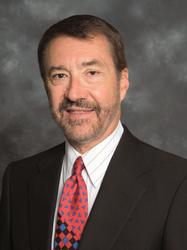
Garry Bartecki is a CPA and MBA with GB Financial Services LLC, and a Wholesaler columnist since August 1993. E-mail [email protected] to contact Garry.