
MHEFI awards record-breaking $231,700 in scholarships to 61 students

The Material Handling Education Foundation, Inc. (MHEFI) has announced the distribution of $231,700 in scholarships to 61 material handling, supply chain, and logistics students for the 2024/2025 academic year. This marks the highest amount ever awarded by MHEFI, reflecting its commitment to supporting education in material handling, logistics, and supply chain management. The scholarships, ranging from $1,500 to $6,000, were granted to undergraduate students who demonstrated outstanding academic performance, maintaining a “B” grade point average or higher in their major. Recipients were selected based on their dedication to these fields of study and their potential to make a positive impact in the industry. In response to this record-breaking scholarship amount, Brian Neuwirth, MHEFI President, stated: “We are immensely grateful to our sponsors whose generous contributions make these scholarships possible. These students show incredible potential and dedication, and we are honored to support their journey into the material handling and supply chain industry.” MHEFI would like to congratulate the following scholarship recipients: • William Fish, North Dakota State University, Crane Manufacturers Association of America (CMAA) Honor Scholarship, $6,000 • Sarosh Ahmed, University of Toledo, Crane Manufacturers Association of America (CMAA) Honor Scholarship, $6,000 • Ethan O’Connor, Oklahoma State University, Al Wurz Memorial Scholarship, $5,000 • Rahul Sah, Mississippi State University, Al Wurz Memorial Scholarship, $5,000 • Kayleigh Bednar, Kansas State University, Automated Storage & Retrieval Systems (ASRS) Honor Scholarship, $5,000 • Seth Thibodeau, Oklahoma State University, Conveyor & Sortation Systems (CSS) Honor Scholarship, $5,000 • Daniela Elenes, California Polytechnic, Dan Clapp Memorial Scholarship Sponsored by Rack Manufacturers Institute (RMI), $5,000 • Meredith DePuy, Virginia Tech, Frazier Industrial Honor Scholarship, $5,000 • Kyra Glenn, University of NorthTexas George W. Prest Honor Scholarship, $5,000 • Rushang Patel, Texas A&M University, Liz Richards Honor Scholarship Sponsored by MHEDA, $5,000 • Meher Syed, Texas A&M University, Liz Richards Honor Scholarship Sponsored by MHEDA, $5,000 • Justin Anetone, University of Nebraska, Kearney Liz Richards Honor Scholarship Sponsored by MHEDA, $5,000 • Addison Kiteley, Michigan State University, Material Handling Education Foundation, Inc. Honor Scholarship, $5,000 • Chase Hakerem, North Carolina State University, Material Handling Education Foundation, Inc. Honor Scholarship, $5,000 • Maleigha Long, Iowa State University, Material Handling Education Foundation, Inc. Honor Scholarship, $5,000 • Thomas Dean Mount, North Dakota State University, Material Handling Education Foundation, Inc. Honor Scholarship, $5,000 •Joan Jaiyeoba, Texas Tech University, Material Handling Education Foundation, Inc. Honor Scholarship, $5,000 • Matthew Offerman, Bradley University, Material Handling Education Foundation, Inc. Honor Scholarship, $5,000 • Katherine Maciejewski, Maine Maritime Academy, Material Handling Education Foundation, Inc. Honor Scholarship, $5,000 • Daniel Dandreo, Kansas State University, Material Handling Education Foundation, Inc. Honor Scholarship, $5,000 • Vinithra Seshan, California Polytechnic San Luis, Material Handling Education Foundation, Inc. Honor Scholarship, $5,000 • Bretton Hall, Oklahoma State University, Material Handling Education Foundation, Inc. Honor Scholarship, $5,000 • Christopher Bohm, Lake Superior State University, Richard Dilling Memorial Scholarship, $5,000 • Withanage Praveen Perera, University of Florida, Richard Dilling Memorial Scholarship, $5,000 • Emma Grace Woolsey, Virginia Tech, Rack Manufacturers Institute (RMI) Honor Scholarship Sponsored by ASG, $5,000 • Rae Williamson, Oklahoma State University, Rack Manufacturers Institute (RMI) Honor Scholarship Sponsored by ASG, $5,000 • Matthew Moore, University of Texas Arlington, Rack Manufacturers Institute (RMI) Honor Scholarship Sponsored by ASG, $5,000 • Genevieve Rasmussen, Bradley University, Rack Manufacturers Institute (RMI) Honor Scholarship Sponsored by ASG, $5,000 • Stephen Farley, Penn State University, Willard P. Heddles Memorial Scholarship, $4,800 • Abbey Kirk, Oklahoma State University, Mobile Automation Group (MAG) Honor Scholarship, $4,000 • Austin Yarbrough, University of Missouri-Columbia, The Robotics Group (TRG) Honor Scholarship, $4,000 • Samantha Chiang, Kettering University, The Robotics Group (TRG) Honor Scholarship, $4,000 • Peter Kronebusch, University of Illinois Urbana Champagne, Crane Manufacturers Association of America (CMAA) Honor Scholarship, $3,100 • Elijah Griego, New Mexico State University, Automation Controls Electrification (ACE) Honor Scholarship, $3,000 • Garrett Dickinson, University of Maine, Automation Controls Electrification (ACE) Honor Scholarship, $3,000 • Sydney Herring, Michigan State University, Ergonomics Assist Systems Equipment (EASE) Honor Scholarship, $3,000 • Gabriela McSwieney, Clarkson University, Gorbel Inc. Honor Scholarship, $3,000 • Samuel Sweat, Kansas State University, Protective Guarding Manufacturers Association (ProGMA) Honor Scholarship, $3,000 • Asif Ahmed, Texas Tech University, Protective Guarding Manufacturers Association (ProGMA) Honor Scholarship, $3,000 • Rashed Amad, Virginia Tech, Scan Label Apply Manifest (SLAM) Honor Scholarship, $3,000 • Matthew Carlesi, Worcester Polytechnic Institute, Storage Manufacturers Association (SMA) Honor Scholarship, $3,000 • Madison Harmon, Virginia Tech, Irving M. Footlik, PE Memorial Scholarship, $2,850 • Mollie McKee, Virginia Tech, Loading Dock Equipment Manufacturers (LODEM) Honor Scholarship, $2,850 • Evan Bennett, University of Wisconsin-Superior, LIFT Manufacturers Honor Scholarship, $2,600 • Margaret Stoving, Michigan State University, Bastian Family Scholarship, $2,500 • Ulises Navarro-Luviano, North Carolina State University, Bastian Family Scholarship, $2,500 • Matthew Wells, University of Arkansas, Conveyor & Sortation Systems (CSS) Honor Scholarship, $2,500 • Anna Sidoti, University of Tennessee, Solutions Community Honor Scholarship, $2,500 • Ivan Latinovic, Purdue University, Solutions Community Honor Scholarship, $2,500 • Carolina Remond, University of Arkansas, Southworth International Group Honor Scholarship, $2,500 • Philip Klim, North Carolina State University, St. Onge Company Honor Scholarship, $2,500 • Elan Preis, California Polytechnic San Luis, Seizmic, Inc./LAMHMS Honor Scholarship, $2,300 • Lucas Greazel, University of Mississippi, Expert Crane Honor Scholarship, $2,250 • Kush Patel, University of Tennessee Knoxville, UNEX Manufacturing Honor Scholarship, $2,250 • Blake Bollow, University of Wisconsin, Platteville, Hoist Manufacturers Institute (HMI)/Monorail Manufacturers Association (MMA) Honor Scholarship, $2,100 • Eamon Walsh, George Washington University, Hanel Storage Systems Honor Scholarship, $2,000 • Joel Chon, Rutgers University, Ridg-U-Rak Honor Scholarship, $2,000 • Alexis Denny, Michigan State University, Steel King Industries Honor Scholarship, $2,000 • Julia Fitzgerald, University of Pittsburgh, Brian McNamara Honor Scholarship Sponsored by Southworth International Group, $1,800 • Bryce Bullard, Oklahoma State University, James Galante Memorial Scholarship Sponsored by Southworth International Group, $1,800 • Ashton Parkey, Oklahoma State University, James Indelicato Material Handling Scholarship, $1,500 If you would like to support MHEFI’s mission to provide financial support for educational programs to engage and retain talent for the material handling, logistics and supply chain industry, please donate
IDENTCO highlights automation capabilities and PCB labeling at PCB East
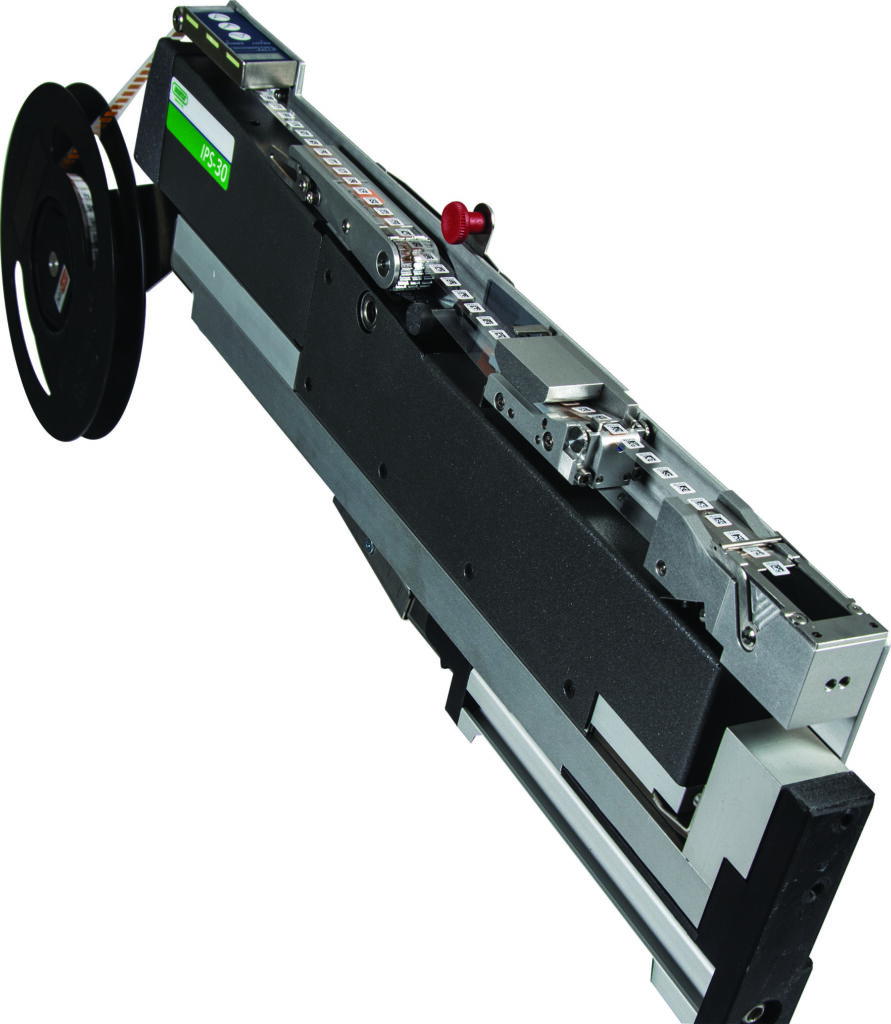
Company to showcase label feeders and product solutions to simplify automation. IDENTCO will highlight its automation capabilities and PCB labeling solutions at PCB East, June 4-7 in Boxborough, MA, Booth #301. With automation a key theme, IDENTCO’s commitment to simplifying the automation process for PCB manufacturers is evident through the company’s comprehensive label and equipment packages. Designed for hassle-free integration, IDENTCO’s automation products offer plug-and-play functionality with most SMT equipment brands. Attendees of the show will have the opportunity for a live demonstration of the IPS-30 Slimline Label Feeder. At a mere 30mm (1.18 in.) wide – half the size of conventional feeders – the IPS-30 requires only one feeder position on pick-and-place machines, freeing up valuable space along congested SMT production lines. Providing precise and accurate placement, it can also feed labels or die-cut parts as small as 2mm x 2mm. The company will also be exhibiting its robust label solutions for printed circuit board (PCB) applications, including DuraTrack. This label series provides printed circuit assemblies with comprehensive traceability – an increasingly attractive internal quality control and supply chain transparency feature for brand owners producing high-leverage electronics. Engineered for use in surface mount technology and throughout the entire assembly process, DuraTrack thermal transfer printable labels can endure harsh fluxes, the latest cleaning chemistries, and high temperatures encountered in today’s circuit board assembly processes, on both sides of the board.
Vertical reciprocating conveyors elevate AGVs and AMRs to new levels of efficiency

Vertical reciprocating conveyors (VRCs) act as the pivotal link between two major trends in warehouse operations that are dramatically increasing efficiency and profitability: Mobile Robots — The widespread adoption of Automated Guided Vehicles (AGVs) and Autonomous Mobile Robots (AMRs) is transforming the horizontal movement of materials across facilities, revolutionizing logistics and material handling processes. Vertical Space Utilization — Driven by the pursuit of logistics efficiency, along with escalating real estate costs and last-mile distribution demands, warehouses and production facilities are optimizing “cube space utilization” by expanding upwards rather than outwards. Vertical reciprocating conveyors seamlessly integrate the horizontal and vertical material handling processes, facilitating the smooth automated flow of material in three dimensions. These flexible and compact systems can be incorporated into a wide variety of layouts and serve a multitude of different applications. Combining VRCs with mobile robots and other manual and automated equipment often represents the most efficient, safest, and cost-effective solution for accessing taller racking, pick modules, mezzanines, and multiple floor levels, in virtually any type of warehouse or production environment. Rapid Adoption of Mobile Robots AGVs and AMRs are revolutionizing logistics across many industry sectors. In factories, these technological advancements automate material handling and assembly line tasks. This not only boosts production rates but also improves workplace safety by taking over hazardous or repetitive tasks from human workers. Automated Guided Vehicles adhere to predetermined paths, whereas Autonomous Mobile Robots employ sophisticated sensors and artificial intelligence for flexible navigation. AGVs, with their lower initial costs, are sometimes preferred by production and packaging operations in obstacle-free routes where predictable timing of material delivery is paramount. Conversely, AMRs offer unparalleled adaptability in dynamic and chaotic settings, making them ideal for large warehouses and distribution centers. Mobile robots are crucial to the advancement of Industry 4.0, boosting efficiency, flexibility, and automation within manufacturing landscapes. Their capacity for autonomous navigation and task execution across diverse scenarios renders them indispensable in the drive towards more intelligent and interconnected factory ecosystems. In warehouses, the impact of these robots is even more visible and transformative. Several factors are driving the swift adoption: E-commerce Growth: As E-commerce continues to experience explosive growth, with next-day-delivery expectations and direct-to-consumer marketing models, AGVs and AMRs are key to meeting the demand for quicker order fulfillment and inventory management. Complexity of Modern Distribution: The modern warehouses and distribution centers need to rapidly evolve from classic distribution models to an omni-channel model with the agility to pick case packs, fill retail store orders, pick and pack single consumer orders, and process customer returns and product refurbishments. Labor Shortages and Rising Costs: With ongoing labor shortages, particularly in logistics and manufacturing, AGVs and AMRs offer a solution by automating repetitive tasks. Technological Advancements: Enhanced sensors, AI, and better batteries have made AGVs and AMRs more adaptable and efficient, capable of performing complex tasks autonomously. Safety and Efficiency: Compared to forklifts and manual material handling equipment, AGVs and AMRs improve workplace safety and operational efficiency, handling hazardous tasks and operating 24/7 with precision. Vertical Cube Utilization Two to three decades ago, distribution centers typically featured clear heights of 24 to 32 feet – the vertical space from the floor to the ceiling. Today, driven by the scarcity and increased costs of land, especially near urban centers, and advances in fire protection and material handling technology, the industry standard for clear heights has shifted to 36 and 40 feet, with demand growing for even taller structures. The shift towards taller buildings is also fueled by the rapid growth in multi-level facilities, specifically designed to optimize last mile distribution, accommodating the increasing demand for faster and more efficient delivery systems in densely populated areas. Leveraging the “vertical cube” not only maximizes storage but also streamlines operations, improving material handling, increasing productivity, and ensuring safety without necessitating horizontal expansion. The utilization of upper levels also frees up prime dock-level real estate for crucial shipping, receiving, or re-packaging processes. Furthermore, the concept of cubic utilization in warehouse and factory design marks a significant shift towards sustainability and energy efficiency. By maximizing cubic space while minimizing the square footage of the building’s exterior envelope, facilities significantly reduce HVAC costs. This approach not only lowers initial investment in land and construction but also yields long-term savings in maintenance, operations, and even property taxes. VRCs are Ideal for Automated Material Handling The symbiotic relationship between these two trends — mobile robots and the utilization of vertical space — mediated through Vertical Reciprocating Conveyor technology, exemplifies how the strategic adoption of advanced automation technologies and space utilization concepts can revolutionize warehousing and manufacturing. A VRC functions like an elevator, with one fundamental difference — VRCs are intended to move material loads, not people. They are regulated as a conveyor (under ASME B20.1) and not people-moving elevators, making them less costly to install and maintain than an elevators. VRCs have an enclosed platform that prevents loads from falling as they are lifted and lowered. This makes them far safer to operate than forklifts or scissor lifts. VRCs safeguard employees from injuries incurred while transporting items on staircases and deter the misuse of forklifts beyond their safe mast lift height limits. Flexibility VRCs are a versatile solution that can be installed next to mezzanines, in existing elevator shafts, or through floors, and they can also be installed outdoors. Vertical Reciprocating Conveyors (VRCs) stand out for their exceptional versatility and adaptability, opening a myriad of automated material handling opportunities. They seamlessly integrate with mobile robots and automated conveyor systems, or they can be manually loaded and unloaded. AGVs, AMRs and driverless forklifts can travel with the load on the VCR and continue travel when they arrive at the destination floor. Alternatively, they can efficiently transfer loads onto the VRC at one level, and then another system —whether it’s another AGV, AMR, or a different automated or manual material handling method — can take over at a different level. Furthermore, VRCs can effortlessly connect with automated horizontal conveyor systems, facilitating the smooth flow of
LOBO Systems supports No Falls Week 2024
Safety in working at height environments LOBO Systems has announced its commitment to the No Falls Week Foundation’s upcoming event, No Falls Week, between 13th and 17th May 2024. With a resolute dedication to enhancing safety in working at height environments, LOBO Systems aligns with the Foundation’s mission to decrease the injuries stemming from inadequate training and inappropriate systems. No Falls Week, an initiative created by the No Falls Foundation, serves as a reminder of the critical importance of proper safety measures in preventing falls at worksites. This year’s event, scheduled for May 2024, aims to raise awareness and promote best practices for mitigating the risks associated with working at height. “Unfortunately, there has been a recent rise in workplace accidents in relation to falls,” said Robert Bokros, CEO of LOBO Systems. “Statistics show, 40 people lost their life due from a fall from height between 2022-2023, with the added statistic of 30% of all workplace deaths were due from falls from height” Robert adds. “No one should leave for work and fail to return home, our mission here at LOBO Systems is to increase safety whilst working at height, while providing a bespoke advanced system that is cost-effective and efficient.” No Falls Week 2024 will feature a series of educational initiatives, interactive workshops, and informational resources geared towards equipping workers and employers with the knowledge and tools necessary to mitigate fall-related risks. By leveraging its expertise and innovative solutions, LOBO Systems will actively contribute to these efforts, reinforcing its commitment to advancing safety standards within the industry.
Plastics Industry association packs over 21k meals for charity at NPE2024

The Plastics Industry Association announced over 21,000 meals were packed at the first-ever community service event at NPE2024: The Plastics Show, exceeding the association’s goal of 20,000 meals. The event, in partnership with Alliance Specialties and Laser Sales and U.S. Hunger, saw over 70 volunteers, including NPE attendees and exhibitors, come together to make a difference in the fight against hunger. All meals were donated to Orlando’s Second Harvest Food Bank for distribution to the local community. “I’m thrilled we were able to surpass our goal for this event,” said Whitney Taveras PLASTICS’ Director of Industry Engagement (Equipment). “We are grateful for the amazing team of volunteers who packed over 21,000 meals for those in need. The plastics industry is dedicated to supporting local communities and this initiative was a true testament to that mission.” “We were able to accomplish an amazing act of service at NPE2024,” said Tony Demakis, President of Alliance Specialties and Laser Sales. “The event brought people together from across the plastics industry to serve others and make a difference for people in need in the local Orlando area. I’m so proud we exceeded our goal for this event and am thankful to PLASTICS and to all the volunteers.” “We are so grateful to the Plastics Industry Association for choosing to make an impact through U.S. Hunger,” said U.S. Hunger CEO Rick Whitted. “Together, we’ve packed over 21,000 meals for Central Florida families in need, illustrating the power of partnership and community spirit. This extraordinary act of generosity not only addresses immediate hunger relief but also underscores the profound impact we can achieve when industries unite for a common cause.” U.S. Hunger is a 501(c)(3) that has activated more than 950,000 volunteers to distribute over 160 million meals across the globe. We address hunger by engaging volunteers, educating on the root causes of food insecurity, and creating access to nutritious meals for low-income families.
Nucor Executive VP Douglas J. Jellison to Retire and Randy J. Spicer to be promoted

Nucor Corporation has announced that Executive Vice President Douglas J. Jellison plans to retire on June 8, 2024 after more than 33 years of service with Nucor. Jellison began his Nucor career in 1990 as Materials Manager at Nucor Bearing Products and has worked in various positions and businesses, including several controller and business development roles. Mr. Jellison served as General Manager of Nucor Bearing Products; Vice President and General Manager of Nucor Steel Seattle, Inc.; Vice President and General Manager of Nucor-Yamato Steel Company; President of Nucor Tubular Products; and President of Skyline Steel LLC. He was promoted to Executive Vice President in 2021. Leon Topalian, Nucor’s Chair, President and Chief Executive Officer commented, “I am incredibly grateful for Doug’s contributions over the last three decades. Throughout his career, he influenced a broad spectrum of Nucor’s businesses. He successfully led significant facilities, oversaw international operations, integrated and shaped acquisitions and spearheaded key enterprise strategies. His unyielding ability to drive change, overcome challenges and seek out the best outcomes is unparalleled. Most importantly, he lives Nucor’s culture in developing teammates and making everyone around him better. He is one of a kind. On behalf of all teammates, I want to thank Doug for his leadership and wish him a long and happy retirement.” Effective May 12, 2024, Randy J. Spicer will be promoted to Executive Vice President. Mr. Spicer began his Nucor career in 2004 as Accounting Supervisor at Nucor Steel Indiana. In 2006, he joined the start-up team at Nucor Steel Memphis, Inc. as Controller and subsequently served as Controller and Hot Mill Manager at Nucor Steel Gallatin LLC. He was promoted to General Manager of Nucor Tubular Products North in 2020 and elected to Vice President in 2022. He currently serves as President of Nucor Tubular Products. “Randy is a talented leader whose 20 years of Nucor experience help make him well-positioned to take on this challenging role. We look forward to his contributions to the executive leadership team,” said Mr. Topalian. “Doug’s retirement and Randy’s promotion are the product of the robust and thoughtful succession planning process that has been a top strategic initiative throughout Nucor.”
ALAN opens nominations for 2024 Humanitarian Logistics Awards

Annual awards honor extraordinary supply chain relief efforts The American Logistics Aid Network (ALAN) has officially opened nominations for its eighth annual Humanitarian Logistics Awards, and it’s asking for your help in identifying some of this year’s most deserving honorees. “There’s a lot of amazing work that the commercial supply chain community does to facilitate humanitarian relief efforts. But all too often, it goes unrecognized,” said ALAN Executive Director Kathy Fulton. “Our awards were created to spotlight the industry’s generosity and to honor its most compassionate companies and individuals. While ALAN works closely with a lot of these organizations to aid disaster relief efforts, there are still many deserving honorees that we won’t be made aware of – and able to honor – unless someone takes the time to nominate them.” Nominations (including self-nominations) can be made via ALAN’s website between now and June 28th. Winners will be announced this fall at the annual CSCMP Edge Conference. ALAN’s Humanitarian Logistics Awards are open to any logistics professional, academic, organization or department. They are awarded in four key categories, each of which can have multiple honorees: Outstanding Contribution To Humanitarian Logistics Employee Engagement Research And Academic Contributions Lifetime Achievement For a full list of rules and nomination criteria visit https://www.alanaid.org/wp-content/uploads/2018/06/HULA-2024-Nomination-Info-1.pdf Established in 2017, ALAN’s Humanitarian Logistics Awards recognize companies and individuals who exemplify the best that the supply chain profession has to offer by assuring that aid and comfort are rapidly delivered to communities in crisis. Previous winners have included United States Cold Storage, Flexport.org, CEVA Logistics, Palmer Logistics, ARPCO Transport Services, Scotlynn, Vector Global Logistics, Tucker Company Worldwide, Truckstop.com, Dr. Diego Vega, Professor Maria Bessiou, and the students on ALAN’s intern teams from the W.P. Carrey School of Business at Arizona State University, the University of Tennessee, Knoxville, and the University of Wisconsin Madison.
NFI strengthens Spin Master’s Supply Chain Solutions with New Mississippi Facility

Spin Master is a leading global children’s entertainment company that creates exceptional play experiences through its three creative centers: toys, entertainment, and digital games. Since its founding in 1994, Spin Master has grown from a small toy manufacturer to become the home of iconic brands, such as Rubik’s Cube, which is celebrating its 50th anniversary, the powerhouse preschool franchise, Paw Patrol, and the award-winning Toca Boca digital game. “This location is ideal and allows us to better service our retail customers,” said Steve Radewych, SVP of Supply Chain Operations at Spin Master. “We’re happy to continue working with NFI to strategically position our supply chain as business continues to grow.” NFI and Spin Master began their partnership in 2018 when Spin Master was looking to expand its supply chain throughout the Northeast. That same year, Spin Master acquired another company, which increased their need for faster solutions. NFI’s distribution team was able to help establish this East Coast presence in their Kutztown, Pennsylvania campus. As Spin Master’s business continued to evolve and expand, requiring additional flex space within the campus and the larger Lehigh Valley network, NFI was able to accommodate this overflow need. In early 2024, the relationship expanded further with the addition of an ideally located warehouse in Olive Branch, Mississippi, situated in the heart of the Central United States. While continuing to fulfill Spin Master’s distribution needs, NFI’s port services capabilities will also be utilized for drayage services inbound to the new distribution center. Additionally, NFI’s ILS team will manage the transfer of products from California to the new facility in 2024 and to Pennsylvania in 2025. “We’re really excited to expand our relationship with Spin Master for at least the next five years and utilize other services for this very strategic customer,” said Bill Mahoney, CCO and EVP at NFI. “We’ve celebrated five years of a great partnership and look forward to growing together.” NFI is committed to tailoring solutions for each unique customer and growing alongside the businesses it partners with. With expert knowledge, technology, scale, and dedicated people, NFI offers innovative, integrated, and customized solutions that span customer’s entire supply chain.
PLASTICS Industry Association releases 2024 Bioplastics Market Watch Report
The Plastics Industry Association (PLASTICS) released its 2024 Bioplastics Market Watch Report today during an education session at NPE2024: The Plastics Show that ran from May 6-10th in Orlando, Florida, and attracted thousands of attendees from around the globe. “Bioplastics manufacturing is growing and consumers’ familiarity with bioplastics has increased, based on PLASTICS consumer survey,” said PLASTICS’ Chief Economist Dr. Perc Pineda. “Overall, the outlook for this industry is positive.” Among the highlights found in the 2024 Bioplastics Market Watch Report: Bioplastics manufacturing revenue is now projected to grow at a Compound Annual Growth Rate (CAGR) of 1.9% to reach $1.2 billion by 2028. The size of the U.S. bioplastics market will continue to vary depending on the different metrics used to quantify it. Nevertheless, the production capacity of bioplastics in North America, predominantly concentrated in the U.S., is estimated to account for 18.7% of the global production capacity. Although consumer perceptions of bioplastics continue to evolve, familiarity with bioplastics has increased significantly over a five-year period. In last year’s survey, 68% of consumers expressed a net familiar response, with just 14% indicating unfamiliarity. This marks a notable shift from the 2018 survey, where the net familiarity was 63%, with 31% indicating unfamiliarity. Competition within bioplastics manufacturing is expected to increase within and outside U.S. borders, driven by new materials development and new applications.
Marsh Bellofram re-organizes sales territories

The Marsh Bellofram Group of Companies has announced a reorganization of its sales territories and a new, more holistic approach to sales across its 12 business units. As part of this effort, an existing manufacturers’ representative agency that already handles Marsh Bellofram products is expanding its territory, and a new rep group is being brought on. In addition, several internal territories are being reshuffled. EMPOWER Sales will expand its Marsh Bellofram territory to include Texas and Oklahoma. EMPOWER’s sales for Marsh Bellofram will be personally overseen by EMPOWER co-founder, principal, and general manager Bill Carroll. Carroll has nearly a decade of experience with Marsh Bellofram’s vast product lines, and will bring his expertise to these important expanded markets. EMPOWER’s main responsibility will be over the products of Automatic Timing & Controls (ATC), ATC Diversified Electronics (DEI), and Bellofram Precision Controls. In addition, Dan Weis and his company, Fluid in Motion (FIM), will represent these same products in three states in the upper Midwest for ATC/DEI and four states for Bellofram Precision Controls. Weis is a past sales manager for Bellofram Precision Controls in the same territory. His knowledge of the products and the market is expected to help customers achieve maximum impact from Marsh Bellofram solutions. Fluid in Motion has spent the past 35 years building strategic partnerships, industry knowledge, and product expertise to provide customers with a one-of-a-kind sourcing solution that is unparalleled in the industry. The sales re-organization brings other changes as well. Jon Staniszewski takes on a new role as sales manager for BelGAS (he previously served in the same position within Bellofram Precision Controls). Tony DeSimone will manage ATC/DEI for Illinois as well as all products in six other states. Meanwhile, longtime ATC/DEI sales manager Phil Storey remains covering the East Coast region down through mid-South states. Nick Kerpsack handles the same territory for Bellofram Precision Controls. A goal of the sales reorganization is to enable sales reps to sell broad product lines across multiple business units of the Marsh Bellofram family of brands, with support from product experts available to aid customers.
Compact light switch handle
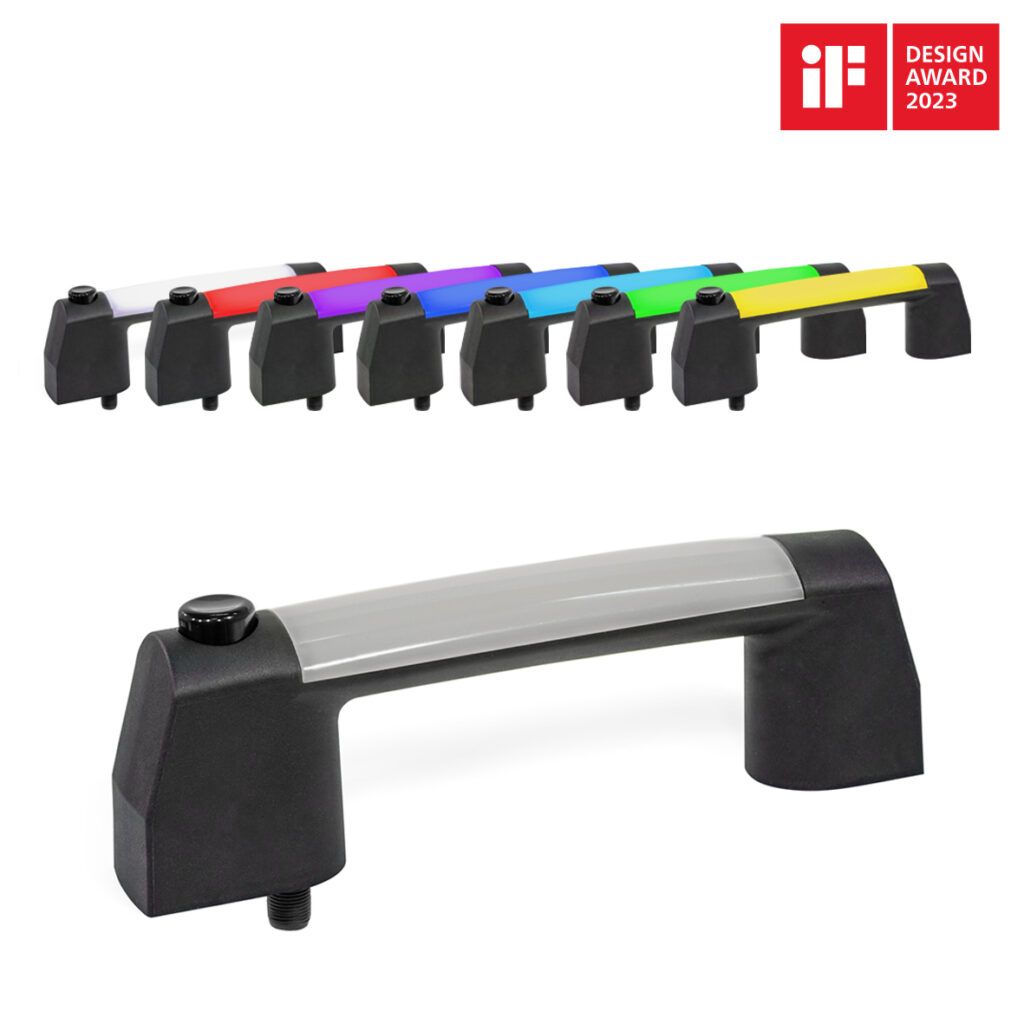
Signaling and indicator lights, switches, and buttons – elements that hardly any machine can do without. The new JW Winco cabinet U-handle EN 6284 integrates all these functions into a single, compact element. The U-handle is designed to enhance the operation of systems and machines. It features an integrated button and a large, colored, backlit area on the back of the handle. These elements can be used individually or in combination, providing a versatile tool for system control and process monitoring. The EN 6284 prioritizes safety in its design. The two-channel switch element, available in different contact configurations, enhances operational safety. It can handle a wide range of applications with DC and AC voltages from 24 to 240 volts and currents of up to 3 amperes, ensuring compatibility with various systems and machines. The light element on the back of the handle comprises a form-fitting diffusor made of robust polycarbonate that is tightly attached with an IP 67 protection rating. It homogenously diffuses the light produced by the interior LED module in a variety of colors and brightness levels depending on the activation of the 24-volt RGB matrix. This transforms the handle into a visible status indicator even from the side or from a distance – ideal for large systems operating with small crews. Depending on how it is wired, the light signal can indicate problems in the process, signal regular operation, or show that the system is ready to be opened. The colors and functions can be allocated individually. The extensive documentation and the video tutorial on the JW Winco website offer several possibilities. JW Winco has taken a holistic approach and provided the illuminated cabinet U-handle with a passive counterpart. The EN 6284.1 has the same shape and material (glass fiber- reinforced polyamide) as its active sibling, allowing for consistent machine design. Speaking of design: This combination of multifunctionality, design, ergonomics, and versatility was awarded the prestigious iF Design Award 2023.
Episode 484: Diving into the e-commerce transaction at Jay Group

For The New Warehouse podcast, we had the pleasure of being on site and recording on location at Jay Group in Lancaster, PA. Kevin sat down with their President and COO, Blake Dudek as well as Ryan Millman of UnDigital and Akhilesh Srivastava of Fenix Commerce to discuss the end to end e-commerce order and how all of their solutions play a part to improve the customer experience and drive further value for brands. Giving the Consumer the Information They Need Consumers are constantly buying products online creating tons of data points but consumers desire to have as much information as possible to make their buying decisions easier. Fenix Commerce aims to capture this data and allow brands to leverage to help give these consumers the information they need. In the episode, Akhilesh discusses one example where the consumer is able to know exactly when to expect their package to arrive and they can get that information as early as on the Google search results page. Now, they have created value for the consumer at one of the earliest points. The data is being captured but then also flowing through the entire transaction feeding off of Jay Group’s shipping capabilities. This becomes your digital retail clerk and gives extra touch points for the consumer during the e-commerce transaction. Getting the Order to the Consumer When it comes to the physical process of getting the product to the customer, Jay Group steps in and handles the fulfillment process. With a long-standing history of servicing customers for multiple generations, they have built an outstanding fulfillment business that has its roots in promotional items. Fun fact, Blake’s Grandfather Jay started the company and was the one who came up with the idea for the Crown Royal bag. Focused on the customer experience, it is apparent that they are constantly looking to improve and provide additional value to their clients and their client’s customers. Part of that is partnering with smart technologies like Fenix Commerce and UnDigital to make that transaction a better experience for everyone involved. Creating a Personalized Unboxing Experience With more consumers focusing on online transactions and not going into physical stores, brands need to find a way to still give their customers a personalized shopping experience. They have the experience on their website but what happens when they get their product? In some cases, it may just be a product thrown into a plain brown box but some brands are upping that experience by making sure it is an actual experience and not something forgettable. UnDigital is providing a very personal and customized solution to help with this experience. Based on data known about these consumers and their buying habits they are able to provide customized labels, offers, and inserts into each individual package. From an operations perspective, the customized marketing material automatically comes out with the order so there is no manual intervention needed on the fulfillment provider side. Key Takeaways E-commerce shopping is going nowhere but consumers are still desiring a great experience. They want to know when they will get their order and they want to still have a great experience like they were going to the store to make a purchase. Tools can help you to drive value for all parties involved. In this discussion, all three solution providers are strong on their own but when they come together they can really elevate the overall consumer experience smartly and cost-effectively. A small cost per order can be an investment in immense long-term value. As you look at different tools and solutions to help provide more value to your customers, the cost may come into play but for small additional costs per order you can be creating a ton of long-term value. Retaining a customer for the long term is much better then losing them from a bad experience. The New Warehouse Podcast Episode 484: Diving into the E-commerce Transaction at Jay Group
U.S. Rail Traffic report for the week ending May 4, 2024
The Association of American Railroads (AAR) has reported U.S. rail traffic for the week ending May 4, 2024. For this week, total U.S. weekly rail traffic was 463,106 carloads and intermodal units, up 0.0 percent compared with the same week last year. Total carloads for the week ending May 4 were 213,410 carloads, down 5.1 percent compared with the same week in 2023, while U.S. weekly intermodal volume was 249,696 containers and trailers, up 4.9 percent compared to 2023. Seven of the 10 carload commodity groups posted an increase compared with the same week in 2023. They included petroleum and petroleum products, up 1,611 carloads, to 10,628; miscellaneous carloads, up 1,610 carloads, to 8,184; and grain, up 1,193 carloads, to 21,725. Commodity groups that posted decreases compared with the same week in 2023 were coal, down 15,611 carloads, to 46,928; nonmetallic minerals, down 1,615 carloads, to 32,965; and farm products excl. grain, and food, down 731 carloads, to 15,381. For the first 18 weeks of 2024, U.S. railroads reported a cumulative volume of 3,836,119 carloads, down 4.8 percent from the same point last year; and 4,536,912 intermodal units, up 8.7 percent from last year. Total combined U.S. traffic for the first 18 weeks of 2024 was 8,373,031 carloads and intermodal units, an increase of 2.1 percent compared to last year. North American rail volume for the week ending May 4, 2024, on 10 reporting U.S., Canadian and Mexican railroads totaled 324,302 carloads, down 0.9 percent compared with the same week last year, and 337,489 intermodal units, up 5.3 percent compared with last year. Total combined weekly rail traffic in North America was 661,791 carloads and intermodal units, up 2.2 percent. North American rail volume for the first 18 weeks of 2024 was 11,813,804 carloads and intermodal units, up 2.1 percent compared with 2023. Canadian railroads reported 94,801 carloads for the week, up 7.4 percent, and 76,026 intermodal units, up 5.7 percent compared with the same week in 2023. For the first 18 weeks of 2024, Canadian railroads reported a cumulative rail traffic volume of 2,896,564 carloads, containers, and trailers, up 0.6 percent. Mexican railroads reported 16,091 carloads for the week, up 12.9 percent compared with the same week last year, and 11,767 intermodal units, up 13.4 percent. Cumulative volume on Mexican railroads for the first 18 weeks of 2024 was 544,209 carloads and intermodal containers and trailers, up 10.5 percent from the same point last year. View reports here
Lucas Systems announced 100 Billion warehouse picks

Credits continuous innovation of technologies centered around workers Warehouse workers made 100 billion warehouse picks using Lucas Systems software, according to an announcement today from Lucas Systems, a distribution center technology company. Lucas Systems, which provides software to workers in more than 400 warehouses across four continents, says the 100-billion milestone is a culmination of industry longevity combined with tens of thousands of workers using its sophisticated speech-recognition and optimization software, powered by Jennifer™. Jennifer™ provides in-the-moment voice and visual guidance for warehouse tasks such as picking, replenishment, putaway, loading, and cycle count. “Workers make nearly 17 million picks each day with Lucas technologies,” says Lucas Systems Founder and CEO Rick Brown. “For 26 years, we’ve been helping to improve the quality of work-life for warehouse workers while dramatically boosting productivity, accuracy, and safety.” Warehouse workers value technology so much that they are willing to make important trade-offs to access it. According to a recent market study commissioned by Lucas Systems, which polled 500 U.S. on-floor warehouse workers, nearly three out of four on-floor workers would consider a pay cut at another company for an opportunity to use technology if it helps them in their job. Lucas Systems says its technologies gain favor for key reasons: No voice training required with industrial grade dual engine speech recognition Flexibility for workers to work in their own language with more than 30 languages available Multimodal worker interaction using voice, visual and scanning options Built-in optimization that can reduce worker travel by up to 50% while improving picking accuracy Software that runs on a wide variety of Android devices including tablets, wearable devices and mobile computers Reaching 100 billion picks required adaptability, says Lucas executives. “Innovation has been key to our longevity and growth,” Brown says. “We have been at the forefront of leading change in the distribution industry, which is now occurring at an accelerated rate.” Notable market shifts have significantly raised the bar for technology companies. These changes include growth in direct-to-consumer volume and high expectations for near perfect accuracy and shorter order-to-delivery times. Henry Schein has benefitted from Lucas’ commitment to continuous innovation. “In pursuit of consistently fulfilling our customer commitment, we forged a partnership with Lucas Systems in 2006,” said Ed Igrisan, Vice President, U.S. Distribution West, South, and Canada, Henry Schein. “Since implementing Lucas Systems’ voice and AI optimization technologies, Henry Schein has achieved significant growth, exceeding $12 billion in revenue. This strategic partnership has helped to transform our distribution centers, driving substantial improvements in worker productivity, operational agility, and overall satisfaction for both our Team Schein Members and customers.”
PTDA Foundation launches student and employee scholarships

The demand for skilled professionals in the power transmission and motion control (PT/MC) industry has never been more urgent. Committed to helping PT/MC employers nurture current and upcoming talent, the PTDA Foundation has launched two new scholarships to empower individuals who are passionate about pursuing PT/MC careers. “By providing financial support by way of scholarships, we want to build the robust pipeline of talent needed to foster employee growth and ensure the industry has the expertise it needs to thrive,” says 2024 PTDA Foundation President Matt Pavlinsky, Applied Industrial Technologies. “We believe targeting individuals with a demonstrated interest or commitment to pursuing work in PT/MC-related fields will help ease some of the burden of employers struggling to find qualified candidates.” The new student scholarship provides financial support to those who are considering or currently pursuing an education in PT/MC related fields. Applicants must be currently enrolled or recently accepted as a student at a trade school, technical school, community college or four-year university in fields relevant to the PT/MC industry. Up to five $3,000 scholarships will be awarded. The employee scholarship provides financial support to individuals currently employed full-time at a PT/MC distributor or manufacturer in North America. Applicants must also be currently enrolled or recently accepted as a student at any level at a trade school, technical school, community college or university, and must be studying PT/MC related fields in engineering, technology or business. Up to five $2,500 scholarships will be awarded. Applications for both scholarships can be found online at ptworkforce.org/scholarships The application deadline is July 1, 2024. Awardees will be selected in August.
Bobcat reveals backyard makeover contest winners transformed outdoor space

Transformation demonstrates the possibilities for creating a dream backyard using Bobcat equipment Turlock, Calif., resident Julie Rummer now has her dream backyard thanks to the Bobcat backyard makeover contest. Last summer, Bobcat Company announced that Rummer had won the contest, which awarded her a $25,000 backyard makeover using Bobcat equipment. Rummer survived a car crash in 1995 that left her paralyzed as a quadriplegic and dependent on a power wheelchair. An avid gardener, Rummer loved to spend time in her backyard, but navigating loose, dusty soil and thorny vegetation in her backyard became a challenge. She described the yard as an “eyesore, a big disaster” and an “embarrassment.” Winning the contest has completely transformed her backyard into a wheelchair-accessible “paradise,” according to Rummer’s husband Rich. With the help of Bobcat and the use of equipment from local dealer Bobcat Central, Inc., as well as the work of area contractors and friends and family, Julie’s dreams became a reality. “I just feel happy; it’s a happy place to be,” she said about her new backyard. “I can’t even shut the curtains at night, the backyard is so beautiful. Having complete access to nature and my garden is freedom.” The backyard makeover demonstrated the power of Bobcat equipment to get the job done, transforming the overgrown and compact backyard into an accessible and aesthetic space for the Rummer family. “The team at Bobcat is thrilled that we could help Julie achieve her dream of a wheelchair-accessible backyard with room to garden, entertain and get away,” said Laura Ness Owens, Doosan Bobcat vice president of brand and marketing. “Bobcat exists to empower people to accomplish more, and this is a perfect example of doing just that. We hope others are inspired by this transformation and recognize the potential in their own outdoor spaces.” Rummer’s project was kicked off by using a Bobcat skid-steer loader to prepare the area, as well as the demolition and removal of an existing patio, which made room for a new ramp that the Rummers needed for their back door. Tree removal, relocation and planting was done by HIS Tree Service and concrete work preparations by Ultimate Concrete. Then came Bobcat Central with a Bobcat MT100 mini track loader to complete work in the fenced-in area. Crews installed concrete paths, which was preferred for accessibility rather than stone pathways or a patio. The finished landscaping includes a water and irrigation system, new drought-tolerant plants, compost and fertilizer. New cedar mulch was placed to prevent weeds and hold moisture during the summer. After additional lighting, a fire pit, sound system and other items were installed, the job was done. When Rummer submitted her contest application, she did not have her hopes up. However, when her story was chosen as a finalist entry, her community rallied to show support and help Rummer win the grand prize. “I appreciate everyone’s vote and everybody who picked up a shovel or lent a hand clearing, shredding, spreading,” Rummer said. “Every day can be a challenge for me, but the kindness, love and support from everyone during this process just fills my heart. So, thank you, Bobcat, for empowering me and making my backyard dream come true.”
Oshkosh Corporation to acquire AUSA
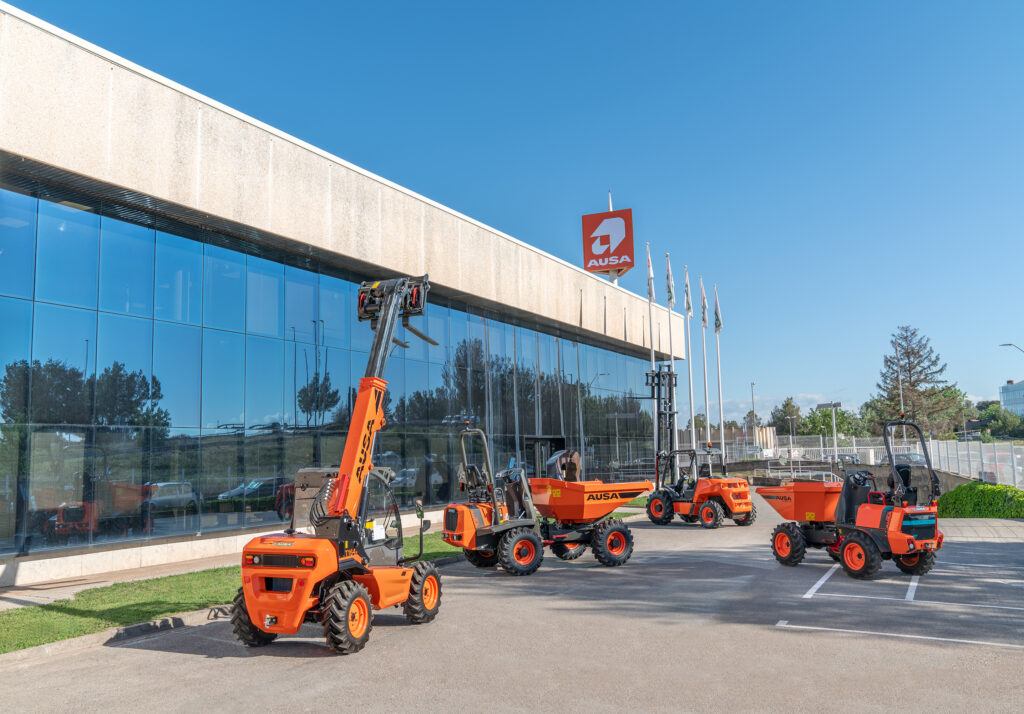
Complementary product portfolio deepens market reach, builds on partnership with JLG Oshkosh Corporation has announced it has entered into a definitive agreement to acquire AUSACORP S.L. Upon closing, AUSA will become part of the Oshkosh Access segment. “AUSA’s history of producing high-quality, purpose-built equipment aligns with our Innovate. Serve. Advance. strategy, allowing us to broaden our product offerings in both current and adjacent markets,” said John Pfeifer, Oshkosh Corporation’s president and chief executive officer. “We look forward to welcoming the AUSA team into the Oshkosh family.” AUSA products will enhance the JLG® line of telehandlers, as well as Hinowa tracked dumpers and forklifts to strengthen the Access segment’s portfolio of equipment. The companies began working together through a partner agreement in 2020, with AUSA manufacturing the JLG-branded SkyTrak ® 3013 compact telehandler. “We are excited to join forces with a proven partner like AUSA,” said Mahesh Narang, executive vice president, Oshkosh Corporation, and president, Access. “Combining our advanced technology capabilities and robust training, support, and service infrastructures will allow us to better serve customers and enable targeted growth.” “We constantly pursue excellence in our products, services and business,” said Ramon Carbonell, AUSA’s chief executive officer. “A deeper relationship with Oshkosh will expand the reach of our products, which is an objective our companies share.” AUSA, which was founded in 1956 in Barcelona, Spain, reported sales of approximately $132 million euros in 2023. The company’s nearly 350 team members and 600 dealers bring with them a long history of innovation, quality, and customer service. The AUSA acquisition supports the Oshkosh accelerated growth strategy. The transaction, which is subject to customary closing conditions, is expected to close within 90 days.
Tom Panzarella appointed Chief Technology Officer at Seegrid

Seegrid Corporation has announced Tom Panzarella as Chief Technology Officer (CTO). In this critical leadership role, Panzarella will spearhead Seegrid’s technological initiatives to continue guiding the development of cutting-edge autonomous solutions that work—meeting evolving customer needs and delivering unmatched ROI. Panzarella’s appointment underscores Seegrid’s commitment to innovation and industry advancement in the rapidly evolving field of robotics and automation. “I am very pleased to appoint Tom to the role of Chief Technology Officer,” said CEO and President Joe Pajer. “Tom’s exceptional leadership and dedication to technological innovation have been pivotal in shaping Seegrid’s market-leading AMR solutions. With Tom at the helm of our technology and development teams, I am confident that Seegrid will continue to revolutionize the future of material handling automation.” As CTO, Panzarella will lead Seegrid’s technology initiatives, including the development of cutting-edge autonomous solutions that empower customers to optimize their material handling workflows. His strategic vision will drive the advancement of Seegrid’s proprietary autonomy technology, further enhancing the safety, efficiency, and flexibility of its proven AMRs. “I am honored to take on the role of Chief Technology Officer at Seegrid,” said Panzarella. “Seegrid’s commitment to innovation and customer-centric solutions is truly inspiring, and I am excited to lead our talented team of engineers as we continue to push the boundaries of what’s possible in autonomous material handling.” Panzarella began working with Seegrid in 2017 while he was building his first perception-based start-up company, Love Park Robotics (LPR). Seegrid partnered with LPR to successfully apply LPR’s pallet detection technology in its AMR solutions. After LPR was acquired in 2018 by ifm, he founded a second start-up named Box Robotics. Box was focused on rebuilding the AGV perception stack with human-like spatial awareness by leveraging long-range 3D LiDAR, Deep Learning, and HD Maps—in direct alignment with Seegrid’s long-term technology vision. Seegrid acquired Box Robotics in September 2020, making Panzarella and his co-founder John Spletzer technology leaders within the company, focused on the successful commercialization of the Box technology stack in our AMR solutions today. Panzarella has over 27 years of experience in engineering and robotics. As the new CTO, Panzarella will steer Seegrid’s technology and product development, working closely with our customers on the required technology and innovation initiatives, and represent Seegrid across the technical bodies that are driving the growth of autonomy across the industry. Q&A with Tom Panzarella: Q: What excites you most about your new role as CTO? A: The most exciting thing for me is the timing and the opportunity to make a lasting impact. Right now there is a convergence of several factors that is driving our market. First, the macroeconomic condition around the stability of labor supply creates an almost urgent need for autonomy technology. Second, our customers have what is seemingly an endless number of problems that they are trying to solve which lead to increased demand for our solutions. Third, foundational technology in areas such as sensors, embedded computers, artificial intelligence, and open-source robotics software have all matured to the point that they can be incorporated into cost-effective and robust solutions. This could not have been timed better. I am thrilled to be a part of a leading organization in the AMR space and to be appointed into a role where I can help to influence the next generation of industrial automation. Q: What are your primary goals and objectives as Seegrid’s new Chief Technology Officer? A: Seegrid was founded by a legendary roboticist, Dr. Hans Moravec. The company was formed around the commercialization of Hans’ work in infrastructure-free localization built on stereo vision and 3D probabilistic mapping. Seegrid was disruptive in commercializing Hans’ work—and we produced a solution that is highly predictable but requires no infrastructure changes, with routes that can be trained by simply walking the vehicle through the facility. Seegrid literally laid the foundation for the AMR revolution that we are all currently witnessing. Today, we are revolutionizing the industry again—by offering technology that can scale from this highly predictable solution which is appropriate in many cases, to solutions that offer tremendous flexibility, built upon Seegrid’s dynamic path planning. As Seegrid’s new CTO, my primary goal is to stay true to our heritage in innovating and commercializing deep robotics technology, to align this technology to our customer’s objectives, and to push our market forward for our customers and society as a whole. Q: How do you envision Seegrid’s technology evolving under your leadership? A: Our technology will evolve in support of our customers’ needs—a solution-based offering that supports full end-to-end autonomous workflows as we’re already seeing with our industry-leading Autonomous Buffer Management (ABM) solution. In the tech stack, this is an architecture that looks at AMRs and enterprise software as a single distributed computing system that is designed to solve problems, easy to tune, and is observable. By having direct exposures to the kinds of problems our lead customers are trying to solve, you can expect to see continued investment and market leadership in our manipulation stack and AI perception models, significant enhancements to our planning systems to include fleet-scale optimization, and an increasingly innovative set of capabilities offered in Fleet Central, our enterprise software platform. Q: What do you see as the biggest opportunities for Seegrid in the coming years? A: Growth in the autonomous lift truck market is a sweet spot for Seegrid. As we continue building out our Palion Lift Truck solutions—the CR1 and RS1—we focus on providing the most capable systems in the market today. We’ve made huge investments in our manipulation software—composed of perception feedback systems, dynamic planners, controllers, and safety systems over and above regulatory requirements—that will generalize to nearly any manipulation task that can be handled by a lift truck. Our leading-edge AI perception models segment the scene in real time into semantically relevant objects of interest. This facilitates high-level reasoning by our planning and execution software to ensure we can carry out the work safely and reliably. This core capability is an innovative and true differentiator between Seegrid and others in the market today and is setting a new standard
The new SENNEBOGEN Maxcab is modern and comfortable
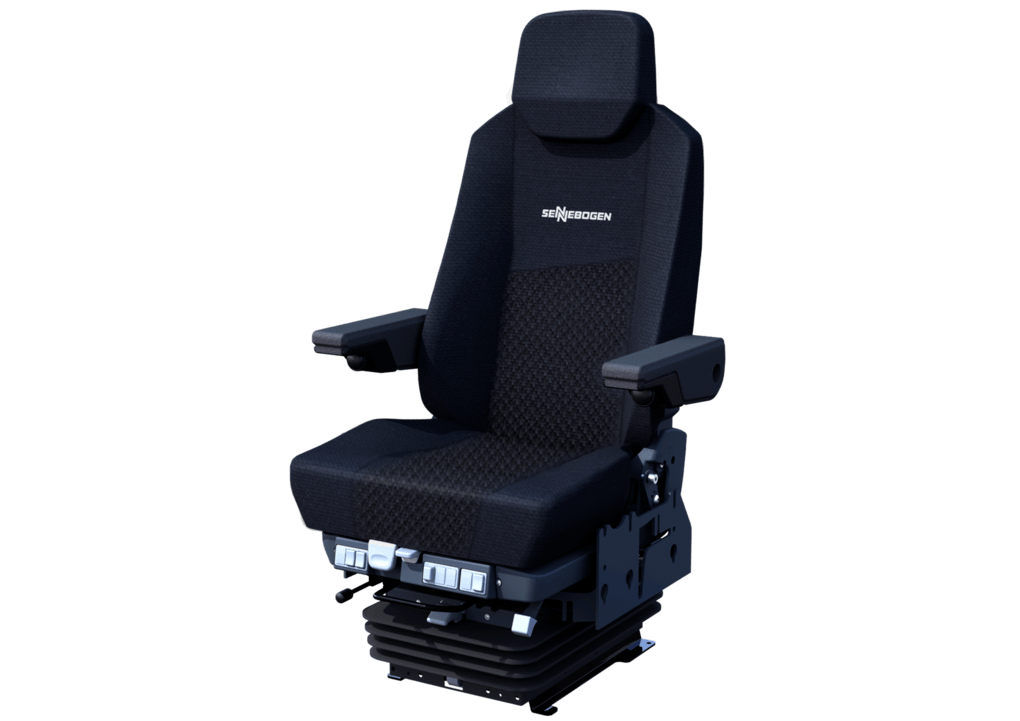
Operator comfort is a priority at SENNEBOGEN, as the operator spends many hours in the cab every day. The maXcab is designed to make working in the machine as pleasant and easy as possible for the operator. The extensive cab update ideally rounds off the new features of the G-series and once again sets new standards. Comfort seat and climate seat In addition to the back-friendly comfort seat with air suspension adapted to the driver, individual ergonomic adjustment options such as adjustable armrests and optimally positioned controls ensure maximum comfort while driving. The optional air-conditioned comfort seat also contributes to this. Comfort audio system Noise is an omnipresent problem that machine operators are exposed to on a daily basis. The new SENNEBOGEN Comfort Audio System offers the solution: its advanced Active Noise Canceling technology can reduce harmful noise by up to 50 percent while providing a high-quality communication system. The optional SENNEBOGEN radio helmet enables easy communication with workers outside the machine via radio. The advantage here: no annoying cables, as the radio can be charged via USB cable. In addition, ambient noise is muffled by the microphone. Air conditioning and air flow In addition to the innovations already mentioned, the SENNEBOGEN maXcab is particularly impressive due to its large number of air nozzles. A total of 10 built-in air glands ensure even air circulation and a well-tempered workplace – whether in summer or winter. Driver support through safety cameras Important operating parameters and clear text displays of error messages for quick troubleshooting are clearly visible on the camera display. The driver is supported in his work by safety cameras – he can conveniently monitor the danger zone via the monitor system in the cab. In addition, the retrofittable Backeye360 camera system with its four cameras detects people and eliminates blind spots. A wide range of safety guards for every application provide additional safety for the driver, while bright LED headlights ensure safe working even in difficult lighting conditions. Amenities for the driver: sun visor, USB & cool box The cab is often not only the driver’s workplace but also their own personal space. This is why SENNEBOGEN attaches great importance to the driver’s well-being and integrates additional features into the maXcab, such as the sun visor, which provides improved visibility and protection from dazzling sunlight. The 12V, 24V and USB charging sockets make it easy to charge electronic devices directly in the cab, while an integrated cool box keeps drinks and snacks cool even in hot outside temperatures. Entertainment and safety for the driver is provided by the built-in radio, which has Bluetooth and USB functions in addition to an integrated hands-free system. Some customers had the opportunity to see the advantages of the new maXcab for themselves at the SENNEBOGEN Operators’ Xperience driver’s day in February. The outcome was overwhelmingly enthusiastic about the outstanding comfort of the cab.
April 2024 Logistics Manager’s Index Report® LMI® at 52.9
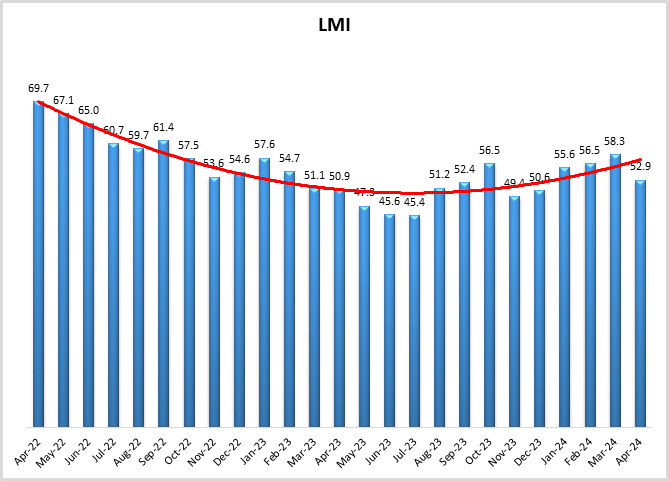
Growth is INCREASING AT AN INCREASING RATE for: Inventory Costs, Warehousing Capacity, and Transportation Capacity. Growth is INCREASING AT A DECREASING RATE for: Inventory Levels, Warehousing Utilization, Warehousing Prices, and Transportation Utilization. Transportation Prices are CONTRACTING. The Logistics Manager’s Index reads in at 52.9 in April 2024. This is down (-5.4) from March’s reading of 58.3, which was the highest rate of growth in 18 months. While this still indicates growth in the logistics industry, this breaks what had been four consecutive months of increasing rates of expansion and is the slowest rate of growth observed so far in 2024. The slowed pace of growth is driven by a significant decrease in the expansion of Inventory Levels (down 12.8-points to 51.0 which is the most marginal level of expansion). This has cascading effects across the supply chain, as lower levels of inventory led to a loosening of both Warehousing (+9.4) and Transportation (+1.8) Capacity, slower expansion for Warehousing Utilization (-8.5), and most importantly, Transportation Prices moving back into contraction at a rate of 44.1. There had been signs that the transportation market was moving back towards equilibrium. However, with the movements in our transportation metrics, Transportation Capacity is now 17.3-points higher than Transportation Prices (61.4 to 44.1) indicating that we are still firmly in a state of freight recession. There is some nuance to these movements however, as we saw that transportation, and the logistics industry overall were much stronger in the second half of the month. Transportation Prices jumped 27.3-points (back into expansion at 54.8) and Transportation Capacity dropped by 10.1-points (down to 57.4) in the back half of April. This may be reflective of seasonal restocking of summer items, or increased hopes that interest rates could come down in late summer after reading the tea leaves of the most recent Federal Reserve meeting. Whatever the cause, it is clear that the logistics industry was much stronger in the second half of April. It will be interesting to see if that trend continues into May, or if there were other forces at work causing some type of aberration. On that front, it should be noted that the second half of April is much more consistent with recent trends than the sharp contraction we observed in the first half of the month. Researchers at Arizona State University, Colorado State University, Florida Atlantic University, Rutgers University, and the University of Nevada, Reno, and in conjunction with the Council of Supply Chain Management Professionals (CSCMP) issued this report today. Results Overview The LMI score is a combination of eight unique components that make up the logistics industry, including: inventory levels and costs, warehousing capacity, utilization, and prices, and transportation capacity, utilization, and prices. The LMI is calculated using a diffusion index, in which any reading above 50.0 indicates that logistics is expanding; a reading below 50.0 is indicative of a shrinking logistics industry. The latest results of the LMI summarize the responses of supply chain professionals collected in April 2024. The LMI read in at 52.9 in April, down (-5.4) from April’s reading of 58.3. While this is lower than what we had seen in any of the readings in Q1, this is still indicative of expansion and is the eighth time in the past nine months that we have recorded growth in the overall index. As mentioned above, this dip was largely a function of the pullback we saw from late March to mid-April when the overall index actually contracted. However, there was a recovery from this in late April when the index was significantly higher than earlier in the month (moving from contraction at 46.8 to growth at 56.5). Whether the rest of Q2 looks more like that fallow period, or like the robust growth we saw later in the month will have a significant impact on the direction of the economy as we head into summer. The motif of optimism that is still high, if not slightly dimmed, is reflected in the University of Michigan’s Consumer Sentiment Index. Consumer sentiment was down slightly from March but remained high overall at 77.2 – which is up 17.5 points from a year ago. Consumers have been consistently optimistic on the economy throughout 2024, with all four readings from this year falling within a range of 2.5 points[1]. Likely the most important piece of economic information from April was the job report that was released last Friday. This so-called “Goldilocks” report states that 175,000 jobs were added in the U.S. in April. This is down from the 300,000 that were added in March (and the 240,000 that were predicted). Of the 175,000 jobs added in April, 22,000 were in the transportation and warehousing sector, reflecting the moderate rates of continued growth in the logistics industry. This slowdown is at least partially due to high employment participation, the 8.5 million unfilled job openings that employers reported on the last day of March is the fewest since early 2021[2]. It also suggests that the economy is growing at a more sustainable rate, and the stock market was up as traders are hoping this signal will allow the Fed to lower rates sometime in Q3[3]. When rates do eventually come down it is unlikely that they will be to the levels around 2.5% that had been common since the recession of 2008. The ongoing investment into green energy and AI has led many analysts to predict that the engines of growth in the economy mean that the Fed will set the current “neutral rate” (also known as r*), somewhere in the 3%-4% range[4]. So, while it is reasonable to expect rates to come down in 2024, it is unlikely that they will come down to their pre-covid levels. While there are some issues, the underlying strength of the U.S. economy contrasts with much of the rest of the world. According to the International Monetary Fund, the U.S. economy will account for 26.3% of GDP in 2024, which is the highest level in almost 20 years.