As industrial automation continues to accelerate, manufacturers face a unique challenge—how do you safely integrate robotics and advanced machinery into high-throughput environments without sacrificing operational efficiency? The rise of co-bots, autonomous mobile robots (AMRs), and automated storage systems has transformed everything from production floors to distribution centers. However, without proper safeguarding in place, these innovations can introduce serious risks to both workers and equipment.
Designing an effective machine guarding strategy requires more than just checking boxes for compliance. It demands a deep understanding of how machines interact with people, and how to design around that intersection to reduce downtime, improve access, and ultimately protect everyone involved.
 Key Risks and Why Guarding Matters
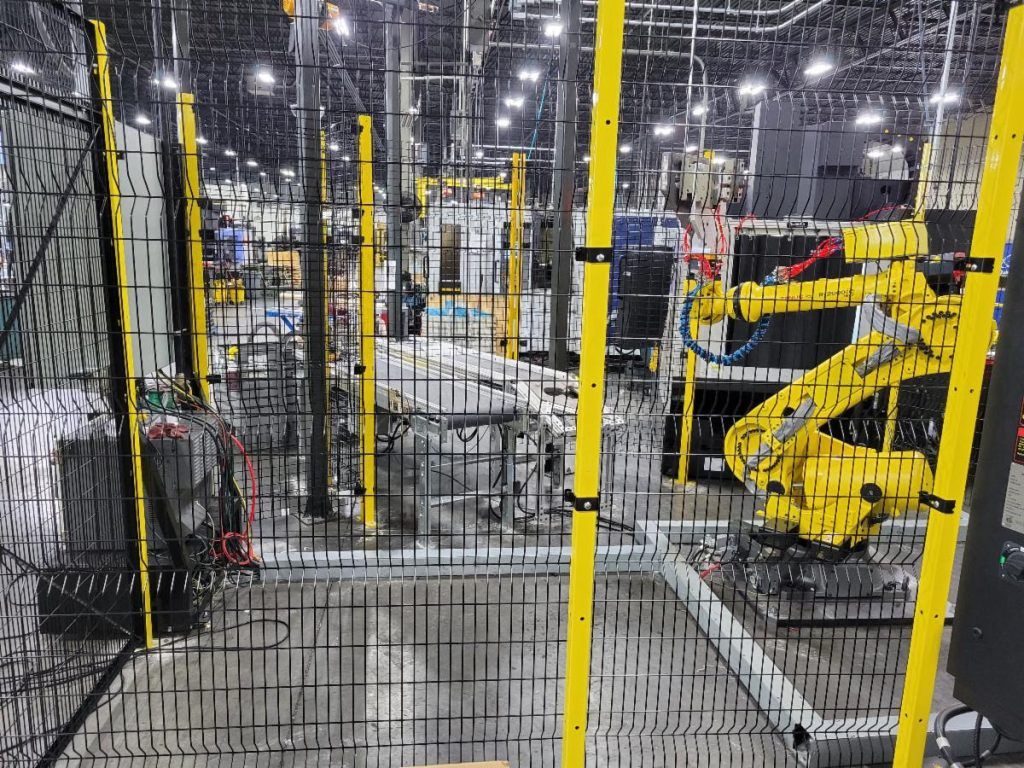
In any automated manufacturing environment, guarding systems serve as critical barriers between humans and hazardous equipment. These barriers protect against everything from flying debris to unexpected equipment motion—particularly in operations involving CNC machines, robotic arms, and high-speed conveyors. Even seemingly minor incidents, such as a tool detaching or a sensor failing, can result in injury or costly downtime without proper safeguards.
Unlike light curtains or pressure-sensitive floor mats, which rely on sensors to detect presence, physical guarding offers a visible and consistent point of protection. While sensor-based systems can complement guarding, they also come with trade-offs. A floor mat, for instance, may shut a machine down prematurely if a worker steps off unintentionally, disrupting the throughput of the machine unnecessarily.
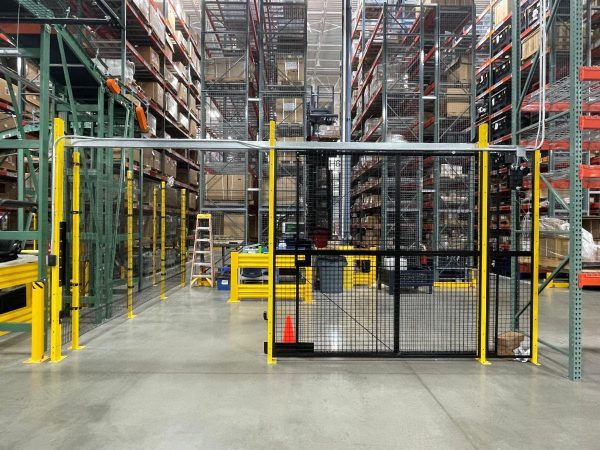
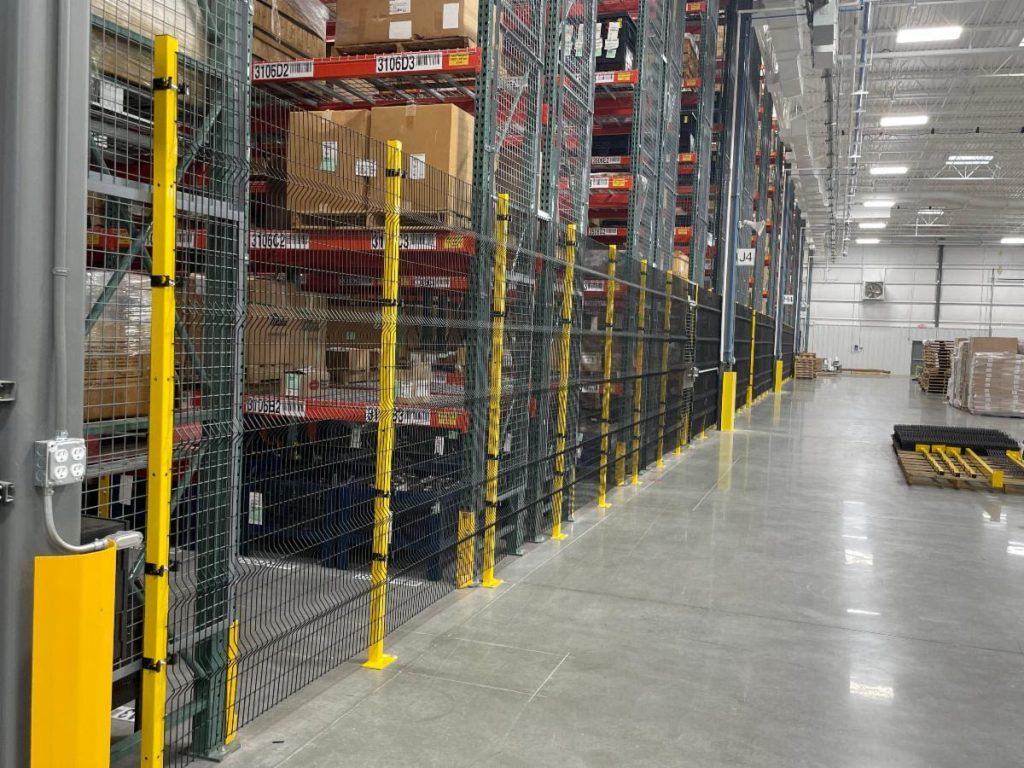
By contrast, wire mesh guarding systems offer a tactile and visual deterrent that cannot be accidentally ignored. They define clear boundaries, can be customized for machine access, and can be tailored to withstand high-impact zones—providing both safety and confidence in production reliability.
Regulations Are Evolving—So Should Guarding Solutions
The integration of robotics and automated systems into manufacturing processes has pushed regulatory bodies to reevaluate best practices. Industry groups like the Association for Advancing Automation (A3) have recently developed updated standards that not only address equipment operation but also specify expectations for safe access, routine maintenance, and product changeover.
Guarding designs now need to account for more than just injury prevention, they must also accommodate operational protocols, such as standard operating procedures (SOPs) for entering a robotic cell or exchanging materials. As a result, more facilities are prioritizing flexible designs that support both regulation and workflow efficiency.
 Modularity and Scalability: Designing for the Future
A growing number of facilities are adopting modular guarding systems, and for good reason. As automation evolves, so do floorplans. Machines may be upgraded, replaced, or reconfigured based on changing demand and the guarding systems surrounding them must keep up.
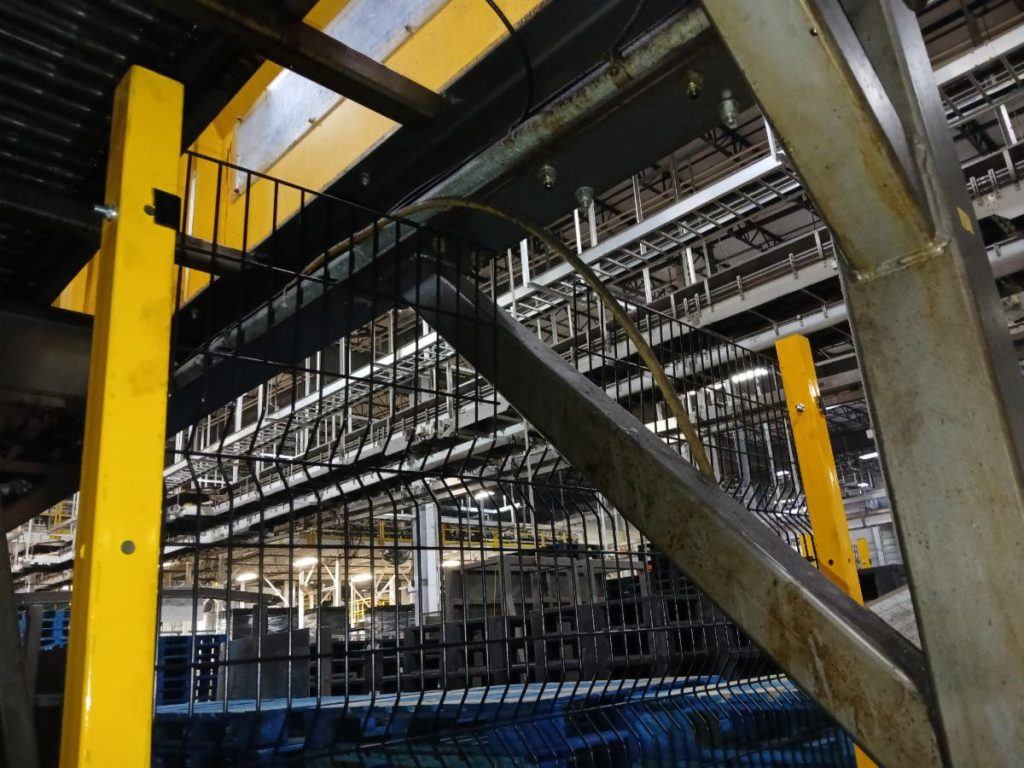
Modular wire mesh systems, particularly unframed panel designs, offer significant advantages in this context. These systems can be field-modified quickly—cut down, adjusted, or retrofitted without requiring new engineered drawings or extended lead times. For facilities that need to implement guarding after equipment is already installed, flexibility becomes critical. It enables safety upgrades to be completed during scheduled downtime, or during second or third shifts, minimizing disruption to first-shift production.
In contrast, fully framed guarding systems offer higher durability but often require a lengthy approval process and precise measurements. While essential for some high-impact applications, they can introduce delays when time is short or space is constrained.
Design Considerations in High-Throughput Facilities
Implementing an effective guarding system is never one-size-fits-all. The ideal solution balances safety, durability, accessibility, and installation speed. Some of the most important considerations include:
Access Needs: Sliding or swinging doors with integrated interlocks allow for controlled entry and exit. These systems can be wired to shut down machines the moment a door opens, preserving safety while enabling quick access for operators and maintenance teams.
Durability Requirements: Facilities must evaluate whether guarding will encounter external impacts from forklifts, AMRs, or other equipment. In such environments, framed mesh systems offer better structural integrity, while unframed systems may suffice in lighter-duty areas.
Customization Factors: Some applications call for specialized access windows, tight integration around unique machine layouts, or panel cutouts to accommodate electrical conduit and control boxes. Factoring these needs in early avoids costly rework.
Spatial Awareness: One common oversight is underestimating how much space guarding will occupy. Machine layouts that appear compliant on paper may infringe on pedestrian aisles or forklift paths once guarding is installed. Overhead obstructions such as piping or lighting can also interfere with panel placement if not considered ahead of time.
 Speed and Safety Don’t Have to Be at Odds
One of the biggest misconceptions in industrial design is that strong safety measures inherently slow down production. In reality, well-designed guarding systems streamline processes by clarifying movement, minimizing maintenance delays, and reducing unplanned stoppages due to human error or hazard exposure.
When safety and automation are treated as mutually reinforcing rather than opposing forces, the result is a more resilient and responsive facility. For facilities that need to implement custom safety solutions quickly, companies like SpaceGuard Products, a leader in wire mesh security solutions and protective guarding systems, has stepped in with modular offerings tailored to the demands of modern automation. SpaceGuard’s RageWire® robotic guarding system, for example, features unframed wire mesh panels that can be easily modified on-site without engineering approvals. This allows maintenance crews to respond to real-time challenges without delay, cutting down on installation timelines and improving facility responsiveness.
At the same time, SpaceGuard’s BeastWire® product line supports applications that require fully framed panels and a more rigid, engineered solution. By working with a provider that offers both options, manufacturers can have the flexibility to prioritize speed, durability, or a blend of both based on their specific needs.
The Road Ahead: Smarter Automation, Smarter Safety
As robotics continues to advance, so too will the conversation around industrial safety. Technologies like collaborative robots (co-bots), which feature built-in sensors that detect contact and stop movement, promise greater coexistence between humans and machines. But while these features reduce risk, they don’t eliminate the need for physical barriers—especially in shared spaces or environments where the unexpected can still occur.
At the end of the day, the goal is not just to meet safety regulations but to create a workplace where people and machines can operate in harmony. That requires not only smarter equipment, but smarter planning and flexible, scalable guarding solutions will continue to be a key part of that equation. Smart factories demand smart protection—and modular guarding will remain at the frontlines of that need.