
Bridge recognized as significant infrastructure for Long Beach
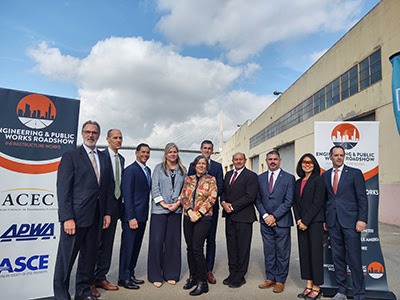
The Long Beach International Gateway Bridge was honored Monday for contributing to the national economy as a vital link in the global supply chain by three leading organizations representing designers and public operators of U.S. infrastructure. Representatives from the American Council of Engineering Companies, the American Public Works Association, and the American Society of Civil Engineers visited the Port of Long Beach as the first stop of a national “Engineering and Public Works Roadshow” that recognizes how critical infrastructure projects benefit the nation’s economy, jobs, and environment. “The need to invest in port infrastructure has never been greater, and we appreciate being recognized for building a bridge that is both visually stunning and critically important to the global supply chain,” said Port of Long Beach Executive Director Mario Cordero. “The Port of Long Beach is committed to building infrastructure to meet the challenges that lie ahead and maintain our status as a leading gateway for trans-Pacific trade.” “The Port of Long Beach continues to invest in infrastructure projects that are crucial to enhancing productivity, delivering greater efficiency and operating sustainably,” said Long Beach Harbor Commission President Sharon L. Weissman. “We are honored to receive this recognition and to showcase how infrastructure projects like the Long Beach International Gateway Bridge can lift the nation’s economy.” Built to last 100 years as a critical piece of infrastructure to sustain long-term growth at the Port of Long Beach, the bridge is high enough to allow large ships to easily access the Port’s Inner Harbor. As a major link in the national supply chain, the six-lane span is used by truckers to haul about 15% of America’s containerized imports. It also serves the region as an important commuter thoroughfare. The cable-stayed bridge opened in October 2020 as part of the state highway system and stands as a stunning local icon with two support towers reaching 515 feet into the sky and a multicolored LED lighting system.
R&M improves reliability for stainless steel producer
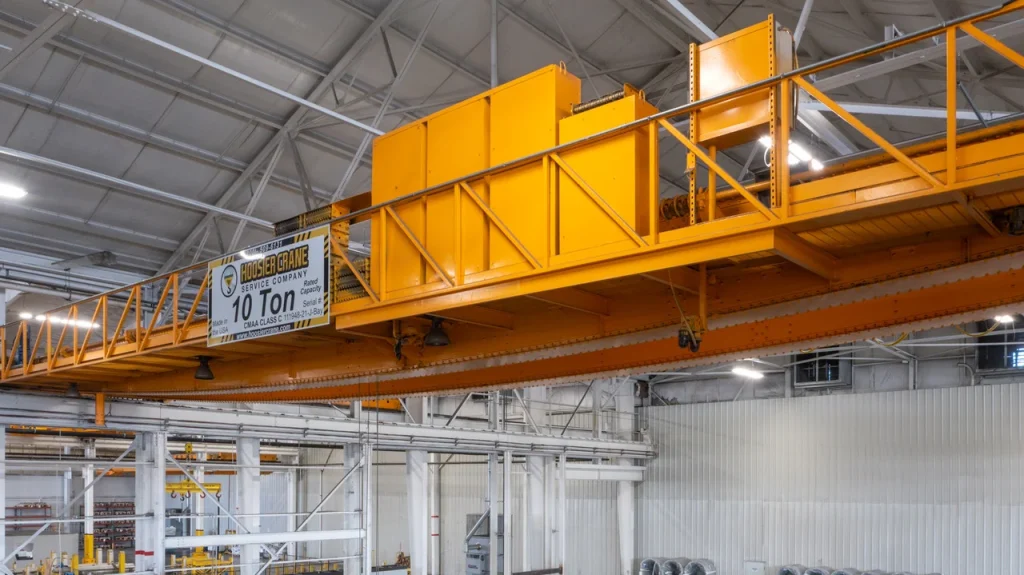
Overhead cranes from R&M Materials Handling, Inc. have provided a cost-effective and more reliable solution for a producer of stainless steel. Application Based in Fort Wayne, Indiana, Valbruna Slater Stainless, Inc. (VSSI) is part of the Valbruna Group. Founded in 1925, Valbruna has 2,500 employees and an annual output of approximately 250,000 tons of specialty steel. Production is primarily focused on stainless steel and specialty alloys, such as nickel alloys and titanium long products. As part of its investment in continuous improvement, Valbruna is constantly updating its production capabilities and experience. For VSSI, this included upgrading its overhead cranes, which are used to move finished goods and raw materials for stainless steel processing. Challenge VSSI wanted to replace two older DC-powered cranes with more powerful AC cranes – but still retain the existing bridge structure. The older cranes had become unreliable, and the hoists were heavy compared to more modern solutions. Getting new cranes to work on the current bridge would ensure that the upgrade was highly cost-effective. Solution VSSI turned to Hoosier Crane Service Co. for expert assistance. HCS, founded by Tom and Cherie Schmidt, is a family-owned business headquartered in Elkhart, IN. Hoosier Crane has grown throughout the last 20 years from 4 employees to approximately 100 employees and is presently providing overhead crane material handling solutions throughout the USA. The older DC cranes were each equipped with 20-ton and 7-ton dual hoists on one trolley. Hoosier Crane’s original plan was to keep a center line bridge drive motor on both but replace the DC motors with larger AC motors. However, Hoosier Crane decided that the more viable solution was side-mounted SEW Euro Drive gearboxes with motors. Hoosier Crane removed the two existing hoists and replaced them with new R&M 10-ton hoists. Hoosier Crane installed the new hoists on a new ASCE rail. These new hoists were one-third of the weight of the old hoists. Results Using the R&M 10t hoists, Hoosier Crane was able to deploy a more reliable, lightweight, and modern system without replacing the bridges. Patrick Hilger, Engineering and Maintenance Manager at Valbruna Slater Stainless, Inc. said: “Hoosier Crane has been a reliable service vendor for Valbruna for years. We were looking for a reliable, cost-effective solution that could still be designed to fit the existing bridge structure. Using the existing bridge structure saved cost on installation and material.” Derek Bukrajewski, Director of Service for Hoosier Crane, said: “R&M has always been a reliable option in the past. In this case, it fits the footprint for what both HCS and the customer were trying to accomplish.”
UgoWork named one of Canada’s Companies-to-Watch in Deloitte’s Technology Fast 50™ program
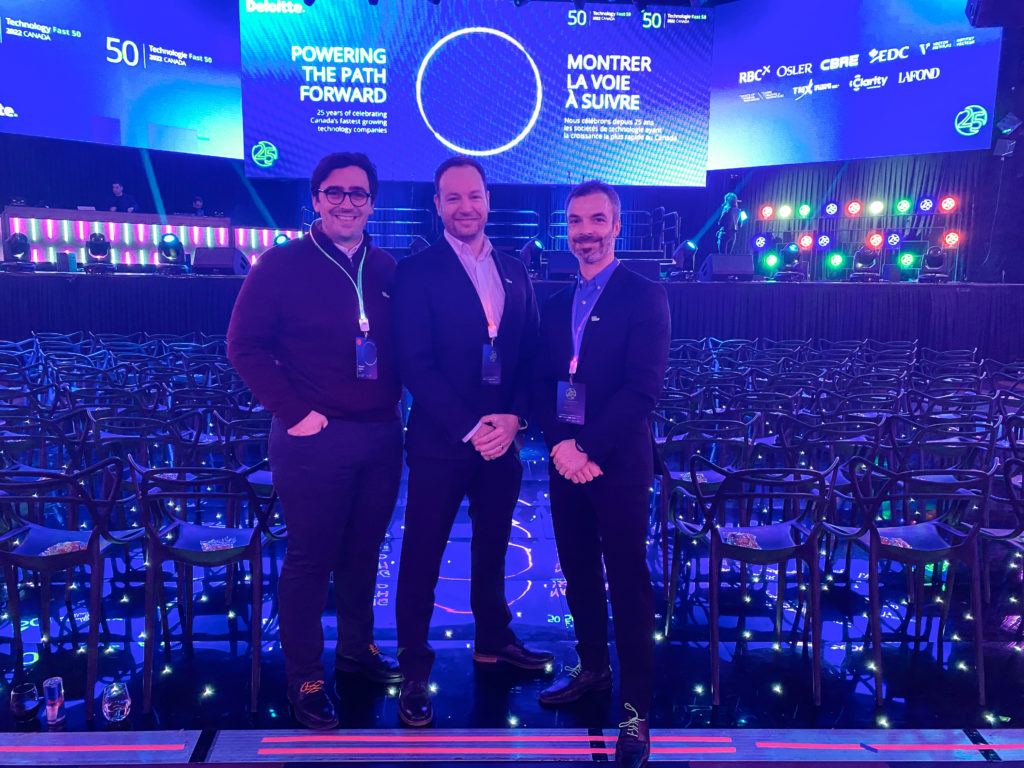
UgoWork™, a Canadian energy solutions provider specializing in the material handling industry, received a Companies-to-Watch award as part of the 2022 Deloitte Technology Fast 50™ program. Celebrating its 25th anniversary, the award recognizes emerging companies based on their revenue growth percentage. “At UgoWork, our mission is to enable organizations to really focus on their core business all while taking control over their material handling operations,” said Philippe Beauchamp, President and CEO of UgoWork. “We thank Deloitte Canada for this recognition and we maintain our commitment to expanding the reach and innovation of our lithium-ion energy solutions with our data-forward approach.” The Companies-to-watch category is a ranking of Canadian technology companies with the potential to be future Technology Fast 50™ candidates by their revenue growth percentage over their last three years of operation. The winners of this year’s companies to watch category must have a minimum of $50 thousand in 2019. “Congratulations to this year’s Companies-to-Watch winners,” commented Anders McKenzie, partner and national leader for the Technology Fast 50 program at Deloitte Canada. “These companies have demonstrated promising growth trajectories and an exemplary ability to seize opportunities even in the face of a challenging economic context. This sets them apart as members of an emerging cohort of tech leaders in Canada. We look forward to keeping an eye on their progress in the months and years to come.”
HC Forklift America Corporation introduces the 26,000-36,000lb XH Series high voltage Lithium-ion Pneumatic Forklift

HC Forklift America Corporation (HCFA), a wholly-owned subsidiary of Hangcha Group, announced the XH Series High Voltage Lithium-ion Pneumatic Forklift with a 26,000-36,000lb load capacity. This innovative series represents a breakthrough in high-capacity forklifts. Designed around high-voltage (541V std. / 608V opt.) lithium-ion battery packs, the XH Series can outperform comparable I.C.-powered high-capacity forklifts. These forklifts offer reduced noise levels, zero emissions, and faster travel/lift speeds. The XH Series High Voltage Lithium-ion Pneumatic Forklifts also provide owners with a total cost of ownership that is 90% less than comparable I.C.-powered high-capacity forklifts. “Hangcha again is staying ahead in the Lithium-ion Material Handling Market Place. Super power, low energy usage, high performance, and exceptional value come together in the new high-voltage XH Series from Hangcha Group. This is lithium at its best!” Frank Russo, Vice President of Sales and Dealer Development The maintenance-free, high-voltage Lithium Iron Phosphate (LiFePO4) battery packs allow the forklift to rapid charge to 100% in under 1.5 hours and opportunity charge as needed. The battery packs, controller, and electric motors are also water-cooled. Combined with the IPX4 and IP67 water and dust ratings, these forklifts will reliably work in harsh operational environments. This makes it perfect for steel mills, ports, and lumber yards. As with all Hangcha’s equipment, the XH Series High Voltage Lithium-ion Pneumatic Forklift is designed with safety in mind for both operators and mechanics. The XH Series features high voltage interlock, insulation monitoring, and automatic deceleration while turning. These forklifts also feature an MSD maintenance switch allowing mechanics to power down the machine with one click. Faster travel & lift speeds, zero emissions, rapid charging, and a 90% lower total cost of ownership than a comparable high-capacity I.C. pneumatic forklift are just a few of the reasons that the new XH Series High Voltage Lithium-ion Pneumatic Forklift is helping Hangcha to re-imagine power.
House action would undermine future collective bargaining, White House recommendations
Following Speaker Pelosi’s announcement that the U.S. House of Representatives would take up new legislation separate from a bill to implement the neutrally arbitrated agreements already ratified by the majority of unions, AAR President and CEO Ian Jefferies issued the following statement: “Just last night, President Biden spoke clearly on the appropriate need for Congress to implement the agreements already ratified by eight of the twelve unions, which represent a clear pattern. Doing so was never anti-worker, in fact, it would reward all rail workers with historic deals – particularly those who already ratified – as well as the millions of workers across the economy who would suffer from a rail strike.” “Now, after the Speaker stated publicly this is the most prudent path, the House is considering a new measure to the equation based on the wholly false premise that rail employees do not get paid sick leave. The ramifications of approving such a measure would disincentivize future voluntary agreements for freight railroads, Amtrak and airlines if a party in bargaining believes it can obtain a better deal from Congress than it could through good faith negotiations and the statutory PEB process under the Railway Labor Act. This ignores over 100 years of precedent and clearly usurps longstanding bargaining procedures.” AAR stresses a few points for lawmakers and the public to understand: Every single union gets some form of paid sick leave. The terms of these sickness benefits are the product of multiple rounds of collective bargaining in addition to extended paid sickness benefits not enjoyed by employees in any other industry. These benefits are no accident – they are the result of decades of collective bargaining in which unions have repeatedly agreed that time off for shorter illnesses may be unpaid in favor of higher compensation and more generous long-term sickness benefits. Rail employees are in the top 7 percent of U.S. wage earners. Most rail workers are scheduled employees who work predictable schedules and have ample paid time off. On average workers have three weeks of vacation and up to 14 days of holidays and personal leave days. More senior employees receive up to five weeks of vacation for a total of up to seven weeks of paid leave. The Presidential Emergency Board (PEB) took concerns about paid leave into account when they released the very generous recommendations on which the tentative agreements are based. Jefferies concluded: “Now is not the time for Congress to put its thumb on the scale and selectively add to labor contracts, including agreements already ratified by employees, created through a multi-year process. It is in direct conflict with the President’s statement and the Speaker and Congress must think of the long-term implications of such actions. A vote for terms above and beyond those recommended by the PEB, agreed to at the bargaining table, and ratified by a majority of the unions and voting employees, would upend the time-tested bargaining process in rail and other industries.”
Millwood acquires Southworth Wood Products
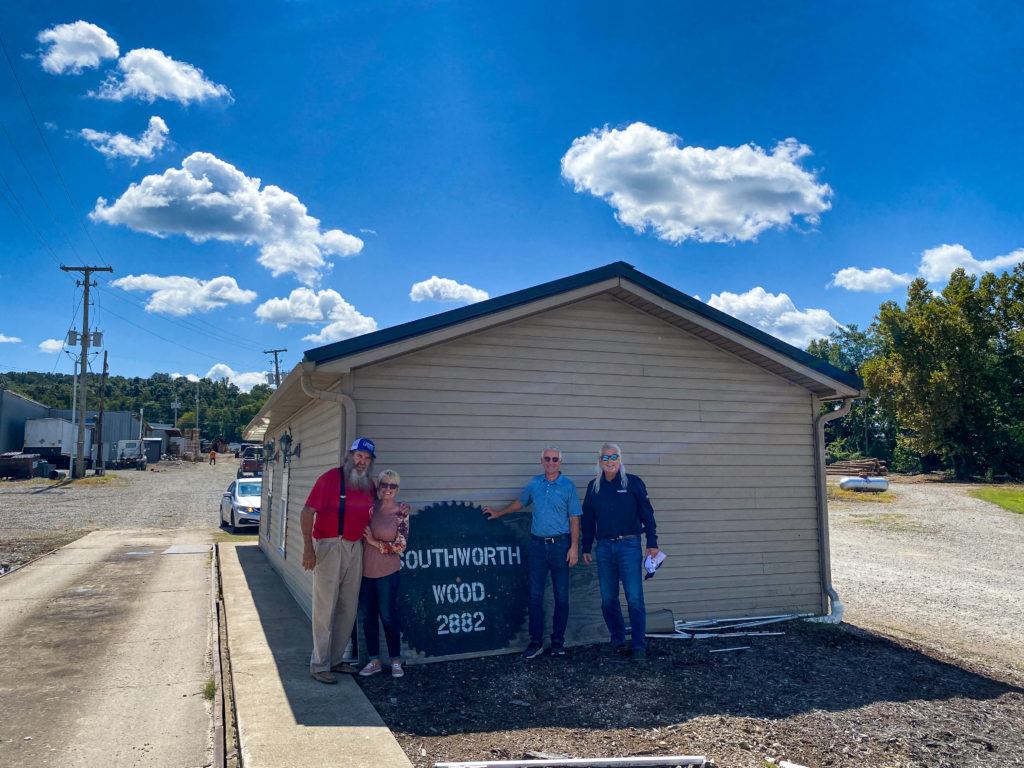
The acquisition is Millwood’s second Waverly, OH location Millwood, Inc. acquired its second location in Southern Ohio and 35th location nationwide. Millwood Co-owners and Partners Chip Trebilcock and Steve Miller finalized the acquisition on September 1. This new location sits on 51 acres and will be referred to as MillTree East: A Millwood, Inc. Company and is just minutes from Millwood’s original MillTree West location in Waverly, OH. MillTree East is a circle mill that is currently cutting material that is resized with band saws for pallet material. Custom crates and pallets are also built at this new location. “This mill here allows us to do more custom lengths than our original Waverly scragg mill,” Millwood General Manager Lionel Trebilcock said. “This acquisition will allow for growth for the company and the team members working at our MillTree operations.” Railroad ties are also being cut at this new Millwood location. “When pallets or cut stock is down a little bit, we can switch gears and cut these ties,” Trebilcock said. “This is a new product that we’ve never done before.” Millwood’s mission is that all who come in contact with Millwood would clearly see the love of Christ in all we do and is at the top of our acquisition checklist. “The Southworth Wood Products acquisition just made sense. It fits with our mission and is just minutes away from our MillTree West location,” Trebilcock said. The two MillTree locations will work in tandem to meet the needs of our customer base in this region.” The team at this new location all have transitioned into the Millwood family and will work hand-in-hand with the MillTree West location to meet the demands of our customers in this area of Ohio. “Located only three miles from our existing sawmill and pallet operation in Waverly, acquiring Southworth presented a unique opportunity for us to not only increase our capacity but also our product offerings to our customers in Central and Southern Ohio,” Sales Director Lee Evans III said. Rich Clark, who now works as a district manager, will oversee the operational and chaplaincy responsibilities for both MillTree locations. “The team and I at MillTree West are very excited to work with and help develop and grow the MillTree East team,” Clark said.
HUBTEX RoxX: Maneuverable compact forklift for heavy loads
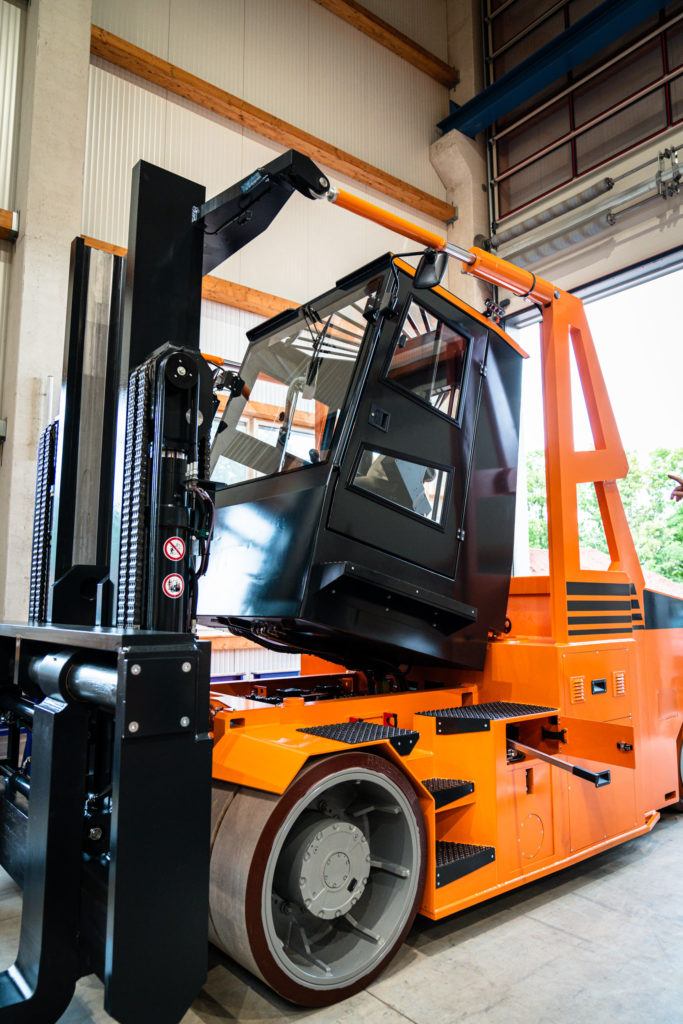
From coils to large paper rolls and tooling – the newly expanded range of 8t to 30t trucks in the RoxX compact forklift series from HUBTEX, solve specific challenges across many industries. Heavy loads can be handled in the tightest of spaces, thanks to the unique electric drive and steering systems with great efficiency. When transporting heavy loads, users often find themselves in a dilemma. Industrial trucks have to be designed to handle heavy loads, yet most units are restricted by their length in cramped spaces. In this environment, the RoxX comes into its own. The compact forklift series from HUBTEX combines a high load capacity with a compact design. This is because the industrial truck is up to 25% narrower and around 20% shorter than classic forklift trucks and is available in load classes from 8t to 30t. The optional electric steering saves even more space and is 30% more efficient than trucks with electro-hydrostatic drives. And, thanks to a new, patented single-wheel steering system, the turning radius is also significantly reduced. The reduction is around 50% compared to the standard steering system. All-round visibility makes transporting loads safer and more efficient In order to give customers a high degree of flexibility in addition to the wide range of load capacities, HUBTEX offers three types of lift mast. The masts range from a 2-stage Simplex mast with a lift height of 3,400 mm as standard, a 2-stage mast with full free lift (Duplex), or a 3-stage mast with full free lift (Triplex). The three lift mast variants have something in common: Not only can they pick up heavy loads and move them safely, but it also provides the driver with an unrestricted panoramic view from the driver’s cabin. All models can be tilted from −5 degrees to +5 degrees. HUBTEX also designs additional mast solutions to meet individual customer requirements. The spacious driver’s cabin offers an outstanding panoramic view thanks to its large windows and optimally designed lift mast. Yet, the cabin can also be easily folded down to enable fast response times and easy maintenance in the event of service. To do this, a lever attached under the cabin is removed and used next to the steps. The driver then pumps the cab up to the stop position, like a jack. A safety bolt engages and prevents the cabin from falling. In addition, the modular design of the heavy-duty compact forklift allows optimal access for maintenance and repair. Finally, the easy-to-use multifunction display HIT3 terminal provides a continuous overview of all the key data for the truck.
Raymond celebrates a century of innovation with induction into the Logistics Hall of Fame
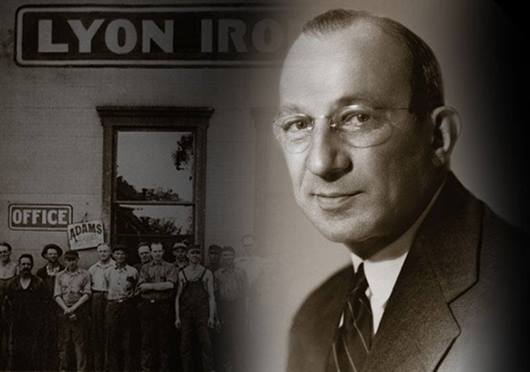
Group posthumously recognizes George Raymond Sr. for his transformational contribution to the logistics industry The Logistics Hall of Fame posthumously lauded The Raymond Corporation’s founder, George Raymond Sr., as an inductee for his invention of the first double-faced wooden pallet. The organization celebrated this year’s honorees at a gala reception with German Transport Minister Volker Wissing on Nov. 29 in Berlin. “It’s an honor to have our founder recognized for a pivotal innovation that changed the trajectory of the logistics industry,” said Michael Field, president and CEO of The Raymond Corporation. “The invention of the double-faced wooden pallet centered on helping customers bring their operations to a new level of performance. Today, we continue George Raymond’s legacy by finding innovative intralogistics solutions that help customers run better and manage smarter through our lean-based approach of optimize, connect, and automate.” Just this year, The Raymond Corporation has unveiled advancements that allow warehouse managers to get more out of every square foot of their operation — from the iWAREHOUSE® FieldSense, a robust proximity notification system designed to alert pedestrians and lift truck operators when they come within a predefined distance of properly equipped trucks and pedestrians — to the High Capacity Orderpicker, which allows picking a full rack higher than most models on the market. The intralogistics leader also launched its next-generation Virtual Reality Simulator, an award-winning, flexible, scalable teaching tool that uses the latest immersive technology to bring new hires up to proficiency more quickly and continue expanding operator skills for reduced turnover. “It’s incredible to see the lasting impact my grandfather had and how his spirit of innovation lives on today at The Raymond Corporation,” said Steve Raymond, retired president of Raymond Handling Concepts Corporation and grandson of Raymond’s founder. “One hundred years later, the double-faced wooden pallet remains an industry standard, helping to transport an ever-increasing amount of goods around the globe. Thank you to the Logistics Hall of Fame for this honor.” Developed in the 1930s by George Raymond Sr. and his colleague, William House, the double-faced wooden pallet permits the high stacking of crushable goods. In a show of commitment to the industry, Raymond Sr. donated the patent to the industry soon after it was awarded. The Logistics Hall of Fame honors leading figures who have made outstanding efforts to promote the development of logistics and supply chain management. In addition, the organization aims to document outstanding logistics achievements and encourage and promote industry innovation. In this way, it raises public awareness of the logistics industry’s performance capability and innovative drive, helping to underpin the competitiveness and improve the image of the entire sector.
Episode 337: Kindred at MODEX 2022
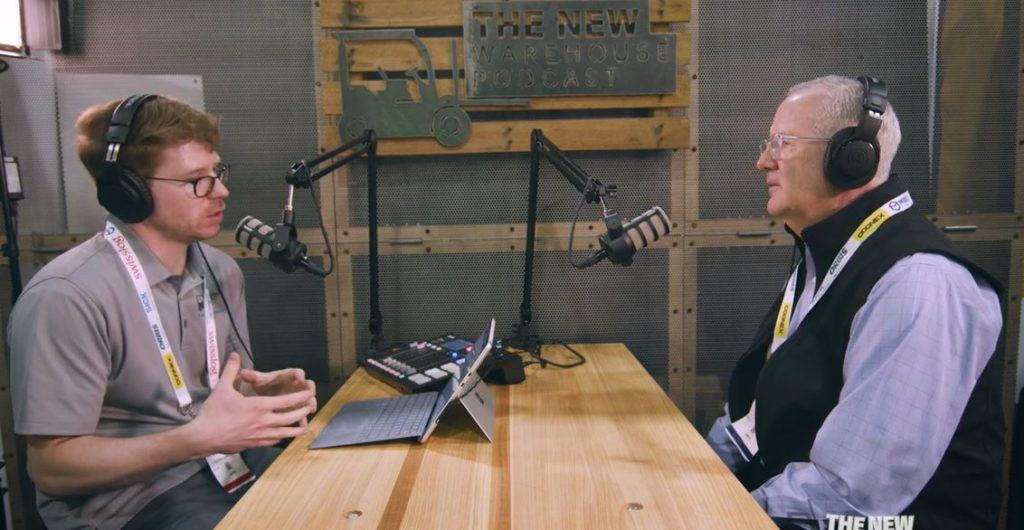
Kindred, part of Ocado Group, joins The New Warehouse podcast at MODEX 2022 to share how their robotics solutions improve productivity. With a focus on all different aspects of fulfillment center operations, Kindred strives to enhance the human worker through AI robotic solutions. Since Kindred began deploying robots in 2017, its robotic solutions have completed over 500 million transactions for companies like Gap, J.Crew, and Under Armour. Key Takeaways Joe shares how Kindred sees a lot of excitement from its users as they interact with their products, as the experience makes them feel more like a supervisor. One such product is Kindred’s Sort AI Powered Putwall Robot, which replaces a manual put wall. Sortation goes from managing one put wall to the same person working four quadrants, thus enhancing worker productivity. Joe shares how attendees at this year’s show are more aware of the problems they must solve, like throughput, labor shortages, and quality, but they need to figure out how to solve them. This year’s attendees want to leverage technology to push more inventory through their building. Shows like MODEX and ProMat go a long way in visualizing the various solutions within your operations. The latest product from Kindred is the INDUCT AI-Powered Robotic Work Cell. Joe explains how the INDUCT utilizes the same AI, machine learning, and grasping as the SORT but removes the steel frame allowing the unit to pick small products up to eight pounds and sort as needed. The New Warehouse Podcast EP 337: Kindred at MODEX 2022 podc
Blue Giant Equipment announces Biasutto as Director of Product Management
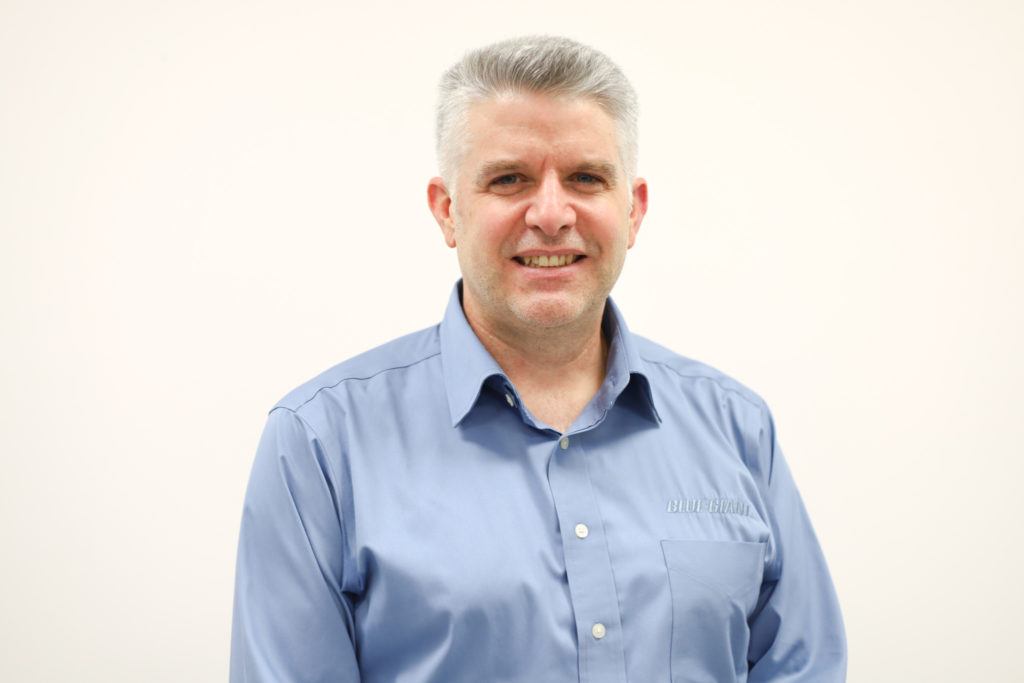
Blue Giant Equipment Corporation (Blue Giant) has announced Gerard Biasutto as its Director of Product Management. Gerard began working for Blue Giant as the Engineering Manager in 2008. Since then, Gerard has supported product design, manufacturing, and sales efforts through his involvement in Technical Development/Sales, Customer Support, Marketing, and Engineered Solutions. Gerard has represented Blue Giant in its membership in the MHI Industry Groups of LODEM (Loading Dock Equipment Manufacturers) since 2012 and LIFT (Lift Manufacturers Association) since 2020. In October 2018 Gerard was elected as Vice-Chair and in October 2022 became Chair of LODEM demonstrating his leadership and commitment to the industry. Steve Barbosa, President, stated “Gerard has been an integral part of Blue Giant for many years. His extensive knowledge and dedication to the company and this industry made him the obvious choice for this position. We know Gerard will succeed in this position and continue to bring value to Blue Giant.” With over 14 years of experience at Blue Giant, Gerard is well suited for the Director, Product Management position. His wide range of skills and expertise will be an asset to overseeing the full product planning cycle including product evaluation, positioning, and new product introduction.
MHEDA CEO Liz Richards announces retirement

After 27-plus years at the helm of the Material Handling Equipment Dealers Association (MHEDA), Liz Richards, CEO has announced that she will be retiring on December 31, 2023. “It has been an incredible experience to work with so many professionals in MHEDA, the Board of Directors, the membership, and of course, the amazing team of associates who work tirelessly to bring value to our members. It has been a great ride for 27 years and I look forward to turning the reins over to the next leader who will undoubtedly bring a refreshing and innovative new chapter to MHEDA! I am honored and humbled to have been able to serve this great industry.” – Liz Richards, MHEDA CEO The MHEDA Board of Directors has hired Steve Riege with Ovation Leadership to assist with the search for her replacement. Interested applicants are encouraged to learn more about the position by reviewing the information on MHEDA’s website.
KION Group plans expansion of production at Reutlingen site
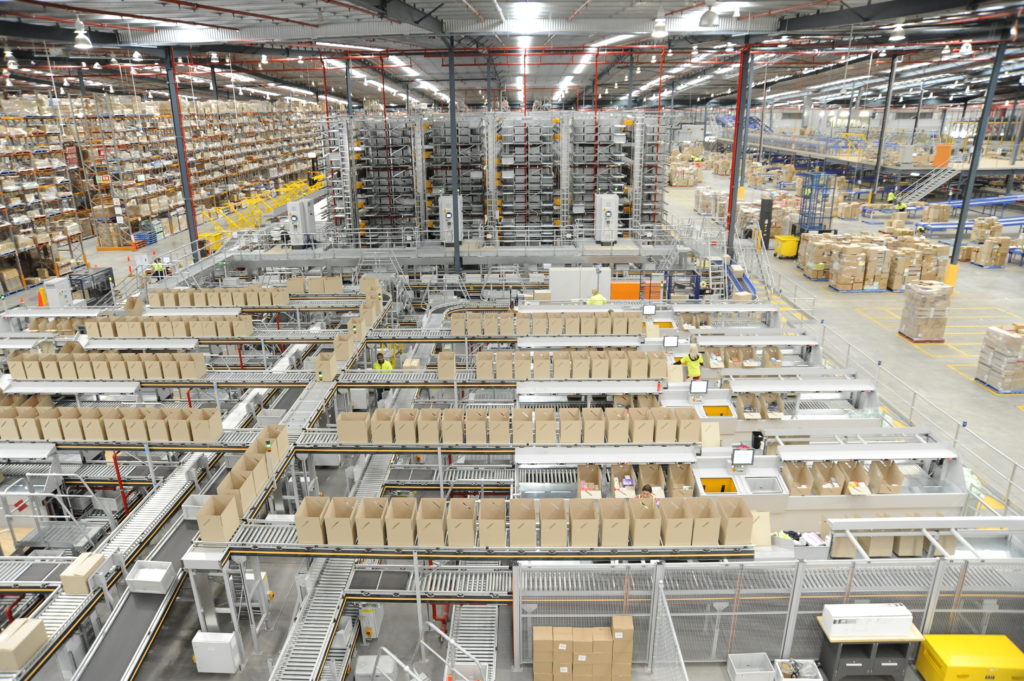
Plan to increase production by up to 60 percent KION Warehouse Systems (KWS) company premises are to be expanded by at least 2600 square meters New build on the south side of the plant in close cooperation with political bodies and in compliance with nature conservation legislation A clear commitment by KION to KWS and Reutlingen KION Group is strengthening its position in Reutlingen with plans to expand its plant. The intralogistics group is investing a double-digit million Euro amount in the project. “By expanding the production by some 60 percent, we are sending an important message about the future. We expect to see sustainable market growth in the field of narrow aisle trucks and vertical order pickers and have planned accordingly,” says Rob Smith, CEO of KION GROUP AG. “Expanding the site will help to further strengthen our excellent position as a global intralogistics provider.” The subsidiary KION Warehouse Systems (KWS), which is based in the district of Mittelstadt, is the Group’s competence center for the development and production of system technology vehicles for the KION brands. Volker Bonk, Managing Director of KION Warehouse Systems, presented together with Thomas Keck, Mayor of the City of Reutlingen, Roland Wintzen, Deputy Mayor responsible for Finance and Economic Affairs, and Wilhelm Haug, District Mayor of Mittelstadt the current planning status at an on-site meeting. The plan is to expand the existing production halls by moving the plant bypass road, with the aim to extend the production space to the south. KWS intends to buy the wooded area there, which is currently owned by the city of Reutlingen. This solution will enable internal production processes to be significantly improved using minimal additional space. Overall, the expansion will comprise at least 2600 square meters, 2200 of which are for the expansion of the production hall. Extensive investments are also planned for the existing facilities and machinery, as well as a general modernization of the processes on site. Once the relevant bodies have issued their approval, construction is planned to start in fall 2023, with the expanded production facilities in operation from 2025. “KION’s location policy and corporate strategy is both flexible and reliable. With this project, the intralogistics group is once again sending a positive signal in terms of the economy, the labor market, and specifically Reutlingen as a location for business,” says Thomas Keck, Mayor of the City of Reutlingen. More Than 400 Jobs Safeguarded in Reutlingen The increase in production capacity will also have an impact on employment at the site: The workforce has already grown from 250 employees in 2010 to over 400 today. Around 130 of these KWS employees currently come from the city of Reutlingen and 280 from the district of Reutlingen. The planned expansion will safeguard the 400 existing jobs and enable the creation of new ones. “Reutlingen is the biggest and most important site for our global narrow aisle trucks business,” says Volker Bonk, Managing Director of KWS. The planned investment makes one thing clear, he says: “Our heart is here in the city. This expansion will give us even more flexibility and ensure that KWS can maintain an optimal position in the dynamic intralogistics market for years to come.” In order to meet the legal planning requirements for the expansion to the south of the plant, a development plan process has to be completed and a change needs to be made to the land-use plan. The development plan is on the agenda for Mittelstadt District Council today, November 28, 2022. KWS is already working in close consultation with the relevant bodies in the city. The planned expansion will also be carried out in strict compliance with nature conservation regulations. As part of this requirement, external areas to provide the necessary forestry and nature conservation compensation have to be found during the development plan process. Suitable reforestation areas have already been identified within the urban area of Reutlingen in preparation for this. The following areas, in particular, are being considered for reforestation: the “Hinterer Zaun” and “Eichwäldle” areas in the district of Reutlingen and the “Oberer Auchtert” area in the district of Mittelstadt.
Episode 336: Boston Dynamics

Perhaps you know Boston Dynamics from their viral videos of dancing robot dogs or their humanoid robot that moves with human-like agility. Did you know they developed a robotic solution to automate container unloading? On this episode of The New Warehouse Podcast, Nicolas De Keijser, Director of Sales at Boston Dynamics, shares how their robotic solutions perform undesirable tasks in environments that can be unsafe for humans. Be sure to listen to find out how and why Boston Dynamics took on the pesky problem of container unloading. Key Takeaways Boston Dynamics is an engineering and robotics design company that has gained worldwide fame through viral videos. Nicolas adds they are primarily known for their development of three different products. Spot is the robot dog used in several industries for inspections, creating digital twins, and security. Atlas is a humanoid robot that is nothing short of amazing with its dynamic movement and human-like agility. Lastly, Stretch is a purpose-built mobile robot for the warehouse and logistics industry. Nicolas explains how Boston Dynamics founder Marc Raibert also started the leg lab at MIT. He adds that leg movement opens up many capabilities in specific environments compared to wheeled movement. However, as the Stretch robot developed, the team at Boston Dynamics learned that neither legs nor wheels built for speed were necessary and that a stable platform was the best fit for moving and sorting boxes with Stretch. Kevin and Nicolas discuss the challenge of implementing robotics for container and trailer unloading. This type of work is laborious for humans, strenuous, and can be monotonous, which makes this task ideal for automation—realizing that no containers in the world use automation for unloading made solving this problem more attractive. However, the variability of this task has been a barrier to a robotic solution. With the ability to operate in tight spaces, Stretch can go from one container to the next and unload boxes quickly. Nicolas shares the evolution of Spot at Boston Dynamics and how they ultimately solved the unique challenge of container unloading. The New Warehouse Podcast EP 336: Boston Dynamics
Why employees don’t take ownership

I recently had a conversation with a C-suite leader of a company that has 6,000+ employees who were implementing a significant organizational structure change to build in more accountability and ownership across 50 interconnected departments. The goal was to create an umbrella team who would be in charge of ensuring there was more transparency and communication between each department. This layer would aggregate and disseminate information, along with being the one point of reporting to upper management. On the surface, this may sound good, but it’s actually a terrible idea. The core problem that existed wasn’t really communication, but rather behavior. When one department couldn’t do its job because another department was dragging its heels, it simply pointed the finger at the culprit. Of course, the organization wanted these departments to collaborate and communicate, instead of passing the buck. Installing a “mothership” layer seemed like a logical choice. Yet keep in mind, this layer didn’t have any of these department leaders reporting to them, nor influenced or impacted their performance reviews, compensation, or budgets. However, another layer is just that – more bureaucracy and more bloat. While the layer may identify problems and make recommendations to departments A or B about how to resolve a stalemate, it doesn’t have any power to actually resolve it. And in many cases, these types of gaps between departments have more to do with infrastructure, internal processes, interpersonal issues, or more often – the wrong focus. Why focus? Employees, or in this case department leaders, don’t take ownership of bigger issues (such as a process getting bogged down) because the focus is on the wrong thing. For example, department A might be deemed responsible for X and department B might be responsible for Y. X and Y impact and influence each other. Both departments work on their own activities and inherently blame the other department if they can’t accomplish X or Y. However, what each team should be both responsible for is Z. X and Y are only the tactical activities, initiatives, processes, or programs to achieve Z. Having the right focus – in other words, outcome – is where both departments should be incentivized, rewarded, and measured on. We often mentally get tied up with the responsibilities and activities of a department, such as “sales teams” or “customer service”. We focus on the fact that sales teams need to make quotas, and customer service needs to efficiently resolve questions and issues. This is simply doing the day-to-day business – it’s not collaborative, and can be in certain cases, inherently at odds. For instance, one department might be responsible for maintaining stability and consistency while another is responsible for creating and implementing new ideas. One will naturally push back on the other. However, when departments are incentivized and operate with a bigger, more strategic focus, the behavior changes. Going back to our C-Suite leader, if departments A and B are both responsible for delivering on shared goal Z, then the focus shifts from “my camp vs. your camp” to “our collective objective”. While we often want to add layers or insert one person to be responsible and accountable for making the proverbial machine run more effectively, we overlook why it’s not running effectively in the first place. In sports, when a team is underperforming, the coach gets replaced. However, businesses are different. They aren’t a single team, even though we want to believe they are. They are multiple teams all playing in the same league and all trying to move to the top of the table. Smart business leaders understand to get everyone collaborating and rowing in the same direction, you need to have shared outcomes and a focus on the bigger picture, rather than adding another layer of management and bureaucrats. About the Author Andrea Belk Olson is a keynote speaker, author, differentiation strategist, behavioral scientist, and customer-centricity expert. As the CEO of Pragmadik, she helps organizations of all sizes, from small businesses to Fortune 500, and has served as an outside consultant for EY and McKinsey. Andrea is the author of three books, including her most recent, What To Ask: How To Learn What Customers Need but Don’t Tell You, released in June 2022. She is a 4-time ADDY® award winner and host of the popular Customer Mission podcast. Her thoughts have been continually featured in news sources such as Chief Executive Magazine, Entrepreneur Magazine, Harvard Business Review, Rotman Magazine, World Economic Forum, and more. Andrea is a sought-after speaker at conferences and corporate events throughout the world. She is a visiting lecturer and startup coach at the University of Iowa, a TEDx presenter, and TEDx speaker coach. She is also an instructor at the University of Iowa Venture School. More information is also available on www.pragmadik.com and www.andreabelkolson.com.
U.S. Rail Traffic for the week ending November 19, 2022
The Association of American Railroads (AAR) has reported U.S. rail traffic for the week ending November 19, 2022. For this week, total U.S. weekly rail traffic was 491,794 carloads and intermodal units, down 3.2 percent compared with the same week last year. Total carloads for the week ending November 19 were 235,887 carloads, down 0.6 percent compared with the same week in 2021, while U.S. weekly intermodal volume was 255,907 containers and trailers, down 5.6 percent compared to 2021. Four of the 10 carload commodity groups posted an increase compared with the same week in 2021. They included grain, up 2,039 carloads, to 26,624; coal, up 1,766 carloads, to 66,485; and nonmetallic minerals, up 463 carloads, to 31,558. Commodity groups that posted decreases compared with the same week in 2021 included chemicals, down 3,081 carloads, to 31,074; motor vehicles and parts, down 1,030 carloads, to 13,631; and forest products, down 864 carloads, to 9,033. For the first 46 weeks of 2022, U.S. railroads reported a cumulative volume of 10,686,013 carloads, up 0.2 percent from the same point last year; and 12,091,589 intermodal units, down 4.8 percent from last year. Total combined U.S. traffic for the first 46 weeks of 2022 was 22,777,602 carloads and intermodal units, a decrease of 2.5 percent compared to last year. North American rail volume for the week ending November 19, 2022, on 12 reporting U.S., Canadian and Mexican railroads totaled 341,621 carloads, up 3.2 percent compared with the same week last year, and 338,616 intermodal units, down 0.2 percent compared with last year. Total combined weekly rail traffic in North America was 680,237 carloads and intermodal units, up 1.5 percent. North American rail volume for the first 46 weeks of 2022 was 31,230,674 carloads and intermodal units, down 1.9 percent compared with 2021. Canadian railroads reported 82,709 carloads for the week, up 12.8 percent, and 65,975 intermodal units, up 24.8 percent compared with the same week in 2021. For the first 46 weeks of 2022, Canadian railroads reported a cumulative rail traffic volume of 6,716,105 carloads, containers, and trailers, down 1.4 percent. Mexican railroads reported 23,025 carloads for the week, up 11.7 percent compared with the same week last year, and 16,734 intermodal units, up 9.4 percent. Cumulative volume on Mexican railroads for the first 46 weeks of 2022 was 1,736,967 carloads and intermodal containers and trailers, up 3.7 percent from the same point last year. To view the weekly rail traffic charts, click here.
New challenges of using remote workers

The pandemic has changed workplace culture, probably forever. As events unfolded over the last few years, many employers shuttered their doors completely or scaled back to using only essential workers at their regular workplace. Remote workers became a commonplace occurrence rather than an unusual situation, even for traditional work-on-site businesses. Now that health conditions have generally improved, should your operation return to pre-pandemic business as usual? Some company leaders are advocating for a complete return while others are comfortable with a remote workforce. Still, others prefer a hybrid. On one hand, traditionalists with “production paranoia” maintain that output suffers when employees work remotely and that there are substantial benefits to keeping all workers on the premises. On the other hand, some businesspeople see productivity rising with work-at-home employees and have even expressed concern that they’re working too hard and may experience burnout. These two schools of thought appear to conflict with each other — but they actually share a common objective. Old School: Don’t Trust Workers Traditionally, supervisors have been reluctant to allow employees to work from home mainly because they feared workers would be distracted or simply goof off. How could you be sure that they weren’t watching TV, doing household chores, or taking a nap? The problem was that the office couldn’t monitor the work being performed at home. Now, however, it’s possible to track keystrokes, mouse movements, and onscreen activities to determine exactly what a worker is doing and when. Some jobs that aren’t heavily connected to computer functions are more difficult to monitor but tracking other functions may be possible. Monitoring may seem like an acceptable compromise for some workers motivated to continue working from home. But many employees are likely to push back on monitoring as a form of surveillance and indication of distrust. Is there a better way? New School: Expect More from Workers A new wave of managers has embraced the concept of remote workers. In fact, some supervisors expect their remote workers to deliver even more than they did before the pandemic hit. After all, the reasoning goes, at-home workers no longer spend time commuting. Usually, their “commute” involves no more than walking from one room of their home to another room. So they have more time to devote to work. Also, workers aren’t distracted by social interaction with coworkers. There’s no one to chat with around the water cooler. They’re not dissecting last night’s big game or their favorite TV shows. Again, this leads to a greater focus on work — the ultimate goal of many managers. But it does create a different set of problems. Breaks from the daily grind are still necessary. Keeping employees in constant work mode while they’re home — which means they’re putting in even more hours than usual — isn’t necessarily the answer, either. Find the Proper Balance A general desire for a greater work/life balance has largely driven the “Great Resignation.” In the past two years, many workers have jumped ship when they felt dissatisfied with their work environment. How then can managers retain current employees and attract new talent? Consider these practical suggestions. Emphasize outcomes over input. Take a closer look at what’s most important to your company. If you’re usually more concerned about quality than quantity, don’t place undue significance on productivity. Concentrate on the value you’re getting from employees rather than insisting workers remain at their desk every moment. Measure what means the most. Along the same lines, is it necessary to measure activity by monitoring an employee’s keystrokes on their computer? You’ll be better served by measuring the results stemming from employee activities while they’re working from home. Check off goals achieved rather than the hours worked. Be flexible. There’s a lot to be said about adopting a hybrid approach that suits the needs of your business. For example, if occasional face-to-face meetings are essential, you might schedule employees to work at the physical building location once or twice (or more) a month Communicate with employees. This discussion shouldn’t be a one-way street. Ask your employees about their preferences. The answers may surprise you. For instance, employees may not want to work from home full-time. Employee preferences may dovetail with a hybrid schedule you’re proposing or encourage you to fine-tune your strategies. Schedule work breaks. This can be a great way to get employees to take a deep breath and then refocus on their work. It also enables workers to avoid distractions that can come at critical times. Use software to accommodate scheduling that benefits your company. Be judicious about meetings. Zoom, Teams, and comparable videoconferencing programs have eliminated one of the main complaints that traditionalists had about remote work. They enable virtual face-to-face meetings with your staff. But that doesn’t mean you have to overload on videoconference meetings. Gather your workforce together when it accomplishes specific goals, but be smart about holding meetings, just like you should when workers are on the premises. Use, but don’t abuse monitoring software. No one likes the idea that “Big Brother” is spying on them. Many workers cringe at the thought of their supervisors micromanaging them in this fashion. But certain software can be less intrusive and even welcome if it offers resources such as providing reminders and notifications. Customize Your Approach There are challenges ahead for employers that choose to use remote workers in some capacity going forward. You may have to tinker with arrangements to find the balance your company is seeking. However, if you’re willing to remain flexible, you should be able to develop a solution that accommodates your business — and your employee’s — needs. About the Author: Steve Pierson provides clients with a wide array of technical accounting, tax, financial, estate and succession planning, employee benefits, and international tax planning expertise, as well as merger and acquisition transaction guidance. Pierson is an Executive Vice-President and Shareholder of Seldon Fox.
Episode 335: New Gen Architects

If you want to scale your business or add tools to your warehouse, you will want to tune in to this episode. The New Warehouse welcomes Kimberlee Owens, Principal Architect for New Gen Architects. New Gen Architects focuses on supply chain transformation and finding the right end-to-end solutions to increase productivity and optimize supply chains. Kevin and Kimberlee discuss warehouse tools and how to select the right ones for your operation, and what happens if you don’t. Key Takeaways Kimberlee says when businesses have clearly defined organizational goals and objectives, it is much easier to identify and implement the right tool. This strategic planning allows New Gen Architects to evaluate options, analyze the market, and see how the tools stack up to their competitors. This strong understanding of internal needs defines the roadmap for businesses to grow. Understanding the business needs can prevent implementations from going sideways. Kimberlee shares a story of New Gen Architects coming in to right the ship for a customer who was promised an Enterprise Resource Planning (ERP) tool would solve all of their problems. Unfortunately for the customer, their implementation partner failed to scope the job correctly. She considers herself a “matchmaker” of sorts and adds through a deep understanding of the customer’s processes and identifying what they want to achieve, you can locate the ideal match for the organization and avoid many headaches. Kimberlee describes tools are anything from barcode scanners to gold-standard Warehouse Management Systems (WMS) and Inventory Management Systems (IMS). She sees many companies are looking to improve efficiencies through automation and reduce manual steps. She shares how companies are highly interested in data capture for enhanced analytics and insights. One way Kimberlee says businesses can identify that they need to implement new tools or processes is when they find themselves trying to throw more labor at the problem to no avail. Kimberlee believes data validity and security also play a critical role in identifying the need to step up to the next tool. Companies using antiquated tools that require manual workarounds, tools that cannot integrate with other systems, or are vulnerable to security threats need to level up or run a greater risk of disruptions to their operations. Sharing and transferring data can lead to inaccurate data, ultimately impacting decision-making. Kimberlee stresses precise requirements, a feedback loop, change management, support, and product champion as keys to success when choosing and implementing a new tool or system. New Gen Architects believes when companies can check these boxes, they ensure employees utilize the tools as intended and contribute to the overall adoption and success of the tools. The New Warehouse Podcast EP 355: New Gen Architects
Siemens Logistics wins important contract for new Noida International Airport in India
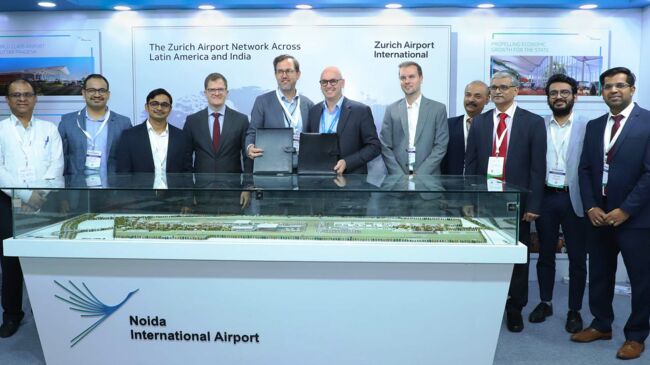
• Greenfield project to be equipped with Siemens baggage handling system • High-performing VarioTray technology and BagIQ software for excellent passenger experience • Terminal 1 to initially handle 12 million passengers per year Siemens Logistics has been awarded a contract to deliver the baggage handling system (BHS) for the new Noida International Airport (NIA), which will be constructed near Delhi, India. The scope of the contract is the design, supply, installation, commissioning, and maintenance of the BHS for the new Terminal 1. The airport project will be implemented in four phases, starting with the building of the first terminal, which will initially handle 12 million passengers per year and is expandable to 30 million passengers. Siemens Logistics will supply its high-performance VarioTray conveyor technology to transport baggage quickly and reliably. The VarioTray system is modular and can be easily expanded in the future. For intelligent baggage process control throughout the entire BHS, Siemens Logistics will also install its proven High-Level Control software BagIQ. It employs the latest software architecture to manage the routing of all bags and coordinating data in the airport ecosystem, among others. “We are very delighted that Noida International Airport has chosen us for this exciting new airport project in India”, said Michael Schneider, Executive Vice President at Siemens Logistics. “The deployment of our latest VarioTray and software technologies will significantly contribute to enhanced passenger experience at NIA – whilst the operator can rely on operational efficiency and future-proof expandability.” “We’re looking forward to our collaboration with Siemens Logistics,” explained Christoph Schnellmann, Chief Executive Officer, of Noida International Airport. “Noida International Airport will be India’s newest, greenest, and most digital airport, providing a quick, easy and seamless experience for passengers and cost-efficient operations for airlines. We decided to rely on the Siemens team, who presented us with the best value proposition with the most powerful and reliable baggage handling technologies. Besides that, Siemens has a strong local presence with a fully committed team.” NIA will enhance the connectivity to and from the National Capital Region of Delhi, Noida, and Western Uttar Pradesh. Terminal 1 will be built in two stages. The design of the airport will focus on seamless and fast transfer processes for domestic-to-domestic passengers as well as for domestic-to-international transfers. Siemens Logistics has already implemented its VarioTray technology in major hubs worldwide, among others Dubai Airports (UAE), Guangzhou and Beijing (China), Incheon (South Korea), Bangkok (Thailand), Madrid (Spain), Paris (France), etc. In India, the company has a long-standing proven track record of delivering projects successfully. The local professional team operates and maintains the BHS in Delhi, Mumbai, Kolkata, and Bangalore – the four busiest Indian airports. Every second bag at an Indian airport is being handled by a BHS that is operated and maintained by Siemens Logistics.
OZ Lifting unveils ProMat 2023 showcase
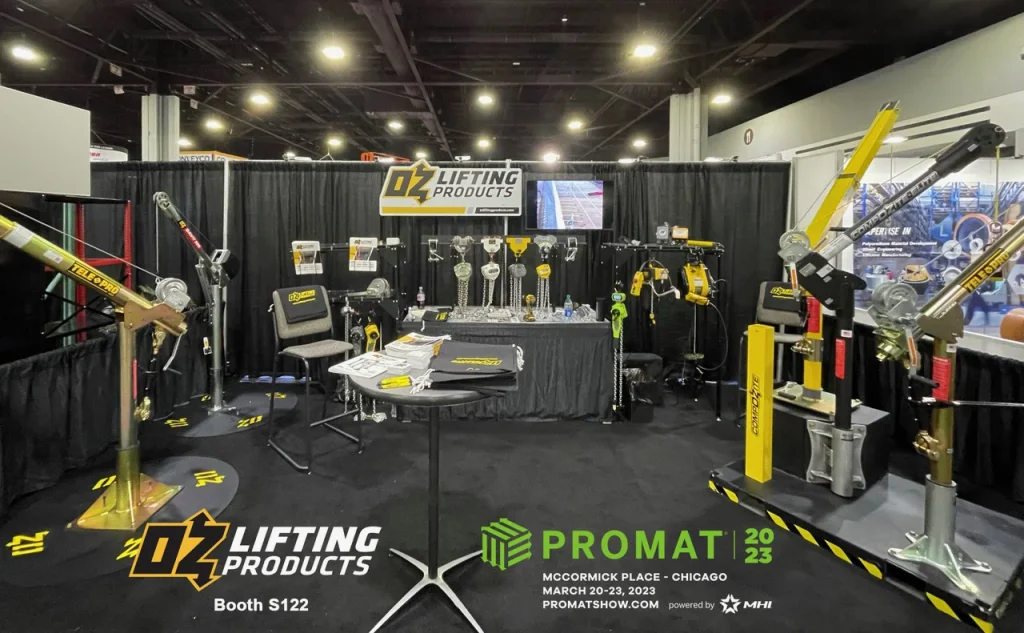
OZ Lifting will show a variety of davit cranes, hoists, and lifting components at ProMat 2023, which takes place March 20-23, 2023 at Chicago’s McCormick Place. The company will exhibit at Booth S122. The Winona, the Minnesota-based manufacturer, which will take a 10 ft. by 15 ft. booth, will show its new Aluma-Lite davit crane for the first time at ProMat. The ultra-portable davit crane is available in 500 lbs. and 1,000 lbs. capacities, each available with three bases: pedestal, socket (flush-mount), or wall-mount. The Aluma-Lite 500 weighs in at 24 lbs. with a maximum capacity of 500 lbs. Aluma-Lite 1,000, meanwhile, weighs in at 47 lbs. with a maximum capacity of 1,000 lbs. Both fold flat for easy storage or transportation; are made of aerospace / military grade aluminum; and are available with manual winch (including drill drive adapter), AC or DC electric winches. Further, they boast a durable, powder-coated finish; no tools are needed for assembly/disassembly. The Tele-Pro davit crane will again be on the exhibit. The patented model allows users to leverage the benefits of other lifting technologies in its range while telescoping the boom in and out under load. The CompOZite and CompOZite Elite carbon fiber models will also be on show, as will the recently launched Longreach davits. However, OZ Lifting is more than a davit crane manufacturer, and its showcase will also feature several stainless steel products, designed for use in corrosive environments, including hoists, beam clamps, trolleys, and a manual winch that boasts a drill-adaptor feature. Spark-resistant hoists and trolleys will be of interest to exhibitors too. Steve Napieralski, president at OZ Lifting, said: “As with all products in our range, the new davit cranes fill voids in the material handling marketplace. As such, we expect the [Aluma-Lite and Longreach] davits to be especially popular, but our composite products always seem to attract attention. MHI-sponsored shows have become an integral part of our annual exhibition strategy. Business is still very good, and we have several new products that will launch next year.” ProMat features over 900 exhibits from leading solution providers and a comprehensive educational conference of over 150 sessions focusing on best-in-class solutions for manufacturing and supply chain operations. Exhibits will represent all segments of the material handling, logistics, and transportation industry, from traditional, manual equipment to computerized, automated systems and smart, connected supply chain technologies. Napieralski added: “Having that many exhibitors should draw a lot of attendees and Chicago being a central location should help as well. The cons, however, are you can get lost in the maze of exhibitors. We plan on getting the word out that we will be exhibiting and will be inviting a lot of distributors. The educational sessions are good for the industry. Anytime you can offer to learn, those attending are there for a reason. They will gain a new concept or learn something new that helps their business.”
Equipment Leasing and Finance Association’s Survey of Economic Activity: Monthly Leasing and Finance Index
October New Business Volume Up 6 Percent Year-over-year, 11 Percent Month-to-month and Nearly 6 Percent Year-to-date The Equipment Leasing and Finance Association’s (ELFA) Monthly Leasing and Finance Index (MLFI-25), which reports economic activity from 25 companies representing a cross-section of the $1 trillion equipment finance sector, showed their overall new business volume for October was $11.3 billion, up 6 percent year-over-year from new business volume in October 2021. Volume was up 11 percent from $10.2 billion in September. Year-to-date, cumulative new business volume was up nearly 6 percent compared to 2021. Receivables over 30 days were 1.7 percent, up from 1.5 percent from the previous month and unchanged from the same period in 2021. Charge-offs were 0.18 percent, up from 0.17% the previous month and up from 0.16 percent in the year-earlier period. Credit approvals totaled 77.0 percent, down from 77.3 percent in September. The total headcount for equipment finance companies was down 4.7 percent year-over-year. Separately, the Equipment Leasing & Finance Foundation’s Monthly Confidence Index (MCI-EFI) in November is 43.7, a decrease from the October index of 45. ELFA President and CEO Ralph Petta said, “The equipment finance industry demonstrates its typical resilient nature, producing an increase in October’s new business volume despite months of interest rate hikes brought on by the Fed’s efforts to control inflation. Despite the spectre of an imminent recession—as many economists predict—equipment finance organizations continue to do what they do best, i.e., help supply the nation’s businesses with productive assets that enable them to survive and thrive.” James Currier, Chief Revenue Officer, Finloc USA Inc., said, “By now there should be some consensus amongst economists and industry vets alike that the economy slowing down is not only predictable but intended—and necessary. We see it coming and know it’s close. We just won’t know what the severity and duration will be until we come out on the other side. Despite the rhetoric from drama-driven sources, it’s unlikely that the sky will fall given our modern quantitative tightening policies and practices. Tough, yes, global economic catastrophe, probably not. We see the economic tightening as an opportunity for carriers to get back on track with normal equipment replacement cycles that have been postponed and explore new verticals. Business reorganizations will require lenders to adapt to changing practices and operations. It will not be business as usual for the foreseeable future, so it is our role as lenders and financing consultants to help manage difficult situations.”