
Is it better to talk or ask your way to the sale?

Ask. A sale takes place when a prospect trusts and has confidence in the salesperson, and the prospect perceives a valued difference in the company and the product. You’ve never said to your spouse “Honey, let’s go out and get sold a car.” No, you say, “Let’s go out and buy a car.” People don’t like to be sold but they love to buy. Your challenge is to create an atmosphere where a “buy” can take place. You accomplish this by asking the right questions and letting the prospect or customer answer his or her own concerns while you uncover their present situation and real needs. Power Questions are the difference between earning a sale and fighting for a sale. What’s a Power Question? Good question. The definition of a Power Question is… Ask a question about the prospect, that makes the prospect think about themselves and answer in terms of you. The key to developing a Power Question is… Formulating an open-ended, thought-provoking question that uncovers how the prospect uses or could use what you sell, reveals their present situation, or tells how decisions are made (how they buy). The major secret of selling: Instead of telling the prospect about your key benefit, ask a question about it. When you ask, you get open response answers. When you tell, you close the prospect off from communicating specific purpose needs that lead to the sale. The result of “telling” is a defensive prospect. Telling leads to objections. Asking leads to a sale. Success Strategy: It’s not about what you have to offer, it’s about how the prospect will use what you offer to build his or her business. The only way you can get to these uses is to ask. Questions uncover needs. When you ask the right question, one that makes the prospect think about their needs and respond in terms of your product or service your prospects will begin to sell themselves. The only thing more powerful than that is if they give you their blank signed check and ask you to fill it out. Here are a few examples of a Power Question: • How do you ensure that you’re taking maximum advantage of (your product or service) to grow your business? • What are your plans to increase your profitability through (your product or service) over the next twelve months? (Most prospects won’t have a plan) • How do your salespeople use (your product or service) to gain sales? • How much is (your product or service) impacting your growth? • How are you (your customers) taking advantage of (your product or service)? • Have you identified any other (your product or service) opportunities you want to employ in 1999? • If you owned a (your product or service), how would you take advantage of it? Then get into questions about the criteria by which decisions are made: • What made you choose your present supplier? • How did you make the decision? Who was involved? • How long have you been using the service? • How often have they contacted you since you began? • How much-added value support have they provided you? • How would a (make a special offer) impact your decision to give us an opportunity to earn your business? As a consultant, you must be able to ask the question… What opportunities are you missing in (your product or service) to grow your business? and uncover the answers that will lead to a buying decision. If you believe you can provide the products that will help your prospect profit, produce, and succeed, then the challenge is can you create an atmosphere where trust, confidence, and value are perceived strong enough for the prospect to buy? You can with the right questions. You can’t with the wrong statements. Your choice. About the Author: Jeffrey Gitomer is the author of twelve best-selling books including The Sales Bible, The Little Red Book of Selling, and The Little Gold Book of Yes! Attitude. His real-world ideas and content are also available as online courses at www.GitomerLearningAcademy.com. For information about training and seminars visit www.Gitomer.com or email Jeffrey at [email protected] or call him at 704 333-1112.
SnapFulfil strengthens U.S. arm with key senior appointment

WMS technology innovator, SnapFulfil, selects Brian Kirst a seasoned 3PL Executive for the role of US Vice President Sales & Business Development. Kirst has 25+ years of experience in supply chain, logistics, and digital technology. Prior to joining the SnapFulfil team, he co-founded and launched two high-growth 3PL order fulfillment companies –Total Reliance in 2014 and Resurge in 2019. Both scaled successfully with the highly flexible SnapFulfil WMS as their differentiator. As part of the US leadership team, Brian brings his domain expertise in the 3PL sector to accelerate SnapFulfil’s growth as companies capitalize on trends in the Direct to Consumer (DTC) market. Kirst reports directly to Rich Pirrotta, CEO of parent company Synergy North America, who said: “Brian was one of the early adopters of our solution and used SnapFulfil to scale and grow at a rapid rate. He understands how our innovative self-configuration addresses complex fulfillment challenges and is uniquely placed to enable customers to drive significant value. He has been a strong advocate for SnapFulfil over the years and we’re delighted that Brian is now bringing his considerable insight, experience, and expertise to the team.” With SnapFulfil’s assistance, Total Reliance quickly achieved revenue growth of more than 800% and was acquired in its’ third year of operation by Best Logistics (in which Alibaba, China’s e-commerce giant, holds a 25% share). Brian repeated the pattern at Resurge, where they onboarded 20 new clients in just six weeks, including some very complex integrations. Brian said: “This move is a natural progression for me. SnapFulfil brings a level of support that, in my experience, goes way above and beyond the industry standard, and I have first-hand experience of how a speed-to-value partnership can be leveraged as an extension of your own core management team to drive rapid ROI and low TCO and attract new and bigger revenue streams. “The software is especially well-suited to retailers and 3PLs looking to expand into fast-paced DTC and e-commerce, as it gives maximum operational flexibility. Not only that, having access to the rules engine was empowering, hugely valuable, and set us apart from our competitors. I’ll be using my applied knowledge, gained across multiple industries and sectors, to help our customers identify their value drivers and further tap into the potential of SnapFulfil to drive revenue and profitability.” Brian resides in Freehold, New Jersey with his two daughters. Outside of work, he supports his daughters’ passions for equestrian sports and dance and networks with his fellow entrepreneurs in their active technology ventures.
Matrix and its Master Distributor Brands demonstrating its latest Vertical FFS, Pre-Made Pouch, and Sachet Packaging Technology in booth 2413 at PACK EXPO East 2022
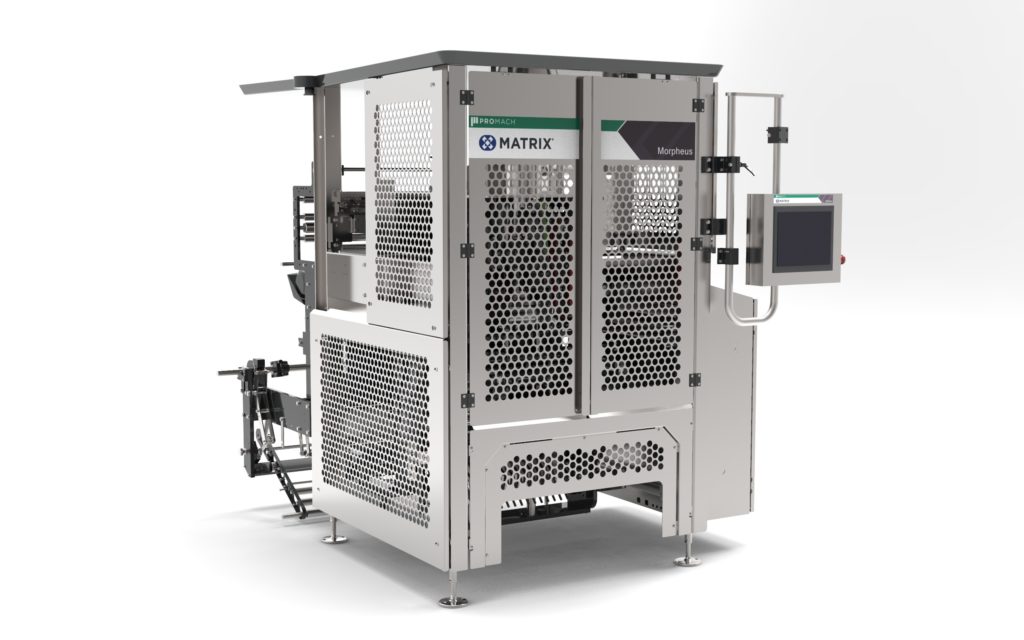
If you are looking to see the latest in vertical form fill seal and pre-made pouch machines, then look no further than Matrix Packaging Machinery in booth 2413 at PACK EXPO East, March 21-23, at the Philadelphia Convention Center in Philadelphia, Penn. Matrix is an industry manufacturer of vertical form fill seal machines operating widely throughout a variety of industries. In addition, Matrix is the master distributor of global flexible packaging brands INVpack, and Pacraft (formerly Toyo Jidoki). Machines from both brands will be in action in Matrix’s booth 2413 at PACK EXPO East. Show attendees can see the following machines on display: Matrix Morpheus Series The Matrix Morpheus, a continuous box-motion bagger, allows users to package their products with a variety of films at faster speeds and with better accuracy. The Morpheus uses a continuous-motion, high-speed jaw system that is unique from other vertical form fill seal machines because the film never stops. The jaw system cuts the film and provides just enough dwell time for the three bag seams to properly seal. This innovative feature allows users to achieve higher fill rates and proves why the Morpheus is Matrix’s most advanced vertical form fill seal machine. The Morpheus series comes in three different machines to best meet users’ production requirements: Morpheus: Standard machine with up to 12-inch bag width Morpheus AB: Includes Rockwell controls; up to 12-inch bag width Morpheus XL: Accommodates up to 15-inch bag width Pacraft (formerly known as Toyo Jidoki) The Pacraft TT-8D-N pre-made pouch filler/sealer is designed for a wide variety of packaging applications. Its pouch formats and product types including flat, stand-up, retort, and press-to-close pouch styles. It can seal up to 55 pouches per minute; pouch sizes range from 4.72” to 10.23” (120 – 260mm), lengths from 5.11” to 15.74” (130 – 400mm). INVpack MVA3 EVO The MVA3 EVO sachet form fill seal machine from INVpack is designed for small to medium production runs that require high-quality sealings for liquids, powders, granulates and pasty products. Output ranges from 70 sachets per minute for a single-lane operation, and up to 280 per minute with four lanes. Matrix and its distributor brands maintain a strong commitment to sustainability. Those traits are found by working closely with its customers in developing packaging solutions that exceed their sustainability goals. Multiple film types including compostable and recyclable films can run efficiently on many Matrix machines, as well as those of its distributor brands. Plan to visit booth 2413 at PACK EXPO East to see the flexible packaging solutions from Matrix, Pacraft, and INVpack in action, and learn how they can help you increase productivity and meet your sustainability goals.
Gordon Report: Welcome to “Twilight Zone 2022”

Across America, unnerving and disruptive economic and social shifts are causing confusion and anxiety. We are living in a new “Twilight Zone.” Many surprises lie ahead in 2022. The shrinkage of the $8.76 trillion Federal Reserve portfolio will raise interest rates as inflation soars. As cheap money ends, expect a major stock market correction. Real GDP growth is slowing. It only rose 1.9 percent between 2019 and 2021. By the end of 2022 expect GDP to only be $21.5 trillion. This is dwarfed by $30 trillion in total U.S. government debt. As interest rates rise, paying all that debt will squeeze the federal budget. There is no free lunch. Retirements will soar. In 2022 the largest cohort of baby boomers will turn 65. Population growth is at record lows – only 0.1 percent in 2021. This plus stepped-up retirements will lead to growing job vacancies in 2022. Long-term unemployment will continue to be high for prime-age workers (ages 25 to 54). The causes include COVID-19 risks, inability to find affordable childcare, education and skill deficits, and lack of access to job training. Business training investment will be forced upward as job vacancies escalate. Some companies have already announced major initiatives. Intel is committing $100 million to train and development of workers for two chip factories to be built outside Columbus, Ohio. To combat persistent pilot shortages that have forced route reductions, United Airlines has launched its own training program for pilots, the Aviate Academy in Goodyear, California. In 2021 according to Federal Reserve estimates, U.S. businesses lost over $700 billion due to skilled job vacancies. This number will rise in 2022. If the United States is to emerge from the 2022 Twilight Zone over this decade, addressing skilled labor deficiencies is an urgent priority. Multisector initiatives can more effectively coordinate education and training programs. Students need more information on career options and the educational preparation needed for them. Workers need retraining to acquire the specific skills needed for jobs in today’s high-tech offices and factories. About the Author: Edward E. Gordon is the president and founder of Imperial Consulting Corporation.
MHS Lift, Inc. recognized by Crown Equipment Corporation for Outstanding Sales with Seventh Summit Award

MHS Lift, Inc. has received the prestigious 2021 Summit Award from Crown Equipment Corporation, one of the world’s largest material handling companies. Crown’s Summit Award recognizes outstanding sales and customer satisfaction achievements in its North American sales and service network. To qualify for the Summit Award, the company must be a Crown dealer and be considered the Best Dealer by market size. This is MHS Lift’s seventh Summit Award in eight years (2014, 2016, 2017, 2018, 2019, 2020, 2021). “We are thrilled to again be named one of Crown’s Summit Award winners in North America,” said Brett Levin, Vice President and Co-Owner, MHS Lift, Inc. “Our team has worked tirelessly this year to continue to provide top-quality customer service and we’re honored that we were recognized for our hard work by Crown,” said Andy Levin, President and Co-Owner, MHS Lift, Inc. “We look forward to continuing to accommodate our clients with Crown’s equipment in the future.”
January 2022 Logistics Manager’s Index Report®
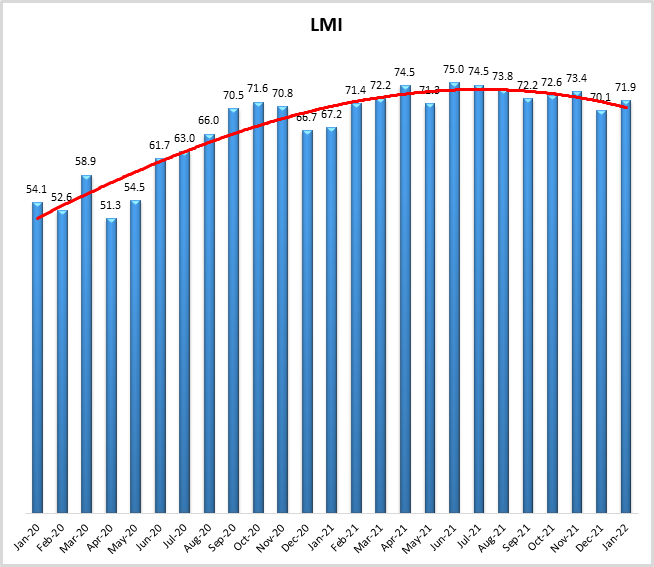
LMI® at 71.9 Growth is INCREASING AT A DECREASING RATE for: Inventory Levels, Inventory Costs, Warehousing Utilization Warehousing Prices, and Transportation Prices Growth is INCREASING AT AN INCREASING RATE for: Transportation Utilization Warehousing Capacity and Transportation Capacity are CONTRACTING January’s reading of 71.9 is up (+1.8) from December’s reading of 70.1. The marks a full year of growth rates above 70.0 – a level we would classify as significant expansion. The only two months of the last 17 in which we saw sub-70.0 growth were in December 2020 and January 2021 which was largely a function of the seasonal wind-down of inventories. This year we’re seeing the opposite, as January’s Inventory Levels read in a 71.1 – the highest rate of growth since early 2018. In December we noted that inventories remained high upstream, speculating that we may be seeing significant inventory that was ordered for the holiday season continue to flow through supply chains even after Q4 was over. This month’s report offers more evidence that this is the case, as now Upstream and Downstream respondents report significant levels of inventory growth. The unseasonable expansion of inventory may be creating a positive feedback look with the logistics capacity and cost issues that plagued 2021. Because capacity is low and costs are high, it is difficult to move inventory efficiently. This combination of low capacity and high costs likely led to over-ordering this past Fall, and to goods idling at points in the supply chain where they could not be purchased by customers. Excess inventory in the system is eating up more capacity and causing costs to increase further. Essentially, low capacity and high costs led to higher levels of inventory, and now higher inventory is leading to even less capacity and higher costs. The result of this is that the high levels of inventory of durable goods in the supply chain are eating up capacity, and preventing high-turn inventories from moving as quickly as they need to which explains why some firms (i.e. apparel) are weighed down with inventory, and others such as grocery stores are facing shortages. Much like diets and gym memberships, January is a time of renewal in supply chains, allowing logistics networks to reset post-holiday. After this reset, firms can then began ramping back up for demand throughout the year. This year, activity is already elevated in January. It will be interesting to observe the next 12 months, and whether this portends continued growth, or if the price will be too high eventually be too high for demand to continue to grow. Researchers at Arizona State University, Colorado State University, Rochester Institute of Technology, Rutgers University, and the University of Nevada, Reno, and in conjunction with the Council of Supply Chain Management Professionals (CSCMP) issued this report today. Results Overview The LMI score is a combination of eight unique components that make up the logistics industry, including inventory levels and costs, warehousing capacity, utilization, and prices, and transportation capacity, utilization, and prices. The LMI is calculated using a diffusion index, in which any reading above 50 percent indicates that logistics is expanding; a reading below 50 percent is indicative of a shrinking logistics industry. The latest results of the LMI summarize the responses of supply chain professionals collected in January 2022. Overall, the LMI is up slightly (+1.8) from December’s reading of 70.1. The growth in this month’s index is fueled by metrics from across the index. Unseasonably high rates of inventory accumulation stand out among these metrics, but capacity remains constrained, and prices continue to grow quickly. Looking forward, respondents do not predict much relied over the next 12 months. Given the current shortages in capacity, it is difficult to disagree with them. The start-stop nature of economic activity during a pandemic continues into 2002. In a turn from the hot consumer market we saw through much of 2021, U.S. spending was down 0.6% in December[1]. This is likely one of the drivers behind growing inventory levels. Firms that had stocked up anticipating a continuation of the hot consumer economy we observed throughout the Fall may now be facing the opposite problem, with more inventory than needed to meet demand. Reacting to this shift, Bank of America has decreased its expectations for first-quarter US GDP growth to only 1%. Originally, they had predicted 4% growth. The Atlanta Federal Reserve predicts a meager 0.1% growth in the 4th quarter. Reduced growth predictions are partially due to the continued spread of Omicron[2]. It is also possible that decreased consumer spending and increased firm expenses will put a crimp on the economy. This is likely due to the Omicron spike that raged throughout the US in December and January, a continued lack of logistics capacity that made some sales impossible, and a decrease in consumer savings that – after peaking in March – are now back down to pre-COVID levels, indicating that much of the stimulus has been worked through at the consumer level. Despite this slowdown, logistics professionals are bullish on continued growth in 2022[3]. Continued growth is likely a safe assumption as the lack of logistics capacity is one of the primary reasons consumer activity was down. For example, December volumes at the ports of LA and Long Beach were down 14% year over year[4], and LA Signal reports that volumes for the last week of January were down 19.3% year over year. Throughput continues to drop despite the 100-ship backlog off the Southern California ports. Conversely, the first two weeks of February are predicted to be up 66% and 38% respectively year-over-year[5]. This continues an interesting pattern in which future bookings for the Port of LA are much higher than in 2021, but then the volume that is actually processed turns out to be much lower. Essentially, the highly-reported increases in throughput at the ports were largely driven by gains in the first half of the year, before the lack of capacity ground everything to a halt[6]. And congestion at the ports is
Orion demonstrating updated features on its Flex LPA Automatic Turntable Pallet Wrapping Systems at PACK EXPO East 2022
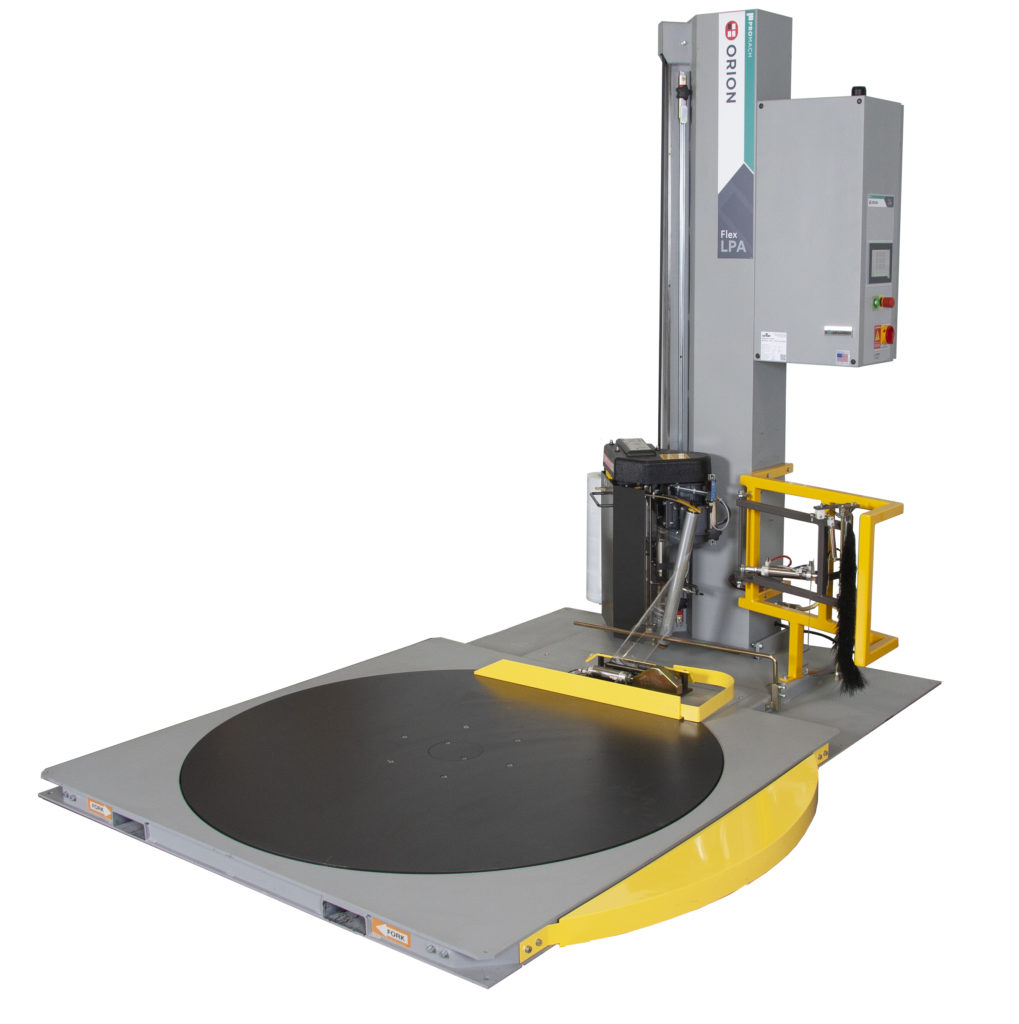
Orion Packaging Systems, a ProMach brand, is exhibiting updated features on its Flex LPA Automatic Turntable Pallet Wrapping System in booth 2214 at PACK EXPO East, March 21-23, at the Philadelphia Convention Center in Philadelphia, Penn. Orion is an industry-leading stretch wrapper and pallet unitizing machinery manufacturer of automatic and semi-automatic stretch wrapping equipment, including rotary turntables, rotary towers, and horizontal wrapping systems. The Flex LPA Automatic Turntable Pallet Wrapping System with updated features automatically performs the entire film wrap cycle without the operator dealing with the film tail at the beginning or end of the cycle. To start the wrapping process, simply place the pallet load on the machine and pull a lanyard switch while backing away. Minimizing operator interaction significantly impacts efficiency by freeing staff to work on other tasks while the machine is wrapping. The Flex LPA Automatic Turntable Pallet Wrapping System is engineered for 24/7 operation. It features a heavy-duty steel framework and turntable support system, AC motors, and a belt-driven carriage lift. Additionally, the wrapper is outfitted with Orion’s S-Carriage InstaThread Pre-stretch Film Carriage, which provides a consistent pre-stretch film of 260% at different tensions and 1” less neckdown – both of which allow customers to save up to 15% on film per load. The Flex LPA Automatic Turntable Pallet Wrapping System comes with several performance features and benefits, including: 63” diameter turntable for loads up to 50” x 50” 80” maximum load height standard, optional up to 110” Load with a pallet jack, electric walkie or forklift Full surround deck for easier loading Precision ring bearing turntable support, with heavy-duty casters for additional support 7” IntelleVue color, HD touch screen HMI with up to nine different wrap recipes 15 RMP variable speed with “soft start” 6,000 lb. maximum load weight capacity Automatic force to load for even film tension AC/VFD motors reduce maintenance Forklift portable from front or rear Plan to visit Orion in booth 2214 at PACK EXPO East 2022 to see how it’s Flex LPA Automatic Turntable Pallet Wrapping System with updated features can bring efficiencies to your next stretch wrapping application.
Vader Combo for ultimate in Anti-Fog and Full-Face Protection
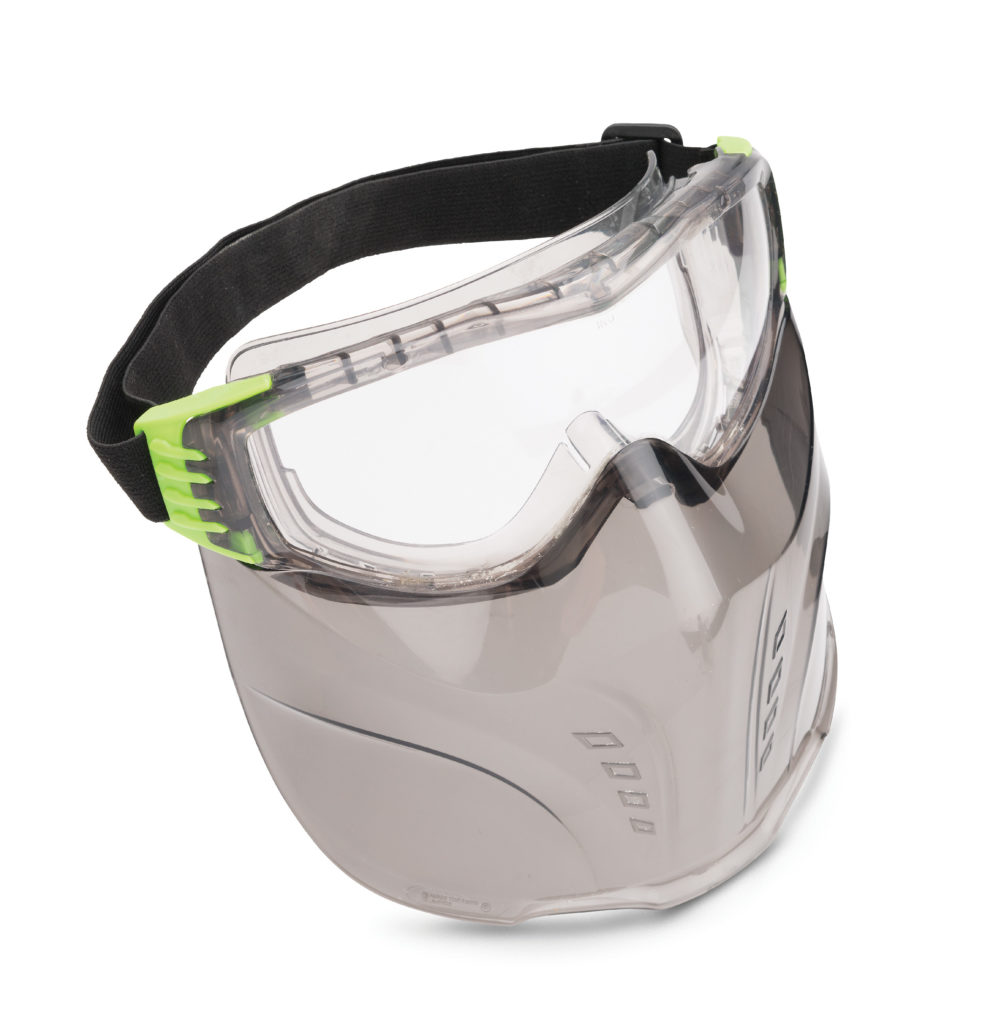
Foul, nasty, or painful debris. Spark. Liquid sprayback. All can slow the most seasoned employee and, worse, bring the threat of occupational injury. So, what protection do workers want on their face when the situation hits the fan? Not a standard goggle that leaves the rest of their face exposed. Not a traditional face shield, with huge gaps that are easily penetrated and allow major neck exposure. The answer is Brass Knuckle® Vader Combo, the goggle and face shield in one, with industry-leading BK-Anti-Fog for the best visibility available. Its integrated face shield offers 180-degree peripheral vision and face coverage. Ultra-soft conditioned rubber forms a splash barrier. Because the face shield isn’t attached to a hard hat, it provides unprecedented mobility and visibility — the shield goes wherever the wearer’s head goes. Brass Knuckle has created a product primer to help industry vets more accustomed to old-style face shields better understand the differences inherent in Vader Combo. Readers are encouraged to download the fact sheet and watch the BKTV video of it at work in real-world conditions. BK-Anti-Fog exceeds the industry’s most stringent anti-fog standard and makes Vader Combo the first choice in face protection for construction, grinding, water and wastewater, jan/san, or any application with sprayback that can cause lens fog. The ANSI-rated, military-style splash goggle also includes a durable anti-scratch treatment and is D3 rated for droplet and splash protection. The built-in venting system helps reduce the potential for moisture buildup, helping to maintain clear vision. If a job exposes its workers to any kind of wetness or debris being thrown into their faces, the Vader Combo brings the necessary protection. It protects from the sun, from impact, from splash—and even from dangerous, temporarily impaired vision caused by fog.
CBS ArcSafe® introduces RRS-3 HVF for HVF-Style Vacuum Circuit Breakers

CBS ArcSafe®, a manufacturer of remote racking and switching solutions for low- and medium-voltage switchgear, introduces the RRS-3 HVF remote racking solution. The device allows technicians to remotely rack IN and OUT HVF-style vacuum circuit breakers from outside the arc-flash boundary (up to 300 feet away). Automating the racking procedure reduces operator fatigue and increases safety. Installation and operation of the RRS-3 HVF do not require any modifications to existing electrical equipment. The RRS-3 HVF is compatible with all HVF-style circuit breakers manufactured by Myers Power Products with current ratings from 1200–3000 A. Typical industries for HVF-style circuit breakers include power generation, chiller/HVAC, petrochemical, water/waste treatment, pulp/paper, and data centers. The RRS-3 HVF is lightweight and portable and offers quick installation and removal. The control/power source is the CBS ArcSafe RSO-IV control console. All CBS ArcSafe products are manufactured in the United States at our facilities in Denton, TX, and Charleston, WV
Taylor Northeast becomes exclusive US distributor of EPIQ Mecfor equipment
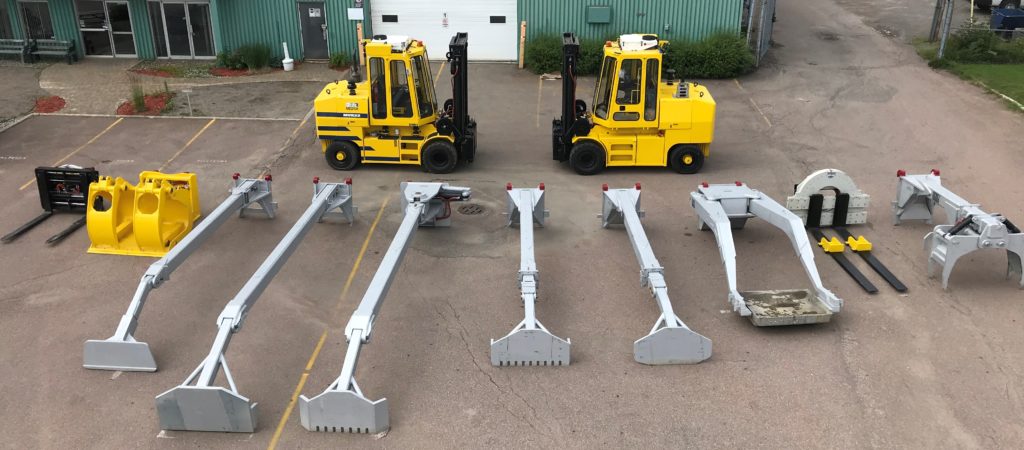
Taylor Northeast (TNE), a Pennsylvania-based material handling equipment supplier, just announced that it is now the factory-authorized distributor of EPIQ Mecfor mobile equipment, products, and parts for the entire US market. As of January 1, 2022, TNE and its affiliate company, H&K Equipment, are handling all EPIQ Mecfor equipment sales, rentals, and aftermarket support within the United States. “As EPIQ Machinery continues to grow, we are excited to have this opportunity to expand our equipment and service offerings,” said Yannick Beaulé, chief revenue officer of EPIQ Machinery. A brand component of EPIQ Machinery, Mecfor manufactures customized mobile equipment for harsh working environments such as aluminum mills. With multiple operations in Quebec, Canada, and a location in France, EPIQ Machinery has a strong international footprint but was looking to increase its coverage in the United States, which laid the groundwork for its relationship with TNE. “We were drawn to EPIQ Mecfor because, as an organization, we’ve been providing this kind of highly specialized equipment to myriad heavy industries for decades,” said Kevin Koch, vice-president of Taylor Northeast. “We have been working with EPIQ Mecfor for several years, and this expanded partnership represents a tremendous opportunity for us to better serve our customers throughout the US.” Long a leader in specialized machinery, EPIQ has focused recently on creating what it has dubbed an Aluminum Hub of Excellence to increase its offerings for all aspects of the aluminum sector around the world, an aim that addresses the needs of much of TNE’s customer base. “The entire team here at TNE closely understands the challenges that aluminum producers face in finding the right piece of mobile equipment for their demanding applications,” Koch said. “There really is no other dealer in the country that is set up to address those needs the way that we are.” Chet Pawelski, a veteran of the heavy equipment industry and TNE’s EPIQ Mecfor US sales specialist, is overseeing all sales, rentals, and technical inquiries as well as advising on new and existing equipment. Buck Shirey, TNE’s EPIQ Mecfor US support specialist, is managing all US parts orders as well as service and aftermarket requests. Headquartered in Morgantown, Pennsylvania, TNE has provided sales, service, and parts for large-capacity lift trucks and specialized industrial equipment throughout the mid-Atlantic and Northeast since 1989. The company’s broad geographic reach has enabled it to begin providing unique material handling solutions to customers in all regions of the US. Beaulé noted that TNE’s extensive presence and experience were key components in their decision to select a US distributor. “TNE shares our commitment to quality and service, and we are thrilled to bring their passion and expertise to our US customers through this partnership.”
ProMach acquires TechniBlend

ProMach, a worldwide provider in processing and packaging machinery solutions, has announced that it has acquired TechniBlend, a provider of engineered process systems for the liquid processing industry. The addition of TechniBlend significantly expands ProMach’s processing technologies portfolio, enhancing ProMach’s capacity to provide complete turnkey systems along any part of the production line. Founded in 2008, TechniBlend provides a full suite of high-quality, technologically advanced liquid processing machinery and services across numerous market segments including food, dairy, chemicals, and household and personal care products. Their main area of expertise though is in the beverage processing market, providing solutions for beverages ranging from hot to cold, carbonated to non-carbonated, and alcoholic to non-alcoholic. Engineered solutions include deaerators, batching and blending systems, carbonation systems, nitrogenation systems, proofing systems, alcohol separation systems, degassing systems, flash pasteurization systems, can filling and seaming systems, clean-in-place systems, and more to help customers successfully bring their ready-to-drink beverages to market. TechniBlend also provides engineering services and complete turnkey liquid manufacturing systems to help customers in applications ranging from vitamin water, soft drinks, teas, coffees, and juices to craft beer, ready-to-drink cocktails, seltzer, kombucha, and much more. TechniBlend also operates a subsidiary brand ProBrew, a leading supplier of technologically advanced brewing processing equipment to help customers in the craft beverage space improve their processes and grow their independent, artisan brands across local and national markets. “We’re pleased to welcome the TechniBlend and ProBrew teams to ProMach,” said Mark Anderson, ProMach President and CEO. “With the addition of TechniBlend, ProMach now has a very comprehensive portfolio of liquid food and beverage processing technologies that includes our Statco-DSI, Allpax, and Stock product brands. This is another strong step towards becoming the total solutions provider for customers across North America who are looking for a trusted partner to help them succeed in an increasingly competitive marketplace. “ProMach continues to expand further upstream on the production line,” added Mr. Anderson, “which means customers can start and end their journey with ProMach to commission a successful line from processing to packaging. And when you layer in ProMach’s strong individual product brands and expertise across nearly all parts of the packaging line, from filling to palletizing, coupled with our foundation of customer service excellence, the value of partnering with ProMach becomes clear. I am excited to work with the outstanding senior leadership team at TechniBlend as they continue developing new innovative solutions, expanding into new markets, and growing their already successful business to even greater heights.” Waukesha, Wisconsin-based TechniBlend, and its entire staff are joining the ProMach team. Current TechniBlend President, Derek Deubel, will join ProMach as Vice President and General Manager of TechniBlend. ProMach will continue to invest in TechniBlend’s team, brands, products, services, facility, and research and development efforts to further advance its position as a leader in processing technologies. “ProMach and TechniBlend bring together two organizations that share a common vision for the future and what it means to fully support our customers,” said Mr. Deubel. “This is an outstanding opportunity for TechniBlend customers to benefit from ProMach’s portfolio of solutions and for current ProMach customers to access more options to streamline their processing operations. I’m very excited for both our customer’s and our employees’ participation in the next chapter of the TechniBlend story and I strongly believe with ProMach we have an ideal partner to help us continue our incredible growth. We are looking forward to working with the entire ProMach team to continue this journey we embarked on nearly 15 years ago.” ProMach has grown over the past decade into a leading single-source provider of high-performance processing and packaging lines. It provides stand-alone machines, engineering services, and turnkey integrated systems for many of the world’s most recognized brands, with more than 40 best-in-class equipment product brands sold and supported around the globe. It continues to add complementary packaging and processing machinery solutions to advance its turnkey systems capabilities.
CLARK Material Handling Company launches the new TWLi20 Three-Wheel Electric Lithium-Ion Powered Lift Truck
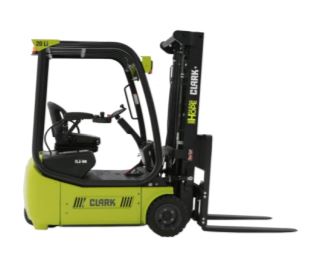
CLARK Material Handling Company, a top-ten global manufacturer of forklift trucks and aftermarket parts, announces the launch of the TWLi20 ThreeWheel Electric Lithium-Ion forklift truck to the CLARK line of industrial lift trucks. Built around the powerful 48V Lithium-Ion battery, the TWLi20 boasts many excellent operator focused features, including: A spacious cabin Intuitive dual-joystick controls A “plug and play” battery charger An interactive LCD dash with audio/visual warnings 4,000 lb. capacity And much more! This highly efficient Lithium-Ion forklift provides both new and experienced operators an easy to maneuver and handle lift truck. The narrow profile and tight turning radius make the TWLi20 perfectly suited for a wide range of applications and operations. The new TWLi20 also comes with the CLARK Protection Plan, one of the best warranty programs in the industry. “The TWLi20 adds another great product to our line-up of electric trucks, and it gives certified operators an easy-to-operate solution, regardless of their experience level,” commented Dennis Lawrence, President and CEO of CLARK, “We are excited to introduce this truck to the market, and know our customers will see the value of this great new product” “Our three-wheel electric forklift, powered by an integrated Lithium-Ion battery, marks another great step forward for CLARK. The longer service lifespans available through Lithium-Ion batteries require less maintenance compared with lead-acid batteries, and the ability to opportunity charge is a huge advantage in a busy operation,” noted Brandon Bullard, Director of Sales and Marketing. “The TWLi20 is a great addition to the CLARK line; and represents our commitment to providing a full scope of material handling solutions for customer’s changing needs.”
Gebrüder Weiss opens another location in the USA

New branch in El Paso, Texas / Focus on cross-border transports between the USA and Mexico El Paso is the name of the new US location of the international transport and logistics service provider Gebrüder Weiss. The border city, located in the state of Texas, is to become a future hub for full load transports between Mexico and the USA. This is the logistics provider’s response to the growing flow of goods between the two countries and the resulting high demand for transport capacity. “Mexico’s position as a production location for the US automotive, steel, and textile industries is becoming increasingly important. With our new location in El Paso, we can now offer our customers cross-border transport services with a focus on full loads.,” explains Mark McCullough, Country Manager of Gebrüder Weiss USA. With a population of around 700,000, El Paso is the sixth-largest city in Texas and a major border crossing point for goods traveling between Mexico and the United States. Its largest industries include textiles, automotive, biomedical, and electronics. The city is conveniently located for traffic-related purposes, on Interstate 10, which runs from the west to the east coast of the United States. Some of the largest hubs in the United States – including Chicago, the Dallas/Fort-Worth metropolitan area, and Los Angeles – are just a short flight away from El Paso airport. Gebrüder Weiss has been active in the USA with its own national company since 2017. From this date, the logistics provider has established itself stably on the market and continuously expanded its network. A total of eight locations now offer transport and logistics services for air & sea, land transport, and warehouse logistics: Chicago (head office), Atlanta, Boston, Dallas, El Paso, Los Angeles, New York, and San Francisco.
U.S. Rail Traffic for the week ending February 12, 2022
The Association of American Railroads (AAR) has reported U.S. rail traffic for the week ending February 12, 2022. For this week, total U.S. weekly rail traffic was 504,482 carloads and intermodal units, up 5 percent compared with the same week last year. Total carloads for the week ending February 12 were 236,457 carloads, up 11.9 percent compared with the same week in 2021, while U.S. weekly intermodal volume was 268,025 containers and trailers, down 0.4 percent compared to 2021. Seven of the 10 carload commodity groups posted an increase compared with the same week in 2021. They included coal, up 14,634 carloads, to 69,021; nonmetallic minerals, up 5,315 carloads, to 28,262; and farm products excl. grain, and food, up 2,022 carloads, to 16,911. Commodity groups that posted decreases compared with the same week in 2021 were petroleum and petroleum products, down 345 carloads, to 9,673; motor vehicles and parts, down 305 carloads, to 13,659; and miscellaneous carloads, down 282 carloads, to 9,649. For the first six weeks of 2022, U.S. railroads reported a cumulative volume of 1,357,008 carloads, down 0.8 percent from the same point last year; and 1,509,334 intermodal units, down 11.8 percent from last year. Total combined U.S. traffic for the first six weeks of 2022 was 2,866,342 carloads and intermodal units, a decrease of 6.9 percent compared to last year. North American rail volume for the week ending February 12, 2022, on 12 reporting U.S., Canadian and Mexican railroads totaled 329,598 carloads, up 9.3 percent compared with the same week last year, and 350,974 intermodal units, down 0.1 percent compared with last year. Total combined weekly rail traffic in North America was 680,572 carloads and intermodal units, up 4.3 percent. North American rail volume for the first six weeks of 2022 was 3,879,720 carloads and intermodal units, down 7.8 percent compared with 2021. Canadian railroads reported 72,963 carloads for the week, up 5.2 percent, and 67,484 intermodal units, up 4.7 percent compared with the same week in 2021. For the first six weeks of 2022, Canadian railroads reported a cumulative rail traffic volume of 793,071 carloads, containers, and trailers, down 12.2 percent. Mexican railroads reported 20,178 carloads for the week, down 3.6 percent compared with the same week last year, and 15,465 intermodal units, down 12.4 percent. Cumulative volume on Mexican railroads for the first six weeks of 2022 was 220,307 carloads and intermodal containers and trailers, down 2.5 percent from the same point last year. To view the weekly U.S. Traffic charts, click here.
EP 255: 2022 Predictions from Zebra Technologies

In this episode, I reconnected with Jim Lawton of Zebra Technologies. Jim is the Vice President and General Manager of Robotics Automation at Zebra focusing on their robotics division which includes the addition of Fetch Robotics last year. Last time we spoke we discussed the expansion of Zebra’s robotics arm and this time we discussed what to expect for this year in the robotics and automation world. Key Takeaways In 2021 we certainly saw a large increase in demand for robotics and automation due to the impact of the pandemic. Multiple factors driving an increased need for warehouses to perform and perform more efficiently. Due to this companies have had to adopt these technologies at a more rapid rate in order to keep up. Jim discusses how companies have had to let go of the traditionally reserved decision-making in supply chain decisions and pull the trigger in order to get these technologies into their operations and realize the benefits. As we are underway in the new year I was interested to know Jim’s thoughts on what we will see in the robotics and automation world. From his perspective, we will be seeing the adoption rate continue to grow. Not only are companies needing these technologies to help them continue to grow but solution providers are also helping to make these technologies more accessible to companies. Jim and I discuss how for too long the idea of robots and putting them into a company’s operation seemed unattainable and only for the large companies like Amazon to do. However, now robotics companies like Zebra are very focused on ensuring smaller companies can also utilize robotics in their operations and have it make sense. Another issue that has been seen in the technology market is the burden that an implementation can be on an organization. Jim and I discuss why that it is and how that perception is beginning to change. While most technologies have advanced in our lives, many in the warehousing world have not until very recently. Part of that is due to the large undertaking introducing or even upgrading new technology could be. As the professional world is beginning to recognize how personal tech can be an influence on how companies adopt robotics they are ensuring that implementations are much smoother and the experience is a lot less stressful. Jim believes this will continue to be improved on and we will see the idea of implementation being scary become a thing of the past. Listen to the episode below and leave your thoughts in the comments. The New Warehouse Podcast EP 255: 2022 Predictions from Zebra Technologies
New Holland raises the bar on performance and comfort with the new D Series Backhoe Loader

New Stage V engine and maintenance-free Hi-eSCR2 after-treatment system optimized for compact equipment deliver industry-leading power and torque with reduced emissions Cab re-designed for comfort and safety, with more space, improved ergonomics, and visibility New Holland Agriculture takes a further significant step in the renewal of its light equipment range with the new backhoe loader range, following the recent launch of the D Series wheel loader. The new D Series builds on the strengths of New Holland backhoe loaders to deliver significant benefits in productivity, operator comfort, and safety. Alain de Nanteuil, New Holland Light Equipment Europe Leader, states: “Our backhoe loaders are masters of versatility that combine the strength and the efficiency of a compact loader with the precision and the versatility of a real mini excavator. They are a real asset for all types of operations, from arable farms to horticultural and landscaping businesses.” Cutting-edge powertrain technology for increased productivity The new D Series backhoe loaders deliver a powerful and fuel-efficient performance with the cutting-edge powertrain technology developed by FPT Industrial. The new F36 3.6-litre, 4-cylinder engine delivers industry-leading power and torque up to 82 kW and 460 Nm. The Hi-eSCR2 after-treatment system uses a low-rate EGR (Exhaust Gas Recirculation), SCR (Selective Catalytic Reduction), and DPF (Diesel Particulate Filter) to achieve the stringent Stage V emissions standards. The SCR integrates a maintenance-free filtering device, which has the dual advantages of maintaining the after treatment’s compact size so that it has no impact on the design and visibility of the machine and ensures maximum uptime. The new D Series also introduces a host of efficiency-boosting features. They include the standard Eco Mode, which automatically regulates engine speed and hydraulic pressure in all operations that do not require sustained speed and power, delivering up to 10% fuel savings. Further fuel economy is achieved with the Auto Idle feature that lowers engine speed when the machine is inactive for more than 5 seconds, and Auto Engine Shutdown, which switches off the engine after 3 minutes of inactivity. New cab re-designed for outstanding operator comfort The cab has been re-designed to significantly enhance the operator’s experience onboard. The wider cab provides better access and the space to increase knee and feet clearance when the operator rotates the seat to switch from loader to backhoe operation. The parking brake and stabilizer levers have been relocated, and the switches on the right-hand console have been regrouped. Together with the new F-N-R (Forward, Neutral, Reverse) switch integrated into the loader joystick and a new joystick roller switch for extending dipper operation these features further add to the operator’s comfort and productivity. The latest Bluetooth technology includes two new USB ports, a 12v port on the instrument cluster, and a mobile phone holder which makes it easier for the operator to bring their digital life on board. Industry-leading storage capacity, increased four-fold compared to the C Series, will enable them to comfortably accommodate everything they need during their working day. Operator safety comes first Operator safety is always key for New Holland, and the D Series backhoe loaders introduce further improvements. The excellent 360° visibility provided by the large, glazed areas benefits from new rear side glasses, as well as the powerful work lights packages. This comes top of the many safety features, such as the cab’s ROPS and FOPS (Roll-Over and Fall-Over Protection Systems) certification, the standard stabilizer check valves, backhoe transport lock, available safety valves for hydraulic cylinders, optional front loader check valves, 4×1 / 6×1 check valves and Object Handling Kit.
Translating research into Actionable Strategy

I’ve seen hundreds of customer and competitive research documents, with pages upon pages of excellent data, qualitative feedback, facts, and figures. These documents are often presented to organizational leadership, who skim through the pages and pull out a few key questions on specific points for clarification and discussion. Those meetings always go well, with the executive team complimenting the thoroughness and value of the research, noting the time and effort put in, and everyone leaves on a proverbial high. We now have the information we need to develop a clear strategy – or do we? The problem comes post-meeting. Those documents are pushed to the side in the weeks to come, where strategy meetings and discussions continue to churn on those biggest pain points in the organization, and new ideas are tossed about. Maybe the data is referred to here and there but isn’t directly put into action. Why? Maybe stakeholders don’t see the true value of the research, or they don’t make the best decisions with the data given, or they automatically assume the fault lies with the data itself. I’d argue, it’s not the data, and it’s not the leadership. It’s the gap between them. Now maybe you’d say a reason why stakeholders might not translate information into action is that these reports aren’t the most engaging of materials to read, and when stakeholders need to make a decision at the moment, leafing through a long wordy report to find the right data point to help just won’t happen. No question this is an influencing factor, and in the last few years, research reporting has undergone a substantial revolution. There are now multiple ways of reporting that capture stakeholders’ attention: for example, using video, newsletters, and posters to create bite-sized delivery systems so stakeholders can quickly read them and easily find specific data points. However, this improved delivery of information is only one piece of the puzzle. The real problem is that of insight. Research primarily provides information on “what is”, or the current state of affairs. 60% of customers prefer this product. 26% of customers surveyed want digital rather than in-person options. The number of applications has increased 15% year over year. Ok, this is all good and well. The question is, so what? What does that mean, and more importantly, what do we do with it? The gap is insights. Insight is the understanding of a specific cause and effect within a particular context. Data isn’t insights. Commentary isn’t insights. Product comparisons aren’t insights. It’s information. Insights are much harder to produce, and many times, executives expect their research teams to generate insights, while the research teams believe it’s the leadership’s responsibility to draw insights from the data. It’s like a Mexican standoff. Consider this scenario. A book publisher is looking to grow its readership base. This is their “high level” objective. Wonderful! So they have their team conduct research on other publishers, identifying trends in genres and best-selling titles. They also dive into customers’ reading habits, including where/when they read, how they read, how they pick a book, and so forth. Fantastic! The data is presented to the executive team, where there’s active discussion and commentary about some interesting facts, such as almost 40% of readers still prefer printed books. Interesting! Now what? Where does the company go from here? This is the insight problem. We’re looking for some eureka moment that doesn’t come. The research alone cannot generate a specific understanding of a cause and effect or draw connections between disparate data points. We need to generate insights and this requires human intervention. What separates the winners from the losers is the ability to transform data into insights and to turn those insights into an actionable strategy. Insights can’t be created by a recipe or rigid methodology. Insight requires thinking holistically, exercising creative, right-brain skills as well as left-brain analytics – in short, whole-brain thinking. Insight must also be business-focused, always considering ways and means for generating organizational growth. This begins with scenario-telling. Walking through experiences as a customer would, exploring behaviors, their catalysts, and barriers. For example, instead of simply reporting how, say, seniors struggle with products, articulate and simulate a scenario of how hard it might be to read the label on a product, such as toothpaste. This provides both leaders and researchers with a better understanding of human behaviors and obstacles people may face. This connection arc helps make all the difference. Instead of reading a report outlining X% of consumers prefer brand A over brand B, examine scenarios. Dive into behaviors and discuss perceptions. Gleaning insight isn’t simply about examining information on current behaviors, but understanding the why behind those behaviors. Going back to our book publisher example, the team utilized scenario-telling to identify that readers were often interrupted throughout their day, and had difficulty blocking out long chunks of time for reading, even though they enjoyed it. While the research alone uncovered topics, authors, and genres of interest, it couldn’t uncover this behavior. In turn, the company created a series of serialized stories, one short 600–5,000 word episode at a time, to reach a whole new audience of mobile-first, on-the-go readers. Readers could follow the stories they’re invested in, let the author know they liked it with “thumbs up”, and redeem tokens to unlock future episodes. Now that’s creating real insight and turning it into business generation. About the Author: Andrea Belk Olson is a speaker, author, applied behavioral scientist, and customer-centricity expert. As the CEO of Pragmadik, she helps organizations of all sizes, from small businesses to Fortune 500, and has served as an outside consultant for EY and McKinsey. Andrea is the author of The Customer Mission: Why it’s time to cut the $*&% and get back to the business of understanding customers, No Disruptions: The future for mid-market manufacturing, and her upcoming book, What To Ask, coming in June 2022. She is a 4-time ADDY® award winner and host of the popular Customer Mission podcast. Her thoughts have been continually featured in news
Siemens offers turnkey Logistic Solutions for material handling processes at MODEX 2022

Displays include hardware automation and software solutions specific to today’s material handling/intralogistics challenges Siemens will exhibit at MODEX 2022 in Atlanta at the Georgia World Congress Center from March 28-31, 2022. MODEX is the premier supply chain event, attracting industry professionals from across the globe. Highlights will include the new SIMATIC MICRO-DRIVE, designed for ultra-low-voltage applications, in a demonstration of an automated guided vehicle (AGV). Also featured will be the new SINAMICS G115D, a recently released distributed drive system, specifically designed for conveyor applications. Displays in the Siemens booth will include drives for motion control, material handling, and intralogistics applications that are controlled by SIMATIC PLCs with unified HMI panels and integrated safety, all programmed in the Siemens Totally Integrated Automation (TIA) Portal. Additional topics in the booth include Industrial Edge and cybersecurity. Another highlight will focus on a project Siemens recently completed for a customer in Kentucky. Siemens supplied a fully automated mega warehouse with 200,000 pallet positions as a turnkey project which distributes laundry and home care products to 60% of the U.S. market, with all logistics operations performed at this production site. The benefits Siemens offered, in addition to all mechanical deliveries, include a modular automation standard by SIMATIC, SINAMICS, SIMOTICS, and SIMOGEAR standard components and INTRALOG TIA software modules resulting in increased delivery reliability (on-time and defect-free.)
Inflation – OMG!

In December of 1980, I left college and got my first full-time job. We had just elected Ronald Reagan in a landslide election, but Jimmy Carter was still the President. The hostages in Iran had been held captive for over 400 days. The unemployment rate was eight percent. Our economy was facing runaway inflation. Nobody knew quite what to do, or what to expect next. In 1976, the inflation rate was 4.6%. Four years later it had skyrocketed to 12.5%. The Federal Reserve uses interest rates as their primary tool to stem the tide of dollars flowing into the marketplace and bring inflation back under control. In the six-month period from June to December of 1980, the federal funds rate was raised six consecutive times, starting at 8.5% and topping out at 20%. The prime rate in December was an astronomical 21.5%. It was a portentous moment to start a career. The standing joke of the day was: “I dozed off for a moment…. did the prime rate go up while I was asleep?” We only laughed to keep ourselves from crying. Only people born before 1960 were affected by (or even remember) this near-catastrophic economic upheaval. Ronald Reagan re-ignited the economy using tax cuts, deregulation, and incentives. Life went on…prosperity returned. That was 40 years ago. 40 years is a long time. How quickly we forget the tenuous economic legs on which we stand. For the rest of the ’80s and most of the 1990s, we were able to enjoy a robust economy, while maintaining control over the money supply. Rates were moderated with the FOMC occasionally adjusting federal funds rates which averaged between 3.0 – 5.0% through the mid-2000s. Then in 2008, an unprecedented banking crisis nearly took the country into a deep depression. Credit tightened, as banks had to adjust to new regulatory parameters. The Federal Reserve, in an effort to soften the severity of the economic impact, started printing money (using the bond market and a new euphemism called “quantitative easing”). They also lowered the fed funds rate to spur borrowing of those printed dollars, in an effort to get the economy moving again. All of this phantom liquidity caused some concern. Rewind to 1980. Too many dollars, chasing too few goods equals inflation. Surprisingly…inflation did not materialize. So, the Fed lowered rates again…and again…and again. From a high of 5.25% in June of 2006 to a low of 0.25% in December of 2008. For the next 13 years (with a few notable exceptions), the government has kept printing money and making it available to banks at nearly zero net cost. This left many (myself included) scratching their heads about the mathematics connected to economic inflation. The banks, the investment firms, the government bailouts, the low-cost loans, and even a worldwide pandemic could not seem to stir the inflationary beast. Funny thing about inflation; by the time you figure out it’s started… it’s already out of control. Well, it seems the wildfire has been started…on a very windy day. The supply chain crisis has finally kicked us over the edge of the inflationary cliff. All of the printed dollars circulating in the economy have fewer and fewer places to go. Cars, machinery, real estate, clothing, food staples, gasoline, building materials, and nearly every other consumer and commercial category are facing rising prices as demand increases, and supply shrinks. In January of 2021, the CPI inflation index was at 1.4%. It DOUBLED two months later (Mar 21 -2.6%). Then it doubled AGAIN on May 21 (5.0%). At this writing, the numbers for November were just published at a staggering rate of 7%. Ships are still waiting to unload at the ports, shortages are becoming commonplace, and makers of microchips are still reporting lead times that extend well into 2023. Yes…. we need microchips to build forklift trucks. Inflation is not “on the horizon”. It’s not “transitory”. It’s here…it’s real and as dealers, we are directly affected by it. For the past 40 years, we have not really had to deal with spiking prices. Our SOP’s, our pricing policies, our workforce, and our customer service processes will all need to be reviewed. Our success in 2022 and beyond will in great measure, be predicated on the decisions we make NOW regarding inflationary pressure. In this article, I want to suggest a few key areas where we need to prepare the management team ahead of this expanding price wave. Doing so will ensure that we maintain adequate profitability as well as long-term customer retention. New Equipment Sales My wife and I just purchased a new vehicle a couple of months ago. Have you been to a car lot lately? What did you see? New cars? No, you didn’t. You saw USED cars. That’s because every dealership in the country is waiting on their inventory from the factory…. just like we are. Of the model we were interested in… they had a total of two in inventory. We were quoted a full sticker price PLUS $4,000 if we wanted to drive it off the lot. No deals. No discounts. They knew exactly how many new cars they were apportioned, and exactly what they had to sell them for in order to remain in business. They didn’t really care if we bought it or not, because someone would….and quickly. We wanted it, so we paid for it. We also knew that to find another one, we would have to drive over 100 miles, and pay the same price. So, our options were limited because the INVENTORY was limited. Can you sell your new lift truck inventory on the yard for the list price? Perhaps not…. But you need to understand the power that scarcity gives us. As a sales manager, I can’t ignore the fact that we may be out of stock by the time the trees are in bloom. Every dealer has a minimum profit percentage for a new forklift deal. Raise the floor on that expectation NOW. Announce
Westfalia Technologies’ Ryan Smith named a 2022 Rock Star of the Supply Chain

Westfalia’s Vice President of Automation awarded for contribution to global food supply chain Westfalia Technologies, Inc., a provider of logistics solutions for manufacturers and distributors, announces that Ryan Smith, Vice President of Automation, has been recognized as a 2022 Rockstar of the Supply Chain. Food Logistics recognized Smith for his key role in advancing the global food supply chain through the design of innovative automated warehousing systems. The Rock Stars of the Supply Chain Award recognizes the industry’s most influential people who work behind the scenes to shape the global cold food supply chain. Due to the pandemic, the food and beverage industry has completely changed for both consumers and companies alike. Despite the challenges of the last two years, Smith stands out as a leader in the food supply chain for his hard work and vision. During his time at Westfalia, Smith has spearheaded initiatives to design automated warehousing systems that: Get orders to and from the loading dock faster, ultimately making the supply chain more efficient and solving critical problems facing today’s warehouses. Introduce an entry-level, hybrid system for industries or companies that need automation, but can’t afford to fully automate. Align with Westfalia’s mission to bring more autonomy to the U.S. automation market, allowing warehouses to solve critical problems with technology built in the U.S. Smith commented, “I am honored to accept this award and to play a role in improving the efficiency and cost-effectiveness of food distribution centers and warehouses around the world. I believe in the importance of collaboration and building long-lasting relationships with customers, co-workers, and warehousing experts. It’s this mindset that will continue to move the supply chain—and Westfalia—forward for years to come.” “Behind every great company is an even greater leader. And, the supply chain leaders receiving this award are no exception,” says Marina Mayer, Editor-in-Chief of Food Logistics and Supply & Demand Chain Executive. “Within the last 18 months or so, the cold food chain has seen a lot of rock stars rise to the occasion. These rock stars developed platforms, integrated automation, and led teams through disruption after disruption. They’ve helped their companies pivot and adapt, and continue to do so with grace, agility, flexibility, and resilience. These rock stars are strong in so many ways. Congratulations to the true rock stars of the supply chain, who continue to keep the cold food chain moving.” Recipients of this year’s award will be profiled in Food Logistics’ Jan/Feb 2022 print issue as well as online at www.FoodLogistics.com. For more information on the 2022 Rock Stars of the Supply Chain Award, click here.