
JW Winco linear guide rail systems are indispensable
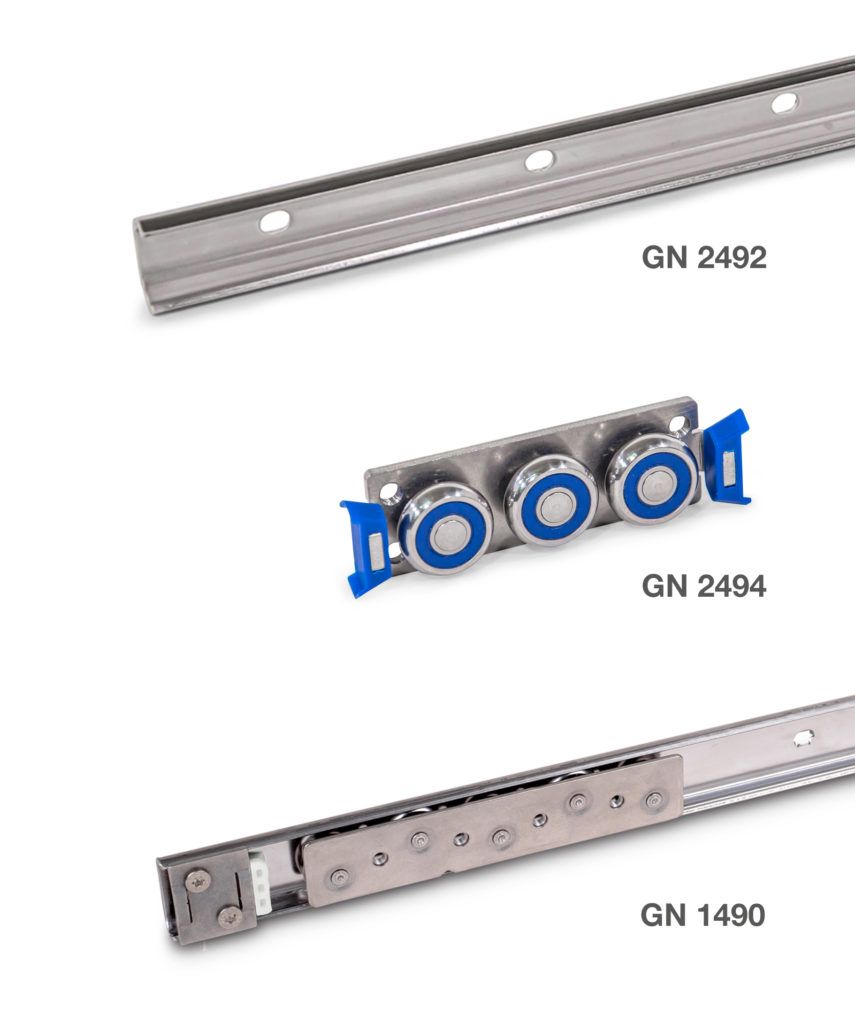
If precise, quiet, and dynamic linear movements are required, linear guide rail systems are indispensable. For special applications, JW Winco has now produced its modular system in stainless steel. Even if they might appear so at first glance, not all linear guide rail systems are the same. The differences reveal themselves upon a closer look and tend to lie in fundamental aspects rather than mere details. This is why Winco offers a number of different models and versions. The most recent addition is the stainless steel version in the two most important guide rail heights of 1.18 in (30 mm) and 1.77 in (45 mm). These guide rails are assembled from precisely matched components: linear guide rails GN 2492, the matching cam roller carriages GN 2494, and the separately available wipers of TPU plus the individual rollers with three different bore types. The exceptionally stable guide rails are produced in a rolling process and can be mounted using the typical bore pattern, even up to a rail length of 97.64 in (2480 mm). The compact cam roller carriages run securely within the C-shaped rail, and the vertical play can be adjusted on the middle roller – a typical Winco feature. The ball bearings of the rollers are sealed, lubricated for life, and FDA-compliant (as indicated by the blue seals). As a result, these linear guide rail systems can be used in corrosive environments as well as areas with strict hygiene requirements. The linear guide rail systems of the GN 2422 series can be assembled just as individually. In this case, the C-shaped guide rails GN 2422 are available in four heights and are made of non-warping zinc-plated, hardened, and ground steel. The matching cam roller carriages GN 2424 come in three versions, each with an adjustable middle roller. All rollers and wipers can also be purchased individually. When mounted to the cam roller carriages, the wipers remove dirt from the guide rails during every movement to ensure smooth travel at all times. Alongside these linear guide rail systems designed for extreme demands, Winco also carries simpler variations in its product range, which are quite sufficient for standard applications. GN 1490 is offered in two heights as a complete set including rail and carriage – in zinc-plated steel or stainless steel. Thanks to slightly over-dimensioned rollers, the carriages run quietly and precisely within the C-profiles with zero backlashes. The lifetime lubrication and dust-proof sealing of the bearing also make valuable contributions here. With these three models, Winco offers ideal solutions for all quality requirements and price points.
PERC encourages material handling professionals to decrease forklift emissions this Earth Day
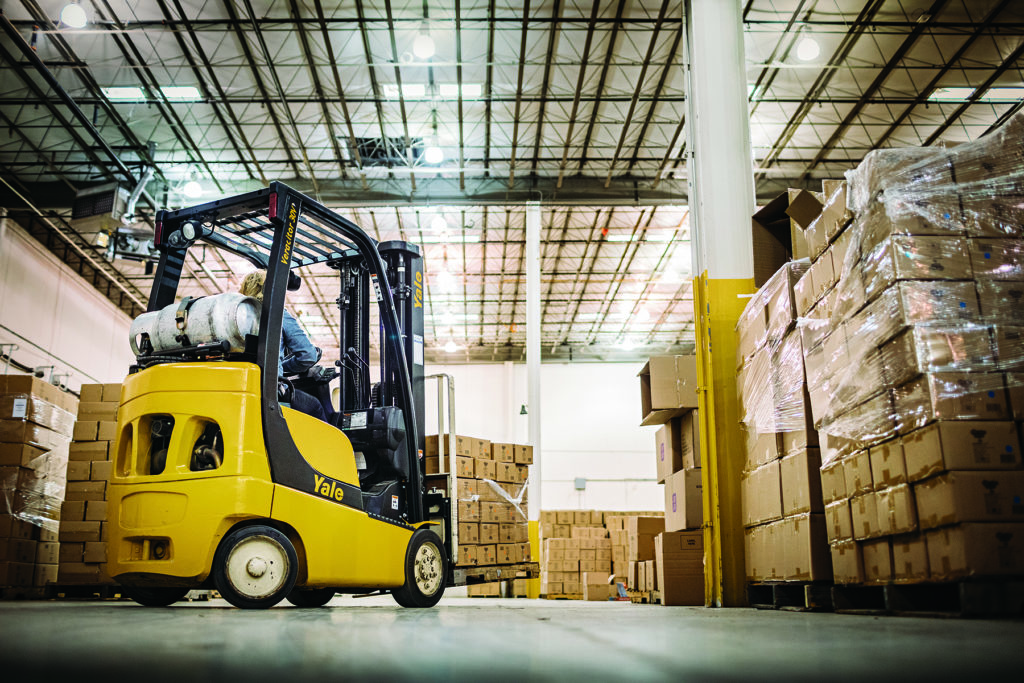
Research reveals low-emission propane forklifts can assist with decarbonization This Earth Day, the Propane Education & Research Council (PERC) is reminding material handling professionals that because of propane’s clean, low emissions profile, propane forklifts are a reliable and sustainable choice for both indoor and outdoor environments. “Professionals throughout the supply chain industry are working to decrease emissions and achieve a more sustainable operation—and Earth Day brings a heightened awareness to these efforts,” said Joseph Calhoun, director of off-road business development at PERC. “For material handling professionals, this often means taking a closer look at the equipment and energy sources that are being used.” Research from PERC reveals propane forklifts provide a smaller carbon footprint than electric forklifts under several conditions. The analysis, Fork(lifts) in the (Off) Road: Should We Ban Internal Combustion Engines for Electric? debates California Air Resources Board (CARB)’s proposed to ban on internal combustion engine (ICE) forklifts. CARB’s mandate would ban all internal combustion engine forklifts including hybrid electric solutions, allowing only battery-powered and hydrogen fuel cell forklifts. The analysis from PERC compares the lifecycle profiles of propane and electric-powered forklifts, including carbon dioxide (CO2) and nitrogen oxide (NOx) emissions. Findings for several states show that forklifts with conventional propane engines are superior to those powered by electricity, especially when considering marginal emissions. The case for internal combustion engine forklifts becomes even stronger with hybrids and renewable fuels. In fact, nearly all propane ICE forklifts technologies emit extremely low levels of criteria pollutants compared to the regulatory standards. PERC conducted the analysis using available Environmental Protection Agency (EPA) certification emissions data to compare the CO2 and NOx lifecycle emissions of propane and electric forklifts. The comparative analysis presented the following scientific findings: A zero-emissions forklift does not exist. Hybrid electric forklifts, with both conventional and renewable fuels, emit less CO2 than battery-electric forklifts. For most states, NOx emissions from propane-powered forklifts engines can be less than half that of battery-electric forklifts powered by the electric grid. Nearly 314,000 ICE forklifts are operating in California alone. Replacing all ICE forklifts in the state with battery-electric forklifts would require nearly 10 GWh/day of additional charging capacity. Electrification as a means of decarbonization sounds attractive but as proven, is not real without complete consideration of lifecycle emissions. “As fuels and engine technologies continue to evolve—coming together as a unified and environmentally conscious industry has never been more important,” Calhoun said. “Earth Day provides the perfect opportunity for companies throughout the supply chain industry to re-evaluate their current practices and determine where they can make a positive change. With the clean energy of propane, every day is Earth Day.” Download PERC’s new analysis or visit www.Propane.com/Research to learn more about how to decrease forklift emissions this Earth Day.
U.S. Rail Traffic for the week ending April 16, 2022
The Association of American Railroads (AAR) has reported U.S. rail traffic for the week ending April 16, 2022. For this week, total U.S. weekly rail traffic was 489,801 carloads and intermodal units, down 8.1 percent compared with the same week last year. Total carloads for the week ending April 16 were 221,228 carloads, down 6.8 percent compared with the same week in 2021, while U.S. weekly intermodal volume was 268,573 containers and trailers, down 9.2 percent compared to 2021. Two of the 10 carload commodity groups posted an increase compared with the same week in 2021. They were chemicals, up 849 carloads, to 33,090; and coal, up 2 carloads, to 61,550. Commodity groups that posted decreases compared with the same week in 2021 included grain, down 6,632 carloads, to 19,602; metallic ores and metals, down 4,136 carloads, to 20,638; and petroleum and petroleum products, down 2,358 carloads, to 8,466. For the first 15 weeks of 2022, U.S. railroads reported a cumulative volume of 3,444,827 carloads, up 1.9 percent from the same point last year; and 3,910,355 intermodal units, down 6.8 percent from last year. Total combined U.S. traffic for the first 15 weeks of 2022 was 7,355,182 carloads and intermodal units, a decrease of 2.9 percent compared to last year. North American rail volume for the week ending April 16, 2022, on 12 reporting U.S., Canadian and Mexican railroads totaled 319,064 carloads, down 6.8 percent compared with the same week last year, and 354,060 intermodal units, down 8.1 percent compared with last year. Total combined weekly rail traffic in North America was 673,124 carloads and intermodal units, down 7.5 percent. North American rail volume for the first 15 weeks of 2022 was 9,987,458 carloads and intermodal units, down 3.9 percent compared with 2021. Canadian railroads reported 75,273 carloads for the week, down 9.3 percent, and 71,623 intermodal units, down 0.03 percent compared with the same week in 2021. For the first 15 weeks of 2022, Canadian railroads reported a cumulative rail traffic volume of 2,083,303 carloads, containers, and trailers, down 8.5 percent. Mexican railroads reported 22,563 carloads for the week, up 2.9 percent compared with the same week last year, and 13,864 intermodal units, down 23 percent. Cumulative volume on Mexican railroads for the first 15 weeks of 2022 was 548,973 carloads and intermodal containers and trailers, up 1.4 percent from the same point last year. To view the U.S. Traffic charts, click here.
Pay attention
Ever hear those words when you were growing up? Hundreds of times, right? And you probably thought you were being scolded. Actually, when you were told to “pay attention,” you were getting one of life’s most valuable lessons. Now you’re grown up, and I bet you still haven’t learned that lesson. Why? Because you’re probably more focused on yourself than you are on the world around you. And when you’re focused on yourself-how you look, what you’re wearing, and what other people think of you-you are diverting your “focus energy” away from your success. When you’re focused, you have an intense purpose. But when you waste that focus on yourself, you’ll miss the opportunities around you and stay “out of focus.” Now, people will tell you TO focus or to BE more focused, but very few will tell you HOW to focus. So, let me share this little secret with you. The easiest way to “be focused” is to “be aware.” Be aware of what is around you and be aware of who is around you. Sounds simple, but it means you have to change selfish and insecure to open-minded and self-confident. Let me explain. “Antennas up” at all times is what my mentor and friend Earl Pertnoy has preached for more than 25 years. It doesn’t matter where you are. You could be in a bathroom, online at the airport, in a hotel lobby, at a car wash, in an elevator, or at a restaurant. All are ripe for making connections if you’re alert. And if you follow Earl’s advice like I do, you’ll get the sales lead or the deal you were never expecting. “Antennas up” philosophy starts with being aware of your immediate surroundings. If you’re looking to be a master seller, you must understand and capitalize on where you are, whom you meet, and what you say. If you’re at an event, your job is to keep your “antennas up” until you meet the key players. You do whatever it takes. You may have to ask someone, “Where’s the big cheese?” You may have to read every nametag in the room. You may have to stay until you’re the only person left. You may even have to stand and wait until the conversation the “big cheese” is having with someone else is finished. But if your antennas are in a bottle of beer or with your friends or looking for more food, they’re pointed in the wrong direction. So besides losing, you’ll lose to someone whose antennas are pointed in the right direction. TRUE STORY Take Note: This story, which took place in the men’s room at LaGuardia Airport, is not meant to offend, but to make a point. After getting off the plane at LaGuardia, I had to use the facility. Like all men’s rooms, this one was equipped with urinals. Now, when you visit the men’s room, you adhere to this unwritten rule: You don’t talk. But I happened to glance to my left and saw the actor Hal Linden, who played Barney Miller on the TV series, and said as we stood over our urinals, “The great equalizer of men.” Linden started to howl and almost wet his suede shoes. I said, “Goin’ into the city?” He said, “Yep.” I said, “Wanna split a cab?” He said, “Sure.” And we drove into the city through the Astoria section of Queens where “Archie Bunker” lived and where “Barney Miller’s” police station was located. It was a great ride, and when we got to the city, he paid the cab fare. Guess what? My antennas were up. I had the guts to make the exchange, and I won. Did I win big? No, but I had fun. In the game of “antennas up,” it’s not always about winning big. It’s about having a good time, and it’s about practice. I never fail to keep my antennas up, and I never fail to capitalize on an opportunity when it occurs. Neither should you. Here’s another story. Recently, I was flying from Buffalo to Dallas. As usual, my antennas were up, especially since I was sitting next to Hall of Fame quarterback Jim Kelly. We chatted a bit, but I certainly didn’t want to mention the word “Super Bowl.” So, I began to tell him that I was an author and a speaker, that I had been on the same program with him at a couple of events, and that I had a couple of his autographed footballs. Kelly smiled. Then I said, “As a noted speaker and author, you probably want my autograph.” So, I autographed my boarding card and handed it to him. As Kelly sat there dumbfounded, I said, “I wouldn’t mind if you autographed your boarding pass and gave it to me.” He laughed, autographed his boarding pass, and handed back both his boarding pass and mine. Because my antennas were up, I talked to Jim Kelly, got his autograph, and as a bonus-had lot of fun. It’s important for you to understand that selling yourself is not about tactics. Selling is not about techniques. Selling is about focusing and engaging the person you are focused on in a creative verbal exchange. And the only way to master focus is to keep your antennas up. Are your antennas up? About the Author: Jeffrey Gitomer is the author of twelve best-selling books including The Sales Bible, The Little Red Book of Selling, and The Little Gold Book of Yes! Attitude. His real-world ideas and content are also available as online courses at www.GitomerLearningAcademy.com. For information about training and seminars visit www.Gitomer.com or email Jeffrey at [email protected] or call him at 704 333-1112.
It’s an Automation Boom creating big opportunities

Demand for shorter lead times needs for quality products and staffing shortages. It’s an equation resulting in increased automation in material handling warehouses. “We have experienced demand from customers for shorter delivery times. There is a higher expectation, not only for quality but to get products within hours to the door,” said Carlos Fernández, chief product officer at AutoStore, a warehouse automation company. One way to achieve these goals is to move inventory closer to the customer, Fernández said. But in greater population centers, real estate is typically at a premium. This month, Material Handling Wholesaler examines some of the latest automation innovations designed to help companies succeed, as well as some of the trends shaping the industry. Robots reaching higher AutoStore’s recently announced the arrival of its R5+ Robot in the company’s “Red Line.” This addition to the AutoStore Robot fleet enables warehouses to manage larger items, because the R5+ is able to handle bins up to 425 millimeters, the tallest in the AutoStore system, according to a company press release. Previously, this was a premium feature possible only with the AutoStore B1 Robot installations, or the “Black Line.” The company, which has been developing cube storage for more than 20 years, has long focused on helping customers lower their fulfillment costs, according to Fernández. He said making the R5+ Robot available through the company’s cost-effective Red Line allows businesses around the globe the flexibility to select the most appropriate line for their needs. “There has been a big demand for this type of application,” said Fernández, who said that apparel companies have been particularly interested in using the AutoStore 425-millimeter bin line. Fernández said AutoStore customers view the Red Line as “a very solid and proven” technology. “Our customers really like it,” he said. “We have seen a very positive demand from both our distributor network and customers.” The goal of AutoStore is to continuously upgrade the technology to extend the capabilities of both the hardware and software. By making the robotic technology widely accessible, Fernández said AutoStore is helping customers automate new sections of warehouses, allowing for the driving of more inventory and increased productivity. Material handling warehouse management typically is looking to “save as much space in their current operation so they can continue to grow. To think faster and be more productive,” Fernández said. “We want to allow them to stay competitive. All the way to the end clients.” At The Raymond Corp., the Automated Transtacker (Automated TRT) was recently released, with an ability for a high vertical reach. “It’s an industry-leading product,” said Martin Buena-Franco, product marketing manager of automation at Raymond. The Automated TRT can be operated 24/7, according to Buena-Franco. It has dual-mode operation: automated mode for full pallet moves and manual mode for case picking. “With no need for operator breaks, this means more hours and the floor and more pallets moved per shift, increasing productivity,” a company release said. The Automated TRT also integrates into the customer’s warehouse management system and while it requires some human interaction, does not require regular maintenance. “You still need to train the operator to set up the automatic mode, to introduce to the system at the beginning of the shift,” Buena-Franco said. “And there are few other safety training things you train the customer or end-user on.” Still, many of the safety features are simply built in to the Automated TRT. The transtacker is a solution for very narrow aisles and is being used by Raymond’s customers in apparel, warehousing, packaging and plastics, and others. “A lot of times the customer, because they don’t have the room to expand the distribution center, they build up instead,” Bunea-Franco said. At FORT Robotics, the Nano Safety Controller was released this spring. The controller is an embeddable board allowing customers to build FORT wireless communication and safety technology into their machines. It can receive trusted commands, or dependable messages like stopping, sprinting, crawling, or changing in the state, via patented technology, a press release said. “Until now, customers who wanted our trusted command technology have had to use our bolt-on hardware. That’s not always ideal for every project,” said Nathan Bivans, FORT CTO, in the statement. “With the NSC, we can provide a solution that’s smaller, more flexible, more integrated, and cost-effective.” Labor shortage Worker shortages are driving the automation trend due to the cost of labor and a generational shift, Buena-Franco said. “The baby boomers a few years from now, are going to be all out of the workforce,” he said. “We don’t have enough young people coming in. It’s just the numbers. We need to find ways to automate. ”Fernández agreed. Automation advances like the R5+ Robot can assist in filling the ongoing labor gap and in meeting the growth of e-commerce following the pandemic, according to Fernández. “We definitely are seeing that the labor shortage is driving a lot of the automation push and demand for technology,” he said, adding that the advancement of the technology can provide improved safety and provide a draw for the workforce. “Technology like that from AutoStore is allowing retailers to bring workers into a better work environment,” he said. “From a safety standpoint, there is no need to walk longer distances. The goods will come to where they are. We have also seen how retailers are using technology to attract more talent into their operations,” said Fernández. “There is greater importance in knowing how (a company) relates to sustainability. Brands want to have a statement out there,” he said, noting how the use of AutoStore technology can assist a business in using space efficiently. “Space is always a key driver,” said Fernández, who said that AutoStore technology is also designed to be user-friendly, helping address labor turnover. “It is very easy to use. It takes maybe 30 minutes to understand how the workstation works,” he said. “It’s very fast and intuitive.” The system can be monitored by a designated supervisor or superuser in-house. The Future Fernández can envision automation technology eventually moving directly into retail spaces. This would free up
More distress plus

This month I was hoping to share some positive comments about inflation, supply chain issues, OEM delivery dates, improving sales numbers and margins. Unfortunately, I cannot do that. I cannot do that because the activities in Europe have changed from what we call a conventional recession (where we were headed before the shooting started in Europe) to a strange recession that will have more bite for a longer-term. Just what we needed. In addition, word on the street is this recession will become stagflation where prices continue to rise even though economic activity is shrinking. Conventional recession could last from six months to a year when events turn and it is a start back to business as usual, such as what happened in 2008 and 2009. Stagflation, on the other hand, is made up of long-term events that keep pushing up pricing even though the economy is in decline. Hence, we can do away with the transitory inflation speak. The war in Europe, the COVID in China, more supply chain problems, and especially the increase in oil prices will be here long term with little hope that monetary policy changes can produce a soft recovery any time soon. The long-term phase is the one that bothers me. It bothers me because if dealers and their customers were taking steps to offset the negative impacts of minor interest rate hikes, short-term price increases, and OEM lead time of six to 10 months, hoping that their strategy provides a return to normalcy within a year, that no longer may be a workable solution to the problem. This situation is no longer a minor change in the business plan and operating budget. Dealing with Stagflation requires a new set of planning skills few managers have had the pleasure of dealing with. Setting time aside to visit this unusual set of circumstances needs to take place ASAP to discuss how this scenario impacts every segment of your business, not to discuss recession but to discuss how you must operate and cash flow when prices are moving into a double-digit range while sales are falling. This is an entirely new ballgame. There are businesses out there that are capital-efficient or in other words have the flexibility to deal with stagflation because they have pricing power and are not bound by substantial amounts of debt and fixed costs. I wish I could say that an equipment dealer fits into this category, but you do not. Dealers will have to examine their revenue silos to see where they are making money. Have to pass on costs if they can, and if they cannot consider downsizing the operation or department, also be careful granting credit while stepping up the collection process. Large AR write-offs cannot be tolerated. After gaining insights about Stagflation your business model may require revisions if you hope to come out the other side of adventure. Challenging decisions may have to be made once your complete stress tests to see if the revised model cash flows. Spend as much time as necessary, using outsiders, if necessary, to do the projections resulting from the changes. The bottom line here is the need for a higher-than-normal return on equity. You know this. But what process to use to make it happen is another story. Return on equity means having control of the balance sheet and operating margins. And one way to find out what yours looks like is to use MHEDA’s Return on Investment Calculation found in the Disc Report. Remember this: Profit Margin X Asset Turnover = Return on Assets x Financial Leverage = Return on Equity. The definitions can be found in the report. The Profit Margin deals with pricing and cost controls. The inability to pass on the cost increases means cost reductions are in order. Asset Turnover is where the rubber meets the road. Asset costs are increasing while sales are decreasing. Something has to give sooner rather than later. Financial Leverage works as long as you can cover the debt covenants and debt service. Keep in mind that more costly inventory will require additional financing. In other words, Stagflation financials will look nothing like you normally expect. They will return to historical levels at some point, but in the meantime will look uncoordinated and require special and consistent management review. This process will be something like ZERO-BASED BUDGETING where you “start” the business from scratch and in the process find ways to reduce costs and increase cash flow. Financial gurus, I follow believe stagflation is in the cards because energy and food costs will stick around for quite some time. It cannot hurt to plan accordingly. If nothing else, you will have a more capital-efficient company earning higher than average returns. About the Columnist: Garry Bartecki is a CPA MBA with GB Financial Services LLC and a Wholesaler columnist since August 1993. E-mail [email protected] to contact Garry.
KEEN Utility Cincinnati Wellington pull-on style boasts durability
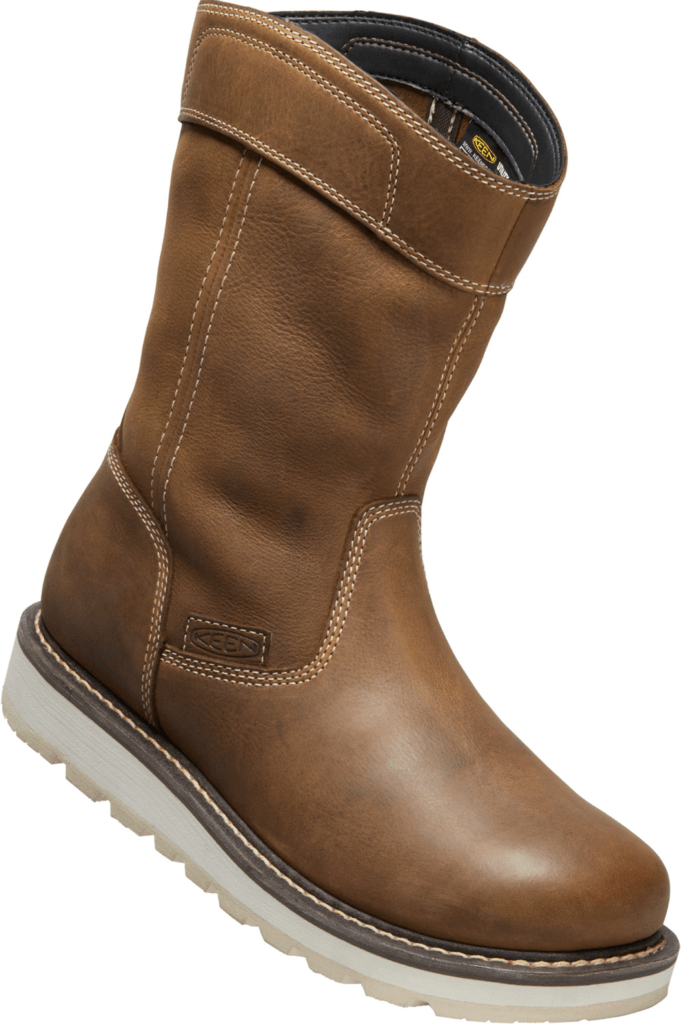
With the introduction of the Cincinnati Wellington, KEEN Utility incorporates modern, lightweight materials into a time-tested pull-on style for heavy-duty performance. Constructed with a Goodyear welt, the Cincinnati Wellington boasts a durable, Barnyard Resistant full-grain leather upper to resist many caustic minerals, oils, and chemicals. Product highlights include an air-infused KEEN Luftcell midsole as well as a removable, dual-density PolyAer footbed with an aerated pillow-top cushioning. Safety features include non-metallic asymmetrical carbon-fiber toes that are 15% lighter than steel while offering an unobtrusive fit as well as a slip-resistant, EH-rated rubber outsole to provide dependable traction in wet or oily environments while also giving protection from accidental contact with live electrical circuits. From the farm to the worksite, the Cincinnati Wellington is built to grind through tough job site conditions while still looking great.
Inflation Strategy—Part Two
As we traverse the road forward in 2022, the business climate is becoming clear. High demand, dwindling supply, rising prices, and an uninspired workforce. What a combination! In my March 2020 column (Inflation OMG!), I laid out a series of strategies that could be employed in order to reshape and align the sales department in this new and different distribution landscape. At the end of the March article, I promised some ideas on similar strategies for the rental, parts, and service departments. This month I am going to make good on that promise. My first intention was to provide these strategies in my April column. I rethought that course of action. Because the disruption to our businesses is so acute, I thought it better to do “first things first”. The first step in the creation of an effective plan is to take stock of your resources and use your collected data as a basis for a SWOT analysis (Strengths – Weaknesses – Opportunities – Threats). In times where resources are running low but customer expectations are high, we tend to panic and naturally react by “shooting” before we “aim”. This consumes resources even more quickly. Although you can re-read the April issue, in short, a properly executed SWOT analysis does the following five things: SWOT Slows everyone down. As customer urgency rises, our response is to “speed up” and answer quickly. SWOT counteracts this by preplanning responses and understanding the ramifications of a kneejerk reaction. SWOT tells the TRUTH about existing and future resources. It is, what it is. We are not magicians. We can’t simply wish more resources into existence. SWOT defines how resources will be distributed. No shortcuts, no workarounds, no rogue ideas SWOT defines what we are best at doing. When supplies are short…. they MUST be pointed at the CENTER of your target. SWOT warns us about what we struggle with. Don’t throw shrinking resources at a black hole. With a well-defined SWOT analysis behind us, we can now talk about rental, parts, and service strategy. The reason I wanted to talk about a SWOT analysis BEFORE I present strategies is because not every idea presented here will square with your SWOT findings. So, use what fits. Discard what doesn’t. Rental Department Strategies Make no mistake. Rising prices and the absolute lack of new inventory in 2022 will mean that the OTHER departments in the dealership have to produce more profitability for the dealership to meet its obligations. The rental department is critical to producing these profits. Rental asset decisions One of the natural tendencies that dealer principals have, when inventory is in short supply, is to reallocate new equipment (ordered for the rental fleet) to the sales department to fill waiting customer orders. I understand the temptation to do this, and on its surface, it might seem like the right decision to make. The downside to doing so however must be recognized. The benefit to the dealership as a whole is served by rental assets adhering to a cycle of replacement that is proven in our industry. Extending the rental life of units in rental service increases maintenance costs affects depreciation allowances, and most importantly, precludes the rental department from raising their rates in an inflationary environment (see next section). As attractive as these rental assets may be to the sales department, the fact remains that the sales department’s long-term appetite for inventory will likely not be satiated. The needs of the DEALERSHIP will be better served by putting that new unit in service at an existing rental customer. This will allow the unit currently in service, to be retired, refurbished, and made available to sales. It also may allow the rental department to RAISE THE RATE on the new replacement. Additionally, it provides a depreciation benefit to the dealership and reduces service expense and exposure. Surrendering rental assets to the sales department may placate a nervous customer, but it gives the dealership no hard financial benefit. In fact, the sales department will still get a unit to sell in the end, it’s just used, instead of new. Price increases – Base Rates As the acquisition price of rental assets rises, the rates must follow suit. For the last 20 years or so, short-term rental rates have been stuck in neutral for a myriad of reasons. Low inflation, low-interest rates, and better technology leading to decreased maintenance costs are all factors that held retail rental rates in check. The newest inflation spike however will serve to force all of us out of that rut. As supply dwindles, so will the available units for rent on your lot. There is no reason not to raise basic published rates now. Do some math here. Historically, best practice suggests that monthly rental rates should represent 4% to 5% of the net acquisition cost of the equipment. In most dealerships, we have not kept that ratio. Even “preferred customers” are going to have to stomach an increase, and quite frankly, I don’t think they will be surprised. After all, every other cost is increasing at the same time. Hourly Usage Charges Another unexploited area is the over-use of short-term rental assets by customers. Your rental document probably specifies that the rental rates quoted, allow for eight hours of equipment usage per day, 40 hours per week, and 160 hours per month. It should also specify the “per hour” penalty for exceeding these thresholds. My observations are that these charges are seldom levied on customers and the entire issue of short-term overtime billing is routinely ignored. For long-term rentals (mostly full maintenance units), we don’t hesitate to explain these penalties, because we are constrained by the finance company to do so. Not collecting for over-use of equipment is especially damaging in seasonal and agricultural applications where units are literally run around the clock. My advice is to use the shortage of available rental inventory at this juncture, to shift your policy towards enforcing the hourly stipulations. If you EXPLAIN
Hyundai Material Handling retains LKH&S for marketing
Hyundai Material Handling, North America, has selected LKH&S, Chicago-based marketing, and advertising agency to be its agency of record. Hyundai Material Handling, known for its quality manufacturing, is looking to the agency to generate more top-of-mind awareness, drive sales, and establish a leadership position in the marketplace. “This was a long time coming and we’re ready to support our dealers with best-in-class marketing,” said Lewis Byers, executive vice president and chief operating officer for Hyundai Material Handling, N.A. “LKH&S has experience working with forklift brands and knows our category well. They get what we’re trying to do, and I think they will become a great partner.” LKH&S has a more than 30-year history in both B2B and B2C marketing and advertising, working on over 100 industry-leading brands. Its most recent material handling experience was with UniCarriers Americas, and past experience includes other capital equipment manufacturers such as International Truck, Caterpillar, Case Construction, and Hyster. “My colleagues and I are thrilled to be working with such a storied, global brand. The quality of their products is only exceeded by their constant desire to innovate,” said Stanton Lewin, managing director and principal at LKH&S. “In keeping with their spirit, we’re ready to work together to innovate and help Hyundai transform the material handling industry.” LKH&S will begin developing a marketing infrastructure for Hyundai and start the planning process immediately.
AFFLINK LLC hires Todd Gatzulis as Senior Vice President of Business Development
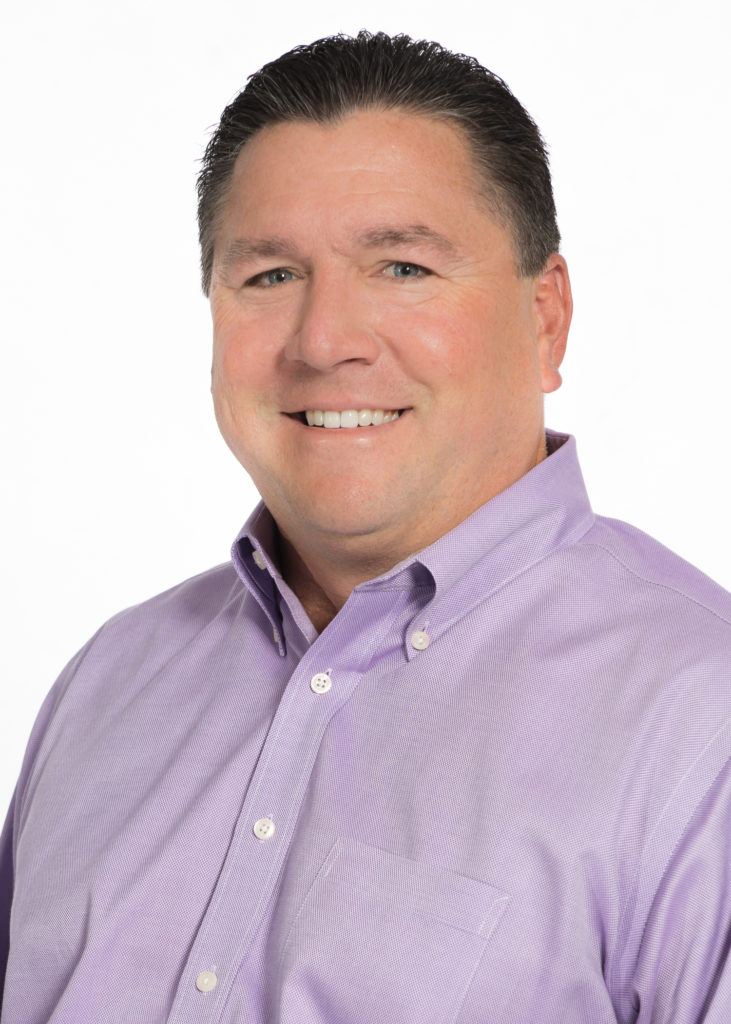
AFFLINK LLC, a global provider in supply chain management, announces the appointment of Todd Gatzulis as Senior Vice President of Business Development. Gatzulis, an industry veteran with over three decades of experience, will oversee AFFLINK’s corporate sales and supply chain functions, reporting to President and CEO Dennis Riffer. “We are excited to welcome Todd to AFFLINK. His experience and track record of success in the industry make him a prodigious addition to our organization,” said Riffer. Gatzulis joins AFFLINK with over 30 years of experience. During many of those years, he served in various roles at Henkel/Dial, a worldwide leader in innovations, brands, and technologies in the business areas of beauty, laundry, and home care. Upon departure, Gatzulis held the title of President/General Manager of the Diversified Markets Division, the commercial business unit for Henkel North America. Gatzulis actively participated on the Executive Committee for Henkel Consumer Goods North America for nine years during his tenure. Most recently, Gatzulis served as the Chief Operating Officer for ViaClean Technologies, a biotech company that develops, manufactures, and markets environmentally responsible solutions to protect surfaces. In addition to his professional experience, Gatzulis has dedicated himself to numerous non-profit organizations and industry boards, including the Leukemia & Lymphoma Society and Fresh Start Women’s Foundation, and the Sanitary Supply Wholesaling Association. “I am honored to join the leadership team at AFFLINK; they have done a tremendous job evolving as the commercial markets have continued to change and consolidate,” said Gatzulis. “I look forward to utilizing my years of experience and training alongside Dennis Riffer and his team. AFFLINK has a great culture and a passion for winning, making this new opportunity extremely exciting for my family and me.”
UWL expands global footprint with new offices

UWL, a top 20 American-owned NVOCC, and global logistics solutions provider are expanding its global footprint with the opening of two new strategically located offices: one in Long Beach, CA, and one in Ho Chi Minh City, Vietnam. In addition to enabling localized support to meet customer demand in these markets, this strategic investment also sets the stage for UWL’s continued growth. UWL, part of the World Group family of transportation and logistics companies, experienced record-breaking container volume in 2021 and is poised to continue to grow through innovative customer-centric solutions, enhanced services, and geographic expansion. “As UWL has expanded our global ocean services, we have had to move west and to the far east to support those services,” said Duncan Wright, UWL President. “With highly disruptive supply chains, our customers need us to have boots on the ground to help coordinate shipments and ensure they get the space and equipment to move freight. Strengthening our position in these markets answers the call from our customers looking to us as their logistics solutions partner to offer both local support and a global perspective.” “As the industry diversifies trade route options, we are confident our investment in Long Beach and Ho Chi Minh City will meet the needs of our current customer base as well as set the stage for future growth,” added Wright. According to World Shipping Council 2020 rankings, the Port of Long Beach is firmly established as the second-largest container port in North America based on total container volume. The Port of Ho Chi Minh City is the 26th largest container port in the world, and North American container volume out of Vietnam increased 32% in 2021 compared to 2020. That growth is projected to increase as the industry looks to diversify its trading routes. “The commitment to our partners on the ground in Vietnam and Southern California is at the heart of our decision to put a team in place in these markets. We see this as an investment in our customers, our company, and our future,” Evan Hartman, Senior VP of International Operations for UWL. “Our goal for today and tomorrow is to be where our customers need us, offering the customized, hands-on support they require to navigate a highly volatile logistics environment.” As an asset-based NVOCC, UWL has introduced additional technology and end-to-end services to respond to customers’ needs and address marketplace challenges. Its sister company, World Distribution Services (WDS), recently secured a brand-new 303,000 sq ft distribution facility in the Pacific Northwest, giving customers an additional destination option as well as distribution options. “For more than 60 years, our organization has worked to get ahead of market trends, providing forward-thinking solutions to our customers while supporting supply chain fluidity. This expansion into Long Beach and Ho Chi Minh City is the latest example of our people understanding where the market is going, anticipating customer needs, and developing solutions to keep freight moving. We will continue to explore and leverage opportunities that expand our customer service offerings and align with our strategic growth plans,” said Fred Hunger, Chairman of World Group, the parent company of UWL and WDS.
UgoWork receives major repeat order from top Fortune Global 500 company for its lithium-ion batteries
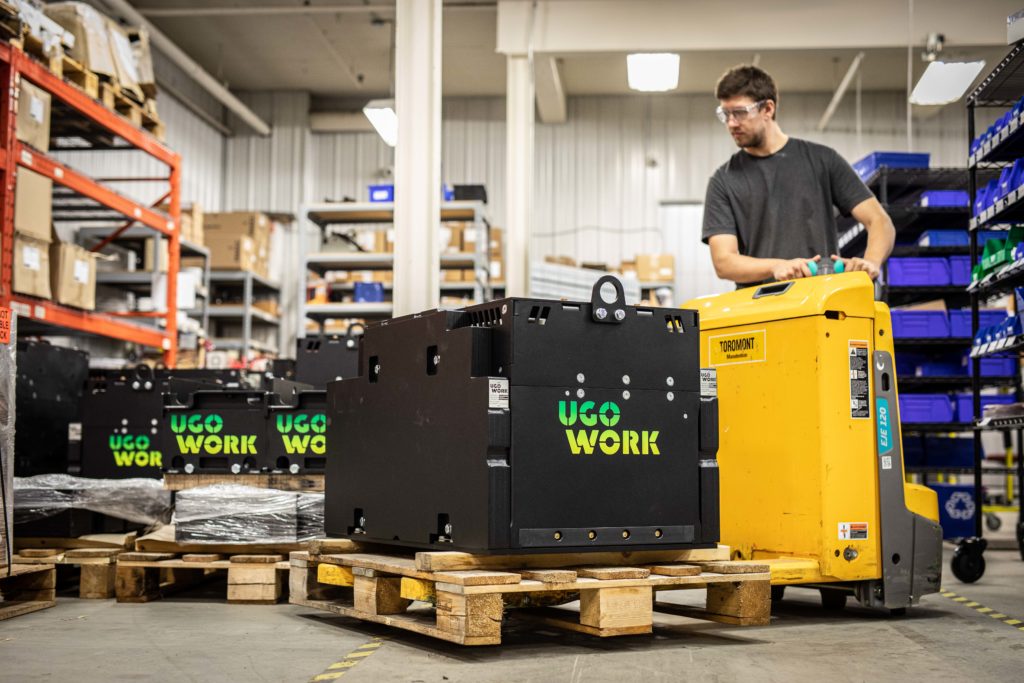
UgoWork™, a Canadian lithium-ion battery manufacturer specializing in industrial vehicles and the material handling industry, has announced it has received a substantial purchase order from one of the top Fortune Global 500 companies with multiple locations worldwide. The client, which remains undisclosed due to the terms of the agreement, is a major player in the automotive industry. UgoWork will be supplying a significant volume of its UL-2580-certified lithium-ion batteries for electric forklifts. UgoWork’s innovative technology is the foundation for turnkey solutions that feature safe and high-performance lithium-ion batteries, embedded chargers, and a universal, automotive-grade charging station to maximize material handling operations and forklift operator efficiency. These solutions optimize the energy path from grid to truck, with 87% of power being transferred to industrial vehicles for increased energy savings and reduced carbon footprint. In addition, UgoWork’s client will benefit from 24/7 support, battery monitoring, and performance analytics in order to carry out proactive, preventative, and predictive maintenance across its entire fleet of forklifts. “This repeat order from this client is a clear demonstration of the value and future-proofed approach UgoWork brings to the table—especially in an industry as committed to high standards as the automotive sector,” said Philippe Beauchamp, CEO of UgoWork. “Our client was impressed with the quality of our solutions and the means with which we offer comprehensive support for their material handling workflows. We look forward to helping the organization hit its sustainability targets and bring their fleet operations to a whole new level of efficiency.”
Peers and partners to convene for PTDA 2022 Canadian Conference

The Power Transmission Distributors Association (PTDA) will convene for the PTDA 2022 Canadian Conference in Montreal, Quebec, Canada June 7–9. Delegates in the power transmission/motion control (PT/MC) industry, representing PTDA distributor and manufacturer companies, will be in attendance to broaden cross-channel networks, expand connections and deepen business relationships. “This is a long-awaited opportunity for PTDA members doing business in Canada to re-connect, grow their knowledge of top industry trends and converse with thought leadership,” said PTDA President JP Bouchard, vice president, General Bearing Service, Inc. “Each interaction will deliver insight to help participants become a sought-out business partner and provide better value to their customers.” A highlight of the conference is the Distributor-Manufacturer Idea Exchange (DM-IDEX), a time- and cost-effective forum bringing together distributor and manufacturer executives for high-level discussions on market strategies and issues. Both groups laud DM-IDEX as one of the best face-to-face cross-channel business programs with a measurable ROI for participants. Well-respected industry thought leaders will offer keynote presentations. Decorated military officer, author, and award-winning speaker retired Colonel Mark Gasparotto will present the opening keynote, “Clearing the Way: Leading from the Front.” With ever-escalating recruitment and retention struggles topping the list of challenges for PT/MC employers, the PT WORK Force® initiative of the PTDA Foundation will host transformational growth expert and best-selling author Rick Denley to speak on “Growth Minded Recruitment.” Tom Dielschneider, vice president of Global Supply Chain, Svante will address the emerging opportunity for PTDA members to play a role in supporting climate technology, specifically providing PT/MC parts to assist in the reduction of CO2 in the atmosphere and emissions. Ryan Walter, former NHL player and Hall of Fame Inductee will present a Leadership Enhancement Workshop titled “Six Mindsets to Power Your Leadership” during which he will highlight his proprietary “Utilizing Our Thinking Tendencies Model.” Walter will also present the closing keynote, “Winning Leadership,” and will draw similarities between skills practiced inside NHL locker rooms and corporate board rooms that can set leaders apart and activate winning energy. Breakfast, evening receptions and golf will provide opportunities for more informal networking throughout the conference. For more information, visit ptda.org/CanadianConference. Those registering before April 28, 2022 will receive a $100 discount. The Power Transmission Distributors Association (PTDA) is the leading global association for the industrial power transmission/motion control (PT/MC) distribution channel. Headquartered in Chicago, PTDA represents power transmission/motion control distribution firms that generate more than $20 billion in sales and span over 2,700 locations. PTDA members also include manufacturers that supply the PT/MC industry.
MHS and Fortna to combine to create global eCommerce and Logistics Automation leader
MHS Global (“MHS”), a global provider of material handling automation technology and systems integration, and Fortna (“Fortna”), a software and solutions provider for warehouse and distribution, will combine to form a multi-billion-dollar, multinational company providing parcel, warehouse and distribution, and lifecycle services. MHS and Fortna belong to the investment portfolio of Thomas H. Lee Partners, L.P. (“THL”), a premier private equity firm investing in middle-market growth companies. THL will remain the majority owner of the combined company and a wholly-owned subsidiary of the Abu Dhabi Investment Authority (“ADIA”) will acquire a significant minority stake to support the combination. As businesses increasingly require improved throughput and faster execution, there is heightened demand for automation, advanced operating software, and services. The combination of MHS’s automation technologies and Fortna’s operational optimization software, in addition to each company’s deep industry partnerships, serves the need for end-to-end solutions in logistics operations. Customers will benefit from the breadth and depth of both companies’ offerings: industry-leading capabilities in a parcel, cross-docking, conveyance, and sortation solutions combined with industry-leading orchestration and optimization software and unique operational designs leveraging advanced automation to drive greater efficiencies and cost savings for customers. “MHS has built its reputation over the past 20-plus years by being a reliable and committed partner while expanding our capabilities and taking a progressive, tech-forward stance to deliver new products and solutions,” said MHS CEO Scott McReynolds. “Combining with Fortna will allow us to accelerate our collective efforts on all fronts, to the benefit of our customers, employees, and suppliers.” “Fortna has been a trusted advisor driving competitive advantage for our clients as they build direct-to-consumer models, increase service levels, and enable a lower cost to serve,” said Rob McKeel, CEO of Fortna. “The combination with MHS will enable the model to scale with our clients globally and allow the combined company to drive further innovation in operating models, software, and automation.” Upon closing, McKeel will become the CEO, and McReynolds will become the President, of the combined entity. Hamad Shahwan Al Dhaheri, Executive Director of the Private Equities Department at ADIA, said, “MHS and Fortna are leading players in their respective industries, and their combination will create a significant operating platform for the company to deliver automation solutions to customers on a global scale. This transaction aligns with our approach of making investments alongside proven partners in support of technology leadership.” Jim Carlisle, Managing Director at THL and head of both Technology & Business Solutions and the THL Automation Fund, said, “We look forward to working with the talented management teams and employees of Fortna and MHS as we continue to drive excellence in logistics automation. Automation solves industry-wide challenges, such as labor shortages, and helps customers meet escalating demand. These two companies are well-positioned to meet these challenges and unlock new opportunities for their customers.” Carlisle will serve as board chairman of the combined company. This transaction is subject to customary closing conditions and regulatory approvals. The terms of the transaction were not disclosed. Morgan Stanley & Co. LLC and RBC Capital Markets, LLC served as financial advisors to MHS. Baird served as financial advisor to Fortna. Kirkland and Ellis served as legal advisor, respectively, to both companies. J.P. Morgan Securities, LLC will lead the debt financing for MHS. J.P. Morgan Securities, LLC and Gibson, Dunn & Crutcher LLP served as financial and legal advisors, respectively, to ADIA’s subsidiary.
Final Federal Environmental Impact statement released on Rail Facility
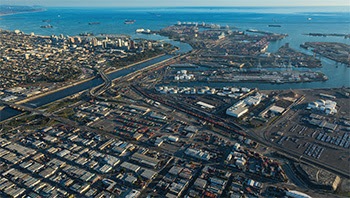
Pier B project will shift more cargo to trains The U.S. Maritime Administration has issued a Final Environmental Impact Statement (EIS) and Record of Decision, approving the planned Pier B On-Dock Rail Support Facility, a Port of Long Beach project designed to enhance the flow of cargo by rail. The EIS is available on this federal government website. Located southwest of Anaheim Street and the 710 Freeway, the planned $1.5 billion Pier B On-Dock Rail Support Facility is the centerpiece of the Port of Long Beach’s rail improvement program. It will shift more cargo to “on-dock rail,” where containers are moved directly to and from marine terminals by rail, significantly reducing trips by trucks throughout the region. “Simply put, the Pier B On-Dock Rail Support Facility will move cargo faster and with fewer environmental impacts,” said Port of Long Beach Executive Director Mario Cordero. “We thank MARAD for its work completing the EIS, which allows us to receive federal funding for a facility that will benefit the whole country.” “The Port of Long Beach is a gateway for $200 billion in job-generating trade each year,” said Long Beach Harbor Commission President Steven Neal. “This project will help cargo move more efficiently, and it’s vital to maintaining our competitiveness and meeting our environmental goals.” In December, in recognition of the critical role the Port of Long Beach plays in America’s supply chain, the U.S. Department of Transportation, Maritime Administration awarded $52.3 million to help fund the development of the facility. Phase 1 construction, expected to be completed in 2025, will double the capacity of the existing Pier B rail yard. Street realignments and other component projects will continue to improve operations as they are finished. The project is scheduled for full completion in 2032. No cargo trucks will visit the facility. View a video about the project.
Newsweek Magazine names Franklin Electric to list of America’s Most Responsible Companies 2022

Franklin Electric Co., Inc. has been named to Newsweek’s list of America’s Most Responsible Companies 2022. This prestigious award is presented by Newsweek and Statista Inc., the world-leading statistics portal and industry ranking provider. The awards list can currently be viewed on Newsweek’s website. “We are honored to receive recognition for the work we do to implement sustainable business practices not only on a global scale but at home in Fort Wayne, Indiana,” said Gregg Sengstack, Chairperson of the Board and Chief Executive Officer. “Across all the communities we operate in, we are committed to expanding the availability of clean water, creating products that help with resource conservation, and addressing growing environmental safety concerns around fueling.” Franklin Electric has made significant investments in research and development to improve the efficiency of its products and continues to deliver products such as the MagForce™ High-Efficiency Motor System. Additionally, the company’s Global Product Supply team has placed a heavy focus on sustainability initiatives within Franklin Electric’s production and manufacturing facilities across select global facilities. For 2020 this included LED lighting upgrades, air quality control systems, waste stream audits, solar panel installations, and UV mitigation efforts. Franklin Electric is also committed to reducing water consumption, for example, by eliminating the washing process for circuit boards in its Guadalupe, Mexico manufacturing facility, which is expected to save 5.9 million gallons of water per year. The company is also recognized worldwide for its commitment to helping some of the most underserved communities access safe, clean drinking water. The Franklin Wells for the World Foundation (FWWF) provides safe, reliable, and cost-effective water supplies to developing regions, focusing on Africa where the need is greatest. To date, the FWWF has impacted the lives of hundreds of thousands of people in over 10 countries by bringing clean water to the surface. America’s Most Responsible Companies were selected based on publicly available key performance indicators (KPIs) derived from CSR Reports, Sustainability Reports, and Corporate Citizenship Reports as well as an independent survey. The KPIs focused on company performance in the environmental, social, and corporate governance areas, while the independent survey asked U.S. citizens about their perception of company activities related to corporate social responsibility.
Nozomi Networks achieves FIPS compliance
The industry’s first FIPS-compliant OT/IoT security solution assures Federal customers of a robust, hardened platform amidst the growing need for cybersecurity threat detection and visibility Nozomi Networks, a provider in OT and IT security, has released a Federal Information Processing Standard 140-2 (FIPS 140-2)- compliant version of its Guardian sensor product line. Developed to meet mandatory standards for the protection of sensitive or valuable data within Federal systems, Guardians FIPS incorporates a cryptographic methods library that has completed Federal Information Processing Standard 140-2 (FIPS 140-2) validation testing from the National Institute of Standards and Technology (NIST). Encrypting traffic collected and sent by Guardian sensors to central data analysis points is a key feature of this new sensor. Achieving FIPS compliance is part of Nozomi Networks’ continued commitment to delivering hardened solutions that meet the US and Canadian federal government standards for securing government infrastructure. “FIPS 140-2 is a fundamental requirement and stamp of approval for encryption technology in cybersecurity solutions,” said Moreno Carullo, CTO and Co-Founder at Nozomi Networks. “FIPS compliance gives customers an extra level of confidence when deploying Nozomi Networks in rigorous application environments and accelerates s key opportunities for us in the federal.” FIPS 140-2 compliant Guardian sensors are available with the Guardian 22.0.0 release out now.
Alta Equipment Group appoints Craig Brubaker as Chief Operating Officer
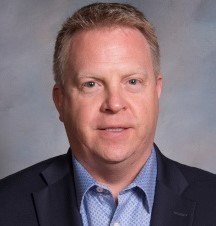
On April 12, 2022, Alta Equipment Group Inc. (“Alta”), a provider of premium material handling and construction equipment and related services, announced the appointment of Craig Brubaker as Chief Operating Officer, a new position at the company, effective immediately. Since 2006, Mr. Brubaker has served as Vice President, Operations at Alta. Craig joined Alta in 1995 after completing his BS in Mechanical Engineering from the University of Toledo. Mr. Brubaker has held several operations positions of increased responsibilities before being promoted to VP of Operations. Previously, Craig held positions as Systems Manager, Rental Manager, General Service Manager, and Regional Operations Manager. As Chief Operating Officer Mr. Brubaker will report to Alta’s Chief Executive Officer, Ryan Greenawalt, and oversee day-to-day operations of both material handling and construction equipment segments. “We are pleased to announce the appointment of Craig Brubaker as Chief Operating Officer. Craig brings a great track record of success and strong operational experience during his time at Alta,” said Ryan Greenawalt, Chief Executive Officer. “I look forward to the contributions he will continue to make as part of the Alta family.” “I am excited to step into my new role as COO and look forward to using my experience in leading Alta’s operations over the past 16 years to help build on the company’s future success and continue to drive operational improvements across the organization,” said Mr. Brubaker.
EP 272: SVT Robotics at MODEX 2022

In this episode, I was joined by A.K. Schultz at MODEX 2022 to discuss his company, SVT Robotics. SVT Robotics is focused on allowing automation solutions to function together in the same operation through their Softbot Platform. We discuss one of the big problems with automation integrations and how SVT Robotics is solving that problem. Key Takeaways A.K. was sure to start off our conversation by discussing the problem in automation which is one that has been multiplied by the number of solutions now available. He points out that with so many automation solutions coming into our world, they are from multiple different companies and they need to communicate. In addition to this, getting these solutions to communicate can be complicated at times, and companies that do not have the resources are simply not equipped with programmers that can handle making these integrations work. SVT Robotics has set out to simplify this and make this a reality for all companies. SVT Robotics has developed their Softbot Platform which helps to solve this problem. It provides the code already written for each solution that is requested (with many already in the database) and puts it in an easy drag and drop format. This gives access to companies of all sizes and skillsets to easily integrate multiple different automation solutions into their operation. Listen or watch the episode below and leave your thoughts in the comments. The New Warehouse Podcast EP 272: SVT Robotics at MODEX 2022
Industrial automation partner Gibson Engineering bolsters Kassow Robots’ position in US Manufacturing

Kassow Robots, a developer of 7-axis cobot solutions for machine tending, material handling, and related applications, has partnered with Gibson Engineering (Norwood, Massachusetts, USA), a subsidiary of Applied Industrial Technologies. Gibson Engineering is a value-added distributor of automation solutions serving manufacturers in all industries in the northeastern U.S., from Maine to Maryland. The KR series of lightweight 7-axis collaborative robots supplements Gibson Engineering’s solutions to efficiently complete light manufacturing operations in the medical, semiconductor, and electronics industries. “Gibson Engineering’s long-established operation gives Kassow Robots the opportunity to work with world-class manufacturers in the U.S. that can benefit from strong, fast, and simple cobots,” says Dieter Pletscher, the head of global sales at Kassow Robots. The 7-axis cobots offer speed and power combined with a long reach and a high degree of flexibility to work in tight and awkward spaces. The KR series can handle payloads up to 18 kg and reach up to 1800 mm, allowing customers to automate a variety of physically demanding and/or repetitive tasks. The seventh axis enables continuous dispensing, welding, and material removal applications, regardless of access angle, without the need to reorient the arm. “The KR 7-axis cobots use workspaces efficiently and give programmers more options for completing tasks than traditional 6-axis devices,” says Rob MacDonald, director of sales and marketing at Gibson Engineering. “The combination of performance, ease of use, and safety make the Kassow cobots a great addition to our product portfolio.” Small- and medium-sized enterprises (SMEs) without robotics specialists can carry out complex automation and programming cost-effectively and independently with Kassow Robots solutions. The cobots are perfect for limited-space retrofits and applications such as machine tending, pick-and-place tasks, quality inspection, and palletizing.