
EP 281: Newcastle Systems at MODEX 2022
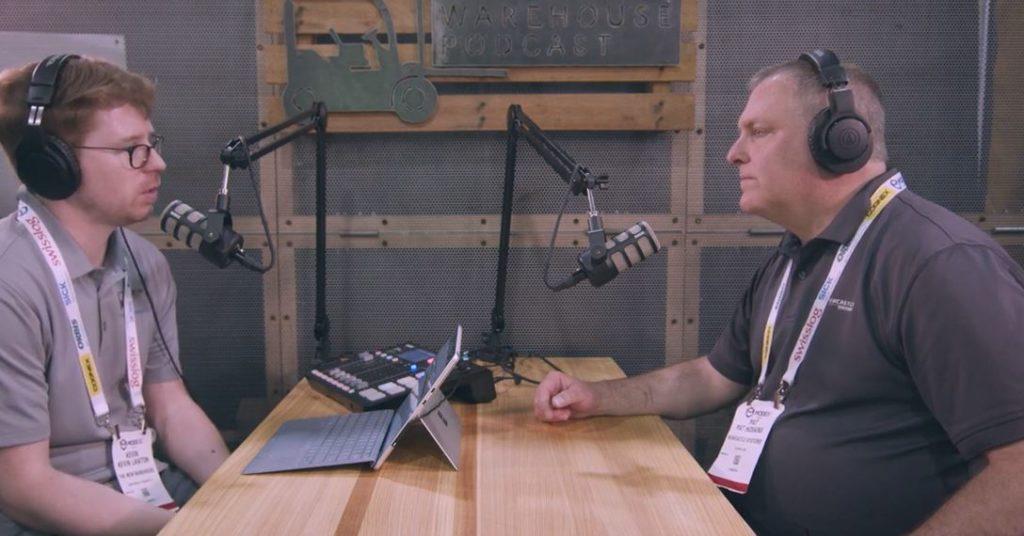
In this episode, I was joined by Pat Hoskins of Newcastle Systems at MODEX 2022. Newcastle Systems is focused on bringing mobile workstations to your operation in order to increase process accuracy and productivity. We discuss how Newcastle Systems is focused on increasing this process accuracy, how they are helping to get more out of employees, and their roots as a lean organization. Key Takeaways Newcastle Systems provides mobile workstations which are very smartly designed and allow for further productivity. I have utilized them myself in multiple jobs and I cannot imagine being in an operation that is not utilizing them. They allow you to have a full work set up where ever you need through their mobile battery technology. Not only are they known for being used in the warehousing environment, but they are also recently seeing success for technicians using their stations too where they can have their tools on the cart and have the computer in front of them to reference work instructions or other needed materials. Pat discusses the importance of process accuracy and why that can slow an operation down. When we look at standardizing our processes it is important that the process is done the same way every time because that is how you have determined the best way to do the process. The mobile carts help to ensure that accuracy because they allow you to do the work where you are actually working. Pat utilizes a great example of receiving pallets where instead of walking back and forth to print labels and check products into the system, you can take the cart with you and do all of those actions at the pallet itself. This helps ensure better accuracy and also eliminates the waste of walking back and forth. As I have discussed with Newcastle Systems on the show before, they are a lean organization and they try to bring that mindset and knowledge into their customer’s organizations as well. Pat discusses how they begin to do that and we discuss the initial challenges of getting people to see the waste that is present in their operation. Once you are able to get people to understand just how much time they are spending walking or quantify it into a cost then their eyes start to open to all of the waste that is potentially present. EP 281: Newcastle Systems at MODEX 2022
Six things every CEO needs to know about branding to better manage the human side of business

We live in an upside world where the old rules no longer apply. Many call it a VUCA world – volatile, uncertain, complex, and ambiguous. Mass consumerism has been replaced by a new consumption paradigm as people are driven by new essentialism where things matter less and relationships, experiences and self-being dominate all. In this new world, workers are restless, customers fickle, investors skittish, and the public has an appetite to cancel. In order to rally everyone together to stand behind a company and its path during all the ups and downs, leaders need to draw upon emotions as rationality will not carry the day. They have one tool at their disposal to do this delicate work – the brand. Although often associated with marketing, brands are actually cultural icons that symbolically carry meaning. In just a nanosecond, they evoke common immediate meaning and emotions across all people. Think BMW, John Deere, Chanel, Apple, and American Express. In a world where everything is uncertain, brands can be trusted to stand true. Now, if you don’t have a brand, you can build one. Anyone can. It takes commitment to people, to tell their story and represent their interests with your brand, not your own. If you create a brand that represents the highest common denominator between your people (customers, employees, investors) and your products/services, then you can forge an enduring powerful partnership that will yield surprising dividends for your business. It all begins with understanding the basics of what a brand really means for a business. A Brand Resides in the Mind, not in a Logo: Although expressed in a logo and a tagline, a brand is actually a mental construct that gets into the mind and lives in the memory of people. Branding is the process of creating a brand in the minds of people. It is typically done by creating things and experiences that “express” the brand such as marketing materials and product design. Brands also live in the culture. Powerful brands like Nike become social concepts and exist in the culture where they continually give people cues and establish the brand as a part of society. Brands Set Meaning: Brands give meaning to products. Is an anti-lock braking system (ABS) a breakthrough in performance (BMW) or safety (Volvo)? That depends on the brand. The brand is a mental lens that provides immediate meaning. A Snickers bar is a snack. Tiffany means luxury taste and quality. Apple is about unleashing creativity while IBM is about improving productivity. The brand provides context which tells people why a product is important to them. Brands Carry Emotional Power: Like great art, brands are designed to elicit a response, both emotional and rational. Like art, they can enchant and often captivate people which creates desire. Marlboro was the first filter-tipped cigarette and was initially launched as a woman’s cigarette which failed. The same product was re-branded as the ultimate masculine smoke and with the swagger of the Marlboro man still remains one of the most powerful brands in the world. Powerful brands are mythologies that evoke emotions that swell to desire. Brands are Fiction Not Fact: Branding is poetry, not journalism. Messaging matrixes and value propositions belong to marketers and are fact-based. Branding is another world that is concept-based. Branding brings out the big gun – an idea. A powerful, transcendent, mind-tweaking idea designed to engage the mind and heart at another level. The idea is what catalyzes new behavior and thinking. When Tide gets clothes clean, it means that Mom and Dad are good parents and conveys that message. The Home Depot is a large hardware store, but the brand makes it a Home Center for any current and aspiring do-it-yourselfer. Brands Defy Logic: When you have a powerful brand, you’ll be surprised by what it can do. You will see strong conviction and commitment across employees, customers, and investors despite challenges. People tend to defend the brands they love and stay loyal against all odds – better alternatives, cheaper alternatives, easier alternatives. To achieve that kind of priceless cohesion, you have to build and continually maintain the brand campfire – and make it into a bonfire for the whole world to see. At John Deere, they say people bleed green because the brand is so deep. Brands Deliver Business Value Multiple Ways: Because powerful brands are sticky, they have the ability to build a moat around the business. Customers remain loyal even in the face of superior performing or lower-priced competitors. People forgive and forget product and corporate errors which mitigates losses. People are more willing to try new products, services, and experiences from brands they love which accelerates sales. If you have the vision to build an empire, but a brand to amplify the upside and mitigate the downside. Many corporate executives view the brand as simply a marketing asset. Others like Steve Jobs, Bill Gates, Richard Branson, and Elon Musk view it as a corporate asset, part of the business strategy. Once built, a powerful brand can be used to wield influence in many circumstances from Main Street to Wall Street to Capitol Hill. While products and executives may come and go within a company, the brand can endure forever – as long as it is well maintained. In a world of fake news where people are becoming increasingly unmoored and where constant shocks and disruptions seem to prevent ‘normal’ from ever being a reality, brands are a reassuring presence that people can depend on. Powerful brands nurture, the people that come to work, buy products, and invest in companies. Business always comes down to connecting with people on a human level. Powerful brands are creative concepts that stimulate imagination and emotions in ways that most CEOs cannot. With a powerful brand, the CEO has a tool to open minds, raise hearts, command attention, bring everyone together and protect the business again in a volatile, uncertain, complex, and ambiguous world. About the Author: Jane Cavalier, CEO and Founder
Millwood acquires Cleveland Custom Pallet & Crate, Inc.
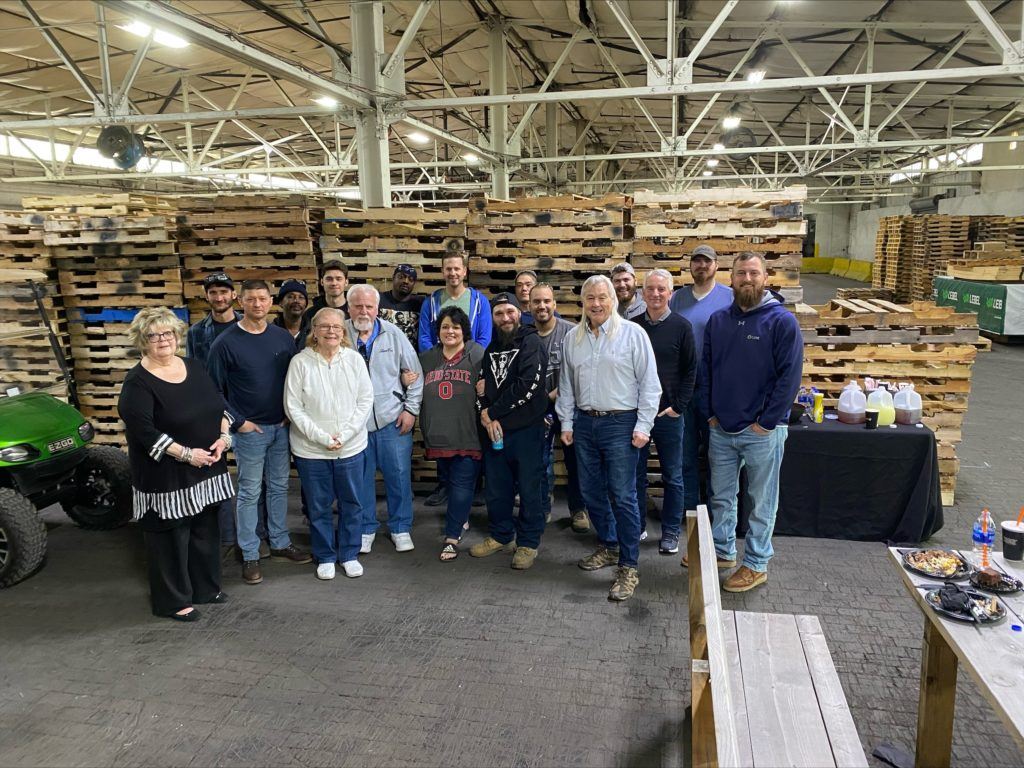
CCPC is the 10th Ohio and 32nd Overall Millwood location Millwood, Inc. acquired its 10th Ohio and 32nd location nationwide. The acquisition was made official on May 2 after Millwood Co-owners and Partners Chip Trebilcock and Steve Miller made the trip to Cleveland Custom Pallet & Crate, Inc. in downtown Cleveland to meet with management and team members who will make the transition to the Millwood family. “We’re very excited for this acquisition,” Trebilcock said. “We firmly standby our mission that all who come in contact with Millwood would clearly see the love of Christ in all we do, and that won’t be any different with the family we’re welcoming from CCPC.” With this additional location, Millwood will be able to supply whitewood pallets, crates, and other products and services to much of northeast Ohio and beyond. “Millwood continues to grow each year, and with growth comes the opportunity to acquire new business,” Miller said. “After careful consideration, we are confident that the purchase of CCPC will allow Millwood to further extend its brand and Christian values and give our sales, sourcing, and operations teams opportunities to develop new relationships in this area of the state and country.” CCPC, formerly known as G&M Pallet & Skid, Co., services much of the greater Cleveland area, including downtown, and is a family-owned business with more than 40 years and two generations of experience. It also operates as a Christian pallet company that shares many of the same Christian values as Millwood. CCPC specializes in many of the same products and services that Millwood already offers such as custom pallets, plastic pallets, pressed wood (INCA) pallets, crates, heat treating, pallet removal, and other packaging consumables. The team at CCPC will transition to the Millwood family, and signage and other branding will soon be done at the location at 4201 Lakeside Ave. Cleveland, OH 44114. “Several members of the Millwood team are already working with the CCPC team to ensure a smooth transition,” Trebilcock and Miller said. “We look forward to serving the greater Cleveland area and welcoming our new Millwood family members.”
Merlo P72.10Plus. The sweet spot in telehandlers
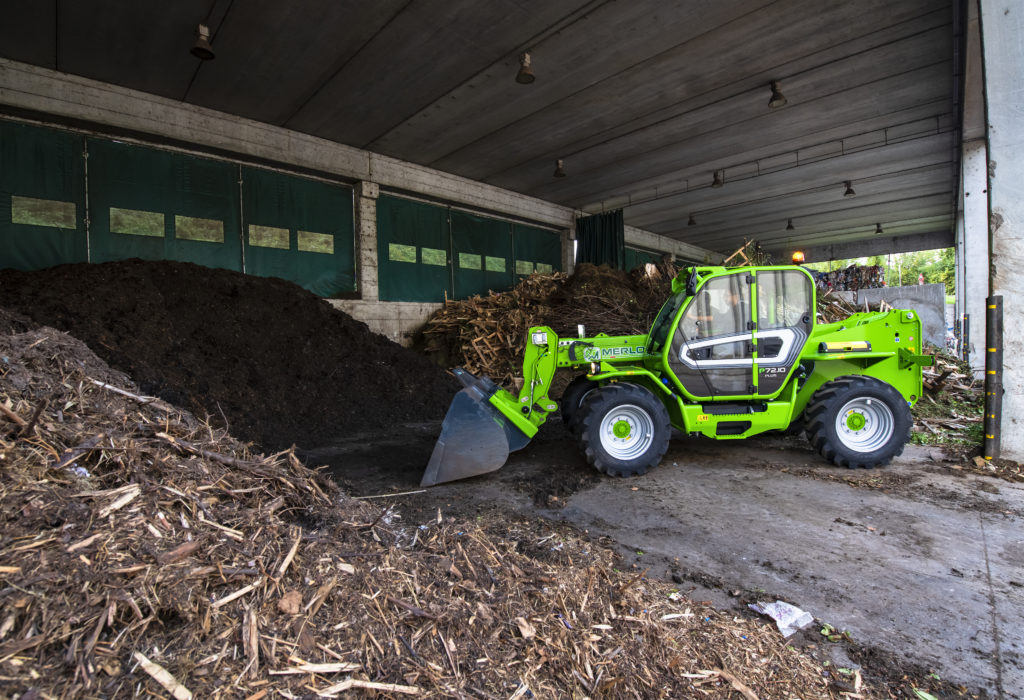
Merlo’s Heavy-Duty range of telehandlers, which includes the P72.10PLUS, is engineered to meet the needs of all industries required to move heavy loads under all conditions, safely. The user-friendly P72.10PLUS offers excellent telescopic performance without limiting the speed of work. The maximum load capacity is 15,800 lbs. The low pivot, the no-flex boom has a lift height up to 31’3”. Top load at full height is 9,000 lbs. Maximum reach of 17’1” easily manages 4,500 lbs. Power The P72.10PLUS is powered by a 115HP Perkins engine with Eco Power Drive (EPD). To maximize efficiency, the EPD automatically controls and adjusts engine speed, hydrostatic pump flow rate, and hydrostatic engine displacement according to operating conditions. EPD reduces RPM and ensures a reduction in fuel consumption of up to 18%. A load sensing hydraulic pump with a flow-sharing distributor supplies the P72.10PLUS with high efficiency, excellent performance, and smooth operation. The hydrostatic transmission, 4WD, 3 steering modes and speed up to 25 mph creates a very nimble machine. Safety Merlo’s adaptive stability control system (ASCS) recognizes the machine’s operating parameters in real-time. This includes attachments, load weight, and machine positioning. Depending on the implementation in use, the system can vary the response of the machine and the speed of movement. Machine safety also includes an automatic parking brake management system. The machine sets the brake automatically when the engine switches off to avoid unintentional movements. Every Merlo has a 3” solid ring of steel surrounding the machine. Along with increasing structural strength, the ring of steel eliminates the need for counterweights, making this a very compact telehandler (17’11” x 7’4” x 8’2”). The P72.10PLUS is equipped with frame leveling, boom side-shift, and an inching pedal for safe precision material placement. Control Center Designed for the operator, the cab sports automotive-style ergonomics while ensuring excellent protection for the operator. FOPS (Level II) and ROPS certified the 3’3” spacious cockpit and the expansive glass surface -front, back, sides, roof- of the cab ensures unparalleled comfort and full visibility. The reverse shuttle is on the steering column and joystick. The P70.10PLUS packages together everything needed for optimum job performance. For the operator: comfort, visibility, safety. For the job site: nimble performance, tight turning capabilities, attachment versatility, and overall excellence in performance and reliability.
U.S. Great Lakes shipping reports mixed results; signs for optimism
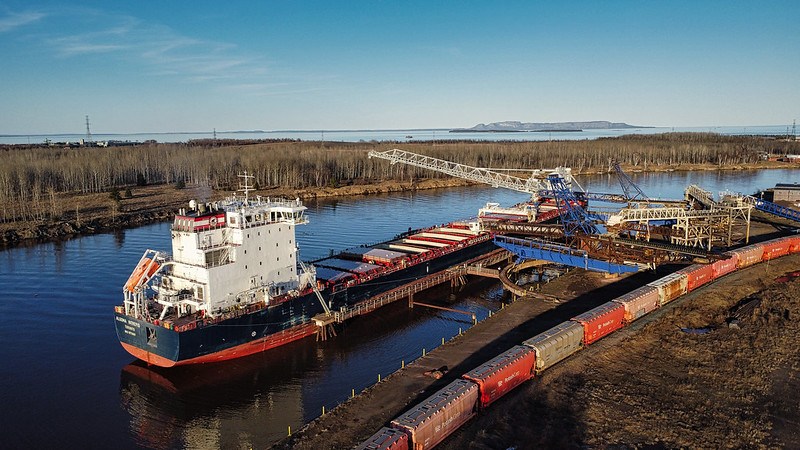
U.S. Great Lakes ports reported mixed results for the start of the spring shipping season, with gains and losses heavily tied to global trading conditions and Lake Superior ice-breaking resources. U.S. grain exports, steel imports, road salt, and containerized goods were strong performers. “Inadequate ice-breaking resources in Lake Superior had a major impact on cargo shipments out of the port of Duluth-Superior, which underlines how much we need new and improved capacity for the U.S. Coast Guard icebreaking fleet,” says Bruce Burrows, president and CEO of the Chamber of Marine Commerce. “On a more positive note, grain exports from U.S. ports were in strong demand along with shipments of salt, steel, and containers. We expect that the demand for different cargo segments will continue to be impacted by fluctuating prices and trade flows related to global supply chain issues and the Russia/Ukraine conflict.” Overall cargo shipments (from March 22 to April 30) via the St. Lawrence Seaway totaled 3.5 million metric tons, down by 18 percent compared to the same period in 2021. Iron ore volumes were down 23 percent. Year-to-date U.S. grain shipments via the Seaway totaled 176,000 metric tons, up 175 percent compared to 2021. Road salt shipments were also up 21 percent, as Canadian mines delivered to cities throughout the bi-national region. The Port of Toledo was off to a good start in 2022. Through April, 78 vessels have already called upon the Port and tonnage is up nearly 11 percent over the same period in 2021. Grain, salt, coal, and liquid bulk are all outpacing 2021 totals. “While it is early in the season, there are signs that 2022 will be successful,” said Joseph Cappel, VP of Business Development for the Toledo-Lucas County Port Authority. “Grain and fertilizer are expected to be big movers in 2022 as trade patterns and pricing continues to fluctuate based on various global happenings. If our staple commodities like coal, iron ore, and other dry bulk commodities remain consistent, we will have a strong year.” The Port of Cleveland has experienced a very strong start to the 2022 season in its general cargo operation. April tonnage more than doubled its total tonnage from April 2021. “Our container numbers have also increased dramatically due to the addition of Doornekamp’s Peyton Lynn C to the Spliethoff service last September,” said David Gutheil, Chief Commercial Officer at the Port of Cleveland. “Export customers are now jumping on board due to shortages of containers and vessel space at coastal ports. We are very close to completing the first phase of a very large infrastructure project which will improve the efficiency of the movement of general cargo throughout the Port. This project will be completed in its entirety late first quarter of 2023.” Hampered by Great Lakes icebreaking challenges and a slower-than-normal start for the American lake freighter fleet, total tonnage through the Port of Duluth-Superior reached only 2.43 million short tons in April 2022. Combined with an icy March in which only three ships called on the port, overall tonnage through April 30 trailed last year’s pace and the five-season average by 38 percent and 27 percent, respectively. Iron ore, the port’s top cargo by tonnage, neared 1.6 million short tons through April. This represented a 42 percent dip from the 2021 pace and a 34 percent drop compared to the five-season average. Each of the port’s major cargo categories finished April behind the 2021 pace with the exception of grain and salt. Outbound grain shipments comprised of wheat and beet pulp pellets totaled 148,620 short tons through April, nearly doubling the 2021 pace and exceeding the five-season average by 24 percent. Almost two-thirds of the Duluth-Superior grain float sailed through the Great Lakes-St. Lawrence Seaway System as export commerce. Inbound salt deliveries to Duluth-Superior topped 81,000 short tons in April, more than doubling the April 2021 total and the five-season average. “Winter lingered a bit too long this year, which made March and most of April a tough slog for Coast Guard icebreakers and the freighters that depend on them for support to power through those conditions,” said Deb DeLuca, executive director of the Duluth Seaway Port Authority. “We started to see an uptick in vessel traffic later in the month, as the ice situation improved, but it’s still hard to predict the tenor of 2022. Unusual factors continue to affect the world of cargo transportation, including ongoing global supply chain delays and the situation in Ukraine. That instability keeps everyone guessing, but there’s still reason for optimism that it’ll be a good season in the Port of Duluth-Superior.”
Sunlight Group to showcase diversified and integrated portfolio of energy storage and IoT technologies at LogiMAT 2022
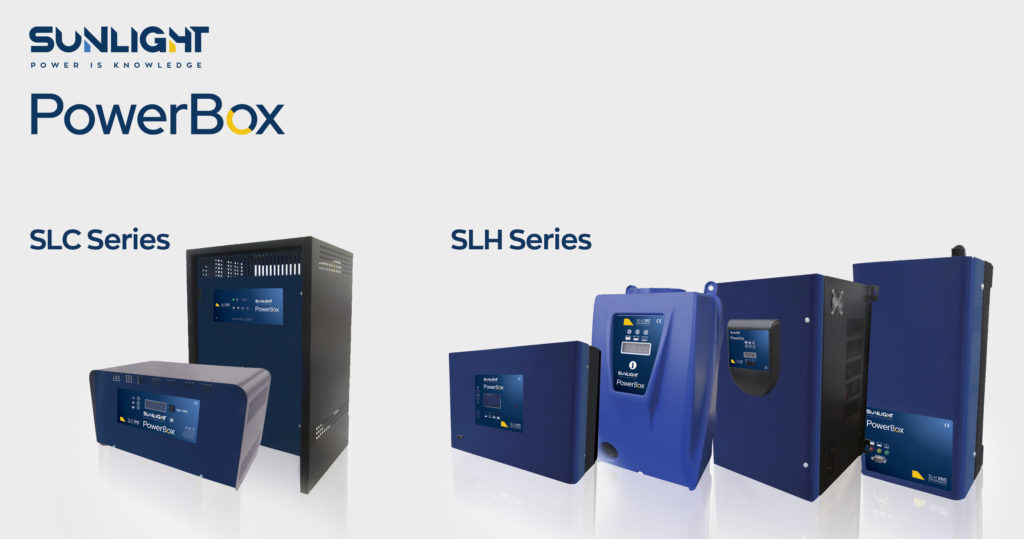
From 31 May to 2 June, Sunlight Group will be attending the LogiMAT Trade Show to showcase the company’s extensive portfolio of lithium-ion and lead-acid energy storage solutions Featured products include the company’s newest semi-traction lithium-ion battery, Sunlight ElectroLiFe, smart Battery Monitoring System (BMS), Sunlight KnoWi, and complete range of chargers, Sunlight PowerBox Sunlight Group CEO, Lampros Bisalas, will be in attendance to discuss the company’s €560m five-year business plan under implementation, aimed at strengthening the European clean energy sector Sunlight Group Energy Storage Systems, the global technology company, and producer of integrated and innovative energy storage solutions announces its attendance at LogiMAT 2022, held from May 31 to June 2 in Stuttgart, Germany. At booth 10 A75, Sunlight Group will demonstrate its innovative, integrated, and diversified energy storage and IoT solutions, including the newly launched semi-traction battery, Sunlight ElectroLiFe, smart Battery Monitoring System, Sunlight KnoWi, and portfolio of chargers, Sunlight PowerBox. The Sunlight PowerBox range includes low- and high-frequency chargers for both lithium-ion and lead-acid products. The range has been enriched with the addition of PBM S.R.L to the Sunlight family. PBM is an established global leader in the production of battery chargers and industrial devices, and its acquisition brings the Sunlight Group another step closer to a sustainable, efficient, and complete batteries value chain – a critical aspect of the transition to an all-electric future. Sunlight ElectroLiFe is Sunlight Group’s range of semi-traction lithium-ion batteries. Its innovative lightweight yet robust design is built to suit evolving customer needs and allows for tool-less, plug & play installation in golf carts and other recreational and light commercial or manufacturing vehicles, industrial or material handling equipment, as well as leisure marine applications. Sunlight KnoWi is the market’s most advanced Battery Monitoring System (BMS) for motive power lead-acid batteries. It’s designed to help improve the management and performance of both batteries and the forklifts they power. Both lithium-ion and lead-acid Sunlight products offer remote connectivity to the company’s smart cloud-based platform Sunlight GLocal. GLocal uses artificial intelligence (AI) to record, in real-time, key parameters about the operation of the battery. It also allows for remote monitoring and preventive maintenance, protecting the equipment, maximizing battery service life, and reducing costs. At LogiMAT, an experienced team from Sunlight Group –led by CEO, Lampros Bisalas– will be presenting the company’s full range of lithium-ion and lead-acid solutions. These include the lithium-ion motive power battery, Sunlight Li.ON FORCE, semi-traction battery, Sunlight ElectroLiFe, and reserve power energy storage system, Sunlight Li.ON ESS. The company will also discuss its plans to further strengthen the European energy storage market through a five-year €560m business plan, currently under implementation. The plan aims to expand the company’s production capacity in lead-acid and lithium-ion batteries and energy storage systems, as well as secure and grow its supply chain and sales network. To that effect, Sunlight invests millions in equipment, automated production, and assembly lines, Research & Development, human resources, as well as Mergers & Acquisitions, across its facilities in Greece and abroad. Commenting on the company’s participation at the exhibition, Sunlight Group CEO, Lampros Bisalas said: “Following our establishment in the US and Italy with manufacturing and sales facilities, we are excited to attend LogiMAT and establish ourselves further in a market in which we’ve been operating for over three decades. Thanks to our growing international team of experts, each of whom has strong expertise and knowledge of the energy storage market, and the robust steer of our BoD and Executive Committee, we’ve made significant additions to our product range that better serve our customers. And as we proceed with the implementation of our five-year €560m business plan, and our support to the global goal of transition to a more sustainable future, the next few years will see the continued expansion of Sunlight Group across key markets.”
Friendly reminder for Memorial Day: One veteran’s opinion for Memorial Day
On Memorial Day, 1945, the war in Europe had ended but the fighting in the Pacific continued, Lt. Gen. Lucian Truscott voiced remarks at the Sicily-Rome American Cemetery at Nettuno, Italy. Turning his back on the assembled VIP’s he faced the rows upon rows of headstones and apologized to the 20,000 fallen Americans who had been laid to rest far from home. He was quoted as saying, “All over the world our soldiers sleep beneath the crosses. It is a challenge to us – all allied nations – to ensure that they do not and have not died in vain.” Fast forward to Memorial Day 2022, and the familiar voices of brothers in arms begin to call one another on the phone. People usually think of reconnecting with former military buddies as a joyous happening. However, for this Memorial Day, the topic of conversation was not an armistice, a promotion, or even a daughter’s wedding or new addition to a home, it was about the latest in a string of suicides that silence the voice of our brothers but brought renewed connections from other familiar voices. One desperately said, “Sir, I needed to call someone who could understand this.” Everyone in the greatest generation understood war. At home they experienced rationing, schoolchildren collected scrap, and women took up factory jobs while overseas the troops endured combat and were witness to some of the largest and most brutal atrocities in the modern age. When the war was over, they followed the lead of Lt. Gen Truscott and committed their lives to ensure that they “have not died in vain.” The shared sacrifice of a generation united them and helped them solve tough problems. In subsequent wars, such as the Korean and Vietnam era, Veterans did not experience the same level of understanding and thus either turned their voice inward or used their voice to fight for one another on subjects that varied from Agent Orange, PTSD, and other once-silent conditions. The War on Terror introduced a unique time in our nation’s collective history as acts of war played out in real-time on our media devices. Although only one percent of Americans served post 9/11, it seems 100 percent of the country used their voice to express their opinions of this shared history as it unfolded. For Korean and Vietnam Veterans, war was not a shared experience and therefore various voices having various opinions helped further the national conversation regarding the treatment of veterans leading to safer and more thoughtful approaches. Unlike the veterans of Korea and Vietnam, the veterans of the last several decades did not return home to the voices of dissent that could be addressed directly, instead, they returned to a polite nation that creates media of dissent and very little opportunity for honest, open dialog. This new era of media, learning, and personal discussions bring rise to the question, “Do people really remember why we hold our veterans in a place of honor?” For years, voices saying meaningless phrases like “the enemy gets a vote” or “there’s nothing you could have done” were meant to comfort those of us who have held the heavy responsibility of leading troops in combat. However, many people seem to lack the understanding that our hearts have been forever scarred by the invisible wounds of war, scarred by guilt and grief, and by the longing for forgiveness that will never come. Even if forgiveness was offered, it would be hard to accept as no mere words can undo a life experience and because of this, we often feel isolated, misunderstood, and undervalued therefore our voices remain silent. As conversations with the voice on the other end of the phone come to their inevitable conclusion, I am reminded that to remain silent is a betrayal of my obligation to those who made the ultimate sacrifice. As Horace Bushnell once said, the best thing for us to do is to remember “what they have put it on us to do for the dear common country to which they sold their life.” As we gather as one nation this Memorial Day, my hope is that instead of directing shallow words of gratitude at each other, we do as Lt. Gen. Truscott did and direct our gratitude directly towards those who made the ultimate sacrifice. In both our words and actions, let us all commit ourselves to serving the country to which they gave their lives. While there is still much work to be done, the generation of Veterans from this century has access to vast resources, life-saving technology, and increased information. This same generation of Veterans is just now starting to define our post-service legacy and like our grandparents, return home with a deep commitment to service, and a desire to address the many problems that we face. One such issue needing to be addressed is helping Veterans find purpose in their post-service lives. Truscott’s apology to the dead are not empty words, but a strong voice reminding us that we have an obligation to choose resilience and purpose when faced with guilt or grief. As an example, Gold Star Families, who have experienced tremendous loss, continue to serve their communities to maintain the legacy of the loved one they lost. I often recall a colleague of mine responding to the question “why do you do so much to help Veterans?” he simply held up his finger, choking back tears he responded, “for the one, I couldn’t save.” By choosing to use his voice to advocate for other veterans, he not only helped them find their purpose – he found his own. It’s often said that for those who have served “every day is Memorial Day,” a traditionally silent observance in the Veteran’s mind that can best be described as an impossible trinity made up of an overwhelming sense of guilt, grief, and grit. Usually, a moment of silence on this day is a welcomed and solemn way to honor the voices from our past, but for myself, after losing three former
Seegrid launches online AMR knowledge base
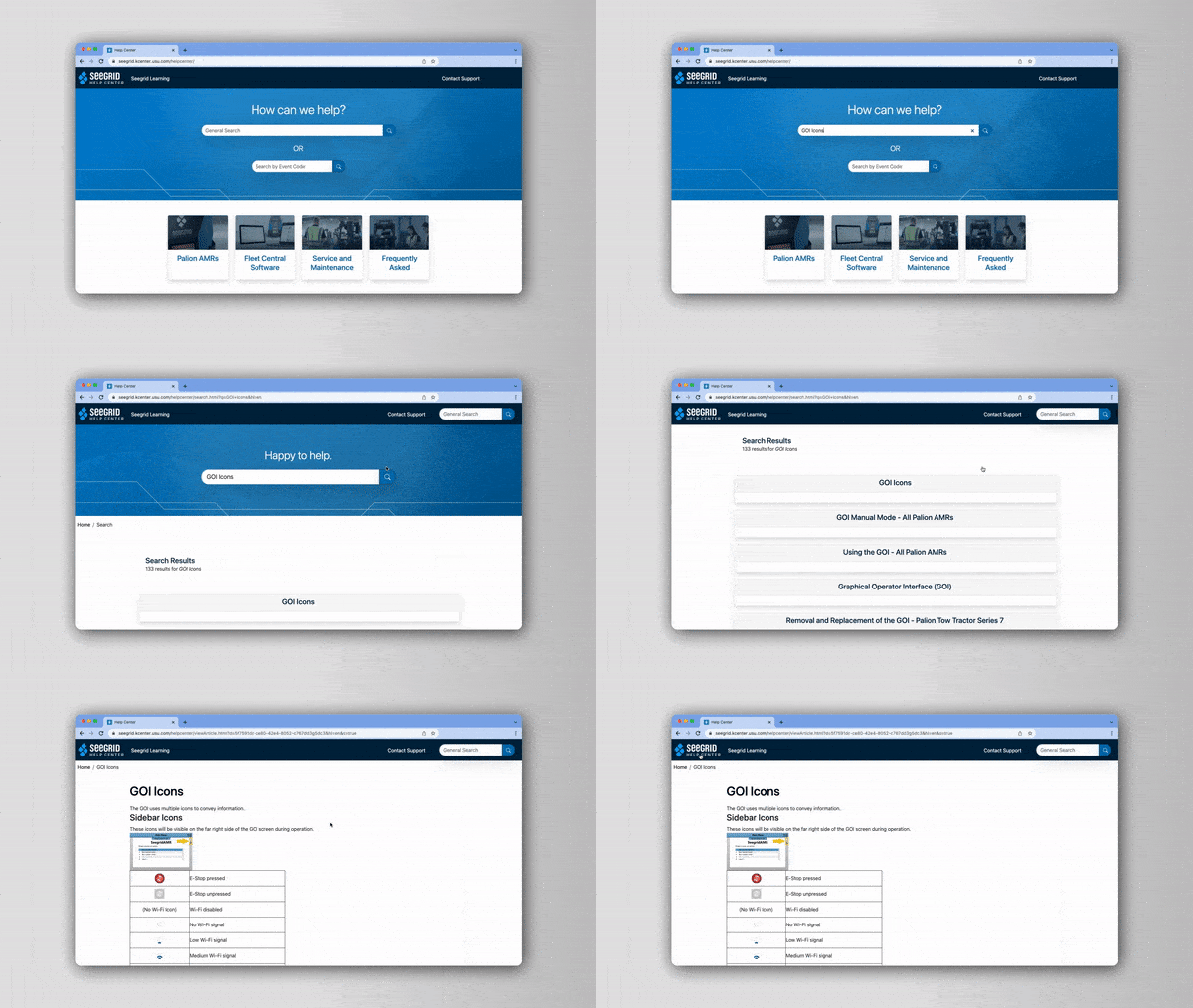
Seegrid Corporation, the manufacturer of autonomous mobile robots (AMRs) for material handling, has announced the launch of a new customer resource, Seegrid Help Center, an online knowledge base that gives Seegrid’s global logistics, e-commerce, and manufacturing customers exclusive access to specialized insights, product information, and innovative mobile automation use cases curated by Seegrid’s expert engineering, service, and support teams. “Our robots and software are proven, having safely driven more than seven million autonomous miles while moving billions of pounds of materials in our customers’ highly dynamic, complex industrial environments,” said Jim Rock, Chief Executive Officer at Seegrid. “Every autonomous mile and pound moved represents real-world knowledge and expertise, making Seegrid uniquely capable of helping our customers succeed with mobile automation.” Seegrid Help Center is a user-friendly, online knowledge base that complements the company’s robust training, service, and support offerings. The intuitive online platform offers a personalized experience for end-users and is available 24×7, providing the ability to self-serve on a wide variety of topics and categories, including AMR models, to support, optimize, and advance the use of their Seegrid mobile automation solution. “Our customers are always looking to stay ahead and safely raise productivity levels, and we are committed to enabling our customers to achieve these goals with automation,” said Rock. “Now, our customers can leverage Seegrid automation solutions for the competitive advantage while also funneling our extensive, collective expertise across entire networks of operators.” Providing timely, relevant, and expertly sourced answers to questions ranging from simple to complex, Seegrid Help Center enhances the company’s suite of expert automation services. Seegrid offers its customers a full-service support experience throughout the entire automation journey, from initial evaluation and solution recommendation to ongoing analysis and consultation of automation performance post-deployment. Seegrid recently received recognition for its industry excellence and best practices, being named a technology innovation leader by Frost & Sullivan, the #1 autonomous mobile robot provider in the US by Interact Analysis, and the #4 most innovative robotics company in the world by Fast Company.
BeerBoard names Josh Solomon Vice President of Channel Partnerships
BeerBoard a provider of technology and automated business intelligence for the on-premise retail industry has announced that Josh Solomon has been named the company’s vice president of channel partnerships. Solomon has spent the last 16-plus years in various positions with the company, including sales, client relationship management, client support, and service and product validation/R&D. Most recently, Solomon focused his efforts to support BeerBoard’s National Accounts Division for concepts such as Buffalo Wild Wings, Twin Peaks, Main Event, World of Beer, TGI Fridays, American Social, Abby’s, Grub Burger Bar (now Hopdoddy Burger Bar), FAT Brands, Reach Restaurant Group and Smokey Bones, among others. Working closely with BeerBoard’s retail client-partners, Solomon has helped them realize the benefits of BeerBoard’s full technology stack, with an emphasis on automated ordering, automated inventory, and industry insights/data. “With the national rollout of SmartOrders and the integrations with scores of industry partners, we now need to dedicate a person to manage the success of our fast-growing Channel Partnership Network,” said John Boyle, BeerBoard’s Senior Vice President of Business Development. “With his industry knowledge and vast relationships, Josh is the right person to step into this role and drive the growth of our channel partnerships.” “BeerBoard’s proven track record of success, coupled with our strong retail, brewer, and distributor relationships, it is the right time to branch out to other industry providers and stakeholders to promote mutual benefits to the industry as a whole,” Solomon said. “We are excited to continue our next phase of growth through the expansion of current relationships and formation of new industry partners.” BeerBoard’s robust client list features high-profile independent groups and major chain operators across North America. Retailers include industry leaders Buffalo Wild Wings, Hooters, Twin Peaks, WingHouse, Mellow Mushroom, and TGI Fridays. BeerBoard also partners with major brewers including Molson Coors, Boston Beer, Constellation Brands, Lagunitas, Heineken, Diageo, and Yuengling.
U.S. Rail Traffic for the week ending May 14, 2022
The Association of American Railroads (AAR) has reported U.S. rail traffic for the week ending May 14, 2022. For this week, total U.S. weekly rail traffic was 505,120 carloads and intermodal units, down 5.4 percent compared with the same week last year. Total carloads for the week ending May 14 were 230,128 carloads, down 5.2 percent compared with the same week in 2021, while U.S. weekly intermodal volume was 274,992 containers and trailers, down 5.5 percent compared to 2021. Three of the 10 carload commodity groups posted an increase compared with the same week in 2021. They were nonmetallic minerals, up 1,570 carloads, to 33,344; farm products excl. grain, and food, up 993 carloads, to 16,257; and motor vehicles and parts, up 625 carloads, to 13,097. Commodity groups that posted decreases compared with the same week in 2021 included coal, down 4,317 carloads, to 64,015; grain, down 3,561 carloads, to 21,910; and metallic ores and metals, down 2,289 carloads, to 21,426. For the first 19 weeks of 2022, U.S. railroads reported a cumulative volume of 4,368,828 carloads, up 0.6 percent from the same point last year; and 5,001,231 intermodal units, down 6.9 percent from last year. Total combined U.S. traffic for the first 19 weeks of 2022 was 9,370,059 carloads and intermodal units, a decrease of 3.5 percent compared to last year. North American rail volume for the week ending May 14, 2022, on 12 reporting U.S., Canadian and Mexican railroads totaled 325,431 carloads, down 4.2 percent compared with the same week last year, and 367,153 intermodal units, down 4.2 percent compared with last year. Total combined weekly rail traffic in North America was 692,584 carloads and intermodal units, down 4.2 percent. North American rail volume for the first 19 weeks of 2022 was 12,770,815 carloads and intermodal units, down 3.9 percent compared with 2021. Canadian railroads reported 74,072 carloads for the week, down 5.1 percent, and 76,004 intermodal units, down 1.8 percent compared with the same week in 2021. For the first 19 weeks of 2022, Canadian railroads reported a cumulative rail traffic volume of 2,691,713 carloads, containers, and trailers, down 6.7 percent. Mexican railroads reported 21,231 carloads for the week, up 12.6 percent compared with the same week last year, and 16,157 intermodal units, up 9.5 percent. Cumulative volume on Mexican railroads for the first 19 weeks of 2022 was 709,043 carloads and intermodal containers and trailers, up 3.1 percent from the same point last year. To view the U.S. Traffic counts, click here.
ASSP announces 2022 Outstanding Safety Educator
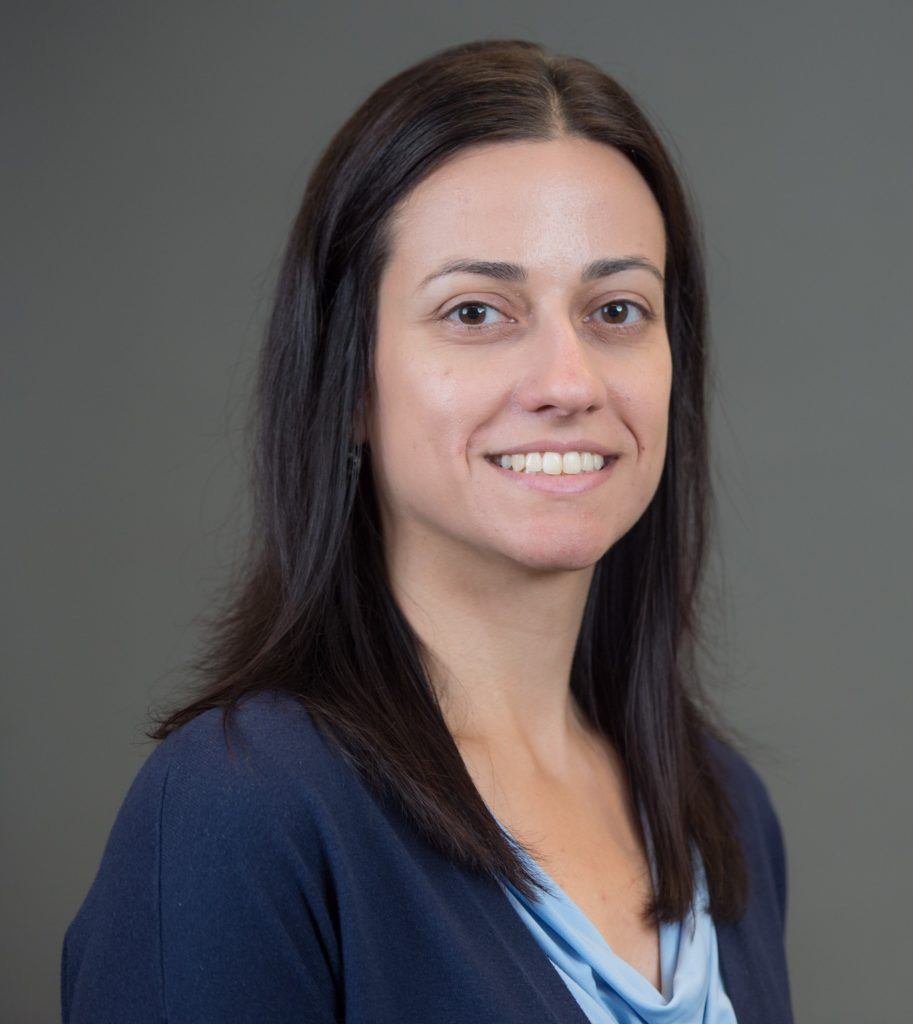
Lora Cavuoto, a widely respected educator in the occupational safety and health field and a member of the American Society of Safety Professionals (ASSP) for seven years, is ASSP’s 2022 William E. Tarrants Outstanding Safety Educator. Cavuoto, Ph.D., CPE, is an associate professor in the Department of Industrial and Systems Engineering (ISE) at the University at Buffalo in New York. She has been the director of the university’s occupational health and safety training program since 2017. Cavuoto has written nearly 70 journal articles, more than 30 conference proceedings, and many technical reports, in addition to delivering technical presentations at national and international conferences. Her research promotes healthier and more productive work environments by integrating human factors and ergonomics principles. A resident of South Wales in suburban Buffalo, Cavuoto joined the university in 2012 to strengthen its ergonomics research to prevent occupational injury and illness, and to teach courses in human factors engineering. In 2020, she received the school’s highest award for undergraduate teaching and mentorship. “Dr. Cavuoto not only embodies scientific excellence, creativity, and a commitment to education – she is also a leader and collaborator,” said Ann Bisantz, Ph.D., dean of undergraduate education at the university. “Her student evaluations are typically among the highest in the department, and among the best at the university overall.” Each of Cavuoto’s industry-funded research projects over the last five years has involved students, providing them with practical experience and exposure to the challenges faced in industries worldwide. “Dr. Cavuoto is one of the most impactful occupational safety and health scholars of her generation,” said Victor Paquet, Sc.D., professor, and chair of the university’s ISE department. “She has made significant educational and research contributions in ergonomics and biomechanics, assessment of work-related injury risk, use of wearable technologies to prevent injuries, and the improvement of patient safety through robotics and surgery design.” Cavuoto has mentored more than 40 students on senior capstone projects and dissertations aimed at solving occupational safety and health engineering challenges and better protecting workers on the job. “She instills an enthusiasm for student learning by carefully guiding students toward the right answers to complex problems,” Paquet said. “She strongly believes that being approachable and accessible are vital components of a successful learning environment. The way that Dr. Cavuoto operationalizes her teaching philosophies and dedication to her students has enabled her to become the exceptional teacher and mentor that she is today.” Cavuoto will be honored at ASSP’s Safety 2022 Professional Development Conference and Exposition, held June 27-29 in Chicago. The global event will bring together thousands of safety professionals to learn about best practices, industry trends, and the latest product innovations in the occupational safety and health field. Each year, ASSP honors a member who demonstrates outstanding achievement in occupational safety and health education. These top instructors help students reach their full potential and become results-producing safety professionals. ASSP’s Outstanding Safety Educator Award is named after William E. Tarrants, a pioneer in safety education who was an ASSP Fellow and president (1977-78).
KEEN Utility advances women in the trades through $1M pledge
She Builds Grants initiative supports nonprofits that empower and educate women pursuing careers in the trades KEEN Utility, the work boot division of KEEN Inc. (KEEN), launched the She Builds Grant Program to champion the next generation of tradeswomen. The program pledges $1M in much-needed product and financial support over the next five years to trailblazing nonprofit organizations in the United States and Canada dedicated to the empowerment and education of women seeking a career in the skilled trades. KEEN Utility announced the 2022 She Builds grants, selected by KEEN Utility and their fans, will go to Black Women Build-Baltimore, Girl’s Garage, Vermont Works for Women, Oregon Tradeswomen, and British Columbia Institute of Technology’s Trades Discovery for Women. Grants will help provide hundreds of thousands of hours in trade skills education, expansion of workplace inclusivity training, as well as women’s specific safety footwear. “Women are essential to the future of the skilled trades,” said Robin Skillings, VP/General Manager at KEEN Utility. “ Supporting organizations that are deeply dedicated to the empowerment and advancement of women in the trades is critical. Through the She Builds Grant Program, we are solidifying our commitment to their future, and the growth of the trades, one step at a time.” The She Builds Grant is funded through The KEEN Effect, part of KEEN’s larger mission to make Outside and the Trades accessible to all. KEEN has committed millions of dollars toward social and environmental justice since 2003. A leader in women’s safety footwear, KEEN Utility is uniquely positioned to champion the cause of welcoming more women into the trades and encouraging skills acquisition. The Tradeswomen Tested collection from KEEN Utility enlists the insights of tradeswomen working in a variety of professions from initial conception all the way through final product release and incorporates on-the-job feedback into future designs. By creating more inclusive and adaptive footwear built for and inspired by women in the trades, the brand established early on that the future of the trades is diverse and demands support. More information about KEEN Utility’s women’s specific styles can be found by visiting https://www.keenfootwear.com/work-tradeswomen-tested-collection/.
Community Impact Project lends assistance to My Friend’s House in Vacaville, CA
A partnership between the American Rental Association (ARA) Foundation and The Toro Company Foundation is bringing together rental businesses across the country to make improvements in their communities. The Community Impact Project initiative recently selected a project assisting My Friend’s House Shelter in Vacaville, Calif. My Friend’s House Shelter exists to meet the needs of homeless and at-risk young adults, ages 18-24. The program provides a low-barrier shelter and provides case management, connections to mentors, and access to essential goods and services like food, clothing, and toiletries. The shelter aims to connect with and begin serving the residents before they become victims of drugs, street gangs, incarceration, or homelessness. The Community Impact Project initiative involves both the ARA Foundation and The Toro Company Foundation with the dual purpose of community service and improvement as well as raising public awareness and demonstrating the advantages of equipment and event rental. More than 15 volunteers from area rental businesses and residents volunteered time and equipment to complete the two-day project on May 11 & 12. Work included converting the existing garage to an office space to accommodate more residents, yard beautification, and concrete repairs to make the property ADA compliant. Companies supporting the project include: Aaction Rents A Tool Shed Interstate 80 Forklift Expo Party Rentals Celebrations! Party Rentals and Tents NACH Marketing This is the third project completed in 2022 and the sixth in a series of 10 Community Impact Projects overall. Previous projects were organized in Cleveland, Ohio, Denver, Colo., St. Paul, Minn., San Antonio, Texas, and Safety Harbor, Fla. Future projects are slated for the remainder of 2022 including locations in Pennsylvania and New York. Each project is made possible through a $20,000 donation from the ARA Foundation and The Toro Company Foundation. This contribution provides the nonprofit organization the funds to purchase materials required to complete the project with any remaining funds going toward long-term project maintenance.
Kyocera strengthens its leadership team with the addition of new Vice Presidents of Software & ICT and Channel Sales
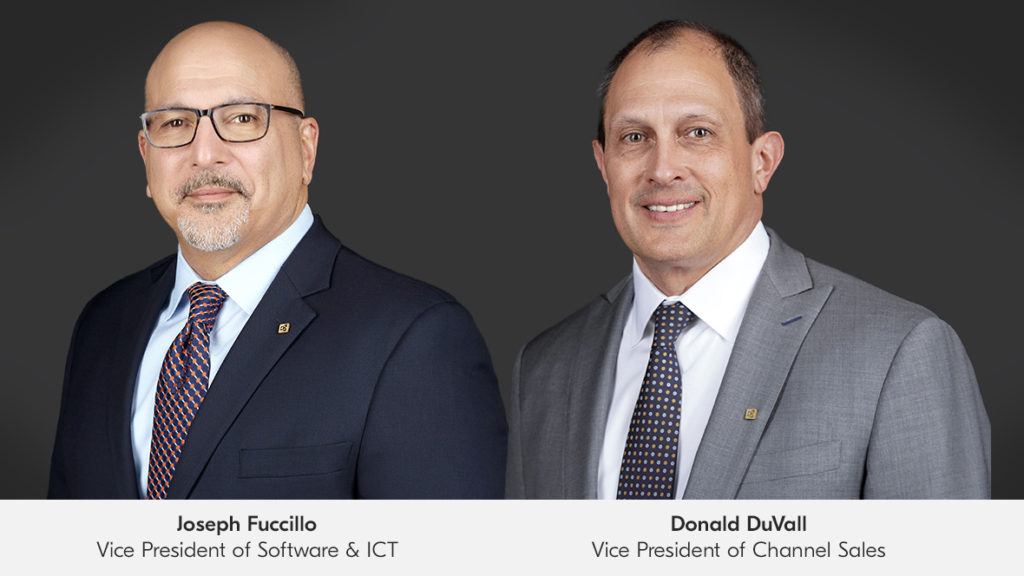
Kyocera Document Solutions America, Inc. has announced the appointment of Joseph Fuccillo as Vice President of Software & ICT, and Donald DuVall, as Vice President of Channel Sales. The duo arrives as the latest reinforcements to Oscar Sanchez’s team of experts, leading Kyocera with a diverse range of backgrounds. These two new faces bring vast experience in their fields and industries, to add to the team. It builds upon Sanchez’s renovation of Kyocera’s leadership team since his appointment as President & CEO in 2018. “It is a great source of pride and excitement for us to welcome Joe and Don to our team,” Sanchez said. “They are two very accomplished individuals who will help to guide the future of our organization, using their vast experience and first-class minds to bring new ideas to Kyocera. They will help our team to achieve all the objectives that we have outlined for the present, while also working alongside our leadership team to determine our vision for the future.” The arrival of Fuccillo builds upon the company’s increasing commitment to the world of ICT Services. Armed with experience as a leader of Managed and Professional Service at Hitachi Vantara/Hitachi Data Systems, a Fortune 500 company specializing in products and services for cloud computing, data center management, Internet of Things, data protection, and big data analytics, he comes well-equipped to lead Kyocera’s charge in the field. “Joe’s background is exactly the kind of area that we needed to strengthen. Managed IT and Communication Services will form a core pillar for the future of Kyocera, and Joe is the ideal leader to take on this exciting project of establishing Kyocera as a player in the industry, building upon our existing services and a team of experts,” Sanchez added. Channel Sales also remain a fundamental area within the company’s operations. Arriving with over 25 years of industry experience, DuVall previously led Konica Minolta’s dealer business unit and acted as Vice President of Sales for Impact Networking as he led their startup operation in Southern California. His proven track record in the industry and the perfect mix of experience on both the side of a manufacturer at Konica Minolta and the side of dealers with Impact Networking gives him a unique profile when it comes to establishing plans for Kyocera to give their partners exactly what they need to grow. “From the first time I spoke to Don, I was already immensely impressed by his knowledge of the industry and the channel. He knows and understands the importance of having committed partnerships with dealers of all shapes and sizes, and how to help dealers to achieve more. I’m already looking forward to seeing how we can put his knowledge to work within Kyocera,” Sanchez indicated. Both departments are essential to Kyocera’s long-term strategy of diversification of its product portfolio while building ever-stronger relationships with dealer partners across the U.S. With these arrivals, Sanchez and the existing leadership team will benefit from the innovation and impetus of proven industry leaders in their fields. The appointments also come at the perfect time, giving Fuccillo and DuVall time to get to grips with Kyocera, their new team, and stakeholders ahead of their REIMAGINE Dealer Conference to be held in San Antonio, Texas, in June.
Invest in employees this Supply Chain Professionals Appreciation Day
Supply chain professionals are facing many challenges right now—labor shortages, rising energy costs, and increased demand, just to name a few. Supply Chain Professionals Appreciation Day is an ideal time to remind warehouses and distribution centers that choosing more efficient, reliable equipment can have a big impact on their employees’ morale and productivity over time. “We want to thank the people who are working hard to keep our supply chains moving,” said Joseph Calhoun, director of off-road business development for the Propane Education & Research Council (PERC). “No doubt, it’s a tough time for them, and simply switching to propane-powered equipment is one way to help. For example, propane-powered forklifts offer versatility and consistent power, giving supply chain professionals many advantages that can make their jobs easier while increasing productivity.” Propane-powered forklifts offer 100 percent, reliable, consistent power during operation. One propane cylinder can last an entire eight-hour shift which reduces downtime and allows forklift operators to use their working time more efficiently. According to PERC, propane forklifts can push heavy loads at full capacity longer and at more consistent travel speeds compared with other types of forklifts. A PERC survey revealed that most forklift users operate their equipment both indoors and outdoors. Diesel forklifts can’t be safely used indoors due to their higher emissions profile, but propane forklifts run cleaner with lower emissions, making it possible to run them both inside and outside. And because propane can be used indoors and outdoors, it further simplifies the job for the worker by being able to seamlessly transition between spaces without needing to swap equipment. Other options, like electric forklifts, often can’t bring the power needed for larger jobs. Propane-fueled forklifts maximize productivity, especially for multi-shift operations, because they require less time to refuel than the time needed to recharge electric forklift batteries. Plus, propane-fueled forklifts can typically operate for a full eight-hour shift on one tank fill, whereas electric forklift operators may need to switch out the battery during a shift. Additionally, the purchase price of an electric forklift is 30 percent higher than that of a propane-powered one. Electric forklifts often require the costly installation of battery charging stations, which must be in a designated area of the facility. It’s important to note that charging stations may cause issues in some facilities and require costly service upgrades to accommodate the new power requirements. With propane forklifts, however, infrastructure requirements are minimal and facility managers can easily work with their propane supplier on the best location for their cylinder cage. “Propane makes the job of a supply chain professional easier,” Calhoun said. “Companies that invest in propane-powered forklifts are also investing in their employees, and that’s something that shows how much you value your crew not just on Supply Chain Professionals Appreciation Day, but all year long.”
Fenner™ Precision Polymers relocates corporate offices
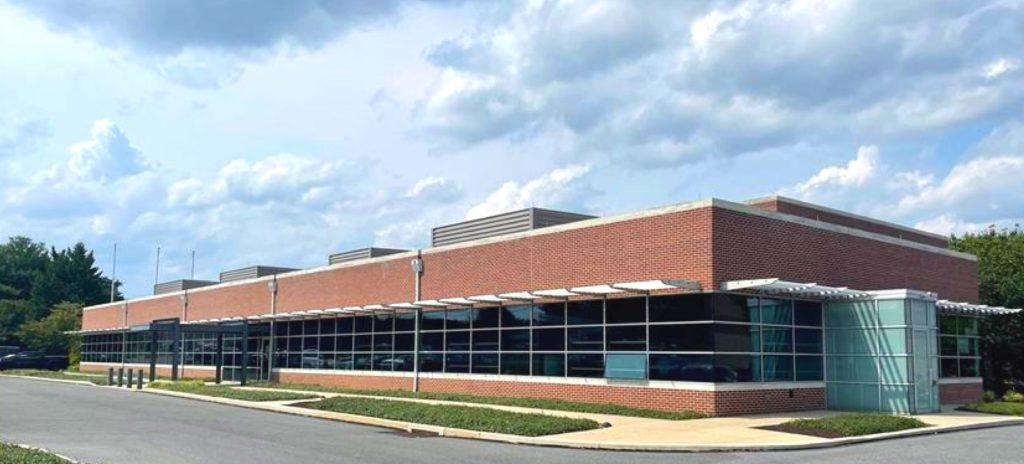
Fenner™ Precision Polymers, a Michelin Group Company and world provider in reinforced polymer technology announced the move of its corporate offices. The new location is in Manheim Township, will be at 187 West Airport Road in Lititz, Pa. Approximately 100 of Fenner’s office staff are expected to move into the new offices beginning fall of 2022. Ongoing construction updates will be underway in the space through October. The company anticipates that the remaining corporate staff will have relocated to the new facility by end of 2022. “This is a great location for us and one that is great for the business,” said Jack Krecek, Divisional Managing Director, Fenner Precision Polymers. “The West Airport Road location offers a convenient commute for employees that is just minutes away from the previous site. It also provides enhanced comfort and productivity advantages over the previous corporate headquarters. It’s a workplace in which staff will be more connected and better positioned to support our growth.” The enhanced office space brings to life the kind of environment that will attract and retain top talent in the Lancaster area. It features improved cross-functional collaboration inside the workplace and supports sustainability efforts externally, by reducing time and carbon emissions produced by travel between buildings and outside meetings. “Our relocation to the new facility marks yet another proud milestone along our journey to becoming a world-class manufacturing operation,” added Krecek. “We see it as a launch pad for innovation –increasing engineering jobs for an R&D center and creating new manufacturing jobs to support Fenner’s expanding operations.” Built in 1998, 187 West Airport Road sits on 2.94 acres. It is a 35,021 sq. ft. Industrial/Flex building consisting of office and warehouse space. Fenner and many of its brands have been members of Lancaster and Manheim communities for more than 100 years.
What the wave of retiring machinists means to plant safety
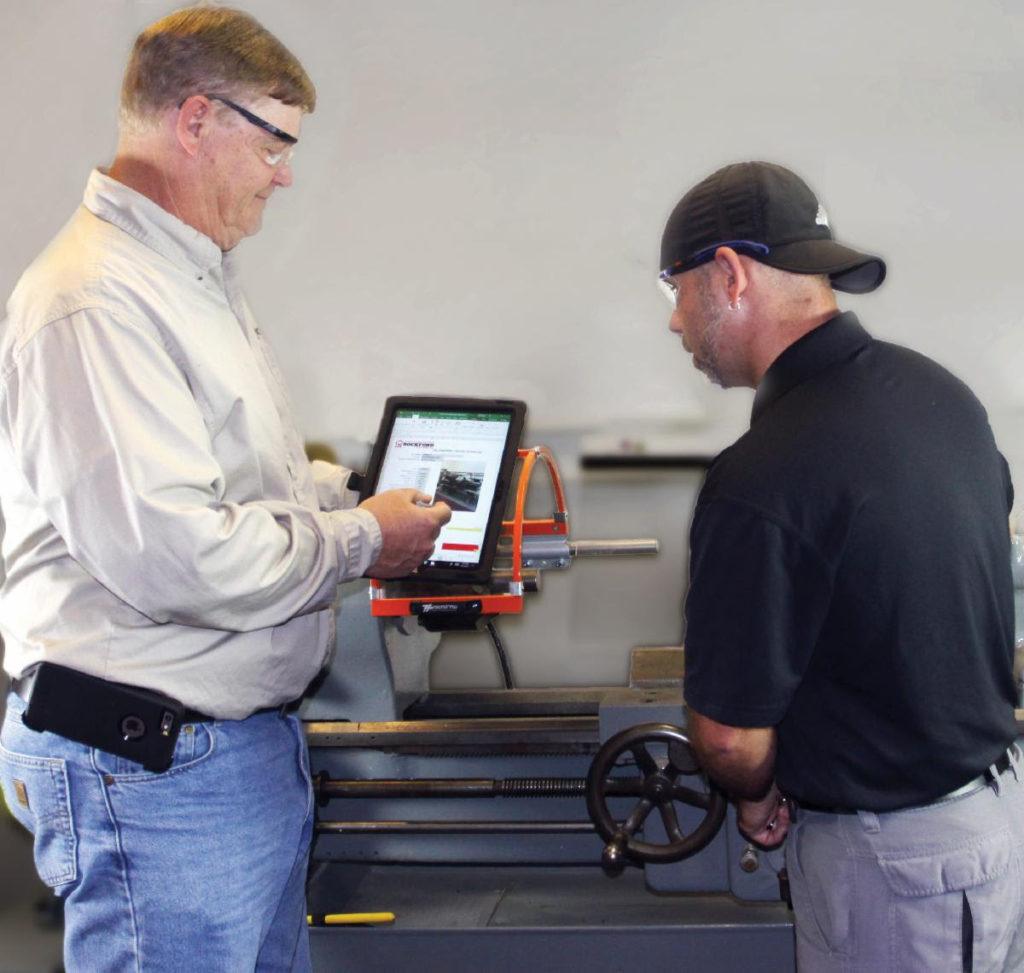
Within the next decade, approximately 2.7 million “Baby Boomers” (b. 1946-1964) will retire, thereby ensuring that tens of thousands of skilled, well-paid positions will become available without a ready supply of American workers to fill them. Statistics paint an especially gloomy picture for the manufacturing sector, a widening of the skills gap, and a possible dilution of existing training programs. Compared to the rest of the economy, the impact on manufacturing of this generational shift is oversized owing to two factors: One, despite increased efforts by colleges and vocational schools to train new manufacturing workers, available jobs still outpace qualified employees. And two, the existing manufacturing workforce is considerably older than the national employee average of 42 years. Currently, the average age of highly skilled manufacturing employees is 56, and nearly a third of all manufacturing professionals are over 50. As they retire, knowledge goes out the door with them. What are the implications of these trends for your plant’s productivity? How will it impact employee safety? What can you do to transfer knowledge from one generation to the next? Safety Knowledge Gap Besides having less experience operating machinery correctly, workers new to the job are often unsure about their safety rights and responsibilities or might feel uncomfortable speaking out about a potential hazard. They may also not have the proper training, so they underestimate the risks involved with operating high-speed machinery. A recent survey of machinists in North America exposed that 70% couldn’t recall receiving any formal training when they were first hired on. Equally troubling, the Millennials (b. 1980-1996), who are replacing baby boomers, are more apt to job hop — 90 percent expect to stay in a job for less than three years — leaving manufacturers with heightened turnover and a badly depleted knowledge base, especially when it comes to safety. The so-called “Great Resignation,” the unprecedented mass exit from the workforce spurred on by Covid-19, also has reduced the pool for skilled labor. Given all this, it probably comes an as little surprise that employees under the age of 25 are twice as likely to visit the emergency room for an occupational injury than those over 25. The dangers facing younger workers underscore the critical importance of machine safeguarding. The lathe, press or saw on the plant floor considered “safe” solely on the basis of being accident-free for many years is no guarantee that modern safety regulations and standards are being met. A machine mistakenly perceived as “safe” may be the most dangerous in your maintenance shop, or on your production floor. Safeguarding Assessment Faced with the wave of Baby Boomer retirements, many manufacturers are trying to hold on to their older workers, persuade some to return after retirement, or recruit those retired from other companies. Unfortunately, these steps only postpone the inevitable. A more meaningful first step is to conduct a thorough machine safeguarding assessment on your machinery. A machine safeguarding assessment draws on the expertise and experience of an outside company to identify and address machine hazards before they cause accidents. Over the course of a machine safeguarding assessment, detailed information is collected concerning each machine, how the operator interacts with the machine, and the process it is tied to. Hazardous areas are pinpointed on the machine and a hazard level is assigned to each machine. Evaluating this hazard level helps determine which safeguarding methods should be applied to each machine to make it safe. If a risk is not tolerable, safeguarding measures need to be applied that will reduce the risk to an acceptable level that is in accordance with applicable regulations and standards. The assessor should also accurately identify all costs associated with the final project. After installing safeguards, a follow-up assessment will be conducted to verify that risk levels have either been eliminated or reduced to a tolerable level. Transferring Tribal Knowledge Retirees won’t leave behind every bit of knowledge they’ve gained over the years, but capturing a majority of the important operational details will be beneficial down the road. Your organization needs to find ways of both learning and sharing this “tribal” knowledge before experienced machinists retire. One common way of doing so is implementing a structured training and mentoring program pairing young workers with senior people who are technically experts in complex machinery. Along with face-to-face training on the machinery, the experienced worker is there to answer questions about operating procedures, and to help the young worker learn how to operate the machinery correctly. Recognizing hazards and learning safe work practices must be a central part of training and mentoring programs so make sure they are given equal billing with productivity during conversations. Training and mentorship also play an important role in informing young workers about OSHA, every worker’s right to a safe workplace, as well as the right to refuse unsafe work. Once retired, the mentor can return on a part-time or as-needed basis to continue training new hires. Outside Training While older machinists certainly have the experience and technical knowledge, they may not know how to teach because they aren’t professional trainers or they can’t communicate effectively with a younger generation. Others may feel that training is an additional obligation that has been hoisted upon them when they are already crunched for time. Hiring an outside firm to teach your team about machine safety regulations and standards is another step toward overcoming dilution in training. Rockford Systems offers a variety of safety training courses, including Machine Safeguarding Seminars, Combustion Safety Training, NFPA 70E, and other courses at its Training Center in Rockford, Illinois. The popular 2-day seminars combine classroom discussion with live demonstrations to give the hands-on experience that new employees need. Once the seminar is complete, the employee will be better able to interpret the OSHA 29 CRF and ANSI series standards as they relate to their specific machine applications and production requirements. Can’t make it to Rockford? No problem. The seminars can be presented at your company and tailored to the types of machinery found at your plant.
RightHand Robotics debuts RightPick™ 3 at LogiMAT 2022

RightHand Robotics, a provider of data-driven, autonomous robotic picking solutions for order fulfillment, announces its debut at LogiMAT 2022, the international trade show for intralogistics solutions and process management. RightHand Robotics will be showcasing product demos in Hall 7 Stand A61 from May 31 – June 2 in Stuttgart, Germany. Last year, RightHand Robotics established a physical presence in Europe with the opening of its RightPick™ Center Europe in Nürnberg, Germany, designed to enable customers to easily test the company’s item-handling system. Earlier this year, RightHand Robotics announced a significant Series C funding round of $66 million led by top investors, with an eye toward global expansion. Further solidifying these efforts is the company’s recently launched Partner Integrator Program for robotic piece-picking deployments alongside complementary technologies to address the growing demand for order fulfillment. RightHand Robotics recently announced charter members Element Logic®, the world’s first and largest AutoStore™ partner, and Vanderlande, a global leader in warehouse automation. Through partner collaborations, one of RightHand Robotics’ customers includes apo.com Group, Europe’s most advanced online pharmacy. Given this success, the company is actively developing its partner network. “Our latest expansion and funding have accelerated plans for RightHand Robotics to be a leader in the European market. We are excited to be exhibiting our RightPick™ 3 solution at LogiMAT this year. Despite having production systems in Europe, we have not been able to showcase RightPick 3 in a public event due to COVID restrictions, so we are excited to see how new prospects and customers react to our latest generation. We intend to be at LogiMAT and other European trade shows for years to come to connect with future customers and industry leaders,” said Roderik Ter Beek, EMEA Region Manager of RightHand Robotics. At the show, attendees will have the opportunity to interact with the RightPick 3 system as it demonstrates model-free picking of a range of items with its multi-function smart gripper that combines sensing, suction, and compliant fingers. Attendees can also see the eOperator, Element Logic’s offering that enables automated handling of goods stored in AutoStore via the RightPick 3 core robotic picking technology and RightPickTM AI software. RightPick 3 is the world’s first autonomous piece-picking solution designed to be integrator-friendly with a modular, industrialized hardware design, well-defined software APIs, and compliance with international standards. RightPick 3 picks faster and handles an even broader range of items than before, with sophisticated features such as dense packing and damage-free item handling. The system provides integrators with industry-leading performance, reliability, and safety along with the flexibility and tools to jump-start their offering of automated piece-picking with confidence and at scale. Get in touch with us to schedule a meeting with RightHand Robotics at LogiMAT and learn if RightPick 3 is right for your firm through our Warehouse Innovators program. Visit RightHand Robotics in Hall 7 Stand A61 and watch a preview of RightPick 3 in action before the show.
ASSP honors Lyon for work on safety standards

The American Society of Safety Professionals (ASSP) has named Bruce K. Lyon, P.E., CSP, SMS, ARM, CHMM, the recipient of the 2022 Thomas F. Bresnahan Standards Medal for his extensive work in developing and advocating occupational safety and health standards. Lyon is vice president, of risk management services, at Brown & Brown Inc., an independent insurance brokerage firm. He also is an adjunct safety science professor at the University of Central Missouri. Lyon has more than 40 years of experience in directing safety and risk management for organizations in various industries. He specializes in risk assessment and management, safety management systems, ergonomics, and team-based problem-solving. “Bruce’s impact on workplace safety and health standards is significant, and thousands of people are safer on the job today due to his broad contributions,” said Georgi Popov, professor, and chair of the occupational risk and safety sciences program at the University of Central Missouri. “I can’t say enough about his value to the safety profession.” Lyon’s recent work in safety standards has been through his roles as chair of the U.S. Technical Advisory Group to TC 262 for the ISO 31000 Risk Management standards and vice-chair of the ANSI/ASSP Z590.3 Prevention Through Design Committee. Voluntary consensus standards help organizations in all industries become safer. An ASSP member since 1989, Lyon is working on a proposal to develop a technical report on prevention through ergonomics that will complement the popular prevention through design standards. He influenced many concepts and methods in that existing standard, ensuring it aligned with other global risk-based standards. Beginning in 2019, Lyon led the U.S. Technical Advisory Group in the development of the ASSP TR-31010-2020 Technical Report: Risk Management – Techniques for Safety Practitioners, published the following year. The technical report is specifically for safety professionals and includes 50 risk management tools. Lyon is a widely respected author who has written three books and many technical articles on risk. His books and articles are used by countless safety professionals and in university safety sciences and risk management courses, in addition to having appeared in ASSP’s flagship publication, Professional Safety. He has earned six technical writing awards from the journal’s editorial review board. “As a result of his extensive involvement in standards research, development, and consulting, Bruce has created several innovative techniques that are now registered with the U.S. Copyright Office,” Popov said. “His advanced methods are being used by occupational safety and health professionals around the world.” In 2021, Lyon was named Safety Professional of the Year in ASSP’s Risk Management Practice Specialty. He continues to present webinars, podcasts, and training courses on risk management principles and the application of safety standards. The Bresnahan Standards Medal recognizes ASSP members who actively participate in developing voluntary consensus standards that advance worker safety. The award is named in honor of Thomas F. Bresnahan, a former ASSP staff member and Fellow who reinvigorated the Society’s standards development program and helped position the organization for growth in this strategic area.
Women In Trucking Association publishes whitepaper on addressing Gender Bias and Harassment toward professional drivers

The Women In Trucking Association (WIT) has published a new whitepaper, “Addressing Gender Bias and Harassment in the Trucking Industry.” Gender bias and harassment have been primary concerns of current and prospective female professional drivers and deserve all stakeholders’ time and attention. While a majority of respondents (55 percent) indicated that the trucking industry overall is a safe one for women to be employed within, many report instances of being the recipient of verbally offensive comments or verbal threats within the last five years: In fact, 56 percent of drivers report they have been the recipient of verbally offensive comments more than once, while another 13 percent report it has happened to them earlier. Approximately 29 percent of respondents say they have not been on the receiving end of verbally offensive comments. In addition, approximately 28 percent say they have received verbal threats more than once and another 21 percent say it has happened to them once. Approximately 49 percent said they have not ever received a verbal threat on the job. Another area of concern by drivers responding to the survey is that they have either been the victim of unwanted physical advances or rape within the last five years: In fact, 39 percent of respondents say they have been the recipient of an unwanted physical advance more than once, and another 18 percent say they have experienced this one time on the job. Approximately 41 percent say they have not been the victim of an unwanted physical advance. Approximately four percent of respondents say have experienced rape while another two percent say they experienced rape more than once. Another six percent did not wish to answer. More than 37 percent of respondents reported their company either not having a harassment policy or being unsure of whether their company has one. “The Women In Trucking Association is dedicated to encouraging companies to create a safer work environment for women in our industry,” said Ellen Voie, president and CEO of WIT. There are a number of corporate policy recommendations on gender bias and harassment that Voie recommends: Implement and enforce workplace harassment policies specifically outlining what is and isn’t tolerated in the workplace and what consequences will come from violating the policy. All gender bias and harassment policies also should guarantee that employees who report gender bias and/or harassment won’t suffer adverse job consequences. These policies should be communicated to employees routinely, not just during initial training. Implement same-gender training programs, as driving training often requires spending long periods with a member of the opposite gender, and is a top area where gender bias and harassment are perpetuated. Employ more women in management roles, as company leadership staff that includes appropriate gender representation of its employee base is far more equipped to understand, address, and correct the many ways gender bias and harassment persist in the workplace. This whitepaper is the second of a series focused on safety and harassment issues for women in the transportation industry. To download a copy of the whitepaper, click here: https://www.womenintrucking.org/safety-harassment-series