
AMT to present Technical Seminars on Autonomous Mobile Robots and mixed Load Depalletizing and at Automate 2022

Applied Manufacturing Technologies COO Craig Salvalaggio and Controls Manager Terry Meister will share technical expertise on autonomous mobile robots and mixed load depalletizing at Automate hosted by A3 Association for Advancing Automation June 6-9, 2022 at Huntington Place Convention Center in Detroit, Michigan Applied Manufacturing Technologies (AMT), North America’s largest independent automation engineering company supporting warehousing and logistics, robot companies, system integrators, line builders, and users of robotic automation worldwide, today announced the details of its collaboration with Liberty Reach and presentations at Automate 2022 hosted by Association for Advancing Automation (A3). “Applied Manufacturing Technologies will have an extensive presence at Automate 2022,” said Rick VandenBoom, Vice President of Sales at AMT. “Not only are we presenting two of-the-moment technical seminars, at our booth, we will also be showcasing groundbreaking robotic and AI technology for mixed case palletizing/depalletizing / decanting of multiple cases using optimized best-fit finding algorithms. The event will be capped off by our founder, Mike Jacobs, receiving the prestigious Engelberger Robotics Award for Leadership.” AMT’s Controls Manager, Terry Meister, will present “Autonomous Mobile Robots – Integrator’s Insights on AMR Integration.” During this presentation, Meister will share some of the tools, thought processes, and strategies to consider when developing an AMR solution. He will discuss possible pitfalls to avoid, and how to work with the end-user on what to expect. The presentation will take place on Tuesday, June 7, 2022, at 10:00 am. AMT’s Chief Operating Officer, Craig Salvalaggio, will present “Demystifying Mixed Load Depalletizing: How AL and ML Vision Technology Can Unlock New Applications in the Warehouse.” During this presentation, Salvalaggio will break down the different descriptions of mixed product palletizing and depalletizing. He will describe vision technology and new software applications within the warehouse and review two case studies. The presentation will take place on Wednesday, June 8, 2022, at 1:30 pm. Also at Automate, AMT will unveil the latest technology breakthrough in robotic depalletizing using artificial intelligence (AI) in booth #1210. Held at the Huntington Place Convention Center in Detroit, Michigan June 6-9, 2022, the Automate Conference and Exhibition is the largest and most inspiring showcase of automation in North America. The Automate exhibition hosts more than 500 leading global automation solutions providers on the show floor. The Automate conference hosts four full days of educational sessions with eight training tracks for attendees with varying interests and levels of experience. At Automate on Wednesday, June 8, 2022, AMT Founder and CEO Michael P. Jacobs will be presented with the Joseph F. Engelberger Robotics Award for Leadership at the Joseph F. Engelberger Awards Dinner and Ceremony.
Port of Long Beach Harbor Commission approves 2023 Budget

Cargo growth is expected to boost Port of Long Beach’s revenue by almost 11% The Long Beach Board of Harbor Commissioners recently approved a $685.5 million annual budget for the Port of Long Beach, with almost 47% of expenditures dedicated to the nation’s most active seaport capital improvement program. Budgeted spending for the 2023 fiscal year, which begins Oct. 1, is 10% higher than the budget adopted last year. Operating revenue meanwhile is anticipated to be 10.9% higher, primarily due to anticipated increases in cargo volume. “Prudent fiscal planning has allowed us to weather the most drastic crisis to hit the supply chain in recent years,” said Port of Long Beach Executive Director Mario Cordero. “This budget reflects our commitment to continually invest in our facilities to attract business and put our customers in the best position to succeed.” Next year, the Port will again transfer a record amount – $22.8 million – to the City’s Tidelands Operating Fund, which supports quality-of-life projects along Long Beach’s 7-mile coastline. The budget also includes $40.6 million for the self-sustaining Clean Trucks Program as the Port works toward a zero-emissions drayage truck fleet by 2035. “This budget maintains our financial strength and broadens community access to the economic benefits the Port creates,” said Long Beach Harbor Commission President Steven Neal. “Our consistent focus on improving our position as a preferred gateway for trans-Pacific trade while operating in a more sustainable way is why we are the Port of Choice.” In alignment with the Port’s Strategic Plan, the Port forecasts investing nearly $2.6 billion in capital improvements over the next 10 years to improve terminal and rail capacity, upgrade critical infrastructure and reduce the environmental impact of Port operations. Almost $322 million is set aside for the improvements in 2023, demonstrating the Port’s leadership role in an increasingly competitive market. The Long Beach City Council will consider approval of the budget in late summer.
Kassow Robots to demonstrate KR1805 7-Axis Cobot and Cobot applications at Automate 2022
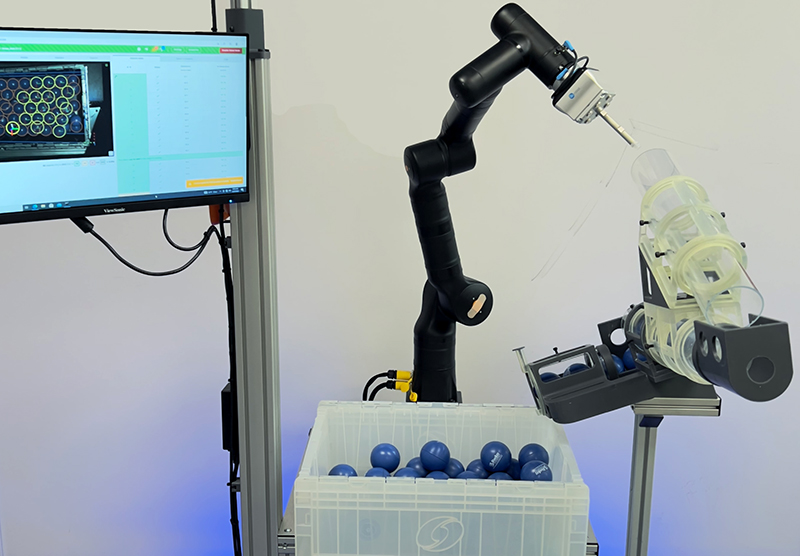
Kassow Robots, a developer of 7-axis cobots for machine tending, material handling, and related applications, will feature cobot bin picking and quality control demonstrations at Booth 1452 at Automate, June 6-9 in Detroit, Michigan, USA. Visit the Kassow Robots booth to see the company’s KR series of 7-axis cobots in action. In addition to the bin picking and quality control demonstrations, the KR1805 will showcase its speed, strength, and 1800-mm reach. 7-axis Cobots Improve 3D Bin Picking Kassow Robots will collaborate with partner BlueBay Automation to demonstrate how 7-axis cobots can improve 3D bin picking. The KR810 7-axis cobot will be paired with the PickIt L-HD 3D vision system and OnRobot VGC10 customizable vacuum gripper to demonstrate how the seventh axis allows the system to reach objects positioned in corners, close to the robot, or in hard-to-reach places. Attendees can also see how easy the cobot is to program and integrate into a system. “The added maneuverability gained from the seventh axis, combined with the wide range of reach and payload of the KR series, provides a unique solution in the collaborative market,” says Pierre de Giorgio, CEO of BlueBay Automation. Inspect Complicated Parts from Many Angles Kassow Robots partner Industrial Control will also show how cobots can be used in quality control applications. The demonstration will feature the KR810 7-axis cobot and an LMI Technologies Gocator 3D camera performing non-contact part inspections using 3D machine vision technology. Placing the camera on the robot arm allows the system to inspect highly complicated parts from many angles and create a 3D point cloud for inspection. “Kassow Robots’ terrific 7-axis lightweight cobots offer incredible opportunities to Industrial Control’s end customers in the industry,” says Mark Ermatinger, CEO of Industrial Control. Automate Repetitive Tasks with Lightweight Cobots The KR series of five lightweight cobots can handle payloads up to 18 kg and reach up to 1800 mm, allowing customers to automate a variety of physically demanding and/or repetitive tasks. The seventh axis enables continuous dispensing, welding, and material removal applications, regardless of access angle, and without the need to reorient the arm. The cobots are perfect for limited-space retrofits and applications such as machine tending, pick-and-place tasks, quality inspection, and palletizing. No in-depth programming knowledge is required to operate the cobots, allowing small and medium-sized enterprises (SMEs) without robotics specialists to implement automation and programming cost-effectively and independently. Kassow Robots made its first public appearance in 2018, and in late April 2022, Bosch Rexroth became the company’s new majority owner. Founder Kristian Kassow is now co-owner and continues to serve as CEO of Kassow Robots.
Dorner’s ERT250/150 Conveyor platforms power automation Applications at Automate 2022, June 6-9, in Detroit
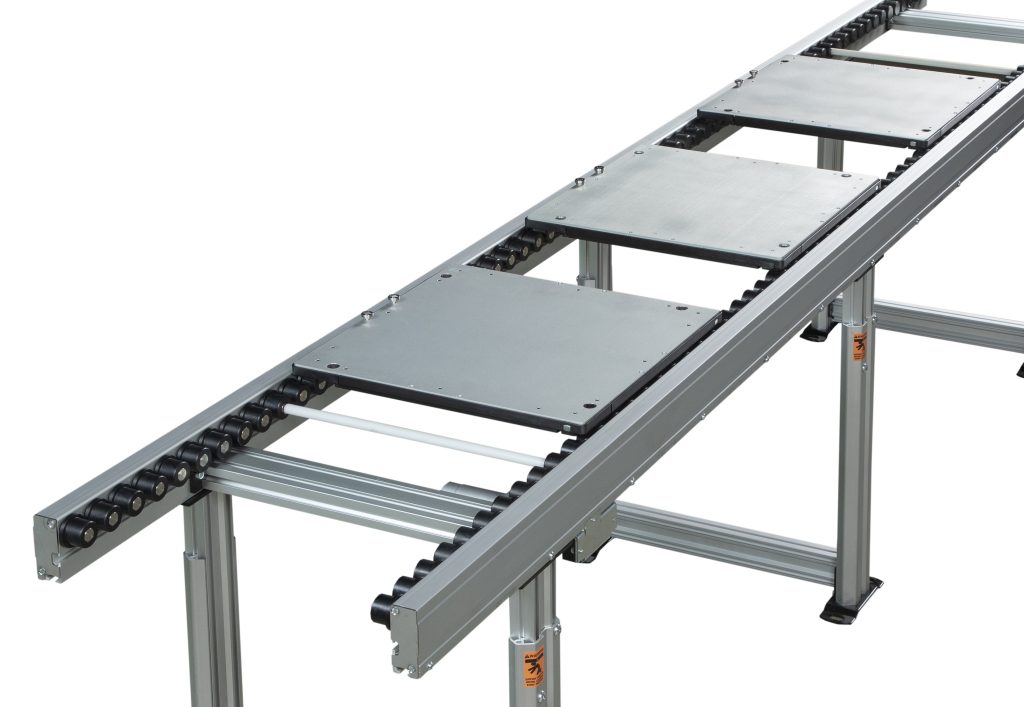
Dorner is exhibiting its deep lineup of automation-focused conveyor platforms, including the Edge Roller Technology ERT®250 and ERT®150 models, in booth 4300 at Automate 2022, June 6-9, in Detroit. As implied by their name, the ERT250 and ERT150 conveyors use rollers to move pallets smoothly with no friction (a byproduct often seen in belt-driven platforms). The conveyors’ open design eliminates concerns of small parts or screws dropping into rollers and causing damage or jamming. The ERT series is ideal for applications calling for pallet or tray handling; no- and low-back pressure accumulation; light, medium, or heavy load assembly automation; and Cleanroom applications such as medical product or device manufacturing, assembly, packaging, and others. In addition to the ERT series, Automate attendees will experience Dorner’s 2200 Precision Move Pallet System, a conveyor designed to provide accurate positioning and routing of parts for assembly, robotic, and inspection applications. The 2200 Series Precision Move Pallet System comes with many benefits for the assembly automation industry, including a heavy-load corner design to carry and accumulate loads up to 75 pounds around 90° or 180° corners and effectively provide loop capacity for larger, heavier pallets. Pallet widths have also been expanded to 640 mm by 640 mm to handle heavy loads. For robotic integration, Dorner and its 2200 Series conveyor is a certified Universal Robot solution provider. This partnership helps customers by simplifying robotic and conveyor integration for a wide variety of automated applications. Finally, Dorner is showcasing its FlexMove Pallet System, a versatile conveyor engineered for product routing, control, and inspection in small- to medium-size assembly automation applications. Sold as completed assemblies or as kits, FlexMove components offer users layout flexibility and the ability to implement conveyor system design changes easily. Components include merge and divert modules, lift and locate stations, cushioned pallet stops, and a unique pin tracking system to guide pallets through 90° turns – all of which attach directly to the conveyor frame, without the need for modifications.
US Cutting Tool orders totaled $175.5 million in April 2022, bringing YTD total 9.1% over 2021
April 2022 U.S. cutting tool consumption totaled $175.5 million, according to the U.S. Cutting Tool Institute (USCTI) and AMT – The Association For Manufacturing Technology. This total, as reported by companies participating in the Cutting Tool Market Report collaboration, was down 10.1% from March’s $196.4 million and up 3.8% when compared with the $170 million reported for April 2021. With a year-to-date total of $700.4 million, 2022 is up 9.1% when compared to the same time period in 2021. These numbers and all data in this report are based on the totals reported by the companies participating in the CTMR program. The totals here represent the majority of the U.S. market for cutting tools. “Data from AMT and USCTI show April sales declined slightly from March, but the year-to-date sales are still outpacing 2021,” said Jeff Major, president of USCTI. “Supply chain issues and rising costs of manufacturing continued to hinder our business. The hope is that these factors will ease later this year. Our industry outlook continues to remain positive.” Eli Lustgarten, president at ESL Consultants, echoed Major’s near-term optimism but warned of possible challenges further over the horizon, saying, “Orders should continue to track the increase in durable goods output as supply chain issues somewhat ease, helped by below-normal industrial goods inventories and the upcoming IMTS in September. However, a growth slowdown for the U.S. economy is a near certainty, driven by the high level of inflation, global financial tightening, and economic weakness in Europe and China. The impact on the cutting tool sector will likely be more volatility in monthly orders and possibly a flattening of demand with dollar sales growth likely to be driven by inflationary pressures.” The Cutting Tool Market Report is jointly compiled by AMT and USCTI, two trade associations representing the development, production, and distribution of cutting tool technology and products. It provides a monthly statement on U.S. manufacturers’ consumption of the primary consumable in the manufacturing process – the cutting tool. Analysis of cutting tool consumption is a leading indicator of both upturns and downturns in U.S. manufacturing activity, as it is a true measure of actual production levels. Historical data for the Cutting Tool Market Report is available dating back to January 2012. This collaboration of AMT and USCTI is the first step in the two associations working together to promote and support U.S.-based manufacturers of cutting tool technology. The graph below includes the 12-month moving average for the durable goods shipments and cutting tool orders. These values are calculated by taking the average of the most recent 12 months and plotting them over time.
Orbital Wrapper manufacturer reports high demand for wireless, automated operation
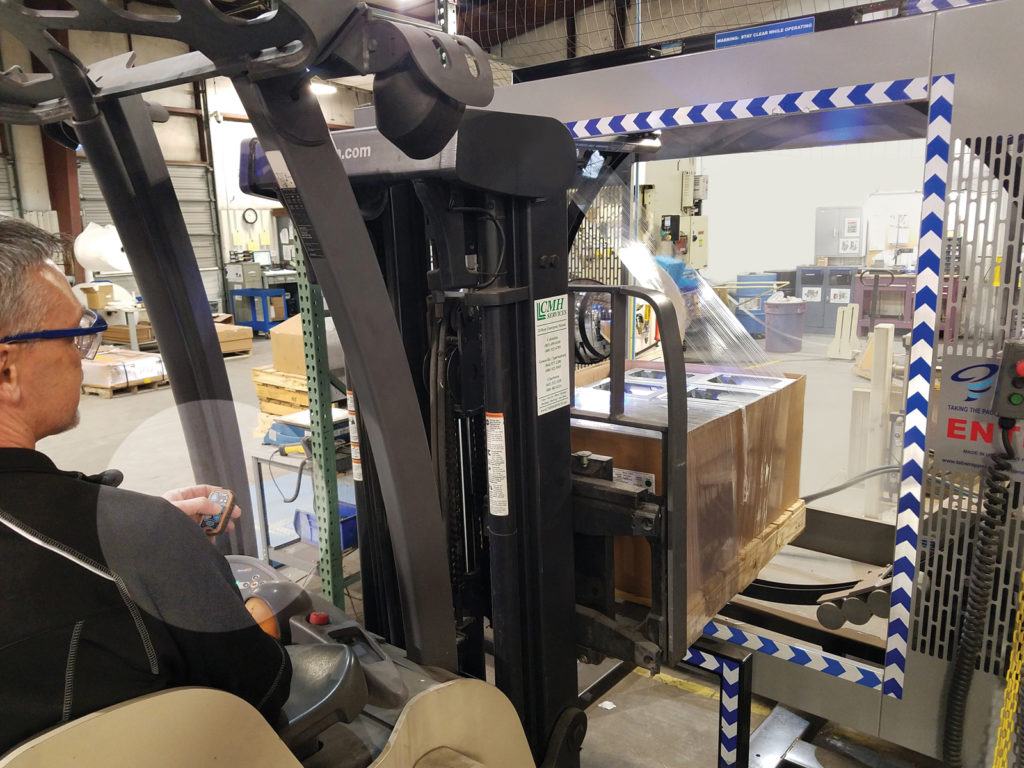
Packaging machinery manufacturer TAB Industries, LLC has reported that 90 percent of the TAB Wrapper Tornado orbital wrapping systems purchased in the 11 years since its development feature the company’s wireless automation package. Devised as an optional convenience to speed the pallet wrapping process, the wireless automation package enables a single lift truck operator to manage the entire pallet wrapping function by remote control without leaving the seat of the forklift. By replacing a manual stretch wrapping process that typically requires two or three workers with an automated process performed by a single worker, the wireless automation package offers speed, efficiency, and enticing labor savings, according to Vice President of Sales and Marketing Andy Brizek, noting continued labor force concerns among his customer base of manufacturers. Offered on the TAB Wrapper Tornado Standard and Smart Controls models, the wireless automation package comprises the company’s automated cut and wrap device, which automatically cuts the stretch wrap after each pallet is wrapped and readies it for the next pallet load, and the wireless remote control, which brings operator controls inside the lift truck. These TAB Wrapper Tornado orbital wrappers automatically apply stretch wrap 360 degrees around and under the pallet and load to create a tight, secure, unitized load that resists shifting in transit without requiring banding, boxing, or strapping. The pallet wrappers are designed and manufactured in the company’s Reading, Pa. headquarters and delivered ready for operation with a warranty.
LEDtronics LED Dimmable Canopy Luminaire an easy install for lighting applications

LEDtronics® presents a UL-listed, surface-mount, dimmable addition to its lineup of low-profile LED canopy lights for parking garages and other area lighting applications, both indoors and outdoors. Consuming only 45 watts, the luminaire replaces HID lights of up to 175 watts—an energy savings of up to 75%—offering an output of 5,000 lumens of pure white (5000K) bright illumination through a white, frosted lens. This translates into luminous efficacy of 111 lumens per watt. It operates on a wide voltage range of 100-277VAC, as well as a wide operating temperature range of -40°F to ~+104°F. The compact CNP000-PG-045WF has an extremely low profile, boasting a total height of only 3.3 inches. Its sleek, slim and round design makes it perfect for any canopy application, such as parking garages, gas stations, manufacturing, and factory floors, warehouses, loading docks, recreation areas, tunnels, canopies, entrances, walkways, underpasses, and many more. Even though the brightness of LED Canopy Lights is equal to or greater than the HID lamps they replace, they create much less heat in comparison, reducing air conditioning demands in indoor applications such as manufacturing and factory floors or warehouses. The latest LEDtronics canopy light offers a 135-degree wide beam and is dimmable with standard dimmers, thus making it California Title 24 compliant. Sealed in a die-casting profile for indoor and outdoor applications and suitable for J-BOX mounting, it is UL/cUL Wet Locations rated for weather resistance and is easily installed on walls or ceilings, without the need to be dismantled for setup. Both lightweight and rugged, it is made of one-piece, die-cast aluminum alloy housing and has a high-impact, UV-proof, white polycarbonate frosted lens. The luminaire is efficiently designed to dissipate heat and distribute light evenly, with minimal glare. Its solid-state construction renders it impervious to shock, vibration, frequent switching, and environmental extremes. This all-weather luminaire offers an extended LED lamp life of over 50,000 hours with lumen maintenance of over 70%, as well as maintenance-free operation, long-lasting durability, major energy savings, and reduced light pollution—all translating into reliability, ecological sustainability, and sizable budget savings. Since the luminaire is much more energy-efficient than old-technology lamps, it is perfect for operating with an alternative or renewable energy resources such as solar or wind power, in cold or warm environments. Other wattages and different color temperature options are available for qualified volume offers. A bi-level motion sensor option is also available, for increased energy savings. The LEDtronics UL-listed CNPR00-PG-045WF-W0-XPW-101D LED canopy light comes with a five-year unconditional U.S. factory warranty. It is available through LEDtronics distributors, and quantity discounts are available.
Rental Equipment Investment Corp. acquires Cahill Services, LLC
Rental Equipment Investment Corp. (REIC), a portfolio company of Kinderhook Industries LLC, announced the acquisition of Cahill Services. Cahill represents REIC’s second add-on acquisition under Kinderhook’s ownership and REIC’s 14th since its inception. The financial terms of the transaction were not disclosed. Cahill is a provider of specialty rental solutions for high-demand, critical applications across infrastructure, construction, and industrial maintenance markets. Founded in 2015 and headquartered in Livonia, Mich., Cahill operates four service centers in Canada and two service centers in the United States. Cahill is one of the largest “pure-play” specialty rental service providers of critical climate control and lighting equipment including proprietary flameless heaters and hybrid light towers. REIC’s acquisition of Cahill represents a unique opportunity to add a growing, differentiated specialty rental model that leverages both proprietary technology and local market expertise to provide critical specialty rental solutions. “We are excited to welcome the Cahill team to REIC,” said Kevin Fitzgerald, CEO of REIC. “Cahill’s patented JetHeat is the HVAC industry’s premier flameless heater, and a unique product offering that we are excited to roll out throughout our fleet. The JetHeat® helps customers achieve fuel savings, which in turn generates significant cost savings over the duration of a project.” Dennis Haller, CEO of Cahill, added, “My team is thrilled about the opportunity to join REIC’s specialty rental division. Cahill has experienced tremendous growth in the past 24 months and will now have access to the additional resources of REIC to scale our business and continue capturing market share.” “The acquisition of Cahill furthers REIC’s mission of becoming a national specialty rental provider and results in 12 standalone specialty rental locations across North America,” said Paul Cifelli, managing director at Kinderhook. “We are eager to partner with Cahill’s seasoned management team who have deep sector expertise and a long history of growing businesses in specialty rental.” “Cahill’s built a strong foundation in the specialty rental market industry and will add new geographies and products to REIC’s existing fleet,” said Nate Druckenmiller, vice president, Kinderhook. “Kinderhook and REIC look forward to leveraging the capabilities of the combined businesses to accelerate growth.” Kirkland & Ellis LLP served as legal counsel to Kinderhook. Prestwick Partners served as the Kinderhook Industries’ exclusive financial advisor and Winston & Strawn LLP acted as legal advisor to Cahill. Financing for the transaction was provided by a PNC Capital Markets bank syndicate, which included Flagstar Bank, Axos Bank, BancAlliance, Banc Hapoalim, First Merchants Bank, MUFG Union Bank, and Stifel Bank & Trust.
Women In Trucking Association announces its June 2022 Member of the Month

The Women In Trucking Association (WIT) has announced Elizabeth Perez as its June 2022 Member of the Month. Elizabeth is a professional driver for DVL Express and was named one of their best drivers for September 2021. She began her career in truck driving three and a half years ago and has been with the company for almost a year. Growing up in Mexico, Elizabeth lost her father early in life and as one of the oldest children, she took on the maternal responsibility of her seven siblings. As a result, she began working in the United States making minimum wage at a pizza restaurant. She was known to be curious and hardworking and quickly became one of the main kitchen workers who learned and managed all processes. Elizabeth tried many different career paths until one day she saw a woman driving a semi-truck. Seeing how confident and strong this woman was, she decided that truck driving would be the perfect match for her personality. “Truck driving is a job that always keeps you in suspense,” she said recalling a time she got caught in a snowstorm transporting a load from Illinois to Missouri. She has since visited all 50 states and says that Colorado and California are her favorite because they remind her of Mexico more than anywhere else. Although this career path has its challenges, she enjoys the fact that it is still rewarding in many ways. “As of now, I am thankful for the helpful and caring people that surround me at DVL Express, and I am especially grateful for my dispatcher and the connection that we share.” In her spare time, Elizabeth enjoys speaking to her family via FaceTime and exercising while waiting for a load. “As for my future, my biggest dream is to own a big and beautiful house someday, which would become a home for my whole family.”
U.S. Rail Traffic for May and the week ending May 28, 2022
The Association of American Railroads (AAR) has reported U.S. rail traffic for the week ending May 28, 2022, as well as volumes for May 2022. U.S. railroads originated 928,742 carloads in May 2022, down 3.7 percent, or 35,821 carloads, from May 2021. U.S. railroads also originated 1,102,558 containers and trailers in May 2022, down 4.3 percent, or 49,258 units, from the same month last year. Combined U.S. carload and intermodal originations in May 2022 were 2,031,300, down 4 percent, or 85,079 carloads and intermodal units from May 2021. In May 2022, seven of the 20 carload commodity categories tracked by the AAR each month saw carload gains compared with May 2021. These included: crushed stone, sand & gravel, up 4,659 carloads or 5.8 percent; motor vehicles & parts, up 4,534 carloads or 9 percent; and food products, up 1,652 carloads or 7.1 percent. Commodities that saw declines in May 2022 from May 2021 included: grain, down 13,738 carloads or 13.5 percent; primary metal products, down 5,878 carloads or 15.3 percent; and petroleum & petroleum products, down 5,857 carloads or 13.5 percent. “Rail traffic volumes in May reflected an economy that is a mixture of good and not-so-good,” said AAR Senior Vice President John T. Gray. “Auto production and auto carloads seem to be slowly recovering; crushed stone and sand and food-related volumes are showing strength while intermodal had its best month since June 2021. On the other hand, carloads of chemicals fell for the first time in more than a year in May, while grain volumes continued to be disappointing when compared to those of 2021 and the latter half of 2020.” Excluding coal, carloads were down 30,281 carloads, or 4.3 percent, in May 2022 from May 2021. Excluding coal and grain, carloads were down 16,543 carloads, or 2.8 percent. Total U.S. carload traffic for the first five months of 2022 was 4,835,705 carloads, up 0.2 percent, or 8,490 carloads, from the same period last year; and 5,555,607 intermodal units, down 6.6 percent, or 389,799 containers and trailers, from last year. Total combined U.S. traffic for the first 21 weeks of 2022 was 10,391,312 carloads and intermodal units, a decrease of 3.5 percent compared to last year. Week ending May 28, 2022 Total U.S. weekly rail traffic was 514,277 carloads and intermodal units, down 3 percent compared with the same week last year. Total carloads for the week ending May 28 were 233,633 carloads, down 4 percent compared with the same week in 2021, while U.S. weekly intermodal volume was 280,644 containers and trailers, down 2.2 percent compared to 2021. Three of the 10 carload commodity groups posted an increase compared with the same week in 2021. They were farm products excl. grain, and food, up 1,311 carloads, to 16,694; miscellaneous carloads, up 939 carloads, to 11,160; and motor vehicles and parts, up 770 carloads, to 13,708. Commodity groups that posted decreases compared with the same week in 2021 included grain, down 3,849 carloads, to 21,686; metallic ores and metals, down 3,251 carloads, to 21,109; and coal, down 2,711 carloads, to 63,937. North American rail volume for the week ending May 28, 2022, on 12 reporting U.S., Canadian and Mexican railroads totaled 330,951 carloads, down 2.5 percent compared with the same week last year, and 365,869 intermodal units, down 2.4 percent compared with last year. Total combined weekly rail traffic in North America was 696,820 carloads and intermodal units, down 2.5 percent. North American rail volume for the first 21 weeks of 2022 was 14,163,140 carloads and intermodal units, down 3.8 percent compared with 2021. Canadian railroads reported 77,381 carloads for the week, up 0.9 percent, and 70,418 intermodal units, down 3.2 percent compared with the same week in 2021. For the first 21 weeks of 2022, Canadian railroads reported a cumulative rail traffic volume of 2,990,982 carloads, containers, and trailers, down 6.1 percent. Mexican railroads reported 19,937 carloads for the week, up 2 percent compared with the same week last year, and 14,807 intermodal units, down 2.1 percent. Cumulative volume on Mexican railroads for the first 21 weeks of 2022 was 780,846 carloads and intermodal containers and trailers, up 3 percent from the same point last year. For the U.S., Canada, and Mexico Rail Charts, click here.
EP 285: Big Joe Lift Trucks at MODEX 2022
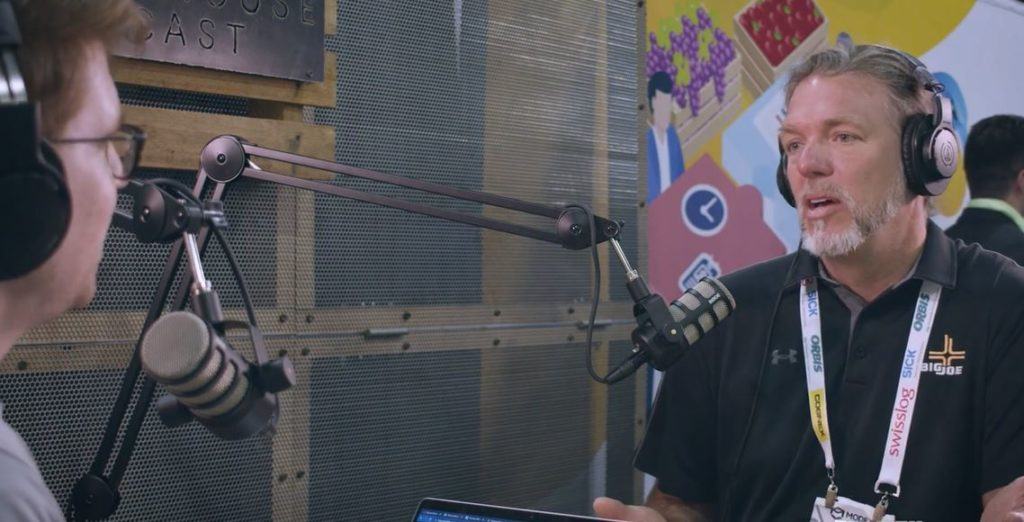
In this episode, I was joined by the Chief Marketing Officer at Big Joe Lift Trucks, Bill Pedriana, at MODEX 2022. Big Joe is providing electric walk-behind forklift options that can be utilized in many different warehousing applications. We discuss the origins of Big Joe, who Big Joe really is, and their new automated solution Bud. Key Takeaways Big Joe Lift Trucks have been around since the fifties and Bill explains how the idea came about when the family owners were looking around Chicago for problems to solve. They noticed that people were having to take heavy cast iron cash boxes out of stores and they were just utilizing simple dollies and struggling. That is when they had the idea of making it better by adding a hydraulic cylinder to get the dolly up to counter height which would make it easy to get the cash box onto the dolly. From there the ideas started to grow and they have focused on making simpler solutions when it comes to forklifts and thinking about the standard forklift in a different way. When we think of things in a different way Big Joe takes a look at a standard type of forklift and thinks about how they can improve it. For example, Bill discusses how they have taken a standard pallet jack and made tweaks to it like the sizing of the forks that allows for better maneuverability in smaller spaces and creating other solutions that allow users to better handle loads in unique spaces. They have built a strict lithium rider jack that allows for less footprint and gives the ability to utilize the power better through lithium. They have also recently entered the automation world by announcing Bud at MODEX which is their simplified approach to automation. Bud stands for Big Joe User Directed which means that the user is controlling when it moves but does not need to stay with it. It is essentially an automated pallet jack that the user will load with a pallet and then press the button to send it on its way to the destination. Bill discusses how quickly ROI can be achieved with Bud as it is only priced at around $50 a day through a RaaS model. The New Warehouse Podcast EP 285: Big Joe Lift Trucks at MODEX 2022
Container Dwell Fee on hold through June 3

The San Pedro Bay ports of Long Beach and Los Angeles will once again delay consideration of the “Container Dwell Fee” for another week, this time until June 3. Since the program was announced on Oct. 25, the two ports have seen a combined decline of 48% in aging cargo on the docks. The executive directors of both ports will reassess fee implementation after monitoring data over the next week. Fee implementation has been postponed by both ports since the start of the program. The Long Beach and Los Angeles Boards of Harbor Commissioners have both extended the fee program through July 28. Under the temporary policy, ocean carriers can be charged for each import container dwelling nine days or more at the terminal. Currently, no date has been set to start the count with respect to container dwell time. The ports plan to charge ocean carriers $100 per container, increasing in $100 increments per container per day until the container leaves the terminal. Any fees collected from dwelling cargo will be reinvested for programs designed to enhance efficiency, accelerate cargo velocity and address congestion impacts. The policy was developed in coordination with the Biden-Harris Supply Chain Disruptions Task Force, U.S. Department of Transportation and multiple supply chain stakeholders.
EP 284: TAWI

In this episode, I was joined by the Senior Regional Sales Manager at TAWI, Cyrus Choy. TAWI is focused on helping you lift things by making them feel like nothing through vacuum technology. We discuss the origins of TAWI and how their technology helps to address safety concerns and the labor shortage. Key Takeaways TAWI is a Swedish-based company that has roots dating back to the 1970s when they first invented vacuum lift technology. At the flour mills in Sweden, they recognized that lifting 110-pound bags of flour, sugar and other ingredients was very taxing on the worker and also very limiting to the type of worker that could be hired. As they looked at this they realized they needed a better solution to help them lift these bags and that is when they came up with the vacuum technology. TAWI’s vacuum technology has the ability to make your items feel like they are weightless making them much easier to move around. One big issue with heavy packages and products is that they can be very cumbersome to lift and have a high potential to cause injury to those who are lifting them. Not only is weight an issue but also the ability to grab items at the right position. We discuss how maximizing container space can be a potential hazard to unloading. As you are unloading packages from the top of a container it can be very difficult to get a proper grip and do a proper lift on these items. When you utilize a vacuum lift device from TAWI it makes the item essentially weightless so that it can easily be moved around in any position. Allowing this freedom of movement is ideal for preventing strains and other types of injuries that can occur from improper lifting techniques. Not only does the TAWI vacuum lifting technology help to reduce the number of injuries in your operation, but it can also help to address some of your staffing issues. Cyrus discusses how oftentimes companies that deal in heavy material need to hire employees who can handle this heavy material and even then they will still be exhausted and not have a great work environment. When you take the weight out of the items you are now able to have anyone move that material around which expands your potential labor pool. Cyrus shares some examples of how this has benefited the flexibility of certain positions and paid off in happier employees as the technology was introduced. Listen to the episode below and leave your thoughts in the comments. The New Warehouse Podcast EP 284: TAWI
Safety Systems & Controls adds Nomad X to pace-one zone speed control product line
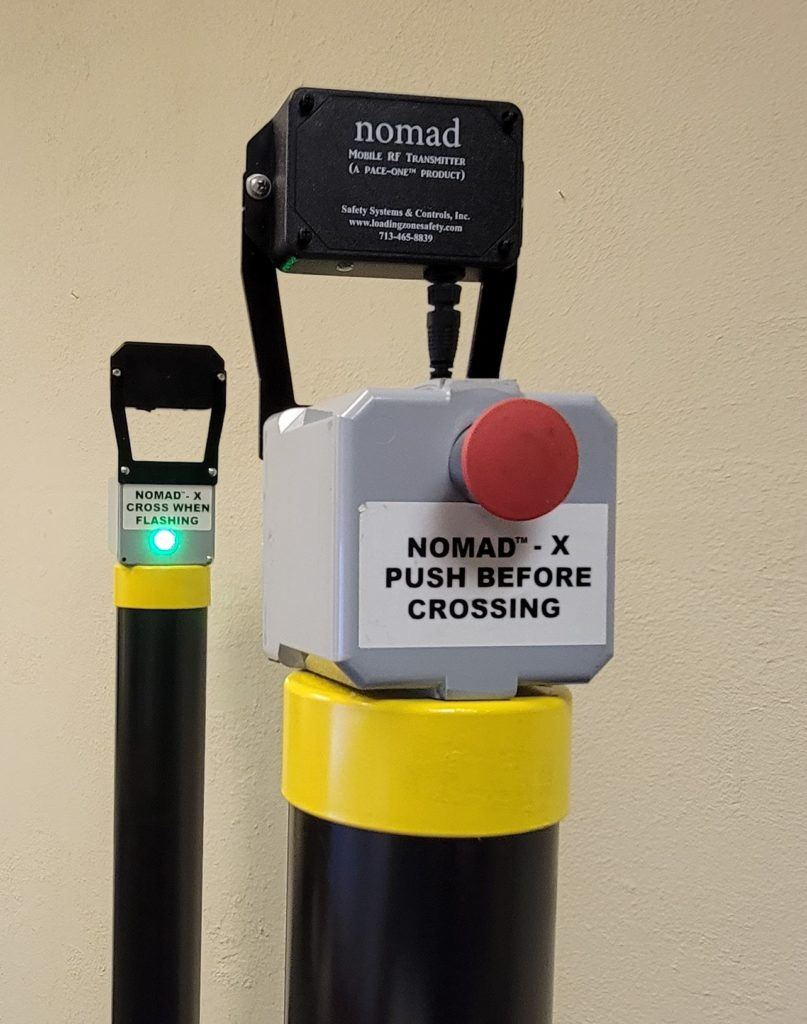
With addressing customers’ desire to protect individuals at forklift crossings, Safety Systems & Controls has expanded its Nomad RF transmitter with a transceiver option. Nomad X is mounted on each side of a pedestrian crossing. It can be mounted on a crossing gate, pedestrian barrier, or standalone support. Each Nomad X consists of a mounting box containing a PC Board with internal timer, push-button, battery and pilot light (LED).” Corky Bynum, VP of Safety Systems & Controls, explains how the new feature works and the benefits of the new design. Bynum states, “Nomad X is activated by depressing a push-button on the mounting box. This powers Nomad X and generates an RF signal that slows Pace-One-equipped vehicles AND wakens the Nomad X on the opposite side of the crosswalk. In addition to slowing travel speeds, the LEDs on both boxes flash as visual indicators that Nomad X is activated. The activation time is programmable on the Nomad X circuit board. With this design, we have slower travel speeds or optional forced STOP (electric trucks) at crosswalks but only when there are pedestrians present. This continues SSC’s design initiative of improving safety and doing so with minimal effects to productivity.”
Kassow Robots makes its Automate debut, showcasing the KR Series of 7-Axis Cobots

Kassow Robots, a developer of 7-axis cobot solutions for machine tending, material handling, and related applications, exhibits at Automate for the first time. Held June 6–9 in Detroit, Michigan, USA, Automate is the largest solutions-based showcase of automation, robotics, vision, motion control, and more in North America. Visit Kassow Robots at Booth 1452 to learn about our extremely flexible 7-axis cobots. The 7-axis cobots in Kassow’s KR series offer speed and power combined with a long reach and a high degree of flexibility to work in tight and awkward spaces. They can handle payloads up to 18 kg and reach up to 1800 mm, allowing customers to automate a variety of physically demanding and/or repetitive tasks. The seventh axis enables continuous dispensing, welding, and material removal applications, regardless of access angle, without the need to reorient the arm. The cobots are perfect for limited-space retrofits and applications such as machine tending, pick-and-place tasks, quality inspection, and palletizing. No in-depth programming knowledge is required to operate the cobots, allowing small and medium-sized enterprises (SMEs) without robotics specialists to implement automation and programming cost-effectively and independently. Kassow Robots made its first public appearance in 2018, and in late April 2022, Bosch Rexroth became the company’s new majority owner. Founder Kristian Kassow is now co-owner and continues to serve as CEO of Kassow Robots.
DESTACO to exhibit at Automate Tradeshow 2022
DESTACO has announced that it will be exhibiting in Booth No. 3013 at the upcoming Automate Tradeshow 2022, which will be held from June 6-9 at the Huntington Place Convention Center in Detroit, MI. Produced by the Association for Advancing Automation (A3), Automate is the largest showcase of automation, robotics, vision, and motion-control solutions in North America. “DESTACO is excited to be back in person at Automate 2022,” said Darren Greene, Director, Global Marketing Communications for DESTACO. “We can’t wait to show you some of our new products and be able to talk face-to-face with current and new customers.” At the show, DESTACO will be highlighting an extensive array of products, including: 84N5 Series Sheet Metal Press Shop Grippers: A lighter, faster, and highly flexible solution for press shop gripping applications that feature easy in-field jaw reconfiguration, adjustable opening angle, multiport sensing, and minimal field maintenance Camco™ PGM40 Series Servo Positioners: Ideal for use in small high-speed positioning and sub-positioning on large servo-positioning applications due to its large through-hole and ability to be mounted both horizontally and vertically RCM/RFM Series Adjustable Pneumatic Pivot Units: The unit’s toggle-action mechanism delivers reliable power to hold large fixtures in place during welding and assembly applications while also offering the flexibility of in-field opening-angle adjustment Manual Clamps with Front-Mount Base: Designed with a vertical mounting base that reduces interfering contours, and available with both vertical (models 2002-UF and 2007-UF) and horizontal (models 225-UF and 235-UF) handle the action. All models have hardened bushings at key pivot points for longer cycle life and higher holding capacities. TCC-2E Pneumatic Power Clamps: Offer tolerance compensation that allows the clamp to self-adjust within three degrees of the clamp arm moving, with no need to use shims. Ideal for use in manual and automated fixture welding, positioning, and locating. 82M-3E Series Pneumatic Power Clamps: Provide superior holding power for automotive and sheet-metal processing applications via a lightweight, enclosed aluminum housing and optimized mechanics that are more precise in their positioning capabilities Camco™ Precision Link Conveyors: Combining excellent accuracy with high-load capacity gives these conveyors the versatility to meet virtually any automated assembly or manufacturing challenge. Offered in tabletop, modular tabletop, and heavy-duty versions with all models featuring roller bearings and precision-ground cam followers that help ensure a smooth transfer and long life. TC1 Series Manual Tool Changers: Ultralight, compact and ideal for use in cobot work cells and applications that require custom coupling solutions. These tool changers feature a very low profile and pneumatic and electric pass-through coupling capability. Robohand™ Linear Positioning & Gripping Products: Designed to be used together in any number of combinations to offer a unique automation solution that fits the needs of the specific application. All Robohand products are engineered for reliability and long life to help ensure maximum uptime and minimal maintenance.
U.S. Rail Traffic for the week ending May 21, 2022
The Association of American Railroads (AAR) has reported U.S. rail traffic for the week ending May 21, 2022. For this week, total U.S. weekly rail traffic was 506,976 carloads and intermodal units, down 4.1 percent compared with the same week last year. Total carloads for the week ending May 21 were 233,244 carloads, down 3.7 percent compared with the same week in 2021, while U.S. weekly intermodal volume was 273,732 containers and trailers, down 4.5 percent compared to 2021. Four of the 10 carload commodity groups posted an increase compared with the same week in 2021. They included coal, up 966 carloads, to 65,609; chemicals, up 784 carloads, to 33,943; and forest products, up 171 carloads, to 10,300. Commodity groups that posted decreases compared with the same week in 2021 included grain, down 3,515 carloads, to 21,797; miscellaneous carloads, down 3,023 carloads, to 8,129; and metallic ores and metals, down 1,932 carloads, to 21,664. For the first 20 weeks of 2022, U.S. railroads reported a cumulative volume of 4,602,072 carloads, up 0.4 percent from the same point last year; and 5,274,963 intermodal units, down 6.8 percent from last year. Total combined U.S. traffic for the first 20 weeks of 2022 was 9,877,035 carloads and intermodal units, a decrease of 3.6 percent compared to last year. North American rail volume for the week ending May 21, 2022, on 12 reporting U.S., Canadian and Mexican railroads totaled 329,823 carloads, down 2.8 percent compared with the same week last year, and 365,682 intermodal units, down 3 percent compared with last year. Total combined weekly rail traffic in North America was 695,505 carloads and intermodal units, down 2.9 percent. North American rail volume for the first 20 weeks of 2022 was 13,466,320 carloads and intermodal units, down 3.8 percent compared with 2021. Canadian railroads reported 75,281 carloads for the week, down 1.3 percent, and 76,189 intermodal units, up 0.9 percent compared with the same week in 2021. For the first 20 weeks of 2022, Canadian railroads reported a cumulative rail traffic volume of 2,843,183 carloads, containers, and trailers, down 6.4 percent. Mexican railroads reported 21,298 carloads for the week, up 3.1 percent compared with the same week last year, and 15,761 intermodal units, up 4.4 percent. Cumulative volume on Mexican railroads for the first 20 weeks of 2022 was 746,102 carloads and intermodal containers and trailers, up 3.2 percent from the same point last year. To view the U.S. Rail Traffic charts, click here.
EP 283: CLARK Material Handling at MODEX 2022
In this episode, I was joined by Brandon Bullard of CLARK Material Handling. CLARK provides material handling equipment and forklifts for many different industries including the warehousing industry. We discuss their new automation partnership, his thoughts on lithium, and how they continue to maintain quality while innovating. Key Takeaways CLARK invented the forklift in 1917 and has been around for 105 years innovating the forklift space while focusing on quality. They provide multiple different forklift solutions for different industries and have many offerings for the warehousing industry as well. Brandon discusses how their focus is on innovation, safety, and ergonomics when it comes to designing and improving their forklifts. The next innovation for CLARK is getting into the automation space. They are doing this by partnering with Third Wave Automation to automate one of their narrow aisle reach trucks. I am very interested to see how this develops because I think one of the next frontiers is getting an automated reach truck that can be utilized in existing warehousing spaces. This will essentially give you the ability to automate the put-away process without having to invest in an ASRS system so a great alternative for companies looking to automate processes in an easier way. As we discussed the high interest in lithium at MODEX, Brandon pointed out that as CLARK continues to innovate they also keep quality in mind as that has been their foundation since the beginning. The importance of quality for them goes above all as they want to ensure that customers have long-lasting products. While they continue to innovate they also focus heavily on the data and analytics to ensure that customers are getting the right fit for their fleet and not just the latest innovation because it’s new. It is important for CLARK to be able to give the customer a complete experience when it comes to providing the right fit as well as the highest quality. Listen to the episode below and leave your thoughts in the comments. The New Warehouse Podcast EP 283: CLARK Material Handling at MODEX 2022
Softeon continues to advance integration and optimization of Mobile Robots, Put Walls, other warehouse automation

Warehouse Management and Warehouse Execution Systems deliver throughput, Operating Cost Reduction, and ROI Softeon, a global supply chain software provider with the industry’s best track record of customer success, announced the continued expansion of its software support for materials handling systems, especially for mobile robots and put walls. While Softeon easily integrates with and optimizes virtually all types of materials handling systems in the distribution center, it is seeing special interest by companies in mobile robots and put walls – technologies for which it provides comprehensive software support. While very different from each other, both mobile robots and put walls share some common attributes. For example, both can be deployed at a lower scale and price point, and expand flexibly over time. Both mobile robots and put walls also offer the opportunity to drive improved productivity and reduce the need for adding workers in what continues to be a very challenging labor environment. Both do so with a lot less heavy footprint (and cost) than full-blown goods-to-person or other major automation systems. Softeon can integrate with robotic systems in different ways. If a customer chooses to use the robot’s application software to manage picking, Softeon can easily integrate its WMW/WES in that way, often still managing location and inventory information and sending needed picks and locations to the AMR software. But Softeon also uniquely offers a mobile robot platform that can integrate with machines of different types and from different vendors. This provides seamless integration, for example, as inventory is passed from one type of robot to another. More importantly, companies can flexibly add robots from new providers with new and varying capabilities, capacities, and configurations. This “future proofs” a company’s investment in robots today, with maximum flexibility to add different types of robots over time. Softeon’s put wall integration starts with algorithms to determine which orders in the pool are best suited to go through the wall(s). This is especially important as companies can start small, with limited put wall capacity. Softeon also provides end-to-end integration and support. No third-party put wall software is required. Softeon simultaneously optimizes both picking and “putting” to the wall to achieve the lowest cost and greatest throughput. It allows multiple waves to be processed on a given wall module concurrently, and multiple associates to work on the same wall at once. Among a number of put wall deployments, one Softeon omnichannel retail customer shows the true scalability of put wall technology. It started with one wall module as a pilot, then added 9 more walls based on the initial success, then later almost 20 more, along with a new mechanized pick module to feed put wall operations. “Softeon provides innovative and differentiated support for materials handling systems with very unique support, especially for the increasingly popular mobile robots and put wall systems,” said Dan Gilmore, chief marketing officer at Softeon. You can learn more about the Softeon Warehouse Management + Execution System.
Port of Long Beach Harbor Commission OKs $700,000 in community sponsorships
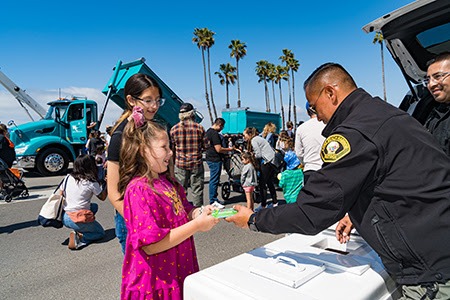
The Long Beach Board of Harbor Commissioners on Monday approved 179 sponsorships totaling $701,430 for a wide variety of community events and projects. The sponsorship program helps the Port of Long Beach engage with and inform local community members about Port projects and initiatives. For the spring 2022 sponsorship call, the Port received 28% more applications than in spring 2021. Of the applications, 43% were first-time applicants. To satisfy the demand for community funding, the Harbor Commission approved a $222,150 increase to the $1 million sponsorship budget, bringing the new sponsorship budget total to $1,222,150 for the 2022 fiscal year. “Nearly half of the applicants in this round were first-timers, which is encouraging. It’s another indication of how the community is emerging from the pandemic,” said Port of Long Beach Executive Director Mario Cordero. “With the current economic climate and continued effects of the COVID-19 pandemic, the Port is pleased to be able to fund new and returning organizations helping to revitalize our community,” said Harbor Commission president Steven Neal. Among the many events and programs sponsored in the latest call for applications are Long Beach Community Table’s Sunday Homebound Food Distribution Program, Compound Long Beach’s Art for All Series, and Operation Jump Start’s 2022 Scholars Day Celebration. Sponsored events and programs help spread awareness about the Port’s operations and initiatives. The Port accepts sponsorship applications twice a year, in March and September. More information about the Community Sponsorship Program and a list of approved sponsorships can be found here.