
As California plans to ban propane and diesel forklifts, Expect a faster shift to electric

The California Air Resources Board (CARB) is planning to ban sales of all new forklifts that aren’t zero-emission by 2026. Its recent proposal to phase out non-zero-emission forklifts is still in development, and the legislation is not yet in effect. However, the users of the material handling equipment (MHE) industries are questioning what it will mean for their operations—and not just in California, but all over the country. At its core, the planned proposal would force users to phase out internal combustion forklifts, including propane and diesel forklifts, and instead lease or buy zero-emission material handling equipment. Starting in 2026, fleets may not purchase large spark-ignition (LSI) forklifts (another name that CARB uses for lift trucks powered by internal combustion (IC) engines) while after 2026 fleets will need to retire existing LSI forklifts that are 13 years old or older. Understandably, fleets will need to plan ahead to guarantee they’re able to meet these regulations. At OneCharge Lithium Batteries, we always work with our customers to better understand the equipment requirements of their operations. Below, we’ll break down what these new regulations mean, and how they’ll affect different fleet types. We hope this information will simplify planning and help electric forklift buyers adjust to the upcoming mandates. What It All Means The new regulation will naturally mean an increase in reporting requirements for fleets and fleet owners, including an initial report with basic company and forklift information, and a final report to be completed when the fleet has fully transitioned to zero-emission lift trucks. Beginning in 2026, applicable forklifts that are bought or leased will need to be zero-emission, and the phaseout of older, non-compliant models will also begin that year. Starting in 2026, IC engine-powered forklifts that are 13 years old or older, or have an engine that is 13 years old or older, will no longer be allowed to operate. Not all forklifts will be affected by the regulation. The main segment targeted by the regulation will be large spark-ignition forklifts with a lift capacity of 12,000 pounds or less. Forklifts that won’t be affected include rough-terrain forklifts, pallet jacks, military tactical vehicles, forklifts with telescoping booms, and forklifts owned or operated by facilities that are subject to the Regulation for Mobile Cargo Handling Equipment at Ports and Intermodal Rail Yards. In 2022, the production of material handling equipment (MHE) struggles to catch up with the demand, owing in many ways to pandemic-related supply-chain issues. How these production issues will affect the adoption of the new regulations remains to be seen, though leading lithium battery manufacturers are already preparing to ramp up production and satisfy the demand for zero-emission forklift batteries. To make the transition less difficult, there are several exemptions and allowances built into the regulation, including a rental allowance for fleet operators. As long as their intention is reported in advance, fleets will be allowed to rent LSI forklifts for unexpected occurrences or seasonal workload increases for up to 30 days each calendar year. Similarly, a low-use exemption will allow fleets to keep a number of LSI forklifts as long as they’re used fewer than 200 hours per calendar year. The number of low-use LSI forklifts a fleet can keep will be limited to 10% of its total units. Notably, microbusinesses, which have fewer than 25 employees and less than $5 million in annual gross receipts, will be allowed to keep one low-use LSI forklift indefinitely. What will these regulations look like in reality, and how could they potentially affect real-world fleets? To make the regulation’s implications clearer for our readers, we’ve put together a few scenarios that highlight how the regulation will play out for different types of fleets. Company 1 In our first scenario, the fleet has 45 large spark-ignition (LSI) forklifts. In 2026, our starting year, the model years of their forklifts range from 2011 to 2025, meaning their forklifts are all between one and 15 years old. Starting in 2026, additions and voluntary replacements would be required by the new zero-emission regulations. In that first year, the fleet would have nine forklifts from the model year 2013 or earlier—which means, essentially, they would have to replace nine forklifts. For every following year, three of their remaining forklifts would become older than 13 years and would need to be replaced. That doesn’t sound too difficult, and keep in mind that the fleet would be allowed to keep five low-use LSI forklifts of any model year until 2031. Company 2 This hypothetical fleet has 27 LSI forklifts, from model years 2017–2025. However, the model years aren’t evenly spaced for this fleet: 14 of the forklifts are from the model year 2017, and 13 are from the model year 2025. Additionally, this fleet experiences extra business in December, and typically rents 10 extra forklifts for the month. Because this fleet’s forklifts are concentrated in specific model years, there will be long stretches of time when they don’t need to retire any units. Between 2026 and 2029, no turnover will be required, and the same is true of the period between 2031 and 2037. However, in 2030, 14 of their model year 2017 units will need to be replaced, while in 2038, 13 of their model year 2025 units will need to be replaced. Smart planning will be required in a situation like this. The good news is that under the new regulations, short-term rentals of LSI forklifts for seasonal work increases will still be allowed. In addition, this fleet would be able to keep three low-use LSI forklifts of any age until 2031. Figure 1. Forklift fleet transition to zero-emission by 2026. LSI forklifts will need to retire faster due to economic reasons if the usage of the equipment is high. Company 3 A microbusiness, meaning it has fewer than 25 employees and less than $5 million in annual gross receipts, has a fleet of only one LSI forklift model year 2020. The general regulation still applies to this microbusiness, meaning that its forklift
MassRobotics expanding STEM Programming with $100,000 Cummings grant
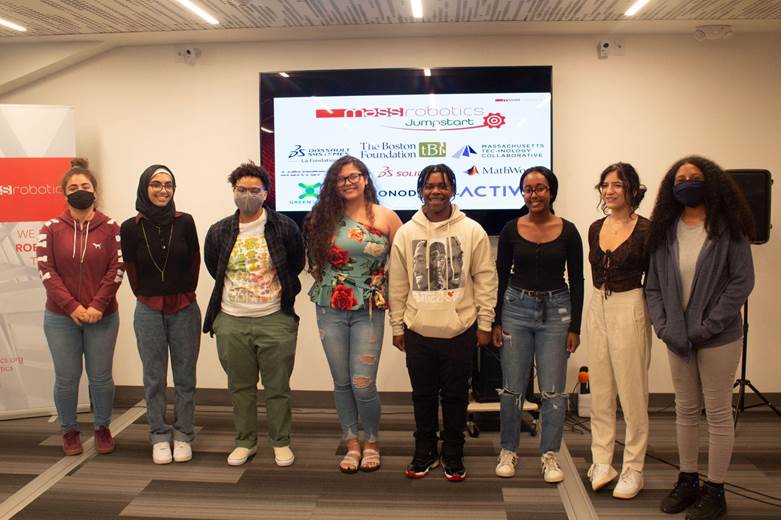
Boston-based robotics and STEM nonprofit receive three years of funding from the Cummings Foundation MassRobotics is one of 140 Massachusetts nonprofits to receive a grant through Cummings Foundation’s $25 Million Grant Program. The non-profit will use these funds to provide young women, especially Black and Latinx girls, a direct pathway to transform an interest in STEM into a passion and career in STEM, especially in robotics and artificial intelligence. MassRobotics was chosen from a total of 580 applicants during a competitive review process and will receive a $100,000 total over the next three years. “The current STEM workforce in Massachusetts is suffering from a lack of diversity, especially women of color,” said Khalif Mitchell, MassRobotics STEM program manager. “MassRobotics is honored to receive a Cummings Foundation grant that will help set women of color up for success in the technology industry, driving a more diverse workforce to pursue these disciplines for their professional careers.” MassRobotics STEM education is aimed at facilitating relationships between the robotics community and the next generation of innovators. Since 2017, MassRobotics has hosted hundreds of students for workshops and tours through their 50,000-square-foot state-of-the-art space. In 2020, MassRobotics initiated several STEM programs in collaboration with various partners and the robotics industry such as the MassRobotics Jumpstart Fellowship Program. The Jumpstart Fellowship was created to provide opportunities for diverse Massachusetts high school girls to learn about careers in robotics and develop their professional networks through direct engagement with industry professionals. The curriculum exposes young women to the many technical skills in areas that are included in the robotics industry, from programming to design and simulation, to hands-on building, prototyping, and testing. The program also includes mentorship to help develop a more inclusive technical workforce by preparing diverse talent in high school to pursue careers in STEM and robotics. The Cummings Foundation’s $25 Million Grant Program supports Massachusetts nonprofits that are based in and primarily serve Middlesex, Essex, and Suffolk counties. “We are so fortunate in greater Boston to have such effective nonprofits, plus a wealth of talented, dedicated professionals and volunteers to run them,” said Cummings Foundation Executive Director Joyce Vyriotes. “We are indebted to them for the work they do each day to provide for basic needs, break down barriers to education, and work toward a more equitable society.” Cummings Foundation has awarded more than $375 million to date in Greater Boston, including $25 million to 140 local-area nonprofits in 2022. It seeks to provide vital funding to mostly local charities that are working to improve the lives of community members through education, healthcare, human services, and social justice programs. This year’s grant recipients represent a wide variety of causes, including food insecurity, immigrant and refugee services, social justice, STEM education, and mental health services. The complete list of 140 grant winners is available at www.CummingsFoundation.org.
April Manufacturing Technology orders surpassed half a billion dollars

April 2022 orders of manufacturing technology totaled $513.4 million, the second month in a row surpassing half a billion dollars, according to the latest U.S. Manufacturing Technology Orders Report published by AMT – The Association For Manufacturing Technology. April orders decreased nearly 7% from March 2022 but were 27.5% larger than April 2021. 2022 orders through April totaled $1.9 billion, a 27% increase over the first four months of 2021. “Despite these strong results, there’s clearly been a lot of news related to declining consumer sentiment, everything from inflation to high interest rates to the war in Ukraine,” said Douglas K. Woods, president of AMT. “While consumer sentiment has been low since April 2021, consumer demand continues to hit record highs, leveraging consumers’ amassed savings as well as large capital investment pools looking for high-value market opportunities. “April USMTO numbers reflect ongoing consumer spending, particularly fueled by demand for manufactured goods, such as aerospace and other capital-heavy industries,” Woods continued. “Based on available economic projections, we had anticipated orders to gradually soften through the middle of the year. However, that pullback has not happened, and signs point to above-average orders for manufacturing technology into the beginning of the summer. “When supply chain issues are minimized, the continued pace of consumer-driven demand could necessitate additional capacity, prolonging a potential slowdown in the industry.”
Why decision making needs dialogue

Consider a situation where a major change for an organization is being debated amongst a leadership team. The group discusses the pros and cons, evaluating whether it should be implemented and if it will produce the outcomes they’re trying to achieve. They debate whether it’s the right direction or if other alternatives are better approaches. After a lengthy back-and-forth, they choose to proceed. The decision is communicated to the front line, and then monthly monitoring ensues. However, the results fall short of expectations. The team is frustrated. They push harder about the importance of making the change a reality, and how it will positively impact the company. They extend deadlines and lower success thresholds. Over the coming weeks, the organization cobbles together enough deliverables to meet expectations, and the change is presented in a good enough light to satisfy the executives but is far from stellar. Does this sound familiar? Why does this occur? Often we blame the plan itself – maybe there was an inherent flaw in its focus. Or it was just a bad idea in the first place. Alternatively, we blame execution – that the team couldn’t effectively implement the plan or didn’t have the skills to do so. I’d argue that blame can’t be solely placed on either camp – but I’d guarantee that a lack of dialogue between the front line and the leadership team help facilitate the failure. Most plans, strategies, or organizational changes take into consideration a wide variety of factors including the competitive landscape, organizational capabilities, and resources to name a few. Yet when these plans are derived, a dialogue between the front-line employees rarely occurs, which leaves it vulnerable to failure. Note that I said dialogue. Dialogue is not about bringing the proverbial tablets down from the mountain, but truly litmus testing your concept in collaboration with those who will have to implement it – before it is set in stone. Why is this important? Because most leaders are not immersed in the day-to-day operations. They don’t know the limitations, pressures, existing workloads, or mindsets of those who will be tasked with rolling out the change. They don’t know the true reality on the ground. This is why an early dialogue is essential. Once your change is outlined, bring to the table a handful of selected front-line employees – those who are candid enough to share their perspectives on potential pitfalls, and broad-minded enough to see the potential of the change. Accept their slings and arrows. That feedback is constructive criticism, which can make or break the success of a change. Enable their contributions to be folded in, making any necessary modifications to the plan which will clearly eliminate roadblocks and open up opportunities for easier adoption. Don’t take a negative view of their feedback. Have a back and forth. Ask why and propose other solutions to their concerns. Debate. Discuss. It’s not simply about fulfilling front-line requests, but rather understanding the landscape and constraints in which they are living and identifying ways to smooth the path that’s efficient, effective, and beneficial for everyone involved. By having a dialogue with those who will have to make your plan a reality, you’ll ensure any change has a much stronger chance of real success. About the Author: Andrea Belk Olson is a keynote speaker, author, differentiation strategist, behavioral scientist, and customer-centricity expert. As the CEO of Pragmadik, she helps organizations of all sizes, from small businesses to Fortune 500, and has served as an outside consultant for EY and McKinsey. Andrea is the author of The Customer Mission: Why it’s time to cut the $*&% and get back to the business of understanding customers, No Disruptions: The future for mid-market manufacturing, and her upcoming book, What To Ask, coming in June 2022. She is a 4-time ADDY® award winner and host of the popular Customer Mission podcast. Her thoughts have been continually featured in news sources such as Chief Executive Magazine, Entrepreneur Magazine, The Financial Brand, SMPS Marketer, Rotman Magazine, and more. Andrea is a sought-after speaker at conferences and corporate events throughout the world. She is a visiting lecturer and startup coach at the University of Iowa, a TEDx presenter, and TEDx speaker coach. She is also an instructor at the University of Iowa Venture School. More information is also available on www.pragmadik.com and www.andreabelkolson.com.
Hyster releases updated operator training program on National Forklift Safety Day
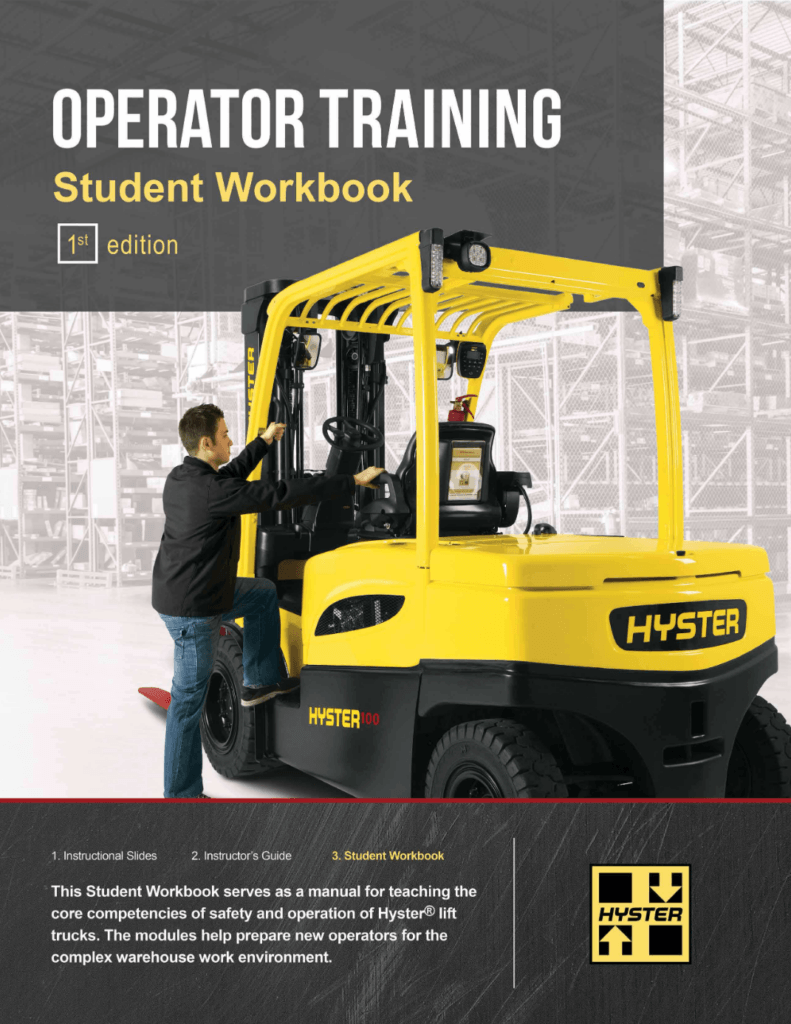
Hyster announces completely redesigned training videos for the newly updated Hyster® Operator Training Program, set for release Tuesday, June 14 in conjunction with National Forklift Safety Day (NFSD). Thoughtfully developed with contemporary adult learning methodologies, the videos help fast-paced operations level up their lift truck operator training and staff up quickly to keep pace with demand. “We live in a social media-driven world, with people used to getting smaller bites of information quickly and easily,” says Roger Keys, Sales Trainer, Hyster Company. “These modern training videos are designed to help contemporary learners engage with the material and ultimately better comprehend the essential skills and knowledge they need to be an effective lift truck operator. And as the industry observes NFSD this week, what better time to highlight the importance of training forklift operators?” The Hyster Operator Training Program offers a fast-paced learning process, with shorter video sections interspersed with hands-on learning to keep trainees engaged. The videos also equip businesses to consistently deliver instruction on key topics across several training classes and trainers. This consistency is especially attractive to busy manufacturers and other operations that must scale up on lift truck operators quickly due to turnover or seasonal upticks, without overburdening in-house training resources. The new training videos fulfill most lift truck-related topics in the formal instruction component of OSHA lift truck certification requirements. The videos are available through participating Hyster® dealers, who can also offer training resources for full OSHA certification. Learn more about the Hyster Operator Training Program here.
Freight Railroads encourage regulator to embrace technology ahead of Congressional hearing
U.S. freight railroads are asking policymakers in advance of a Congressional hearing to understand that rail employees and technology work together to continually improve safety and move goods. The most environmentally efficient way to move goods over land, railroads are also urging lawmakers and regulators to understand that policies that reduce rail’s competitive viability will shift goods to more carbon-intensive modes. The industry has a simple, common-sense message to the Federal Railroad Administration (FRA): let data drive policy. The call for thoughtful public policy is in keeping with a letter AAR sent to Department of Transportation Secretary Buttigieg earlier this year in response to the agency’s very own innovation principles. It outlined how technologies like Positive Train Control, or PTC, as well as automated track inspection, or ATI, wayside detectors, and fuel management systems make the network safer and greener. Railroads greatly value their workers — their work is crucial — and technology can make their work more predictable and safer. Pertaining to wayside detectors, the FRA recently noted in a new report, “the work reported here shows that the wayside detection systems have performed as expected in improving the railroad fleet performance and operational safety reflected in the reduction in derailment incidences.” Through consistent investment, training, and employee excellence, the train accident rate last year was down 32 percent from 2000 and the employee injury rate decreased by 48 percent. At the same time, technology spans other areas, such as energy use. Fuel management systems and anti-idling systems, alongside locomotive upgrades and better operating practices, have improved fuel efficiency to a level that railroads can carry a ton of freight 500 miles on a single gallon of diesel. From 2000 to 2019, railroads consumed 9.6 billion fewer gallons of diesel and emitted 108 million fewer tons of CO2 due to innovation. Yet existing and expected policy from the FRA raises questions about the agency’s commitment to progress and willingness to collaborate with stakeholders, such as the industry. The FRA recently refused to extend the geographic scope of one railroad’s ATI program and refused to permit another to continue. Other waiver applications are long pending with delays beyond the historical norm, while more pilot programs will expire later this year. The data is clear: ATI is more effective than visual inspections alone, in some cases reducing track geometry defects by 90 percent. Even where ATI is used, visual inspections continue, but they are not needed at the level specified by FRA’s 50-year-old inspection regulations. Slowing or stopping their use only stands to reduce investment in new safety technologies. The industry is also concerned about a regulation to require railroads to maintain the physical presence of two people in the cab of a locomotive with no end in sight. The FRA sent a rule to the Office of Management and Budget in March, despite a continued dearth of data to justify such intervention. When originally proposed in 2016, the FRA noted it did “not have information that suggests that there have been any previous accidents involving one-person crew operations that could have been avoided by adding a second crew member.” PTC, which helps avoid the worst accidents, makes the case for freezing current operating models in perpetuity even less reasonable. Railroads, competing in a dynamic market defined by technology, need options in the future to redeploy employees outside of the cab. As Norfolk Southern EVP and COO Cindy Sanborn noted in testimony to the committee, railroads “seek the flexibility to continue to work with rail labor under the existing collective bargaining framework to identify when the presence of PTC, or other technologies, allow a reduction in the number of crew members in a locomotive cab without jeopardizing rail safety.” Importantly, AAR continues to make clear to the administration and Congressional leaders that technology and labor are not inherently at odds. “A vast wealth of data and experience shows that humans and technologies are both needed to perform important functions and together they improve outcomes,” says AAR President and CEO Ian Jefferies. “Technology is key to continued gains in key planks of the Biden agenda, including ever-improving safety, the climate, and supply chain fluidity. We need sensible and coherent policies now more than ever to propel railroads into the future.”
EP 288: Safety with Toyota Material Handling

In this episode, I was joined by Paige Johnson and Dixon Churchill of Toyota Material Handling North America. Paige and Dixon are both a part of the environmental health and safety team at Toyota’s Indiana facility where they manufacture material handling equipment. We discuss their safety culture, how they have reduced injuries by 59% and how they continue to improve their safety culture. Key Takeaways Toyota is a well-known company for its many divisions but in our industry, we know of their forklifts which fall under the material handling division. They are also very well known for their culture which is constantly studied and many times has tried to be replicated. For this episode, we focus on their safety culture and how they are able to maintain continuous improvement in that area. As you will hear in the episode, they have been able to implement some very interesting ideas for maintaining safety and they have also seen some great results. Paige and Dixon discuss how safety always comes first at Toyota and how it is the first part of their meetings every single day. This is how they are able to keep the safety culture so ingrained in the employee’s minds. Additionally, they have a safety dojo where they are able to review safety training and even re-enact safety incidents that may have occurred so all employees can understand the incident and how to prevent it. They also have a dedicated section of the manufacturing plant which is used to do training on their material handling equipment. This allows the operators to learn how to use the equipment in a controlled environment. The investments in these things show the importance that Toyota puts on safety. One of their most recent safety developments is their on-site medical staff that helps the team to understand how certain injuries can occur and help those that may get injured from having reoccurring injuries. Through this addition, they have been able to reduce their safety incidents dramatically and have the employees understand how their bodies can react to certain things. With the medical team on-site and a gym on-site, they are able to give new hires a week of training in the gym to help them understand what part of their bodies will be utilized in their job. This helps to build those areas so that the potential of injury can be greatly reduced. The New Warehouse Podcast EP 288: Safety with Toyota Material Handling
Container Dwell Fee on hold through June 17
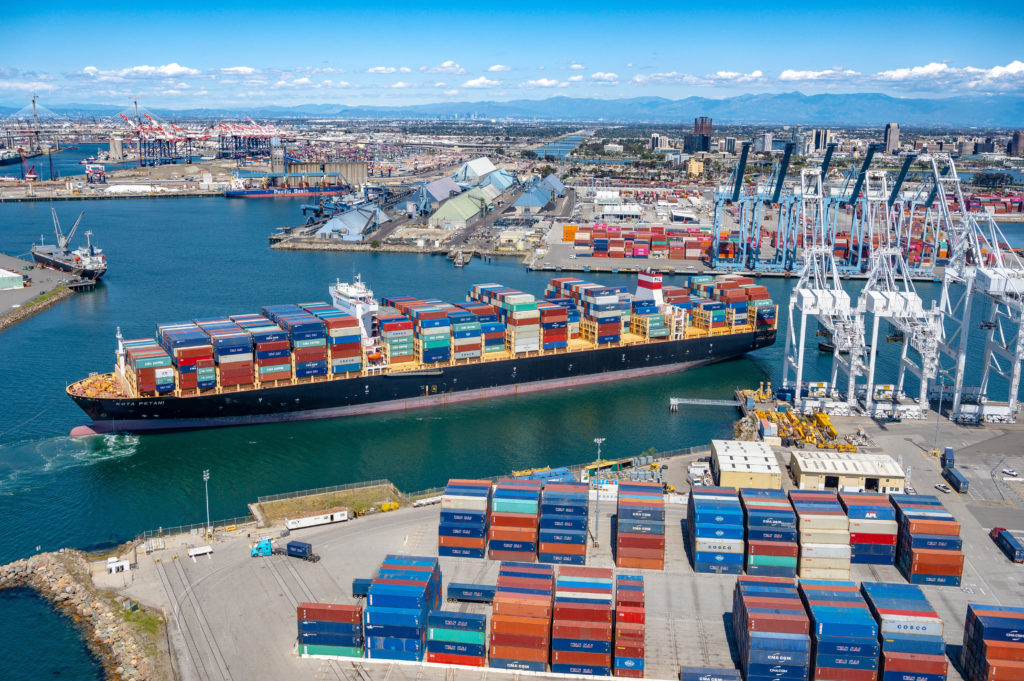
The San Pedro Bay ports of Long Beach and Los Angeles will once again delay consideration of the “Container Dwell Fee” for another week, this time until June 17. Since the program was announced on Oct. 25, the two ports have seen a combined decline of 38% in aging cargo on the docks. The executive directors of both ports will reassess fee implementation after monitoring data over the next week. Fee implementation has been postponed by both ports since the start of the program. The Long Beach and Los Angeles Boards of Harbor Commissioners have both extended the fee program through July 28. Under the temporary policy, ocean carriers can be charged for each import container dwelling nine days or more at the terminal. Currently, no date has been set to start the count with respect to container dwell time. The ports plan to charge ocean carriers $100 per container, increasing in $100 increments per container per day until the container leaves the terminal. Any fees collected from dwelling cargo will be reinvested for programs designed to enhance efficiency, accelerate cargo velocity and address congestion impacts. The policy was developed in coordination with the Biden-Harris Supply Chain Disruptions Task Force, the U.S. Department of Transportation, and multiple supply chain stakeholders.
AGE Industries, Ltd delivers wide range of custom Fiber Tubes
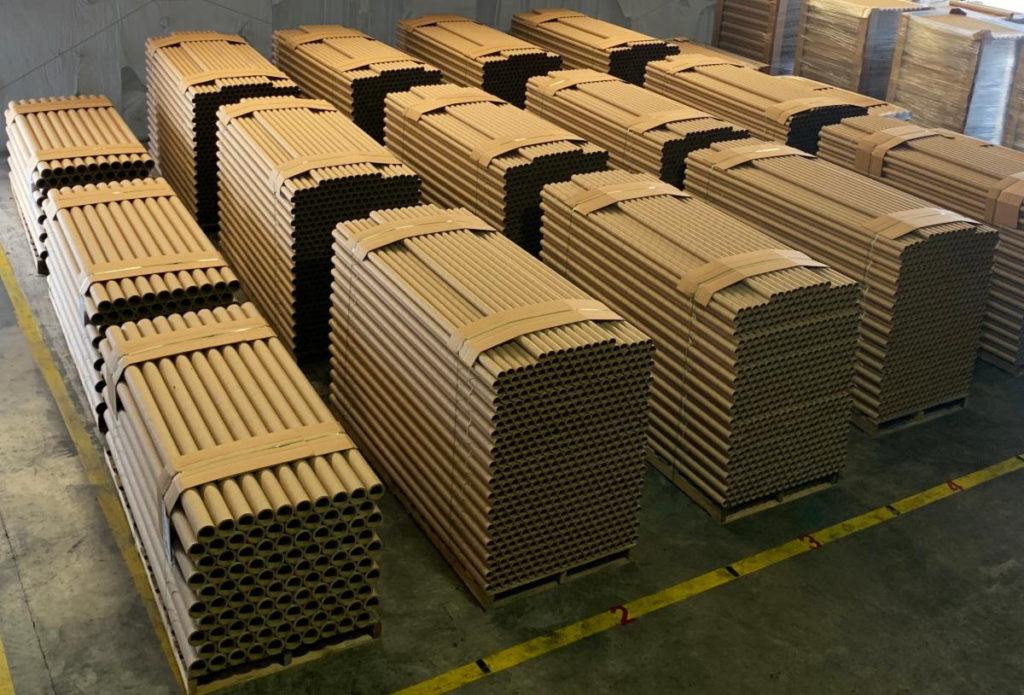
AGE Industries, Ltd, a supplier of custom paper tubes, innovative packaging, and shipping solutions, manufactures custom fiber tubes for an extremely wide variety of applications, ranging from heavy-duty tubes for shipping large steel products, fishing rods, shipping containers for architectural designs, documents, and many other applications. The strength of the round tubes provides superior protection during shipping, storage, and handling compared to rectangular boxes. Tubes protect paper, such as blueprints and posters, from folds and creases. Tubes also protect metal and plastic objects for internal handling as well as shipping. Tubes are widely used as cores for all types of rolled materials, from tapes, to wrapping paper and bubble wrap, to carpeting, roofing material, and artificial turf. AGE Industries can deliver tubes of almost any length, with diameters ranging from a fraction of an inch to several feet. Depending on the application, thicknesses range from 1/16 to 1/2 inches. AGE Industries offers custom single-color printing and even has the ability to buy preprinted liners when higher graphics are required.
Industry guru shifts lanes
Matt Powell leaves Convergint to head ISS’s Transportation Group ISS, a supplier of intelligent video solutions, has announced the appointment of Matt Powell as Managing Director, Transportation. Powell joins directly from systems integrator Convergint Technologies where he was Principal-Infrastructure Markets. He has enjoyed over two decades of experience in transportation technologies. Prior to Convergint, Powell developed ITS/DoT market strategies for Videolarm and Moog. Reflecting the importance of the appointment and the major potential the transportation sector holds for ISS, Powell will report directly to the ISS Board of Directors. “Matt is a remarkable individual,” said ISS Chairman Richard Burns. “Not only is he one of the most knowledgeable and respected individuals in the country on transportation technology solutions, but his end-user-oriented market approach has made him a fully trusted advisor to the industry. We believe that Matt, together with our full development and resource backing, will be able to make ISS a significant player in this arena.” While working at Convergint, Powell worked as Principal–Transportation, developing and executing the strategy that transformed Convergint into the premier aviation integrator in the world. His team added more than 60 airport and 8 airline clients to Convergint’s client base over seven years. Powell additionally developed the transit and ITS sectors for Convergint, leading to growth in both markets. He is a regular speaker at industry events speaking on topics ranging from lessons learned to technology capabilities and has been featured in Mass Transit Magazine, Security Info Watch, Aviation Pros, and many others. Said Powell of his appointment: “ISS has a concept unlike any other in the solution space. They have an incredible range of technology solutions that are based on absolute innovation but grounded in practical reality and needs. I look forward immensely to connecting with the market and showcasing the ways that ISS can partner and solve critical challenges faced by integrators, end-users, and citizens.” “I couldn’t be more excited to combine my experience with the capabilities of the team at ISS to develop a whole new generation of products,” added Powell. “The traditional providers of solutions in transportation are, in my opinion, beginning to look and feel a little tired. It’s time for a new wave of positive change.”
Session with OSHA’s Parker added to Safety 2022 in Chicago
The American Society of Safety Professionals (ASSP) welcomes Doug Parker, assistant secretary of labor for occupational safety and health, to a special general session at Safety 2022 in Chicago. Parker will attend in person to discuss the latest activities and future plans of the Occupational Safety and Health Administration (OSHA) to protect workers across the country. The newly added Q&A session to ASSP’s annual conference and exposition at McCormick Place will start at 8 a.m. CT on Wednesday, June 29, in front of thousands of workplace safety and health professionals, including online attendees who will watch the live stream from Chicago. Parker was sworn in as the 13th assistant secretary of labor for occupational safety and health on Nov. 3. He will be interviewed on stage about many issues facing OSHA, including the pandemic, heat stress, recordkeeping, enforcement, falls from height, OSHA’s staffing goals, and safety and health management systems. The special session with Parker will be part of a dynamic three-day program designed to inform and inspire attendees of ASSP’s signature event, held June 27-29. Safety 2022 is the 61st annual conference of the world’s oldest professional safety organization. The event returns to Chicago for the first time since the Society celebrated its 100th anniversary there in 2011. ASSP is headquartered in the Chicago suburb of Park Ridge. ASSP will live stream five major sessions from Safety 2022 so in-person and online attendees experience them together in real-time. The broad access to Safety 2022 programming will enable safety and health professionals around the world to conveniently grow their career development and elevate safety in their organizations. The safety and health of everyone at the convention center remain a priority. Under ASSP’s on-site safety plan, attendees must provide proof of full vaccination or a negative COVID-19 test within 48 hours of badge pick-up. ASSP continues to track public health guidance and may revise its protocols as the event draws closer. Safety 2022 attendees can register online, with groups of eight or more from the same company qualifying for a discount. Stay informed of the latest conference news and safety and health protocols at safety.assp.org.
North American Rail Shippers: Elections, Honors and Awards

The North American Rail Shippers Association (NARS) elected new officers at its recent annual meeting in May. The association also honored members with two major awards and chose its 2022 scholarship recipients. The 2022–2023 NARS officers are President Bruce C. Mann, Port Houston; First Vice President John Meyers, DM Bowman Company; Second Vice President Kate Luce, Mississippi Export Railroad; Secretary Ray Hufnagel, Plastic Express; Treasurer Torri Stuckey, bp; and Immediate Past President Tom Tisa, CSX. “I’m excited about the ability of our new board to continue to build on the past success of NARS,” said Mann. “This is the most diverse board in the 93-year history of NARS.” Mann said a few years ago Kate Luce, one of the few woman CEOs in the industry at the time, joined the NARS Board. “This year, it’s my honor, privilege, and pleasure to announce the addition of Torri Stuckey, who is the Head of North America Rail at bp, and is the first Black officer for NARS. Together with the rest of our board, I believe the future is bright for NARS,” said Mann. Each year, NARS recognizes exemplary leadership in the rail shipping community through the NARS Person of the Year Award and the Edward R. Hamberger Lifetime Achievement Award. For 2022, the NARS Person of the Year is Tom Tisa for his outstanding service both to NARS and the overall freight rail industry. Tisa is Head of Business Development at CSX and has served on the NARS board for many years—including multiple terms as president. “After the height of the COVID pandemic, Tom oversaw our first in-person annual meeting in more than two years. It was the most successful annual meeting that NARS has ever held, with record attendance,” said Mann. Susan Cox is the recipient of the 2022 Edward R. Hamberger Lifetime Achievement Award. Cox has been co-executive director of the Southwest Association of Rail Shippers (SWARS) since 2019. She recently retired after 40 years of service with Chevron Phillips Chemical Company and Phillips Petroleum Company. She was an active member of SWARS throughout her career and mentored many colleagues who continue to turn to her for professional advice. “Susan spent her career at Chevron being a leader in the world of rail shipping. She was a highly respected colleague to other shippers and partner to railroads,” said Mann. “Over the last few years, serving as the co-executive director of SWARS, she has been a terrific resource for the industry and not only SWARS but NARS as well. We will truly miss her presence and voice.” During the annual meeting, NARS announced its 2022 class of scholarship recipients. The 10 college students were selected based on their academic achievement, extracurricular activities, and community service. They are a blend of traditional undergraduate students as well as some working on advanced degrees in fields associated with the transportation industry. The recipients of the NARS scholarships are: Kyra Cunningham, Pennsylvania State University Caden Hazenstab, Pennsylvania State University David Hinkle, Lehigh University Usama Khalil, Rutgers University Business School Nicholas Mayorga, Liberty University Jackie Molina, University of Southern California Alayna Munoz, York College of Pennsylvania Denisha Philistin, George Washington University Nevil Thomas, Michigan State University Teleri Wilt, Massachusetts Maritime University
Toyota Material Handling reinforces culture of operator safety on National Forklift Safety Day
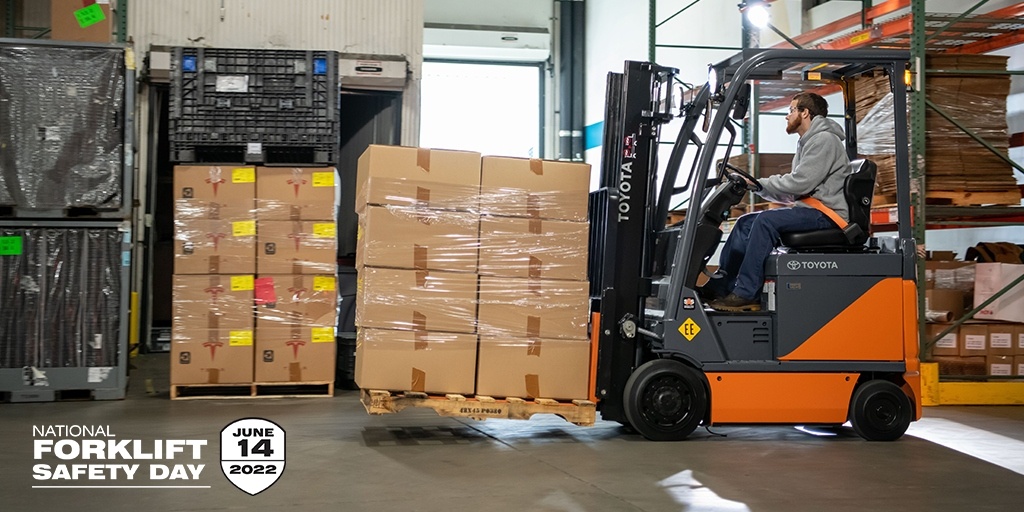
Toyota Material Handling (TMH) is celebrating National Forklift Safety Day 2022 by reinforcing the importance of creating and maintaining a culture of safety for forklift operators. In 2021, the North American material handling industry exceeded 330,000 unit sales, an all-time record. The exponential growth will require more operators in different settings, making operator safety training more important than ever before. The number of forklift operators in the US has risen to 4.5 million, and they – along with the pedestrians around them – deserve a safe work environment. To promote operator safety training, Toyota Material Handling is offering free site survey audits to recognize and support each operation’s unique needs. “The operator is the most important component of a forklift. Training and investing in these individuals is paramount, even for the most seasoned operators,” said Tom Lego, Toyota Material Handling Brand Ambassador. “There is always something new in this industry because each setting is unique and different. We create great trucks for many different settings using the best technology, but we find that proper training and ample opportunities to hone the skills of these essential workers are the most important investments in forklift safety.” National Forklift Safety Day, sponsored by the Industrial Truck Association, is an annual event that serves as the focal point for forklift manufacturers to educate customers, policymakers, and government officials about the safe use of forklifts and the importance of proper operator training. With involvement in National Forklift Safety Day since the inaugural event in 2014, Toyota Material Handling continues to innovate with product features to help support operators. Toyota’s Smart Environment Sensor (SEnS) uses advanced technology that, in certain environments, can assist operators in identifying a pedestrian or object behind their forklift. If within a detectible range, a buzzer and four indicator lights will alert the operator that a pedestrian or object is within a certain range of the rear of the forklift. Toyota’s revolutionary System of Active Stability (SAS)™ helps reduce the risk of accidents and injuries, minimizes the potential for product and equipment damage, and increases overall productivity levels. SAS senses various factors that lead to lateral instability and potential lateral overturn. When those conditions are detected, SAS instantly engages the Swing Lock Cylinder to stabilize the rear axle, changing the forklift’s stability footprint from triangular to rectangular. The resulting increase in stability reduces the likelihood of a lateral overturn. These features, however, should not be viewed as a substitute for operator safety training. “I appreciate that all those involved with National Forklift Safety Day are trying to move the whole industry forward,” Lego said. “Operators are the gears that keep products moving. Everything we use throughout a day has been moved by a forklift at some point in the supply chain, and it’s great to see this profession recognized and respected.” Toyota Material Handling is committed to building a culture of safety today and every day. As part of this pledge to prioritize safety, Toyota dealers are helping their customers’ material handling fleet operators by offering free up-to-date safety audits, consultations, and training. Operator training is also available on request from any one of the more than 230 Toyota dealer locations in the US. TMH also created a resource library of forklift safety information that can be accessed by visiting ToyotaForklift.com/Forklift-Safety.
Port of Long Beach joins the Green Shipping Corridor
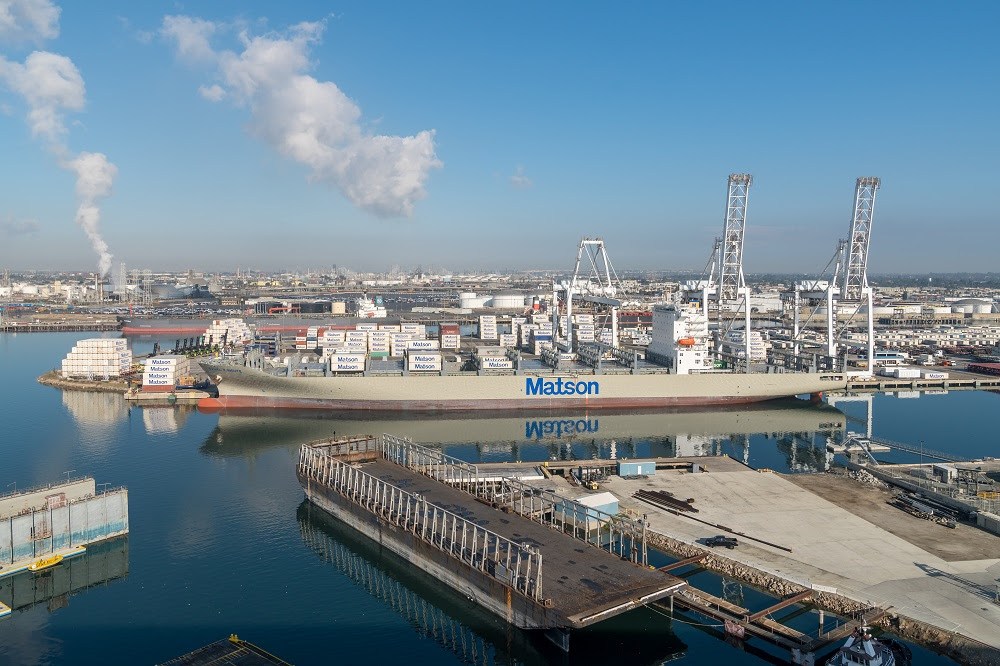
The partnership aims to decarbonize the U.S.-Asia trade route by 2030 The Port of Long Beach has signed on to the Shanghai-Los Angeles Green Shipping Corridor, a partnership of C40 Cities, ports, shipping companies and cargo owners convened to create a zero-emissions trans-Pacific trade route. First announced in January by C40 Cities, the ports of Shanghai and Los Angeles, and key maritime stakeholders, this Green Shipping Corridor will be a big step toward decarbonizing shipping between the busiest ports in China and the United States. C40 Cities is a network of the world’s leading cities that are working to deliver the urgent action needed to confront the climate crisis and create a future where everyone, everywhere can thrive. The partnership intends to work together to achieve these goals by developing a “Green Shipping Corridor Implementation Plan” by the end of 2022 that will include deliverables, goals and interim milestones, and roles for participants. “This initiative builds on important efforts our Port participates in, including the World Ports Climate Action Program, an international commitment to developing projects to address global warming and meet the goals outlined in the Paris Agreement,” said Port of Long Beach Executive Director Mario Cordero. “It also complements the Clean Air Action Plan, and supports our shared goals to reduce carbon emissions and advance technologies, especially for vessels, which are our largest source of emissions.” “Accelerating efforts to decarbonize the shipping sector is urgent if we are to limit global heating to 1.5 degrees Celsius,” C40 Executive Director Mark Watts said. “By convening a powerful coalition that includes the San Pedro Bay ports complex, the Port of Shanghai, and key maritime industry stakeholders, we hope to be an important catalyst in decarbonizing supply chains of all kinds around the world, while also creating a replicable model for other port cities to follow.” “The Port of Long Beach has an arsenal of environmental initiatives, with an ultimate goal of reaching zero-emission terminal operations by 2030 and truck operations by 2035,” said Long Beach Harbor Commission President Steven Neal. “Joining the Green Shipping Corridor extends our influence outside of our own city, seeks to decarbonize shipping operations, and reinforces our commitment to balancing economic activity with sustainability.” Key decarbonization goals for the Green Shipping Corridor partnership include: The phasing in of low, ultra-low, and zero-carbon fueled ships through the 2020s with the world’s first zero-carbon trans-Pacific container ships introduced by 2030 by qualified and willing shipping lines. The development of best management practices to help reduce emissions and improve efficiency for all ships using this international trade corridor. Reducing supply chain emissions from port operations, and improving air quality in the ports of Shanghai, Los Angeles and Long Beach, and adjacent communities. For more information about the Port of Long Beach’s environmental programs, visit www.polb.com/environment.
Ergodyne’s Aerial Bucket Series takes dangerously confined elevated worksites into a new class of safety, organization and efficiency

Ergodyne announced the launch of an all-new Aerial Bucket Series designed specifically for safer, easier work in bucket trucks and elevated work platforms. The collection features a tool board and tool bag—each engineered with extensive worker feedback and boasting a multitude of pockets and ANSI-approved tethering points for securely storing and safely accessing tools in confined work spaces. A durable aerial bucket hook for mounting the new solutions is also included. “For workers in bucket trucks and elevated worksites, every inch counts. But using a container that isn’t designed specifically for the space can actually cause more harm than good—creating a dangerous trip and drop hazards,” said Matt Hahn, Ergodyne Product Manager. “These solutions were made specifically with aerial buckets in mind, with ANSI 121-approved tethering points and durable easy-to-attach designs.” Adopted in 2018, the ANSI 121 standard is the first ever to establish best practices for tethering and transporting tools and equipment. Given their expertise in the category, Ergodyne worked closely with the International Safety Equipment Association on its development. “This new series is an opportunity for us to put our extensive knowledge of dropped object prevention toward helping an entire class of workers perform their jobs more safely and efficiently,” said Tom Votel, Ergodyne President & CEO. “There’s a lot more to come here, and we’re excited to continue bringing new innovations to this category.”
Port of Long Beach has second-busiest month on record

The summertime surge could follow China’s post-pandemic recovery May was the second-busiest month on record for the Port of Long Beach, and its strongest month so far in 2022. Dockworkers and terminal operators processed 890,989 twenty-foot equivalent units in May, a 1.8% decline from May 2021, which remains the Port’s busiest month in its 111-year history. Imports decreased 1.7% to 436,977 TEUs and exports were down 12.6% to 118,234 TEUs. Empty containers moved through the Port increased by 2.6% to 335,778 TEUs. “We are moving an extraordinary amount of cargo and continue to work with industry partners to quickly move imports and empties off the docks,” said Port of Long Beach Executive Director Mario Cordero. “Looking ahead, we are ready for the traditional summertime surge to coincide with China’s recovery from a lengthy lockdown.” “We appreciate the hardworking people who quickly process cargo and make the Port of Long Beach a leader in trans-Pacific trade,” said Long Beach Harbor Commission president Steven Neal. “We are collaborating with federal, state, local, and industry stakeholders to find long-term solutions that will satisfy consumer demand and increase efficiency at the port.” The Port has withheld the start of a “Container Dwell Fee” that would charge ocean carriers for containers that remain too long on the docks. The San Pedro Bay ports – Long Beach and Los Angeles – have seen a 40% decline in aging cargo on the docks since the program was announced on Oct. 25. A cargo influx is anticipated as pandemic-induced shutdowns are lifted in China. Strong income gains and a large savings cushion are anticipated to support consumer spending this year, despite the ongoing risks of inflation, the war in Ukraine, and the recent lockdown in China. Demand for workers remains strong, with the addition of 6.6 million jobs reported nationwide over the past year. Increases in core durable goods shipments suggest business investment continues to progress at a steady clip. The Port has moved 4,172,366 TEUs during the first five months of 2022, a 3.5% increase from the same period in 2021. For complete cargo numbers, visit polb.com/statistics.
Darr Equipment completes Liftmasters brand transition

Darr Equipment Co, one of the largest Caterpillar forklift dealerships in the country, has announced the completion of the acquisition of the S&L Liftmasters, Inc brand throughout South Texas. The purchase began in February 2020 and the brand transition from Liftmasters to Darr will be completed in June 2022. Throughout South Texas, Darr (formerly Liftmasters) will continue to represent its own equipment brands including a full line of new and used equipment including Clark and Komatsu forklifts, Big Joe pallet jacks, JLG aerial lifts, and various warehouse dock, safety and storage products. In addition, there are no changes in employees or support services, only the brand name. “It’s no secret that for almost two years, Liftmasters has been part of the Darr Equipment Co family. We are excited the brand transition is now complete and we are able to offer Darr customers services from San Antonio and the Hill Country to Corpus Christi and the Valley,” stated Robert Engstrom, President, Darr Equipment Co. Headquartered in Dallas, Texas, family-owned Darr Equipment has 11 locations throughout Texas, Oklahoma and also services Louisiana. Former Liftmasters customers are asked to continue to contact the San Antonio location for equipment and services.
U.S. Rail Traffic for the week ending June 4, 2022
The Association of American Railroads (AAR) has reported U.S. rail traffic for the week ending June 4, 2022. For this week, total U.S. weekly rail traffic was 475,513 carloads and intermodal units, down 2.8 percent compared with the same week last year. Total carloads for the week ending June 4 were 225,274 carloads, down 1 percent compared with the same week in 2021, while U.S. weekly intermodal volume was 250,239 containers and trailers, down 4.4 percent compared to 2021. Four of the 10 carload commodity groups posted an increase compared with the same week in 2021. They included grain, up 2,515 carloads, to 23,867; motor vehicles and parts, up 1,385 carloads, to 12,518; and nonmetallic minerals, up 562 carloads, to 29,778. Commodity groups that posted decreases compared with the same week in 2021 included metallic ores and metals, down 3,222 carloads, to 20,192; miscellaneous carloads, down 1,468 carloads, to 8,037; and farm products excl. grain, and food, down 887 carloads, to 14,510. For the first 22 weeks of 2022, U.S. railroads reported a cumulative volume of 5,061,636 carloads, up 0.1 percent from the same point last year; and 5,805,846 intermodal units, down 6.5 percent from last year. Total combined U.S. traffic for the first 22 weeks of 2022 was 10,867,482 carloads and intermodal units, a decrease of 3.5 percent compared to last year. North American rail volume for the week ending June 4, 2022, on 12 reporting U.S., Canadian and Mexican railroads totaled 319,932 carloads, down 1.4 percent compared with the same week last year, and 331,817 intermodal units, down 5.2 percent compared with last year. Total combined weekly rail traffic in North America was 651,749 carloads and intermodal units, down 3.4 percent. North American rail volume for the first 22 weeks of 2022 was 14,815,546 carloads and intermodal units, down 3.7 percent compared with 2021. Canadian railroads reported 75,646 carloads for the week, down 3.5 percent, and 67,573 intermodal units, down 9.2 percent compared with the same week in 2021. For the first 22 weeks of 2022, Canadian railroads reported a cumulative rail traffic volume of 3,134,201 carloads, containers, and trailers, down 6.1 percent. Mexican railroads reported 19,012 carloads for the week, up 2.8 percent compared with the same week last year, and 14,005 intermodal units, up 1.2 percent. Cumulative volume on Mexican railroads for the first 22 weeks of 2022 was 813,863 carloads and intermodal containers and trailers, up 3 percent from the same point last year. To view weekly rail traffic charts, click here.
EP 287: The Alpine Supply Chain Solutions experience
In this episode, I was joined by Mark Zabloudil and Matt Warner representing Alpine Supply Chain Solutions as their customers. Mark is the COO at MJ Holding Company and Matt is the COO at Monat Global they both joined me at MODEX 2022 to discuss their experiences with Alpine Supply Chain Solutions as their customers. We discuss why their companies needed Alpine Supply Chain Solutions help and how they were able to optimize their distribution footprint with their guidance. Key Takeaways Alpine Supply Chain Solutions provides solutions and consulting services that help you optimize your operation and deliver maximum value to your customers. Both Monat Global and MJ Holding Company were in similar positions before they got to Alpine. They both were facing rapid growth with the pandemic fueling a lot of it. Alpine was able to help them understand the space that they had and then optimize their distribution footprint so they could not only keep up with their current demand but also grow into future demand. In MJ Holding’s case, they were looking at highly increased demand due to the renewed interest in trading cards like sports cards and Pokemon cards during the pandemic. They also faced the challenge of having multiple different product profiles where the trading card side of the business had a somewhat regular cadence they also have a toy side that is more of an impulse buy so there is a lot of fluctuation in demand. Alpine Supply Chain Solutions helped them to understand how they could better slot their products and bring in different storage solutions to optimize their space and give them the most flexibility to move products around. Monat Global saw a large spike during the pandemic due to its e-commerce-based business which distributes skincare products via ambassadors who mostly sell and market through social media. Their challenge was matching this demand with their capacity so they could get the orders out within 24 hours and have them delivered to customers at the service levels they were expecting. Alpine helped them to realize their space constraints by analyzing their data and then helping them to understand how much space they actually needed for now and future growth. Through this analysis, they were able to help them determine they should do a two-phase project with one distribution point servicing international customers and the other serving the United States. Additionally, they helped them maximize their space by recommending different storage solutions that helped them to almost double the number of pallet spaces they would have put in on their own. The New Warehouse Podcast EP 287: The Alpine Supply Chain Solutions Experience
EnerSys® supports National Forklift Safety Day 2022
EnerSys®, the global provider of stored energy solutions for industrial applications, joins the Industrial Truck Association (ITA) in support of its annual National Forklift Safety Day. Now in its ninth year, National Forklift Safety Day 2022 will be observed on Tuesday, June 14, 2022, and coincide with a keynote presentation at the National Press Club in Washington, D.C. Estimates from the Occupational Safety and Health Administration (OSHA) indicate nearly 100,000 workers are injured each year from accidents involving the almost 900,000 forklifts currently in operation in the U.S. Statistically, it means that more than one in every ten forklifts will be involved in an accident each year. Those numbers align with data from the Bureau of Labor Statistics, which also shows nearly 100 workers are fatally injured in forklift-related incidents annually. OSHA also estimates that nearly 70% of all forklift accidents can be prevented with proper training or policy. To help facilitate such training, the ITA works with OSHA to develop educational seminars and resources that highlight best practices in manufacturing and warehousing environments. National Forklift Safety Day reflects this mission and provides an opportunity to emphasize operator training, promote greater pedestrian awareness, and share resources about forklift safety. “From battery design and installation to on-site training, safety is a top priority at EnerSys, and we proudly support ITA’s National Forklift Safety Day,” says Harold Vanasse, Senior Director of Marketing, Motive Power Global at EnerSys. “With the world’s supply chain still under tremendous pressure to recover from the pandemic and other influences, raising awareness of lift truck safety and best practices is more crucial than ever. We applaud ITA’s ongoing efforts to do that through National Forklift Safety Day.” For more information about National Forklift Safety Day, click here.