
U.S. Rail Traffic for the week ending August 20, 2022

The Association of American Railroads (AAR) today reported U.S. rail traffic for the week ending August 20, 2022. For this week, total U.S. weekly rail traffic was 501,548 carloads and intermodal units, up 0.1 percent compared with the same week last year. Total carloads for the week ending August 20 were 237,404 carloads, up 2.9 percent compared with the same week in 2021, while U.S. weekly intermodal volume was 264,144 containers and trailers, down 2.4 percent compared to 2021. Seven of the 10 carload commodity groups posted an increase compared with the same week in 2021. They included coal, up 4,321 carloads, to 68,280; grain, up 2,825 carloads, to 20,974; and farm products excl. grain, and food, up 2,128 carloads, to 17,031. Commodity groups that posted decreases compared with the same week in 2021 were miscellaneous carloads, down 1,951 carloads, to 8,600; metallic ores and metals, down 1,248 carloads, to 22,270; and petroleum and petroleum products, down 627 carloads, to 9,681. For the first 33 weeks of 2022, U.S. railroads reported a cumulative volume of 7,606,648 carloads, down 0.01 percent from the same point last year; and 8,707,653 intermodal units, down 5.5 percent from last year. Total combined U.S. traffic for the first 33 weeks of 2022 was 16,314,301 carloads and intermodal units, a decrease of 3 percent compared to last year. North American rail volume for the week ending August 20, 2022, on 12 reporting U.S., Canadian and Mexican railroads totaled 334,389 carloads, up 2.3 percent compared with the same week last year, and 354,588 intermodal units, down 1.7 percent compared with last year. Total combined weekly rail traffic in North America was 688,977 carloads and intermodal units, up 0.2 percent. North American rail volume for the first 33 weeks of 2022 was 22,296,729 carloads and intermodal units, down 2.8 percent compared with 2021. Canadian railroads reported 75,585 carloads for the week, up 1.2 percent, and 74,484 intermodal units, up 1 percent compared with the same week in 2021. For the first 33 weeks of 2022, Canadian railroads reported a cumulative rail traffic volume of 4,747,008 carloads, containers, and trailers, down 3.2 percent. Mexican railroads reported 21,400 carloads for the week, down 1.1 percent compared with the same week last year, and 15,960 intermodal units, down 2.5 percent. Cumulative volume on Mexican railroads for the first 33 weeks of 2022 was 1,235,420 carloads and intermodal containers and trailers, up 1.1 percent from the same point last year. To view the rail charts, click here.
Episode 309: Siemens at MODEX 2022
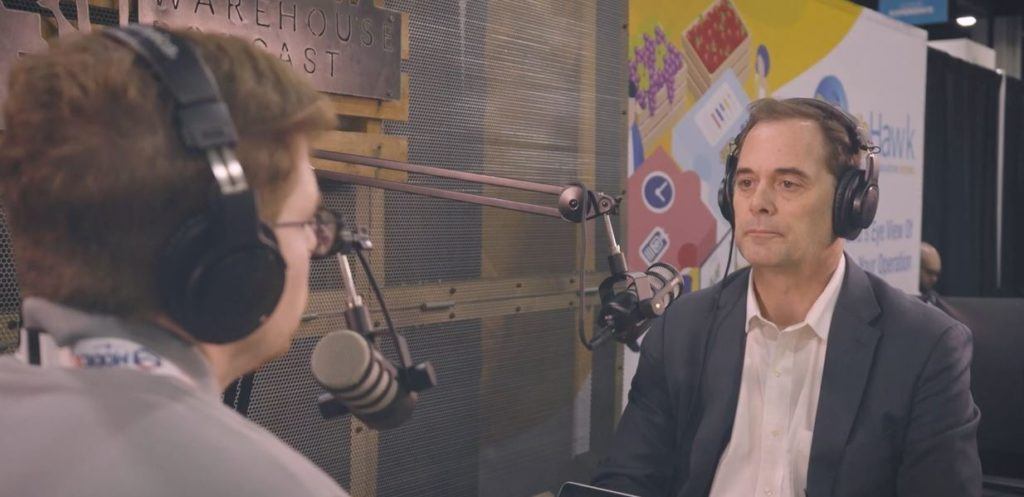
Welcome to the New Warehouse Podcast! In this episode, Kevin is live from MODEX 2022. Craig Henry, U.S. Industry Manager for Intralogistics and Material Handling at Siemens, joins Kevin to discuss automation and robotics. Siemens is one of the world’s oldest and largest engineering companies, and its digital industry sector provides a lot of automation technology inside robotics and automation hardware. Kevin and Craig discuss the age of the robot, and while neither feel robots will take over the world (anytime soon), they agree we will see robots and humans working together more often. Key Takeaways Craig feels that it will not be the robots taking over, and the people are outside looking in, wishing for a job. It is quite the opposite; robots perform monotonous, repetitive, and strenuous jobs that others do not want to do, particularly in the warehouse environment. Kevin and Craig discuss the urgency of implementing automation in warehouses and distribution centers. Shows like MODEX are designed to help businesses automate in a way that provides the best return on investment, addresses the labor gap issue, provides agility, increases throughput, and builds resilience for a sustainable future. Much of what was being shown at MODEX is helping to create awareness of that urgency. As a forklift helps lift heavy objects, robots and automation technology are tools to aid in work. These tools simplify jobs and improve safety by reducing the amount of walking and lifting required of human workers. This ultimately results in productivity and safety gains. Craig discusses how Siemens’ investment in industry 4.0 to develop an integrated architecture yields many benefits for companies looking to automate, such as reducing project costs by 30%, errors, and downtime, to name a few. The New Warehouse Podcast EP 309: Siemens at MODEX 2022
Hyster introduces lift truck with advanced ergonomics to support high-intensity trucking industry
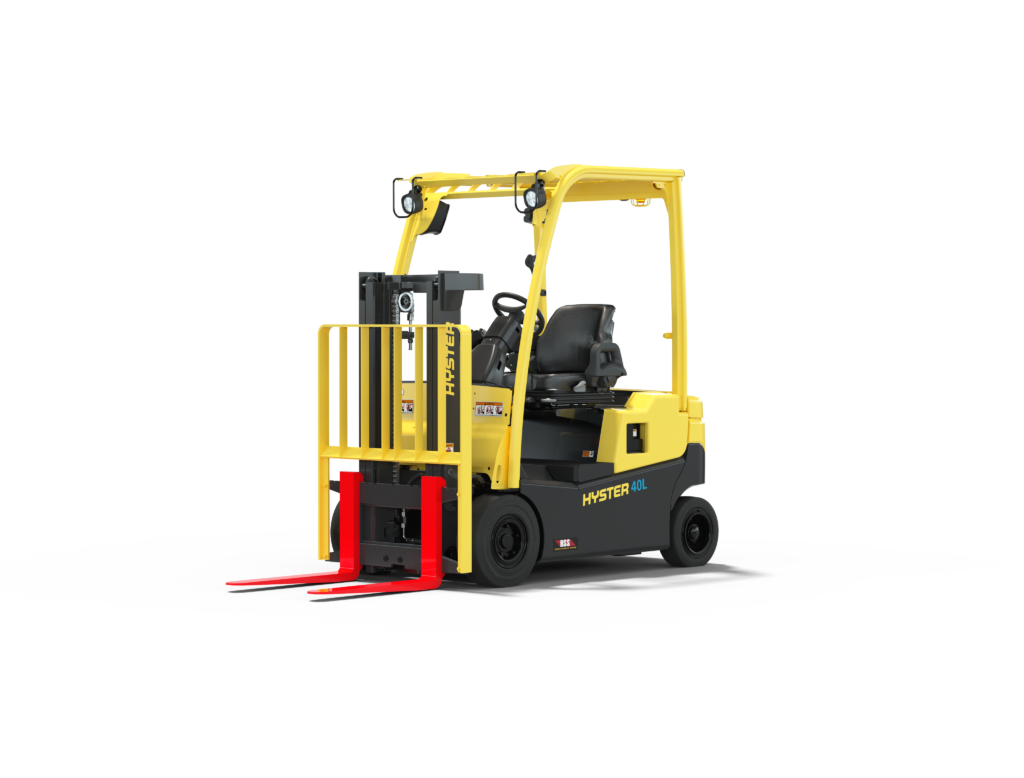
Hyster Company announces the launch of an integrated lithium-ion battery-powered lift truck built to meet the demands of the fast-paced trucking industry. The J40XNL supports workflows common in trucking terminals, like loading and unloading trailers, with a strategic open-space design that prioritizes operator comfort and reduces the truck weight to improve acceleration and reduce energy consumption. “The trucking industry is electrifying quickly, and that trend includes more than just the tractor-trailers on the highway,” says Buddy Spurrier, Director, Major Accounts, Logistics, Hyster Company. “Our customers are looking across their supply chains, including lift trucks, to find options that can not only reduce their carbon footprint but also support operator retention and productivity in what are often extremely busy, multi-shift operations.” A four-wheel counterbalanced model with a 4,000-pound capacity, the J40XNL is a strong match for trucking: Low step height – Reduces the amount of effort needed to climb into the cabin, a key attribute in workflows where operators are frequently mounting and dismounting lift trucks to make use of the equipment nearest to the trailer that needs to be loaded or unloaded next. Operator-centric ergonomics – Support operator awareness with comfortable seating, increased headroom for taller drivers, and greater space in the operator compartment encouraging freedom of movement. Improved truck feel – A lowered center of gravity improves truck handling in corners, while reduced truck weight improves acceleration. Maintenance- and emission-free power – A sealed lithium-ion battery eliminates battery cleaning, watering, and equalizing, and doesn’t emit fumes or gasses. Trucker’s mast – Designed with trucking in mind, the optional trucker’s mast meets application lift heights while helping minimize the risk of trailer and bay damage. The J40XNL is a fit for other intense industries looking for solutions to help reach zero emissions targets, such as general manufacturing, agriculture, home centers, chemicals and plastics, and auto and transport manufacturing.
Staffing employment holds steady in August
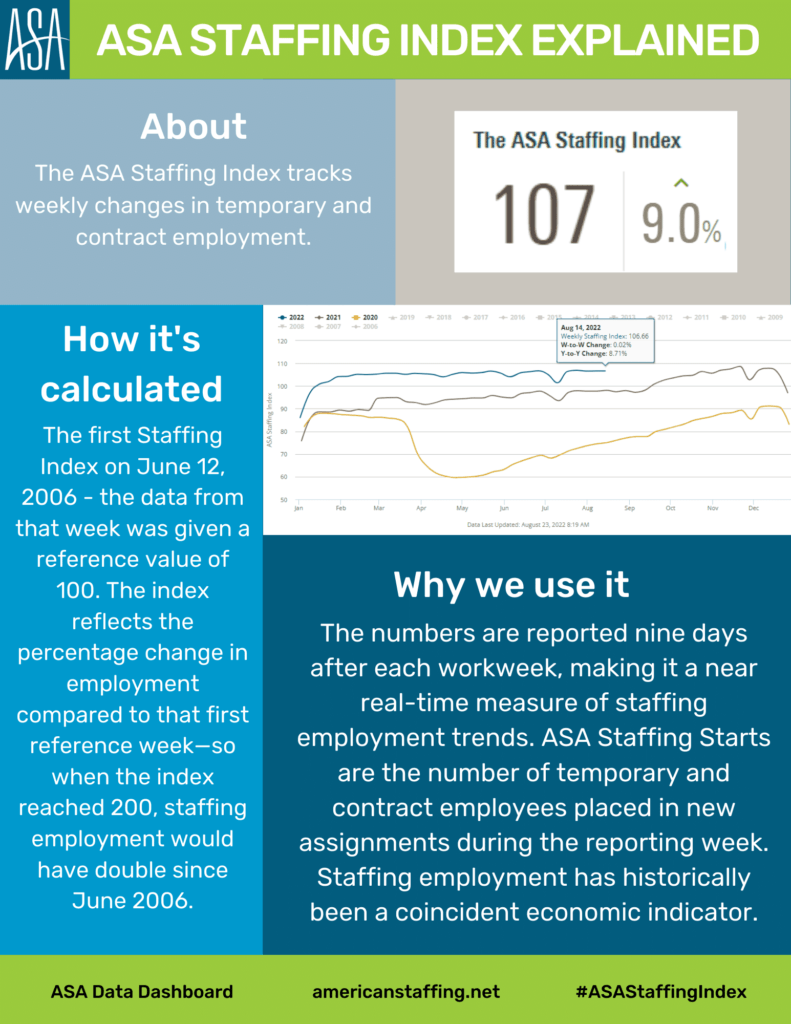
Staffing employment was essentially unchanged in the week of Aug. 8–14, rising just 0.02% to hold at a rounded value of 107—a record for the month of August. Staffing companies cited a variety of factors including COVID-19, seasonal business fluctuations, and lack of candidates as barriers preventing further growth. Staffing jobs were up 8.7% from the same week last year. New starts also held steady in the 32nd week of the year, edging up 0.7% from the prior week. Four in 10 staffing companies reported gains in new assignments week-to-week. The ASA Staffing Index four-week moving average inched up slightly from the prior week to hold at a rounded value of 107, as temporary and contract staffing employment for the four weeks ending Aug. 14 was 9.0% higher than the same period in 2021. “Staffing employment remains at a high level,” said Tim Hulley, ASA Assistant Director of Research. This week, containing the 12th day of the month will be used in the August monthly employment situation report scheduled to be issued by the U.S. Bureau of Labor Statistics on Sept. 2.
Percentage of Female Safety Professionals in transportation continues to grow

The percentage of female safety professionals in corporations with for-hire or private fleets in the commercial freight transportation industry continues to increase, according to new data highlighted in the WIT Index, which was just released by the Women In Trucking Association (WIT). The WIT Index is the official industry barometer to benchmark and measures each year the percentage of women who make up critical roles in transportation. The 2022 WIT Index shows that 40.5 percent of safety professionals in transportation companies are women. This is the first year the WIT Index has included the percentage of technicians in its annual survey. The 2022 WIT Index shows approximately 20 percent of respondents report having 90 percent or more women in safety roles, with another 28 percent saying they have 50 percent to 70 percent women in those roles. Approximately 27 percent report having 10 percent to 40 percent women in safety roles, while 23.5 percent report they have no women in safety roles. “More and more women are becoming safety directors and we are encouraged by these numbers and look forward to seeing the percentages increase in the coming years,” said Ellen Voie, WIT’s president and chief executive officer. “We look forward to seeing this percentage continue to increase in the coming years.” Initiated in 2016, the WIT Index is comprised of average percentages of females in various roles that are reported by companies in transportation, including predominantly for-hire trucking companies, private fleets, transportation intermediaries, railroads, ocean carriers, equipment manufacturers, and technology companies. This data was confidentially gathered from January through April of 2022 from 180 participating companies and percentages are reported only as aggregate totals of respondents. This year, WIT has expanded its collection of the percentage of women to include not only safety professionals, but also technicians, operations, human resources and talent management, and sales and marketing. The WIT Index historically also has identified the percentage of women who are in leadership roles and professional drivers. For more information on the WIT Index and to download a full executive summary of the 2022 WIT Index findings, visit https://www.womenintrucking.org/index.
Serpa to unveil new Intermittent Motion Beverage Cartoner in Live Demonstrations at PACK EXPO 2022
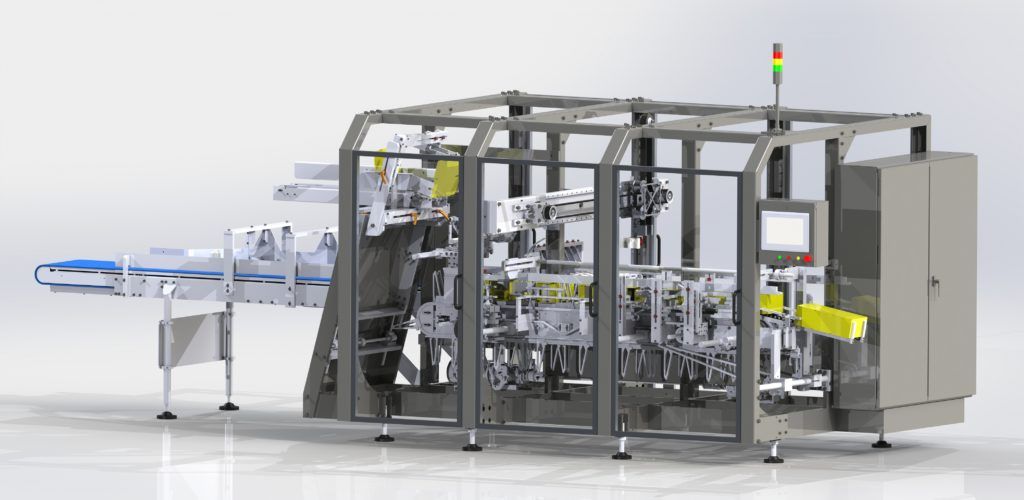
Serpa, a secondary packaging solutions manufacturer, will exhibit its newly redesigned P150 Intermittent Beverage Cartoner at booth N-5548 at PACK EXPO 2022, October 23-26, at McCormick Place in Chicago. The P150 takes Serpa’s proven intermittent motion technology that is primarily used in packaging pharmaceuticals and modifies it to accurately and efficiently fill and seal cartons of canned or bottled beverages. This machine features nine configuration options, including options for slim canned beverages such as hard seltzers. Maintenance-friendly changeover between these settings takes less than 10 minutes and does not require tools. Other features and benefits of the P150 include: 300 cans processed per minute Balcony design with walk-in access Low maintenance with easy access to all main components Preventative maintenance program in HMI and Serpa Servo Smart Torque Outboard belt drive for lower noise and longer life Compact footprint Hygienic design with no product catch Ergonomic Design – 18” maximum reach points Stainless steel washdown construction with NEMA 4X available Positive carton erecting with prebreak PACK EXPO attendees will have the opportunity to view a live demonstration of the P150 loading prefilled cans into cartons. In addition to displaying the machine’s capabilities, this demonstration will exhibit cooperation between ProMach brands. The cans in use will be filled and sealed by Techniblend. A CL&D machine will manufacture the plastic shrink wraps, which a solution from Axon will then seal to the can. Finally, after Serpa’s P150 has sorted the cans into cartons, a large shrink wrapper from Texwrap will prepare cases for shipping. This fully functional integrated packaging line is a great example of ProMach bringing its product brands closer together to better meet the needs of its customers. Projects like this allow customers to have one central point of contact, and that contact really serves as a one-stop, full-service provider by connecting all the ProMach brands together. This level of project management greatly streamlines the planning process, installation, and start-up curve for packaging lines. Forty-five packaging and automation-focused companies comprise the ProMach family of product brands in categories including Systems & Integration, Filling, Bottling & Capping, Decorative Labeling, Flexibles & Trays, Handling & Sterilization, Labeling & Coding, Robotics & End of Line, and Pharma.
KION North America announces new partnership with Dealer Partner Condal Trade Dominicana

KION North America has announced that Condal Trade Dominicana (CTD), part of the CTB group, CONDAL TRADE BARCELONA, S.A., has joined the KION North America dealer network. Condal Trade Dominicana operates in Santo Domingo, Dominican Republic, and is authorized to sell both the Linde Material Handling and Baoli brands. “Condal Trade Dominicana is known for offering personalized service that exceeds customers’ expectations,” said Director of Distribution Management Rick Schiel. “We are pleased to partner with CTD in offering two exceptional brands to this new market.” For more than 30 years, CTB group, CONDAL TRADE BARCELONA, S.A., has been known throughout the Caribbean for providing its customer with quality products and services, supported by trained and experienced staff. In 2012, the company expanded to include industrial trucks and quickly expanded to the Dominican Republic in 2015. “We are more than delighted be part of the new addition to the KION North America family. It’s thrilling to partner up with such a prestigious brand in this continuously expanding market. This new endeavor brings new challenges and expectations to our company, but we are more than happy to take them head-on. We know that the marketplace can be hectic but matching and exceeding our customer’s needs does not have to be,” said Alberto Abreu, Executive Vice President, CTD Dominicana.
Episode 308: RightHand Robotics at MODEX 2022
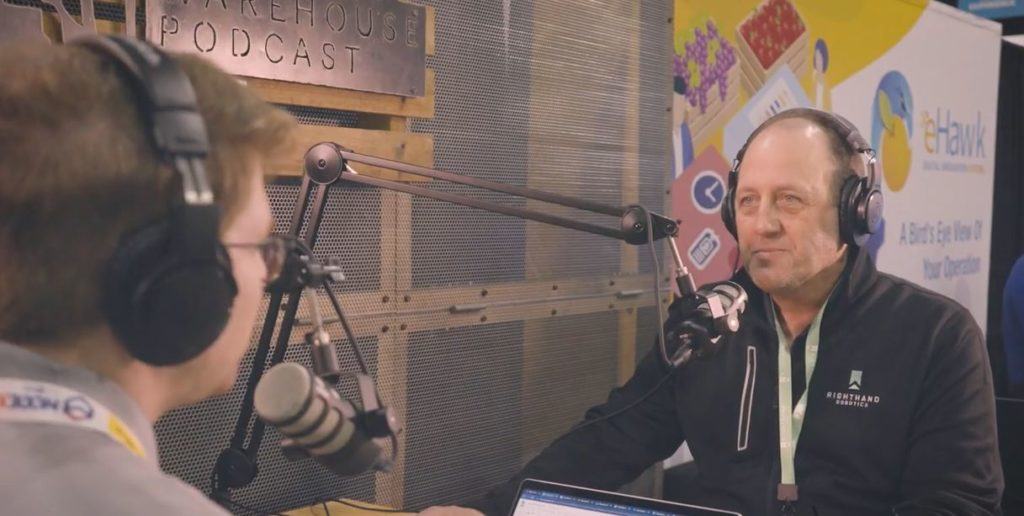
Joining Kevin from the booth at MODEX 2022 is Vince Martinelli, Head of Product and Marketing at RightHand Robotics. Unlike other automation systems that move pallets or cases, RightHand Robotics builds data-driven machines that pick individual pieces. Their platform provides flexible and scalable automation for order fulfillment. Vince and Kevin discuss the complexities of gripping technology for individual piece picking. Be sure to check out this week’s episode to learn more about how RightHand Robotics is changing the way we pick and pack orders and to find out what makes up the first three feet of the last mile! Key Takeaways Vince discusses how the RightPick system handles the core task of picking and placing individual items as part of many fulfillment center processes. The piece-picking solution combines an intelligent gripper, a vision system, and control software with learning as a form of hand-eye coordination, providing accountability for picking success. Vince shares how RightHand Robotics utilizes grasping knowledge, computer vision, and AI Machine Learning to create an industrial-grade hardware platform and reliable picking solution. Excited to be back in person, Kevin and Vince discuss the new relationship with Vanderlande. This partnership will work together to bring their respective technologies to the market. Vince jokes, as Kevin asks for clarification, that they are not anti-lefthanders as their CEO himself is left-handed. The New Warehouse Podcast EP 308: RightHand Robotics at MODEX 2022
The 24-hour reality of Time Management-Yes!

“I don’t have enough time.” Ever say that? What does it mean? I want more hours in the day or I’m not using my allotted time (24 hours) to my best advantage. (What we need is a 36-hour day. That way we could work 24 hours and still get a good 8 hours of sleep.) The reality is that most people don’t need more time, they just need to reprioritize the time they’ve got that’s not productive. Sales time management is no different. All salespeople (including me) are always lamenting the fact that there are too few hours and too many things to do. More salespeople want “time management” training than “sales training.” So, how do you harness the clock? Time management is not complicated unless you take a time management course. Then you have to have a minor degree in rocket science to figure out what piece of paper gets what notes in what category and with what priority. Time management is big business. Daily planners and planning systems are often accompanied by training (one day to a week-long) for their elaborate books, binders, and special pages. Most of the training is paradoxical in that it is its own waste of time. Twenty-first-century people will shift away from paper systems and go to computerized programs. The basic underlying principle of time management is “do what’s important first.” The Time Management industry has complicated that principle to a fault. There’s an “ABC” system, a “First Things First” system, and theme variations into the night. I say reduce sales time management to one word, “YES.” Enter the “Yes Principle of Sales Time Management.” How does it work? Simply devote your time executing functions and having meetings with prospects and customers that will lead you to Yes. Almost everything else is a waste of time. Here are the best ways to manage, prioritize and spend your time preparing for the sale: Finding out how decisions are made (how people say Yes). Before you can ever get a Yes, you’d better find out how (by what process) they make the decision. Finding out who says Yes. The people who say, “I’m the decision maker” usually are not (at least not the only). Finding out about the people who say Yes. Personal information will lead to a relationship and relationships lead to multiple yes’s. Getting stuff for people to get them to say Yes. (Dreaded) proposals, information, and answers needed to get the prospect to confirm the decision to say Yes. Talking to people in the Yes Sometimes the people who “buy” the product or service are not the ones who “use” it. You must gather evidence, support, and proof in order to get the Yes guy to be inclined to say Yes. Creative think and plan time to get a Yes before the competition does. Figure out ways to be creative, innovative, and memorable. Here are the three Prime A Number One uses of sales time to make sales: Talking to people who say Yes. The introduction, preparation, and communication for the final yes. Getting in front of people who say Yes. This is the single highest priority and most productive use of your time. The time you spend face-to-face is in direct proportion to the number of sales you will make. Spending fun time with customers and prospects. Yes Building a relationship with Yes sayers. Here are the three Prime A Number One uses of passive time to make active time more sales productive: Reading about the industry, market, and customers who say yes to you. Reading about sales (learning about how to get to yes). Reading about yourself and your attitude (thinking yes). Whew, sounds like a full-time job? It is. That’s why so few people succeed. Most people are too busy with their part-time job, General Manager of The Universe. Here’s how to get to YES on the use of your time: Delegate paperwork. Get a laptop, and learn how to MASTER IT. Stop personal calls during work hours. Schedule sales meetings at meals, especially breakfast. Limit yourself to a scheduled 1-hour daily segment for crap to do or clean up. Not too much, now. (My organization code is chaos minus one) Do business (make sales and contacts) before and after regular “business” hours. Stay out of other people’s business. Stop complaining, or telling others your complaints. Turn off the TV at home. It’s pretty much a waste of time. The most important use of time to balance the game of business: Spend time with your family and friends, and have fun spending time on relationships and recreation. Want to double your sales? Easy, just double the time you spend in front of people who can say Yes to you. About the Author: Jeffrey Gitomer is the author of twelve best-selling books including The Sales Bible, The Little Red Book of Selling, and The Little Gold Book of Yes! Attitude. His real-world ideas and content are also available as online courses at www.GitomerLearningAcademy.com. For information about training and seminars visit www.Gitomer.com or email Jeffrey at [email protected] or call him at 704 333-1112.
Farewell
For the past six years, I have had the distinct honor of writing for Material Handling Wholesaler. When I left my dealership to enter the consulting world in late 2016, I had no idea what to expect. I was well aware of many of the challenges that lie under the surface of the day-to-day operations in a dealership. My own company tackled some of these things head-on, and along the way, found innovative solutions that we never expected. As a consultant, I was able to tie these victories to key “best practices”. I believed then (as I do now), that any dealer, in any marketplace, can be successful if they commit themselves to a “best practice” methodology. Not every dealer faces the same dragons. The challenges are many: OEM relationships Undercapitalization Debt Ratio Expense control Personnel issues Regulatory agencies Taxes No need to fill up the page. We all get it. The best practices that I focus on in my business are the low-hanging fruit. We many times miss harvesting that fruit because the noise and confusion of the current marketplace tend to drive us toward “problem-focused” activity instead of “process-focused” activity. Please make no mistake, I am not advocating ignoring or discounting existential threats to the health of your dealership. It’s important to always create and deploy countermeasures for known and perceived threats. This is why I advise that dealers utilize a regular SWOT analysis. The issue I see too often however is when the leadership gets so focused on solving individual issues, they lose focus on their core best practice regimen. The processes and accountability measures that undergird profitable day-to-day, operations, cannot be abandoned for any reason. Problems are actually more easily and sustainably solved when solutions are achieved through the enhancement of best practices….not by subverting them or putting them on hiatus. During my time with RDS, I have assisted many dealers in creating and refining processes that continue to pay handsome dividends today. I have developed programs from the ground up, and have also helped dealers refine and focus existing programs for improved results. RDS has addressed almost every internal and external area of the dealership’s aftermarket departments. Expansion of customer maintenance programs Improving the field service customer experience Refining field service van inventory policies Service and parts teambuilding and motivation Compensation programs that engender a unified team SOP creation (or refinement) Effective, repeatable industry onboarding Even the best-performing dealerships were not ready for what was waiting for us in Spring 2020. Here we sit over two years later, still trying to cope with the aftermath of the single largest disruption to American business we may ever encounter. Even some of my most trusted metrics and ratios regarding rental assets, sales coverage, and marketing had to be adjusted for this unprecedented interruption to the status quo. While internal metrics (in extreme circumstances) should be adjusted based on market conditions, the “client-facing” processes that govern customer contact, pricing, documentation, internal expenses, and invoicing should be exempt from attenuation, especially when the headwinds blow. My consulting efforts during this COVID interlude were understandably affected. Visiting dealerships, and helping dealers establish new initiatives were really not on the menu during 2020. The madness only continued in 2021 as we could not seem to escape the continuing ramifications of our collective COVID nemesis. At the end of last year, I was constrained to reassess my own future in light of the changes that COVID had made to the industry. I had a growing desire to be more productive, and continue to grow and innovate in a more meaningful fashion than COVID allowed. Thankfully, I found an opportunity to partner with an organization that is devoted to growing not only its revenues but also its influence as they seek to widen its appeal and extend its reach more deeply into the supply chain. This new venture offers me the opportunity to stay much closer to home, yet still affords me a platform for sharing many of the same ideas I have had the privilege to share with all of you during my 6-year tenure. No doubt, I will miss the forklift business. It’s not an easy task to walk away from an industry after investing over 40 years of your life. Fortunately, I get to keep the memories, the friendships, and the things I’ve learned along the way. I appreciate all of the kind and thoughtful comments I have received over the years. They kept me writing when I felt like I might just be repeating myself. My heartfelt thanks to Dean Millius, my editor, publisher, and valued friend. This industry, although evolving, will always require bright minds and new ideas. Thank you for letting me be a part of that mix. I have no doubt you all will be eager for the challenges that lie ahead. You can always find me on LinkedIn if you want to share new ideas or just chat. Godspeed to you all. Dave About the Author: Dave Baiocchi is the president of Resonant Dealer Services LLC. He has spent 40 years in the equipment business as a sales manager, aftermarket director, and dealer principal. Dave now consults with dealerships nationwide to establish and enhance best practices, especially in the area of aftermarket development and performance. E-mail [email protected] to contact Dave.
156 new plans for Industrial Manufacturing Investment – Top locations for July 2022
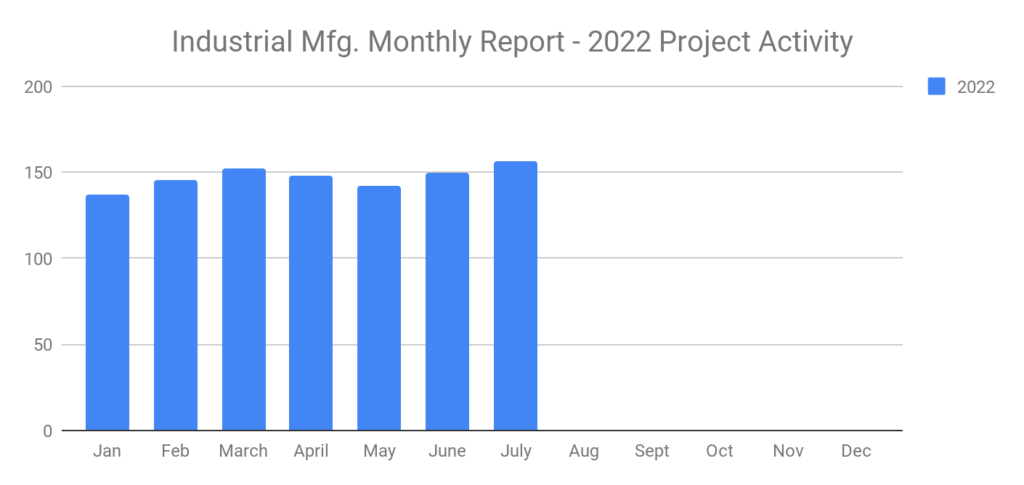
Industrial SalesLeads has announced the July 2022 results for the newly planned capital project spending report for the Industrial Manufacturing industry. The Firm tracks North American planned industrial capital project activity; including facility expansions, new plant construction, and significant equipment modernization projects. Research confirms 156 new projects with Texas leading the top locations for July. The following are selected highlights on new Industrial Manufacturing industry construction news. Industrial Manufacturing – By Project Type Manufacturing/Production Facilities – 139 New Projects Distribution and Industrial Warehouse – 71 New Projects Industrial Manufacturing – By Project Scope/Activity New Construction – 51 New Projects Expansion – 58 New Projects Renovations/Equipment Upgrades – 59 New Projects Plant Closings – 11 New Projects Industrial Manufacturing – By Project Location – Top 10 States Texas – 13 North Carolina – 11 Florida – 9 Georgia – 9 Indiana – 9 New York – 8 Ohio – 8 California – 6 Illinois – 5 Michigan – 5 Largest Planned Project During the month of July, our research team identified 18 new Industrial Manufacturing facility construction projects with an estimated value of $100 million or more. The largest project is owned by Samsung Electronics America, Inc., which is planning to invest $192 billion in the construction of 11 semiconductor manufacturing facilities in the AUSTIN, TX and TAYLOR, TX areas. The project is in the early design phase. Top 10 Tracked Industrial Manufacturing Projects NORTH CAROLINA: A Semiconductor company is planning to invest $5 billion in the construction of a manufacturing facility in CHATHAM COUNTY, NC. They are currently seeking approval for the project. KANSAS: Electronics mfr. is planning to invest $4 billion in the construction of an EV battery manufacturing facility in DE SOTO, KS. They are currently seeking approval for the project. ONTARIO: Battery mfr. is planning to invest $1.5 billion in the construction of a manufacturing facility in KINGSTON, ON. Construction is expected to start in 2023, with completion slated for late 2025. NEW YORK: A pharmaceutical company is planning to invest $470 million for a 260,000 SF expansion, renovation, and equipment upgrades at their processing and laboratory facility in PEARL RIVER, NY. They are currently seeking approval for the project. Completion is slated for early 2026. GEORGIA: Specialty copper foil mfr. is planning to invest $430 million in the construction of a manufacturing and office facility in AUGUSTA, GA. Construction will occur in three phases starting in early Fall 2022. Completion is slated for late 2024. TEXAS: A steel company is planning to invest $265 million in the construction of a manufacturing facility in SULPHUR SPRINGS, TX. They are currently seeking approval for the project. MINNESOTA: A steel company is planning to invest $150 million for the expansion of their manufacturing facilities in KEETAC, MN or MINNTAC, MN. They are currently seeking approval for the project. MISSISSIPPI: Steel tube mfr. is planning to invest $110 million in the construction of a manufacturing, warehouse, and office facility at 1923 Airport Road in COLUMBUS, MS. Construction is expected to start in Fall 2022, with completion for Summer 2023. TEXAS: Specialty roofing mfr. is planning to invest $100 million in the construction of a 450,000 SF manufacturing, warehouse, research, and office facility in GEORGETOWN, TX. They are currently seeking approval for the project. SOUTH CAROLINA: Medical equipment mfr. is planning to invest $90 million in the construction of a 270,000 SF manufacturing facility in NORTH CHARLESTON, SC. They are currently seeking approval for the project. Completion is slated for 2024. About SalesLeads, Inc. Since 1959, SalesLeads, based in Jacksonville, FL is a leader in delivering industrial capital project intelligence and prospecting services for sales and marketing teams to ensure a predictable and scalable pipeline. Our Industrial Market Intelligence, IMI identifies timely insights on companies planning significant capital investments such as new construction, expansion, relocation, equipment modernization, and plant closings in industrial facilities. The Outsourced Prospecting Services, an extension to your sales team, is designed to drive growth with qualified meetings and appointments for your internal sales team.
Bust Out of Service Fatigue: The What, Where, Why and How behind a decline in Customer Service Excellence

Does it feel like no matter how hard you try to please your customer, it isn’t enough? Are you in charge of leading others and the faster you train teams and build energy, the quicker it seems to fade? Are you a business owner feeling hopeless about the never-ending needs of staff AND customers while trying to achieve a profitable bottom line? You’re exhausted, right? This exhaustion is what’s called service fatigue, defined as that feeling that keeps you from delivering the excellent customer service your staff and patrons have come to expect. Left unchecked, this weariness can impact your business in many negative ways, from short tempers to lost business. Let’s unpack the what, where, why, and how of service fatigue and get on the path to busting out of it. What does Service Fatigue look like? You know what customer service delivery should look like. Attentive. Proactive. Genuine. Service fatigue is “less than,” and it presents in many forms. It’s when your customer experience is less than you—or they—expect. It’s a lack of energy, elevated stress, constant ambivalence, difficulty concentrating, missed deadlines, frequent mistakes, or safety compliance issues. The trickiest kind of service fatigue to spot is the kind the team thinks they can hide from guests. It’s still there, lurking beneath the surface, threatening to bring everyone down in its undertow. Where does Service Fatigue come from? After a stressful few years, various challenges have caused service fatigue levels to skyrocket. But the truth is, that service fatigue can strike at any time, and much of it is really nothing new. It’s short-tempered customers who escalate to anger quickly. It’s trying (and usually failing) to juggle multiple priorities at a time. It’s navigating ever-changing business policies. It’s responsibilities that outnumber hours in the day. It’s one bad attitude draining a team’s morale. Service fatigue can come from anywhere and knowing how to identify it is half the battle. Why does Service Fatigue matter? The short answer: It matters because it impacts your bottom line. When service fatigue takes over your business, everything is at risk. You can play a huge part in lessening that burden for your team and your customers. If it’s possible, make work a welcoming, encouraging environment for your staff so they can give your customers a reason to crow about the great experience they had. By recognizing service fatigue and equipping your team with the tools to bust out of its grip before it’s too late, you’ll ensure that everyone’s experience is that much better. How do we mitigate the effects of Service Fatigue? There are countless ways to bust out of service fatigue, and no two businesses will adopt exactly the same solution. Decades of experience in the customer service industry prove that there’s no silver bullet to finally overcoming exhaustion. Instead, it takes a combination of strategy, patience, and commitment to bolster your team and get them back on track to deliver the kind of remarkable customer service you and your customers expect. To get you started, here are a few ways to start busting out of service fatigue as soon as today: Build Better Boundaries Professional boundaries can be the single best tool to help bust out of service fatigue, whether you need to put them in place with your boss or you need to ensure your team knows that work/life separation is a good thing. Unless it’s imperative to your industry, do you really need to reply to emails at 8 p.m.? Is that gap or hiccup in a process at work really yours to lose sleep over? We all can and should go above and beyond to deliver customer service excellence. But when you’re doing far more than is expected, you may be bringing service fatigue on yourself. Be honest: Are you guilty of your own boundary breakdowns? Are there honest conversations you can have to get those boundaries—and your energy levels—back on track? Re-evaluate your boundaries today and find where you can firm them up. You’ll soon see what a difference they make in boosting your energy and positive attitude. Grant Yourself Rest! Who doesn’t love rest? While some have mastered the art of taking breaks, Americans tend to do things fast—and often multitask. We like the concept of rest, but the demands on our time often get in the way of our ability to truly take a break. There are as many as seven types of rest, from physical and emotional to creative and spiritual. The truth is, they’re all important, and giving ourselves the space to breathe when things get stressful is imperative. Rest can mean putting down your phone an hour early and reading a book instead, or using your shift break to do a brief silent meditation so you’re prepared to head back to work. When we prioritize rest and start to see it as doing good for ourselves, we are more energized to deliver customer service excellence. Bonus: When do I need to address Service Fatigue? No surprises here: If you recognize the signs of service fatigue, now is the time to bust out of it! Start by identifying what’s causing the fatigue, then set aside time to plan for change, including both big and small steps to reinvigorate your team and return to delivering customer service excellence. When you commit to the change, the hardest part is already over. All it takes from there is digging in to bust out of service fatigue once and for all! About the Author A Hall of Fame keynote speaker and author, Laurie Guest, CSP, CPAE, is an authority on customer service excellence. Laurie blends real-life examples and proven action steps for improvement. She is the author of two books and is writing a third on the topic of service fatigue. To learn more or connect with Laurie, visit www.LaurieGuest.com
Episode 307 – Combilift at MODEX 2022
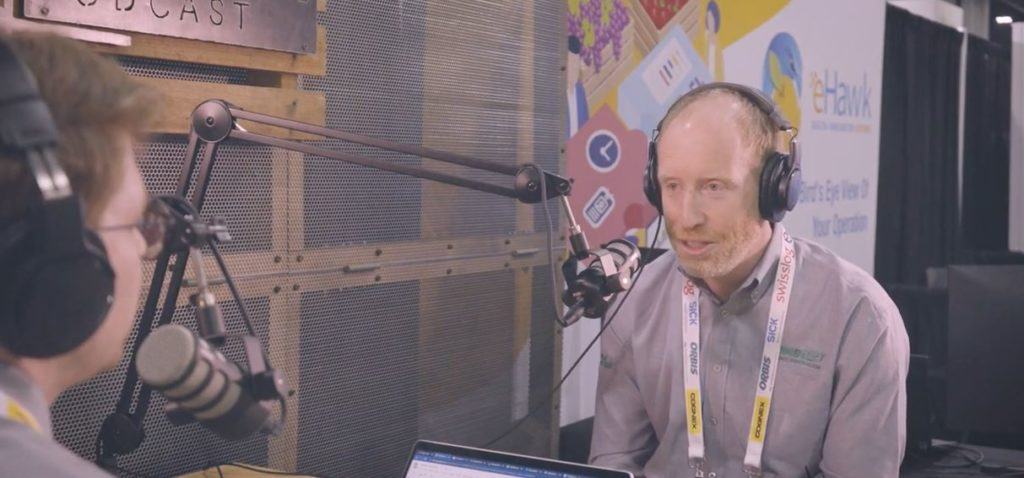
Welcome to the New Warehouse podcast. In this episode, Kevin welcomes Paul Short, president of Combilift North America, as his guest. Combilift is a fast-growing multi-directional forklift manufacturer specializing in helping warehouses maximize storage capacity. Combilift builds fully customizable products and solutions for all types of warehouse environments. They provide a warehouse layout service to customers worldwide designed to increase storage capacity and improve flow. Key Takeaways Paul breaks down some of the products from Combilift, like side loaders, multi-directional lifts, and articulated forklifts, and how each is designed to improve productivity and reduce costs in the warehouse. He also discusses some unique features that set them apart from other manufacturers, like their focus on customer service, ability to customize products, and constantly innovating their product line. Paul shares how MODEX 2022 attendees are anxious to automate their warehouses. However, many companies are still in the learning stages and have a lot of technical stops to make before they are ready to automate. One of the steps that Paul’s team can help with is getting racking systems set up in the most efficient way possible. Combilift prides itself on innovation and making the environment safer for operators and the people around them. They found that removing operators from hazardous situations and improving visibility can create a safer working environment. Listening to customer problems and solutions leads to unique opportunities for innovation throughout the industry. They’ve done this by super-sizing slip sheets in the COMBI-CSS container loader. This time-saver can load and unload entire containers in under six minutes. The New Warehouse Podcast EP 307: Combilift at MODEX 2022
Schneider’s KayLeigh McCall selected as Women In Trucking’s Driver Ambassador
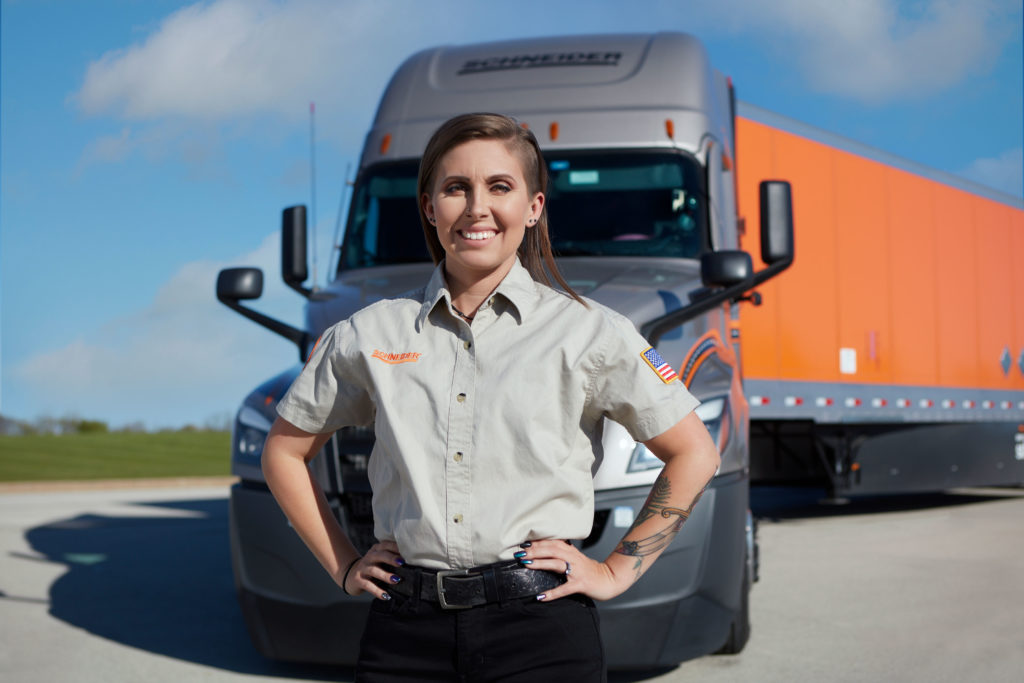
As a Driver Ambassador, McCall will raise awareness for Women In Trucking Association’s mission and promote women in the industry Schneider, a premier multimodal provider of transportation, intermodal and logistics services, is excited to share that KayLeigh McCall, driver and training engineer at Schneider, has been selected as the Women in Trucking Association’s (WIT) newest Driver Ambassador. WIT is a non-profit organization with a mission to encourage employment, address obstacles and celebrate the successes of women in the trucking industry. “Being selected as Schneider’s Women in Trucking ambassador provides an opportunity for me to spread the message that women can and will continue to be successful in the industry,” said McCall. “I’m honored to serve in this role to emphasize that it is possible for all generations of women – new to this profession, and those who have been in the industry for a while, mothers, wives, caretakers – to acquire the hard-earned skills necessary and lead a fulfilling career in trucking.” In her ambassador role, McCall will lead and organize efforts to empower and connect women across the trucking industry, as well as assist in developing and sharing various resources available including career services, mentorship, training, and scholarships. “We are thrilled to have KayLeigh McCall as our new Driver Ambassador,” said WIT’s President and Chief Executive Officer Ellen Voie. “Not only will she represent WIT and Schneider, but she will also be a visible spokeswoman for all female professional drivers today and in the future.” “KayLeigh is a phenomenal example of what we strive for every day here at Schneider – fostering an environment where our associates can develop their unlimited potential and make a real difference for themselves, our customers and for the betterment of the industry as a whole,” says Schneider President and CEO Mark Rourke. “We’re so proud of KayLeigh and look forward to seeing all she accomplishes as WIT’s Driver Ambassador.” Previously, McCall worked as a pastry chef, earning her Class A CDL in 2017 and driving a mixer truck for a construction company before joining Schneider in 2020. McCall discovered a passion for truck driving and feels empowered in her role as a woman driver and trainer. “For those looking to join the industry, my best piece of advice is to just do it, you won’t know until you try,” says McCall. “Schneider has provided an inclusive culture and platform of growth for my career, and I look forward to sharing my knowledge and empowering other women to join me.” In addition to her roles and responsibilities at Schneider and as WIT’s Driver Ambassador, McCall is a wife and mother of four. She brings tenacity, resiliency, and passion to her job every day, making her an asset to the Schneider team. To learn more about how Schneider elevates women in the industry, visit: https://schneider.com/company/corporate-responsibility/diversity-equity-inclusion To learn more about KayLeigh McCall visit: https://schneiderjobs.com/blog/2021-featured-female-truck-driver
How can Port Terminal Operators save money on Heavy-Duty Forklift Equipment?
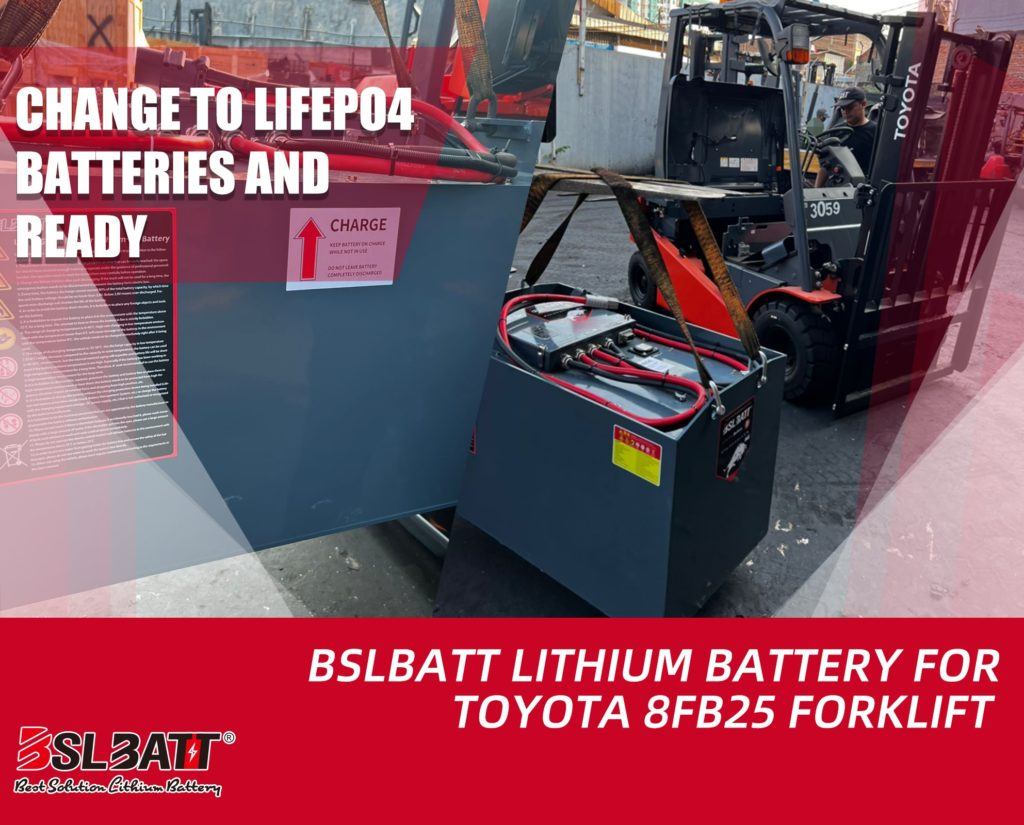
Port Sustainability: Delivering Clean Energy and Performance to Ports In port and terminal operations, having trucks to ensure that cargo can be shipped in volume and in a timely manner is key. For example, with the advent of large ships carrying more than 23,000 TEU, the terminal generates a lot of activity. Additionally, in the current environment, having an efficient fleet of high-capacity electric forklifts may help manage costs across the business. But what are the main challenges of operating forklifts in ports and terminals? How can a BSLBATT® high-capacity forklift lithium battery help overcome these challenges? What is your challenge? Port Terminal Operators – The current environment for port terminal operations requires a high priority to reduce carbon emissions. This is mandated by most councils in cities across North America. To date, most port terminals continue to use diesel forklift machinery, which takes a huge toll on the environment, employee health, and the people living in these environments. A forklift operator at a port terminal arrives at work in the hot summer sun and sits above a hot diesel engine. Additionally, noise pollution from forklifts often requires operators to wear ear protection. With the BSLBATT Heavy duty forklift lithium battery, these challenges are solved. Financially, many ports operate under the direction of committees and require board approval for capital expenditures. Some of the challenges for port operators are being able to communicate effectively with the board and requiring capital expenditures to replace forklifts when operating costs remain low over the life of the asset. As a result, many diesel forklifts in operation today continue to operate well beyond a reasonable life cycle, and as costs begin to increase, the financial efficiency of the asset becomes inefficient. Some of these costs include maintenance and repairs, energy consumption, tire changes, and extended downtime, all of which result in the need for backup machinery, the most expensive of all. The solution available for ports today is the BSLBATT industrial electric forklift lithium battery. These batteries are especially popular with bulk terminals, as the superior performance and visibility allow operators to use the equipment like a conventional diesel-powered truck. Guaranteed uninterrupted operation in the most demanding applications handling heavy loads (beverage distribution, paper, wood, and metal industries), high lift heights (very narrow aisle applications), and large attachments (roll clips, push-pull, single and double). Choose BSLBATT® Heavy duty forklift lithium battery manufacturer for…. Adaptable Products Based on Different Forklift Dimensions When purchasing a forklift battery, most of the time you are buying it for a specific piece of equipment. The battery compartment dimensions, minimum forklift battery weight requirement, and the connector cable length and position are all important aspects that the new battery must be compatible with. This process becomes much more of a headache when you are forced to look through 400-500 different SKUs to find the battery that fits your equipment’s exact specifications. To make this step in the process a whole lot easier, you can look for a manufacturer that offers customizable battery models that can be adapted to your equipment. This way, you can purchase a base model battery for whatever type of lift truck you’re outfitting, and then add an adapter to meet the truck requirements. Looking for a forklift manufacturer with this type of modular battery design is important because these batteries can be utilized with different forklift brands and models if your fleet composition changes in the future. As a leading full China Lithium-Ion battery provider, BSLBATT® heavy-duty lithium-ion batteries are used by many fortune 500 companies including Toyota, Yale-Hyster, Linde, Taylor, Kalmar, Lift-Force, and Raniero. BSLBATT aims to allow every individual vehicle driver in the world to enjoy the extraordinary experience of the superior performance of BSLBATT batteries, just like the feeling that the operator finishes their shift – fresh and ready to work. Excellent and Ongoing Technical Support Traditionally, forklift batteries tend to be seen as a one-time cost of doing business, and great customer support is not high on the priority list. But with the advent of lithium-ion technology, where batteries are more of long-term technology investment, the customer support experience is more important for fleet managers to get the most out of their equipment. Make sure to pay attention to the tools and resources the customer support team provide such as: Online product guides and videos Product training programs Safety and battery disposal and recycling documents Service bulletins Being able to leverage a responsive, helpful technical support team to ensure batteries are being used to their fullest potential and maintained correctly to maximize lifespan is crucial in the world of advanced battery technology. Additionally, since lithium-ion batteries can have different chemical compositions, it is important for users to follow the manufacturer’s instructions for charging, storage, shipping, and maintenance. Whether the battery is purchased directly from the manufacturer, an OEM, or through a local equipment dealer, you should be able to contact the manufacturer for help with any problems or questions they might have. Minimized risk of operator injury Reliability is also important as many terminals operate 24/7 with tight turnaround times. Trucks need to work when needed in order to move goods where they are needed. Likewise, forklifts need to be flexible. Since modern terminals handle a variety of loads, having different trucks for different load types takes up valuable space and reduces cost efficiency. The safety of people, cargo, and infrastructure are also critical to the success of terminal operations. For material handling equipment, lithium iron phosphate (LiFePO4) is thermally stable and can handle very high and very low temperatures, meaning thermal runaway is less likely. They can be used in temperatures up to 131 degrees Fahrenheit without the risk of burning or damaging the battery. It is critical for operators to always follow the battery manufacturer’s instructions to minimize risk. Compared to other lithium-ion chemistries, lithium iron phosphate batteries are generally the safest when mishandled. BMS with Telematics Offering for Battery Data Management Lithium-ion battery technology is more than just a power source for your equipment; it is a useful
PAC Machinery’s PACK EXPO International Exhibit provides packaging solutions to increase production

PAC Machinery, providers of packaging equipment, announces the company’s largest exhibit ever at PACK EXPO International (Oct. 23-26; McCormick Place, Chicago), the most comprehensive packaging and processing show in the world in 2022. With unprecedented demand for packaging and automation, PACK EXPO International 2022 is packing the show with lots of new, exciting features according to show producer PMMI, The Association for Packaging and Processing Technologies. Sure to be a “must-see” exhibit, PAC Machinery will be bringing a diverse range of machinery of its most popular models including flow wrappers, automatic baggers, shrink machines, heat and vacuum sealers, and validatable medical packaging machines. See the packaging machines that top companies are buying this year in PAC’s 2,500 sqft. exhibit in the South Hall at S 3314. “Exhibiting at Pack Expo is a great way to meet face-to-face with companies planning a more automated packaging process, said Greg Berguig, VP of Sales and Marketing. “PAC Machinery can help facilities plan the next 1-3 years out, developing solutions that increase production without increasing labor, which is what companies are seeking right now. Additionally, increased output through packaging automation can help companies put off costly facility expansion by using their current space more efficiently,” Berguig said. PAC encourages attendees to bring their products so solutions can be developed with machine experts at the exhibit. Due to the wide range of applications and various industries and companies that attend this bi-annual show, PAC Machinery will be showcasing packaging machines from all product categories as well as automatic bagging materials from its bag’s division – including green, more environmentally friendly packaging solutions! See Machines featured from all these categories: Automatic Baggers Materials for Auto Baggers Shrink Wrap Machines Medical packaging machines Heat Sealers Flow Wrappers Vacuum Sealers PAC Machinery is also a part of the interactive PACK to the Future Exhibit that celebrates the role of packaging and processing through history and future impact. As a family-owned business, PAC is proud to have developed the first commercial heat sealer, the Sealmaster, circa 1970, on display. Scan the QR code on the exhibit to learn more about the history of sealing from PAC Machinery. Visit our exhibit South Building S-3314 Visit our show page JOIN US! ATTEND FOR FREE LEARN MORE WATCH OUR SHOW PREVIEW VIDEO Click Here
Port of Long Beach welcomes Pasha Hawaii LNG-Powered Ship
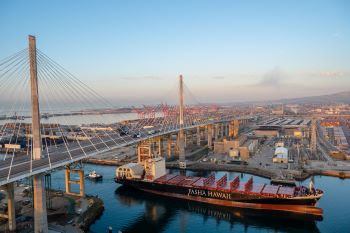
‘MV George III’ first to refuel with liquefied natural gas on West Coast The Port of Long Beach on Wednesday welcomed Pasha Hawaii’s MV George III, the first container ship powered by liquefied natural gas to refuel on the West Coast. The ship’s LNG-powered engines are dramatically cleaner than those of a traditional cargo ship. Following George III’s inaugural visit to Long Beach, the newly built 774-foot-long ship will begin its maiden voyage to its home port in Honolulu. And there’s another LNG Pasha ship on the way – the Janet Marie will be the second of two “Ohana Class” container ships to join Pasha Hawaii’s fleet, in the fourth quarter of 2022, in service between Hawaii and the U.S. mainland. “Reducing ship emissions will have a significant and positive impact on the region’s air quality,” said Port of Long Beach Executive Director Mario Cordero. “We thank Pasha Hawaii for leading the way in green shipping at the Green Port.” “This is another positive step toward the widespread adoption of alternative fuels in cargo shipping and using cleaner technology to do business at the Port,” said Harbor Commission President Sharon L. Weissman. “Pasha Hawaii shares our long-term commitment for growing sustainably and responsibly.” “As we mark our 75th anniversary and welcome George III to Long Beach, we are proud to continue my family’s legacy of innovation and environmental stewardship, while recognizing our employees as our extended ‘ohana,’ ” said George Pasha IV, president and CEO, Pasha Hawaii. “We are also grateful for our partnership with the Port of Long Beach. Being able to fuel MV George III with natural gas at the Port reflects our shared vision of minimizing our environmental impact while setting a new standard for shipbuilding in the U.S.” The vessel was named after George Pasha IV’s late father, George Pasha III. Operating fully on natural gas, the new vessel surpasses the International Maritime Organization’s 2030 emission standards for ocean vessels, representing the most technologically advanced and environmentally friendly class of vessel to serve Hawaii and one of several that serve Long Beach. Energy efficiencies are also achieved with a state-of-the-art engine, an optimized hull form, and an underwater propulsion system with a high-efficiency rudder and propeller. LNG-powered ships achieve a 99.9% reduction in diesel particulate matter and sulfur oxide emissions, 90% less nitrogen oxides, and a 25% reduction in carbon dioxide compared to ships running on traditional fuels. Accommodating Pasha Hawaii’s new LNG-fueled ship aligns with the Port of Long Beach’s dedication to environmental sustainability and strengthens its commitment to the Green Port Policy and San Pedro Bay Ports Clean Air Action Plan enacted more than 15 years ago. Those historic actions have led to unprecedented reductions in emissions connected to goods movement as the Port continues to work toward meeting a goal of deploying all zero-emissions cargo-handling equipment by 2030 and zero-emissions drayage trucks by 2035. The Port of Long Beach is one of the world’s premier seaports, a gateway for trans-Pacific trade, and a trailblazer in goods movement and environmental stewardship. As the second-busiest container seaport in the United States, the Port handles trade valued at more than $200 billion annually and supports 2.6 million trade-related jobs across the nation, including 575,000 in Southern California. Pasha Hawaii, an independent operating subsidiary of The Pasha Group, is one of the nation’s leading domestic ocean shipping companies serving Hawaii from the continental United States. The company operates a fleet of seven fully Jones Act-qualified vessels and operates out of multiple port terminals. Pasha Hawaii is a trusted partner for many of the nation’s leading retailers, manufacturers, and U.S. government agencies, providing reliable containerized and roll-on/roll-off cargo services that leverage its unique combination of ocean transportation and inland distribution capabilities to deliver goods that are vital to the people of the State of Hawaii and the prosperity of the Hawaii market it serves.
San Pedro Bay Ports seek comment on second Drayage Truck Assessment
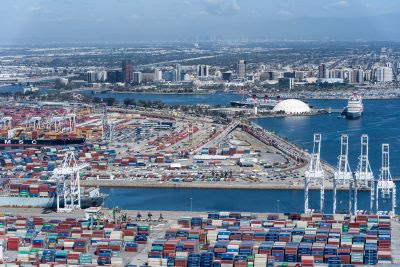
The public may submit feedback through Sept. 27 The public is invited to comment on a draft 2021 feasibility assessment of cleaner drayage truck technologies needed to help the San Pedro Bay ports of Los Angeles and Long Beach reduce air pollution and reach the ambitious zero-emissions goals adopted in the 2017 Clean Air Action Plan (CAAP) Update. The draft 2021 assessment, which builds upon the inaugural 2018 assessment, examines the current state of technology, operational characteristics, economic considerations, infrastructure availability, and commercial readiness related to zero-emissions and low-emissions drayage trucks. The draft 2021 feasibility assessment is available on the CAAP website, posted here. Comments on the 2021 draft feasibility assessment for drayage trucks will be accepted through Sept. 27 and can be emailed to [email protected]. The updated CAAP established goals of zero-emissions trucks by 2035 and zero-emissions terminal equipment by 2030. As part of this strategy, the ports committed to developing feasibility assessments every three years for drayage trucks and terminal equipment to inform the ports’ approach to meeting those goals. Currently, the ports are demonstrating 56 pieces of cargo-handling equipment, including zero-emissions yard tractors, top handlers, forklifts, and rubber-tired gantry cranes, and 16 class 8 on-road trucks, including hybrid, battery-electric, and hydrogen fuel cell technologies, with a number of additional terminal equipment and on-road trucks to be commissioned by the end of the year. Updated in 2017, the CAAP contains a comprehensive strategy to accelerate progress toward a zero-emissions future while protecting and strengthening the ports’ competitive position in the global economy. Since 2005, port-related air pollution emissions in San Pedro Bay have dropped 90% for diesel particulate matter, 63% for nitrogen oxides and 97% for sulfur oxides. Targets for reducing greenhouse gases (GHGs) from port-related sources were introduced as part of the 2017 CAAP Update. The document calls for the ports to reduce GHGs to 40% below 1990 levels by 2030 and 80% below 1990 levels by 2050. The CAAP was originally approved in 2006.
TA Services named ‘Great Supply Chain Partner’

TA Services, a full-service 3PL (third-party logistics) provider, has announced that it has been included in SupplyChainBrain‘s list of 100 Great Supply Chain Partners. For two decades this award has recognized customer-nominated companies that show a dedication to providing outstanding solutions and services. “In a year that has proven to have ups and downs for many companies’ supply chains, our team has worked tirelessly to help our customers overcome shipping obstacles and deliver stability to their shipping needs. I’m thankful for the stellar TA Services team who continuously provides excellent customer service,” said Scott Schell, president and CEO of TA Services. “It’s always exciting to be recognized for the hard work and dedication that we provide our customers.” With over 36 years of industry experience, TA Services offers a wide variety of domestic and international transportation management and modes including dry van, truckload, flatbed, heavy haul, expedited, refrigerated, and less-than-truckload (LTL). Just this year, TA Services streamlined communication touchpoints and simplified orders between businesses and shippers by implementing their Supplier Portal, which calculates pricing models for shippers, earning Director of Cross-Border Logistics, Andrew Welling, the recognition of being named Supply & Demand Chain Executive’s 2022 Pros to Know List. Additionally, this year, TA Services acquired Alabama-based C2 Freight Resources to expand brokerage services as well as open a new cross-docking facility in Laredo, Texas. TA Services was also named to Supply & Demand Chain Executive’s 2022 Top Supply Chain Projects for TA Services’ overseeing of transportation management for a Memphis-based construction project that required specialized services other than just mill-to-mill operations. “Our six-month online poll of supply chain professionals requires a qualified response, asking them to nominate vendors and service providers whose solutions have made a significant impact on their company’s efficiency, customer service, and overall supply chain performance,” said Brad Berger, Publisher, SupplyChainBrain. “This year’s field of nominees was highly competitive and overall excellent – coming from all sectors of supply chain management. TA Services will appear in the 2022 August issue of SupplyChainBrain magazine and on SupplyChainBrain.com as an honored member of this year’s 100 Great Supply Chain Partners.”
31% of retirees say continued inflation would motivate them to rejoin the workforce
43% of retirees say age could be a barrier to finding a new job More than three in 10 U.S. retirees say they would be motivated to rejoin the workforce if inflation continued to eat into their savings, according to the latest American Staffing Association Workforce Monitor® online survey conducted by The Harris Poll. In addition to inflation, the role of Social Security insurance was also top of mind for many retirees, with 25% saying they’d be motivated to rejoin the workforce if Social Security no longer covered their expenses. Thirty-nine percent of retirees cited Social Security as their main source of income, while 33% cited retirement plans such as 401(k) accounts and pensions. Overall, 14% of current retirees stated they are open to or actively looking for work. However, the study found that 43% of retirees said their age could be a barrier to getting a new job. In addition, 41% of retirees would look for a job if they could have a flexible work schedule, and 35% would do so if they could work remotely full-time. “At a time when more retirees need additional income and employers need their expertise and experience, older workers continue to face hiring barriers,” said Richard Wahlquist, president and Chief Executive Officer of the American Staffing Association. “Employers that take steps to embrace flexibility and diversity across their entire workforces will be more productive and have higher levels of employee engagement.” The news comes at a time when there are nearly two job openings per unemployed person in the U.S., according to the latest data from the U.S. Bureau of Labor Statistics. Method This survey was conducted online within the U.S. by The Harris Poll on behalf of ASA June 2–6, 2022, among a total of 2,027 U.S. adults age 18 and older of whom 459 were retired and not employed. The sampling precision of Harris online polls is measured by using a Bayesian credible interval. For this study, the sample data are accurate to within + 2.8 percentage points using a 95% confidence level. For complete survey methodology, including weighting variables and subgroup sample sizes, please contact Megan Sweeney at 703-253-1151.