
Cementex highlights feature series of Arc Flash PPE Task Wear
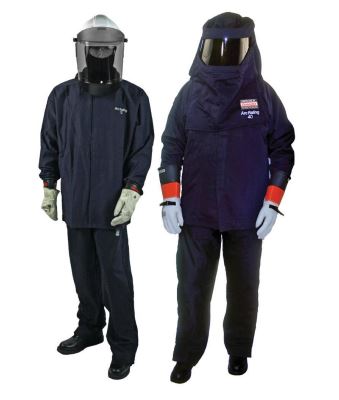
Cementex, the safety tool specialist, highlights the Cementex Feature Series of Arc Flash Protective Clothing PPE, designed for those seeking the next level of comfort, safety, durability, and protection. With a focus on safety and usability, the Cementex Feature Series is made with USA labor and materials to ensure the highest quality arc flash protection. The Feature Series clothing is made with Indura® Ultra Soft® FR treated cotton and meets current ASTM F1506 and F1959/1959M-99 standards. FR Velcro® front closures provide a secure closure, easy access, and rapid removal in the event of arc flash exposure. FR Velcro® calf/ankle closures allow for easy access and fit adjustment during donning and removal, and adjustment while wearing boots. Clothing options include coats, parkas, bib/pants, coveralls, and leggings, available in sizes S-5X with a standard inseam of 32″. Coveralls include elastic backs for ease of movement, and all coats and coveralls have Nomex® knit wrist cuffs. Bib/pants have easily adjustable “quick disconnect” shoulder straps to ensure user safety. Kits are available in a duffle bag, backpack, or hard-sided storage canister, and include hard hats, safety glasses, and ear canal inserts. In addition to the Feature Series of Arc Flash Protective Clothing PPE, Cementex also offers the Contractor Series for high quality, classic protection of personnel around energized equipment and the UltraLite Series, with innovative design and materials for the lightest, most comfortable Arc Flash PPE Task Wear available.
Getting On-the-Job Training Right: Four strategies to start using now

“I learned so much during orientation. It’s too bad I won’t use most of it for six months. I took some notes, but I’m sure I won’t remember half of what they told me to do.” “I’m overwhelmed. I learned a new piece of equipment today. The person showing me what to do knew everything. The problem I had was the deep dives. He spent so much time on troubleshooting techniques. It was just too much for my first day.” “I can follow the steps, but I have no idea why I’m doing what I’m doing. I sort of feel like a trained monkey. I hope nothing goes wrong because I will have no clue how to fix it if something does.” Despite our best efforts, it’s not as easy as it looks to get the training equation right. We train too early, we train too much, or we make a host of other errors. While some of us learn from our mistakes, many of us practice a cycle of rinse and repeat as we make the same blunders year after year. The good news is it doesn’t have to be this way. With some careful planning and follow-through, you can avoid problems many people will encounter again and again. Strategy One: Keep Training Relevant and Immediately Applicable Countless onboarding programs attempt to teach everything a person would ever want to know or need to know about a job in the first few hours, days, or weeks. The information is essential, but it has no immediate value. Subsequently, learners become overwhelmed in class, and then they don’t have opportunities to apply or reinforce what they’ve learned for months or even years. Good training designers know the value of careful pacing, and they practice just-in-time training when they can. Ask yourself, what does my learner need to be successful on the first day, the first week, and the first month? Teach those needs as much as possible, and save the more in-depth information for a more appropriate time. What do you need to prioritize? Strategy Two: Connect to Why Again and Again When people don’t know why they are doing something, they don’t understand the big picture. While they get the process at a surface level, their limited understanding potentially keeps them from following procedures later. For example, if someone is learning how to use a printer/copier/scanner/fax machine and part of the process is putting the guard up on the paper tray with jobs over 100 sheets, without explaining why that’s important to do, that learner might take it upon himself to skip that step back on the job. Only when papers are scattered all over the floor and have to be re-collated does the learner know the importance of raising the guard. Great trainers make connections. They repeatedly explain why they’re doing what they’re doing, why procedures are written as they are, and so forth. Are you connecting the dots as well as you should, or could you do a better job? Strategy Three: Use Multiple Channels to Cement Learning I showed her how to do it, she did it, and now she’s trained. Maybe that’s true for the simple stuff, but for the complex processes and procedures, multi-channel encoding reigns supreme. For example, show learners in real-time how to complete a process. Then do it again, at the same time providing a narration track while the learner takes notes. Next, have the learner read aloud the notes she’s taken. Finally, have the learner demonstrate the procedure. The multi-channel approach allows learners to see, to hear, to write, to speak, and to do whatever process they are learning. Depending on the learner, some senses may be more powerful than others. And in rare cases where there is no preference, repetition wins the day. What can you do differently to engage more senses? Strategy Four: Teach with Reference Tools It’s one thing to conquer a task during class or one-on-one job coaching, but it’s entirely another to reproduce those results on the job. People who have mastered the training function know to develop and teach reference tools in addition to processes themselves. Ask yourself what kinds of support you need to develop. Decide where you need to incorporate them in your training plans. Those who learn how to solve problems themselves are worth their weight in gold. In addition to strong productivity, these people are also usually happier and more motivated than those who don’t have the tools to stand on their own feet. Four strategies and none hard: make training relevant, connect to why, repeat information using different channels, and incorporate the tools learners should use to solve problems back on the job. If done deliberately and with routine, you will almost certainly get a good result. About the Author Kate Zabriskie is the president of Business Training Works, Inc., a Maryland-based talent development firm. She and her team provide onsite, virtual, and online soft-skills training courses and workshops to clients in the United States and internationally. For more information, visit www.businesstrainingworks.com.
Bison announces PowerSTAR® high-efficiency right angle Gearmotor celebrating 10 years of product excellence
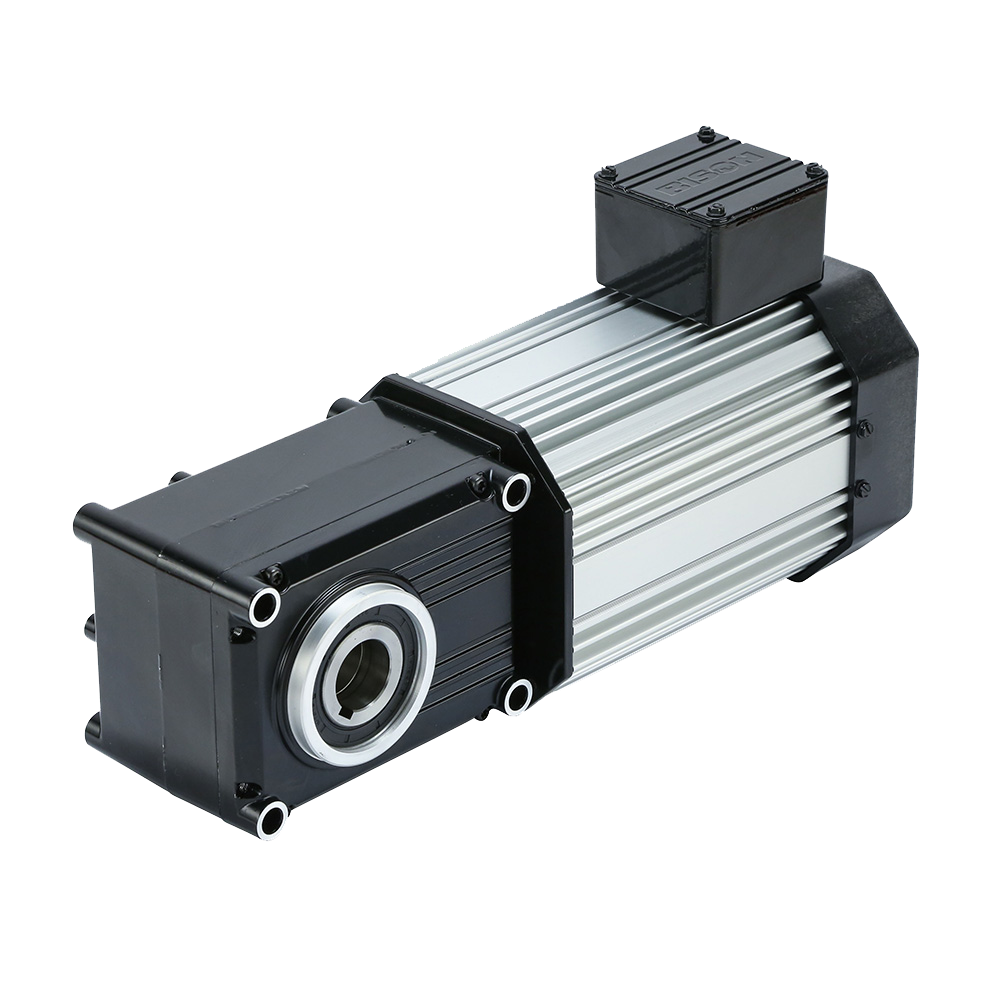
Bison Gear & Engineering Corp., a provider in the power transmission industry, announces its proven PowerSTAR® high-efficiency right angle gearmotor is celebrating 10 years of industry-leading product excellence. Featuring, advanced hypoid gearing technology for improved energy efficiency over traditional right-angle worm gearmotors, PowerSTAR® offers maximum power density in a compact profile that does not compromise performance. Its sleek design offers easy mounting in several orientations, ground gearing for low noise, and a variety of frame sizes to fit numerous design specifications. Ground gearing provides whisper-quiet operation and low backlash precision, while larger diameter pinions offer more surface area contact. With multiple tooth contact that handles larger loads at better efficiency, PowerSTAR® offset gears transmit higher torque output in a smaller profile along with high energy efficiency sustained throughout all standard gear ratios.
Matrix apprenticeship sets high school student on path to success
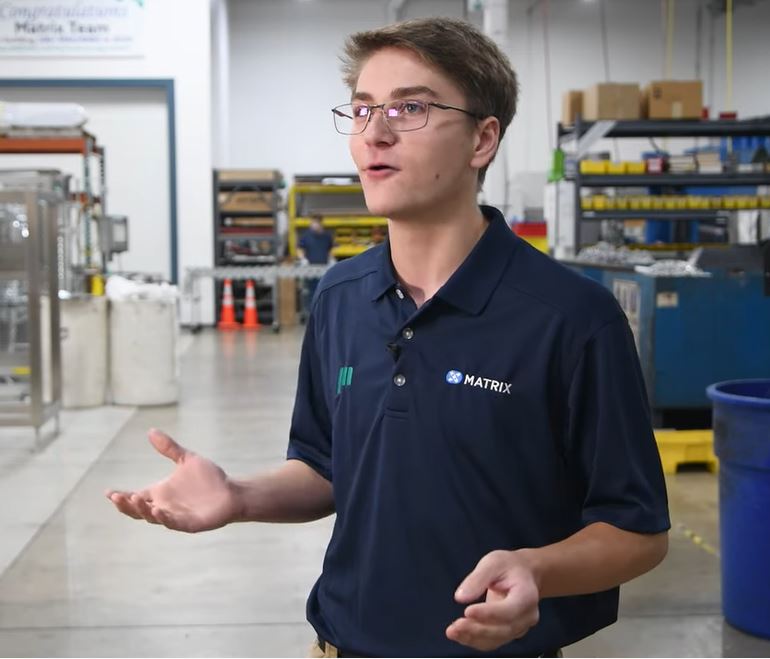
Partnership with the Ozaukee Youth Apprenticeship Program helps showcase careers in packaging to high school senior Sam Kurten Almost everyone is familiar with the proverb, “Give a man a fish and you feed him for a day; teach a man to fish and you feed him for a lifetime.” It simply means it’s more beneficial in the long run to teach someone how to do something than to just do it for them. And learning a skill doesn’t just help in the present, it can shape the way you live your future. Sam Kurten, who is entering his senior year at Cedarburg High School in Cedarburg, Wisconsin, is learning hands-on technical skills through his apprenticeship at Matrix Packaging Machinery, and it has helped steer him toward his future goals. Sam has been interested in learning how things work from the time he was young. It started when his dad exposed him to, of all things, fish tank equipment. The aquatic array of components piqued his interest in tinkering with things, and his passion for hands-on skills was born. As Sam’s gotten older, his interests have become more sophisticated. Today, he is drawn to machining and engineering and has even built a small workshop at home with welders, a plasma cutter, a drill press, and grinders just so he can learn how things work. When Sam heard that Matrix was participating in the Ozaukee Youth Apprenticeship Program, he knew it would be the perfect way to learn more about his interests. Sam has been a Matrix apprentice for about a year and has learned machining skills through hands-on activities and projects. He is using critical thinking to solve problems and has a helpful team to mentor him throughout the educational process. “We have some really great machinists at Matrix that are absolutely at the top of their profession,” he said. “Whenever I have questions, they always know what I’m trying to figure out and are there to help me with problems.” Giving high school students like Sam an experiential education is something that Matrix believes positively impacts lives, as well as the future of manufacturing. Eric Walker, Mechanical Engineering Manager at Matrix, has seen how Sam’s exposure to different aspects of the business has shown him how different departments work together and how they interact. “Without a program like this, Sam wouldn’t truly understand what goes on in machining and engineering,” Walker said. “That’s why this is so valuable. Sam sees machining and engineering working together.” Sam has proven that he’s the right intern for the job, too. “Sam is doing fantastic,” Walker said. “He is a very bright young man – that was evident even during his interview. It was obvious to me that he was going to be a very strong candidate. And, thus far, he’s been just that. He has been ideal for this apprenticeship program.” Through this program, students like Sam benefit from interactive learning and on-the-job training. That exposure helps create future industrial workers and leaders, something that is important as the current workforce starts to age. It also gives Matrix the opportunity to engage with and guide younger individuals into the world of manufacturing. Walker is proud of Matrix’s commitment to the community and its desire to introduce future apprentices to possible careers. “Matrix has a vested interest in serving the community,” Walker said. “We have access to these young individuals through a program like this. So, it’s an outreach tool for us and allows us to engage in the excitement of younger individuals, and that gives them a bright outlook for their future.” For Sam, the hands-on work environment and guidance provided by his apprenticeship allow him to work in an area he sees in his future – which is leaning toward engineering. The knowledge and skills he is gaining at Matrix will give him an advantage over other students entering the career. Sam is learning how specific tools can be used to create new packaging machine parts, while also learning how engineering can utilize those components for better system performance. “My apprenticeship with Matrix has really opened my eyes to all the possibilities within packaging and manufacturing,” Sam said. “So far, it’s been a really great experience to be able to do something that’s going to help me long-term.” Sam’s apprenticeship lasts through 2022.
Tubes versus Boxes: Creating an optimal packaging solution
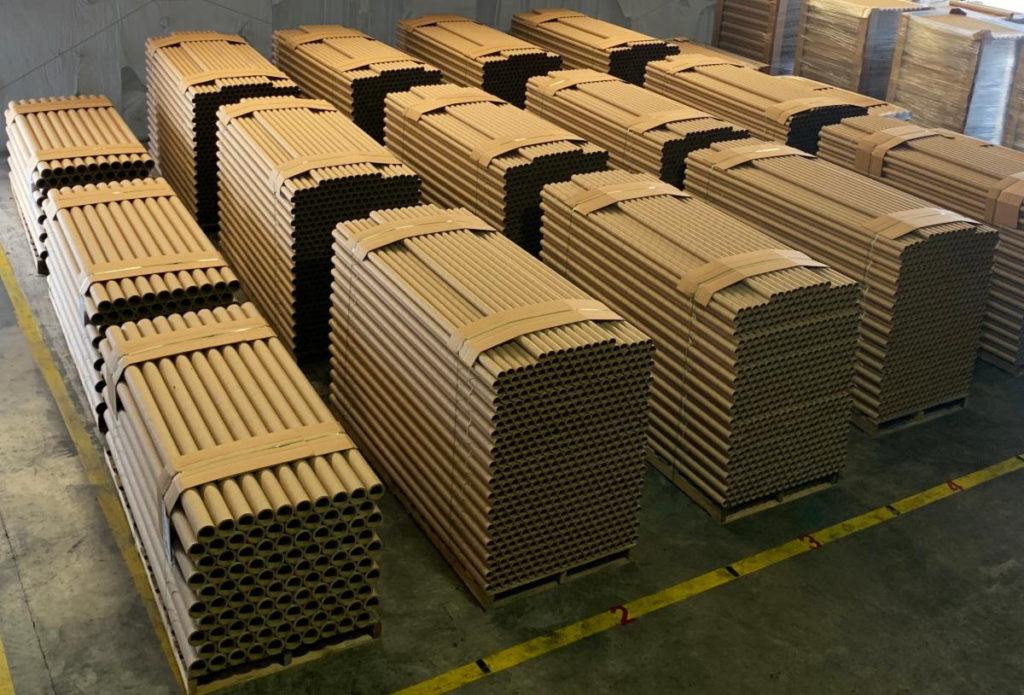
Custom corrugated boxes and fiber tubes protect products and the environment and build brand image The subject of packaging and shipping solutions has become an increasingly popular topic of conversation within businesses and among the public. Before and during the pandemic, the rapid expansion of e-commerce has fueled demand for packaging, while labor shortages and shipping constraints have also made it harder to produce and deliver the containers used to ship and store everything from food and consumer goods to machine parts. At the same time, consumers are increasingly aware of the need for more sustainable packaging. According to McKinsey & Company, 55% of US consumers are extremely or very concerned about the environmental impact of packaging. They are willing to pay more for eco-friendly products, and they express a desire to buy additional sustainably packaged products if more of them were available and better labeled to indicate green packaging. As a result, businesses have responded in three important ways. First, they have turned to suppliers that have a proven track record and ongoing capability of delivering packaging solutions when needed to ensure that the right shipping container is available when the product comes off the production line. Environmental Sustainability Second, the demand for corrugated cardboard boxes and fiber tubes expands as consumers, government regulators, investors, and employees push for environmentally friendly alternatives to plastics. Boxes and tubes are made from plant-based materials which can be sustainably harvested and replanted, and many boxes and tubes are manufactured from 100% recycled material. The disposal of these paper-based packaging solutions is also far more sustainable. In 2021, 91.4% of corrugated cardboard was recycled compared to only 6% of the 40 million tons of plastic waste generated in the US. Moreover, the paper is biodegradable and does not contain any toxic chemicals or heavy metals, and therefore the small percentage of scrap or used boxes and tubes that do end up in a landfill will decompose without harming the environment. In fact, boxes and tubes buried in the earth will compost in a couple of months, adding nutrients back into the soil. Custom Packaging Solutions The third reason for the increased interest in custom boxes and fiber tubes is their versatility and adaptability to perfectly fit the specific requirements of each application to achieve the optimal balance between the crush strength and weight/thickness to reduce the cost of materials and shipping. Custom packaging comes in many shapes, sizes, and strengths to contain and protect products for storage or transport. The packaging should be designed to fit the product, rather than the other way around. A perfect fit means eliminating the waste, reducing environmental impact and costs of producing, handling, and disposing of excess packaging and unnecessary void fill material — and damaged products. The right fit also means higher packing density for more energy-efficient transport and more space-efficient storage. Custom boxes and fiber tubes also enable important marketing advantages over stock packaging. Graphics and information can be printed on the interior and exterior surfaces to increase brand awareness and support point-of-purchase campaigns. The two major categories of custom, sustainable packaging are corrugated boxes and fiber tubes. Both categories have the environmental benefits of fiber material, and both are extremely customizable to meet specific application requirements. Custom Corrugated Boxes Custom corrugated boxes can be designed in any desired size and in a wide range of board thicknesses. Designers utilize software to optimize the shape and size of the box to efficiently and safely package the product(s) contained within, and to ensure the boxes can be stacked securely on a pallet, without wasted space. Boxes hold items wrapped with protective packaging or surrounded with void-fill material for safe shipment. They can be sealed, closed, and stacked in a warehouse or shipping container. Some specialty boxes ship hazardous materials or insulate products from excessive heat or cold. Box types include Die Cut, Full Overlap Slotted Container (FOL), Full Telescopic Design Container (FTD), and Overlap Slotted Container (OSC). A variety of wax and varnish coating options are available. Additional customizations include partitions, eyelets, transparent windows, and die-cut foam inserts Fiber Tubes Fiber wound tubes are also customized depending upon the specifications and requirements of each customer and applications. They are typically made of cardboard, but they can also be reinforced with other materials for added strength and resilience. Paper or paperboard sheet layers are wound together and bonded with an adhesive to form strong, hollow, and usually cylindrical shapes. Fiber wound tubes provide an excellent strength-to-weight ratio and are used in applications requiring high bend strength, crush resistance, and dynamic strength. Tubes are available in various sizes; length, inside diameter, and wall thickness can be customized to fit specific products. The wall thickness of the tube can vary depending on the number of layers wrapped during manufacturing. The innermost layer or ply – the liner -, and the outermost layer – the wrap -, can consist of different materials (foil, film, etc.) or specialized paper. The specialized paper and materials can provide water resistance, graphics or labeling, or a specific color. Tubes Serve as Containers and as Paper Cores The high strength of fiber tubes makes them well-suited to two very different uses — as an exterior container for a very wide range of products or as the interior core around which sheets of material are wound. As a container, tubes protect a wide variety of products during shipment, protecting them from damage, including long, heavy items such as pipes and baseball bats, and fragile items such as fishing poles. Tubes are often a good alternative to shipping items in a box with protective packaging or void fill. The range of applications is quite extensive, from small tubes with film barriers for potato chips to large tubes used to form concrete pilings. Paper cores typically fall into two subcategories: In industrial applications, webs or sheets of flexible material (plastic film, paper, foil, textiles, etc.) are wound around paper cores with thick walls. These tubes function as a machine element and facilitate
Survey uncovers key findings on falls from height

Working at height is inherently hazardous, exposing workers to significant risks that range from falls from roofs, scaffolding, and ladders to slips through floor and roof openings. And the lack of use of personal protective equipment – and its misuse at times – greatly increases those risks. A survey conducted last year by CPWR – The Center for Construction Research and Training, supported by the American Society of Safety Professionals (ASSP), gathered insights from safety and health professionals that will help advance fall protection in all industries worldwide. The ANSI/ASSP Z359 Fall Protection and Fall Restraint Committee will use the key findings from the Fall Experience Survey – which explored the root causes of falls from height – to enhance voluntary national consensus standards that guide safety at construction sites and many other workplaces. “While data has been available on the types and rates of fatal and non-fatal falls, we need more information on the causes of those falls,” said Thomas Kramer, P.E., CSP, chair of the Z359 committee. “These new insights expand our knowledge so we can strengthen standards and ultimately prevent injuries and save lives.” Falls are the leading cause of death among construction workers. Despite the efforts of safety and health professionals to increase the use of fall protection, 368 construction workers and 805 workers across all industries died from falls in 2020, according to the U.S. Bureau of Labor Statistics. Fall protection in construction has remained the most frequently cited OSHA violation each year since 2011. Six key findings surfaced from the 671 responses to the Fall Experience Survey: Respondents believe a lack of planning is a key underlying cause of falls. Insufficient or ineffective planning was the most selected primary cause for falls (27.4 percent). Lack of planning is associated with a lower likelihood of using fall protection. The odds of using fall protection were 71 percent lower for individuals whose employer failed to plan. Nearly half of respondents (48.8 percent) said no fall protection was being used at the time of a fall. Employee beliefs about their company’s fall protection policy are strongly associated with their use of fall protection. Respondents who thought fall protection was required were eight times more likely to use it. Rescue training may help reduce fall-related deaths. The odds of a fall being fatal were 76 percent lower for workers who had self-rescue training. Workers employed by subcontractors face a higher risk of fatal falls. Those who work for a subcontractor were 2.7 times more likely to die from a fall compared to those who work for a general contractor. The 20-page preliminary report published this month by CPWR provides an overview of the main survey findings, and additional reports with further analyses are planned. “It’s important to remember that all falls are preventable, and that drives us to collect better information that can foster operational solutions,” said Jessica Bunting, MPH, director of CPWR’s Research to Practice (r2p). “Our new data is directly from people who are knowledgeable about workplace environments where falls are common.” ASSP is the secretariat of the Z359 committee that develops voluntary national consensus standards to address fall protection equipment and systems for climbing, work positioning, fall arrest, rescue, evacuation, and other fall hazards. The standards also focus on worker training and steps organizations can take to identify and abate hazards to help their employees avoid injuries and fatalities when working at height. The standards are a key component of an employer’s managed fall protection program.
Weissman lays out goals for Port of Long Beach
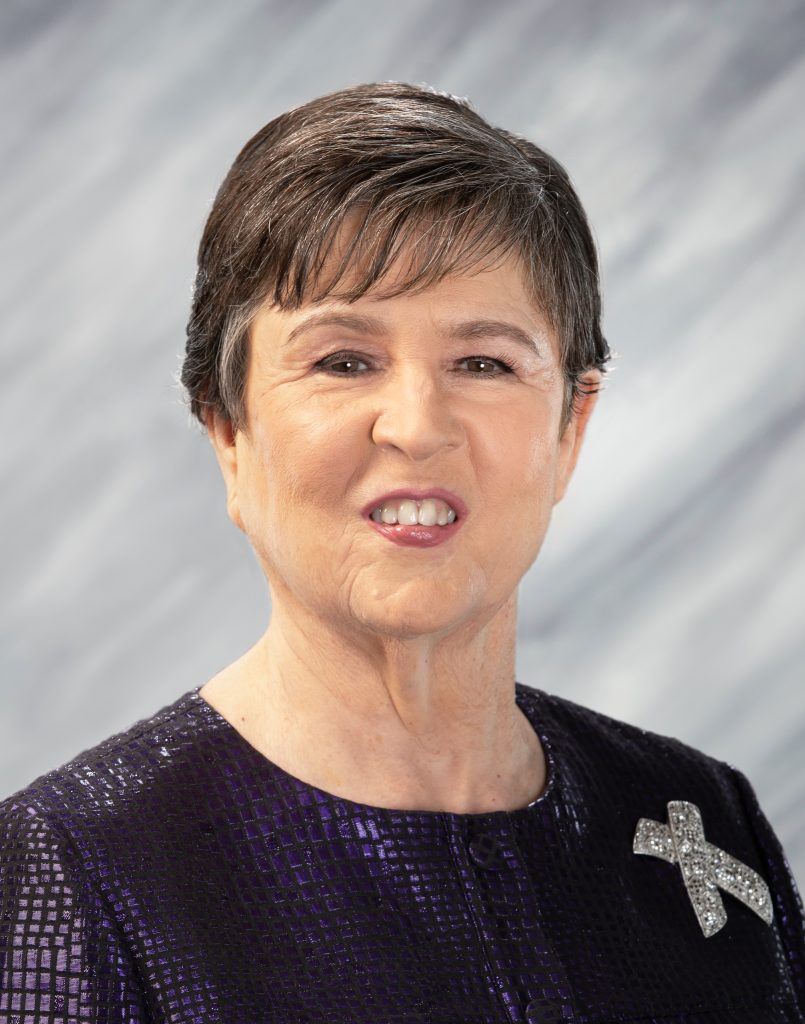
Harbor Commission president to focus on environmental, and community programs Sharon L. Weissman ushered in the start of her term as Harbor Commission president on Thursday, August 11, 2022 by accepting the gavel and announcing an agenda of environmental, community, and workforce goals for the year ahead at the Port of Long Beach. As head of the Board that sets policy for the Port, Weissman said she wants to sharpen the Port’s environmental focus by ensuring it works toward meeting a goal of deploying all zero-emissions cargo-handling equipment by 2030 and zero-emissions drayage trucks by 2035. She succeeds Harbor Commissioner Steven Neal, who served as the Board’s President for the past 12 months. Weissman also said she wants to increase the Board’s support of the Port’s community grants and sponsorship programs, in addition to educational outreach programs such as the Academy of Global Logistics at Cabrillo High School in West Long Beach and the ACE Academy at Jordan High School in North Long Beach. “I know we can make real progress on the goals I have outlined because we have an exceptional staff who have been working on many of these issues and making real progress long before I joined the Commission,” said Weissman, who was appointed to the Board in 2020. “The Harbor Commission is a deliberative body that works together, and I have no doubt we will carry on in building upon the strong foundation we have here.” “Congratulations to president Weissman for continuing a long legacy of strong leadership on the Harbor Commission,” said Port of Long Beach Executive Director Mario Cordero. “We look forward to collaborating with her in fulfilling an ambitious agenda that will improve the lives of the people who work at the Port and our surrounding communities.” In her opening remarks, Weissman said she also planned to focus on: Exploring whether to build an outdoor amphitheater in partnership with the Long Beach Symphony on vacant land adjacent to the Queen Mary and the Carnival Cruise Terminal on Pier H, pending a decision by the Long Beach City Council on whether to seek transfer of oversight of the property to the Port; Improving working conditions for the 20,000 truck drivers who serve the San Pedro Bay ports complex by increasing efficiency and working to secure state and federal financial assistance to purchase zero-emissions trucks; Working with Metro and the Gateway Cities Council of Governments to make the 710 Freeway safer, less congested and cleaner, while also reducing impacts on neighbors and improving cargo flow; and Resuming in-person Board meetings, public events, employee gatherings and other Port programs when safe.
CLARK Material Handling Company exits ITA

Industry sources are reporting that CLARK Material Handling Company has apparently departed from the Industrial Truck Association (ITA) which represents the North American Industry and its supply base. Material Handling Wholesaler has reached out to CLARK Material Handling Company and ITA and is awaiting additional comment. We did receive email correspondence from Jeff English, CLARK General Council and Secretary and he said, “CLARK has no further comment at this time.” CLARK Material Handling Company is headquartered in Lexington, KY. They were a founding member of ITA over 70 years ago. CLARK was founded in 1917 with the first Tructractor built in Buchanan, Michigan by employees of the CLARK Equipment Company. The Tructractor was the world’s first internal combustion-powered industrial truck. The Industrial Truck Association is an organization of industrial truck manufacturers and suppliers of component parts and accessories that conduct business in the United States, Canada, and Mexico. Members gain access to exclusive member services, such as industry engineering practices, statistical reporting, market development, training, and networking.
U.S. Rail Traffic for the week ending August 6, 2022
The Association of American Railroads (AAR) has reported U.S. rail traffic for the week ending August 6, 2022. For this week, total U.S. weekly rail traffic was 496,526 carloads and intermodal units, down 2.6 percent compared with the same week last year. Total carloads for the week ending August 6 were 230,573 carloads, down 1.6 percent compared with the same week in 2021, while U.S. weekly intermodal volume was 265,953 containers and trailers, down 3.4 percent compared to 2021. Four of the 10 carload commodity groups posted an increase compared with the same week in 2021. They included grain, up 1,809 carloads, to 19,916; nonmetallic minerals, up 633 carloads, to 34,409; and farm products excl. grain, and food, up 378 carloads, to 15,618. Commodity groups that posted decreases compared with the same week in 2021 included miscellaneous carloads, down 2,260 carloads, to 7,901; chemicals, down 1,385 carloads, to 32,287; and coal, down 1,076 carloads, to 65,812. For the first 31 weeks of 2022, U.S. railroads reported a cumulative volume of 7,131,393 carloads, down 0.1 percent from the same point last year; and 8,178,585 intermodal units, down 5.7 percent from last year. Total combined U.S. traffic for the first 31 weeks of 2022 was 15,309,978 carloads and intermodal units, a decrease of 3.2 percent compared to last year. North American rail volume for the week ending August 6, 2022, on 12 reporting U.S., Canadian and Mexican railroads totaled 327,633 carloads, down 0.1 percent compared with the same week last year, and 354,967 intermodal units, down 1.2 percent compared with last year. Total combined weekly rail traffic in North America was 682,600 carloads and intermodal units, down 0.7 percent. North American rail volume for the first 31 weeks of 2022 was 20,917,514 carloads and intermodal units, down 3 percent compared with 2021. Canadian railroads reported 74,899 carloads for the week, up 3.2 percent, and 73,082 intermodal units, up 6.7 percent compared with the same week in 2021. For the first 31 weeks of 2022, Canadian railroads reported a cumulative rail traffic volume of 4,447,124 carloads, containers, and trailers, down 3.5 percent. Mexican railroads reported 22,161 carloads for the week, up 4.8 percent compared with the same week last year, and 15,932 intermodal units, up 2.7 percent. Cumulative volume on Mexican railroads for the first 31 weeks of 2022 was 1,160,412 carloads and intermodal containers and trailers, up 1.3 percent from the same point last year. To view the weekly rail traffic charts, click here.
Brown and Caldwell announce new COO

Euan Finlay brings 25 years of driving operational excellence Brown and Caldwell just announced that Euan Finlay has been promoted from senior vice president to chief operating officer (COO), effective immediately. A senior executive with 25 years of experience, Finlay excels in leading organizations and teams to deliver excellence to clients while driving sustainable growth. Throughout his career, he has held executive roles in operations, design, and construction businesses in numerous international locations focused on developing client solutions for environmental, water, and wastewater infrastructure. He has led multi-million-dollar businesses, managed company-wide project delivery, and directed mergers and acquisitions as a Fortune 500 company executive. Before joining the firm in 2019 as director of business transformation, Finlay was an operations executive for a leading provider of design, design/build, and program management services. Brown and Caldwell CEO Rich D’Amato commented on the promotion, “Euan has a strong track record of challenging organizations to achieve their potential,” he said. “As Brown and Caldwell continues to evolve and grow, Euan’s operations expertise will be a key driver in building our future success to better serve clients, recruit and retain top talent, and positively impact our communities.” As COO, Denver-based Finlay will interface with the firm’s leadership to ensure strategic and technical objectives translate to operational capabilities aligned with business targets. Furthermore, he will play a key role in ensuring cultural imperatives are communicated and supported operationally throughout the 1,800 employee-owned company.
OpX leadership network offers updated FAT Guidance

Introducing the newly revised One Voice Factory Acceptance Tests – Protocols for Capital Equipment in the CPG Industry work product, designed to assist consumer packaged goods (CPG) companies and OEMs improve the factory acceptance test (FAT) process for all. This critical industry guide was developed by the OpX Leadership Network convened by PMMI, The Association for Packaging and Processing Technologies. The Factory Acceptance Tests work product is designed to resolve FAT criteria, expectations, and miscommunications that often result in unbudgeted costs in travel and material, increased timelines, and overall confusion for CPGs and OEMs. This update includes new leadership guidance, an additional review of responsibilities for both OEMs and end users, as well as the integration of the Virtual FAT work product, now an appendix versus a stand-alone product. “When conducting an effective FAT, clear communication between all parties is critical,” says Bryan Griffen, senior director, industry services, PMMI. “This latest update helps streamline that communication and facilitate a more productive FAT, regardless of whether it is virtual or in-person.” The OpX Leadership Network was founded in 2011 by PMMI to ensure CPG companies and OEMs are well connected and well prepared to solve common operational challenges, make smarter decisions, and achieve operational excellence. The revised FAT work product, as well as other operational solutions, are available for free download at opxleadershipnetwork.org/projects/download.
HyLite LED NexGen Arc-Cob lamps
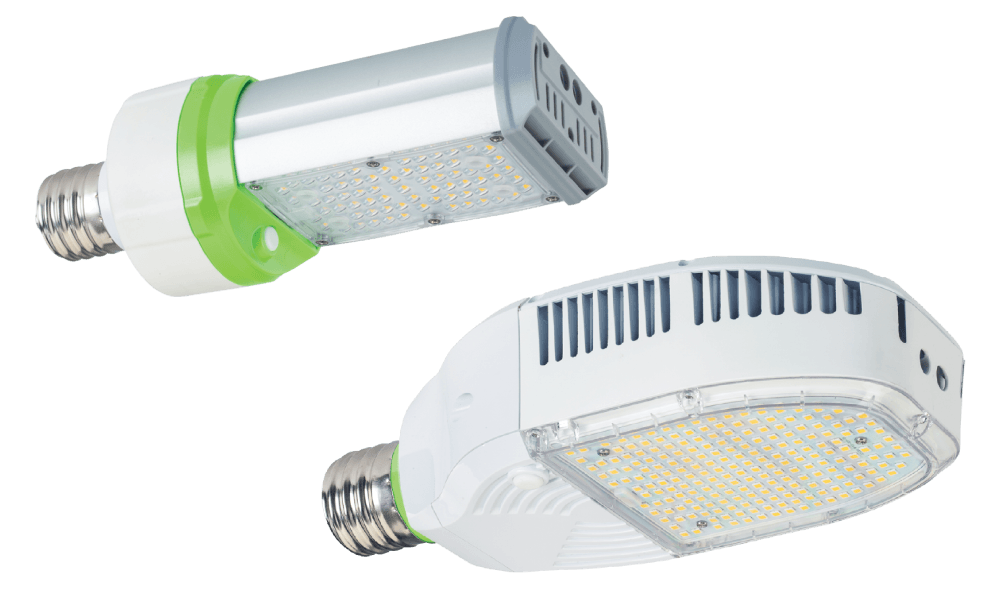
The NexGen LED Arc-Cob Lamps are heavy-duty, industrial-grade lamps with highly efficient lighting design and offer excellent illumination all around. Saving between 67%-90% they significantly reduce energy consumption and re-lamping costs. designed for easy installation in new and existing fixtures, the NexGen LED Lamps are suitable for damp locations and for fully enclosed fixtures which make them excellent for use in a variety of applications. The NexGen Arc-Cob Lamp comes in the most popular wattages of 30W, 40W, 50W & 100W that replace HID equivalent from 100W to 400W of traditional HID lighting. The NexGen Arc-Cob Lamps have a universal input voltage of 100-277V or 120-347V which ideally makes them for use anywhere in the world. The NexGen Arc-Cob Lamps are ideal for the replacement of traditional CFL, MV, HID, and HPS Lamps. Quick and easy installation makes it easy to retrofit into the existing socket. With a lamp life of up to 60,000 hours, they significantly decrease maintenance and disposal costs. The NexGen Arc-Cob Lamps are designed for reliability and optimal performance, the NexGen Arc-Cob Lamp features 120° of clean, bright light. With a 350° rotatable base, it provides users with flexibility while increasing visibility and security through even illumination. The NexGen Arc-Cob Lamp significantly reduces energy use, maintenance costs, and environmental impact while providing the highest quality of light.
Women In Trucking Association announces Truck Giveaway sponsored by Arrow Truck Sales
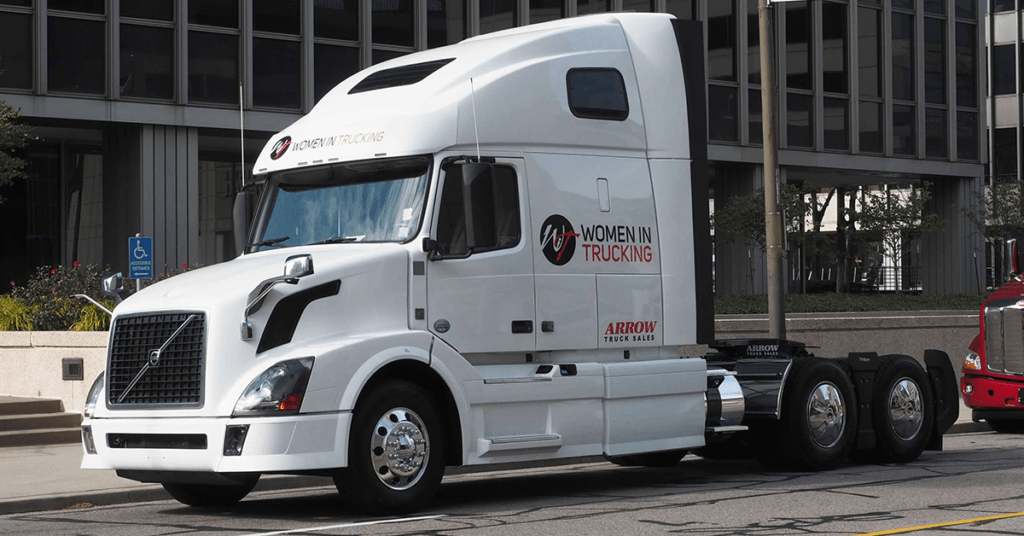
The Women In Trucking Association (WIT) has announced its second truck giveaway in partnership with Arrow Truck Sales. The truck is being donated by Arrow Truck Sales of Kansas City, Mo. On March 24, 2023, five years after the first truck giveaway, Ellen Voie, president and CEO of WIT will hand the keys over to another deserving professional driver. The giveaway will take place at the annual “Salute to Women Behind the Wheel” event at the Mid-America Trucking Show at the Kentucky Exposition Center in Louisville, Ky. “Handing the keys of a truck to a deserving female driver is one of the highlights of my career,” said Voie. “Without the generosity of Arrow Truck Sales, we wouldn’t be able to create a new owner-operator who may someday have her own fleet! The truck giveaway will be one of the most exciting events of the year.” Arrow Truck Sales is a source of used heavy- and medium-duty trucks with locations across the U.S. and Canada. It supports the mission of WIT as a gold-level partner of the association. “Arrow Truck Sales is proud to support the mission of Women In Trucking and being able to provide a truck for a worthy female driver is something that we are very excited about,” said Jim Taber, Arrow’s sales operation manager and WIT board member. Applications for the 2023 Truck Giveaway are open until Nov. 30, 2022. The applicant must be at least 23 years old and hold a valid commercial driver’s license and be a member in good standing of WIT before October 31, 2022. To qualify, a driver must complete an application form to verify eligibility and write a short essay on why it is important to attract more women into the trucking industry. Examples of ways the driver has encouraged women to consider a career in trucking will show her or his support for the mission of WIT.
Alta Equipment Group Inc. reports Second Quarter 2022 financial results and raises 2022 Guidance for Adjusted EBITDA

Second Quarter Financial Highlights: (comparisons are year over year) Total revenues increased 38.9% year over year to $406.5 million Construction and Material Handling revenue of $271.0 million and $135.5 million, respectively Product Support revenue increased by $23.5 million year over year to $110.0 million Record second quarter financial results primarily due to strong demand for equipment and product support growth Net income of $5.4 million available to common shareholders compared to a loss of $(15.8) million in 2021 Adjusted basic and diluted net income per share* of $0.21 compared to a loss of $(0.06) in 2021 Adjusted EBITDA* grew 45.3% to $41.4 million, compared to $28.5 million in 2021 Alta Equipment Group Inc., a provider of premium material handling and construction equipment and related services, today announced financial results for the second quarter ended June 30, 2022. CEO Comment: Ryan Greenawalt, Chief Executive Officer of Alta, said “As a result of the ongoing strong demand in our end-user markets, solid execution, flexible business model, and the positive contributions from our growth initiatives, we delivered record results for the second quarter. Total revenues increased38.9%, or $113.8million, to $406.5million, and Adjusted EBITDA also increased significantly from a year ago. We also achieved $5.4 million of GAAP net income for the quarter. We are seeing significant strength in our Construction segment and our material handling business is also performing well. As a result of our performance in the second quarter and our visibility going forward, we have raised our Adjusted EBITDA guidance for the year.” In terms of our market outlook, Mr. Greenawalt noted “Despite the headline economic news, concerns about a recession, our business indicators remain robust for our end-user markets. Project activity across all our regions remains solid and our industry’s business cycle remains in growth mode. Our large level of new equipment sales for the quarter is indicative of pent-up demand for equipment that continues to manifest itself in historic levels of equipment sales backlogs. Our parts and service revenue lines are benefiting from an aging field population as we provide customers with best-in-class skilled technicians to keep their business operations up and running. We believe the finalization of the infrastructure bill will be an incremental benefit to our business in 2023 and beyond.” In conclusion, Mr. Greenawalt commented, “We have effectively executed our growth strategy over the past two years and our second quarter results reflect that success. On a trailing twelve-month basis, our acquisitions since the IPO have added $376 million in revenue and $42.4 million in Adjusted EBITDA to the enterprise. After quarter end we entered into a definitive agreement to acquire Yale Industrial Trucks, Inc. (“YIT”), a privately held Yale lift truck dealer with five locations in southeastern Canada. The YIT deal is very consistent with our strategy to increase the scale of our business and will establish a presence for Alta in an international market for the first time. Our balance sheet is very solid and will support further acquisition activity as well as our new capital allocation policy, which includes paying a regular quarterly dividend and a share repurchase program.” The full year 2022 Financial Guidance: The Company increased its guidance range and currently expects to report Adjusted EBITDA between $147 million and $152 million, net of new equipment floorplan interest, for the full year of 2022. This is an increase from between $137 million and $142 million, as previously expected. Recent Business Highlights: On July 29th, the Company acquired the stock of YIT, a privately held Canadian equipment distributor with locations in Ontario and Quebec. YIT generated approximately $46.6 million in revenue and adjusted EBITDA of $9.4 million in the trailing twelve months through May 2022. The implied enterprise value of the acquisition is estimated to be approximately $33.5 million, subject to post-closing purchase price adjustments. The Company’s Board approved the initiation of a regular quarterly cash dividend for each of the Company’s issued and outstanding shares of common stock. The common stock dividend is $0.057 per share or approximately $0.23 per share on an annualized basis. The first common stock dividend will be payable on August 31st, 2022 to shareholders of record as of August 15th, 2022. The Company’s Board approved a share repurchase program authorizing Alta to repurchase shares of its common stock for an aggregate purchase price of not more than $12.5 million.
American Staffing Association elevated to Ambassador in OSHA Safety Program

The American Staffing Association was promoted to ambassador status in recognition of its longstanding alliance with the Occupational Safety and Health Administration during a signing ceremony today. Ambassador status reflects OSHA’s recognition that an alliance participant has built, and will continue to maintain, a productive cooperative relationship with the agency. As an ambassador to OSHA’s Alliance program, ASA will continue to work with OSHA to: Help staffing firms, host employers, and temporary workers recognize and prevent workplace hazards Speak, exhibit, or attend OSHA or ASA conferences, local meetings, webinars, or other events Share information among OSHA personnel, staffing industry safety and health professionals, and ASA member companies regarding temporary worker safety best practices “The health and safety of temporary workers is a top priority for our member companies in the staffing and recruiting industry,” said Richard Wahlquist, president and chief executive officer at ASA. “We are proud to take the next step in our continued partnership with OSHA as we work to ensure temporary workers can do their jobs safely.” ASA signed a formal alliance with the Occupational Safety and Health Administration in 2014 to promote awareness of health and safety measures in the workplace, including the Temporary Worker Initiative, Safe and Sound Campaign, and Safety Matters web page. The ASA Safely Back to Work campaign also provides employers with resources and guidance regarding Covid-19 prevention in the workplace.
ARA forecast remains bullish on equipment rental revenue growth despite headwinds
Today’s economic indicators are mixed and uncertain, but all continue to point toward significant growth for equipment rental revenue in the U.S. according to the latest quarterly update of the five-year forecast released by the American Rental Association (ARA). The update, released Aug. 3, projects equipment rental revenue, including the construction and general tool segments, to grow 11.2 percent to nearly reach $55.9 billion in 2022. ARA expects growth of 6.2 percent in 2023, 2.5 percent in 2024, 3.3 percent in 2025, and 3.7 percent in 2026 to total more than $65.1 billion. “Rental revenue continues to experience significant growth, despite some headwinds in 2022. The longer-term forecast, while showing slower growth than this year, remains bullish. It is generally a good time to be in the equipment rental industry,” says Tom Doyle, ARA vice president for program development, “In these times of higher uncertainty, it is prudent to closely watch the driving factors to the forecast for changes that will affect build schedules for original equipment manufacturers (OEMs) or demand for rental companies. Depending on how long we have high inflation, supply chain constraints, labor shortages, and climbing interest rates, those econometric drivers can have an impact on the rest of 2022 and the outlook for 2023,” Doyle says. For construction equipment rental revenue, the forecast calls for a 12.5 percent increase in 2022 to surpass $41.6 billion, with growth slowing to 7 percent in 2023, 2 percent in 2024, 3 percent in 2025, and 3 percent in 2026. General tool growth is expected to be 7.4 percent in 2022 and then remain fairly steady with 5 percent growth in 2023, 3 percent in 2024, 5 percent in 2025, and 5 percent in 2026. The ARA forecast for equipment rental revenue in Canada, combining construction and general tool revenue, closely mirrors the outlook for the U.S., projecting growth of 14.4 percent in 2022 to $4.7 billion, 6 percent in 2023, 2 percent in 2024, 3.4 percent in 2025 and 3.3 percent in 2026 to exceed $5.4 billion.
ASSP encourages involvement in Safe + Sound Week
Everyone can play a role in minimizing workplace risks that lead to injuries, illnesses, and fatalities. The American Society of Safety Professionals (ASSP) encourages involvement in Safe + Sound Week, an annual workplace safety campaign spearheaded by the Occupational Safety and Health Administration (OSHA). The nationwide event takes place Aug. 15-21. More than 1,300 businesses have already registered online to join the event, which recognizes the successes of workplace safety and health programs and provides information on how to keep America’s workers safe. “It’s easy to take for granted that our family members will return home safe and healthy at the end of the workday,” said ASSP President Christine Sullivan, CSP, ARM. “That is far from a guarantee, and employers must recognize the value of safety and health management systems to protect workers across all industries.” According to the U.S. Bureau of Labor Statistics, more than 5,000 workers are killed each year on the job (a rate of 14 per day) and more than 3.6 million suffer a serious job-related injury or illness. ASSP’s 36,000 members help organizations around the world implement safety and health programs to proactively identify and manage workplace hazards before they lead to problems. The results are increased sustainability, higher employee satisfaction, and an improved bottom line for businesses. “The Safe + Sound campaign draws attention to the responsibility we all have to make our workplaces safer, and we’re proud to be a partner in that effort,” Sullivan said. Join ASSP’s social media outreach on Twitter and Facebook to share resources and bring value to the OSHA campaign by using #SafeAndSoundAtWork.
Port of Long Beach has most active July on record

Empties boost increase as consumer spending slows The Port of Long Beach had its busiest July on record despite a cooldown in consumer spending. Dockworkers and terminal operators moved 785,843 twenty-foot equivalent units in July, a slim 0.13% increase from the previous record set in July 2021. Imports declined 1.8% to 376,175 TEUs, while exports were down 0.5% to 109,411 TEUs. Empty containers moved through the Port were up 2.8% to 300,257 TEUs. “We are continuing to seek solutions to improve efficiency as a record-breaking number of containers moves through the Port,” said Port of Long Beach Executive Director Mario Cordero. “We hope to relieve some of the stress points by continuing to support a transition of the entire supply chain to 24/7 operations and ensuring our industry partners can track containers with our new Supply Chain Information Highway data solution.” “Our waterfront workforce continues to ensure trade moves through the Port at a record-setting pace,” said Long Beach Harbor Commission President Sharon L. Weissman. “We continue to strengthen our partnerships with labor and industry to ensure our spot as a leader in trans-Pacific trade.” The economy is not necessarily in a recession, but weaker domestic demand confirms it is rapidly downshifting amid stubbornly high inflation and aggressive tightening by the Federal Reserve. Consumer spending rose a modest 1% nationally, attributed to an increase in spending on services that offset a decline in purchasing goods. With the July result, the Port of Long Beach has broken monthly records in six out of the last seven months. The Port has moved 5,793,621 TEUs during the first seven months of 2022, up 4.6% from the same period last year. For complete cargo numbers, visit polb.com/statistics.
ARA adds to leadership team focused on Rental Workforce Development initiatives

The American Rental Association (ARA) announces Erika Singleton as the association’s new Workforce Development Manager. With a background in human resources management, employee training, and program marketing, her role will work to address the industry labor shortage by promoting rental as a career. “We’re elated to have Singleton on board,” said Tony Conant, ARA CEO. “She’s the perfect fit to support our current and future workplace initiatives due to her extensive experience and her proven success in driving new strategies and solutions forward.” The current ARA workplace initiatives include an industry job portal, best practices documents, customizable job description templates, employee recruitment videos, and an employee recruitment website — exclusively available for ARA member access. Singleton will also serve as a resource on additional topics, such as the following: Rental industry public speaking – Tips for speaking at colleges, trade shows, career fairs, and more. Attending career and job fairs – Advice on how to best promote rental careers among various audiences. Workforce solutions – Guidance and resources for attracting quality candidates for rental industry careers and temporary employment opportunities. Alternative funding programs – Understanding special grants, funding, and local and state programs available for employers to use. “Adding Erika to our team will enhance current workplace initiatives,” said James Auerbach, ARA’s Vice President for the Event Segment and Rental Industry Workforce Development department. “She is focused on continuing to expand her knowledge and putting her expertise into practice in her role with ARA.”
PS Logistics acquires Noble
The transaction further establishes PS Logistics in the 53-foot flatbed trailer market, enhancing its overlength service offerings throughout the U.S. PS Logistics just announced that its DMT Trucking LLC subsidiary has completed the acquisition of Noble LLC, Noble Trucking LLC, and Noble Logistics LLC (collectively “Noble”). The financial terms of the transaction were not disclosed. The transaction will further strengthen DMT Trucking’s operations in the U.S. The combination of DMT Trucking and Noble positions PS Logistics as one of the largest 53-foot lightweight flatbed carriers in the country, with over 400 power units and more than 1,000 trailers that will enhance its overlength service to existing and future customers within the PS Logistics’ freight network. Noble, headquartered in Scottsboro, Alabama, has over 100 trucks and 135 53-foot aluminum flatbed trailers, along with excellent drivers and a seasoned management team leading the company. The company was founded with one truck in 1962 by Sam Noble Sr. and was purchased in 2016 by his son Samuel and two long-term managers. Noble is committed to providing excellent service to its established customer base and to supporting its drivers. “We are proud to welcome Noble to the PS Logistics family,” said Scott Smith, chief executive officer and co-founder of PS Logistics. “We look forward to working with Noble’s strong team of drivers and operators while also continuing to deliver best-in-class service to its customers.” “We are happy to be partnering with PS Logistics and DMT Trucking,” said Samuel Noble Jr. “Over the last few decades, my father and our existing management team have built a successful trucking operation with dedicated employees that serve outstanding customers, and we will strive to continue that tradition with the same commitment to excellence. I have known the PS Logistics team for many years, and I look forward to working with them on their journey to become the preeminent flatbed carrier in the country.” Harold Smith, president, DMT Trucking, said, “PS Logistics has been a great partner for DMT Trucking, and we are thrilled to welcome Samuel and the entire Noble family to our company. PS Logistics has been very supportive of our drivers, customers, and operators, which has enabled us to significantly grow our business. We wouldn’t be where we are today without them, and we look forward to continuing our growth story with Noble, just as we have done with our prior 53-foot trailer acquisitions of Dale Mosley Trucking, Wilmar Trucking, and Daryl Thomason Trucking.” The Noble acquisition continues PS Logistics’ acquisition strategy of partnering with family-owned and driver-focused companies within the flatbed trucking segment. Since 2014, PS Logistics has successfully acquired and integrated 26 trucking and logistics operations.