
Advance Lifts highlights its Industrial Powered Turntables (TPH &TPL)

Motorized turntables allow products to be rotated safely and more accurately Advance Lifts, a North American manufacturer of industrial scissor lift tables and dock lifts, highlights its Industrial-Powered Turntables (TPH &TPL), designed to provide unparalleled efficiency, safety, and durability when rotating heavy loads in the material handling industry. Turntables are used in positioning jobs where loads are regularly rotated. There are two basic types of standard-duty turntables: non-powered and powered. Industrial-powered turntables are used when the rotational effort of a job is too high for a manual turntable. Powered turntables are available in both low-profile and high-profile configurations. Low-profile powered turntables (TPL) are used for power applications where low platform height is essential. There are 16 models with edge load maximums ranging from 50 to 1,400 lbs. Load capacities range from 2,000lbs to 10,000lbs with platform diameters ranging from min 24”/max 48” to 85”/max 96”. Circular platforms are required for this configuration because the drive motor is located at the platform’s edge and projects above the platform. The platforms are supported by lifetime lubricated roller-bearing cam followers. High-profile powered turntables (TPH) are used for power applications where low platform height is less important or the loads are square. There are 16 models with edge load maximums ranging from 100 lbs to 1,200 lbs. Load capacities range from 2,000 lbs to 10,000 lbs, and platform sizes range from 24×24” to 96×96”. Standard rectangular and round platforms are available. These heavy-duty rotating platforms have a drive motor under the platform. Inverted casters with tapered roller bearings or cam followers support them.
How Self-Nurturing Therapy can make you a better leader Seven steps to practice now

Navigating leadership brings a unique set of challenges and opportunities. A young executive, Sarah, faced complaints from her team, who described her as dismissive and devaluing. She was initially blindsided and defensive, yet, as do excellent leaders, she focused on improvement–learning that how leaders make people feel is essential to retention, culture, and ultimately profit. As frontrunners in your field, you know strategies to build your team, yet something is preventing the desired outcome. What is getting in your way? Failure to emotionally connect with your team members makes “lonely at the top” inevitable and creates a culture vulnerable to disconnection, dissatisfaction, and lack of cohesiveness. On the other hand, a positive connection with your team brings an entirely new level of positive, productive, and happy relationships. Rather than focusing solely on strategies to improve interactions, a new approach called Self-Nurturing Therapy (SNT) targets the part within you that carries the fear of vulnerability and acts as a gatekeeper to allowing meaningful emotional connection with others. How SNT Enhances Leadership Leaders learn to change their relationship with vulnerability rather than attempting to eliminate it. SNT encourages leaders to engage with their emotions, building resilience and capability. This emotional strength translates into better communication, sharing of creativity, and a more effective leadership style. Self-nurturing therapy is a process that teaches how to soothe your vulnerable part–specifically your inner child–and learn to thrive in relationships. Here are seven steps that leaders can practice now to enhance their performance: Get to Know Your Inner Child: Give your young self the attention she deserves. By acknowledging and soothing early wounds, leaders can reduce reactive response styles. Sarah, for example, discovered that her reaction to dismissiveness was a self-protective reaction rooted in a childhood of bullying. Sarah’s inner child was so anxious that the corporate strategies she had learned to communicate with team members were interrupted by her emotional state. To reduce reactivity, create a timeline of your life, identifying experiences where you felt shame or vulnerability. Knowing where your self-protection emerged reduces reactivity in interactions with others. Create Emotional Awareness. Leaders are taught the importance of communication, but without understanding your emotions, interactions will fall flat. To resolve this, reflect on what earlier experiences taught you about others. Do you see others as trustworthy and safe or risky and uncertain? Did safe people support you when bad things happened, or could you only count on yourself? Sarah identified that years of suffering from bullying left her feeling alone in her journey. She realized that interactions elicited fear that they would disappoint and an immediate internal reaction to keep conversations short and direct so they would end quickly. Create a Soothing Mantra. Negative early life experiences that are left unprocessed don’t evaporate. Instead, the inner child holds them tight, a reminder to never put yourself at physical or emotional risk again. Some things would have been helpful to you as a child that you never received. Practice acknowledging and accepting emotions from your early years. Start by asking yourself, “What does my inner child need to hear when she is worried?” You’ve got this, or That was then, this is now, offer reassurance and empower a secure response. Think of Your Inner Child as Your Gatekeeper. Excellent leaders have a business gatekeeper to ensure they are insulated from the risk of overscheduling or losing focus. Your inner child is the gatekeeper to how much you allow yourself to care for and invest in relationships emotionally. As a competent adult, you hold the capability to assess those trustworthy enough to be part of your inner circle. Write a list of people who have shown integrity and take a moment to acknowledge them. Notice how your interaction improves when you assure your gatekeeper that you are safe, secure, and confident in your ability to assess others. Purposefully Value Your Feelings. What did your child-self need to cope during difficult times but was denied? For some, like Sarah, it was knowing they were safe, while for others, it was hearing, “You’re loved”. Good parents value what their children need and feel. As an adult, you can self-deliver what you need. Rewire negative thought patterns rooted in your early experiences with positive messaging. Were you taught to believe that other people’s wants and desires were more important than your feelings? Tell yourself, “You matter.” Were you taught to believe harmony was more important than caring for yourself? Know, “You. Matter”. Thrive Emotionally at Work. See team members as worthy of having a meaningful relationship with you. While your inner child tries to protect you from caring too much, it disrupts the soft skills that make good leaders great. Communication without empathy and understanding is risky for leaders. Instead, practice curiosity about what people are experiencing and, equally as important, what emotional response these interactions evoke within you. Use open-ended questions: “How was your weekend?” rather than “Hope you had a good weekend.” Leaders who know their people receive increased investment from them and a willingness to go the distance when asked. Learning to Tolerate Emotions Requires Practice. If you have a loud inner child determined to protect you from vulnerability, showing them that you’re taking the lead requires practice. Avoid becoming frustrated with yourself and instead respond with self-kindness. It’s been a journey to achieve your leadership goals, and you are constantly growing. Mastering comfortability with emotions leads to joy for self and high-performance teams and requires practice. Integrate reflective journals, conversations with trusted friends, and meditation or yoga to support you through this rewarding process. Celebrate the moments when you notice emotions, feel the discomfort, and remind yourself, “Hey, I’m okay!” In summary, leaders who engage in SNT experience numerous benefits that enhance their effectiveness and happiness in their role. Leaders can create a positive, empowering environment that drives organizational success by healing past traumas and fostering present-moment awareness. About the Author: Julie Gowthorpe, PhD, RSW, is a public speaker and author. In addition to her private practice, Gowthorpe contributes her expertise
Farrukh Ghani joins Hyundai Material Handling as Director of Dealer Development & National Accounts

Hyundai Material Handling hired Farrukh Ghani as the new Director of Dealer Development and National Accounts. Mr. Ghani brings more than 25 years of industry experience to the company. His areas of responsibility will include leading the company’s efforts to strengthen its dealer network, add to its growing list of national accounts, and continue its more aggressive approach to sales and marketing. Mr. Ghani has held key leadership positions in the material handling industry. Previously, he served as Director of Channel Development for Doosan Industrial Vehicle America, helping the company achieve record growth and market share year-over-year from 2016 to 2023. Before that, he served as vice president and chief financial officer for Clark Material Handling Company, overseeing and enhancing diverse departments such as finance, sales, IT, order management, and logistics. “I’m very excited to bring my years of experience to Hyundai, its leadership team, and an incredible lineup of dealers,” said Mr. Ghani. “My goal is to help continue the company’s impressive growth and its position of excellence and innovation in the material handling industry.” His wealth of experience also includes creating and implementing successful programs in Sales and Marketing, Strategic Planning, and Global Operations. His proven record of success covers a wide range of business sectors, including manufacturing, supply chains, logistics, engineering, and finance. “We’re extremely proud to bring on someone of Farrukh’s experience and years of success,” said Lewis Byers, Executive Vice President/COO of Hyundai Material Handling. “We believe he’s going to make a tremendous difference in our organization and with our dealers and national accounts. As an organization, we’re committed to growth, building stronger relationships with both our dealer partners and customers, and increasing our North American market share. Farukh will play a key role in all of this.”
The New Warehouse goes LIVE on LinkedIn today discussing The Warehouse Revolution
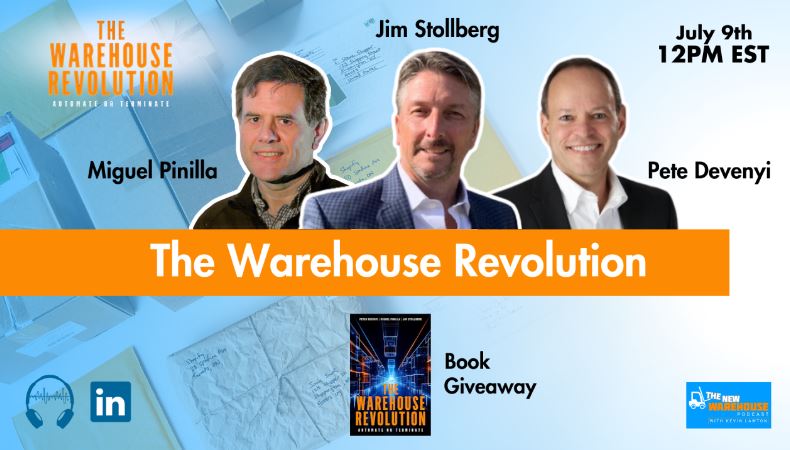
The New Warehouse, with host Kevin Lawton, will host a special LIVE LinkedIn podcast with the authors of The Warehouse Revolution—Automate or Terminate at noon EST. Kevin will be joined by authors Miquel Pinilla, Jim Stollberg, and Pete Devenyi. To join, click this link or the image below to take you to the LinkedIn event. We will go live at noon EST, so just hit the join button, and you can listen in. Have questions? Please reply to this email address or raise your hand in the event and ask them yourself.
500 Episodes!!! Takeaways from five years of the podcast

500 episodes! I cannot believe it, but here we are five years and 500 episodes later. I didn’t think the podcast would go this far when I released episode 1 in 2019, but here we are. I have to say that I owe it to you, the listener. Without the listener finding value somewhere in the podcast, well the motivation probably would have died down at some point. However, the consistent feedback that listeners have learned something through our content has been a great motivator. For this episode, I’m diving into some of my takeaways from the last 500 episodes. I’d love to hear some of your thoughts in the comments as well. Key Takeaways Step outside your comfort zone. When I started the podcast, I was unlikely to volunteer to speak in public, unlikely to volunteer to present in front of a group, and even unlikely to attend a networking event or approach someone I didn’t know at an event. The podcast pushed me out of that comfort zone and has been incredibly rewarding. I’ve now done over 500 interviews with people who essentially started out as strangers, have grown my network immensely, and even spoke in public at multiple events. When you get butterflies in your stomach, push forward and do the thing. The warehousing industry is incredibly exciting. Over the last five years, I have had a unique perspective to see many of the innovations and technology that are pushing our industry further. One of the most exciting parts of this is the fact that many of the cutting edge technologies that are coming into the world are finding practical applications within the warehouse. It’s great to see where technology is meeting classic warehouse processes and making those processes better for the workers themselves. Embrace the warehouse community! One of the reasons I started the podcast was to try to connect with more people in the warehouse, and I’m happy to say that there is a thriving community in the space. Many people have been so willing to help me along the way through teaching and connecting. It has been great to be able to build such a helpful network and I encourage you to embrace the community as well. Connect with that person and reach out! Once again, thank you so much for supporting the podcast! Be sure to stay tuned for the next 500.
Hyster announces latest electric forklift with integrated lithium-ion power
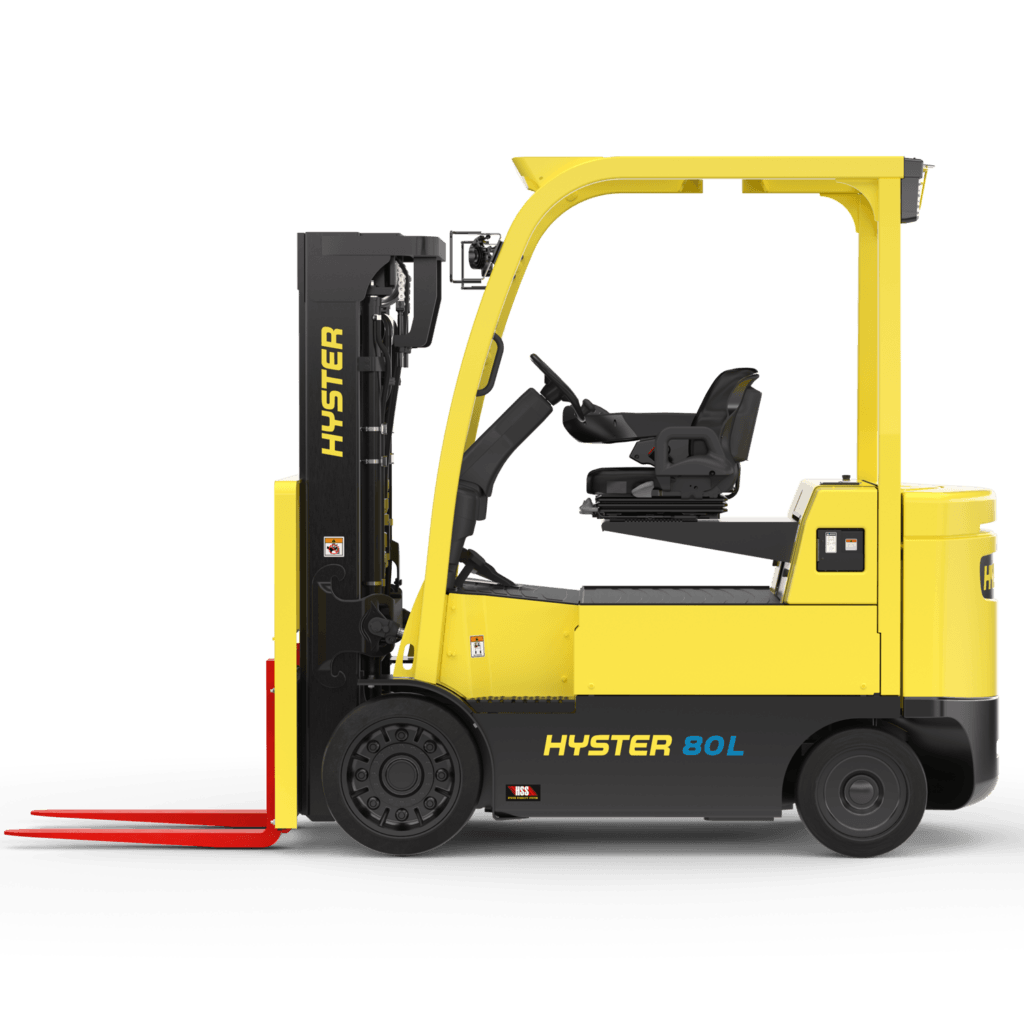
Hyster Company announces the latest addition to its lineup of forklifts with integrated lithium-ion power, the E80XNL. This 8,000-pound capacity cushion tire electric forklift joins four other Hyster models designed from the ground up around the form factor of a lithium-ion battery pack to offer a more spacious operator compartment and lower center of gravity. For heavy-duty operations looking for an electric alternative to internal combustion (ICE) trucks, the E80XNL provides performance they can count on, exceptional ergonomics, improved energy efficiency compared to lead acid models, zero tailpipe emissions, and low noise. The E80XNL is shorter than a comparable ICE model, enabling an improved turning radius and right-angle stack. Multiple battery sizes are available to equip trucks with the performance and run time each application requires. The largest battery can be fully charged in as little as 1 hour and 45 minutes with a 30kW charger, and estimated typical run times range from 5 hours and 45 minutes in heavy-duty cycles to as long as 11 hours in lighter-duty applications. Throughout the shift, batteries accept energy from regenerative braking to help improve run time. “As demanding indoor applications in paper and packaging, manufacturing, automotive and other industries face pressure to decarbonize, lithium-ion offers several key advantages that make it well suited to their duty cycle, including zero battery maintenance, fast charging and ability to top off with a quick opportunity charge during breaks,” says Joshua Eby, Product Technology Manager, Hyster. “But it’s about more than just providing enough performance to do the job with less environmental impact. Electrifying can also unlock ergonomic advantages and operator assistance features.” The size and shape of the lithium-ion battery pack enable a unique truck design with ergonomic and comfort benefits for the operator. The seat is positioned lower for additional headroom, and air-ride seat options support a smooth ride. The spacious operator compartment allows for more freedom to position feet to help keep operators fresh and productive throughout their shift. The E80XNL is available with Hyster Reaction™, an Edison award-winning technology package that helps reinforce forklift operating best practices and can be tailored to the needs of demanding fast-paced indoor environments. The solution enables forklifts to react to real-time conditions in a facility, proactively adjusting truck performance based on stability, detected obstacles, proximity to other equipment or pedestrians, and even location-specific rules – all while keeping the operator in ultimate control of the truck.
Combilift premiers the Combi-CCL
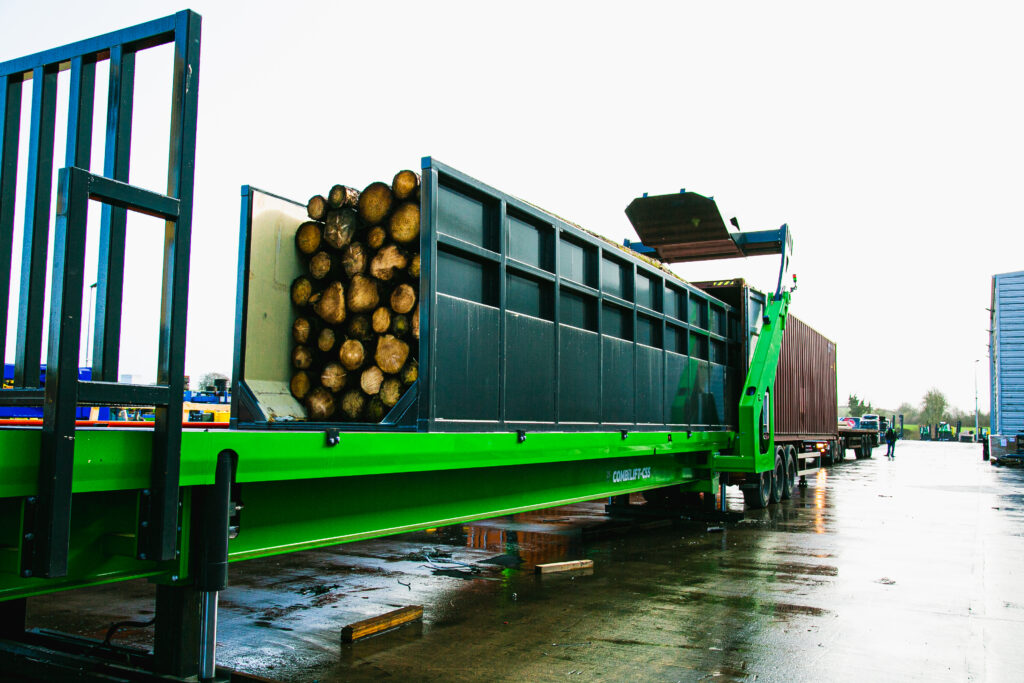
Following the launch of five new models in its 25th anniversary year in 2023, Irish materials handling specialist Combilift has already announced the premiere of yet another innovation. The Combi-CLL (Container Log-Loader) was recently exhibited at EXPO Richmond 2024, one of America’s leading forest product industry trade shows. The concept and operation of the Combi-CLL are based on that of the Combi-CSS (Container Slip Sheet), which has been successfully deployed across numerous industries for the mechanized loading of long products such as packs of timber or steel into containers. This method reduces the risk of accidents to the workforce and product damage and is incredibly fast compared to other methods—one operator can fully load a 40’ container in under six minutes. The 65,000 lbs capacity electro-hydraulically powered Combi-CLL offers the same speed, safety, and product integrity benefits. It was designed to address the requirements of softwood and hardwood logs exporters, the nature and shape of which make them much trickier to handle than palletized or packed products. Logs can be individually lifted and pre-loaded into a robust, high-sided metal “tub” before the patented push-pull mechanism powers the tub into the container. Once inside, the hydraulic dropdown hatch is closed and locked into position to hold the logs securely in place, and the tub is retracted to allow the logs to settle within the container. Once again, Combilift has developed a customer-led solution with potential applications beyond the forestry and timber industries.
June 2024 Logistics Manager’s Index Report® LMI® at 55.3

Growth is INCREASING AT AN INCREASING RATE for: Transportation Prices. Growth is INCREASING AT A DECREASING RATE for: Inventory Costs, Warehousing Capacity, Warehousing Utilization, Warehousing Prices, and Transportation Utilization. NO CHANGE for: Transportation Capacity Inventory Levels are CONTRACTING. The Logistics Manager’s Index reads in at 55.3 in June of 2024, this is very slightly down (-0.3) from May’s reading of 55.6. The overall index has expanded for seven consecutive months and in 10 of the last 11 months. While the overall index has not changed significantly this month, there has been considerable movement in some of the individual metrics. Inventory Levels (+0.8) contracted for the second month in a row at a rate of 47.4. With inventories down we also saw associated dips in the expansion rate of Inventory Costs (down 1.6 points to 63.6) and a very notable drop in Warehousing Utilization (down 11.4 points to 52.6). This slow down is counteracted by a tightening of both Warehousing Capacity (-3.0) at 52.6 and Transportation Capacity (-7.3) which read in at 50.0 – the first time this metric has moved out of expansion since March of 2022 which was the last month before the freight downturn began in earnest. We also see a related increase (+3.2) in Transportation Prices, which at 61.0 are at their highest level since September of 2022. At an 11.0-point difference, Transportation Prices have not exceeded Transportation Capacity by this much since April of 2022. This marks the second consecutive month that prices have exceeded capacity, and Transportation Capacity has moved out of expansion and to “no change” at 50.0. If this trend continues – as one might expect with peak season coming – then we would be comfortable calling the end of the freight recession that has gripped the industry since the Spring of 2022. The freight recession is not technically over yet, but this is the is what the beginning of a recovery might look like. As will be discussed below, much of this expansion can be attributed to strong reports from Upstream respondents, as well as stronger readings in the second half of the month. Researchers at Arizona State University, Colorado State University, Florida Atlantic University, Rutgers University, and the University of Nevada, Reno, and in conjunction with the Council of Supply Chain Management Professionals (CSCMP) issued this report today. Results Overview The LMI score is a combination of eight unique components that make up the logistics industry, including: inventory levels and costs, warehousing capacity, utilization, and prices, and transportation capacity, utilization, and prices. The LMI is calculated using a diffusion index, in which any reading above 50.0 indicates that logistics is expanding; a reading below 50.0 is indicative of a shrinking logistics industry. The latest results of the LMI summarize the responses of supply chain professionals collected in June 2024. The LMI read in at 55.3 in June, down slightly (-0.3) from May’s reading of 55.6 and indicating a moderate rate of expansion in the overall index. This marks the tenth of eleven readings, and seventh consecutive reading of expansion in the overall index. As mentioned above, this increase was largely a function of positive movements in the transportation market contrasting with a moderate contraction in inventories and slowing rates of expansion in the warehousing market – particularly Warehousing Utilization which is down 11.4 points. Most of the growth came in the second half of the month however, particularly from Inventory Levels, which moved from contraction to expansion as June went on. The overall economy continues to be fairly nuanced, but has consistently pointed towards moderate growth, with some hope that interest rates may be revised down. The World Bank is optimistic that strong growth will continue throughout the year, revising their estimates for global GDP expansion up from 2.4% to 2.6% – largely on the strength of the U.S. economy which has led the world in the post-Covid period[1]. GDP growth for Q1 of 2024 was revised up to 1.4% in the last week of June. While this is up from the previous estimate of 1.3% growth, it is the slowest rate of expansion since the Spring of 2022. One of the primary factors in this contraction was a drawdown of inventories in Q1 – something that was reported through the LMI reports during that time[2]. The fact that inventories remained low through Q2, particularly in May and June when they contracted slightly, could foreshadow a slow rate of overall economic expansion in this most recent quarter as well. It is interesting that inventories were down when personal consumption expenditures (PCE) were up 2.6% from a year ago – the lowest rate for the PCE in three years and closing in on the Fed’s stated goal of 2%. However, when digging into the details we see that, while personal income was up 0.5%, spending was down 0.2% in May. The decline in spending was headlined by a 0.4% decrease in spending on goods[3] – something that may be reflected in contracting inventory numbers. Firms may be more willing to invest in inventories – particularly upstream – when interest rates come down. New weekly jobless claims in the U.S. were down to 238,000 in mid-June – down 5,000 from the week before. Conversely, continuing unemployment claims increased by 15,000 to 1.828 million which is the highest level since 2021. More broadly, the U.S. unemployment rate reached 4.0% in May – a level it has not seen since January of 2022. Economists believe that these are signs that the job market is softening and are hopeful they will result in the Fed cutting interest rates 1-2 times by the end of 2024[4]. The European Central Bank recently cut their interest rates to 3.75%. Observing the impact those cuts have on economic activity in the EU will be informative for the Fed in the U.S. Inventory Levels contracted very slightly at 47.4, which is slower than what we saw last month (+0.8). Interestingly, they contracted in the first half of the month (40.5) before turning
Port of Long Beach again named ‘Best West Coast Seaport
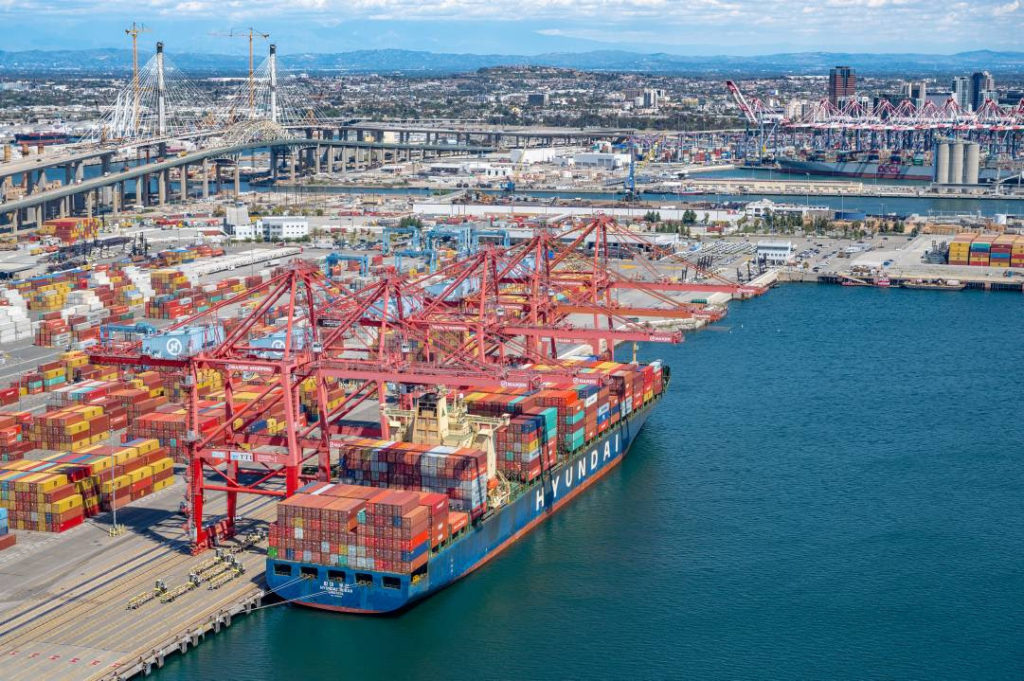
The sixth consecutive annual award from an international trade publication The Port of Long Beach has been named the Best West Coast Seaport in North America for the sixth year in a row by readers of the shipping trade publication Asia Cargo News. The honor was announced during the Asian Freight, Logistics, and Supply Chain Awards held June 25 in Shanghai. Asia Cargo News honors logistics industry members for demonstrating leadership and consistency in service quality, innovation, customer relationship management, and reliability. Importers, exporters, and logistics and supply chain professionals judge the awards. More than 15,000 readers of Asia Cargo News made the nominations for each category, then determined the winner from a list of eight finalists in each category. Find the full list of winners here. “We are grateful to once again be bestowed this honor,” said Port of Long Beach CEO Mario Cordero. “We appreciate the recognition as we continue to offer operational excellence and invest in Port infrastructure such as our Pier B rail facility and our many ongoing zero-emissions projects.” “We must thank our dockworkers, terminal operators, and every one of our supply chain partners for their diligent work and dedication,” said Long Beach Harbor Commission President Bobby Olvera Jr. “Thank you to Asia Cargo News and its readers for this award.”
Episode 499: Going Circular with Rich Bulger

Welcome to The New Warehouse Podcast. Today, Rich Bulger, the author of Going Circular: The Evolution of Reverse Logistics into a Competitive Weapon joins the show. Rich has recently earned a master’s degree in reverse logistics, a field he is deeply passionate about. His extensive background includes a 17-year career at Verizon Wireless, where he pioneered innovative reverse logistics programs. In this episode, Rich shares insights on reverse logistics, its transformative potential for businesses, and how it can be leveraged as a competitive advantage. The Journey to Reverse Logistics Mastery Rich Bulger’s journey into reverse logistics began with his military service and evolved through his extensive career at Verizon Wireless. He started in a temp role and eventually became the youngest director at Verizon. His early career highlighted the importance of adaptability, as seen when his first job was automated. Rich notes, “Just because the task went away, my value did not go away.” This adaptability became a cornerstone of his approach to reverse logistics. At Verizon, Rich implemented a successful retail trading program, leading to significant sales and customer satisfaction growth. He recalls, “The revenue generated from the sale of used devices was more than all the accessories that we sold on average.” This program boosted sales and promoted environmental sustainability by reducing landfill waste. Challenges and Innovations in Reverse Logistics Rich discusses the complexities of reverse logistics, emphasizing that it requires a unique set of skills and understanding. He highlights the growing importance of sustainability in consumer choices, especially among younger generations. “A study by Deloitte in 2022 showed that 70% of Gen Z and Millennials are aware of their carbon footprint and are actively taking steps to mitigate it,” he shares. This demographic shift underscores the need for businesses to adopt sustainable practices in their operations. Rich’s experience at Cisco further enriched his expertise, allowing him to manage international reverse logistics and introduce programs that turned cost centers into profit centers. “We put solar panels on reverse logistics,” he explains, illustrating how reverse logistics can be more than just a cost-saving measure but also a revenue-generating function. Going Circular with Reverse Logistics Looking ahead, Rich predicts that reverse logistics will become integral to business strategies, driven by economic and environmental imperatives. Companies will invest in circular logistics to meet sustainability goals and capitalize on the economic benefits. “Circular logistics is going to become more understood and more necessary,” he asserts. Rich also emphasizes the need for education and training in reverse logistics, noting the scarcity of formal programs. He recently completed a master’s degree in the field and wrote Going Circular to help bridge this gap. His book serves as a comprehensive guide for new professionals in the industry, providing essential knowledge and best practices. Key Takeaways on Going Circular When done correctly, reverse logistics transforms returns management into a competitive advantage. Sustainability is a significant driver for younger consumers. Circular logistics will become essential for businesses to meet sustainability goals. Education and training in reverse logistics are crucial for future success. The New Warehouse Podcast EP 499: Going Circular with Rich Bulger
Freightmate Ai exits stealth mode with pre-seed funding and new tech
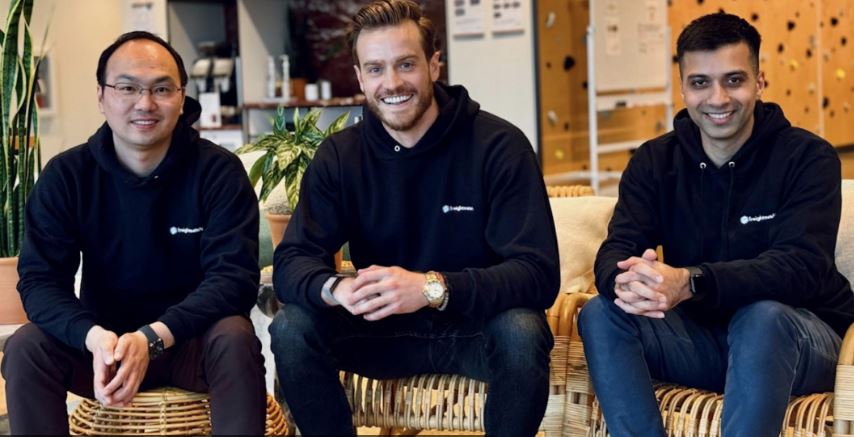
Company launches first automated tool for document management Freightmate Ai announced that it has secured a pre-seed funding round led by Wischoff Ventures and is releasing its first automated solution. The funds will enhance the features of its freight forwarding management system, which was developed by technology experts with experience from Geodis, Manhattan Associates, Amazon Global Logistics, and Flexport. “Freight forwarders coordinate global shipments from end to end from origin country to destination country, leveraging decades-old software with zero task automation, no real-time communication, with a very limited UX,” said Nichole Wischoff, founder and general partner at Wischoff Ventures. “While extremely audacious, a next-gen-AI-powered freight management system can drive higher margins, decrease headcount, improve visibility and tracking, and universally make freight forwarders far more competitive.” “Most startups are focused on solving for a tiny sliver of the larger problem. Freightmate Ai is tackling a rebuilding of legacy infrastructure that is powering one of the biggest drivers of our global economy. I am excited to back Bryan [Lacaillade], Jason [Zhao], and Rishab [Gadroo], who have spent years of their lives solving several parts of this larger problem,” she said in the release. Co-founders Lacaillade, chief executive officer; Zhao, chief operating officer; and Gadroo, chief technology officer, found that throughout their industry experience, they continued to see freight forwarders faltering on their technology journey. “We found there were two paths for freight forwarders,” Lacaillade told FreightWaves. “One is they build their own in-house systems, which are typically super simple, usually basically an Excel spreadsheet with functions. Or they invest in one of several key enterprise solutions that were founded in the ’80s, ’90s, and early 2000s.” He said regardless of which path they took, very little, if any, automation existed in their workflows. “There are no AI capabilities because the architectures are so antiquated they can’t integrate AI effectively. There are no real-time collaboration tools, and there is no data analytics to measure operational, team, or user performance,” he explained. While some traditional freight management systems can integrate updated technology, this often comes at an additional cost. Lacaillade believes those integrations are just a Band-Aid, leading to more significant investments in added technology and the staff to help support those integrations. Freightmate Ai just emerged from stealth mode with the June 27th announcement and is still in the early stages of building its fully automated system. Along with securing its funding, the company is launching a beta version of its first solution: an automated documentation system. This system leverages email scraping, document classification, transcription, and cross-document data validation to manage over 30 trade-related documents that freight forwarders handle for each shipment. “This is a huge pain point that we are looking to solve first with our service, and it’s a stepping stone towards our long-term commitment of providing better solutions,” said Lacaillade.
ASSP statement on OSHA’s proposed heat rule

The American Society of Safety Professionals (ASSP), the world’s oldest professional safety organization with 35,000 members around the globe, releases the following statement in response to OSHA’s proposed rule on heat injury and illness prevention. This statement is attributed to ASSP President Pam Walaski, CSP, FASSP: “ASSP is a strong advocate of OSHA’s efforts to safeguard workers who face high heat and humidity hazards. While we must first analyze the proposed rule once published in the Federal Register, we know there are significant benefits to having work practice standards that help employers manage heat-related risks. That guidance includes training, rest breaks, access to shade and water, heat acclimatization, and emergency response plans. Employers must have the tools and resources to identify and prevent work hazards before incidents occur. The use of standards is an effective way to implement controls that improve occupational safety and health while saving workers’ lives. “This past February, ASSP published the first voluntary national consensus standard addressing heat stress for workers in construction and demolition operations. ANSI/ASSP A10.50-2024 offers guidance on protecting workers, explains how to acclimate workers to high heat conditions, and provides requirements for training employees and supervisors. Our guidance can be adapted to protect workers performing other outdoor jobs as well. We hope the proposed OSHA rule aligns with the industry best practices we have established to help prevent the thousands of heat-related injuries and illnesses on job sites every year.”
Women In Trucking Association announces continued Gold Partnership with Ryder System Inc.
The Women In Trucking Association (WIT) just announced that Ryder System, Inc. has renewed its Gold Level partnership to support the non-profit association’s mission of recruiting and retaining more women in the transportation and logistics industry. In addition to providing financial support, the company has actively participated in the association since 2014. Lesley Kerr, vice president of human resources at Ryder, serves on the WIT board of directors. Debra Brunton, vice president of operations at Ryder, serves as vice chair. Korri Adams, global director of vehicle sales operations for North America & sales for the southeast region at Ryder, serves as a Women In Trucking Foundation board member. The company generously supports the scholarship program to make technical training and education more affordable for women striving to make a career in trucking a reality for the WIT Foundation. “Ryder is proud of its continued support of the Women In Trucking Association and fully believes in the mission to encourage the employment of women in the trucking industry, promote their accomplishments, and minimize obstacles faced by women working in the trucking industry,” said Kerr. “Organizations like WIT are critical to building a diverse workforce and empowering women to succeed at any level in the industry.” “Our goal is to be a valuable resource and powerful community for our members to tap into,” said WIT president and CEO Jennifer Hedrick. “Influential company leaders like Ryder enable us to continue to make a lasting impact on gender diversity issues in the industry and to advance our mission. We are grateful for their continued support.” Founded in 2007, the Women In Trucking Association is a resource for more than 8,000 corporate and individual members in the United States, Canada and Mexico, Japan, Australia, Sweden, South Africa, and New Zealand. Recent accomplishments include releasing the 2023 WIT Index, the official barometer to benchmark and measure the percentage of women who make up critical roles in transportation each year, which had more than 300 company participants; awarding a deserving member a 2018 Volvo VNL670 in collaboration with Arrow Truck Sales, Inc.; honoring 300-plus leaders in transportation through several programs; and more than 1,900 registered attendees at the 2023 Accelerate! Conference and Exhibition.
Wildeck, Inc. provides platforms for media at 2024 Republican National Convention
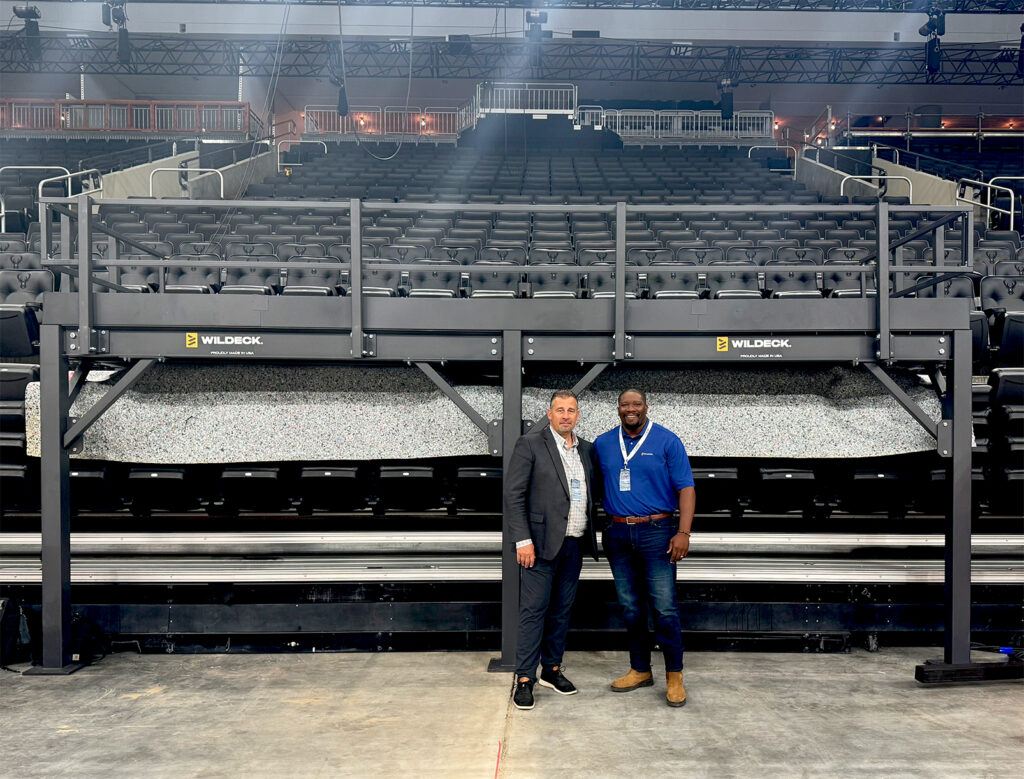
The RNC has sourced a local Milwaukee-area manufacturer, Wildeck, Inc., to provide structural steel platforms supporting media team members and TV camera equipment Wildeck, Inc., a material handling equipment manufacturer, has played a role in designing and manufacturing structural steel platforms (mezzanines) for the upcoming 2024 Republican National Convention. The event is set to take place from July 15 to 18, 2024, at the Fiserv Forum in Milwaukee, less than 20 miles from Wildeck’s headquarters in Waukesha, Wis. In partnership with Willoughby, Ohio-based Morrison Company, a prominent Systems Integrator in the material handling and storage industry, Wildeck has delivered two custom-designed platforms to support the media suites and additional smaller platforms for TV camera equipment. The media suite platforms, 975 sq ft and 1,450 sq ft in size, were designed to fit within the shape of the arena bowl, while the camera platforms were engineered with high rigidity to ensure stable televised coverage. Jim Green, president of Morrison Company, stated, “As Morrison Company has come to expect from Wildeck as our mezzanine partner over the past 30 years, we obtained competitive pricing, detailed engineering, and on-time production for this project. Wildeck gave this project the dedicated attention required to meet all deadlines, including production design, pricing, installation drawings, and extremely tight delivery schedules.” The collaboration between Morrison Company and Wildeck is rooted in their successful history of similar projects, including the 2016 Republican National Convention in Cleveland. The RNC Staging Contractor expressed confidence in the Morrison/Wildeck team’s ability to meet the challenging timeline due to their proven track record. Dan Lorenz, president of Wildeck, Inc., commented, “This has been an exciting opportunity and partnership with Morrison Company to design, build, and install highly sensitive motion-free platforms for the RNC at Fiserv Forum. I am very proud of my team for once again raising the bar in standard and custom platform designs.” Wildeck’s platforms for the event were manufactured using USA steel and local union labor was employed for the installation, aligning with the values and standards expected for such a significant national event.
Episode 498: Taking the air out of packaging with IQpack
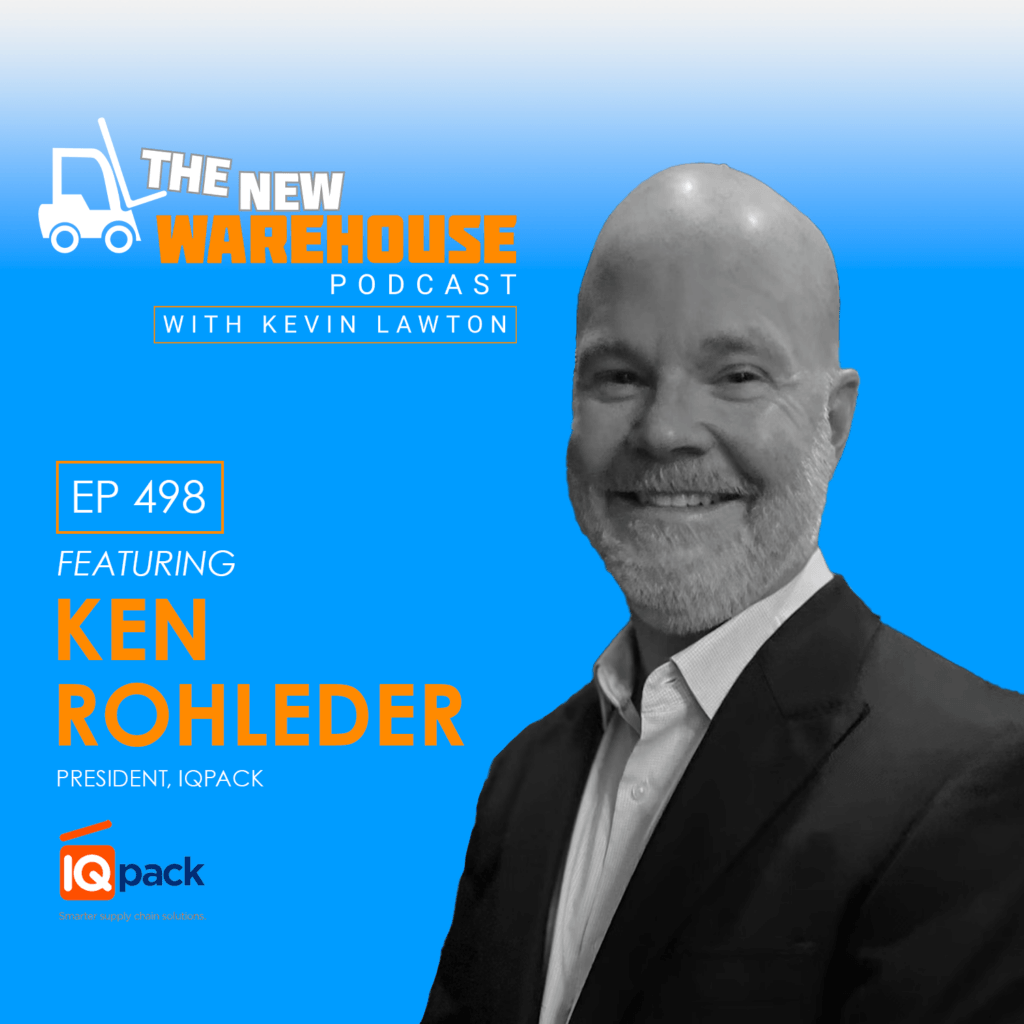
Welcome to The New Warehouse Podcast! Today, we have Ken Rohleder, the president of IQpack, joining us. IQpack specializes in innovative packaging solutions to eliminate excess air in shipping boxes, improving efficiency and reducing costs. In this episode, Ken delves into his background, the inception of IQpack, and the critical issue of air in packaging. He also shares valuable insights on how addressing this issue can benefit your supply chain and overall business operations. The Problem with Air in Packaging Excess air in packaging is a significant issue in the e-commerce industry, leading to increased shipping costs and environmental waste. Ken highlights the extent of this problem: “Most e-commerce direct-to-consumer shippers are shipping 60 percent air.” This inefficient use of space means higher costs for shippers and a larger carbon footprint due to the need for more transportation vehicles. Ken explains that the root of the problem often lies in inaccurate product dimensional data, which leads to poor packaging decisions. He notes, “The more cubic inches, the more you pay. They just pretend like the box is heavier than it really is.” This flawed approach results in unnecessary expenses for businesses and environmental strain. Innovative Solutions by IQpack IQpack offers innovative solutions to tackle the issue of air in packaging. Their strategy focuses on accurate dimensional data and optimized packaging processes. Ken describes their method: “We use a sandbox database to collect dimensional data. This allows us to scan an entire warehouse at lightning speed and ensure accurate measurements.” By implementing these solutions, businesses can significantly reduce their shipping costs and environmental impact. Ken states, “Getting air out of the box will absolutely move the needle,” highlighting the profound impact these changes can have on a company’s bottom line. The Broader Impact Air in Packaging Has on Supply Chain Efficiency Addressing air in packaging reduces costs and enhances overall supply chain efficiency. Accurate data and optimized packaging improve space utilization in warehouses and transportation vehicles. Ken points out, “The savings from getting the box right can be as much as the total cost of operations.” This improvement can result in substantial operational cost savings and improved customer satisfaction due to more efficient and reliable shipping. Additionally, Ken emphasizes the environmental benefits: “If UPS and FedEx are shipping more air than product, it means every two trucks going down the road should really be one truck.” Reducing the number of trucks required for shipping lowers carbon emissions and contributes to a more sustainable supply chain. Key Takeaways The top 7% of SKUs typically represent half of the cubic volume throughput in a warehouse. Companies can save 15-20% on UPS costs by fixing their item master data and improving dimensional accuracy. The industry is shifting to view cubic volume throughput as a more valuable key performance indicator. The New Warehouse Podcast 498: Taking the Air Out of Packaging with IQpack
Herc Rentals acquires Durante Rentals

Herc Rentals, Bonita Springs, Fla., has acquired Durante Rentals, New Rochelle, N.Y. Durante Rentals has provided construction equipment rentals and sales to customers across the New York tri-state area since its establishment in 2009. In May 2023, Durante Rentals acquired the Iron Source brand, enabling the company to expand its reach into the mid-Atlantic market through Iron Source’s Delaware locations. In 2024, Durante Rentals operated six locations under the Durante Rentals brand across New York and New Jersey and four locations under the Iron Source brand in Delaware. Durante Rentals was founded by cousins Anthony Durante and John Durante in 2009. The Durante cousins grew up in the rental business as their respective parents had run a rental business since the 1970s, known as Durante Equipment, which was acquired by United Rentals in 2000. Anthony and John worked briefly for United Rentals before going their separate ways in different businesses, eventually reuniting to found Durante Rentals, starting in a trailer their fathers’ original company had used alongside a Bronx Expressway leading to the entrance to the Whitestone Bridge. John Durante left the company in 2019 and founded Durante Equipment in Hollywood, Fla. Herc’s acquisition of Durante Rentals comes on the heels of Durante Rentals being named one of Rental Management’s 2024 Market Movers in the category of fastest-growing independent equipment rental companies with more than $10 million in annual revenue.
Women In Trucking Association announces its July 2024 Member of the Month
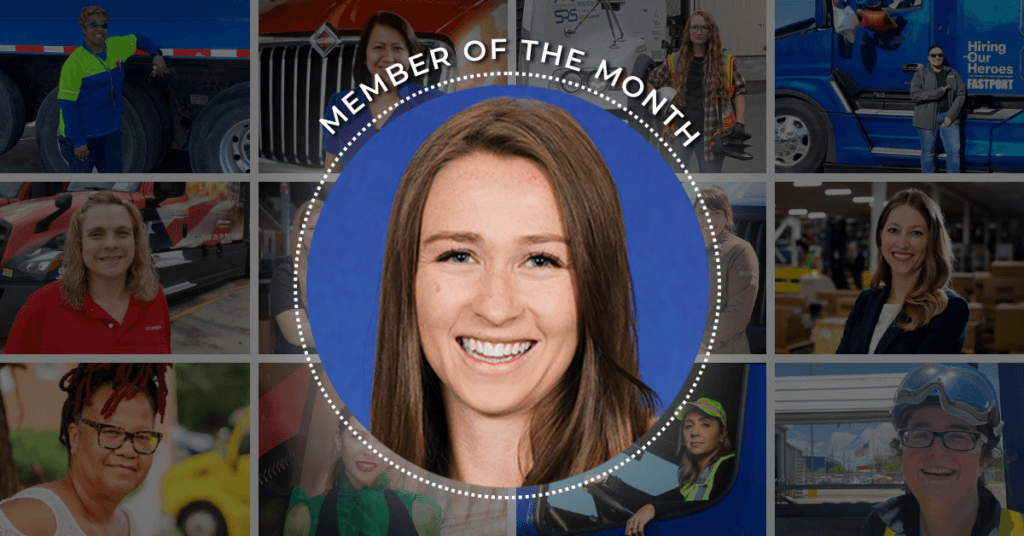
The Women In Trucking Association (WIT) has announced Megan Junker as its July 2024 Member of the Month. Junker is the dedicated product director for electric vehicles at PACCAR Parts, a division of PACCAR. Junker has poured her heart and soul into her career in outside sales, fleet and dealer support, and product marketing. Her unwavering enthusiasm for the products she represents and their crucial economic applications in the field is truly infectious. She loves the fact that what she is doing is making a difference within the trucking industry saying, “Being on the edge of a precipice is always interesting, exciting, and challenging.” In her career, Junker has witnessed and actively contributed to the trucking industry embracing new technology. “What has made this industry so successful is its ability to adapt and evolve. Electrification is a new opportunity to continue that evolution,” she said. PACCAR Parts provided Junker with tools and resources to excel in her professional development, and she stepped up to the task. Her responsibilities now include leading business development, product selection, launch, support, and retail performance for electric vehicles and charging. Junker’s journey in the trucking industry is a testament to its possibilities and growth. She immersed herself in learning how the industry operates, starting with trucking fleets and maintenance shops. Her dedication led her to participate in the Technology and Maintenance Council (TMC) and the TMC Leaders of Tomorrow Program. Her career progression from working with dealer groups to now being on the supplier’s side is a shining example of ambition and success. Junker is keen for women interested in the trucking industry to know that in her personal experience, women in the industry are a strong support system. “Perhaps because we are not always the majority in the room, we understand what it is like not to be the majority. Therefore, we really support each other by bringing each other into the middle. We have the empathy to support each other,” she said. Junker’s advice to women aspiring to join the trucking industry is simple yet powerful. She encourages them to stay true to themselves, believe in their abilities, and never let anything hinder their passion. “The Women In Trucking organization is not just a supportive network, but a lifeline of professionals who are rooting for each other’s success,” she assures, underlining the crucial role of such networks in the industry. Junker’s role as a mentor is not just a job but a passion. She finds immense joy in watching others grow, develop, and become their own. Mentoring younger women, who may be unsure of their abilities, is primarily a testament to her belief in their potential and she believes seeing them gain confidence is the most rewarding part of her journey. She has had mentors, but they were always male mentors. Until recently, when she had a female mentor. “It truly highlighted how impactful having a female mentor benefited me. Her being there for me has inspired me to be there for other women.” Junker holds a BA in marketing from St. Bonaventure University and an MBA from Ohio University. She enjoys spending time with her fiancé and doing service work in her spare time. She is enthusiastic about outdoor activities such as gardening, backpacking, skiing, and snowboarding.
PFlow Industries highlights F-Series Vertical Reciprocating Conveyor
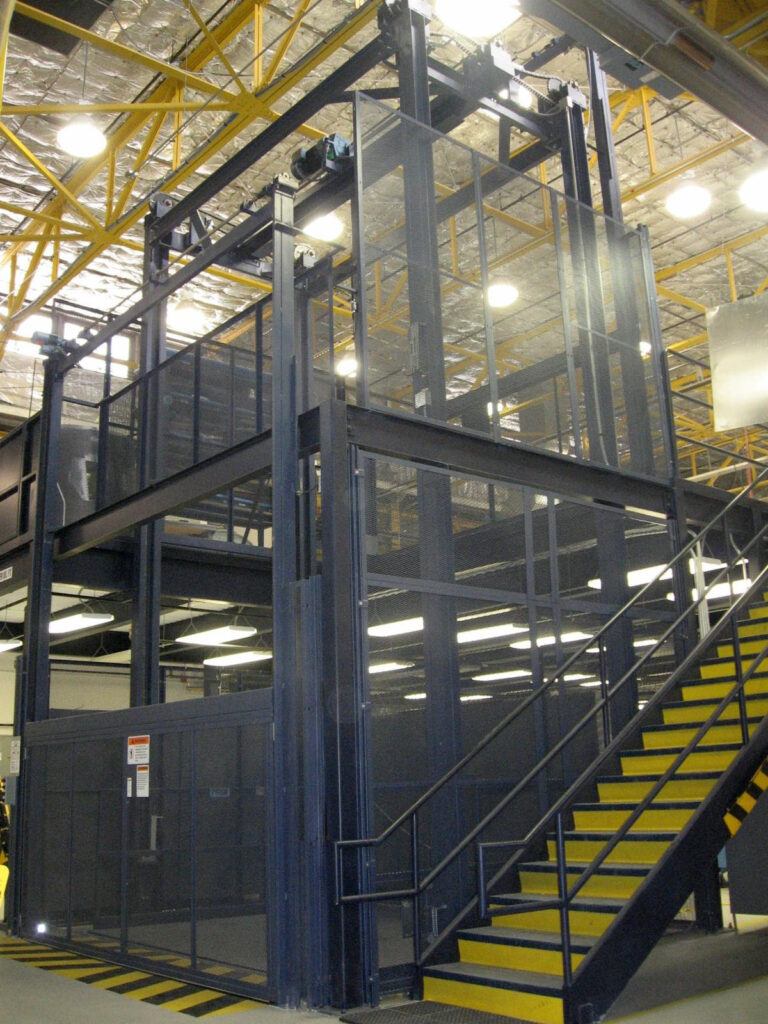
Easily handles loads of up to 50,000 pounds or more in high-speed, high-cycle environments PFlow Industries, the pioneer in vertical reciprocating conveyor (VRC) technology, highlights the F Series VRC, a 4-post mechanical vertical lift that can easily handle loads of up to 50,000 pounds or more in a wide range of material handling applications, including high-speed, high-cycle environments. The lift can also be customized to handle lift material loads up to 200,000 pounds. The F Series is ideal for lifting multiple pallets, oversized materials, large carts, or heavy machinery between two or more levels, indoors or outdoors. The F Series 4-post mechanical VRC offers maximum flexibility in carriage size, capacity, and traffic patterns, allowing loading and unloading from all 4 sides. Featuring an unlimited carriage size, with a minimum size of 6 feet wide and 6 feet 6 inches long, the F Series can lift large and bulky loads that cannot be accommodated by other lifting means. Its ability to reach any floor level maximizes facility use and provides greater material handling operational flexibility. Featuring a standard travel speed of 18 feet per minute (FPM), the F Series can be customized to accommodate speeds of up to 400 FPM, making it an essential part of automated, high-speed/high-cycle material handling applications used in continuous cycle operations – 24/7/365. The F Series comes with a lifetime structural warranty and is built with quality construction that offers reliability and long-term performance, ensuring less downtime. It can be hot-dipped galvanized or fitted with epoxy finishes to withstand extreme weather conditions and temperature fluctuations and enhance corrosion resistance for use in harsh outdoor or wash-down environments. To ensure worker safety and protect material payloads, the F Series features numerous built-in advanced safety features, including limit switches that shut down the motor and engage the brake when the switch is tripped or power is lost; motor overload protection; chain sensors that prevent slack chain from jumping the sprockets; and safety cams that prevent unintended carriage descent. The units conform to ASME B20.1 Safety Standards.
Meritech highlights Sole Clean Low-Moisture Automated Footwear Sanitizing Pan for dry environments
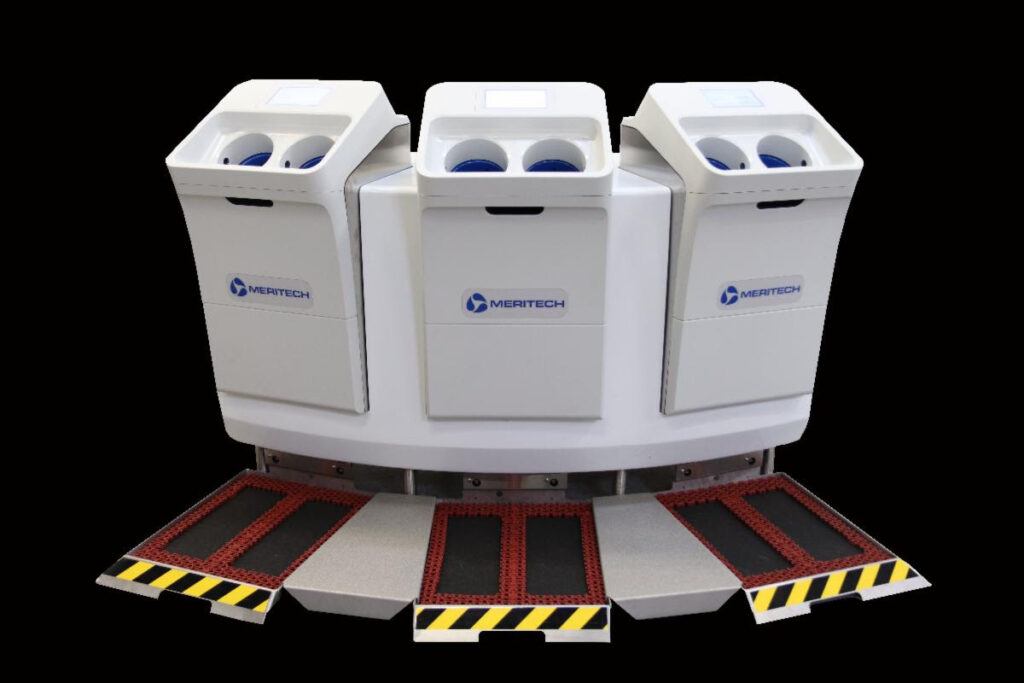
Unmatched efficacy, convenience, and compliance with food safety regulations Meritech, the provider of automated hygiene technology, highlights its innovative Sole Clean Low-Moisture Automated Footwear Sanitizing Pan, setting a new standard for footwear hygiene in dry manufacturing environments, providing unmatched efficacy, convenience, and compliance with food safety regulations. This groundbreaking solution attaches to the CleanTech EVO Automated Handwashing Stations, effectively sanitizing any style of footwear in just 12 seconds, with a fast-drying footwear sanitizer specifically catering to dry or semi-dry production facilities. Proper footwear cleaning is a crucial aspect of any food safety program within a facility. Pathogens like Listeria and Salmonella can easily spread and contaminate surfaces due to inadequate footwear hygiene practices. The Sole Clean Low-Moisture Automated Footwear Sanitizing Pan features a fast-evaporating alcohol-quat sanitizing solution that eliminates pathogens from footwear and evaporates quickly post-application, reducing moisture introduction into production zones. The Sole Clean Low-Moisture Automated Footwear Sanitizing Pan offers customizable auto-start functionality, allowing users to adjust the start time and frequency of sanitizer dispensing throughout the day. This ensures that all employees receive optimal footwear hygiene from the first employee at the start of the shift to the end of the day. By combining hand and footwear hygiene into a single step, it saves valuable space and time in busy production environments. Additionally, the system guarantees that footwear receives twelve seconds of contact time with the sanitizing chemical in the footwear pan, a feature unmatched by most other methods of footwear hygiene. This guarantees thorough sanitation and peace of mind, knowing that stringent hygiene standards are consistently met. Additional highlights of the Sole Clean Low-Moisture Automated Footwear Sanitizing Pan include quick disconnects for easy cleaning, highly visible caution markings for safety, an easy reprime button to refill the pan after cleaning or at start-up, and a solutions empty indicator light. Compatible with all types of footwear, the EVO handwashing station with Sole Clean Low-Moisture Footwear Sanitizing Pan ensures consistent and effective hand and footwear hygiene in one easy step.
BSL Battery-Industrial cutting-edge technology and unparalleled expertise revolutionizes the material handling battery industry

Providing automotive-grade modular lithium battery systems that are transforming the material handling industry, BSL Battery – Industrial is at the forefront of innovation. With over 10 years of combined experience in manufacturing renewable energy and battery systems, BSL Battery – Industrial has revolutionized the market with significant investment, lean manufacturing capabilities, seamless supply chain integration, a team of design experts with 180 years of experience in the lithium battery industry, and a commitment to customer service. The purpose of this in-depth article is to examine how BSL Battery – Industrial’s lithium forklift batteries are different from other batteries on the market, and how the company ensures their durability and longevity. Through continuous innovation in lithium-ion batteries, BSL Battery – Industrial has achieved rapid growth and numerous milestones since its founding in December 2012. A professional R&D team of more than 100 engineers led by PhDs with an average of more than 20 years’ experience in power electronics, battery management systems, and energy storage inverters is established by BSL Battery – Industrial, which spends over 6.2% of its revenue on R&D in the field of new energy innovation every year. Our R&D team focuses on developing new energy system solutions, including power electronics, battery state-of-charge algorithms, system hardware and software design, and battery module and battery pack development. BSL Battery – Industrial focuses on innovation and quality and meets and exceeds international and North American performance, reliability, and safety standards. With more than 60 patents and awards, BSL Battery – Industrial has a comprehensive intellectual property protection system. BSL Battery – Industrial has always been proud of its strong R&D and manufacturing capabilities which have led to the company standing out, gaining wide recognition in the industry, and consolidating its position as a recognized leader in lithium-ion forklift batteries with a leading market share. The R&D team will continue to adhere to the principles of innovation and quality first despite these achievements. Recently, BSL Battery – Industrial is pleased to announce that our B-LFP48-615MH, B-LFP48-460MH, andB-LFP36-820MH lithium battery models have been certified by UL Solutions and tested to Revision 3, the latest and most stringent version of the UL safety standard! We are committed to excellence in product safety, design, and manufacturing. Together, we can make material handling safer and more efficient! There are many advantages to lithium-ion batteries, including a strong discharge, a stable voltage curve, faster lifting and driving speeds, and a lower cost of ownership. Compared to lead-acid batteries, lithium-ion batteries have a significantly longer service life, making them cost-effective and sustainable. An ideal choice for individuals and businesses seeking reliable and efficient power solutions, it is fast charging, maintenance-free, environmentally friendly, and operates at a wide range of temperatures. Battery – Industrial pioneered the transition from lead-acid batteries to lithium-ion batteries and from fossil fuels to electricity. With its automotive grade lithium batteries, BMS, and other accessories, the company offers a wide range of solutions, including industrial lithium batteries for the material handling industry. As the first supplier in the industry, BSL Battery – Industrial offers industrial lithium batteries from 24V – 768V and 52Ah – 2000Ah for heavy forklifts, multidirectional forklifts, and GSE. It uses LiFePO4 chemistry in its batteries to provide unmatched quality and reliability for electric forklifts, which outperforms other lithium-ion solutions in every aspect. With a design life of up to 10 years, 8 years or 12,000 hours warranty, fast charging capabilities, lightweight construction, longer charge retention time, easy installation and a range of battery options to suit different vehicle models, BSL Battery – Industrial’s LiFePO4 batteries are long-lasting and stable. Aside from offering greater chemical and thermal stability, BSLBATT® LiFePO4 batteries also include multilayer protection against water infiltration, acid spills, corrosion, and contamination that could damage the battery and put the user at risk. By eliminating routine maintenance and reducing costs, the transition from lead-acid to lithium-ion batteries is seamless. The BSL Battery – Industrial product line continues to improve. BSLBATT’s latest generation B-LFP48-460MH battery goes one step further with a continuous discharge current of 600A, a maximum discharge current of 1200A, and a peak discharge current of 1800A, allowing for faster acceleration and higher speeds. Hard-working Class I, II, and III forklift batteries that meet the gold standard. As the company continues to refine its battery systems and explore new applications, it remains committed to expanding its global presence. BSLBATT has established a global network with manufacturing centers in China, subsidiaries in the United States, Netherlands, Turkey, South Korea, Mexico and South Africa, established successful partnerships with many well-known brands, and supplies forklifts from various brands to more than 200 dealers. More than 10 forklift manufacturers provide battery communication matching, including Toyota, Hyster-Yale, Combilift, Raniero, Clark, HELI, Xilin, Crown, Doosan, HYUNDAI, etc. Its success on the market can be attributed to all these efforts. The global sales and service network system enables the company to ensure seamless supply chain, timely supply, worry-free aftersales service and responsive technical support for warehouse managers of material handling who are looking to upgrade their power solutions, so that the company maintains its position as a trusted and preferred supplier of lithium batteries for material handling applications. BSL Battery – Industrial will continue to promote the energy revolution as a pioneer in the lithium-ion battery market to create a brighter and more sustainable future. BSL Battery-Industrial has gained good recognition in many markets, including China, ASEAN, Australia, South Asia, the Middle East, America, and Europe. To enhance its competitiveness in these regions, BSL Battery-Industrial is actively seeking local distributors and partners. Feel free to contact our representatives at [email protected] or 0752-2819-469! Visit lithiumforkliftbattery.com for more information about BSLBATT.