
Helmar has lumber forks ready to ship
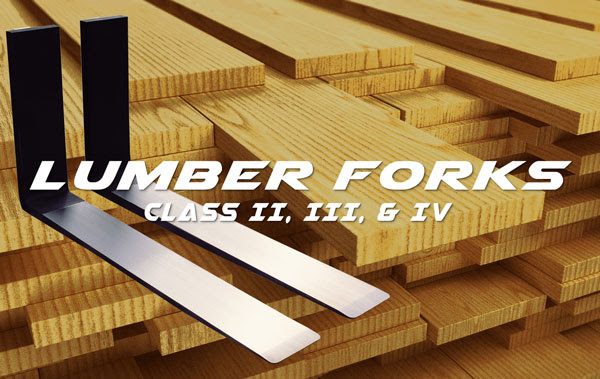
Helmar has lumber forks ready to ship in popular sizes. Lumber Forks are made in various widths with a typical maximum thickness of 1.5 inches depending on the load weight. All are full bottom taper forks: the taper runs from the tip to approximately two inches from the bend. The top of the blade is polished, unpainted, for ease of entry and exit. Tips are thin with a top chamfer for chiseling between plywood sheets. The tips are squared off, not rounded, to assist the chiseling effort. Helmar has the popular FORK-4250 1.5″ x 8″ x 48″ Class II, FORK-4252 1.5″ x 8″ x 48″ Class III, and the FORK-4254 1.5″ x 8″ x 48″ Class IV.
HGH celebrates the new year at the forefront of innovation for its 40 years of existence

At the dawn of the year 2022, HGH Group is celebrating a unique milestone, marking its 40th anniversary with a renewed commitment to electro-optical innovation. A new chapter begins for this pioneer in infrared technology which has established itself as an international reference in terms of electro-optical innovation by constantly pushing the frontiers of technological innovations. Looking to the future, HGH is seizing the opportunity of this celebration to announce plans to remain a leader in electro-optics innovation, reinvent a strong visual identity and further expand its activities and partnerships worldwide. Founded in 1982 and headquartered in Igny, France, HGH develops and sells innovative electro-optics and infrared systems and software for surveillance applications, test & measurement, and industrial thermography to blue-chip customers in different end-markets. In forty years, through significant investment in R&D, HGH has positioned itself as a technology leader and has acquired major international customer references in security, defense, and industry. In particular, HGH has developed a unique proposition with the SPYNEL panoramic Wide Area Surveillance solution, enhanced by its proprietary software for thermal image processing and analysis. For its 40th anniversary, HGH unveils a brand-new image and proves that it has not finished modernizing and innovating. After the launch of its new website, designed to reflect new brand identity, HGH has deployed a more modern and streamlined visual identity on all the Group’s communication media to better represent its technology at the cutting edge of innovation. A pioneer in electro-optics and infrared technologies, HGH has proven time and time again its ability not only to renew itself and have new ideas but also to implement them very quickly in order to maintain its leadership position and meet customers’ needs. Vincent Leboucher, CEO, commented: “HGH’s strength lies in its thirst for continuous innovation by bringing to the market high-end and disruptive electro-optics technologies and services. Today, HGH is leading the way towards Artificial Intelligence in long-distance surveillance, with an ultimate user experience. We would like to take this opportunity to express our gratitude to our committed collaborators, our customers, for their loyalty and their precious collaboration in the development of new products as well as our stakeholders and large network of strategic partners. Going forward, HGH will remain committed to contributing to the progress of electro-optics technologies for Defense, Security, Science and Industry needs. To the next forty years!”
Packaging for the future from Optima

At IDEA, OPTIMA is presenting solutions for attractive, sustainable packaging design IDEA will be held in Miami from March 28 to 31, 2022. It is one of the most important industry meetings of the year for Optima’s Nonwovens business unit. Here, visitors will have the opportunity to use a wide variety of materials to design the packaging concepts of the future. There will also be a welding station on display that will further improve the packaging design of hygienic products. Another focus is on sustainable packaging solutions for a functioning circular economy. Optima’s experts can be found at booth no. 4416. Because of the neighboring FiltXPO, specialists in the production and packaging of filters will also be on hand for the first time. “We are very glad to once again be able to exchange ideas in person with interested parties and customers at IDEA,” says Oliver Rebstock, the Managing Director of OPTIMA nonwovens GmbH. Personal interaction is essential in special machine construction. “Today’s consumers make high demands on the packaging. It is expected to be unique, high quality, customized, and sustainable. Oliver Rebstock says, “At IDEA, we’ll be showing how we can help producers with these trends.” Safe and aesthetically pleasing sealing of packaging This can be achieved by means of an innovative welding station developed by Optima Nonwovens, for example. This has a positive effect on the quality of the packaging. Packaging can be closed safely and welded in an appealing way. As the packaging systems by Optima Nonwovens are able to engage in “machine learning”, changes to the packaging can be detected automatically and the machine users can respond immediately. An automatic, precise adjustment to each packaging format ensures that even the first package after each format change is perfect. This avoids start-up and readjustment. Interactive packaging experience Differentiation in the marketplace is achieved both with improved packaging and with new packaging concepts. Optima Nonwovens is open to working collaboratively to develop new packaging solutions. Here, the options include alternative materials such as paper or starch films, new types of packaging such as cardboard packaging, or packaging with a new added value, such as the opportunity to customize. However, there is also potential for completely new concepts, which Optima would like to discuss with visitors. Hence, visitors at the event will be able to interactively view and discuss packaging with different materials and customizations by means of the “Hypebox” gamification element. Green packaging, not greenwashing “Particularly in terms of sustainable solutions, we are now addressing this issue collectively and at a much earlier stage, from the packaging material to the machines, and to the entire life cycle of the packaging material and the machines,” explains Dominik Broellochs, Group Sustainability Manager of the Optima Group. This is now only possible by working as a network. As a result, project run times would be massively shortened, risks minimized and results improved. Taking diaper packaging as an example, Broellochs is presenting a solution that does justice to both marketing and ecology: the sleeve bag – 100 percent recyclable mono-polyethylene (PE) packaging for paper hygiene products such as diapers, sanitary napkins, and even toilet paper. The prospect of a functioning circular economy The sleeve bag offers the prospect of a functioning circular economy according to the Cradle to Cradle principle. The safe installation of the paper inserts and the encasing of the products is a new, innovative process by Optima. This process can be retrofitted for existing packaging machines, which also contributes to sustainability. “With the sleeve bag, Optima has developed honest packaging. In terms of sustainability, honest packaging is the only way that we want to go forward with our customers. The sleeve bag shows that it’s not always a matter of having to develop complex new materials, but the boldness in the simplicity of package is often just the beginning,” says Broellochs. This packaging has been certified as “excellent, 100 % recyclable” by the cyclos-HTP Institute. Flexible conversion of packaging material Optima is not only active in the area of packaging development; machine technology also provides optimal conditions for a flexible conversion from PE to paper and vice versa. All machine solutions by the Nonwovens business unit are flexibly adaptable. Conversion takes no longer than a normal format change. This means ad hoc tests with paper or bioplastics, for example, can be run. Further optimizations in terms of efficiency and output are possible at any time. Whether paper, PE, or bio-PE – it is essential to integrate product protection, sustainability, and marketing successfully with one another. The machine technologies required for this are available at Optima. This ensures the new packaging solutions have a successful future. Optima Nonwovens at IDEA 2022: March 28 to 31, 2022, Miami Beach Convention Center, Miami Beach, Florida, booth No. 4416
Quad Tracks now available for JLG® 600S and 660SJ Boom Lifts

Convert a normal, wheeled model into a highly capable, comfortable tracked machine JLG Industries, Inc., an Oshkosh Corporation company and a global manufacturer of mobile elevating work platforms and telehandlers, now offers Quad Tracks for JLG® 600S and 660SJ boom lifts. Quad Tracks from JLG are made up of four triangular rubber-track systems, each measuring 34-in high by 54-in long by 18-in wide. They bolt directly to the boom lift’s standard wheel hubs, offering increased machine utilization and flexibility for working on a range of surfaces, including sand, mud, gravel, grass, paved streets with curbs, potholes, and sharp transitions. The Quad Track’s design is low-profile and developed to minimize the impact on ride height, track width, and maximum drive speed. These features provide the machine operator with the benefit of excellent floatation, minimal rutting at job sites, improved traction, greater comfort over obstacles, and no “break over” effect. And when the work is done, the Quad Tracks can be swapped out for regular tires or for use on other applicable models. An added bonus, the Quad Tracks do not require additional wide load transport accommodations for machine shipping when properly loaded and tied down for transport. “There are many considerations when selecting a boom lift for the work at hand. This can sometimes make it challenging to choose between tires or tracks,” says Randi McClure, Marketing Manager for JLG Boom Lifts. “When this happens, Quad Tracks offer an alternative solution: The ability to convert a normal, wheeled JLG boom lift into a highly capable, tracked machine. This allows operators to cover a wide range of applications on multiple job sites with one machine — and offers fleet managers the ability to switch between continuous tracks and traditional wheels as needed.” The new Quad Tracks from JLG are currently available with new 600S and 660SJ machine orders, as well as through aftermarket on select, 2-wheel steer models. Compatibility with additional models will be available in the near future.
Mactac® to acquire Spinnaker Coating, LLC

Mactac®, a LINTEC Company, announces it has entered into an agreement to purchase the assets of Spinnaker Coating, LLC, representing $130 million of specialty revenue at a price of $40 million. The acquisition is expected to close on Feb. 1, 2022, and consists of Spinnaker’s manufacturing facility and headquarters based in Troy, Ohio, and North American distribution centers located in Atlanta, Georgia; Chicago, Illinois; Los Angeles, California; and, Vails Gate, New York. Spinnaker will operate as a standalone subsidiary of Mactac. As part of LINTEC, Mactac is one of the largest, most diversified global pressure-sensitive adhesive (PSA) suppliers. Mactac’s acquisition of Spinnaker, which specializes in the customized production and distribution of pressure-sensitive roll label and sheet base materials in North America, creates a one-of-a-kind, world-class specialty labeling company. With Spinnaker, LINTEC, and Duramark Products (formally Ritrama USA and acquired by Mactac earlier in 2021) serving the industry together, Mactac delivers customers unmatched technology, capability, service, and value. These combined pressure-sensitive adhesive technologies provide the North American market with the necessary support and capacity. “Mactac built upon our solid foundation adding enhanced service, capabilities, and breadth of product offering,” said Ed LaForge, Mactac President, and CEO. “Our combined product offering now encompasses all adhesive technologies, including hot-melt, solvent, silicone, and emulsion. We offer a wide range of high-quality PSA materials for any application need, such as film, cast vinyl, and specialty solutions. And, with Spinnaker’s unique business model, we will expand Mactac and Spinnaker specialty labelstock offerings to create a model unlike any other.” The purchase of Spinnaker delivers Mactac customers an abundance of new opportunities in specialty labeling. Spinnaker customers benefit from Mactac’s advanced technologies, innovative solutions, modern production capabilities, and depth of technical expertise. “Joining together gives Spinnaker access to Mactac’s state-of-the-art engineering and technology and offers our customers new and expanded product offerings and adhesive capabilities,” says Lou Guzzetti, Spinnaker’s Chairman of the Board. “And, like Spinnaker, Mactac is an employee-centric organization with a service-first culture. We look forward to realizing the possibilities this acquisition brings to our employees and to the market.” In response to customer and market requests for enhanced products and services, supply chain continuity, and added reliability, Mactac is focused on market growth and operational expansion. The Duramark acquisition expanded Mactac’s technology, adhesive capabilities, and production capacity with more facilities and locations, new world-class coaters, and advanced automation technologies. In 2022, Mactac will add five new world-class slitting assets and further grow its adhesive formulation and manufacturing capabilities. Mactac and its parent company, LINTEC, a global leader in the field of adhesive materials, will continue to invest heavily in R&D and operational enhancements as part of its strategic plan. Mactac’s acquisition of Spinnaker further solidifies LINTEC’s commitment to bring its comprehensive global capabilities to the North American market. For more information on Mactac, its products, and growth strategies,
EP 247: Inspectorio

On this episode, I was joined by Co-Founder and President at Inspectorio, David Klein. Is it a supply chain SaaS platform that helps you with your quality, compliance, and now tracking? We discuss how Inspectorio was founded, how it has helped companies through the pandemic, and the new tracking component. Key Takeaways David and his co-founders started out helping companies to source manufacturing in Asia for different types of products. Along the way, they developed some frustrations with the processes and being able to ensure that everything was running smoothly. As they were doing this they started to develop systems so that they could more easily handle these types of things. One of the large pain points was ensuring that the level of quality was of the same standard across all suppliers. While they were managing this on their own they started to develop what is now Inspectorio and thought that it would be something companies would want to use so it is now offered as a SaaS platform for all companies to use. Many of the largest retailers utilize this platform and find great efficiency improvements from it. One of the largest pain points for companies during the pandemic has been visibility into their supply chain. Previously things would just continuously flow but the abrupt stop and then the resulting delays have to lead to a lot of gaps in the company’s supply chains. With Inspectorio, however, companies had more visibility into what was happening with their PO’s and where they were in the manufacturing pipeline. By having the data consistent and in a standard format in one platform no matter how many suppliers you are dealing with, you are able to easily have more visibility and make data-driven decisions in a faster way. Along with visibility comes the need to be able to see your tracking and this is where Inspectorio’s new component comes into play. The tracking component of Inspectorio which was just recently launched really allows you to have visibility into your supply chain and understand where your product is. I got a demo of this component and the great thing about is how the platform is fully customizable so you can see the data that you want to see and in the way you want to see it. You can easily hide data and bring in different data if you want which allows great flexibility. The best thing is that it aggregates all of the data from your different suppliers into one spot and reduces the need for manually extracting this data to combine into reports. Listen to the episode below and leave your thoughts in the comments. The New Warehouse Podcast EP 247: Inspectorio
Yale earns recognition for lift truck technologies

Yale Materials Handling Corporation has been named a Top Software and Technology Provider by Food Logistics. Yale won recognition for innovations in robotics, telemetry, and motive power, along with an industry-first suite of operator assistance technologies designed to increase operator awareness and reinforce best practices. “With food distribution operations facing labor challenges and the pressure to do more, technology-enabled solutions offer a chance to boost efficiency and get more out of what they have,” says Brad Long, Brand Manager, Yale Materials Handling Corporation. “From transformative operator assistance technology to advancing the capabilities of robotics and telemetry, we’re working to be the resource warehouses deserve as their operations become increasingly technology-driven.” Yale Reliant™ is an operator assistance solution that adjusts lift truck performance in real-time based on equipment status, location, and operating conditions while keeping the operator in ultimate control. Some of these capabilities include hydraulic arrest to prevent lifting and carrying loads that exceed weight limits, automatic speed reduction when cornering for stability, and preventing equipment from entering designated pedestrian-only zones. The system will also trigger an alert to help support operator awareness and provide additional reaction time if an object or pedestrian is in the path of travel or if there are location-based speed limits or other conditions. The award also recognizes Yale for robotic lift truck innovations, such as the Edison Award-winning robotic reach truck. Yale’s robotic lift truck lineup can automate horizontal workflows or vertical storage tasks, charge autonomously and switch from automated to manual operation at the push of a button. These solutions allow warehouse managers to delegate repetitive, turnover-prone tasks to automation and concentrate staff on higher-value processes, helping maximize labor productivity and employee engagement.
The Fickle Workforce

Much has been written in the past decade about the demographic shift from “boomers” to “millennials”. I was born in 1959, which puts me squarely in the boomer category, and I, like others in this tenured industry, struggled to adapt to the priorities and motivations of the millennial generation. When I entered this industry in 1983, I was determined to find my place, climb the corporate ladder, and stay put for the indefinite future. I stayed at my first dealership for seven years. My second post lasted 26 years. That’s what boomers do. They endure. Work is seen as a calling. Loyalty and legacy are important. Your occupation is connected with your identity. Work-life and personal life are intertwined. Not so much with our millennial co-workers. With rare exceptions, this group doesn’t really see work as a calling. Instead, work is viewed as a CONTRACT. “I’ll trade my hours for your dollars”. Work-life and personal life are mutually exclusive. Switching employers is predicated primarily on personal satisfaction. Millennials tend to grow tired of assignments that don’t interest them, or that don’t add to their personal development. Hence their tenure at any particular employer has noticeably declined. A Bureau of Labor Statistics report issued in September of 2020 highlighted these differences: “Median employee tenure was generally higher among older workers than younger ones. For example, the median tenure of workers ages 55 to 64 (9.9 years) was more than three times that of workers ages 25 to 34 years (2.8 years).” 1 For employers, this shift represents a sea change in how staffing is administrated, and how workplace satisfaction is measured and aligned. The investment costs in hiring, training, and retaining employees have not abated. In fact, not a year goes by where January 1st there aren’t multiple new federal and state regulations enacted that continue to challenge even the best HR professionals. Finding employees that want to work and have the right background is hard enough. Keeping them seems to be even more difficult. Enter the “gig” economy One of the ways the workforce is evolving is in the expansion of freelance “project” work. This is colloquially known as the “gig” economy. The most prevalent examples are on your smartphone right now. The success of Uber and Lyft shows the wide acceptance of itinerant work. As the movement grew, project work became less of a “side-hustle” and more of a mainstream occupational reality. Generation Z (people born after 1997), hot on the heels of the millennials, loves the autonomy and the freedom of expression that comes with not being tied to any single employer for more than a short while. They have the education and digital skills to be effective. They understand and are committed to the short-term “mission” because meeting mission objectives define their value for the next “gig”. Freelance work is distasteful to most boomers as they came of age in a world that clung to the security of long-term employment. Most boomers will be able to finish out their career path without changing lanes, but for everyone born after 1970 … the working world of the 2020s and 2030s will see changes that nobody ever expected. Can dealerships adapt to the gig economy format? The distribution business will find it difficult to amend its operating model to utilize the gig workforce platform. Many of the resources we need to operate efficiently require the knowledge and experience that can only be accumulated over time. Industries such as advertising, consumer goods, fashion, software, engineering, and medicine all offer ripe opportunities for project-driven initiatives, but the needs of distributors are unique and are best performed by a seasoned workforce. So, we have a hill to climb. As we power into 2022 (and beyond), we will be faced with a transitory workforce. How can we make it LESS transitory? Here are some ideas. We must resonate If it’s not meaningful, it won’t matter. We cannot expect assigned work to be a priority if it does not resonate personally with the employee. How can we make a PM service resonate with a young technician? That sounds like a hard sell. Actually, any task can resonate if we surround it with the correct motivational processes. I use the following flow chart to govern the process: Model Measure Report Reward Model: It won’t resonate if we “wing it”. We have to have a hard and fast written SOP for every task, whether it be timecard posting, work order processing, or PM completion. We simply cannot effectively and objectively assess performance if the standards are not understood! Measure: How many were done correctly? How many were not? How can we improve? What tools, policies, or changes must be instituted to have a better process and a better score. Example: In the case of PM’s, we will want to include the following measurements: Additional maintenance services sold by the technician (trans, hydraulic, coolant, etc.…) Segment two repairs found and quoted Completion of all work in the allotted time No negative customer comments Van cleanliness and housekeeping All of these metrics can be assessed as a point value and used to recognize the employee for both performance and improvement. Report: In every case, a report showing performance toward a goal should be generated. Some objectives will be personal and kept between the manager and the employee. Other objectives can serve as a platform for competition. There should be personal goals and team goals in every department. The more that relevant reporting is discussed, the higher the chance that resonance will be found. Reward: Wages and salaries are what we pay an employee to be there and get the job done. Rewards are paid for meeting specific meaningful goals both on the personal and team level. This can be done with cash (through payroll), redeemable points, travel rewards, merchandise (Snap-On, gift cards), or even PTO. The rules are simple. Pay rewards NO LESS than monthly Pay rewards PUBLICLY (during staff meetings) so that we can celebrate the wins
A few sales closing tactics. Taking a new look at old ways.
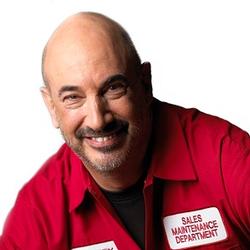
“Jeffrey, how do you close, Jeffrey, how do you close?” I get asked that question more than any other. (“Jeffrey, why is your hair falling out?” is a close second.) I keep giving the same answer, “Don’t close the sale, assume the sale.” The assumptive position is the strongest selling strategy in the world. By definition, you believe you will make every sale you attempt. It sounds simple. It is simple but it’s not easy. In order to utilize the assumptive close, you must be qualified. There are two major prerequisites that make the assumptive close possible: Your personal preparedness. You must display self-confidence, have total product knowledge, have a positive mental attitude, exude so much enthusiasm that it’s contagious, have a desire to help that exceeds a desire to earn money, and have a genuine sincerity of purpose. If this is 110% you, you’re only halfway to assumption. Read on… Your sales preparedness. There are three strategic areas of sales preparedness, and all must be in place to make assuming the sale possible. The needs of the prospect have been determined, and are put ahead of yours. You are established in the mind of the prospect as a person of character, credibility, and high repute. The prospect has confidence in you. You have built a solid rapport with the prospect based on the personal information you’ve gathered, combined with your knowledge of his business. IMPORTANT NOTE: Assuming the sale is a state of mind, it does not preclude employing the science of selling. Yes, you must, from time to time, use sales techniques, but it’s more a matter of word choice and delivery than trying to master some close that has a name. “The Benjamin Franklin Close,” “The Sharp Angle Close,” and “The Final Question Close” are all old-world methods of selling. These tactics will make people mad, or uncomfortable, or both. You may even occasionally make a sale but no one will ever refer their friends to go through the same ordeal. MORE IMPORTANT NOTE: The close of a sale is only one step in the sales cycle. You don’t just close a sale you lead up to a close. You earn the sale based on what you have said and done to guide the prospect to a decision. MOST IMPORTANT NOTE: The actual close of a sale is a delicate balance between your words and actions, and the prospect’s thoughts and perceptions. And a sale is always made either you sell them on yes or they sell you on no. Here are six closing strategies and tactics that you might find effective: Challenge the prospect to do what’s best for his business. This is kind of a guilt strategy. Look the person in the eye and ask him what he thinks is best for his business. This strategy is great when he’s doing business with an existing vendor or friend, and they are not providing the best product or service. We are experts at what we do and you can have peace of mind to do what you do best, knowing our part of your job will get done. Tell the prospect that you can help build her business by providing your service and partnering with them. Always let the prospect have a path to doing what they do best, and have peace of mind that your service will supplement that process on their way to success. This strategy is great for selling professional services. Make a list of objectives for what the prospect wants to accomplish AFTER your product or service is in place. Your objective as a professional is to get the prospect to see the world as though the sale was already made. Forget about convincing them to do it that’s selling, no one wants to be sold. Show them what their world will be like after the sale – that’s buying, everyone loves to buy. This strategy works on every kind of sale. Get the prospect to be a visionary.“Mr. Johnson, If you did __________, when do you think would be the best time to start?” Let the prospect tell you what he has in mind, instead of you telling him what’s on yours. This strategy is called the “if-when decision process,” and is great for selling equipment. Make the prospect commit to future action. The traditional method of accomplishing this is: “If I could… would you…” but today’s professionals can’t say that exactly, it sounds too salesy. This strategy must be worded more out of the conversation than a sales presentation. It must be delivered as a desire to help achieve an objective, not a pressure to make a sale. Make plans for after the sale has taken place before the sale is consummated. Even if you don’t have the commitment yet, you can try to schedule an installation time or a meeting after delivery. “I can schedule the installation for Tuesday, but I wanted to be here personally to be sure that everything is perfect. Will you be able to make it?”This is an indirect way of formalizing the sale, and classic use of the assumptive process. Assuming the sale is the hardest process to prepare for but the easiest sale to make once you do. About the Author: Jeffrey Gitomer is the author of twelve best-selling books including The Sales Bible, The Little Red Book of Selling, and The Little Gold Book of Yes! Attitude. His real-world ideas and content are also available as online courses at www.GitomerLearningAcademy.com. For information about training and seminars visit www.Gitomer.com or email Jeffrey at [email protected] or call him at 704 333-1112.
Where will you fit in?

Reading and watching CNBC (financial channel) on a regular basis gives you a surprisingly good idea of how you are going to get out of this economic craziness and get a handle on where you stand in your market post-pandemic. Future business activities are sure to be different calling for action on management’s part, but it is sure tough to make a decision unless you know where to start. One of the most interesting segments I saw on CNBC concerned Ford and Salesforce. They seem to be joining forces to help contractors get a better understanding of their business and identify where changes need to be made making them more efficient and more profitable. When you think about this it is a GREAT value-added program from Ford since a substantial number of the customers who buy the F-150 are in some sort of service or contracting business. Is your management thinking along these lines as a means to drive continued sales to current customers, but also be a selling point to attract new customers because you have something they need that they are not getting from their current vendor? Who could you team up with to do what Ford and Salesforce are doing? Think about this because there is a market share out there for somebody to take. Along these lines, I hope you had a chance to read “Five Lessons Learned for the Post-Pandemic Supply Chain” that appeared in an MHW email recently. The Five Lessons are as follows: Stay open to new and unconventional ways of doing business. Broadening networks; expanding connections; deepening relationships Allocating resources to equipment and partnering with asset-based providers. Increasing inventory levels. Adding more storage space in multiple markets. Seems like the author, Dale Young of Worldwide Distribution Services, is suggesting spreading the risk, renting when there is a lack of hardware, stepping away from the just-in-time approach, and adding buffer inventory to carry you over the hump. Now you made not need to follow this approach, but I bet you have customers who should be thinking about these issues and what to do about them. It seems to me that most lift truck dealers have customers with problems dealing with supply chain issues, inventory issues, labor shortages, logistic problems. payroll issues and Covid issues. They may also have issues with long-term contractors that are killing them because they are not using the equipment enough to warrant the cost. So, what help can you offer customers to ease their pain? Who could you team up with to reach this goal? Could you offer seminars or Zoom programs to cover some of these problem areas? Between you and your OEM, there have to be “solutions” available to stop the pain and at the same time strengthen relationships. It is no secret that it is going to cost EVERYONE more to run their business whether they are maintaining reasonable sales levels or not. Even if they are running at 2019 sales levels their margins will shrink due to cost increases or pushback on price increases. So, if you want to know your starting point for future planning, I think we could agree that your company along with most of your customers and potential customers are going to be dealing at some level with the problems noted earlier. NOW, THIS IS WHERE YOU FIT IN Customers are going to listen to anybody that calls on them who can reduce their pain in terms of cost reduction or improved efficiency. And they are going to expect you to deliver those solutions. So, you have two or three options to consider: Lower your prices and live with it. Find ways to lower your costs to absorb the cost of the solutions you are providing. Find ways to assist customers in ways that you do not currently offer. What would the Ford CEO do? Ford is offering a solution that helps the customer pay for the truck he bought. Ford also found a partner to work with who can communicate the results of the solutions to the customers. And let us not kid ourselves, technology is going to be a big part of these solutions, and if you are not comfortable with that statement you will have to find “partners” who do and are able to collaborate with your customers. To get you started in your own company I would like you to get a copy of your trial balance for the end of the year and examine each line item to determine if the revenue or cost is going to be impacted by Covid or supply chain issues, or payroll issues, or warehouse issues including receiving or delivering product. You will be amazed how often you will be saying “What the hell is in this account?” to your controller. Believe me, you will find costs no longer required or costs that can be reduced. When you finish this simple process costs will be reduced which in turn absorbs part of the solutions you have to offer. Next, get a full list of current as well as former customers. Examine each company on the list to find those you must keep, those you would like to keep, past customers you would like to get back and new customers you would like to get. Now go down the list and find out where each of these current and former customers “stands” and ask what you can do to help. I bet you will generate a list of meetings with these companies and between you find ways to stop the pain or produce a plan to stop the pain. After all, your expertise is on the shop floor or in the warehouse environment, which covers many of the areas causing the pain. My reading and listening are telling me that technology, AI, and VR are going to become part of the solutions customers to move ahead into the future. But knowing this and knowing where you currently “stand” I surely do
Lithium-ion threatens Lead-Acid batteries dominance in material handling

For decades, lead-acid batteries were one of the only games in town as a source of power for material handling equipment such as forklifts and pallet jacks. But rapid advances in technology are fueling a broader playing field, with options that now include lithium-ion batteries, thin plate pure lead batteries, repurposed lithium-ion products, and an additive that can double the life of lead-acid batteries. Warehouse managers, meanwhile, simply want a power source that is affordable, maintenance-free and requires zero downtime. To be sure, lead acid is still the dominant battery in use in material handling equipment, primarily because of its affordability. It’s also easier just to keep the status quo, said Maxim Khabur, marketing director at One Charge of Garden Grove, Calif. “The change requires energy and a capacity to embrace risk, so once the first-comers seize the most benefits, the rest have to follow after they realize they are losing on cost and effectiveness of operations,” Khabur said. “The change in charging pattern calls for new small chargers to be installed around the facility instead of getting them all into a ventilated charging room (not needed anymore), and however small the change is, it presents an argument for “not changing anything.” But lithium-ion has been grabbing an ever-increasing share of the material handling market in recent years, between 5% and 10% according to most estimates. Khabur said the benefits are numerous: Higher uptimes. There is no need to swap the batteries mid-shift and they can charge quickly, under two hours, lasting through multiple shifts. Two to three times the cycle life of lead-acid batteries. Zero daily maintenance. There is no need to open batteries and top up electrolytes and no need to equalize the cell’s charge, which is done automatically with an onboard battery management system in a lithium-ion battery. Up to 30%, lower electricity use, and lower daily energy costs compared to propane and diesel. Cleaner power, with no pollutants, no exhaust, no acid fumes or spills Far lower labor and maintenance costs “Switching even one single lift truck from propane, diesel, or lead-acid battery to lithium will reduce the total cost of ownership in about four years,” Khabur said. “And a lithium battery will typically work far beyond that. But since the upfront cost of a single lithium battery is significantly higher than lead-acid, bigger fleets and more intense operations with multiple shifts per se see the highest output. Kokomo, Ind.-based Green Cubes Technology has been manufacturing lithium batteries for more than three decades, originally for medical equipment, said Robin Schneider, Director of Marketing. Its lithium motive applications have been around for about 10 years, galvanized by the advent of electric vehicles. Schneider said they have been seeing 100% growth in the market annually for the past five years. According to Schneider, there are two kinds of lithium-ion chemistries available: iron phosphate batteries (LFP): and cobalt-based lithium-ion batteries (NMC). The material handling industry has been favoring iron phosphate because it can be charged with a lead charger, deliver high-power, fast charge, and has a cycle life of 3,000 cycles or more. Schneider said one of the earlier adopters of lithium-ion batteries in material handling are in cold storage applications, warehouses that store food and beverages. “Lead-acid doesn’t operate well in really cold environments, like freezers. There’s a lot of capacity loss and damage to the battery that happens,” Schneider said. “And also, they can’t be charged at cold temperatures, so you have to take the material handling equipment out of the freezer or inside if it’s an outside application in a cold area, and let the battery temperature equilibrate and then charge it.” Making the problem worse, is the condensation buildup that occurs when taking the battery in and out of the freezer. Green Cubes’ lithium-ion batteries have integrated heaters and, because they are “smart,” they have the technology to maintain the battery’s temperature in a safe operating range, Schneider said. But that is just the tip of smart technology. Schneider said that with IoT — Internet of Things — technology that is integrated into the batteries, allowing them to communicate their status to the cloud, each battery’s performance, such as how it is being charged, whether it’s being used properly, and whether it’s being underutilized, can be monitored. “You can load-balance the usage across different areas of your organization,” Schneider said. “So that’s really exciting because it’s all about efficiencies in material handling.” Harold Vanasse, Senior Director of Motive Power Marketing for EnerSys, the largest industrial battery manufacturer in the world, said that more advances in integration are coming in the next two to three years. While the company produces lithium-ion batteries for a vast array of industries, including material handling, Vanasse said it is still fairly new in the marketplace. Lead-acid is still the predominant chemistry used because of its robust design, it is well understood and the batteries are 99% recyclable through a well-established recycling stream, he said. Traditionally the industry has used what is called a flooded lead-acid battery, which contains a liquid electrolyte of sulfuric acid that requires adding water every week to replace what was lost during the recharging process. EnerSys manufactures what Vanasse called a “lithium-like” battery called thin plate pure lead (TPPL) that is less expensive than lithium, but maintenance-free — in other words, it doesn’t require watering. “There’s nothing you really need to do to them, other than charging them correctly and using them correctly,” he said. They also have extremely low gas emissions, a fast recharge rate, and a long cycle life. They cannot, however, be used in heavy-duty applications, whereas a flooded lead-acid battery can. “They excel in light- to medium-duty applications,” Vanasse said. “TPPL batteries are newer to the material handling industry. They have introduced about 10 years ago, though EnerSys has been selling the technology in other industries for over 30 years. Most, if not all, U.S. military tanks use our TPPL batteries.” Vanasse said EnerSys works closely with each client to provide the product
Port of Long Beach to offer Summer 2022 High School internships
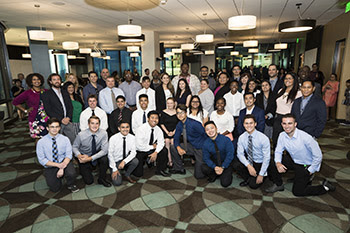
Applications open Jan. 18, due by March 1st Applications for the Port of Long Beach Summer High School Internship Program will open Tuesday, Jan. 18. High school internships are available to current high school juniors and seniors who reside in Long Beach or attend a high school in the Long Beach Unified School District service area. The program is tailored for students with an interest in the goods movement industry. Opportunities are available in a variety of fields, including engineering, environmental science, finance, communications, and more. Participating high school student interns will gain hands-on experience as they work alongside Harbor Department staff. The program lasts six weeks, from June 27 through Aug. 5. Students must have reliable transportation to and from the internship. Interns are paid and work up to 30 hours per week. Schedules will vary depending on the division they are assigned to. Program details, eligibility information, and online application are available on the Port’s website: www.polb.com/internships. To apply applicants must: Be a current junior or senior Reside in Long Beach or attend a high school in the Long Beach Unified School District service area Be in good academic standing (2.5 GPA or higher) Have reliable transportation Be available all six weeks to participate Submit completed online application with attachments by the filing deadline Provide right-to-work documentation (passport or birth certificate and social security card are examples of right-to-work documentation) Be fully vaccinated for COVID-19 and able to provide proof of vaccination
Women In Trucking Association renews contract with Road Dog Trucking on SiriusXM
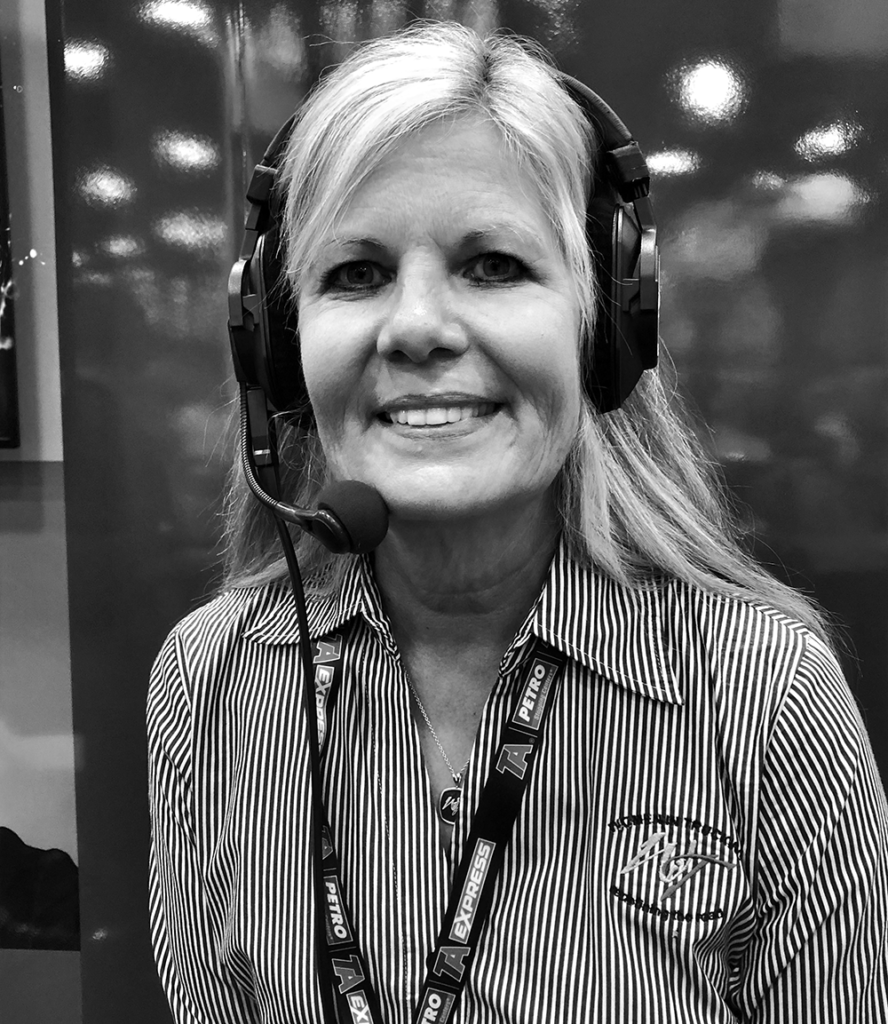
The Women In Trucking Association (WIT) has renewed its contract with Road Dog Trucking (Channel 146) on SiriusXM Radio to continue hosting its Women In Trucking program, hosted by founder and CEO Ellen Voie. In its fifth year in existence, the program features listener call-ins and interviews with professionals from the transportation industry – from professional drivers, technicians, and engineers to executives and dispatchers. Topics have ranged from critical challenges and opportunities involving gender diversity in a male-dominated industry to more specific topics such as driver health and wellness, talent recruiting and retention, leadership, mentoring, autonomous trucks, emerging technology, human trafficking, same-gender training, legal issues, regulations, and legislative developments. “While the show is relevant to both women and men in transportation, we often explore gender diversity issues to encourage more women to consider a career in trucking,” said Voie. “With women making up just 10 percent of the trucking industry workforce, SiriusXM’s Women In Trucking show helps to promote the employment of more women by identifying and removing obstacles that keep them from entering the field, and ultimately recognizes companies and individuals who support the mission of the Women In Trucking Association.” Road Dog Trucking is a 24-hour channel devoted to the trucking industry and, along with Voie, features other industry thought leaders such as KC Phillips, Dave Nemo, George Noory, Tim Ridley, Mark Willis, Mark Reddig, and Dan Ronan. SiriusXM currently has more than 35 million subscribers and more than 70 million listeners. This vast listenership is an excellent communication channel for WIT to advance awareness about gender diversity and its mission: to encourage the employment of women in the trucking industry, promote their accomplishments, and minimize obstacles they face, according to Voie. The SiriusXM Women In Trucking show takes place live at 11:00 eastern on Saturday mornings and is rebroadcast at 2:00 pm Eastern and 11:00 PM on Sundays and is available anytime on the SiriusXM app. This program is a call-in show and callers are encouraged to participate by calling 888-876-2336.
Flux Power appoints Cheemin Bo-Linn to its Board of Directors

25-year global technology veteran’s appointment to advance the commercial rollout of Flux Power’s Sustainable Lithium-Ion Energy Storage Solutions for Fortune 500 fleets Flux Power Holdings, Inc., a developer of advanced lithium-ion battery packs for electrification of commercial and industrial equipment, today announced the appointment of Cheemin Bo-Linn, a global technology industry veteran, to its Board of Directors as an independent director, effective January 14, 2022. Ms. Bo-Linn will also serve as a member of the Audit Committee, Compensation Committee, and Nominating Committee. Ms. Bo-Linn’s appointment as an independent director increases the total number of board members to six, with four independent directors. Ms. Bo-Linn currently serves as Chief Executive Officer of Peritus Partners, Inc., a valuation accelerator that also provides consulting and operations expertise in software (SaaS), IoT, mobile, and digital (analytics, marketing, e-commerce, supply chain, and cybersecurity). Previously, during her 20+ years in senior IBM executive roles, she led global teams as IBM’s VP of Industrial Sector/Electronics, responsible for IBM’s software, semiconductor chips, storage, and consulting services. Ms. Bo-Linn was recognized as one of the “Top 50 Directors” in the United States in 2019 by the National Association of Corporate Directors (NACD) and The Financial Times / Agenda named her one of the 2021 “Top 100” Diverse Directors in the Americas. In 2015, she was inducted into the Women in Technology International Professional Association “Hall of Fame” and was also named “Top Woman of Influence” by the Silicon Valley Business Journal. Ms. Bo-Linn has served on several boards as Lead Independent Director and Chair of every major committee, across the U.S., Canada, and Europe. Ms. Bo-Linn earned a doctorate degree in computer-based management information systems and organizational change from the University of Houston. “We are privileged to welcome Cheemin to the Board, bringing diverse and valuable technology industry experience in manufacturing, software, clean tech, battery storage,” said Ron Dutt, Chief Executive Officer of Flux Power. “She joins us at an opportune time with her firsthand experience in the global industrial sector and product brand development, as well as leading global brands through hypergrowth and diversification. In addition, her expertise in environmental, social, and corporate governance (ESG) strategies will support our expansion. Cheemin will help us increase the breadth and depth of our reach as a Company, positioning us to continue our growth and to create value for our shareholders.” Bo-Linn added, “Flux Power has reached a key inflection point in its evolution, and I am honored to offer my insight as the Company continues its growth trajectory to meet the increasing demands for its lithium-ion battery packs and the addition of new customers and products. I look forward to working alongside Ron and the rest of the board to build its vision of electrification for the global material handling and industrial equipment sectors.”
Great Lakes-St. Lawrence shipping 2022 government wish list
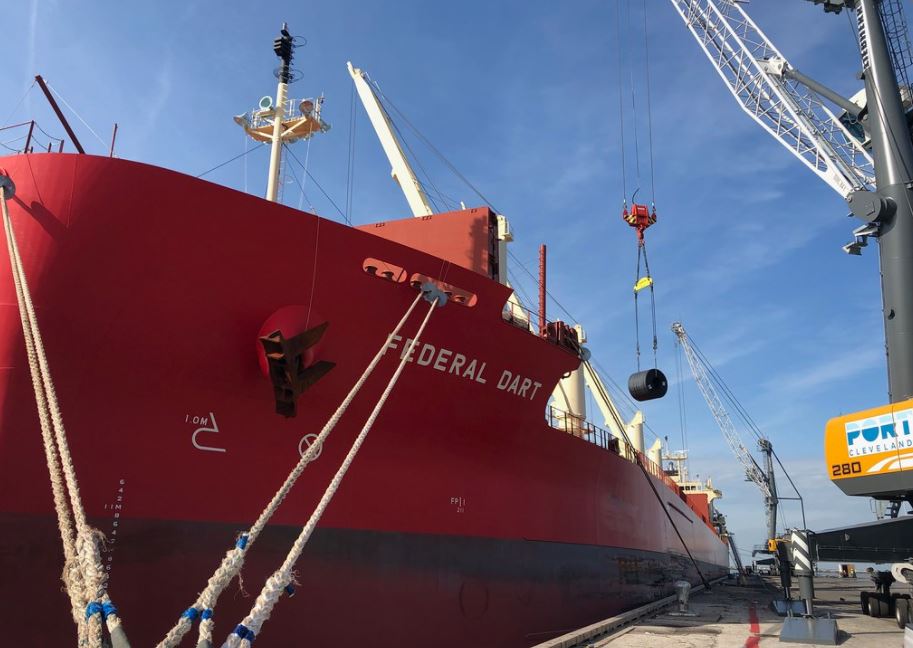
The Chamber of Marine Commerce today unveiled a 2022 wish list for legislative and policymakers to work in partnership with industry to ensure the Great Lakes-St. Lawrence River transportation corridor remains a resilient supply chain and at the forefront of marine innovation to meet ambitious goals of reaching net-zero carbon emissions by 2050. The policy wish list comes as the St. Lawrence Seaway, a key segment of the inland navigation waterway, announces that cargo shipments (between March 22 and Jan. 10) totaled in excess of 38 million metric tons, an estimated 1% above the previous season. Many of the worst-hit cargo sectors in the 2020 navigation season — iron ore, aluminum, and steel — bounced back and some even surpassed 2019 levels. Shipments of construction materials were booming as the Canadian and the U.S. economies recovered and began “building back better”. Slower grain exports due to smaller harvests compared to 2020 continued to offset the growth in other cargo sectors. Without grain factored in, estimated overall tonnage numbers would be up almost 13%. Bruce Burrows, President and CEO of the CMC, said: “Throughout the pandemic and amidst global supply chain disruptions, Great Lakes-St. Lawrence shipping once again proved it’s a reliable, ‘safe harbor’ in a storm. Our members not only delivered for their traditional bulk customers without delays, but some also cultivated new business opportunities by broadening their services for container shipments between cities and to overseas destinations. Our ports and their customers continued renewing, improving and expanding both their infrastructure and their business offerings.” “But we can’t be complacent. The economic and social repercussions that we’ve seen from bottlenecks and severe weather events in other parts of North America this past year reinforces how important it is for governments to work alongside industry to innovate and invest in economically-smart transportation solutions that boost supply chain resiliency and help reduce the future impacts of climate change.” Policy and regulatory priorities for 2022 Decarbonization: CMC members are looking to partner with the Canadian federal government, as well as with research facilities, to develop the future of transportation here in Canada to meet GHG-reduction goals. The marine sector will explore the potential for a multi-stakeholder initiative to establish a new and innovative Green Shipping Corridor in Canada, incorporating a trial of the best of Canadian shipping that is already the most fuel-efficient and carbon-friendly way to move goods, and an important part of the solution to address climate change. Domestic marine navigation (including cargo, passengers, and fishing) contributes less than 1% of all GHG emissions in Canada. Through fleet renewal and the use of alternative fuels, CMC members’ Canadian commercial fleets have already decreased carbon emissions by 19% between 2008 and 2017. However, ships and ports will require support and investment to expand the use of transition fuels, such as LNG and biofuels, as well as develop new propulsion technologies to propel marine innovation even further to meet GHG-reduction targets of net-zero carbon emissions by 2050. To make these pieces all work, CMC will be advocating for a “Made in Canada” approach to Canadian regulations for reducing carbon emissions from domestic ships that account for our short sea shipping trading patterns and unique Canadian ship designs. Supply Chain resiliency: CMC is advocating that the U.S. and Canadian governments ensure that water level management leads to safe and continued navigation on the Great Lakes-St. Lawrence Seaway System and that two industry representatives (one CDN, one U.S.) be appointed on the International Lake Ontario-St. Lawrence River Board (ILOSLRB) to ensure that infrastructure ownership and commercial users are part of the decision-making process for outflow levels through the Moses-Saunders dam. In 2020, the St. Lawrence Seaway navigation season through the Montreal-Lake Ontario section was delayed by 12 days to accommodate outflows of water through the Moses-Saunders dam that were unsafe for navigation. The increased outflow, decided by the ILOSLRB to prevent potential flooding on Lake Ontario, had little effect on Lake levels but impacted more than $80 million worth of shipping business. The latest economic study of impacts is based on the cost to the economy of shipping interruptions. Furthermore, recent experience with flooding in B.C. demonstrates that climate change means weather events will be more extreme and various levels of government along with industry must now work together to develop a much broader, holistic climate resiliency plan that looks at every avenue including flood zoning, shoreline resiliency and infrastructure investments for residents and business owners. Port and Waterway Infrastructure: The CMC is advocating on both sides of the border to secure funding from economic stimulus measures for port and waterway infrastructure to increase trade growth but also for climate change resiliency against persistent high waters throughout the Great Lakes. Pilotage Reform: With global inflation and the exponential costs of installing ballast water treatment systems over the coming years – it will be more important than ever to ensure that Canadian government-mandated pilotage services take into account today’s technology, making more effective use of risk assessments and improve efficiency and cost-effectiveness.
U.S. Rail Traffic for the week ending January 15, 2022

The Association of American Railroads (AAR) has reported U.S. rail traffic for the week ending January 15, 2022. For this week, total U.S. weekly rail traffic was 493,617 carloads and intermodal units, down 6.6 percent compared with the same week last year. Total carloads for the week ending January 15 were 233,647 carloads, up 0.5 percent compared with the same week in 2021, while U.S. weekly intermodal volume was 259,970 containers and trailers, down 12.2 percent compared to 2021. Three of the 10 carload commodity groups posted an increase compared with the same week in 2021. They were coal, up 10,296 carloads, to 67,867; nonmetallic minerals, up 1,779 carloads, to 27,367; and chemicals, up 67 carloads, to 34,002. Commodity groups that posted decreases compared with the same week in 2021 included grain, down 3,196 carloads, to 24,344; motor vehicles and parts, down 2,948 carloads, to 12,382; and petroleum and petroleum products, down 2,653 carloads, to 9,782. For the first two weeks of 2022, U.S. railroads reported a cumulative volume of 443,667 carloads, down 5.1 percent from the same point last year; and 490,711 intermodal units, down 16.2 percent from last year. Total combined U.S. traffic for the first two weeks of 2022 was 934,378 carloads and intermodal units, a decrease of 11.3 percent compared to last year. North American rail volume for the week ending January 15, 2022, on 12 reporting U.S., Canadian and Mexican railroads totaled 323,685 carloads, down 5.3 percent compared with the same week last year, and 339,662 intermodal units, down 12.1 percent compared with last year. Total combined weekly rail traffic in North America was 663,347 carloads and intermodal units, down 8.9 percent. North American rail volume for the first two weeks of 2022 was 1,250,655 carloads and intermodal units, down 13.1 percent compared with 2021. Canadian railroads reported 68,016 carloads for the week, down 21.3 percent, and 64,393 intermodal units, down 13.4 percent compared with the same week in 2021. For the first two weeks of 2022, Canadian railroads reported a cumulative rail traffic volume of 249,567 carloads, containers, and trailers, down 20.2 percent. Mexican railroads reported 22,022 carloads for the week, down 3.4 percent compared with the same week last year, and 15,299 intermodal units, down 4.4 percent. Cumulative volume on Mexican railroads for the first two weeks of 2022 was 66,710 carloads and intermodal containers and trailers, down 8.4 percent from the same point last year. To view the weekly traffic charts, click here.
Ports to revisit ‘Container Dwell Fee’ Jan. 21

Ports of Long Beach, Los Angeles continue to monitor cargo flow Consideration of the “container dwell fee” at the Port of Long Beach and the Port of Los Angeles will be delayed until Jan. 21, port officials announced. The two ports have seen a combined decline of 55% in aging cargo on the docks since the program was announced on Oct. 25. The executive directors of both ports will reassess fee implementation after monitoring data over the next week. Fee implementation has been postponed by both ports since the start of the program. Under the temporary policy approved Oct. 29 by the Harbor Commissions of both ports, ocean carriers can be charged for each long-dwelling import container. Currently, no date has been set to start the count with respect to container dwell time. The ports plan to charge ocean carriers $100 per container, increasing in $100 increments per container per day until the container leaves the terminal. Any fees collected from dwelling cargo will be reinvested for programs designed to enhance efficiency, accelerate cargo velocity and address congestion impacts. The policy was developed in coordination with the Biden-Harris Supply Chain Disruptions Task Force, U.S. Department of Transportation, and multiple supply chain stakeholders.
Witz named Harbor Department HR Director

The Long Beach Board of Harbor Commissioners on Monday approved the appointment of Sandy Witz as Director of Human Resources Services to lead the division that oversees the Port’s human capital strategies. The Port of Long Beach has about 550 employees. Witz, the former Port Assistant Director of Human Resources, had been serving in a consulting role as Acting HR Director. She was selected for the permanent position following a competitive search after the previous HR director, Stacey Lewis, announced her retirement. Witz joined the Port of Long Beach in 2018 as Assistant Director of Human Resources, serving until May of last year. Prior to coming to the Port, she worked for the City of Anaheim Human Resources for more than 20 years serving in various leadership positions. Witz earned a bachelor’s degree in political science at California State University, Long Beach, and a master’s of public administration at the University of Southern California. She is the current president and past board member for the Southern California Public Management Association-Human Resources. The appointment of Witz is effective Jan. 15.
Leaders need to shift their focus from “What” to “Why”

Great execution is essential to any business. You can have a wonderful plan in place, but if it doesn’t manifest into action, it’s not worth the paper it’s printed on. However, with all of our focus on action, leaders often skip investing time in thoroughly examining why we’re taking action in the first place. Are your tactics the right ones to achieve the organization’s objectives, or is it just a matter of keeping up the image that something’s getting done, whether useful or not? Often times when a plan is created, there is a proverbial cut-off point – the point where it’s done, and we simply now need to execute. This usually manifests as a list of activities, such as “create a campaign” or “develop a training program”. The problem is, we’re missing the “why”. That undefined middle ground connects the plan to outcomes. The “campaign” or the “training program” isn’t the real outcomes – they are the mechanism to achieve a more specific, measurable goal. There have been countless plans which have 100,000-foot objectives, such as “increase share in the millennial market by 15%” or “shorten the sales cycle from 60 to 30 days”. While all wonderful and lofty, success isn’t simply about setting the right goals, but understanding that next level “why”. The “why” provides the framework for selecting the ideal “how” – such as that marketing campaign or training program. For example, if the organization’s leaders have determined “shortening the sales cycle” is the goal, jumping to tactics misses the opportunity to tackle the “why” – why does the problem exist today? Digging into the details instead of diving into the execution of a possible solution, examining the “why” helps you determine causes, catalysts, impediments, and roadblocks. It helps you better understand where the biggest areas of concern are within the goal. It helps you create a better approach to attack the problem, rather than implementing tactics that may or may not tie to the core of the issue or objective. Don’t forget the successful execution of any plan or strategy requires strong knowledge of the background and context of the objective – the “why”. Without it, tactics will be selected based on simplicity, cost, or familiarity – none of which may actually get you to your goal. And shortcutting the process doesn’t make things go faster, it simply causes you to throw good money after bad. About the Author Andrea Belk Olson is a speaker, author, applied behavioral scientist, and customer-centricity expert. As the CEO of Pragmadik, she helps organizations of all sizes, from small businesses to Fortune 500, and has served as an outside consultant for EY and McKinsey. Andrea is the author of The Customer Mission: Why it’s time to cut the $*&% and get back to the business of understanding customers, No Disruptions: The future for mid-market manufacturing, and her upcoming book, What To Ask, coming in June 2022. She is a 4-time ADDY® award winner and host of the popular Customer Mission podcast. Her thoughts have been continually featured in news sources such as Chief Executive Magazine, Entrepreneur Magazine, The Financial Brand, SMPS Marketer, Rotman Magazine, and more. Andrea is a sought-after keynote speaker at conferences and corporate events throughout the world. She is a visiting lecturer and startup coach at the University of Iowa, a TEDx presenter, and TEDx speaker coach. She is also a mentor at the University of Iowa Venture School. More information is also available on www.pragmadik.com and www.andreabelkolson.com.
Helmut Schmid takes over the helm at AGILOX

AGILOX makes new top management appointments. Helmut Schmid takes over as CEO in January 2022, as successor to the previous CEO Franz Humer. Schmid will continue the AMR manufacturer’s ongoing strategy to expand its global market share. As the sole managing director of AGILOX, he also adds three new authorized signatories to the management team, Josef Baumann-Rott, Klaus Pucher, and Robert Mayer. Helmut Schmid, who was the head of Germany and Western Europe at cobot market leader Universal Robots for many years, is now taking over as CEO of AGILOX. With Schmid, an internationally experienced managing director, and robotics enthusiast, the company is continuing on its path of further expansion. In his previous appointment, Schmid was Managing Director of the German cobot pioneer Franka Emika GmbH in Munich. New leadership for AGILOX Helmut Schmid is a specialist in growth strategies, business development, change management, internationalization, sales and marketing. In his long career, he has already founded several companies, managed them profitably, and, in particular, implemented scalable business models, often developing new sales processes and structures and implementing new go-to-market strategies in a targeted manner. The graduate aircraft engineer has also made a name for himself as co-founder of the German Robotics Association and Robotics Ventures GmbH. Now, the new CEO of AGILOX wants to drive forward the company’s further development and internationalize it. “AGILOX is a brand with a strong base and an equally high market potential. I look forward to contributing my experience to the company in order to continue to develop it profitably and position it durably on the market,” says Schmid. Seamless transition “With his years of experience in the robotics environment, Helmut Schmid brings in-depth technical as well as management expertise, and now as CEO of AGILOX, can further develop the company from its excellent starting position and support our planned growth with the goal of becoming the world’s leading AMR provider,” said Dr. Thorsten Dippel, Managing Director of the Carlyle Group, which has been involved as a key partner of AGILOX since June 2021. Daniel Haider, Managing Director of Raiffeisen Invest Holding GmbH & Co KG, likewise highlights the international industry experience of the new CEO: “We are very pleased that such a renowned expert in robotics is putting his trust in AGILOX. With Helmut Schmid as our new CEO, we are continuing the drive for dynamic growth at an international level.” The company’s previous CEO, Franz Humer, is also pleased with the new top manager: “It was particularly important to us as founders that the new CEO continues AGILOX’s successfully established strategy for the future while furthering our brand DNA. In Helmut Schmid, AGILOX is getting a CEO who will develop the company progressively and keep us on the right track for the future.” Schmid is also looking forward to the new challenge: “I am looking forward to continuing the good preparation work with the entire team and from now on, become a contributor to the AGILOX success story. Internationalization and the further expansion of the headquarters in Neukirchen near Lambach are just a few of the major topics I am looking forward to addressing.” Franz Humer is joining the Board of AGILOX as Executive Chairman and will prepare the company’s next strategic steps, notably in the area of product development and organization in the US. Dirk Erlacher is moving to China and will build up the Asian market from Shanghai.