
Manufacturing Technology Orders highest in two decades for first two months of 2022

Manufacturing technology orders totaled $479.3 million in February 2022 according to the latest U.S. Manufacturing Technology Orders Report published by AMT – The Association For Manufacturing Technology. February 2022 orders were up 9% from January 2022 and up 27% from February 2021. Year-to-date orders are just shy of $920 million, an increase of 30% from the same period in 2021 and only 11% down from the same period in 1998 when orders set a record by surpassing $1 billion in only two months. “The industry seems to be carrying the momentum of 2021 into the beginning of 2022, recording the best start to the year in over two decades,” said Douglas K. Woods, president of AMT. “As we have learned throughout the last two years and, especially the last few months, conditions can change quickly. We saw this in 2021 when order values during the first few months of the year performed only moderately well, but by the end of 2021, it was the best year on record. This can cut both ways so we may need to temper the early 2022 excitement as conditions on the ground change.” Strong consumer demand has been a key driving factor behind much of the recent capital investment from manufacturers. “Despite waning consumer sentiment and predictions that spending would soon shift back to services, demand for manufactured products remains at historic levels,” said Woods. However, several headwinds stand in the way of growth, most notably inflation. Persistent inflation, exacerbated by geopolitical events, threatens to undermine the base of consumer demand that has supported the manufacturing technology industry over the last twelve months. “Many of the issues such as worker shortages and supply chain troubles we have been highlighting the past few months are still present, but inflation is becoming the biggest threat the manufacturing industry has seen since the initial shutdowns two years ago,” said Woods. “The aggressive posture taken by the Federal Reserve in their last meeting is really telling. Inflation needs to be controlled, but for interest rate-sensitive activities like capital investment, the medicine may be a tough pill to swallow.”
Southworth Products introduces Lift Tables for Fork-Free environments
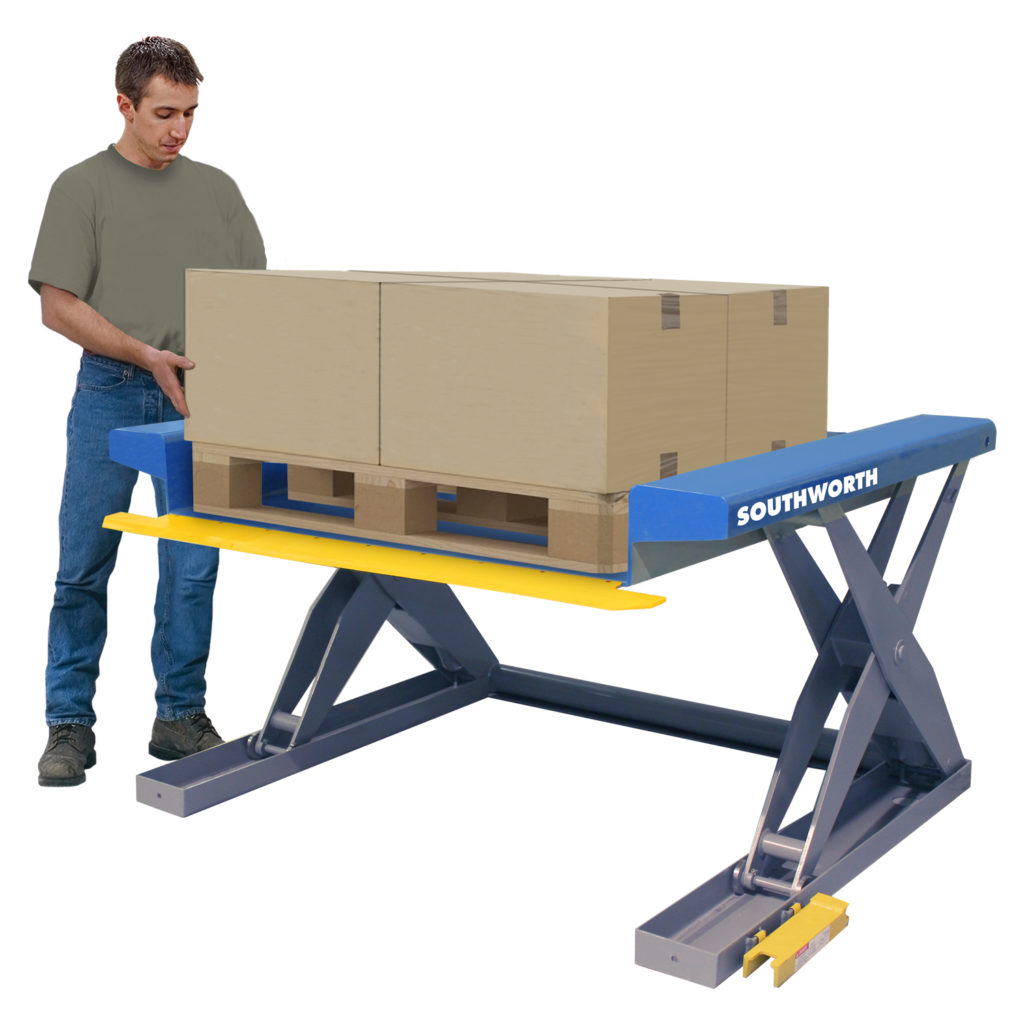
ZLS Series Floor Height Lift Tables from Southworth Products have a pan-style platform that, when lowered, sits essentially flush to the floor allowing them to be loaded and unloaded with an ordinary hand pallet truck. Forklift-free loading and unloading have become increasingly important as many facilities have established fork-free zones, and some have eliminated forklifts entirely. Ideal for palletizing applications, ZLS Lifts gives workers unobstructed access to loads from all four sides. Once loaded, the hydraulic lift table can be positioned to any height up to 35-3/8”. The large 50” x 48” platform accepts a variety of pallet and skid sizes, including the open or closed bottom. Three models are available with 2000, 4000 or 6000-pound capacities. A 6” flexible, high-visibility yellow strip is mounted to the front edge of the platform to protect against toe injuries. Lifting and lowering is controlled by either a footswitch or pushbutton pendant. Units operate on standard 115/1/60 power. ZLS Series Lifts can be equipped with a wide range of safety and convenience options including bellows accordion skirting, photo-eye toe protection, one-touch auto-leveling, portability chains, custom platform sizes, and corrosion-resistant finishes.
How to prevent Bench Grinder accidents
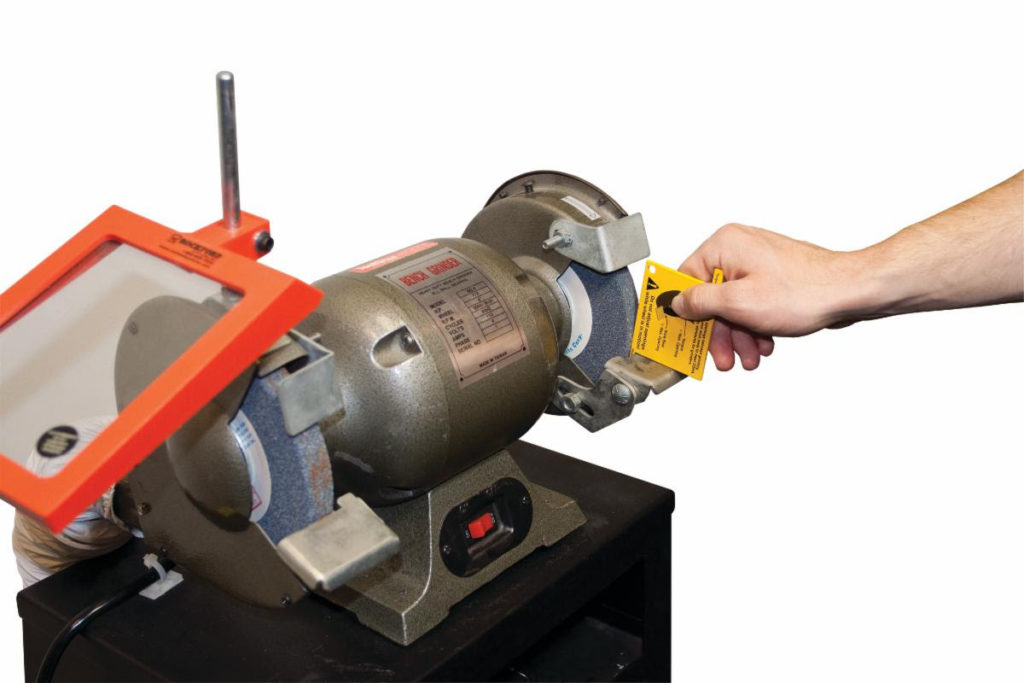
Statistics indicate more than half of grinder accidents result from operator error Because bench grinders are everyday machinery in workplaces nationwide, many operators become complacent about their hazards. However, bench grinders are very dangerous when used improperly. Statistics show that more than half of grinder injuries, such as fingers caught in the machine, or eye and face lacerations, are the result of operator error. Rockford Systems, LLC, a provider of machine safeguarding products and services, offers this primer on grinder safety regulations to help prevent accidents. First off, it is important to be fully versed in the regulations that outline safe grinder installation, maintenance, and operation. The workplace regulations that apply to grinders are OSHA 29 CFR SubPart O 1910.215, a “machine specific” (vertical) regulation with a number of requirements, which if left unchecked, are often cited by OSHA as violations. ANSI B11.9-2010 (Grinders) and ANSI B7.1 2000 (Abrasive Wheels) also apply. Carefully review these sets of regulations before operating any grinding machinery. Work-Rests and Tongue-Guards OSHA specifies that work rests be kept adjusted to within 1/8-inch of the wheel to prevent the workpiece from being jammed between the wheel and the rest, resulting in potential wheel breakage. Because grinders run at such high RPM, wheels actually explode when they break, causing very serious injuries, blindness, and even death. In addition, the distance between the grinding wheel and the adjustable tongue guard — also known as a “spark arrestor” — must never exceed 1/4-inch. Because the wheel wears down during use, both these dimensions must be regularly checked and adjusted. Grinder safety gauges can be used during the installation, maintenance, and inspection of bench/pedestal grinders to ensure work-rests and tongue-guards comply with OSHA’s 1910.215 regulation and ANSI standards. To do so, wait until the wheel has completely stopped and the grinder is properly locked out before using a grinder safety gauge. Grinder coast-down time takes several minutes, which may tempt an impatient employee to use the gauge while the wheel is still rotating. This practice is very dangerous because it can cause wheel breakage. Other advice: where grinders are concerned, personal protective equipment (PPE) usually means a full face shield, not just safety glasses. The fact is, an employee cannot be too careful with a machine that operates at several thousand RPM. Remember to document any safety requirements set forth by OSHA as that is the best evidence that safety procedures are being followed. Ring-Testing OSHA requires that grinding wheels be ring tested before mounting them. This simple step prevents the inadvertent mounting of a cracked grinding wheel. Ring-Testing involves suspending the grinding wheel by its center hole, then tapping the side of the wheel with a non-metallic object. This should produce a bell tone if the wheel is intact. A thud, or a cracked-plate sound, indicates a cracked wheel. For larger grinders, grinding wheels are laid flat on a vibration table with sand evenly spread over the wheel. If the wheel is cracked, the sand moves away from the crack. To prevent cracking a wheel during the mounting procedure, employees must be very carefully trained in those procedures. This starts with making sure the wheel is properly matched to that particular grinder, using proper blotters and spacers, and knowing exactly how much pressure to exert with a torque-wrench, just to mention a few things. Wheel Covers This OSHA-compliant Wheel-Cover allows no more than a total of 90 degrees of the wheel left exposed. (65 degrees from the horizontal plane to the top of the wheel cover). Never exceed these wheel-cover maximum opening dimensions. Larger wheel-cover openings create a wider pattern of flying debris should the wheel explode. A well-recognized safety precaution on bench/pedestal grinders is to stand well off to the side of the wheel for the first full minute before using the machine. Accidents have shown that grinding wheels are most likely to shatter/explode during that first minute. OSHA Instruction Standard #STD 1-12.8 October 30, 1978, addresses the conditional and temporary removal of the “Work Rest” for use only with larger piece parts based on the condition that “Side Guards” are provided. Grinder Do’s Always handle and store wheels in a careful manner Visually inspect all the wheels before mounting for possible damage Make sure the operating speed of the machine does not exceed the speed marked on the wheel, its blotter, or container Check mounting flanges for equal size, relieved as required, and correct diameter Use mounting blotters when supplied with wheels Be sure work rest is properly adjusted on the bench pedestal and floor stand grinders Always use a safety guard that covers a minimum of one-half the grinding wheel Allow newly mounted wheels to run at operating speed, with the guard in place, for at least one minute before grinding Always wear safety glasses or some type of approved eye protection while grinding Turn off the coolant before stopping the wheel to avoid creating an out-of-balance condition Grinder Don’ts Don’t use a wheel that has been dropped or appears to have been abused Don’t force a wheel onto a machine or alter the size of the mounting hole – If a wheel won’t fit the machine, get one that will Don’t ever exceed the maximum operating speed established for the wheel Don’t use mounting flanges on which the bearing surfaces are not clean, flat, and smooth Don’t tighten the mounting nut excessively Don’t grind on the side of conventional, straight, or Type 1 wheels Don’t start the machine until the safety guard is properly and securely In place Don’t jam work into the wheel Don’t stand directly In front of a grinding wheel whenever a grinder is started Don’t grind material for which the wheel Is not designed Rockford Systems offers a wide variety of safeguarding products for grinders including motor starters, disconnect switches, and shields.
Dr. Shrink, Inc. celebrates 30 years as a global provider in Shrink Wrap
Dedication to its customers, world-class customer service, premium product offerings, and willingness to provide experienced advice on the proper way to shrink wrap are just a few of the reasons Dr. Shrink, Inc. has been in business so long. The company celebrates 30 years of success in April 2022. Starting in 1985, before the birth of Dr. Shrink, Inc., Mike Stenberg worked as a shrink wrap installer wrapping boats, machinery, airplanes, buildings, etc. for about seven years, where he perfected the trade and acquired skills to make shrink wrapping easier and more efficient. As shrink wrapping became more prevalent and widespread, Mike saw a more pressing need for the distribution of premium shrink wrap and installation supplies; thus his focus shifted from being a shrink wrap installer to a distributor. In 1992, Mike retreated from the actual shrink wrap installation work to focus on the selling and distributorship of shrink wrap materials—and this is when Dr. Shrink, Inc. was born. Dr. Shrink, Inc. was founded in 1992, by Mike & Jill Stenberg in Manistee, Michigan, as a two-person operation in their home. It has since grown into a 20+ employee international corporation that distributes its products across the world. “Taking a step back and thinking about the last 30 years, it’s humbling,” says Mike Stenberg, President & Founder of Dr. Shrink, Inc. “Jill and I started Dr. Shrink, Inc. in our home and distributed products out of our garage. Our initial vision for the company was to offer expert shrink wrap installation advice, technical support, and provide excellent customer service—all while selling the highest quality, premium shrink wrap and accessories as a “one-stop-shop” for all things shrink wrap. Today we couldn’t be more proud of this company, and the people we have on our team. There is no way Dr. Shrink, Inc. could have reached this milestone without the loyalty of our amazing customers, distributors, and our team of fantastic employees.” Dr. Shrink, Inc. has not only supplied its premium 100% virgin resin shrink wrap, but it has also been a leader and innovator in the shrink wrap industry for the past 30 years. The company is responsible for many of the accessories and practices that are implemented by installers and distributors across the globe. “When we realized the potential of the industry, we had to get more involved on the ground floor,” says Ryan Polcyn, VP of Sales & Marketing of Dr. Shrink, Inc. “The people that we have met, and the businesses and distributorships we have seen grow and expand, not just locally, but internationally have been extremely rewarding. Knowing that our products, training techniques, and resources have contributed towards their success is just incredible.” Throughout the years, Dr. Shrink, Inc. has also found ways to get involved within the communities it serves. From their promotion of breast cancer awareness and their “Think Pink” Shrink Wrap fundraising efforts to their multi-state shrink-wrap recycling drives, it’s about much more than just selling shrink wrap and supplies. “I appreciate each and every one of the people we work with on a daily basis in many countries around the world. The excellent service and products that Dr. Shrink, Inc. offers wouldn’t happen without our tremendous team of customer service representatives, distributors and vendors, warehouse employees, and salespeople who work very hard to make us a world-class business,” says Bart Stenberg, General Manager of Dr. Shrink, Inc. As Dr. Shrink, Inc. looks toward the next 30 years, their commitment to its team, community, and industry has served them well and they are excited about what the future holds. “Every day I get up and look forward to who we can make a connection with,” says Mike Stenberg. “If it’s someone in my hometown of Manistee, or somewhere in Europe or the Far East, it’s the people, connections, and relationships that have and will always keep me motivated. A warm and heartfelt “thank you” to all our distributors and customers for trusting Dr. Shrink, Inc. to be your shrink wrap supplier over the years.”
How technology enables the ‘Demand-Driven Enterprise’
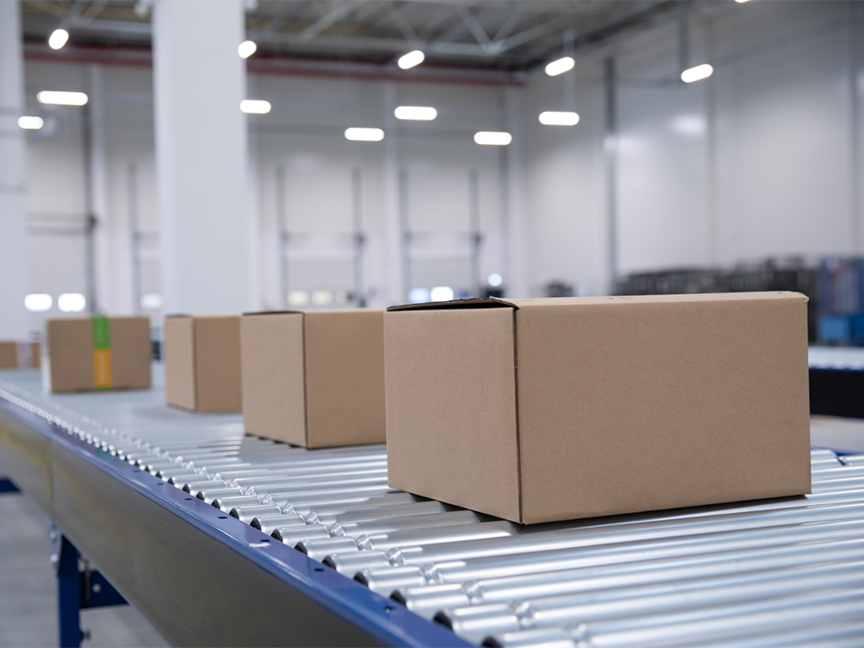
What is a demand-driven enterprise? The Demand Driven Institute defines it as one that “can sense market changes, adapt to complex and volatile environments, and develop market-driven innovation strategies.” At the same time, the demand-driven enterprise can’t ignore its execution arm — the warehouse. That’s where people are responsible for planning, yard management, warehouse management, and inventory control. They rely on data and systems to manage shipping, receiving, dock schedules, inventory control, labor planning, and work release, among other functions. Most distribution centers have a number of complex tasks that are hindered by multiple constraints, as they struggle to get the right inventory out the right door at the right time. But technology can help them to make decisions faster, resulting in optimized warehouse operations and increased efficiency. It’s not easy to identify a single point of failure in today’s complex supply chains. COVID-19 has led to raw-material shortages and missed production schedules. Companies overproduced during the pandemic, and are now facing the consequences of having used up much of their raw-material inventory. Meanwhile, in the warehouse, labor availability remains a big problem, prompting efforts to digitize and automate support systems. But delivery schedules for new equipment can be up to 36 months out. So most organizations are exploring innovation through software. One of the first places warehouse managers look to drive value is visibility platforms, which help to determine where inventory is and when it will arrive. But given that they provide all this data, why is there still a shortage of toilet paper, chicken, and semiconductors in the market today? Who in the supply chain is really at fault? Production blames raw materials procurement and planning, while transportation blames production for not running to agreed-upon schedules. And transportation gets blamed when there aren’t enough trucks to deliver the goods. Finally, responsibility goes to the DC, which has been whipped around by upstream processes and can’t ship anything on time because trucks are showing up six hours late and there isn’t enough labor to run the DC. To mitigate this whipsaw of blame, new systems must be introduced that provide rapid decision support and enable demand-driven execution. Execution platforms tie together visibility, the yard, enterprise resource planning (ERP), warehouse management software (WMS), and other systems. But to implement these applications successfully, management must be prepared to lose a portion of the manual control it’s used to. For example, at one consumer packaged goods producer, the third-party logistics provider was given a full execution plan for the DC. It needed to receive the plan, review it, and manually enter cherry-picked components into the WMS, which directed workers to change their workflow. This took a massive amount of time and was almost worse than having no optimized plan to begin with. To reduce friction and drive execution, plans were pushed directly into the WMS. Once the team automated the decision-making process, efficiency increased by 200% overnight. There’s much talk in supply chains today about the need for visibility, predictability, and prescriptive analytics. Yet few organizations are translating those capabilities into comprehensive execution plans. Even with artificial intelligence and prescriptive software, execution is needed to make everything work smoothly. In an ideal world, all warehouse planning is on autopilot. The facility reduces the need for decision-making, eliminates bottlenecks, and allows key personnel to work with teams on the floor to increase productivity. With automation, plans can be created and directly injected into the WMS. Planning time is reduced by 97%; productivity increases by 16%; inventory waste is reduced by 13%, and intra-campus transportation costs fall by 31%. In the process, demand can be met, production runs on schedule, inventory moves off the shelf, and orders are shipped to customers on time, in full.
EP 270: Concentric at MODEX 2022
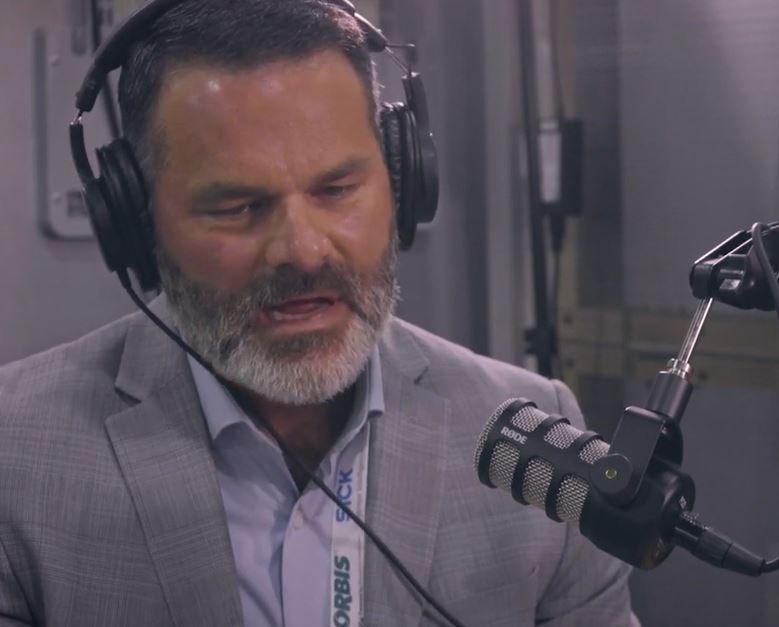
In this episode, I was joined by the COO of Concentric, John Winter, at MODEX 2022. Concentric focuses on bringing the right power fit to your material handling equipment so that you don’t have to worry about your batteries. We discuss what Concentric does, how the power space for lift trucks has developed, and how they help customers understand what the right fit for them is. Key Takeaways Concentric has been formed with a partnership with multiple different distributors allowing them the flexibility to determine the best fit for your power needs. They are focused on ensuring that they help customers understand what is needed in their operation which could be a mix of different power solutions and not just going with one or the other. This is important because it can help you to optimize your power to perform during all of your operational hours, help to reduce maintenance, and also ensure you are not spending more than you should be. John discusses how power for the material handling industry has been evolving and how it has evolved fairly quickly in the last few years. We have been mostly using lead-acid batteries in our industry for a very long time but in recent years we have seen growth in lithium-ion batteries and some others like hydrogen. Within these developments, there are also different variations of chemistry as well so Concentric wants to take on understanding all of these developments so that they can help you get the right fit. They also offer power as a service model where you are only being charged by the usage of power and not a total upfront cost. In our conversation, John also brings up that lithium will not be the last different type of battery chemistry that we will see. From Concentric’s perspective, they want to take on all of these new technologies and get the information together so that you do not have to. Their ultimate goal is that an operation will only have to worry about the operation and not its power sources. As John says, they want you to be able to have your battery options work like you expect the lights in your house to work and for you to never worry about them. Listen or watch the episode below and leave your thoughts in the comments. The New Warehouse Podcast EP 270: Concentric at MODEX 2022
Equipment Finance Industry confidence eases again in March

The Equipment Leasing & Finance Foundation (the Foundation) has released the March 2022 Monthly Confidence Index for the Equipment Finance Industry (MCI-EFI). The index reports a qualitative assessment of both the prevailing business conditions and expectations for the future as reported by key executives from the $900 billion equipment finance sector. Overall, confidence in the equipment finance market is 58.2, easing from the February index of 61.8. When asked about the outlook for the future, MCI-EFI survey respondent Michael Romanowski, President, Farm Credit Leasing, said, “Supply chain issues continue to hamper equipment availability. The Ukraine conflict has enhanced volatility and is contributing to an already unsettled environment. We continue to work closely with our partners and customers to ensure we are advancing our mission in these uncertain times.” March 2022 Survey Results: The overall MCI-EFI is 58.2, easing from the February index of 61.8. • When asked to assess their business conditions over the next four months, 21.4% of executives responding said they believe business conditions will improve over the next four months, a decrease from 24.1% in February. 50% believe business conditions will remain the same over the next four months, down from 69% the previous month. 28.6% believe business conditions will worsen, an increase from 6.9% in February. • 25% of the survey respondents believe demand for leases and loans to fund capital expenditures (capex) will increase over the next four months, up from 24.1% in February. 75% believe demand will “remain the same” during the same four-month time period, an increase from 72.4% the previous month. None believe demand will decline, down from 3.5% in February. • 21.4% of the respondents expect more access to capital to fund equipment acquisitions over the next four months, up from 17.2% in February. 78.6% of executives indicate they expect the “same” access to capital to fund business, a decrease from 82.8% last month. None expect “less” access to capital, unchanged from the previous month. • When asked, 46.4% of the executives report they expect to hire more employees over the next four months, up from 44.8% in February. 50% expect no change in headcount over the next four months, a decrease from 55.2% last month. 3.6% expect to hire fewer employees, up from none in February. • 3.6% of the leadership evaluate the current U.S. economy as “excellent,” a decrease from 10.3% the previous month. 85.7% of the leadership evaluate the current U.S. economy as “fair,” down from 86.2% in February. 10.7% evaluate it as “poor,” an increase from 3.5% last month. • 7.1% of the survey respondents believe that U.S. economic conditions will get “better” over the next six months, a decrease from 24.1% in February. 57.1% indicate they believe the U.S. economy will “stay the same” over the next six months, a decrease from 58.6% last month. 35.7% believe economic conditions in the U.S. will worsen over the next six months, an increase from 17.2% the previous month. • In March 42.9% of respondents indicate they believe their company will increase spending on business development activities during the next six months, down from 44.8% the previous month. 57.1% believe there will be “no change” in business development spending, up from 51.7% in February. None believe there will be a decrease in spending, down from 3.5% last month. March 2021 MCI-EFI Survey Comments from Industry Executive Leadership: Bank, Middle Ticket “While equity markets, crude, supply chain and global industry trade have all been greatly impacted by the Russian invasion of Ukraine, it is the suffering and loss of life that is most disturbing. I am proud of Key’s immediate humanitarian efforts on behalf of the Ukrainian people.” Adam Warner, President, Key Equipment Finance Independent, Small Ticket “Through 2021, often businesses used their federal government stimulus money to purchase capital equipment and services. The deeper we get into 2022, increasingly, these businesses will return to financing their capital equipment purchases.” James D. Jenks, CEO, Global Finance and Leasing Services, LLC
Stretch Wrap supplier introduces ribbed film for extra heavy-duty Pallet Wrapping
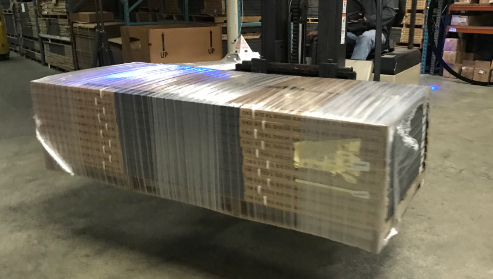
Orbital wrapper manufacturer TAB Industries, LLC, Reading, Pa., has introduced the TWT-20120 Ribbed Stretch Wrap. The strongest grade in the company’s TAB line of stretch wraps, the Ribbed Stretch Wrap features patent-pending, Power Band technology that integrates thick ribs of plastic material within the stretch wrap at regular intervals to provide extra strength, durability, and tear resistance for heavy-duty pallet wrapping. The cast stretch wrap was custom-developed to apply the high compression force needed to secure heavy loads with odd shapes, awkward centers of gravity, sharp edges, and/or other challenging characteristics to their pallets without shifting or sliding in transit. Suitable for stretch wrapping metal parts and assemblies, heavy machinery, building products, and other pallet loads, the TWT-20120 Ribbed Stretch Wrap is proven compatible with the company’s TAB Wrapper Tornado line of orbital wrappers, which automatically applies stretch wrap 360 degrees around and under the pallet and load to create a sturdy, stable, unitized load. The ribbed stretch wrap is typically stocked at the company’s Reading, Pa. headquarters for fast delivery. The stretch wrap rolls come in a 20-inch width x 4,000 feet per roll, 40 rolls per pallet.
Tompkins Robotics continues to enhance Automated Sortation Process with new tSort3D System
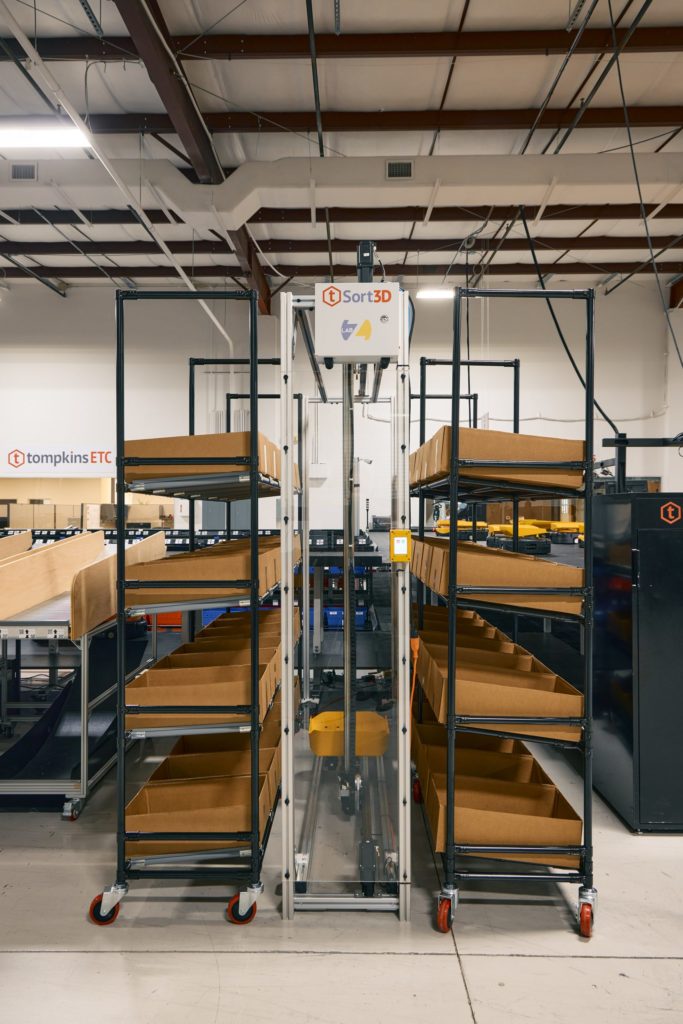
In keeping with the belief to deliver adaptive, flexible, and portable solutions, Tompkins Robotics introduces the new tSort3D. tSort3D is modular, allows customers to implement quickly, and the system can grow and change as their operational needs evolve. The tSort3D greatly multiplies the destination density and volume of the sortation process. A tSort3D system is mated with the Tompkins Robotics tSort solution for item sortation loading and routing the items to tSort3D modules for order consolidation. The system is ideal for the fulfillment of items for customer e-commerce orders and other fulfillment flows such as store replenishment and reverse logistics. The system can be deployed in a scalable fashion in sites as small as the backroom of retail stores and up to very large Distribution and Fulfillment Centers. tSort3D allows 6 to 8 times the sort destinations in the same space as other traditional automated sortation solutions, provides for thousands of sort destinations, volumes up to 20,000 an hour, and facilitates a single, very large batch pick. These capabilities far exceed other dense sortation systems on the market today. This solution solves a pressing need in distribution and fulfillment operations that no previous automation solution fully addressed. “tSort3D can handle the widest range of products compared to other automated sortation solutions on the market,” says Tompkins Robotics President & CEO, Mike Futch. “The tSort3D uses a tray as the carrier, while other solutions use a cross belt. Tompkins Robotics unique tray design ensures that round, cylindrical, and oddly shaped items are compatible with our system.” In addition, tSort3D can handle wider, taller, and deeper products than other dense, robotic sorters on the market. The system can continuously track items, orders, and order status to provide real-time updates to an operator. tSort3D provides a much less labor-intensive process from picking through to order delivery to packing for many product flows and products. Completed orders can be removed individually or as a batch of up to 24 orders. The system greatly enhances the productivity and capacity of an operation while taking up less space, deploying in less than half the normal required time, and costing less. In addition, the system is very flexible having modular, scalable configurable, and portable abilities that are unique and not found in other solutions.
StayLinked supports Zebra Technologies ground-breaking WS50 – the ultra-compact wearable mobile computer
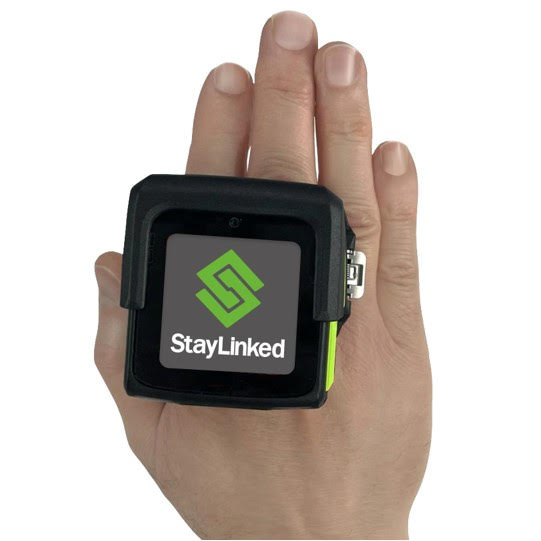
StayLinked, a market provider in terminal emulation (TE) solutions for the supply chain industry, has announced its support for Zebra Technologies’ newly released WS50, the world’s smallest enterprise-class wearable Android mobile computer. The ultra-compact, fully functional mobile computing device with a built-in barcode scanner can be worn on the wrist, across two fingers, or on the back of the hand as a ring scanner. “Our support includes integration of the WS50 with Evolve, StayLinked’s robust and highly-secure integration platform supported by our SmartTE software, enabling supply chain organizations to future-proof their legacy systems and take advantage of new and emerging Industrial Internet of Things (IIoT) technologies,” explained Justin Griffith, chief technology officer, StayLinked. Evolve gives WS50 wearers the ability to activate and communicate with new and emerging IIoT devices such as Fetch Autonomous Mobile Robots (AMRs), and Zebra’s HD4000 Enterprise Head-Mounted Displays. “As a Zebra partner and a member of the Zebra Early Adopter Program we can see the potential wide-ranging applications and capabilities that StayLinked’s integration with the uniquely versatile WS50 can deliver,” continued Griffith. StayLinked Evolve enables the rapid and seamless integration of hardware platforms such as the WS50 and Fetch AMR into a customer’s existing environment. The integration requires no coding, no scripting, and no changes to the customer’s applications. This integration presents significant innovative opportunities for StayLinked’s channel partners and their customers as the WS50 and other IIoT devices are immediately accessible by two-thirds of the rugged data collection market using legacy TE software. “StayLinked Evolve’s integration with Zebra’s WS50 gives our channel partners and their customers an easily deployable IIoT peripheral as a stand-alone wearable Android device and an IIoT hub, all in one versatile platform,” said Griffith. The WS50 has been designed for scan-intensive workflows with a limited user interface (UI). Converged Scan models are ideal for loading trucks, sorting boxes, and item put-away, where workers scan frequently, needing only limited on-screen instructions. With the WS50 Wrist Core model, supervisors can communicate with workers via PTT or push messages and tasks. Users interact with a simple menu-driven UI optimized for the two-inch display. The WS50 supports 14˚ F to 122˚ F operation (not freezer) and is designed for rugged industrial use cases. The WS50 opens the door for StayLinked partners and their customers to deploy many new cutting-edge enhancements to existing workflows by supporting the full suite of its Evolve partners’ solutions. “With the introduction of the WS50, Zebra is once again demonstrating why it is a leader in the rugged wearable technology sector – the WS50 really is in a class of its own, and StayLinked is excited to be supporting this cutting-edge device,” concluded Griffith.
Vecna Robotics partners with Big Joe to introduce a new Co-Bot Pallet Jack
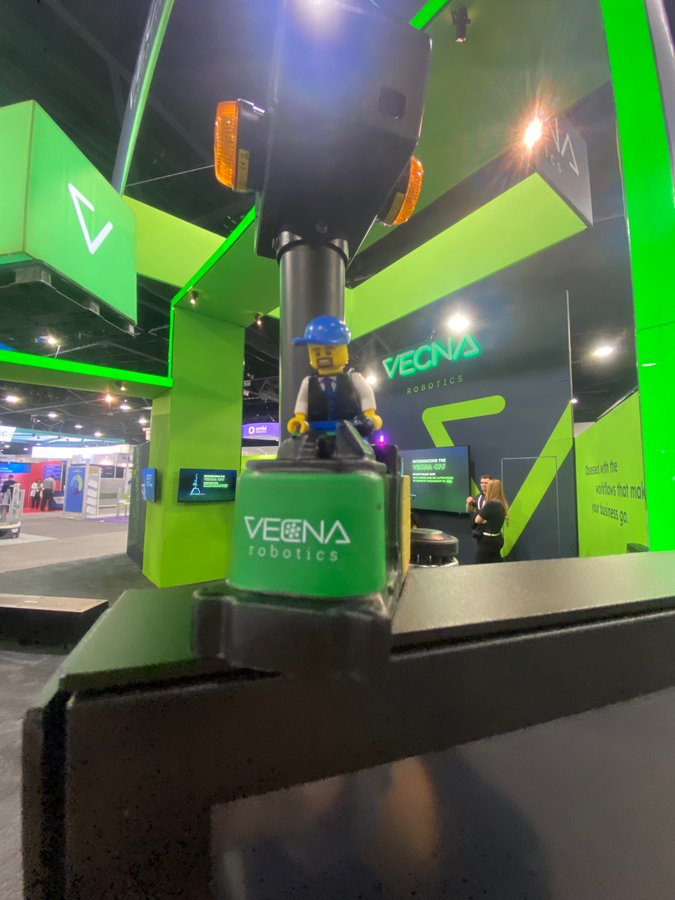
Entry-level Vecna CPJ Brings Intelligent, Flexible Material Handling Robotics Solutions to Labor-intensive “In-between” Workflows That Have Been Long Ignored by Automation Vecna Robotics, a provider of flexible material handling automation solutions, announced at MODEX 2022 with Big Joe, a provider of pedestrian material handling equipment, its latest autonomous offering for labor-intensive material-handling workflows called the Vecna CPJ. This revolutionary co-bot pallet jack is uniquely designed to bring human-assisted robotics to warehouses and manufacturing facilities with labor-intensive workflows that have been long ignored by robotics automation, including shorter distances, lower throughput, and tighter spaces. Internal simulations and field tests reveal up to 45% improvement in throughput versus human work only. There are over 5 billion pallets in circulation and nearly 5 million manual pallet jacks at work moving them every day. With 70% of the total cost of moving those pallets being labor – and severe labor shortages crippling supply chains – Big Joe and Vecna Robotics identified a clear need for an autonomous material handling solution to handle “in-between” loads. The new offering combines Vecna Robotics’ proven expertise in autonomous mobile robots and orchestration with Big Joe’s trusted material handling hardware. Together, the two companies provide an easy-to-use, on-demand labor automation service that frees up human workers to focus on higher-value tasks. “The last 18 months had driven huge demand for AMRs like autonomous forklifts, but current offerings are typically only accessible to very large facilities,” said Craig Malloy, CEO at Vecna Robotics. “Our CPJ is a game-changer as it allows facilities of varied sizes to address their immediate labor shortages with intelligent material handling robots. The new solution works seamlessly alongside human workers and automates a broader range of payloads, workflows, and environments that the market is not currently addressing.” To maximize the accessibility of the product and help with immediate labor shortages, Vecna CPJ will be available through a Robot-as-a-Service (RaaS) pricing model that is designed to support easy onboarding of robotics solutions and deliver rapid savings without the need for large CapEx budgets. “Bringing solutions to market that empower workers to better manage in-between material handling tasks is a core to who we are,” said Bill Pedriana, CMO of Big Joe. “We are thrilled to be working with an industry leader like Vecna Robotics to bring our first robotics offering to the masses together. Their intelligent and easy to deploy system will help our joint customers make moving workloads far more efficient on day one.” Vecna Robotics’ customers, including GEODIS and Shape Corp., trust the company’s material handling automation solutions to simplify workflows and increase throughput. “Vecna Robotics’ new co-bot platform is an innovative, accessible solution for improving productivity in labor-intensive, underserved workflows across the warehouse. We look forward to future tests of the platform and continued innovation from Vecna Robotics on automating material handling workflows,” said Andy Johnston, Senior Director of Innovation at GEODIS in the Americas. “Vecna Robotics’ CPJ is a versatile platform that complements our future deployments, while the flexibility and simplicity of operation allow us to tackle new use cases. We look forward to expanding our work with Vecna and incorporating this into our other workflows to automate our material handling processes,” added Mahesh Nikam, Shape Excellence Systems Manager, Shape Corp. Vecna Robotics also collaborated with industry leader Quanergy Systems (NYSE: QNGY) on the lidar technology used by the CPJ to enable mass-market adoption and democratize access to automation. “The time to democratize automation in material handling is now. This technology has long been exclusive to early adopters or those in select industries with large budgets for innovation,” said Enzo Signore, CMO at Quanergy. “In collaboration with Vecna Robotics, we have a unique opportunity to deliver a true co-bot solution to help companies overcome dire labor shortage issues with technology that can be immediately deployed, virtually out-of-the-box.” Available for purchase by the end of 2022, Vecna CPJ will offer the following: Flexible configurations for moving a variety of pallets, carts, racks, bins, and other payloads up to 3,300 lbs. / 1,500 kg Full AMR functionality, including intelligent route planning, obstacle circumvention, and transport at an accessible entry point Seamless switching between autonomous and manual control, easy onboarding, user-friendly UI/UX for intuitive programming and collaborative workflows Enterprise-class automation to historically underserved workflows, including pallet and tote consolidation, pick-to-packout, QA/QC/rework, and dunnage retrieval Productivity boosts with collaborative human-robot workflows at large, multi-shift enterprise sites with tight spaces Intelligent human-robot orchestration, autonomy, interoperability, remote monitoring, and analytics powered by Vecna’s Pivotal™ software
Wolter, Inc. acquires Crane & Hoist Service Company in Dayton, Ohio

Valley Industrial Crane is a crane and hoist service provider, founded by Vic Slemker in 2002. Whether a one-ton monorail or a forty-ton steel warehouse crane system, Valley Industrial helps customers with a variety of resources including 24-hour service, maintenance, inspections, and turnkey installation. Wolter, Inc. has announced its acquisition of Valley Industrial Crane, located in Dayton, Ohio, marking Wolter’s 13th acquisition in the last 10 years, as well as the company’s 17th location. For Wolter, this acquisition adds a new layer of crane and hoist support and expertise to its existing Crane & Hoist business group, located in Louisville, Kentucky (formerly Bohnert Equipment Company). Moving forward, the Valley Industrial Crane team, including Owner Vic Slemker, will operate as usual, providing the same services to current and new customers under the Wolter name. “This new partnership is a great fit for Wolter’s existing crane and hoist sales and services. The Valley Industrial Crane team shares the same commitment to safety and continuous efforts to enhance productivity through a variety of solutions. We couldn’t ask for a better fit and are excited to grow this segment of the business.” – Jerry Weidmann, Wolter, Inc. president
MH Equipment receives prestigious Hyster-Yale 2021 Group Awards

MH Equipment recently received two major awards from Hyster-Yale Group for focused leadership and drive for success – the 2021 Hyster Dealer of Distinction and 2021 Yale Dealer of Excellence awards. MH Equipment had a record-breaking year with eight recognitions being awarded across its regions. MH’s Illinois, Kentucky, Ohio South, Indianapolis, and Great Plains regions were recognized as 2021 Hyster Dealers of Distinction, and the Ohio North region was awarded the 2021 Yale Dealer of Excellence award. MH Equipment’s Iowa region was recognized with both awards. To achieve the prestige of these recognitions, dealers must meet rigorous business practice standards and performance criteria that are modified regularly to ensure alignment with ever-evolving customer expectations and heightened industry demands. They must also demonstrate excellence in a variety of areas, including new unit sales, aftermarket options, customer satisfaction, and more. “Hyster dealerships and their associates have a thorough understanding of the customer’s application and their business needs,” says Bob Sattler, Vice President, Dealer Business Development. “These dealers are dedicated to helping their customers increase productivity while managing costs in the pursuit of excellence. We’re delighted to honor their outstanding achievement as Dealers of Distinction and extremely fortunate to have them represent the Hyster brand.” To make those accomplishments even more significant, MH Equipment is also one of only two dealers to have received both a Hyster Dealer of Distinction and a Yale Dealer of Excellence award for its work in 2021. “MH strives to achieve this recognition, and when we are blessed to achieve it, we are even more proud of our teams that make it happen. This year was uniquely gratifying because joining our six regions and earning this honor, was for the first time in our Great Plains Region. It feels good when hard work and investment are recognized by our partner, HYG. It confirms our mission to provide exceptional service to our customers with their material handling needs – and that people matter, passion inspires, and purpose unites.”
March 2022 Logistics Manager’s Index Report®
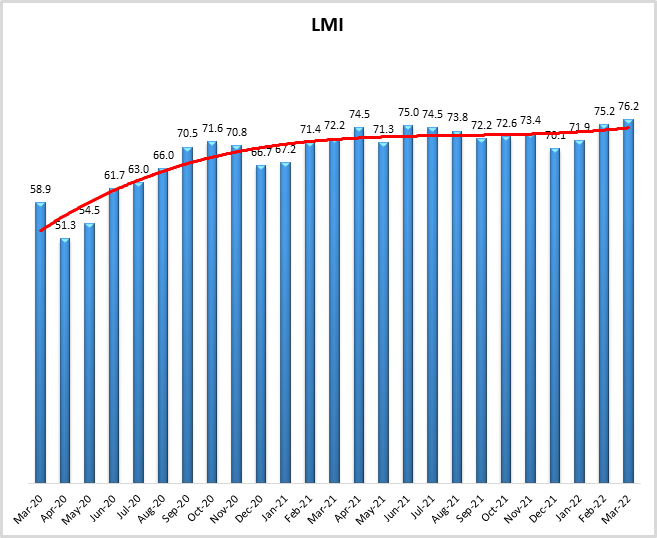
Growth is INCREASING AT AN INCREASING RATE for Inventory Costs, Warehousing Utilization, Warehousing Prices, Transportation Utilization, and Transportation Prices. Growth is INCREASING AT A DECREASING RATE for Inventory Levels Warehousing Capacity and Transportation Capacity are CONTRACTING. March’s overall LMI reading of 76.2 is the highest in the history of the index, up (+1.0) from February’s reading of 75.2. The average over the first quarter of 2022 was 74.5, well above the all-time average of 65.2. The first three months of 2022 have been marked by high levels of inventory, and insufficient capacity to deal with it. This trend started at the end of 2021 when inventories increased by 2.4% in December 2021 – an all-time month-to-month record. This was driven particularly by downstream retailers, who saw inventories up by 4.5% in December, handily outgaining manufacturers and wholesalers[1] (U.S. Census Bureau, 2022). This influx, combined with a cool-down in consumer demand due to the move away from goods and back towards services with easing COVID restrictions, as well as price pressure due to burgeoning inflation, has left firms with more inventory than they know what to do with. Because of this, both Inventory Costs (91.0) and Warehousing Prices (90.5) reached all-time high levels in March. Warehousing Capacity also hit a record in March, reaching an all-time nadir of 36.1 this month. Transportation Prices remain high and Transportation Capacity is still contracting this month. However, it is important to note that in the Upstream portion of our respondent base we saw some loosening in the transportation market, with readings taken after March 15th averaging out to a 55.0 – indicating expansion for the first time in 18 months. Again, this positive reading was only for one piece of the data during a snapshot in time; but it could portend a coming shift in transportation as the impact of record diesel prices is more keenly felt throughout the supply chain. A contraction in the transportation market does not necessarily mean a freight recession is imminent – although that is a possibility. This could also mean that we are finally seeing a move away from the unsustainable supply/demand mismatch we have seen over the past 18 months and moving back towards a more viable market equilibrium. While we do observe signs of supply chains turning a corner, only time will tell what is on the other side. Researchers at Arizona State University, Colorado State University, Rochester Institute of Technology, Rutgers University, and the University of Nevada, Reno, and in conjunction with the Council of Supply Chain Management Professionals (CSCMP) issued this report today. Results Overview The LMI score is a combination of eight unique components that make up the logistics industry, including inventory levels and costs, warehousing capacity, utilization, and prices, and transportation capacity, utilization, and prices. The LMI is calculated using a diffusion index, in which any reading above 50 percent indicates that logistics is expanding; a reading below 50 percent is indicative of a shrinking logistics industry. The latest results of the LMI summarize the responses of supply chain professionals collected in March 2022. Overall, the LMI is up (+1.0) from February’s reading of 75.2, reaching an all-time high of 76.2. The growth in this month’s index is fueled by metrics from across the index. Continued inventory congestion has driven Inventory Costs, Warehousing Prices, and overall aggregate logistics costs to all-time high levels. This is putting even more pressure on already-constrained capacity. Warehousing Capacity hit an all-time low in March. Transportation Capacity was headed in that direction too from March 1st to March 15th but seems to have changed course slightly in the back half of the month due to the rapidly increasing cost of fuel. In the last report, we remarked on the Russian invasion of Ukraine pushing diesel fuel prices up to $4.01 per gallon at the end of February, which was up $1.07 from 12 months prior. In the month since we’ve written that prices have increased even more than they did in those previous 12 months, with a gallon of diesel reaching an all-time high of $5.25 in mid-March before coming down to $5.185 per gallon at the end of the month[2]. The high price of fuel is being felt across the globe. Inflation in the U.S. was up 7.9% in February, the highest rate since the 8.4% experienced in January 1982. In mid-March, the national average for a gallon of regular gasoline surpassed $4 for the first time since 2008[3]. Similarly, we see prices in the Eurozone were up 7.5% from February to March (after a 5.9% jump in February). The high diesel prices will have an outsized effect on smaller fleets and independent operators. Smaller companies that have limited margins and cannot pay wholesale rates like larger firms will be particularly hard-hit by these costs. The high costs also make the imbalance of freight capacity we saw around Southern California ports relative to the rest of North America throughout 2021 more difficult to deal with. Deadhead loads are likely to increase by $2,000 – $3,000 per load given the high costs of fuel[4]. This will make it less attractive to drive empty trucks back to California, and could significantly impact the tender rejection rate. Some evidence of this already exists as tender volumes out of Ontario, California was down 6.5% in the last week of March[5]. Adding to the global supply chain upheaval are the ongoing COVID-related shutdowns happening across China, including in major economic hubs such as Shanghai, Shenzhen, and Suzhou. The Chinese PMI read in at 49.5 in March – registering economic contraction at a time when most of the economies around the world are growing[6]. The high costs of fuel may end up being the thing that finally slows down the runaway transportation market. The dramatic increase in fuel prices (diesel fuel is up approximately 44% in 2022) seem to have put a relative damper on the previously insatiable freight demand. Consumers had been willing to absorb some increase in costs through
RightHand Robotics™ adds Vanderlande to its growing Partner Integrator Network

RightHand Robotics, a provider of data-driven, autonomous robotic picking solutions for order fulfillment, has announced that Vanderlande, a global market provider for future-proof logistic process automation in the warehousing, airports, and parcel sectors, has partnered to deploy piece-picking robots to meet the demands of general merchandise warehouses and distribution centers on a global scale. In doing so, Vanderlande has added the RightHand Robotics award-winning RightPick™ item handling system to its Smart Item Robotics (SIR) portfolio of technologies, following the company’s strategy to accelerate the use of robotics in warehousing. “The market wants integrated robotics that works, so we’ve tested the world’s leading robot solutions,” says Terry Verkuijlen, Vanderlande’s Vice President of Warehouse Solutions. “Our findings showed that RightHand Robotics’ use of gripper technology, vision systems, and software algorithms is the best fit for automated general merchandise warehouses.” After testing several of the world’s leading robot-picking solutions, Vanderlande ultimately selected the RightHand Robotics solutions for their best-in-class features and capabilities, and because they are successfully functioning in warehouses today. As labor shortages continue to increase, the partnership will benefit Vanderlande’s customers as advanced automated picking becomes ubiquitous in an ever-demanding order fulfillment climate. “We are pleased to be included with the Smart Item Robotics (SIR) portfolio of technologies,” said Leif Jentoft, CSO and Co-Founder at RightHand Robotics. “Warehouses are under increasing pressure to accelerate order fulfillment as eCommerce orders continue to rise. We look forward to helping Vanderlande meet the needs of customers worldwide and are honored to meet their standards for advanced automated picking.” The collaboration is managed as part of the RightHand Robotics Partner Integrator program, the company’s flagship strategic partnership initiative that makes it easier for end customers to adopt the RightPick platform while still working with their preferred automation suppliers. The program was launched to align the business goals of system integrators, OEM technology providers, certified robot integrator partners, and other related sales alliance members. The program offers strategic, commercial, and technical engagement such that companies can develop and build comprehensive solutions that are Powered by RightHand RoboticsTM RightPick piece-picking technology.
Synapse Wireless Inc. releases Online DLC 5.0 Networked Lighting Control rebate finder

Synapse Wireless, Inc., an Internet of Things (IoT) company and a member of the McWane family of companies, today announced an online search tool for locating utility rebate incentives that are available when utilizing DLC 5.0 Networked Lighting Control solutions. The DesignLights Consortium® Networked Lighting Controls Qualified Product List (QPL) identifies systems that are eligible for utility rebates and incentives by meeting minimum DLC Technical Requirements. The free search tool identifies specific utility rebate programs for lighting control systems and offers a new way for Lighting Designers, Facility Managers, Specifiers, and Engineers to compare solutions, enabling them to improve the ROI of the project while also reducing the energy by implementing a networked lighting environment. Key requirements of a DLC NLC listed solution include individual fixture control using a true networked control system, reconfigurable zoning, scheduling, daylight harvesting, and motion sensing. Features of the Synapse SimplySnap wireless networked lighting control solution include: An intuitive, easy-to-use, user interface. Market-leading high wattage / high lumen lighting controllers for indoor and outdoor eliminate the need for separate control systems. Embedded controller options from leading luminaire manufacturers, including options that are compatible with DALI-2® and D4i® standards. Support for daylight harvesting, task tuning, high-end trim, and demand response that support compliance with stringent energy-code requirements. Central management and consolidation of controls across the enterprise with cloud-based zones, scenes, and schedules. “This innovative rebate finder is great news for reaching the right ROI on your networked lighting control projects or spec bids. We wanted to help stakeholders find additional incentives, making it easier to add lighting controls to their projects that lower ongoing operating costs and reduce energy consumption,” stated Tom Keane the VP of Sales and Marketing for Synapse. “Our wireless mesh network platform, SimplySnap, is ushering in the next era of lighting control technology, where digital lighting control and integration with Industrial IoT applications will provide end-users the capabilities to meet their desired business outcomes.” The service is available now, at www.synapsewireless.com/support/searchableresources/rebate-search.
San Pedro Bay Ports to revisit ‘Container Dwell Fee’ on April 15
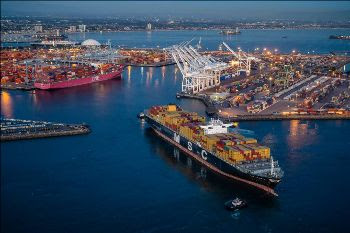
Los Angeles, Long Beach continues to monitor cargo flow Consideration of the “Container Dwell Fee” at the Port of Long Beach and the Port of Los Angeles will be delayed until April 15, port officials announced today. The two San Pedro Bay ports have seen a combined decline of 49% in aging cargo on the docks since the program was announced on Oct. 25. The executive directors of both ports will reassess fee implementation after monitoring data over the next week. Fee implementation has been postponed by both ports since the start of the program. Under the temporary policy, ocean carriers can be charged for each import container dwelling nine days or more at the terminal. Currently, no date has been set to start the count with respect to container dwell time. The ports plan to charge ocean carriers $100 per container, increasing in $100 increments per container per day until the container leaves the terminal. Any fees collected from dwelling cargo will be reinvested for programs designed to enhance efficiency, accelerate cargo velocity and address congestion impacts. The policy was developed in coordination with the Biden-Harris Supply Chain Disruptions Task Force, the U.S. Department of Transportation, and multiple supply chain stakeholders.
OneCharge Lithium Batteries and Combilift USA announce a strategic partnership

OneCharge Inc., a provider of lithium motive batteries for the material handling industry, and Combilift USA, an innovative global manufacturer of material handling equipment announced on March 29, 2022 that the companies have entered into a strategic partnership. OneCharge is pleased to announce another major supply partnership. OneCharge is supplying Combilift with advanced lithium motive power solutions for its customers and network. This will provide both companies with a competitive advantage in the market and deliver the highest quality equipment and solutions to their customers. “Customers of Combilift will now be able to have lithium [batteries] fully integrated into their Combilift equipment. This will increase uptime and efficiency while lowering their CO2 footprint,” said Paul Short, president of Combilift, North America. “OneCharge Inc. has worked closely with us to meet the high standards and specific needs of our electric trucks”. “We’re happy to offer our solutions to many new customers and to provide better support to many of our customers who already enjoy OneCharge lithium batteries in their Combilift lift trucks,” said Tim Karimov, president of OneCharge. “We have been focusing on promoting lithium batteries for use in the material handling equipment for over six years and are happy to see the growing acceptance of this technology in this market.” OneCharge lithium batteries have full communications integration with the whole line of Combilift electric lift trucks. The plug-and-play configuration allows a lithium battery to integrate seamlessly into the truck, retaining full functionality of the battery state of charge indicator and low battery warning system. A growing number of companies in North America already use OneCharge batteries – the company offers over 650 models and growing. Every OneCharge battery features a data processing module tracking numerous operational parameters. It allows to acquire and analyze significant volumes of data further enabling value-adding services for the customers. Such services can range from daily usage reports to Energy as a Service (EaaS) offering, which is sometimes referred to as “power by the hour”.
Women In Trucking Association announces its April 2022 Member of the Month

The Women In Trucking Association (WIT) has announced Jennifer Macalaguin as its April 2022 Member of the Month. Jennifer is vice president of engineering at Navistar, Inc. in Lisle, Illinois. Growing up, Jennifer loved math and science. She is a curious person who loves to design mechanical things, such as the interaction of gear systems. She was raised in the Philippines and completed an engineering degree there. Then, she received a scholarship in the U.S. and completed her Master’s Degree in Industry Technology. Later, she also completed a Master of Business Administration (MBA) while working at Ford Motor Companies. The commercial vehicle industry has always excited Jennifer because of the vital role it plays in our economy and the massive impact it has on every single one of our lives. “Knowing that everything I’m working on is making people’s lives easier, more enjoyable, and safer is one of the biggest reasons I love working in this industry,” she said. As a female engineer at Navistar, Jennifer brings a different perspective to designing trucks. “I represent women and their unique needs and requirements that need to be considered when designing our vehicles. There are concerns and variables that I’m more acutely aware of because I am a woman. So, I make sure that my perspective and insights are expressed and heard,” she said. As the industry has evolved, so too has the equipment. With the increasing number of female drivers in the trucking industry, the designs of trucks are continuing to advance and become compatible with the specific needs of women. Jennifer is passionate about innovation and application of Design Thinking which resulted in her being recognized with numerous awards. She continues to explore her interests, stays committed to her passions, and embraces opportunities to explore new ideas. She completed an executive program at Stanford University focused on customer innovation and INSEAD at France focused on global leadership. Jennifer’s advice for women in the industry is to seek a mentor throughout your career to gain wisdom. “By working with a mentor, you can learn from their past experiences and gain a support system as you determine your career goals. A mentor doesn’t need to have the same professional background as you but should be someone that you can speak openly with and someone who shares your same definition of success,” she said. Persistence, determination, and a positive perspective on challenges are also crucial to success. “It is important not to be intimidated or discouraged by challenges. You should think of obstacles as opportunities to grow rather than roadblocks. There will always be roadblocks on the journey to success. The key to success is to have persistence in the face of challenges,” said Jennifer.
Toyota Material Handling dealer Hugg & Hall Equipment Company acquires Southern Material Handling Company
Dealership expands to provide a full line of material handling solutions to Eastern Oklahoma Hugg & Hall Equipment Company, a member of Toyota Material Handling’s dealer network, has formally acquired fellow Toyota dealer, Southern Material Handling Company. Hugg & Hall Equipment Company is an industrial and construction equipment provider in Arkansas, Oklahoma, Louisiana, Missouri, and Texas. This acquisition will allow Hugg & Hall to expand its Toyota presence to include the entire state of Oklahoma. “We are very excited to add eastern Oklahoma to our Toyota territory,” said Robert Hall, Vice President of Hugg & Hall Equipment Company. “Southern Material Handling has had an excellent reputation for many years. We will continue that passion for an unequaled customer experience. The addition of more products and services will add value to our customers, making them even more competitive in their unique industry.” Hugg & Hall Equipment Company has represented the Toyota brand since 1994, expanding its territory most recently in 2019 to service customers in Louisiana. With their most recent acquisition, Hugg & Hall Equipment will now have a team of over 700 employees and 18 locations across Arkansas, Oklahoma, Louisiana, Missouri, and Texas. “We wish Hugg & Hall the best of luck with this exciting business venture, and we’re excited to see what they can accomplish,” said Anne Ewing, Toyota Material Handling Director of Dealer Development. “Hugg & Hall has been a proud Toyota dealer for nearly 30 years, and we look forward to continuing to strengthen our partnership in the future.”