
Apotea deploys RightPick™ 3 Item-Handling System from RightHand Robotics™ to expedite operations for consumers

RightHand Robotics, a provider of data-driven, autonomous robotic picking solutions for order fulfillment, announces the deployment and installation of RightPick™ 3 item-handling system at Apotea, Sweden’s online pharmacy, to automate their facility in Morgongåva, Sweden. RightHand Robotics will support Apotea’s increasing demand from customers who utilize online ordering and need reliable, direct, and convenient delivery throughout Sweden. Apotea on average ships out over one million parcels per month. During the COVID-19 pandemic, demand for order fulfillment sky-rocketed. To keep up with order volume, Apotea sought out and invested in RightHand Robotics’ RightPick 3 platform to accelerate its e-commerce business and provide Swedish consumers quicker access to medication and other non-prescription products. “Through our warehouse automation initiatives, our efficiency has reached new levels to meet demand. RightHand Robotics’ RightPick 3 technology powered by its RightPick™ AI software will allow us to pick a wide range of non-prescription goods and prescription drugs at a higher, faster rate that will satisfy customers’ needs into the future. As our business model continues to evolve, we’re excited to have RightPick 3 to add extra capacity and elevate our business to the next level for the benefit of our customers,” said Pär Svärdson, CEO of Apotea. As RightHand Robotics’ latest online pharma customer, Apotea boosts the company’s industry applications portfolio. Since the pandemic accelerated the preference for online ordering, especially for over-the-counter and prescribed medication, pharmaceutical retailers and distributors have been challenged to fulfill orders. Automation has proven to Apotea and other pharma supply chain businesses the strong ROI and increased efficiency that RightPick 3 offers. “Robotic piece-picking automation is an increasingly important component of the supply chain, delivering greater efficiency at the fulfillment center, while increasing customer service levels in terms of order accuracy and delivery times,” said Paul Eyre, Director of Global Channel Sales at RightHand Robotics. RightPick 3 is a “model-free” piece-picking solution suitable for automating simple, but critical warehouse order fulfillment tasks 24/7. It is designed to easily integrate with other technologies to further automate warehouse processes and increase efficiency. With the help of RightPick AI and its machine learning capabilities, RightPick 3 instantly finds the best way to handle the selected item, which increases order capacity, improves goods handling, and speeds delivery time, as well as creates a strong link between other installed systems and the material flow. “AI-based robotic piece picking provides supply chain companies with certainty in their fulfillment operations at a time when hiring and retaining personnel is increasingly difficult. The robots eliminate mundane, repetitive work, such that warehouse personnel views the technology as complementary to their roles,” said Juan Manuel Rivas Diaz, Sales Executive Europe at RightHand Robotics,” while positioning pharmacies for growth of digitized services, including e-prescription.” The RightPick solution harmonizes well with warehouse staff, providing a user-friendly technology that’s safe to implement in any facility.
May 2022 Logistics Manager’s Index Report®
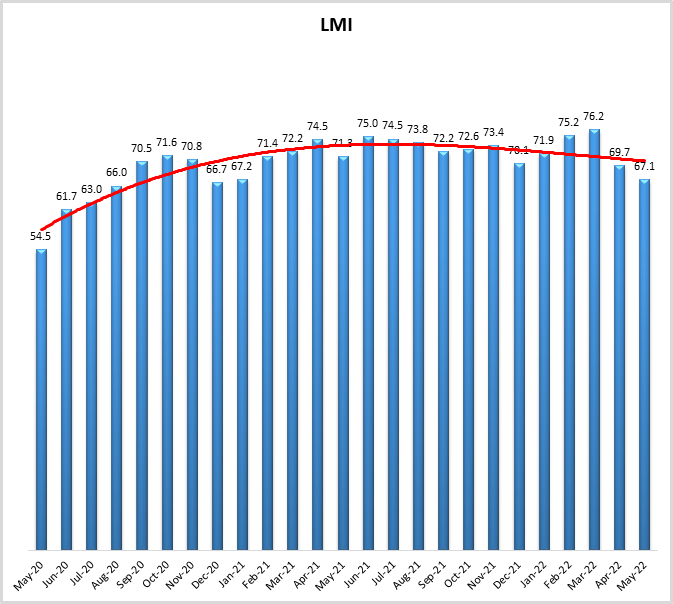
LMI® at 67.1 Growth is INCREASING AT AN INCREASING RATE for: Inventory Costs, Warehousing Utilization, Warehousing Prices, Transportation Capacity, and Transportation Utilization. Growth is INCREASING AT A DECREASING RATE for: Inventory Levels and Transportation Prices Warehousing Capacity is CONTRACTING. The Logistics Managers’ Index reads in at 67.1- in May, as the logistics industry continues its regression towards the mean after nearly two years of rapid growth. The reading of 67.1 is slightly above the all-time average of 65.3 for the overall index, but down considerably (-9.1) from March’s all-time high reading of 76.2. The downward shift in the index continues to be driven by a loosening in the transportation market, as more capacity comes online (+7.8), and prices decrease (-8.7). Despite this slowdown, it should be noted that we are still observing a healthy rate of growth in transportation, but one that pales in comparison to the unsustainable growth rates observed in 2021. Warehousing and Inventory continue to grow at a similar pace to the one we have observed over the last 18 months. Inventory Levels are unseasonably high, packing warehouses to the gills and driving costs up for both inventory and warehousing. Researchers at Arizona State University, Colorado State University, Rochester Institute of Technology, Rutgers University, and the University of Nevada, Reno, and in conjunction with the Council of Supply Chain Management Professionals (CSCMP) issued this report today. Results Overview The LMI score is a combination of eight unique components that make up the logistics industry, including inventory levels and costs, warehousing capacity, utilization, and prices, and transportation capacity, utilization, and prices. The LMI is calculated using a diffusion index, in which any reading above 50 percent indicates that logistics is expanding; a reading below 50 percent is indicative of a shrinking logistics industry. The latest results of the LMI summarize the responses of supply chain professionals collected in May 2022. Overall, the LMI is down (-2.6) from April’s reading of 69.3. The slowdown in the rate of expansion is the product of moderation in the transportation market. On the whole, however, the logistics industry continues to expand, driven primarily by strong growth in the inventory and warehousing metrics all-time high reading of 75.2. The dip is fueled by the first expansion of Transportation Capacity in nearly two years and a subsequent dip in the rate of growth for Transportation Prices. Inventory and Warehousing metrics remain are down slightly but still show high rates of growth as supply chains continue struggling to find the capacity needed to deal with high levels of inventory. The mixed nature of our different logistics components epitomizes the nuances in the overall economy. Revised estimates now suggest that the US economy contracted at a rate of 1.5% (down from the previous estimate of 1.4%) in the first quarter of 2022. Despite the contraction, consumer spending remains strong, and a report released by the Congressional Budget Office in mid-May estimated that GDP will grow by 3.1% in 2022[1]. Some of this softness can be tied to issues abroad. For instance, the China PMI for May was 49.6, up from April’s 47.4 but still indicating slight contraction. China’s economy has contracted for three straight months due to lockdowns. Shanghai’s phased relief from COVID began on June 1st. As a result of this, only 11% of orders from Asia to North America arrived on time in May, down from 18% in May 2021 and from 59% in May 2020. This slowness has led to firms like Walmart, and Eastman Kodak significantly increasing their inventory levels. Some firms are dealing with this by moving in the other direction; Under Armour has cancelled approximately $200 million of orders, due to the unreliability of ocean shipping[2]. If the lockdowns do truly ease through the early Summer, China will likely move back into a state of growth, as the government increases new infrastructure spending the jumpstart the economy[3]. Conversely, the U.S. PMI came in at 56.1, up from the two-year lows of April and March and marking 24 consecutive months of growth. As is often the case, much of the strength of the U.S. economy can be attributed to the consumer. The NRF notes that consumer spending is up 3.1% year-over-year, and business investment is up 9.2%, predicting that the rate of overall economic expansion will slow, but that the US is unlikely to slip into contraction[4]. These mixed signals suggest an economy that is still growing steadily, but at a lower rate than the historic pace we observed in 2021, very similar to the picture painted by the logistics industry in May. The fluctuations in the economy were reflected in the latest job report, which was particularly revealing when it comes to the logistics industry. An estimated 390,000 jobs were added in the US in May. Interestingly, retailers lost 61,000 jobs but leisure and hospitality were up 84,000 as the economy continues to shift back towards a heavier mix of services. While this is fewer jobs than were added in April, 1.2 million jobs have been added over the last three months[5] – which is important as this is the period that came after the Russian invasion of Ukraine and the issues that caused. trucking, warehousing, and parcel delivery added 32,900 jobs over the same period, down slightly from 44,700 in April. Trucking companies alone accounted for 13,300 jobs, with total employment up by over 70,000 in the past year. Some of this movement is likely from owner-operators signing on with larger firms that are less vulnerable to diesel costs and slides in the spot market. Warehousing and storage firms added 17,700 in May for a total of 176,700 new positions through the first five months of 2022[6]. Other than the dip of 2,700 positions in March, the transportation sector has added jobs every month since April 2020. Prior to this year, only three months since 2012 saw job gains over 10,000 – a number that has been doubled this year as three of the last four months saw gains
Synapse Wireless goes beyond lighting with SimplySnap networked wireless lighting control solution for smart luminaires

Seminar on advantages of D4i Enabled Luminaires Conducted at LightFair 2022 Synapse Wireless, Inc., an Internet of Things (IoT) company, and a member of the McWane family of companies will exhibit their SimplySnap wireless network lighting control platform during LightFair 2022 in Las Vegas from June 21 to 23, 2022, at Booth #1665 in the West Hall of the Smart Pavilion. Additionally, Michael Davidson, Lighting Controls Specialist with Synapse, will present a course along with industry experts, on the topic of “Smart Lighting with D4i-enabled Luminaires.” The SimplySnap chip-to-cloud platform includes hardware, software, and services for a total wireless networked lighting control solution. For lighting-industry OEMs and channel representatives, the turnkey solution features field-installable and integrated control components, giving lighting designers various options to meet stringent energy codes and customer requirements. SimplySnap has a local browser interface built into each site controller and a cloud-based user interface for managing large enterprise and campus locations, both outdoor and indoor. “With SimplySnap, you can rely on our field-proven wireless mesh networking technology to reliably connect to each light and sensor within your facility. Our intelligent lighting system scales easily to support and wirelessly control small sites with a few hundred lights, installations with multiple locations, and larger sites with up to 10,000 lights,” stated Michael Davidson. Davidson continued, “The best part? SimplySnap supports multi-site management through the cloud interface, allowing you to control all your locations with a single log-in.” The SimplySnap platform capabilities include: • Daylight Harvesting for Parking Garage and Industrial Spaces: Supports Open-loop Daylight Harvesting, which is designed specifically for large interior spaces with natural light. • Proactive Alerts and Alarms: Notifications are sent immediately when issues are detected. • External System Integration: Leverage the lighting controls with existing Building Management Systems (BMS). • Dynamic Effects: For sports-lighting partners, add dynamic flashing sequences to increase entertainment value at any sports venue. Davidson will conduct a seminar at LightFair about the advantages of D4i-enabled Luminaires. A key capability in use today is power monitoring for energy savings. D4i also stores asset information, diagnostics data, and identifies failure modes of the power source, LED driver and LED array. Attendees will understand how D4i simplifies compliance with networked lighting control specifications from DLC. The course will feature real-world examples from a large regional electrical utility that utilizes D4i-enabled luminaires. D4i is just one of the new technologies and capabilities that Synapse is innovating within the lighting industry to address other customer needs. “Synapse is known as the market leader for our lighting controls systems used in high-wattage and high-lumen LEDs common in outdoor and indoor industrial and manufacturing applications. But the capabilities of SimplySnap have recently expanded to tackle other problems in the manufacturing space, beyond lighting control alone. Executive teams in manufacturing are focused on improving and tracking environmental and sustainability measures, while also enabling facility personnel to optimize their operations to improve profitability. With Energy Management and Equipment Uptime solutions built into SimplySnap, leaders in manufacturing will discover actionable insights to drive down energy costs and improve and track the state and health of equipment. All of this is available from a single system, SimplySnap,” stated Davidson. The LightFair Session entitled, “Smart Lighting with D4i-enabled Luminaires: Energy Reporting, Asset Management, Predictive Maintenance, and More,” will be held on June 21st from 3:30 p.m. to 4:30 p.m. PST. at LightFair 2022 in Las Vegas.
GEODIS partners with KNAPP to implement over $80 Million in highly Automated Fulfillment Technology for leading retailer
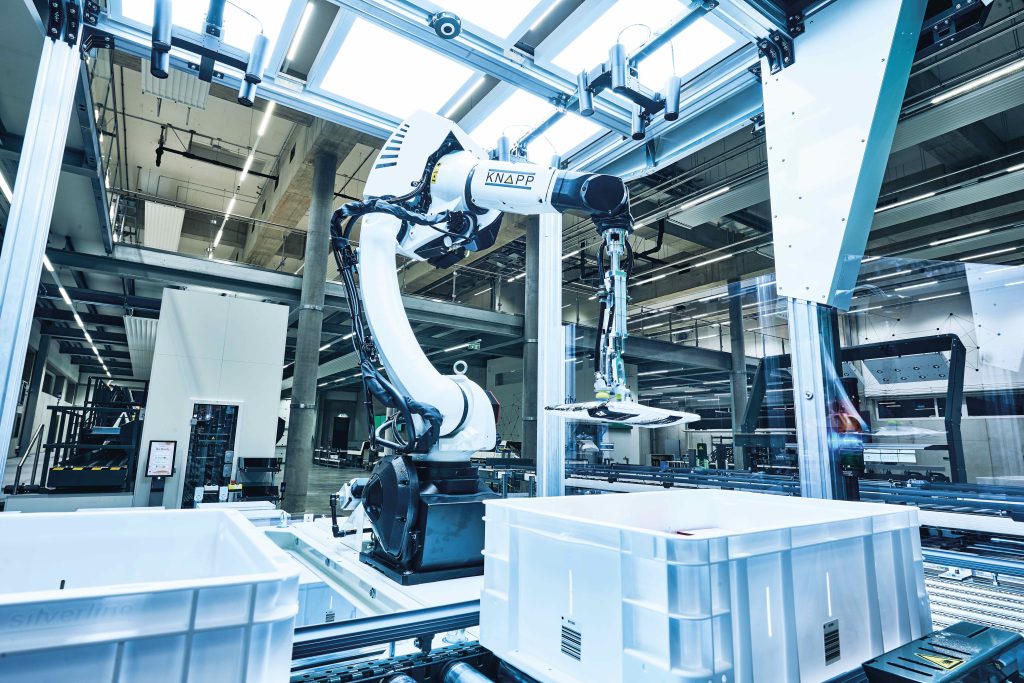
Global transport and logistics provider GEODIS and KNAPP, a technology partner for intelligent value chains, have announced a new collaboration to implement more than $80 million in advanced automation technology into two omnichannel fulfillment centers on behalf of a leading retailer. This marks the third project between the two companies, bringing GEODIS’ 12-month investment with KNAPP to over $130 million as it continues its commitment to implementing the industry’s latest automated technologies into innovative solutions for its clients to best meet today’s service demands. Designed in strong collaboration with GEODIS, KNAPP, and the leading retailer, the two fulfillment centers—located on the East and West Coast in the U.S.—will feature highly automated storage, picking, and packing technologies. The technologies are designed to provide next-generation fulfillment strategies to support the retailer’s complex e-Commerce and retail operations while increasing overall supply chain efficiencies. Following the technology implementation, the combined fulfillment centers are expected to move over 270,000 units per day across a total of more than 850,000 square feet of operations. “This particular client required a technology solution that could offer an extremely efficient fulfillment process far beyond what traditional methodologies can provide,” said Eric Douglas, Executive Vice President of Technology and Engineering at GEODIS in the Americas. “By closely collaborating with KNAPP, we were able to create a fully customized solution featuring industry-leading technology that will allow us to provide a completely integrated offering to best support this customer’s unique needs. Our new investment with KNAPP is the latest proof point in our clear commitment to sourcing and implementing the most innovative solutions into our clients’ supply chains to increase efficiency, agility, and flexibility.” The two fulfillment centers will include a unique combination of KNAPP technologies. Both sites will feature the OSR Shuttle™ Evo, an all-in-one automatic storage and picking system. The facilities will also include the use of multifunctional goods-to-person Pick-it-Easy Evo work stations along with Pick-it-Easy Robots, an AI-equipped robot designed to supplement manual picking stations. In addition, the facilities will include automated carton packing and auto-bagging technology. The sites will also feature various customized value-added services such as personalization in support of the client’s desire for a one-of-a-kind customer experience. In support of GEODIS’ sustainability efforts, the solution utilizes technology that will reduce the size of shipping cartons to ensure consolidated freight requirements to ultimately contribute to a lower carbon footprint. In addition, the KNAPP OSR Shuttle™ Evo solution has provided a sustainably sourced and designed a robotic system to ensure that the client is optimizing every facet of the supply chain to its fullest potential. “The jointly developed solution between GEODIS and KNAPP is specifically designed to address both strategic initiatives and growth that is attributed to rapidly expanding e-Commerce demand,” said Jusuf Buzimkic, Chief Sales Officer at KNAPP. “The technology platform will reduce the challenge associated with labor availability and evolving customer service level expectations. The latest solution represents a balance of performance, flexibility, and scalability to minimize the variable cost per order.” The project is set to begin installation in early 2023. Phase one of implementation is expected to be complete in September 2023 ahead of peak season, with both facilities aiming to be fully completed in Q1 of 2024.
Gerald Desmond Bridge demolition to begin in July

Port of Long Beach Back Channel scheduled to close to vessels July 9-11 Demolition of the Gerald Desmond Bridge in the Port of Long Beach is scheduled to start in July with the removal of the section of the span suspended over the Back Channel, requiring a 48-hour closure of the channel to all watercraft traffic. The Back Channel will be closed to vessels from 6 a.m. Saturday, July 9, to 6 a.m., Monday, July 11, as the bridge’s 410-foot-long suspended span is dismantled and lowered onto a barge. The Gerald Desmond Bridge has been closed to vehicle traffic since early October 2020 when its replacement opened. Vehicle traffic on the replacement bridge will not be affected by the demolition of the old span. Removal of the suspended span is one of the first steps in demolishing the Desmond Bridge. Following the first weekend, further significant waterway impacts are not anticipated. Full demolition is expected to be concluded by the end of 2023. Removal of the Desmond Bridge, rising 155 feet above the water, will allow large cargo vessels to more easily access the Port’s Inner Harbor. The new bridge has a 205-foot clearance over the channel. “We became the nation’s premier port for international trade during a period of extraordinary growth, thanks to infrastructure like the Gerald Desmond Bridge,” said Port of Long Beach Executive Director Mario Cordero. “The new bridge shines as a regional landmark that serves as a fitting and lasting tribute to the old span.” “The Gerald Desmond Bridge served Southern California’s regional transportation network for over 50 years, carrying more than 60,000 Southern California commuters and cargo-hauling trucks every day by the time construction started on the new bridge,” said Steven Neal, President of the Long Beach Board of Harbor Commissioners. “The new bridge is safer and serves as a symbol of the Port of Long Beach’s position as a primary gateway for trans-Pacific trade.” Opened in 1968, the Gerald Desmond Bridge was named after a former Long Beach city attorney and city councilman who helped secure the funding needed to build the nearly 1-mile-long bridge. Desmond died when the bridge that would be eventually named for him was under construction. A retirement ceremony was held for the old bridge in May. An outlook on the new bridge will be named in Desmond’s honor. The Port awarded a contract in July 2021 to Kiewit West Inc., to dismantle and remove main steel truss spans, steel plate girder approaches, abutments, columns, access ramps, and other pieces of the Gerald Desmond Bridge. Funding for the $59.9 million demolition project is included within the overall $1.57 billion budget to design and build the replacement bridge. Metal, concrete, and other materials from the old bridge will be recycled whenever possible.
BSLBATT explains the benefits of lithium-ion forklift batteries
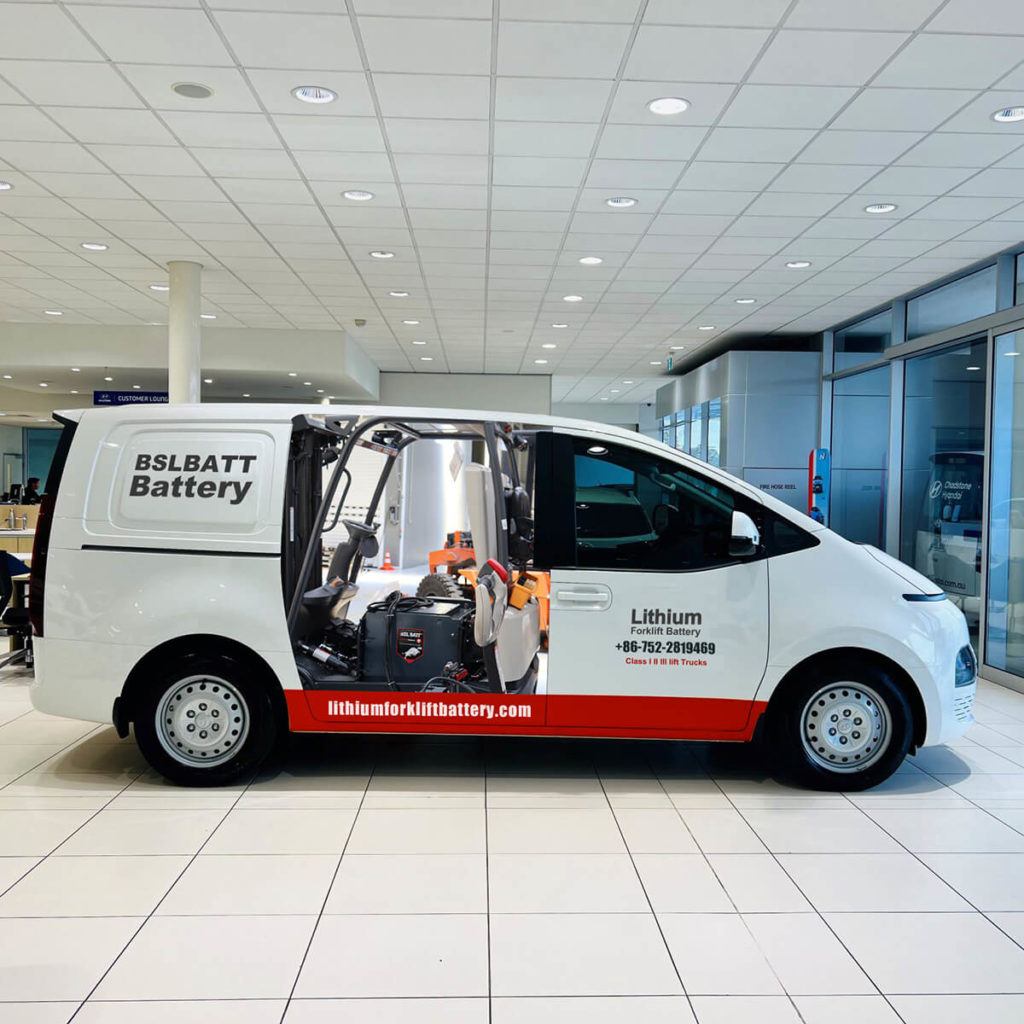
The last thing you need in a warehouse is unplanned downtime due to battery failure. At BSLBATT®, they are committed to providing reliable, advanced power solutions that enable every industrial vehicle driver in the world to enjoy the extraordinary experience brought by the outstanding performance of BSLBATT batteries. Their customers need batteries, chargers, and accessories that can adapt to a variety of applications and environments. While lead-acid batteries are the most common on the market, this power solution is best suited for outdoor work. LiFePO4 technology is more suitable for indoor zero-emission warehouses and extreme ambient temperature applications, or for multiple shifts and long working hours. Lithium iron phosphate forklift batteries, such as our BSLBATT® batteries, can provide your warehouse with many benefits at a more cost-effective price. They are proud to offer this industry-leading flexible power solution to our customers! The benefits of lithium iron phosphate forklift batteries Lithium-Ion batteries are a newer battery technology when it comes to forklifts. The pros of the lithium-ion battery are that it is relatively maintenance-free because it is sealed and requires no watering or cleaning. It has a fast-charging time, requiring only 2-3 hours to fully charge with no cooldown period. You can also employ opportunity charging, which means you can plug them in during a break period for a quick charge. In fact, you can usually plug Lithium-Ion batteries straight into the wall outlet. Perhaps, most important is its increased expectancy of up to 3500 charging cycles. It does not expose your team to harmful substances such as sulfuric acid. Conclusion: For Multi-Shift Operations, Use Lithium-Ion Forklift Batteries Added Features & Adaptability To help OEMs, BSLBATT has developed 43 standard modules for lithium batteries of different capacities, which can form parallel building blocks in forklift battery compartments. Up to 20 of these modules can be stacked in parallel, and the total capacity can be tailored to forklift OEM needs. This is the most innovative battery option. It requires no watering or maintenance and has a very long life (10+ years). Their ultra-fast “whenever charging,” allows you to plug in your equipment during any break times to keep the battery charged all day long with up to 18 hours in run time, without having to run it down to 20%. Because of the chemistry of lithium-ion phosphate batteries, no heat is generated during use, meaning there is no risk of fire or explosion even under the most extreme conditions. These batteries are also sustainable. There is no venting, gassing, or corrosion, and with no toxic or heavy metals, there are no disposal fees either – they are 100% recyclable. BSLBATT Automotive Grade Modules are fabricated out of commercial-grade steel. Extreme shock and vibration resistance The BSLBATT Battery Management System (BMS) manages the lithium battery modules and continuously delivers updates and diagnostic information to the cloud. Individual modules are remotely monitored and controlled to maintain stable operating conditions. Compatible with Hyster-Yale, Crown, Toyota, Manitou, Clark, Raymond, Combilift, Jungheinrich, Doosan, Linde, Nissan, Hyundai, Caterpillar, JCB, Bobcat, KION group, UNICARRIERS, KOMATSU, HELI, HANGCHA, BYD, Mitsubishi, and more Unparalleled Flexibility BSLBATT® batteries are suitable for all types of light to medium-duty applications, such as: Counterbalanced Forklift Heavy-Duty Forklifts Combilift Forklift Pallet trucks Industrial utility vehicles Automated guided vehicles (AGV) Floorcare/cleaning machines Shuttle personnel carriers Narrow aisle fork trucks And more! The BSLBATT modular technology offers significant operational advantages at a safer, more reliable, and lower total cost of ownership than competing batteries. These batteries will truly change the way you work! Experience the difference BSLBATT modular technology can make in your operation! To help OEMs, BSLBATT has developed 43 standard modules for lithium batteries of different capacities, which can form parallel building blocks in forklift battery compartments. Up to 20 of these modules can be stacked in parallel, and the total capacity can be tailored to forklift OEM needs. At BSLBATT®, their goal is to provide Let every industrial vehicle driver in the world enjoy the extraordinary experience brought by the superior performance of the BSLBATT battery. They have developed high-quality alternative motive power solutions through our commitment to innovative technology and data-driven solutions. “The BSLBATT® Li modular technology’s industry-leading performance makes it a beast of a battery, specifically designed for performing in multi-shift warehouse applications, and we’re thrilled to introduce it to the market,” said Eric Yi, Chief Executive Officer of BSLBATT Battery Company. “Owners can count on its safety and reliability, backed by BSLBATT’s 20 years of innovation in battery manufacturing.” The BSLBATT® battery is the industry’s premium lithium iron phosphate forklift battery that can power your material handling vehicles. Contact your local BSLBATT® battery and charger representative today by calling +86 752-2819469 or clicking here.
PACK EXPO International challenges students’ creativity in new Machine Building competition
PACK Challenge, a brand-new packaging competition will bring six high school teams together for a head-to-head machine-building challenge at PACK EXPO International (Oct. 23-26; McCormick Place, Chicago), according to show producer, PMMI, The Association for Packaging and Processing Technologies. “We are excited to introduce this first-of-its-kind competition and watch the students roll up their sleeves in a real-world application while they learn,” says Jim Pittas, president & CEO, PMMI. “One of our main priorities is getting students involved at a young age and showing them the doors the manufacturing industry can open. This competition will give them first-hand experience of what a career in manufacturing could look like.” PMMI will provide a build-to-print snack filler machine kit, designed specifically for this competition, along with an assembly manual to the qualifying teams who will build the machine at their school over the summer. At the show, each team will re-assemble the snack filler to the specifications, compete for best design, host competitions, and marketing and sales presentations. Teams will have the flexibility to be creative with add-ons. The overall best in show team will be awarded $6,000 with second place receiving $3,000 and third $1,000. Other awards include Filler Performance Gold Cup, Most Creative Filler Design, and Marketing/Sales presentations. After the event, the teams will take the machines back to their school, providing future students the opportunity for hands-on experience. “To address the imminent skills gap, PMMI is working at developing many programs to show students the world of manufacturing,” says Kate Fiorianti, senior manager, Workforce Development, PMMI. “This brand-new competition is meant to excite students and pique their interest to want to learn more. As a result, we have a multitude of resources available to both parents and students to get involved and advance the future of this critical industry.” ThePMMI Foundation works to grow awareness of careers in packaging and processing and provides financial support for packaging and processing education throughout the U.S and Canada. Since its inception in 1998, the PMMI Foundation has given more than $2.6 million to strengthen the workforce within the packaging and processing industry. For more information on student opportunities, contact Kate Fiorianti at [email protected] PACK EXPO International also offers multiple other programs and activities aimed at getting students excited about careers in packaging and processing and connecting them with professional mentors in the industry. In addition to exciting networking events and student programs, the highlight of PACK EXPO International will be the new, never-before-seen solutions, from thousands of leading suppliers on the show floor, bringing all vertical industries together to generate a cross-pollination of ideas and crossover solutions that can only be discovered in-person. To learn more and to register, visit packexpointernational.com. Registration for the show is $30 until Sept. 30, after which it increases to $130.
Nano One appoints Lisa Skakun as Independent Director and sets 2022 AGM date
Nano One® Materials Corp. (“Nano One” or the “Company”), a clean technology innovator in battery materials, has announced the appointment of Lisa Skakun as an independent director on it’s Board of Directors effective immediately. Paul Matysek, Executive Chair, commented, “On behalf of the board and the entire team, we welcome Lisa to Nano One at an exciting time for the Company. Lisa brings extensive business, regulatory and governance experience. Lisa’s proven track record and her depth of knowledge will be an invaluable asset as we focus on the Company’s core growth initiatives in Québec and British Columbia to deliver long-term value for our stakeholders and the global lithium-ion battery supply chain.” Lisa Skakun is a lawyer and executive with over 20 years of experience in a variety of private and public industries. Currently the Chief Legal, Regulatory and Corporate Affairs Officer of Coast Capital Savings Federal Credit Union, Lisa is responsible for all legal, mergers and acquisitions, public affairs, compliance, financial crimes risk management, and corporate governance functions. Prior to Coast Capital Savings, Lisa was the Chief Legal & Administrative Officer at Mogo Finance Technology, a TSX-listed fintech company, from 2015-2018. Lisa has her LLB from the University of British Columbia, a Master of Laws degree in business law from Osgoode Hall Law School at York University, and also holds her ICD.D designation from the Institute of Corporate Directors. Lisa is the recipient of the Lexpert Zenith Award: Celebrating Women in Law, the Association of Women in Finance’s PEAK award for Rising Star, and the National Post Award for Tomorrow’s Leader at the Western Canada General Counsel Awards and has been named to Canada’s Diversity 50 list by the Canadian Board Diversity Council. Previously, Lisa was the Board Chair of Kwantlen Polytechnic University, a past board member of the Cause We Care Foundation, a previous Chair of the BC Business Law Section of the Canadian Bar Association, and was also a member of the Securities Law Advisory Committee for the British Columbia Securities Commission. Annual General Meeting (AGM) and Management Update Nano One, with the approval of the Toronto Stock Exchange, has selected Tuesday, July 26, 2022, at 1:30 pm Pacific time to hold its AGM for the fiscal year ended December 31, 2021. The AGM will be held virtually and will be followed by a corporate presentation and update by management. Details regarding how to attend the meeting and corporate presentation will be provided in advance of the AGM.
Siemens introduces the new SINAMICS G120XE series
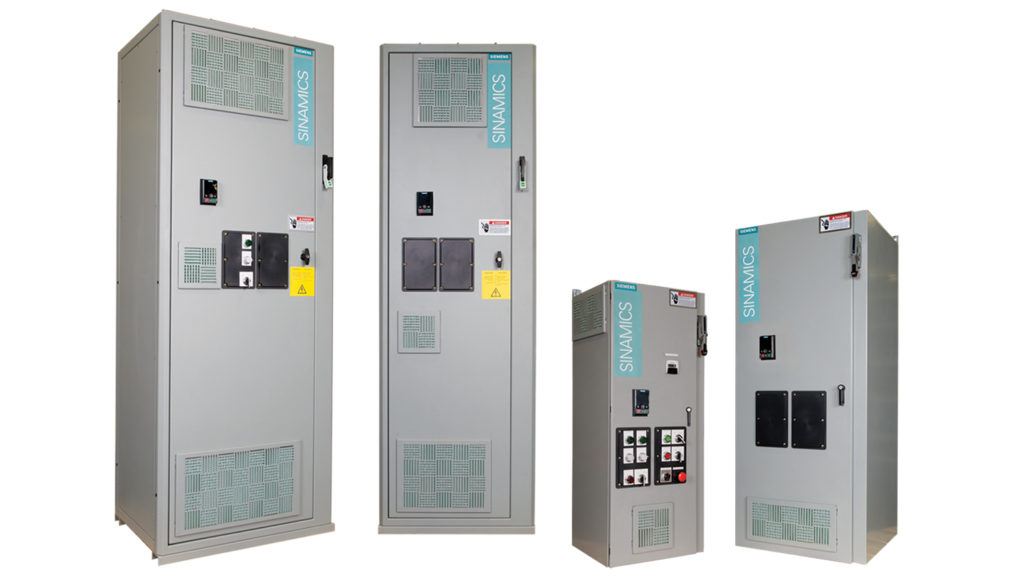
Siemens just announced the immediate availability of a new enclosed drive system, the SINAMICS G120XE, designed specifically for the demands of industrial pump, fan, and compressor applications in a wide variety of markets. Built around the popular SINAMICS G120X infrastructure drive, this new enclosed system is ideal for fast design and commissioning in industries such as oil-and-gas/petrochemical, water/wastewater, power plants, industrial climate control, refrigeration, and chillers in harsh environments. A NEMA 1 enclosure is standard, with a NEMA 12 version optional, featuring appropriate ventilation and air filters. The base enclosure is suitable for wall-mounting to 75 hp applications, while the free-standing floor module accommodates uses to 200 hp. Standard electrical characteristics of this new enclosed drive system also include a UL508A listing, SCCR rating to 65kA, circuit breaker disconnect with flange-mounted operator handle and mechanical door interlock, plus control power transformer for internal power control and power module with PWM IGBT inverter. Overload ratings allow operation in either light or high overload duty conditions. The enclosure ventilation fans on the SINAMICS G120XE are controlled via a relay and run only as needed, a significant energy saver and noise reduction feature. Optional features on the enclosure include output filters and reduced voltage soft start (RVSS) bypass. A key feature of the G120XE is the intelligent operator panel, IOP-2. As Siemens Enclosed Drive Product Manager Chuck Fernandez notes, “One of the really exciting aspects of this new enclosed drive system is the intuitive simplicity in setup and commissioning. There’s no need for extensive parameter knowledge and the unit literally self-guides the operator with on-screen instructions on a keypad-guided menu.” Fernandez further notes every rating of the G120XE is fully tested during the development stage for shock, vibration, and electromagnetic interference (EMI) in addition to many other tests. In addition to the door-mounted IOP-2 keypad/display, the drive can also be commissioned, set up, or modified using any Wi-Fi-enabled laptop, tablet or smartphone by installing the Smart Access Module. Another option for commissioning, setup, or drive modification is to use the Siemens Totally Integrated Automation (TIA) Portal via a GSD file. The popular Siemens SIZER configuration software tool can also be provided to help with selecting and matching the G120X drive system with a Siemens motor and other system components. Communications with higher-level SCADA and PLC systems are possible via PROFINET or EtherNet/IP™ with additional communication options available like PROFIBUS, MODBUS RTU, and BacNet MS/TP. SINAMICS G120XE is ready for digitalization and remote monitoring with a built-in web server and the ability to connect to the SINAMICS Connect 300 allowing operators and maintenance personnel to access real-time status and cloud-based analytics from anywhere using the Analyze MyDrive app installed on their mobile device.
J.W. Speaker introduces the model 93 5-In-1 headlight
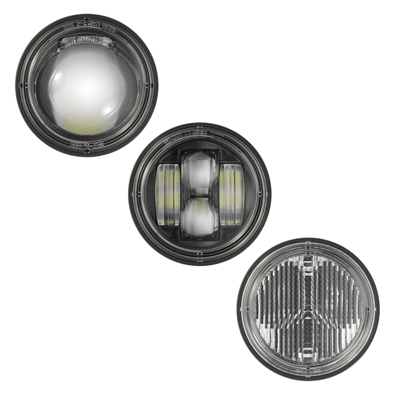
The Model 93 LED headlight offers 5-in-1 functionality for a wide range of applications, including original equipment manufacturer (OEM) designs J.W. Speaker Corporation has introduced the Model 93 5-in-1 functional, drop-in replacement headlight for buses, RVs, tractors, motorcycles, specialty vehicles, and more. The new LED light replaces standard 90mm headlights and integrates easily into OEM designs — offering 5-in-1 functionality for optimal versatility and cost savings. “Our customers have been demanding for more functional drop-in lighting options – and the new Model 93 does just that – it sets a new standard for all-in-one convenience and performance,” said Tim Speaker, Co-President at J.W. Speaker. “We’re most excited about how this new light will replace standard lighting. The Model 93 offers incredible 5-in-1 functionality to enhance vehicle lighting.” The multi-function Model 93 combines high beam, low beam, front position, turn signal, and daytime running light (DRL) performance in a stylish design surrounded by durable die-cast aluminum housing with a sealed integrated connector. The LED meets the tough criteria for IP67 and IP69K certification for optimal protection against dust, water, and other contaminants. In addition, it’s DOT and ECE compliant, making it the ideal LED for both on- and off-road enthusiasts around the globe. J.W. Speaker extended versatility to the Model 93’s mounting options. Customers can choose between industry-standard three-point mounting or single or double pedestal mounting brackets that position them at 90° for even more flexibility without compromising the integrity of the beam.
U.S. Rail Traffic for the week ending June 11, 2022

The Association of American Railroads (AAR) has reported U.S. rail traffic for the week ending June 11, 2022. For this week, total U.S. weekly rail traffic was 510,295 carloads and intermodal units, down 3.6 percent compared with the same week last year. Total carloads for the week ending June 11 were 234,942 carloads, down 2.8 percent compared with the same week in 2021, while U.S. weekly intermodal volume was 275,353 containers and trailers, down 4.4 percent compared to 2021. Three of the 10 carload commodity groups posted an increase compared with the same week in 2021. They were motor vehicles and parts, up 1,571 carloads, to 13,793; farm products excl. grain, and food, up 1,203 carloads, to 16,340; and nonmetallic minerals, up 618 carloads, to 33,028. Commodity groups that posted decreases compared with the same week in 2021 included grain, down 2,912 carloads, to 21,429; coal, down 2,657 carloads, to 66,607; and miscellaneous carloads, down 1,466 carloads, to 9,769. For the first 23 weeks of 2022, U.S. railroads reported a cumulative volume of 5,296,578 carloads, up 0 percent from the same point last year; and 6,081,199 intermodal units, down 6.4 percent from last year. Total combined U.S. traffic for the first 23 weeks of 2022 was 11,377,777 carloads and intermodal units, a decrease of 3.5 percent compared to last year. North American rail volume for the week ending June 11, 2022, on 12 reporting U.S., Canadian and Mexican railroads totaled 332,226 carloads, down 2.5 percent compared with the same week last year, and 363,156 intermodal units, down 4.1 percent compared with last year. Total combined weekly rail traffic in North America was 695,382 carloads and intermodal units, down 3.3 percent. North American rail volume for the first 23 weeks of 2022 was 15,516,828 carloads and intermodal units, down 3.7 percent compared with 2021. Canadian railroads reported 77,814 carloads for the week, up 2.1 percent, and 73,084 intermodal units, down 0.4 percent compared with the same week in 2021. For the first 23 weeks of 2022, Canadian railroads reported a cumulative rail traffic volume of 3,285,099 carloads, containers, and trailers, down 5.8 percent. Mexican railroads reported 19,470 carloads for the week, down 15.7 percent compared with the same week last year, and 14,719 intermodal units, down 14.4 percent. Cumulative volume on Mexican railroads for the first 23 weeks of 2022 was 853,952 carloads and intermodal containers and trailers, up 2.8 percent from the same point last year. Click here for the Weekly Traffic Charts.
EP 289: Raymond at MODEX 2022
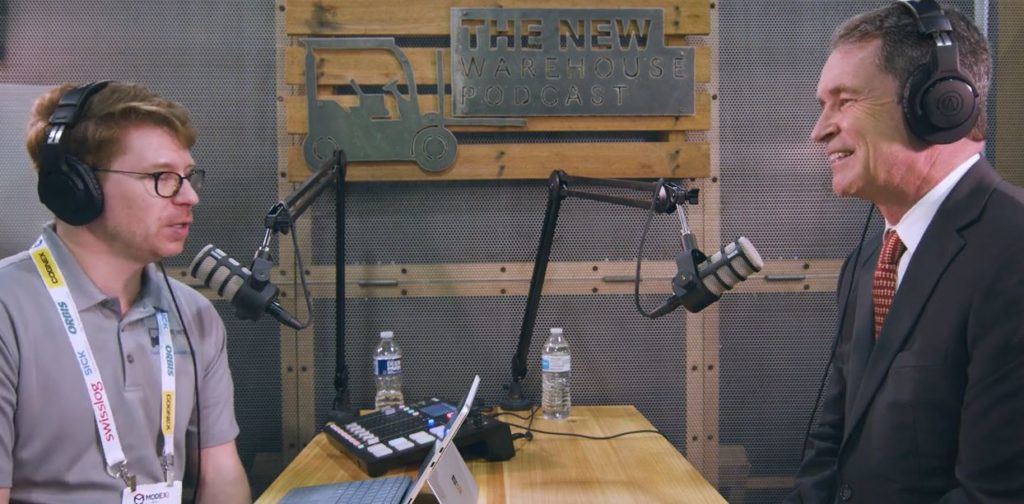
In this episode of the New Warehouse, I’m joined by Mike Field, president, and CEO of Raymond Corp. Recently, celebrating 100 years in the industry, Raymond is a global provider of material handling products and intelligent intralogistics solutions. In the interview, Mike discusses the company’s history, products and solutions, and plans for the future. He offers advice for listeners looking to jump into automation, along with one of my favorite quotes. Key Takeaways Mike explains the iWAREHOUSE forklift fleet management system. With this comprehensive telematics suite of solutions, warehouses can track and report on vehicle data to help drive productivity in the workplace! Mike shares how it works with real-time locating tools for operators that will allow them to understand their work better than ever before. Mike and I discuss why locations with flawed processes are unsuitable for adopting automation. If processes are flawed, bringing in automation will only speed up a flawed process. The Raymond Corporation’s approach to adopting automation is to ensure the customer is in the proper position and the right processes are in place. Laying this solid foundation allows warehouses to automate the right thing in the right way. The Raymond Corp. believes continuous improvement through focusing on the art and science of picking can create a core competency for organizations. Raymond’s advanced operator assist technology allows the truck to move by itself as the order selector places products on the truck as it moves along within the control of the order selector. Mike explains how this adds value by allowing the order selector to focus on what they do best and not operating machinery. The New Warehouse Podcast EP 289: Raymond at MODEX 2022
Yale releases updated videos as part of new operator training program

Coinciding with National Forklift Safety Day, Yale Materials Handling Corporation just released original training videos as part of the new Yale Operator Training Program. The new videos help high-intensity warehouses take control of their lift truck operator training, using enhanced adult learning techniques to support engagement and comprehension. Material is divided into shorter sections and broken up into hands-on learning periods to help improve comprehension and keep learners engaged. Updated, modern graphics present critical information in a familiar visual format and at a pace that supports a wide range of adult learner types. “As warehouse labor turnover reaches nearly 50% annually, getting new hires up and running with comprehensive lift truck training at scale becomes even more essential – but can also be more difficult to manage,” says Evelyn Velasquez-Cuevas, Product Sales and Technical Training Director, Yale Materials Handling Corporation. “Our goal with the Yale Operator Training Program is to arm participating dealers with everything they need to relieve the burden on customers’ in-house training resources, speed up operator onboarding processes, and help support safety efforts.” The OSHA lift truck certification process is composed of three parts – formal instruction, practical training, and operator evaluation. The video content fulfills most truck-related topics in the formal instruction component of OSHA certification requirements. The videos are available through participating dealers in the nationwide Yale® dealer network, who can also offer additional training to satisfy full certification requirements. Equipment-specific product orientation videos for Yale®’s electric narrow aisle warehouse lift trucks are also currently available through the training program, accessible by scanning QR codes on equipment. Operations can also supplement their training with virtual reality forklift simulators from Yale that provide an immersive experience for operators to practice in a realistic, yet controlled environment. To learn more about the Yale Operator Training Program, click here.
Cordero appointed to Federal Transportation Advisory Panel

Buttigieg names Port of Long Beach leader to goods movement committee U.S. Secretary of Transportation Pete Buttigieg has appointed Port of Long Beach Executive Director Mario Cordero to the Maritime Transportation System National Advisory Committee, which advises the secretary on strategies to improve the readiness and resiliency of the U.S. supply chain. The committee is made up of leaders from commercial transportation firms, trade associations, state and local public entities, labor organizations, academia, and environmental groups. Cordero, who has led the Port of Long Beach since 2017, will continue in his role at the Port. “I thank Secretary Pete Buttigieg for this honor at such a pivotal time for international trade, and as we make significant investments through the Bipartisan Infrastructure Law,” said Cordero. “I am grateful to serve with other esteemed leaders and work to improve all areas of the maritime supply chain through investments in infrastructure and innovative technology.” Long Beach Harbor Commission president Steven Neal applauded Cordero’s selection. “Mario’s expertise and knowledge make him an excellent choice to advise on issues surrounding the supply chain and maritime industry,” Neal said. Prior to becoming the Port’s Executive Director, Cordero served on the Federal Maritime Commission from 2011 to 2017 and was FMC Chairman from April 2013 to January 2017. Cordero, an attorney, served as a Long Beach Harbor Commissioner from 2003 to 2011. He holds a law degree from Santa Clara University and a bachelor’s degree in political science from California State University, Long Beach.
Raymond celebrates 100 years of innovation
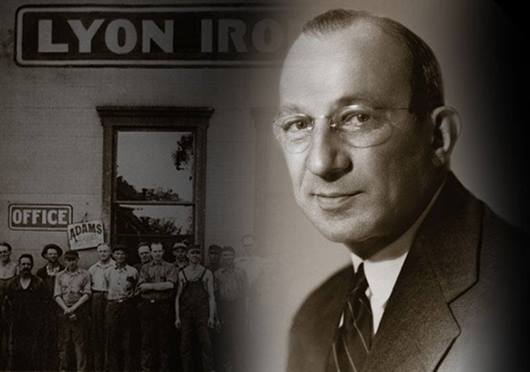
As changing consumer demands are pushing accelerated evolutions in the supply chain, The Raymond Corporation, a Toyota Industries Company, celebrates its 100th anniversary and highlights its focus on delivering the technology and material handling equipment needed to meet today’s demands and be better prepared for tomorrow’s challenges. Building on principles of innovation and continuous improvement for a century, the company is uniquely poised to deliver game-changing solutions in the areas of integrated automation, telematics, virtual reality, and advanced energy solutions that will optimize operations and bring warehouses and distribution centers to a new level of performance. “Just about everything you buy, wear, eat or touch has been moved by a piece of material handling equipment,” said Michael Field, president and CEO of The Raymond Corporation. “E-commerce would not exist as we know it today without innovations in material handling. We’re proud that it takes less time, energy, and warehouse space to deliver products to your door because of the cutting-edge solutions Raymond has developed for the last 100 years. We remain steadfastly committed to driving the industry forward.” Today, Raymond delivers intelligent intralogistics solutions to material handling and logistics markets in North America and globally. With a legacy of industry leadership and innovation, Raymond patented the first hydraulic hand pallet truck and double-faced wooden pallet —ultimately fueling the beginning of the material handling industry. Raymond’s anniversary celebration included an event at its headquarters in Greene, New York, on Tuesday, June 14. An interactive, museum-style exhibit will be on display to showcase Raymond’s industry-changing innovations and influential employee stories as well as to offer guests an exclusive look into the company’s bright future. After the event in Greene has concluded, the interactive exhibit will travel across the country to various Raymond Solutions and Support Center facilities, with the celebration ending at ProMat in March 2023.
As California plans to ban propane and diesel forklifts, Expect a faster shift to electric

The California Air Resources Board (CARB) is planning to ban sales of all new forklifts that aren’t zero-emission by 2026. Its recent proposal to phase out non-zero-emission forklifts is still in development, and the legislation is not yet in effect. However, the users of the material handling equipment (MHE) industries are questioning what it will mean for their operations—and not just in California, but all over the country. At its core, the planned proposal would force users to phase out internal combustion forklifts, including propane and diesel forklifts, and instead lease or buy zero-emission material handling equipment. Starting in 2026, fleets may not purchase large spark-ignition (LSI) forklifts (another name that CARB uses for lift trucks powered by internal combustion (IC) engines) while after 2026 fleets will need to retire existing LSI forklifts that are 13 years old or older. Understandably, fleets will need to plan ahead to guarantee they’re able to meet these regulations. At OneCharge Lithium Batteries, we always work with our customers to better understand the equipment requirements of their operations. Below, we’ll break down what these new regulations mean, and how they’ll affect different fleet types. We hope this information will simplify planning and help electric forklift buyers adjust to the upcoming mandates. What It All Means The new regulation will naturally mean an increase in reporting requirements for fleets and fleet owners, including an initial report with basic company and forklift information, and a final report to be completed when the fleet has fully transitioned to zero-emission lift trucks. Beginning in 2026, applicable forklifts that are bought or leased will need to be zero-emission, and the phaseout of older, non-compliant models will also begin that year. Starting in 2026, IC engine-powered forklifts that are 13 years old or older, or have an engine that is 13 years old or older, will no longer be allowed to operate. Not all forklifts will be affected by the regulation. The main segment targeted by the regulation will be large spark-ignition forklifts with a lift capacity of 12,000 pounds or less. Forklifts that won’t be affected include rough-terrain forklifts, pallet jacks, military tactical vehicles, forklifts with telescoping booms, and forklifts owned or operated by facilities that are subject to the Regulation for Mobile Cargo Handling Equipment at Ports and Intermodal Rail Yards. In 2022, the production of material handling equipment (MHE) struggles to catch up with the demand, owing in many ways to pandemic-related supply-chain issues. How these production issues will affect the adoption of the new regulations remains to be seen, though leading lithium battery manufacturers are already preparing to ramp up production and satisfy the demand for zero-emission forklift batteries. To make the transition less difficult, there are several exemptions and allowances built into the regulation, including a rental allowance for fleet operators. As long as their intention is reported in advance, fleets will be allowed to rent LSI forklifts for unexpected occurrences or seasonal workload increases for up to 30 days each calendar year. Similarly, a low-use exemption will allow fleets to keep a number of LSI forklifts as long as they’re used fewer than 200 hours per calendar year. The number of low-use LSI forklifts a fleet can keep will be limited to 10% of its total units. Notably, microbusinesses, which have fewer than 25 employees and less than $5 million in annual gross receipts, will be allowed to keep one low-use LSI forklift indefinitely. What will these regulations look like in reality, and how could they potentially affect real-world fleets? To make the regulation’s implications clearer for our readers, we’ve put together a few scenarios that highlight how the regulation will play out for different types of fleets. Company 1 In our first scenario, the fleet has 45 large spark-ignition (LSI) forklifts. In 2026, our starting year, the model years of their forklifts range from 2011 to 2025, meaning their forklifts are all between one and 15 years old. Starting in 2026, additions and voluntary replacements would be required by the new zero-emission regulations. In that first year, the fleet would have nine forklifts from the model year 2013 or earlier—which means, essentially, they would have to replace nine forklifts. For every following year, three of their remaining forklifts would become older than 13 years and would need to be replaced. That doesn’t sound too difficult, and keep in mind that the fleet would be allowed to keep five low-use LSI forklifts of any model year until 2031. Company 2 This hypothetical fleet has 27 LSI forklifts, from model years 2017–2025. However, the model years aren’t evenly spaced for this fleet: 14 of the forklifts are from the model year 2017, and 13 are from the model year 2025. Additionally, this fleet experiences extra business in December, and typically rents 10 extra forklifts for the month. Because this fleet’s forklifts are concentrated in specific model years, there will be long stretches of time when they don’t need to retire any units. Between 2026 and 2029, no turnover will be required, and the same is true of the period between 2031 and 2037. However, in 2030, 14 of their model year 2017 units will need to be replaced, while in 2038, 13 of their model year 2025 units will need to be replaced. Smart planning will be required in a situation like this. The good news is that under the new regulations, short-term rentals of LSI forklifts for seasonal work increases will still be allowed. In addition, this fleet would be able to keep three low-use LSI forklifts of any age until 2031. Figure 1. Forklift fleet transition to zero-emission by 2026. LSI forklifts will need to retire faster due to economic reasons if the usage of the equipment is high. Company 3 A microbusiness, meaning it has fewer than 25 employees and less than $5 million in annual gross receipts, has a fleet of only one LSI forklift model year 2020. The general regulation still applies to this microbusiness, meaning that its forklift
MassRobotics expanding STEM Programming with $100,000 Cummings grant
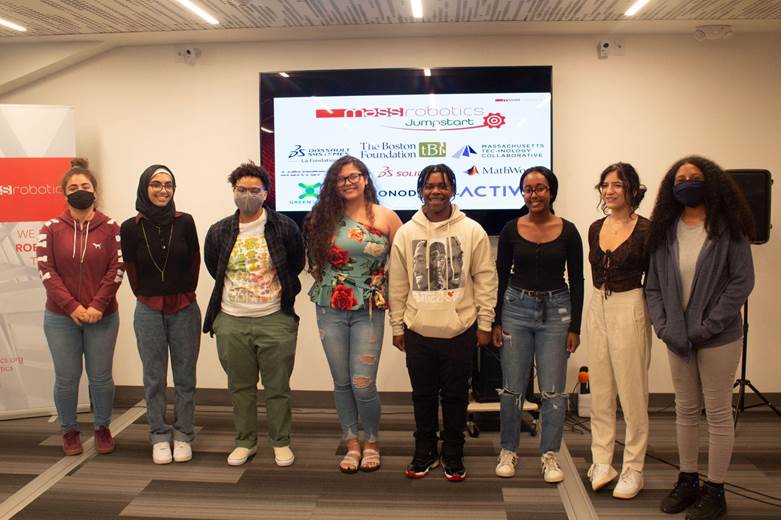
Boston-based robotics and STEM nonprofit receive three years of funding from the Cummings Foundation MassRobotics is one of 140 Massachusetts nonprofits to receive a grant through Cummings Foundation’s $25 Million Grant Program. The non-profit will use these funds to provide young women, especially Black and Latinx girls, a direct pathway to transform an interest in STEM into a passion and career in STEM, especially in robotics and artificial intelligence. MassRobotics was chosen from a total of 580 applicants during a competitive review process and will receive a $100,000 total over the next three years. “The current STEM workforce in Massachusetts is suffering from a lack of diversity, especially women of color,” said Khalif Mitchell, MassRobotics STEM program manager. “MassRobotics is honored to receive a Cummings Foundation grant that will help set women of color up for success in the technology industry, driving a more diverse workforce to pursue these disciplines for their professional careers.” MassRobotics STEM education is aimed at facilitating relationships between the robotics community and the next generation of innovators. Since 2017, MassRobotics has hosted hundreds of students for workshops and tours through their 50,000-square-foot state-of-the-art space. In 2020, MassRobotics initiated several STEM programs in collaboration with various partners and the robotics industry such as the MassRobotics Jumpstart Fellowship Program. The Jumpstart Fellowship was created to provide opportunities for diverse Massachusetts high school girls to learn about careers in robotics and develop their professional networks through direct engagement with industry professionals. The curriculum exposes young women to the many technical skills in areas that are included in the robotics industry, from programming to design and simulation, to hands-on building, prototyping, and testing. The program also includes mentorship to help develop a more inclusive technical workforce by preparing diverse talent in high school to pursue careers in STEM and robotics. The Cummings Foundation’s $25 Million Grant Program supports Massachusetts nonprofits that are based in and primarily serve Middlesex, Essex, and Suffolk counties. “We are so fortunate in greater Boston to have such effective nonprofits, plus a wealth of talented, dedicated professionals and volunteers to run them,” said Cummings Foundation Executive Director Joyce Vyriotes. “We are indebted to them for the work they do each day to provide for basic needs, break down barriers to education, and work toward a more equitable society.” Cummings Foundation has awarded more than $375 million to date in Greater Boston, including $25 million to 140 local-area nonprofits in 2022. It seeks to provide vital funding to mostly local charities that are working to improve the lives of community members through education, healthcare, human services, and social justice programs. This year’s grant recipients represent a wide variety of causes, including food insecurity, immigrant and refugee services, social justice, STEM education, and mental health services. The complete list of 140 grant winners is available at www.CummingsFoundation.org.
April Manufacturing Technology orders surpassed half a billion dollars

April 2022 orders of manufacturing technology totaled $513.4 million, the second month in a row surpassing half a billion dollars, according to the latest U.S. Manufacturing Technology Orders Report published by AMT – The Association For Manufacturing Technology. April orders decreased nearly 7% from March 2022 but were 27.5% larger than April 2021. 2022 orders through April totaled $1.9 billion, a 27% increase over the first four months of 2021. “Despite these strong results, there’s clearly been a lot of news related to declining consumer sentiment, everything from inflation to high interest rates to the war in Ukraine,” said Douglas K. Woods, president of AMT. “While consumer sentiment has been low since April 2021, consumer demand continues to hit record highs, leveraging consumers’ amassed savings as well as large capital investment pools looking for high-value market opportunities. “April USMTO numbers reflect ongoing consumer spending, particularly fueled by demand for manufactured goods, such as aerospace and other capital-heavy industries,” Woods continued. “Based on available economic projections, we had anticipated orders to gradually soften through the middle of the year. However, that pullback has not happened, and signs point to above-average orders for manufacturing technology into the beginning of the summer. “When supply chain issues are minimized, the continued pace of consumer-driven demand could necessitate additional capacity, prolonging a potential slowdown in the industry.”
Why decision making needs dialogue

Consider a situation where a major change for an organization is being debated amongst a leadership team. The group discusses the pros and cons, evaluating whether it should be implemented and if it will produce the outcomes they’re trying to achieve. They debate whether it’s the right direction or if other alternatives are better approaches. After a lengthy back-and-forth, they choose to proceed. The decision is communicated to the front line, and then monthly monitoring ensues. However, the results fall short of expectations. The team is frustrated. They push harder about the importance of making the change a reality, and how it will positively impact the company. They extend deadlines and lower success thresholds. Over the coming weeks, the organization cobbles together enough deliverables to meet expectations, and the change is presented in a good enough light to satisfy the executives but is far from stellar. Does this sound familiar? Why does this occur? Often we blame the plan itself – maybe there was an inherent flaw in its focus. Or it was just a bad idea in the first place. Alternatively, we blame execution – that the team couldn’t effectively implement the plan or didn’t have the skills to do so. I’d argue that blame can’t be solely placed on either camp – but I’d guarantee that a lack of dialogue between the front line and the leadership team help facilitate the failure. Most plans, strategies, or organizational changes take into consideration a wide variety of factors including the competitive landscape, organizational capabilities, and resources to name a few. Yet when these plans are derived, a dialogue between the front-line employees rarely occurs, which leaves it vulnerable to failure. Note that I said dialogue. Dialogue is not about bringing the proverbial tablets down from the mountain, but truly litmus testing your concept in collaboration with those who will have to implement it – before it is set in stone. Why is this important? Because most leaders are not immersed in the day-to-day operations. They don’t know the limitations, pressures, existing workloads, or mindsets of those who will be tasked with rolling out the change. They don’t know the true reality on the ground. This is why an early dialogue is essential. Once your change is outlined, bring to the table a handful of selected front-line employees – those who are candid enough to share their perspectives on potential pitfalls, and broad-minded enough to see the potential of the change. Accept their slings and arrows. That feedback is constructive criticism, which can make or break the success of a change. Enable their contributions to be folded in, making any necessary modifications to the plan which will clearly eliminate roadblocks and open up opportunities for easier adoption. Don’t take a negative view of their feedback. Have a back and forth. Ask why and propose other solutions to their concerns. Debate. Discuss. It’s not simply about fulfilling front-line requests, but rather understanding the landscape and constraints in which they are living and identifying ways to smooth the path that’s efficient, effective, and beneficial for everyone involved. By having a dialogue with those who will have to make your plan a reality, you’ll ensure any change has a much stronger chance of real success. About the Author: Andrea Belk Olson is a keynote speaker, author, differentiation strategist, behavioral scientist, and customer-centricity expert. As the CEO of Pragmadik, she helps organizations of all sizes, from small businesses to Fortune 500, and has served as an outside consultant for EY and McKinsey. Andrea is the author of The Customer Mission: Why it’s time to cut the $*&% and get back to the business of understanding customers, No Disruptions: The future for mid-market manufacturing, and her upcoming book, What To Ask, coming in June 2022. She is a 4-time ADDY® award winner and host of the popular Customer Mission podcast. Her thoughts have been continually featured in news sources such as Chief Executive Magazine, Entrepreneur Magazine, The Financial Brand, SMPS Marketer, Rotman Magazine, and more. Andrea is a sought-after speaker at conferences and corporate events throughout the world. She is a visiting lecturer and startup coach at the University of Iowa, a TEDx presenter, and TEDx speaker coach. She is also an instructor at the University of Iowa Venture School. More information is also available on www.pragmadik.com and www.andreabelkolson.com.
Hyster releases updated operator training program on National Forklift Safety Day
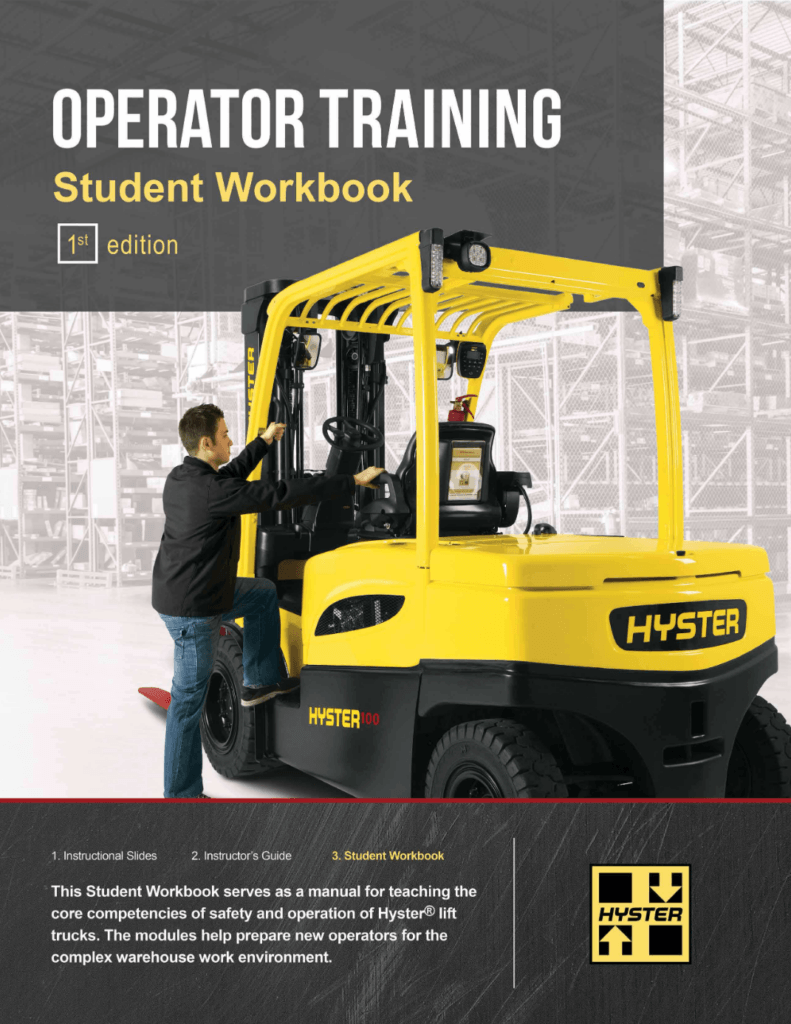
Hyster announces completely redesigned training videos for the newly updated Hyster® Operator Training Program, set for release Tuesday, June 14 in conjunction with National Forklift Safety Day (NFSD). Thoughtfully developed with contemporary adult learning methodologies, the videos help fast-paced operations level up their lift truck operator training and staff up quickly to keep pace with demand. “We live in a social media-driven world, with people used to getting smaller bites of information quickly and easily,” says Roger Keys, Sales Trainer, Hyster Company. “These modern training videos are designed to help contemporary learners engage with the material and ultimately better comprehend the essential skills and knowledge they need to be an effective lift truck operator. And as the industry observes NFSD this week, what better time to highlight the importance of training forklift operators?” The Hyster Operator Training Program offers a fast-paced learning process, with shorter video sections interspersed with hands-on learning to keep trainees engaged. The videos also equip businesses to consistently deliver instruction on key topics across several training classes and trainers. This consistency is especially attractive to busy manufacturers and other operations that must scale up on lift truck operators quickly due to turnover or seasonal upticks, without overburdening in-house training resources. The new training videos fulfill most lift truck-related topics in the formal instruction component of OSHA lift truck certification requirements. The videos are available through participating Hyster® dealers, who can also offer training resources for full OSHA certification. Learn more about the Hyster Operator Training Program here.