
Empire Screen highlights wide range of warning, danger, and safety decals
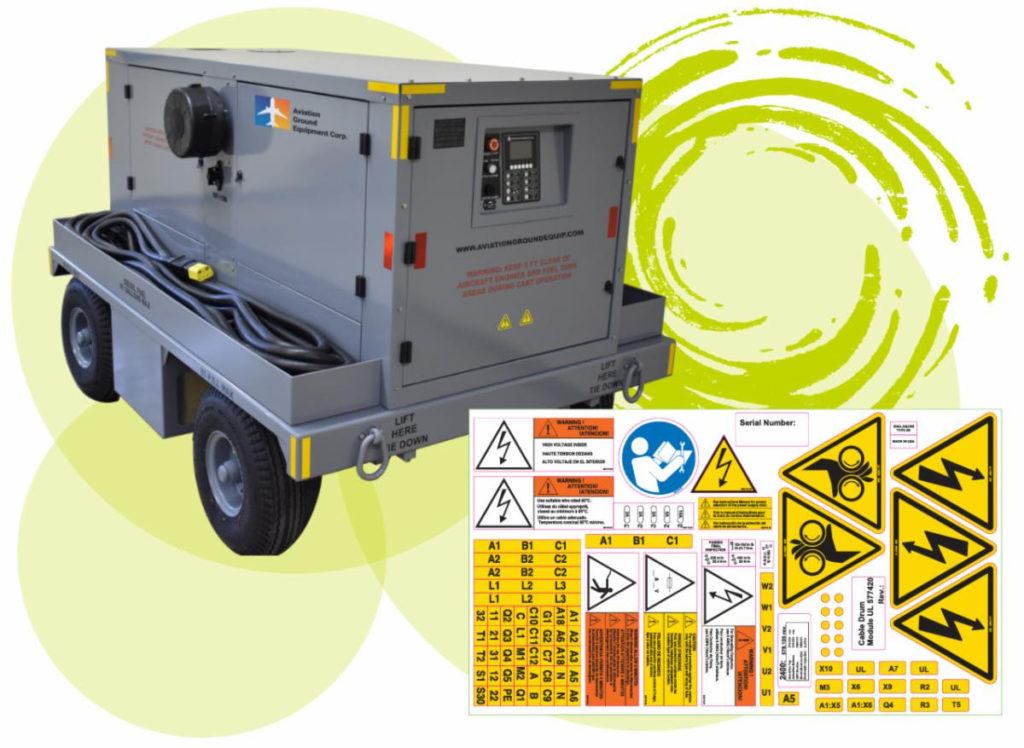
Warning, Danger, and Safety Decals Promote a Safe Working Environment Across Verticals Empire Screen Printing, a manufacturer of screen-printed products, highlights its warning, danger, and safety decals that keep people safe by warning them of potential hazards. The application of these products is in line with Empire’s own commitment to the safety of its employees, with its proven safety record as an organization. These warning, danger, and safety decals are compliant with a range of standards, including ANSI, UL, CUL, RoHS, Prop 65, and REACH. This allows organizations to promote a safe working environment across a range of industry verticals, from OEM and sporting goods to medical device and electronics manufacturers. They come in multiple languages, allowing them to be employed by organizations across the world. The decals are offered in custom shapes and sizes. They are created from a variety of materials, including vinyl, polycarbonate, and polyesters, as well as rigid materials, such as aluminum, and Sintra. Sintra, a lightweight PVC board that is waterproof and unaffected by heat and weather conditions, is particularly ideal for outdoor and indoor signage. The decals are printed via screen, flexo, or digital output. Easy to peel and apply, with a wide range of materials and printing methods, organizations can choose the option that best fits the specific application they have in mind. These can be indoor and outdoor applications including everything from equipment warning decals, product safety labels, hazardous warning decals, and signage. Some customers also dome their decals to provide extra protection and scratch resistance. Empire itself has a commitment to safety across its organization, with its safety committee established in 2005. The organization provides CPR and First Aid Training, and has a record number of days with no loss time accidents, specifically, 1,437. Empire’s recent safety awards include the 2020 EHS Safety Standout Awards and M3 Insurance Nominee Letter for the Wisconsin Manufacturer of the Year. This experience gives Empire a deep appreciation for the value of warning, danger, and safety decals, which play a crucial role in keeping people safe.
DOE awards $2M Research Grant to study Propane blends

Mechanical Engineering Associate Professor Sage Kokjohn and Co-Investigator Professor Dave Rothamer recently received a grant from the Department of Energy – National Energy Technology Laboratory (NETL) to fund their project ‘High-Efficiency Mixing Controlled Compression Ignition Combustion of Propane Dimethyl Ether Blends.’ They are one of two total awards made under this topic area! The intended outcome of this work will be a detailed understanding of the potential emissions and efficiency benefits of using propane and propane DME blends in a mixing controlled combustion mode. The effort is expected to decrease CO2 emissions from medium-duty vehicles by over 15% with a total cost of ownership less than a current state-of-the-art LPG engine. The project period is April 2022 – March 2025 and the total award amount is $2,373,453.
Yale expands lineup of lift trucks with factory integrated lithium-ion power
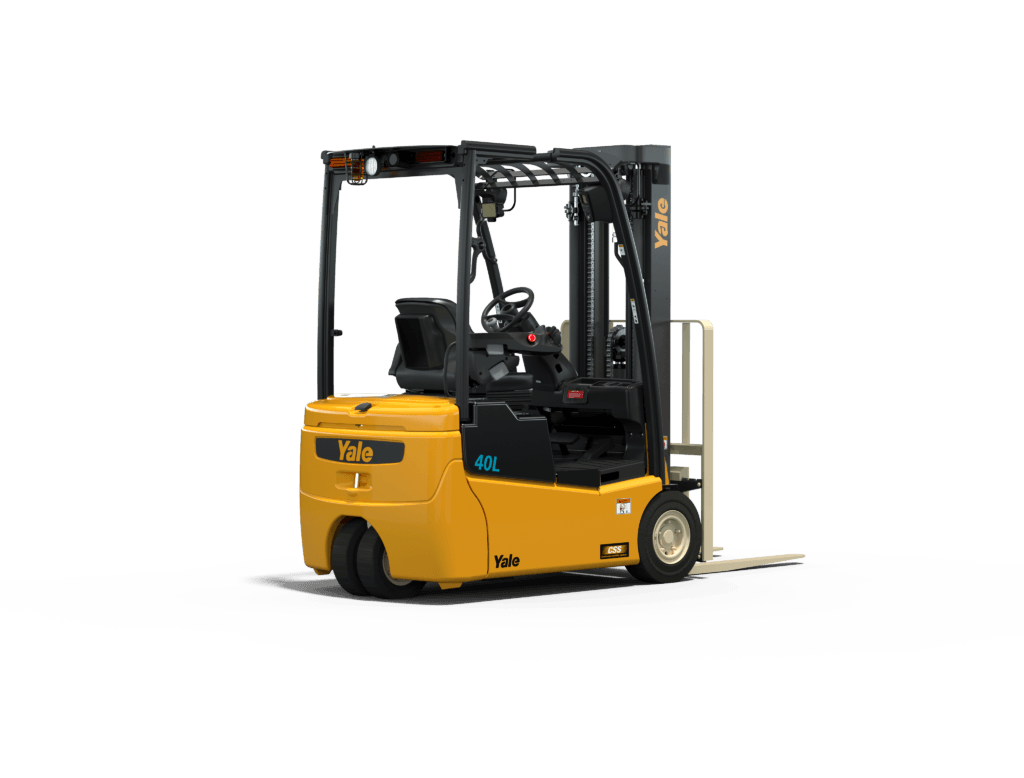
Yale Materials Handling Corporation extends its range of electric lift trucks with the introduction of 4,000-pound capacity integrated lithium-ion powered three-wheel and four-wheel models. Designed and manufactured with lithium-ion power from the factory, the new models allow warehouses in industries like food and beverage, 3PL, and retail and e-commerce to reap the benefits of this advanced electric power source, whether transitioning from internal combustion engine-powered trucks or lead-acid batteries. Both the ERP040VTL, the three-wheel model, and the ERP040VFL, the four-wheel model, buck the traditional approach in which a battery box replacement converts counterbalanced lift trucks from lead-acid to lithium-ion battery power. Instead, the trucks are designed from the ground up around a fully integrated, space-saving lithium-ion battery pack. “Counterbalanced trucks in this low-capacity range are critical workhorses and operations need lithium‑ion options backed by a trusted leader in lift truck technology,” says Brad Long, Brand Manager, Yale Materials Handling Corporation. “We’re making it easier for warehouses to take advantage of lithium-ion power without having to jump through hoops to find a compatible aftermarket lithium-ion battery supplier and retrofit their trucks.” The trucks pack the advantages of lithium-ion power, including fast charging, zero tailpipe emissions and no gassing in battery charging or maintenance processes, and lower energy costs compared to fossil fuels and lead-acid batteries. They are also strategically engineered to deliver other key benefits: Ergonomics – an open-space design increases operator freedom to position feet and makes for easy entry and exit, maximizing comfort and convenience Efficiency – Zero battery maintenance and fast charging times allow operators to focus more of their time on moving, for meaningful productivity advantages Stability – a repositioned center of gravity enhances drive quality and improves truck handling in corners for greater operator confidence and performance The trucks join the Yale lineup of factory-integrated lithium-ion lift trucks, which already include pneumatic and cushion tire models in the 5,000 to the 6,000-pound capacity range, as well as a 15,500 to 19,000-pound capacity series.
Yellow Corporation opens Detroit Driving Academy
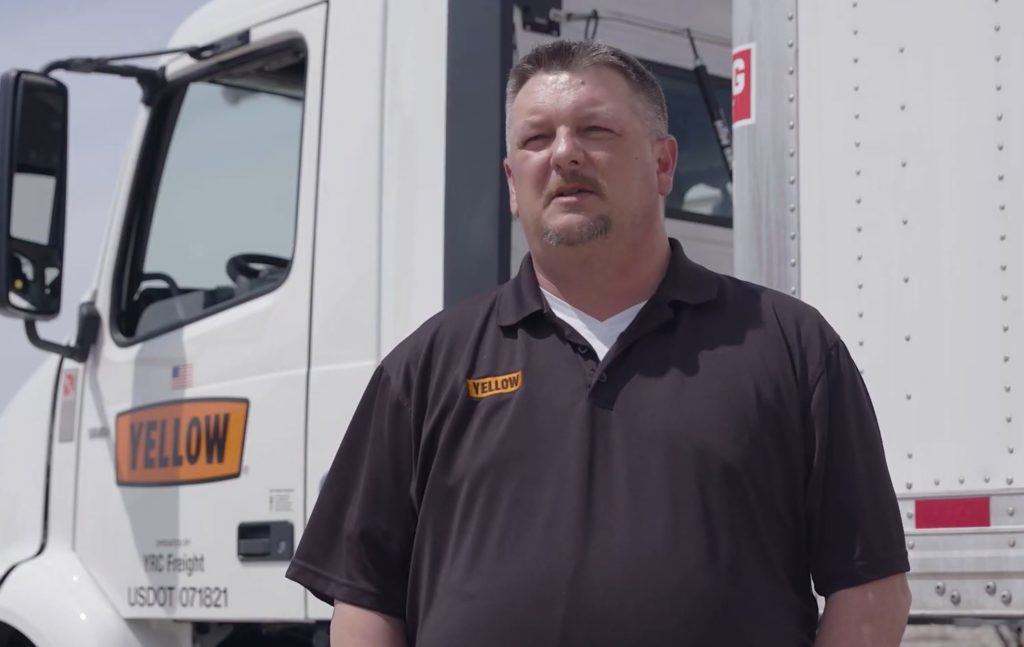
Motor City is home to LTL carrier’s newest tuition-free professional truck Driving Academy Yellow Corporation has announced the opening of its 21st Driving Academy, the company’s first in Michigan, to train the next generation of professional semi-truck drivers amid a nationwide driver shortage. Yellow’s Driving Academies are comprehensive, tuition-free training programs that provide students with classroom and behind-the-wheel training while preparing them to pursue their commercial driver’s license (CDL). After receiving a license, students are offered a driving position with additional on-the-job training at Yellow. Students will also learn the operations side of the trucking and logistics business while being paid a competitive hourly wage throughout the program. “Our Driving Academies open the door to an entirely new career for men and women who want to earn a good living with benefits. Training our own drivers is also the best way to tackle the driver shortage in America,” said Tamara Jalving, vice president of safety and talent acquisition at Yellow. “We’re thrilled to own and operate 21 permanent Driving Academies throughout the United States. In the last year, we have opened nine new Academies, with more scheduled to open later this year in other parts of the country.” Addressing the nationwide shortage of qualified professional truck drivers, estimated at 80,000 by the American Trucking Associations, is at the forefront of Yellow’s Driving Academy strategy. “We’re not only bringing in new drivers but we’re also meeting more diverse candidates as we aim to train 1,000 new drivers this year,” said Darren Hawkins, CEO of Yellow. “We’re introducing a wider and broader audience to the trucking industry.” Each of Yellow’s Driving Academies is certified as a Department of Labor (DOL) apprenticeship program, which is designed to provide paid on-the-job instruction for workers as they prepare for a career that is in high demand. Click here to learn more about the apprenticeship program. Yellow was recently named a DOL Apprenticeship Ambassador to help to promote, expand and diversify other skilled apprenticeship programs across the country. “Yellow Corporation has been a strong partner in the Department of Labor’s work to champion Registered Apprenticeships as a valuable workforce strategy that expands access to underserved communities to high-demand industries, such as trucking,” said Secretary of Labor Marty Walsh. “The success of Yellow’s CDL Driving Academy in producing some of the safest drivers on the road reflects the benefits of high-quality, earn-as-you-learn training that connects drivers to good jobs, and strengthens our nation’s supply chains.” “We’re honored to serve as a DOL Apprenticeship Ambassador,” Hawkins said. “Our Driving Academies serve as a model for other employers looking to train professionals for careers in transportation and logistics.” Yellow also has career opportunities available for sales professionals, dock employees, diesel mechanics, and terminal leadership coast-to-coast. Click here for more information. In addition to the new Driving Academy in Detroit, other Yellow Driving Academies are located in Atlanta/Marietta, Charlotte, Chicago, Cincinnati, Cleveland, Columbus, Denver, Fort Worth, TX, Hagerstown, MD, Indianapolis, Kansas City, Maybrook, NY, Memphis, Nashville, Pico Rivera, CA, Portland, Salt Lake City, South Bend, IN, and Tracy, CA. Learn more about Yellow’s Driving Academies at https://www.myyellow.com/us/en/careers/driving-academy.
BSLBATT surpasses milestone of 37,000 lithium batteries shipped

BSLBATT Battery – Industrial, is a fast-paced, high-growth (200% YoY) hi-tech company leading the adoption of lithium-ion technology solutions. BSLBATT Battery-Industrial designs, manufactures, and sell advanced lithium-ion battery packs that are disrupting the 100+-year-old market for lead-acid batteries, has announced that over 37,000 battery packs have been shipped to customers. The start of the milestone dates back to 2012 when the company first introduced its pallet jacks battery packs. BSLBATT Battery battery packs are used to power all makes and models of forklift trucks (Class I, II, and III forklifts), airport ground support equipment (GSE), golf carts, aerial work platforms, floor machines, micro excavators, automatic guided vehicles (AGVs) and stationary energy storage, etc apps provide power. BSLBATT’s batteries offer powerful solutions for companies in manufacturing, e-commerce, retail, distribution, supply chain logistics, and commercial transportation. At the same time, BSLBATT Battery-Industrial has a complete ISO management system and has become the first forklift lithium battery in China to obtain a UL2580 listing. ISO 9001, ISO 14001, and ISO 45001 certifications demonstrate the company’s strong commitment to employee health, safety, environment, and process quality. In addition, BSLBATT’s commitment to its global customers is to provide high-quality products in a short period of time, always with respect for its employees, local communities, and the environment. “We are excited to reach this milestone at BSLBATT,” commented CEO Eric Yi. “We believe these 37,000+ battery packs are a testament to the contributions of our employees and the customer demand for innovative and safe lithium-ion solutions.” Let the world’s top 10 forklift dealers help you navigate the available power options. BSLBATT Battery has provided customers with more than 37,000 lithium batteries. Rely on our experience to help you explore the operational and financial benefits of advanced technology. BSLBATT continues to witness growth in its material handling battery products. We have grown from 2 locations that started to enter overseas markets in December 2018 to today have 48 dealers and 10 exclusive agents around the world, covering more than 50 countries around the world. If you looking to go lithium for your electric material handling equipment email: [email protected]
AASHTO commends nomination of Shailen Bhatt to lead FHWA

The American Association of State Highway and Transportation officials have applauded the nomination of Shailen Bhatt to lead the Federal Highway Administration. “Shailen Bhatt has been a tireless transportation advocate for decades, especially in the areas of safety and technology, and he makes an excellent choice by the Biden administration to lead FHWA,” said AASHTO Executive Director Jim Tymon. “His leadership roles at both the Delaware and Colorado Departments of Transportation—as well as his time at the U.S. Department of Transportation, the Intelligent Transportation Society of America, and AECOM—demonstrate his ability to bring people together to ensure we have a safe, sustainable, equitable, and multi-modal transportation system that enables mobility for everyone. We look forward to building upon our already strong relationship with Shailen and urge the Senate to consider his nomination quickly so that he may partner with states to implement the Infrastructure Investment and Jobs Act and improve the quality of life for people in every community throughout the country.” Bhatt currently serves as global vice president of global transportation innovation at engineering firm AECOM. Prior to that role, Bhatt was president and CEO of ITSA, championing safety, sustainability, and equity by advancing the deployment of new transportation technologies such as connected and automated vehicles. He also led the Colorado Department of Transportation as its executive director and, before that, the Delaware Department of Transportation as its secretary. He also has federal government experience, previously serving as a presidential appointee to the U.S. Department of Transportation.
KPI Integrated Solutions acquires Commonwealth Supply Chain Advisors
Further strengthening KPI’s capacity and expertise to provide end-to-end distribution solutions for clients KPI Integrated Solutions, a supply chain consulting, software, systems integration, and automation supplier have announced the acquisition of Commonwealth Supply Chain Advisors, a Boston-based, independent supply chain consulting firm that designs innovative demand-centric distribution networks, facilities, and systems. Driven to solve clients’ distribution challenges and provide complete end-to-end solutions, the acquisition of a second consulting firm allows KPI to strengthen our capacity to help our clients address their supply chain and operational challenges. The combined firms will continue to provide innovative solutions that drive scalable and resilient distribution networks and power agile order fulfillment operations for existing as well as new clients. Commonwealth founder and President Ian Hobkirk will be continuing in a senior leadership role at KPI, and all of Commonwealth’s consultants will be making the move to KPI as well. “I am excited to welcome Commonwealth to the KPI team as we continue to provide data-driven network and warehouse designs that speed up order fulfillment and reduce labor dependence for our clients,” said Larry Strayhorn, CEO of KPI. “The deep bench of our combined KPI and Commonwealth teams provides unmatched distribution network strategy, innovative facility plans, and advanced automated systems that deliver business results,” he continued. “By joining KPI, we have significantly increased our pool of consulting resources and added some great analytical tools to our toolbox,” said Hobkirk. “We’ll have the same core consulting team that we’ve spent a decade building but we’ll be able to offer our services on a much larger scale.” Hobkirk added, “Our combined organization offers end-to-end solutions that build agile operations, provide the most resilient and scalable distribution systems, and ultimately help our clients build stronger businesses. It’s an exciting day for Commonwealth and for our customers.” KPI Integrated Solutions, a portfolio company of ARES Management, was formed in 2021 with the combination of Kuecker Logistics Group, Pulse Integration, and QC Software
Nearly six in 10 U.S. Workers say their paycheck is not enough to support themselves or their families
Employed Baby Boomers were much less likely to search for a new job, and also cited age as a potential barrier to finding new work Nearly six in 10 U.S. workers are concerned their paycheck is not enough to support themselves or their families as employees look to keep up with the rise of inflation, according to the latest American Staffing Association Workforce Monitor® online survey. When asked, 58% of employed U.S. adults expressed concern that their paycheck is not enough to support themselves or their families. This number was even higher for Hispanic workers (69%) and for parents with children under 18 (66%). As the cost of living increases, workers are looking to change their circumstances. Twenty-eight percent of employed U.S. adults plan to search for a new job in the next six months, while 27% plan to start a second job to supplement their income, and 20% plan to ask for a raise from their current employer. Twenty-one percent of employed Americans say they would use a staffing agency if they wanted a new job, including 26% of employed millennials. Searching for new work in response to inflation skews to younger generations—40% of employed Millennials and 36% of Gen Z plan to look for higher-earning jobs in the next six months. Meanwhile, only 13% of employed Baby Boomers plan to look for a new job in response to increased living costs, and only 8% plan to ask for a raise. Age is a perceived barrier for Baby Boomers, as 46% of employed Baby Boomers say age is a factor that could prevent them from getting a new job if they wanted one. “Workers are concerned about the effects of inflation, and they’re planning on taking action,” said Richard Wahlquist, ASA president and chief executive officer. “Employers need to provide competitive compensation and work flexibility, and invest in employees’ professional development if they want to keep and recruit quality talent in this labor market.” Method This survey was conducted online within the U.S. by The Harris Poll on behalf of ASA June 2–6, 2022, among a total of 2,027 U.S. adults age 18 and older of whom 1,165 were employed. The sampling precision of Harris online polls is measured by using a Bayesian credible interval. For this study, the sample data are accurate to within + 2.8 percentage points using a 95% confidence level. For complete survey methodology, including weighting variables and subgroup sample sizes, please contact Megan Sweeney at 703-253-1151.
Raymond welder wins gold in global Toyota Material Handling Group competition

The Raymond Corporation proudly announces Dave Micha, a welder at Raymond, has won gold in the international Toyota Material Handling Group (TMHG) Skills Competition, beating competitors from China, France, Italy, and Sweden, as well as additional U.S. participants. Micha’s win is a testament to Raymond’s century-long reputation of dedication to innovation, quality, and service. The end-to-end solutions provider maintains a constant focus on delivering the utmost quality and works for continuous improvement in every aspect of its business. “The Raymond Corporation heartily congratulates Dave Micha on this high achievement. The passion and dedication our welders like Dave Micha bring to the craft is inspiring and is a testament to the best-in-quality forklifts we build at Raymond,” said Tony Topencik, vice president of operations, quality, and environmental health and safety at The Raymond Corporation. “For an industry that touches almost everything, there will always be a need for skilled workers who provide essential services to help keep the supply chain moving. Our skilled team members are a major part of what has helped Raymond be a leader in the material handling industry for the past 100 years.” The competition consisted of welding a steel pressure vessel, which required performing tack welding, executing semiautomatic welding, and finishing of the vessel’s surface. “It was an honor to represent Raymond in the competition and secure this win,” Micha said. “I’m proud to work for a company that prioritizes quality and values the skilled trades such as welding.” Raymond’s internal welding competition began in 2015, with the goal of helping promote friendly competition and enhancing skills and knowledge among its welding teams. Since then, Raymond welders have earned invitations to compete in the TMHG Skills Competition. “Customer safety and product quality are absolutely essential elements in the products produced by Toyota Material Handling Group,” said Haruhiko Kimata, executive officer of Toyota Industries Corporation and chief supply officer and Takahama plant manager at Toyota Material Handling Group. “The skills of welders, who are directly involved in the production, play a decisive role in product quality. I would like to express my great respect for Raymond’s welders who have consistently been top performers in the TMHG Skills Competition and its mission to improve the skills and motivation of welders.”
More than two-dozen Manitowoc/Grove Cranes headed to ALL
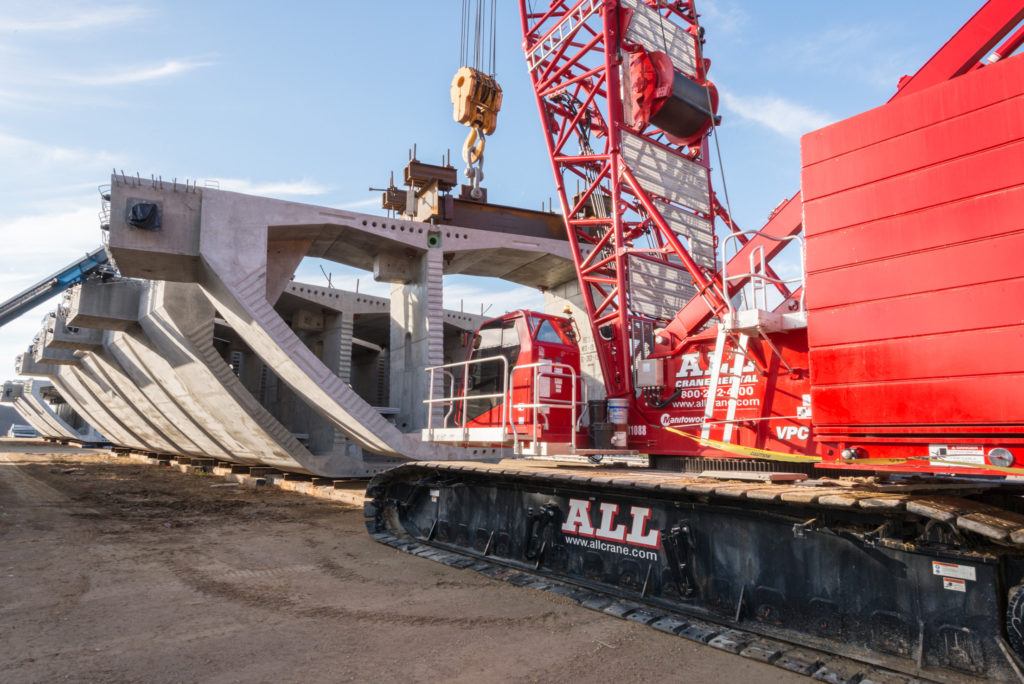
Four MLC300, and two MLC650 highlight packages for 2022 Seven Manitowoc lattice boom crawlers highlight a package of more than two-dozen Manitowoc and Grove cranes being added to the fleet of the ALL Family of Companies. New equipment includes four from the MLC300 line (including MLC300 wide boom and MLC300VPC), and one each Manitowoc 14000, MLC650, and MLC650 rebuild. MLC300 and MLC650 cranes, offering base capacities of 330 tons and 717 tons respectively, are known for their exceptional ability to go where other lattice boom crawlers cannot while offering excellent reach and capacity. They’ve pulled off stunning lifting feats across a host of urban construction projects. The purchase also includes 16 Grove rough terrain (RT) cranes, with capacities ranging from 30 tons to 165 tons. These machines are in high demand for daily construction work as well as the thriving wind market. Rounding out the package is a 300-ton Grove GMK5250XL all-terrain crane and two truck cranes. Manitowoc, a key partner of ALL for decades, is known for high-performance equipment that offers intuitive operation and rugged reliability that has become a favorite of ALL’s customer base. “Equipment from Manitowoc and Grove are essential components of ALL’s product mix,” said Michael L. Liptak, CEO and president of ALL. “These new additions to the fleet will give our customers outstanding flexibility for projects from every day to their most challenging.” The 26 new Manitowoc and Grove cranes are part of 60 total new cranes being added to the ALL fleet in 2022. About half have already been delivered. The machines will be distributed across ALL’s 33 North American branches based on market demand.
PTDA 2022 Industry Summit to deliver “Amped Up” Programming and Networking
The Power Transmission Distributors Association (PTDA) will convene for the PTDA 2022 Industry Summit in Nashville, Tenn. on October 27-29, 2022. With more than 500 delegates in the power transmission/motion control (PT/MC) industry expected to attend, representing over 200 PTDA distributors and manufacturer companies, the Industry Summit—themed “Amp Up”—will offer cross-channel networking, shared learning, and collaborative experiences. “Nashville is a city radiating with energy and I’m excited for PTDA to capitalize on its momentum during the 2022 Industry Summit.” says PTDA President JP Bouchard, vice president, General Bearing Service Inc. “This year’s program has been ‘amped up’ to provide even greater value to attendees, offering more opportunities for business engagement and growth. With dynamic presentations delivering key insights on our challenges like workforce recruitment and the ever-changing economy, the industry’s top PT/MC executive will walk away with not just information, but actionable takeaways.” New for 2022, the signature event of the PTDA Industry Summit–the Manufacturer-Distributor Idea Exchange (MD-IDEX)–has been increased to two days. MD-IDEX is a time- and cost-effective forum bringing together distributor and manufacturer executives for high-level discussions on market strategies and issues. Distributor and manufacturer members alike laud MD-IDEX as one of the best face-to-face cross-channel business programs with a measurable ROI for participants. Well-respected industry thought leaders will offer keynote presentations, beginning with economist Dr. Alan Beaulieu, an Industry Summit favorite. Founder and President of ITR Economics, Beaulieu will address the ever-evolving post-pandemic business landscape and highlight opportunities for PT/MC companies to seize and challenges to avert. Two sessions presented by PT WORK Force®, an initiative of the PTDA Foundation, will address ways employers can circumvent forces hindering their efforts to attract and retain top talent. Risha Grant, Founder & CEO of Risha Grant, LLC, will share unconventional methods to tap into a rich market of dynamic and diverse candidates to foster an energized workforce-focused program and environment. In the second session, a panel discussion featuring career services directors from local schools and technical programs will offer guidance on how to engage young, ambitious students before they hit the marketplace as job seekers. As the closing keynote, former NFL quarterback Joe Theismann will relay how his individuals and organizations committing to a positive mental outlook and vision can tackle any obstacles blocking their success. Additional networking opportunities abound at the PTDA 2022 Industry Summit. From gatherings of the PTDA Women in the Industry (WITI) and Next Gen groups to receptions and networking lunches to an exclusive Closing Event hosted at Nashville’s iconic Wildhorse Saloon, participants will reap content and connections. For more information, visit ptda.org/IndustrySummit. Those registering before August 25, 2022, will receive a $100 discount.
Safety 2022 attendance ranks third all-time
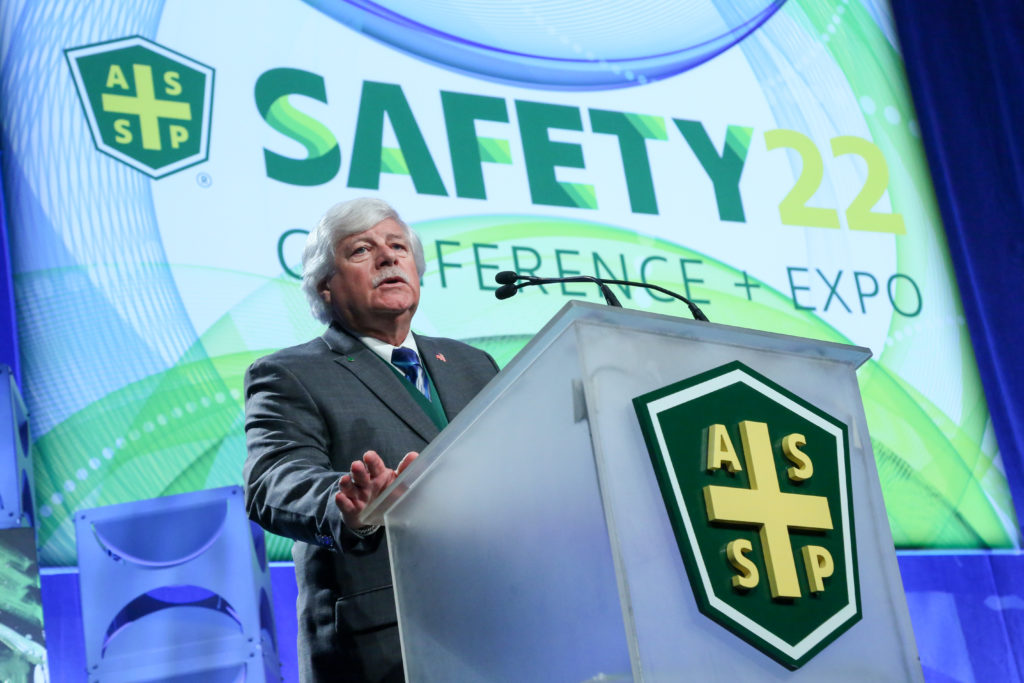
The signature event of the American Society of Safety Professionals (ASSP) returned to Chicago in a big way in June as the occupational safety and health event attracted over 1,000 more attendees than the last time the global conference was held at McCormick Place. ASSP’s Safety 2022 Professional Development Conference and Exposition was a hybrid experience for the second time and welcomed 5,564 registered attendees in person and online from June 27-29. In 2011, the Society’s 50th annual event in Chicago drew 4,535 safety and health professionals. It is one of America’s largest conferences for the advancement of workplace safety and health. “Workplace safety professionals want to stay current on best practices, industry trends, and the latest product innovations,” said ASSP President Christine Sullivan, CSP, ARM. “Regardless of your level of expertise, there are always new safety management techniques and strategies to adapt to our changing world of work.” This year’s in-person turnout was 4,122, and an additional 1,442 attendees joined online. The event’s success – the third highest ASSP attendance behind events in New Orleans (2019) and San Antonio (2018) – reflected a commitment to help advance occupational safety and health worldwide during a challenging time. Boosting Safety 2022’s popularity was a dynamic exposition with 445 vendor booths that covered 82,000 square feet. The extensive product showcase was a key element of the in-person experience. “Our expo is so illuminating and informative that we get some safety and health professionals coming only for that,” Sullivan said. Safety 2022 welcomed 2,782 first-time attendees, making up about half of the total attendance. Approximately one-third of attendees were non-members, who received a free year of ASSP membership. These results signal future growth for ASSP and the workplace safety and health profession. “We’re proud to be a leader in providing professional development for the occupational safety and health community,” Sullivan said. “Our event shares case studies and new safety approaches along with vast networking opportunities that can help practitioners solve challenges, implement innovations, and advance their careers.” In a post-event survey of Safety 2022 attendees, 9 out of 10 respondents said they would recommend the conference to a colleague while nearly 80 percent said they already plan to attend next year’s event. The conference surpassed its $25,000 fundraising goal as participants donated $27,193 to the ASSP Foundation, including a $10,000 match from Liberty Mutual. The ASSP Foundation promotes occupational safety and health as a career choice and works to build a sustainable talent pipeline in the profession that will help make all industries safer worldwide. ASSP’s Safety 2023 is set for June 5-7 in San Antonio and is expected to again include both in-person and online elements. The Henry B. Gonzalez Convention Center is on the famous San Antonio River Walk, which includes 15 miles of restaurants, shops, and museums. San Antonio is an international culinary destination and last hosted ASSP’s conference in 2018 when the Society launched its new name and brand. Groups planning to attend Safety 2023 can save on the entire conference. A record 119 groups received discounts on this year’s event. To learn about group offers, contact ASSP’s Nancy O’Toole at [email protected].
U.S. Rail Traffic for the week ending July 16, 2022

The Association of American Railroads (AAR) has reported U.S. rail traffic for the week ending July 16, 2022. For this week, total U.S. weekly rail traffic was 498,899 carloads and intermodal units, down 2.8 percent compared with the same week last year. Total carloads for the week ending July 16 were 229,809 carloads, down 2.4 percent compared with the same week in 2021, while U.S. weekly intermodal volume was 269,090 containers and trailers, down 3.2 percent compared to 2021. Three of the 10 carload commodity groups posted an increase compared with the same week in 2021. They were nonmetallic minerals, up 2,211 carloads, to 33,017; farm products excl. grain, and food, up 1,099 carloads, to 16,695; and motor vehicles and parts, up 867 carloads, to 12,916. Commodity groups that posted decreases compared with the same week in 2021 included coal, down 3,545 carloads, to 65,634; miscellaneous carloads, down 2,295 carloads, to 8,496; and grain, down 2,265 carloads, to 18,752. For the first 28 weeks of 2022, U.S. railroads reported a cumulative volume of 6,431,176 carloads, down 0.3 percent from the same point last year; and 7,377,966 intermodal units, down 6 percent from last year. Total combined U.S. traffic for the first 28 weeks of 2022 was 13,809,142 carloads and intermodal units, a decrease of 3.4 percent compared to last year. North American rail volume for the week ending July 16, 2022, on 12 reporting U.S., Canadian and Mexican railroads totaled 325,650 carloads, down 0.8 percent compared with the same week last year, and 355,716 intermodal units, down 1 percent compared with last year. Total combined weekly rail traffic in North America was 681,366 carloads and intermodal units, down 0.9 percent. North American rail volume for the first 28 weeks of 2022 was 18,852,354 carloads and intermodal units, down 3.3 percent compared with 2021. Canadian railroads reported 73,518 carloads for the week, up 4.6 percent, and 70,728 intermodal units, up 11.1 percent compared with the same week in 2021. For the first 28 weeks of 2022, Canadian railroads reported a cumulative rail traffic volume of 4,007,538 carloads, containers, and trailers, down 4 percent. Mexican railroads reported 22,323 carloads for the week, down 1.4 percent compared with the same week last year, and 15,898 intermodal units, down 11.1 percent. Cumulative volume on Mexican railroads for the first 28 weeks of 2022 was 1,035,674 carloads and intermodal containers and trailers, up 0.7 percent from the same point last year. To view the traffic charts, click here.
Yellow Corporation signs agreement with U.S. Army to join Partnership for Your Success Veteran Employment Program

Yellow Corporation, has entered into a memorandum of agreement today with the U.S. Army Partnership for Your Success (PaYS) program, demonstrating the Company’s commitment to helping ensure veterans have successful careers upon leaving service. “Veterans bring with them the discipline, training, and can-do attitude that we value at Yellow,” said Darren Hawkins, CEO of Yellow. “We see the partnership with PaYS as a win-win opportunity for us and for veterans. Giving veterans a great place to work is the least we can do to thank them for serving their country.” The PaYS Program is a strategic partnership between the U.S. Army and a cross-section of corporations, companies, and public sector agencies. The program provides America’s Soldiers with an opportunity to serve their country while they prepare for their future. “The Nashville Recruiting Battalion is excited for the opportunity the partnership between the U.S. Army and Yellow Corporation brings to our Soldiers’ lives as they become Veterans,” said Army Lt. Col. Kirsten McFarland, Commander of the Nashville Army Recruiting Battalion. “Our partnership is an exceptional commitment to building not only an experienced job pool for Yellow Corporation but employment for our Veterans as they transition from service.” PaYS partners guarantee Soldiers an interview and possible employment after the Army. This unique program is part of the Army’s effort to partner with America’s business community and reconnect America with its Army. Hawkins said, “In the trucking industry, veterans can have a new career in service, as they help ensure essential goods are safely delivered to our communities. Yellow is proud to support our troops with a meaningful career and honor their sacrifices made to preserve our freedom.” To learn more about the Army PaYS program, go here. Read about what it means to work at Yellow by visiting the careers section of our website.
Help! I’m slumping and I can’t get a sale!

In a slump? Not making enough (or any) sales. Feel like you’re unable to get out of the rut? Maybe you’re not in a big slump but just can’t seem to hit the quota numbers. Let’s be kind and call it “sales underachievement.” Don’t panic. Don’t press too hard. Don’t get down on yourself. Don’t get mad. And above all, don’t quit. What causes a slump? You do. Therefore, you are the best (only) person to fix it. Here are the prime causes of sales slumps: Poor belief system. I don’t believe that my company or product is the best. I don’t think that I’m the best. Poor work habits. Getting to work late, or barely “on time,” Not spending your time productively. Misperceptions that lead to sour grapes. I think my prices are too high, or my territory is bad. Outside pressure. Caused by money problems, family problems, or personal problems. Poor personal habits. Too much drink, too much food, or too much after-hours play. Boss giving crap instead of support. Someone who says, “You better do it,” instead of, “I know you can do it.” Events that go against you. A new salesperson passes you, someone else gets promoted and you knew it should have been you. A customer cancels a big order. Weakening your personal belief or causing severe money problems or both. Getting depressed. From any of the above. When you’re in a slump, you begin to press for orders instead of working your best game plan (which is: sell to help the other person and let your sincerity of purpose shine through). When you have the pressure to sell, the prospect senses it and backs off. Then things get worse. You can’t seem to sell at all and begin to panic. “Oh my gosh, I can’t sell a thing, I’ll get fired, miss my house payment, can’t pay my bills. Aaaahhhhhh!” False fear. Relax, you’re better than that. Here’s a prescription to help cure sick sales: Get back to basics. Usually what’s wrong is not complicated. In fact, you probably know what’s wrong. Your problem is that you think it’s someone else’s fault. Wrong. List two or three areas that need immediate care. Have the guts to take action. Revisit your (or make a new) plan for success. Today. List 5 things you could be doing to work smarter/harder. Make a plan to work as smart as you think (or say) you are. Change your presentation. Try a different approach. Take the customer’s perspective. Talk to your five best customers. Ask them to evaluate your situation. Get someone you respect to evaluate your presentation. Take them with you on sales calls. Get a coach. Visit your mentor. And have a new plan when you get there. Get to work an hour before everyone. Put in more productive time. Stay away from pity parties. Don’t make a slump worse by whining or hanging around a bunch of negits and underachievers. Hang around positive, successful people. The best way to get to success. Have some fun. Go to the comedy club, do a little extra of what you like to do best (unless too much fun is the cause of your slump). Spend 30 minutes a day (in the morning is best) reading about your positive attitude. Then listen to attitude and sales podcasts in the car all day. Listen to your favorite song just before the presentation. Go into your next call singing. Take a few days off. Chill out, take stock, make a plan, regroup, reenergize, and return with renewed determination and better energy. Rearrange your office. Shake things up a little, and make them look new. Record your presentations live. Then listen in the car immediately afterward. Take notes. Act to correct. Take a video of your presentation. Watch it with others who can give you constructive feedback. Take the best salesperson you know out on calls with you for a day. Get a written evaluation after each call. Take your boss with you on calls for a week. You’ll get more feedback than you can handle, but it will help. Avoid negative talk and negative people like the plague. Find people who will encourage you, not puke on you. When a baseball player is in a batting slump, he will do anything to “change his luck.” Things from superstition (rabbit’s foot, not shaving, wearing the same underwear) to changing batting stance, to video watching, to extra coaching. But the one thing that usually breaks the slump is extra batting practice to regain the groove. Fundamentals. They, like you, have the professional ability, but temporarily lost it. They, like you, went back to the raw fundamentals to regain lost talent. Other random notes on the truth about slumps: The best way to get out of the rut is to keep the slump in perspective. Once you accept the fact that it’s no one’s fault but your own, you can begin to recover. Be cool. You’re the greatest if you think you are. Believe in the most important person in the world, YOU. In a sales slump? Get fired up or get fired. About the Author: Jeffrey Gitomer is the author of twelve best-selling books including The Sales Bible, The Little Red Book of Selling, and The Little Gold Book of Yes! Attitude. His real-world ideas and content are also available as online courses at www.GitomerLearningAcademy.com. For information about training and seminars visit www.Gitomer.com or email Jeffrey at [email protected] or call him at 704 333-1112.
Inflation Strategy – Part 4
The summer of 2022 is not really looking better than the Spring. the business climate is still tenuous as labor issues, COVID variants, and geopolitical uncertainties create continue material and labor shortages. Our biggest obstacle is the meteoric rise in inflation. Over the past three articles, I have laid out a series of strategies that could be employed to realign the policies and practices inside your dealership. We must be pragmatic in making intelligent decisions in response to a very different distribution landscape. My prior articles have touched on different approaches to assessing progress and setting goals using a SWOT analysis. I have also suggested strategies for maintaining your revenue stream in sales, by reexamining dealership policies governing rental retirements, and long-term rental contract extensions. I offered ideas about maintaining your sales department profitability by keeping pricing policy “ahead” of the inevitable OEM price adjustments, even for units currently on order. I also touched on ways we could adjust parts policies regarding inventory decisions, vendor selection, and expense recovery. Leveraging the rise in inventory value, that is automatically created during an inflationary cycle is a key factor in maintaining profitability during these times. In this article, I want to turn my attention to the service department, and how the changes in the marketplace give rise to both opportunities and risks that we must prepare for. Labor Rate Methodology Inflation is dangerous because it feeds a vortex of two market forces. Prices rise…. but so do wages. It’s a simple cause-and-effect construct. To remain competitive and maintain your position as an “employer of choice”, you must increase your wages. As wages rise, the amount of dollars entering the economy grows ever larger, thereby forcing prices even higher. This price-wage vortex is difficult to control, and once again, we need to stay “ahead” of the curve. Inflation and wage growth do not change the long-standing “best-practice” ratios that serve as guideposts for setting (and adjusting) retail labor rates. The proven ratio is 3.2 to 3.6 times journeyman wages paid. If you are paying your journeyman technicians $35 an hour, your effective retail rate should be between $112 and $126 an hour. If you are constrained to pay $42 an hour due to inflationary wage growth, your rates need to follow suit at between $135 and $151. This will be uncomfortable, and awkward, especially if you have to enact multiple rate increases during the same calendar year. As disquieting as this can be, we must be committed to our ratio. The math does not change because the costs are rising. We must keep pace. You may want to exempt the selected customers from the increase. I get it. I’ve been there. May I suggest however that instead of exempting them completely, you instead attempt to ramp them into a higher rate over time? If they are already enjoying a discount from your effective rate, calculate the percentage increase represented by the retail rate hike, and cut it into three to six segments, enacted over a period of months. Instead of a $15 jump in rate all at once, you make an agreement to step up smaller increases every 60 or 90 days. Once your train your customers that they can expect to be insulated from rate increases, you will find it hard to unwind that expectation. If your methodology however rewards their loyalty with gradual increases over time, you may find it easier to manage this process. Callout Fees As hard as it will be for customers to stomach rate increases, it will be even more difficult for them to accept paying those rates for travel time. This is a recurring theme in dealerships all over the country. Customers can see the value when the tech is actually onsite making repairs, but not so much when they are sitting in traffic logging windshield time. I have long been a proponent (especially for customers within a 60-mile radius) of establishing a flat rate call-out fee for field repairs. Charging a different amount every time a customer contacts our dispatch desk is already infuriating your customers. Raising the bar on that price only heightens the level of frustration. Some dealers charge travel time based on “zones”. Travel charges are flat rated based on how far the customer is from our dealership. Most of the time, however, we dispatch a technician directly from his remote location to the customer’s place of business. The only time we might dispatch them directly from the dealership is for the first call of the day. So, is your zone charge accurately representing the cost of travel? Maybe…or maybe not. You may want to consider a flat-rate fee for all dispatched field calls in your service area (60 miles). Whether the technician is across the street, or across the county…. it’s the same price every time. Customers will know what to expect, and there will be much less frustration connected with service invoicing. Rural customers outside the 60-mile zone can still be charged hourly, but truth be told, they expect it, and are generally less sensitive to travel time than their in-town counterparts. Setting this callout fee is not really that difficult. If your dealership uses a GPS service provider (which most do) you can use the GPS reporting data to separate transit time from on-site time. Use the fleet average on travel to extrapolate the average total transit time per tech, per day. Apply your effective hourly rate and set your callout fee. Remember to account for things like lunches, commute time, and other anomalies. Surcharges – Fuel Our current inflationary cycle is driven by fuel prices. These prices are unpredictable. It’s not a good idea to try and recover a spike in fuel prices, with a rate increase. Wages should drive hourly rate increases…not expenses. This highlights another area of frustration for customers. During times like this, when fuel prices are running well in excess of historical norms, you have to have a way to recover the expense
June 2022 reaches levels in New Industrial Manufacturing Planned Industrial Projects not seen since March 2022
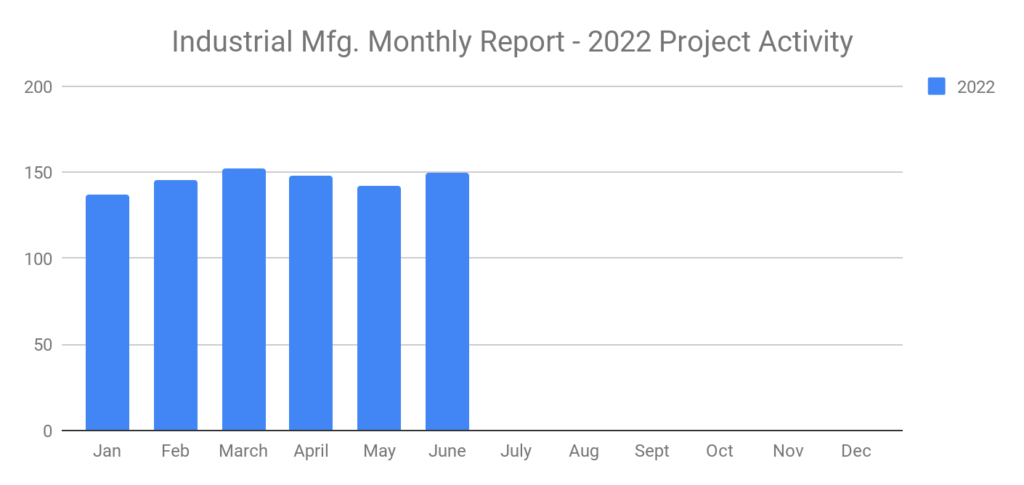
SalesLeads has announced the June 2022 results for the newly planned capital project spending report for the Industrial Manufacturing industry. The Firm tracks North American planned industrial capital project activity; including facility expansions, new plant construction, and significant equipment modernization projects. Research confirms 150 new projects in June 2022 as compared to March 2022 with 152 planned projects in the Industrial Manufacturing sector. The following are selected highlights on new Industrial Manufacturing industry construction news. Industrial Manufacturing – By Project Type Manufacturing/Production Facilities – 129 New Projects Distribution and Industrial Warehouse – 71 New Projects Industrial Manufacturing – By Project Scope/Activity New Construction – 44 New Projects Expansion – 55 New Projects Renovations/Equipment Upgrades – 72 New Projects Plant Closings – 9 New Projects Industrial Manufacturing – By Project Location (Top 10 States) Michigan – 15 Indiana – 13 Ohio – 12 Texas – 9 California – 8 South Carolina – 7 Kentucky – 5 North Carolina – 5 Virginia – 5 Wisconsin – 5 Largest Planned Project During the month of May, our research team identified 16 new Industrial Manufacturing facility construction projects with an estimated value of $100 million or more. The largest project is owned by GlobiTech, Inc., which is planning to invest $5 billion in the construction of a manufacturing facility in SHERMAN, TX. Construction is expected to start in late 2022. Completion is slated for 2025. Top 10 Tracked Industrial Manufacturing Projects OHIO: Automotive mfr. is planning to invest $1.5 billion for expansion and equipment upgrades on their manufacturing facility in AVON LAKE, OH. They are currently seeking approval for the project. OREGON: Lithium battery mfr. is planning to invest $450 million in the construction of a manufacturing facility in REDMOND, OR. They are currently seeking approval for the project. CONNECTICUT: Semiconductor components mfr. is planning to invest $250 million for an expansion of its manufacturing facility in WILTON, CT. They are currently seeking approval for the project. TENNESSEE: Specialty food packaging products mfr. is planning to invest $200 million for expansion and equipment upgrades on their manufacturing facility in VONORE, TN. Completion is slated for late 2023. OHIO: A biotechnology company is expanding and planning to invest $150 million in the construction of a 350,000 SF laboratory and processing facility at 9885 Innovation Campus Way in NEW ALBANY, OH. They are currently seeking approval for the project. GEORGIA: Industrial equipment mfr. is planning to invest $140 million in the construction of a 650,000 SF warehouse and manufacturing facility in GAINESVILLE, GA. They are currently seeking approval for the project. Construction is expected to start in 2022. Completion is slated for late Summer 2024. ARKANSAS: A lumber company is expanding and planning to invest $131 million for the renovation and equipment upgrades on their manufacturing facility in WALDO, AR. Completion is slated for late 2024. MONTANA: A food production company is planning for the construction of meat, dairy, poultry processing, and warehouse complex in GREAT FALLS, MT. The project also includes the construction of a 20,000 distillery and production facility at the site. They are currently seeking approval for the project. MISSOURI: Automotive mfr. is planning to invest $95 million for expansion and equipment upgrades at their manufacturing facility in KANSAS CITY, MO. They have recently received approval for the project. MICHIGAN: Food safety products mfr. is planning to invest $70 million in the construction of a 175,000 SF manufacturing facility in LANSING, MI. Construction is expected to start in Fall 2022. About SalesLeads, Inc. Since 1959, SalesLeads, based in Jacksonville, FL is a leader in delivering industrial capital project intelligence and prospecting services for sales and marketing teams to ensure a predictable and scalable pipeline. Our Industrial Market Intelligence, IMI identifies timely insights on companies planning significant capital investments such as new construction, expansion, relocation, equipment modernization, and plant closings in industrial facilities. The Outsourced Prospecting Services, an extension to your sales team, is designed to drive growth with qualified meetings and appointments for your internal sales team.
Risk Assessment
As you well know there are quite a few issues facing dealers for the balance of 2022 and into 2023. We have Inflation with many factors pointing to Stagflation. We have interest rate risk (which is scary). We have credit risk from your OEM down to your customer level. We have increased transportation costs. We have pending EV interest and requirements. We have consolidation on many equipment fronts. We have staffing problems. We have supply chain problems. We have the retail sector stuck with bloated inventories. You can add a few more. On the positive side a recent BDO newsletter I received states that industrial real estate is staged to almost double the volume of five years ago. With many companies needing to put products closer to customers and the trend to produce more products in the US, lift truck dealers have a tremendous opportunity to add market share. Sounds good so far, but there is no free lunch because owners of these properties plan to become digitally aware looking to digitally connect systems to work together and deliver more productivity. Sounds great as long as you can participate in this digital process. If you cannot, do not expect to be at the top of the list when they need equipment. ( I suggest you sign up for those BDO emails because they contain a lot of practical material). The next item on the list will require a strong balance sheet along with meaningful EBITDA. A year ago, you have a Fed Fund Rate of about “0” to which the bank adds, let us say, 2.5% to 3.0%. as your rate to receive working capital and Cap-X loans. When you think about this your costs are increasing, and vendors who experience a similar fate will be passing on their higher interest costs to you as well. A lose-lose situation because the reality of this situation is you incur higher interest costs without a source of revenue to offset them. You obviously will have to increase margins to cover this higher rate, but it may take a year to catch up to the cost increase, with the higher interest passed on by vendors making it even tougher to catch up. For example, you now have a 2.5% loan. With the Fed rate changes, the base rate is now 2.5% (and will probably go higher) to which you add on the bank rate of 2.5%, with the new rate being 5%. That’s a 100% increase! To see the impact of these changes, take a look at your 2021 annual financials to see what your interest cost was. Now double it to compile what your new annual interest dollars will be.YIKES. Where is cash coming from to cover this expense? Where you find yourself after these higher rates are executed is in front of your banker who says, “ Looks like you missed your covenants, and we will have to see what needs to be done to correct the situation.” I hate to pile on like this but ’22 is the year of the new lease accounting rules which will add lease debt to your balance sheet which could create additional covenant problems. All the more reason to take a HARD look at your balance sheet now to give you time to prepare your defense when the loan renewal comes up. Dealers with unit inventory and a rental fleet might see debt covenants as follows. Debt/Equity. Debt/EBITDA-Cap X. EBITDA/ Interest. EBITDA / Total Debt Service. I am sure that a lot of you are familiar with these calculations. Hopefully, you have examples of how the bank calculates these results. If you do not have those examples, get them, and keep them handy. Since EBITDA shows up in more of these covenant calculations make sure you have an outline for adjustments to make to the EBITDA. For example, one-time charges and personal expenditures could be used to adjust the EBITDA to a higher positive result. It will pay to study how you are accounting for revenues and expenses to insure you have the right figures in the right period. And remember the “I” in EBITDA stands for interest. Make sure you are using the correct amounts for interest expenses. Obviously, the lease debt will increase the debt amount on the balance sheet resulting in a material adjustment if you lease a lot of equipment or have long-term contracts (not equipment related). Bankers have been saying that you do not have to worry about the lease debt, as long as you are in good standing with the bank. Get a bit out of sync and you may find that suddenly the lease debt is more important than anticipated. One last point. Your customers and vendors will find themselves also having problems with increasing rates. So now is the time to see how the financials of your slow players look. These rates are sure to generate a lot of Zombies (Wall St. term for a company not able to make their next bank note payments) who borrowed too much because the rates were low. Thus, the question becomes “How many Zombies are in your AR schedule?” Is not owning a lift truck dealer fun? Most times yes. For the next eight months probably not. About the Columnist: Garry Bartecki is a CPA MBA with GB Financial Services LLC and a Wholesaler columnist since August 1993. E-mail [email protected] to contact Garry.
EP 299: ABCO Systems and Automation Today

I’m excited to welcome back Seth Weisberg to the New Warehouse Podcast. Seth is the CEO of ABCO Systems which is a full-service design and build company specializing in material handling solutions. They offer a complete range of services, from sortation and conveyance to multi-level pick modules, garment on hanger systems, pallet racks, and shelving. Over the years, ABCO has evolved significantly, focusing more and more on product flow throughout the building. Key Takeaways Seth and I discuss the relevance of ROI in automated solutions. While ROI remains a primary factor for investing in automated solutions, we discuss other factors that have become even more critical under the current market conditions. Seth also shares his thoughts on the likelihood of ROI with some solutions that are on the market. ABCO Systems is excited to open a new showroom/training center that will showcase different types of automation technology and train technicians. The showroom will feature a pick wall, pallet shuttle, print and apply loop, store organizer, and more. Seth feels this will be a game changer for ABCO as the new showroom allows customers to see the technology in person and learn about available options. We discuss factors contributing to ABCO’s best year in over 40 years, such as focusing on different types of relationships, finding their niche, and hiring strategies. We also discuss what kind of investments set companies apart from one another to remain relevant. Listen to the episode below and leave your thoughts in the comments. The New Warehouse Podcast EP 299: ABCO Systems and Automation Today
Three lessons learned at Automate 2022

According to a report by Oxford Economics, faster adoption of automation could equate to an extra $4.9 trillion per year to the global economy by 2030. That’s equivalent to an economy greater in size than Germany. Where better to learn about this potential than America’s largest showcase of automation, Automate 2022? Claudia Jarrett, US country manager at automation parts supplier, EU Automation, examines the three biggest trends from this year’s show. Prescriptive maintenance With ample opportunities to save engineering expenditure and reduce the likelihood of downtime, maintenance technologies were among the first to undergo a process of digitalization. For several years already, manufacturers have deployed sensors to collect performance data from assets and undertake predictive maintenance. In practice, this sees maintenance engineers acting on an asset only when it shows signs of wear and tear. But now, maintenance technologies are advancing further. Machine learning (ML) is becoming a ubiquitous feature in many asset management technologies. For instance, the software that gathers data from our aforementioned sensors can analyze data consistently to trends and intelligently schedule maintenance. For prescriptive maintenance to be effective, an ML model needs to be trained onto the sensor or software. The higher quality of the data, the more accurate the maintenance suggestions will be. Prescriptive maintenance isn’t a plug-and-play option and can take several stages of investment to come to fruition, but in the coming years, this technology is likely to become more commonplace. Automating at the edge Businesses that are already years into their digitalization journey will understand the need for edge computing. While factories have become smarter, more complex, and often produced higher volumes of data than ever before, some have suffered from slower processing speeds as a result. Funneling this mass of data through a centralized network can cause bottlenecks and latency, yet edge computing resolves this challenge. Edge computing describes data processing that takes place closer to — or on the edge — of a device. Rather than waiting for data to be processed elsewhere, an edge-enabled device can achieve faster analysis and correction. For instance, if the device was to monitor pipes and identify flow-through issues, it can adjust automatically using decentralized artificial intelligence (AI). While edge is a hot topic, the feasibility and best practices of the technology are still under debate. Does edge computing as software-as-a-service (SaaS) improve accessibility? And, what is the best cloud model to work in conjunction with the edge? These were just some questions posed at the show. I suspect at the next Automate show, we will have more use cases for this tech and a better understanding of its potential. Robots-as-a-service (RaaS) Last year set a record for the number of robots sold in North America, with 39,708 units deployed, according to the Association for Advancing Automation (A3). Despite rising by 28 percent since the previous year, North America is still significantly lower than other leading nations, such as Japan, Germany, the Republic of Korea, and many others. Among many extraordinary exhibitors at Automate were several companies offering RaaS. As the name suggests, RaaS allows manufacturers to install robotics in their facilities on a service-led basis. Essentially leasing the machines and a cloud-based subscription rather than manufacturers buying the robots outright. RaaS is hailed as a way for small and medium-sized manufacturers to benefit from the productivity gains of robots, without needing such a high initial investment. An interesting development in this model is the speed at which it is growing. Industrial robotics manufacturer, Kuka, has recently scaled its RaaS offering to launch a Smart Factory as a Service (SFaaS) option, in which customers can rent out an entire automated plant with robots, software, and more. This new offering demonstrates that service-based automation options are not just for those dipping their toes into automation, but is a feasible business model for all manufacturing players. As the first Automate since before the pandemic, it has been refreshing to see the continued pace of change in automation — despite the challenging and uncertain climate. Faster adoption of automation has masses of potential for the global economy and, as demonstrated at the show, the industry is continuing to develop new, exciting technologies to facilitate this growth. At EU Automation, we are already looking forward to the tech we will see next time.