
U.S. Rail Traffic for the week ending December 17, 2022

The Association of American Railroads (AAR) has reported U.S. rail traffic for the week ending December 17, 2022. For this week, total U.S. weekly rail traffic was 476,232 carloads and intermodal units, down 5.5 percent compared with the same week last year. Total carloads for the week ending December 17 were 226,977 carloads, down 3.2 percent compared with the same week in 2021, while U.S. weekly intermodal volume was 249,255 containers and trailers, down 7.5 percent compared to 2021. Three of the 10 carload commodity groups posted an increase compared with the same week in 2021. They were motor vehicles and parts, up 2,783 carloads, to 15,251; farm products excl. grain, and food, up 603 carloads, to 16,719; and petroleum and petroleum products, up 181 carloads, to 10,582. Commodity groups that posted decreases compared with the same week in 2021 included coal, down 3,317 carloads, to 61,577; chemicals, down 2,766 carloads, to 31,342; and miscellaneous carloads, down 1,948 carloads, to 8,512. For the first 50 weeks of 2022, U.S. railroads reported a cumulative volume of 11,603,096 carloads, up 0 percent from the same point last year; and 13,059,825 intermodal units, down 4.9 percent from last year. Total combined U.S. traffic for the first 50 weeks of 2022 was 24,662,921 carloads and intermodal units, a decrease of 2.7 percent compared to last year. North American rail volume for the week ending December 17, 2022, on 12 reporting U.S., Canadian and Mexican railroads totaled 330,786 carloads, up 0.2 percent compared with the same week last year, and 329,112 intermodal units, down 5.7 percent compared with last year. Total combined weekly rail traffic in North America was 659,898 carloads and intermodal units, down 2.9 percent. North American rail volume for the first 50 weeks of 2022 was 33,849,073 carloads and intermodal units, down 1.8 percent compared with 2021. Canadian railroads reported 81,774 carloads for the week, up 7.2 percent, and 64,345 intermodal units, down 2.2 percent compared with the same week in 2021. For the first 50 weeks of 2022, Canadian railroads reported a cumulative rail traffic volume of 7,299,453 carloads, containers, and trailers, down 0.4 percent. Mexican railroads reported 22,035 carloads for the week, up 13.6 percent compared with the same week last year, and 15,512 intermodal units, up 10.5 percent. Cumulative volume on Mexican railroads for the first 50 weeks of 2022 was 1,886,699 carloads and intermodal containers and trailers, up 3.9 percent from the same point last year. To view the weekly rail traffic charts, click here.
Astronaut Chris Hadfield to headline NAW’s Executive Summit Dinner Gala

Former International Space Station Commander to speak to top wholesale distribution executives at National Air & Space Museum The National Association of Wholesaler-Distributors (NAW) has announced that Chris Hadfield will headline its 2023 Executive Summit dinner gala– the premiere event for the wholesale distribution industry. “We are thrilled to have renowned astronaut, Chris Hadfield, at the NAW Executive Summit this year,” said NAW CEO Eric Hoplin. “Chris will headline our dinner gala at the National Air & Space Museum- a fitting venue as we look towards the Next Frontier of wholesale distribution,” concluded Hoplin. “The wholesale-distribution industry is such a dynamic and enduring industry on the front line of America’s supply chain every day. I’m honored to address this incredible group of executives and share my experience, lessons learned, and what the future of innovation holds for us all, “ said Colonel and Retired Astronaut Chris Hadfield. A heavily decorated astronaut, engineer, and fighter pilot, Colonel Hadfield’s many awards include the Order of Canada, the Meritorious Service Cross, and the NASA Exceptional Service Medal. Drawing upon his insights from an extensive career in the astronaut corps, the Colonel will discuss the necessity for both preparation and reaction to complex change, with our members at the premier dinner event for the North American distribution industry. Held annually, NAW’s Executive Summit gathers the top executives across the wholesale distribution industry for world-class education and programming, and to discuss the future of the industry. This year’s theme is the Next Frontier of Wholesale Distribution. The wholesale distribution industry has seen America through every advancement and inflection point in history. Whatever the next frontier looks like, the wholesale-distribution industry will be there to meet the moment and lead the way. NAW is one of America’s leading trade associations, representing the $7.4 trillion wholesale distribution industry. Founded in 1946, NAW is comprised of national, regional, and state employers of all sizes, industry trade associations, partners, and stakeholders spanning all sectors of distribution. Our industry employs more than 5 million workers throughout the United States and accounts for 1/3 of the U.S. GDP. There are 35,000 Wholesale-Distribution companies that operate nearly 150,000 places of business across North America, including all 50 states. NAW’s mission is to deliver world-class programs and services designed to help the most dynamic companies in Wholesale Distribution succeed. Our programming is tailored for the CEOs, senior executives, and rising leaders at our member companies and associations. Members engage with NAW through our offerings in Thought Leadership, Networking, Executive Education, Benchmarking/Research, Shared Resourcing, Partnerships, Government Relations, and Public Affairs.
Selected Joulin grippers now sold under the Kenos® brand
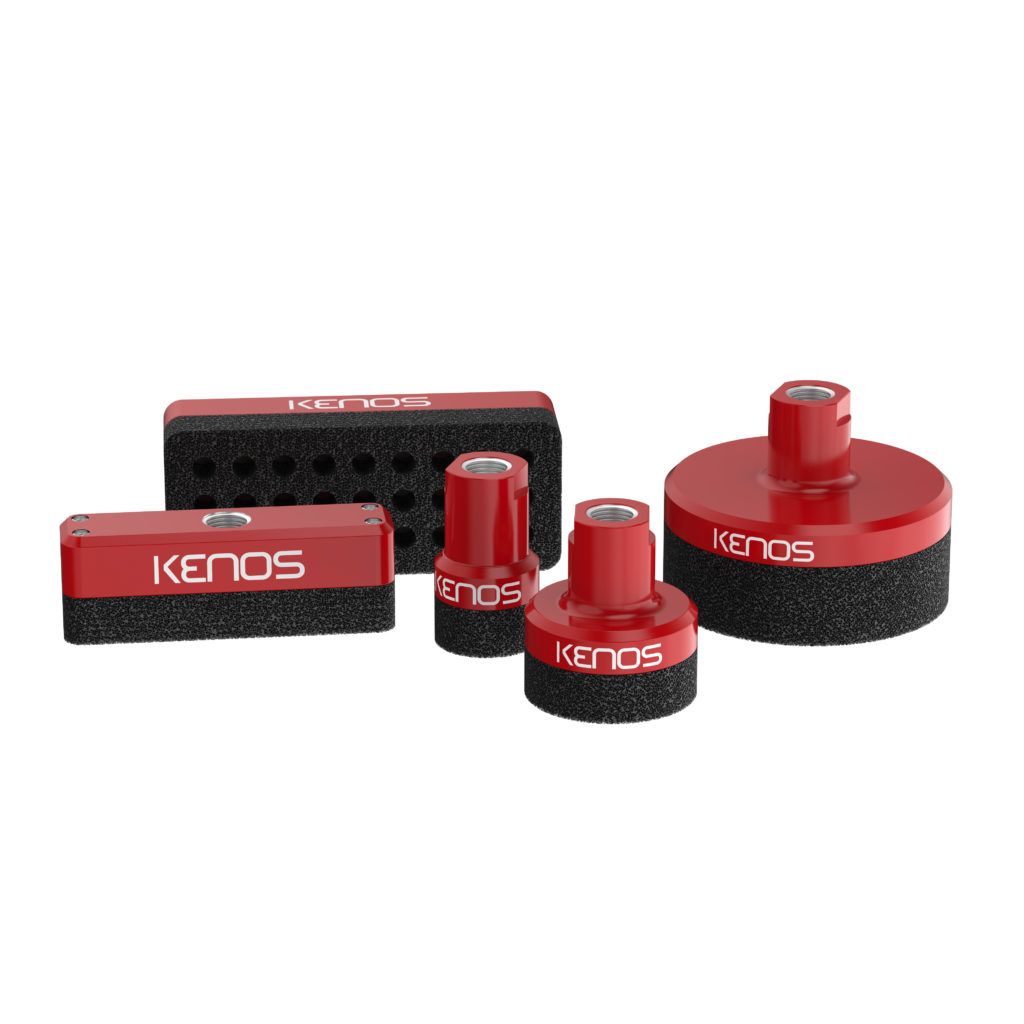
End of May, Piab acquired Joulin, a global provider of vacuum gripping solutions. Now, Piab has integrated three of Joulin’s gripper ranges into its Kenos® portfolio, while the solutions for the heavy-duty industries continue to be marketed under the Joulin brand, whose experts further support these industries in defining the best system for each individual customer. As the market for material handling solutions is growing rapidly, Joulin has a perfect strategic fit to the Piab business. Through the acquisition, Piab is evolving automation further by strengthening our position as a world-leading automation company in our core industries and applications as well as taking a significant step into the raw wood industry, building on Joulin’s 60 years of experience. To further reinforce and expand the solutions business in heavy-duty applications and the wood industry, these solutions consisting of large grippers and gantry cranes will continue to be marketed under the Joulin brand. The industry-known experts will remain to design and build solutions matching individual customer needs and provide their top service. At the same time, the selected gripper ranges developed by Joulin, including the MiniGrip, the FlexiGrip, and the Safe&Light are integrated into the Kenos® brand, which perfectly complements the existing Piab portfolio and further strengthens the support of different needs of the customers. The Kenos® MiniGrip (KMG) is suitable for the FMCG, food & beverage, and automotive industries. It is a foam gripper that can be adapted to tight clearance applications in an End-of-Arm Tool (EOAT). Its foam surface offers the versatility to pick a variety of different objects without adjustment. In case of uneven layer heights, KMG can be equipped with level compensators without needing to change the mounting device. Find out more about it by clicking here! The Kenos® FlexiGrip (KFG) is suitable for the food & beverage, automotive, and construction industries. It is a vacuum foam gripper that can be used as a single gripper on robots as well as on cobots, or combined into an EOAT for use with industrial robots. With its foam surface, it offers the flexibility to pick a variety of different products without adjustment. Its modular design provides the flexibility for fast and easy set-up in case of product changes as well as simple integration into existing equipment. Learn more by clicking here! The Kenos® Safe&Light (KSL) is suitable for use in applications such as packaging, warehousing, and end-of-line production. Thanks to its special design of a carbon fiber structure holding a foam-made body, it is extremely lightweight allowing you to make maximum use of the robot or cobot payload. It is a robust and simple solution for a broad range of purposes, particularly for palletizing applications in rugged and dusty environments. Read on by clicking here! As a vacuum technology leader Piab offers a wide range of solutions for various industries and applications, from suction cups and pumps to full EOAT and custom solutions. Whatever the needs and requirements of the application. Piab’s experts support all customers in the right selection of gripping tools and act as reliable partners from the beginning and beyond.
Salt, Petroleum sail cargo shipments into final weeks of 2022
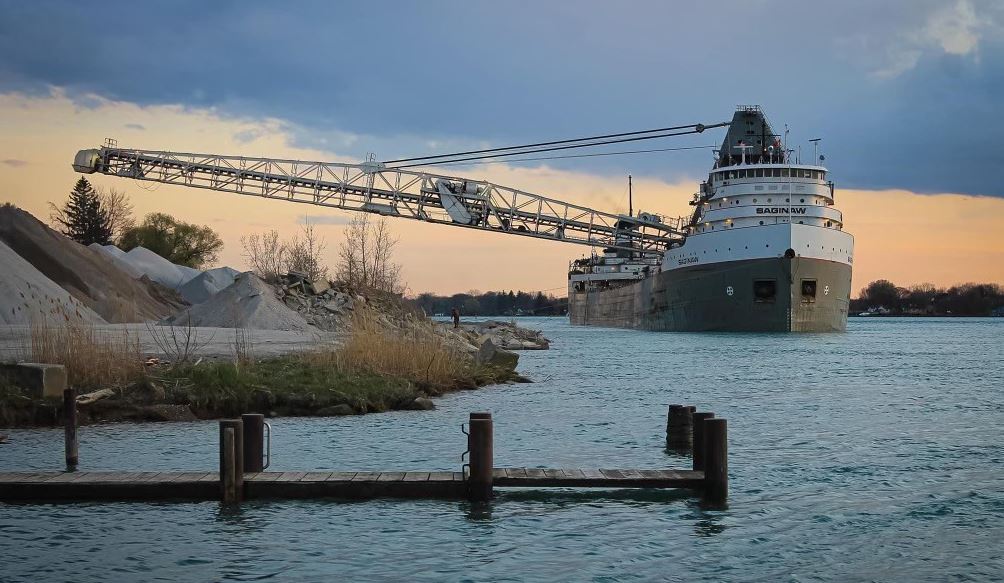
As shipping on the Great Lakes – St. Lawrence Seaway enters the final weeks of the 2022 season, cargo shipments ebbed and flowed with the changing needs of the winter months. With nearly 4 million tons of cargo moving through the system in November, the year-to-date total has reached more than 31.5 million tons, down only 6.8% from this time last year. “It’s important to take a step back and look at the big picture when comparing 2022 and 2021,” said Bruce Burrows, President & CEO of the Chamber of Marine Commerce. “For example, general cargo was down 22.35% in November 2022, but it was up 71% in November 2021, so that paints things a little differently when you compare; not just general cargo, but all categories.” Burrows adds, “We’re optimistic the season will finish in good shape, and shipments of winter-related products illustrate that.” Salt shipments (up 17.23%) for replenishing inventories for roadways aided the dry bulk category (up 1.42%). Petcoke shipments (up nearly 16%) and potash (up 184%) also contributed to the increase in dry bulk. Liquid bulk was up 8.54% in November, including petroleum products (up 27.45%). In November, shipments at the Port of Toledo surpassed 10.5 million tons thanks in large part to gains in coal, grain, and iron ore. Shipments are expected to remain steady going into the final month of the shipping season. “We are handling about 20% more cargo since the Cleveland Cliffs HBI plant went into production at the Port two years ago,” said Joseph Cappel, VP of Business Development for the Toledo-Lucas County Port Authority. “We will build on our new baseline by continuing to make improvements to our dock and material handling capabilities making the necessary investments that will modernize our facilities. This includes the acquisition of a Liebherr 550 mobile harbor crane, the reconstruction of the dock wall at Midwest Terminals, a new conveyor system, and the addition of a multi-modal liquid bulk transload facility representing more than $32 million in recent project investment at the Port.” Through November, the Port of Monroe has handled over 100,000 short tons of bulk product, 130,000 tons of liquid asphalt, and 210,000 tons of steel coils. This fall, the Port loaded over 3,000 tons of steel bars manufactured at Gerdau Special Steel Monroe on the Mark W. Barker, the newest ship on the Great Lakes. The ship, bound for the Gerdau grinding ball mill in Duluth where the material is melted down into grinding balls used by the mining industry, was loaded by the Port’s new Manitowoc crawler crane. The Port of Monroe also recently celebrated the award of an $11 million grant from the U.S. Maritime Administration. The Lake Erie Renewable Energy Resilience Project will fund a handful of components including shoreline reinforcement, rehabbing the existing wharf, and the addition of a second wharf for future wind energy cargoes. The Port’s Turning Basin dock, built in the 1930s, will be heavily rehabilitated and shore power infrastructure will be installed along the riverfront to provide power to the riverfront wharves. More than 1.9 million short tons of iron ore sailed from the Port of Duluth-Superior in November, the season’s fourth-highest monthly iron ore throughput, helping lift the Port’s season-to-date maritime tonnage total above 26.5 million through November. November’s overall maritime tonnage total for the Port eclipsed 3 million short tons for the seventh consecutive month, drawing the season-to-date total within 8.2% of the five-season average. “General cargo shipments, including project cargoes, over-dimensional cargoes, and a variety of other types, have definitely been among the highlights this season in the Port of Duluth-Superior,” said Deb DeLuca, executive director of the Duluth Seaway Port Authority. “It’s been a very good year for those arrivals, with shippers benefiting not only from Duluth Cargo Connect heavy-lift capabilities but also from our port’s excellent road and rail clearances to and from the middle of North America. It’s part of the advantage cargo-movers gain by using the Great Lakes-St. Lawrence Seaway System to reach the Upper Midwest and interior Canada.” At the Port of Cleveland, general cargo tonnage continues to outpace 2021 levels. “We are projected to finish 2022 more than 25% above our tonnage in 2021 for steel, container, and project cargo movements,” said David Gutheil, Chief Commercial Officer at the Port of Cleveland, “The modernization project involving Docks 24 and 26 is scheduled for completion in late May 2023. This has been an 18-month process, and when complete, will serve as the foundation for our general cargo dock for the next 30-40 years.” In addition, the Port recently completed the assembly of a pumping facility that will enable the transfer of liquid bulk cargo from the vessel to the rail car. This system will go into operation early in the 2023 cargo season. The Port anticipates moving approximately 100,000 MT of liquid cargo through this system next year. “The long-term infrastructure improvements we continue to make have shown the cargo market that the Port of Cleveland is a port of choice not only within the Great Lakes/St. Lawrence Seaway System, but within the U.S. supply chain system.”, added Gutheil.
Ports’ Container Dwell Fee program to end Jan. 24
San Pedro Bay measure reduced backlog without triggering a fee The San Pedro Bay ports of Long Beach and Los Angeles will phase out the option to collect a “Container Dwell Fee” on Jan. 24, 2023. Since the program was announced on Oct. 25, 2021, the two ports have seen a combined decline of 92% in aging cargo on the docks. While the executive directors of both ports have had the authority from their respective harbor commissions to implement the fee, it was never activated because cargo owners were able to clear their long-dwelling cargo off terminals. “This fee was conceived as an incentive to ease congestion, keeping imported goods flowing to stores across America,” said Port of Long Beach Executive Director Mario Cordero. “Measured by this standard, we can all appreciate the policy’s success, and best of all, the fee was never implemented. We thank cargo owners and terminal operators for working with us to make operations more efficient, and of course dockworkers for their dedicated labor.” “I said when we launched this program that I hoped we would never collect a dime because that would mean that containers were moving off our docks. And that’s exactly what occurred,” said Port of Los Angeles Executive Director Gene Seroka. “I’m grateful to the cargo owners and all our waterfront workers for all their successful efforts to improve the efficiency of our operations.” Under the temporary policy, ocean carriers could be charged for each import container dwelling nine days or more at the terminal. Fee implementation has been postponed by both ports since the start of the program. The Long Beach and Los Angeles Boards of Harbor Commissioners both extended the fee program through Jan. 24, 2023. Neither port plans to extend the program beyond that date. The policy was developed in coordination with the Biden-Harris Supply Chain Disruptions Task Force, the U.S. Department of Transportation, and multiple supply chain stakeholders.
National Propane Gas Foundation kicks off scholarship program

The National Propane Gas Foundation Scholarship Fund (NPGF/SF) program kicked off on Dec. 15. Children of employees of NPGA member companies, state propane associations, or PERC are eligible to apply. Applicants may be pursuing any course of study at two- and four-year colleges or technical, trade, or vocational schools. Students pursuing propane-related careers are especially encouraged to apply. Every year, the NPGF/SF awards $1,000 and $2,000 scholarships, including the PERC/Roy W. Willis Scholarship, to more than 100 students. Since 1994, the NPGF Scholarship Fund has awarded more than $2.25 million to more than 1,500 children of NPGA member company employees. The application window is open from Dec. 15, 2022 to Feb. 15, 2023. Questions? Contact [email protected].
WIKA Mobile Control launches new CTL-S700 series of safety controllers

WIKA Mobile Control has introduced the new CTL-S700 series of safety controllers. These controllers offer many interfaces and I/Os for safety-relevant machine control tasks and can be used in safety-critical applications according to: IEC/EN 61508 Parts 1-7:2015 SIL 2 EN ISO 13849:2015 PL d EN 62061:2005 + AC:2010 + A1:2013 + A2:2015 SILCL 2 Available in four different configurations, the CTL-S700 series offers up to 64 inputs and 56 outputs providing versatility for a variety of applications. These cost-effective controllers feature CODESYS 3.5 SIL 2 programming and a data logger that collects all relevant operating data. Multiple CANopen safety and Ethernet interfaces are also available. Controllers from the CTL-S700 series are equipped with a 300 MHz Aurix TC299TX processor, up to 64 MB flash, 2.7 MB SRAM, and 32 kB FRAM. With an IP66/67 protection rating, a robust cast aluminum housing, and high shock and vibration resistance, these controllers are designed for use in harsh environments making them a perfect fit for mobile cranes, telehandlers, MEWPs, forestry equipment, and other mobile machine applications.
The time to start is now

Our topic this month deals with tax planning and an organized approach to minimizing your tax bite as part of your CASH IS KING business practice. The is no doubt about it, the uncertain nature of our economy, inflation, and a lack of qualified personnel justify a tax avoidance policy to pay as little as possible. Being that your 2022 book results and therefore your tax results are somewhat in the “can” already, I plan to suggest methods to minimize the 2023 tax bill due 16 months from now. The tax code is EXTREMELY complex, and for equipment dealers, it is even more complex because rental transactions add to the complexity to the point where your normal an IRS agent without a lot of rental experience can drive you up the wall with the potential adjustments they come up with. Consequently, it pays for dealers to work with industry-specific professionals to suggest, explain, execute and deliver a tax avoidance plan as soon as possible for 2023 and beyond based on the current tax code. As far as 2022 is concerned you should have met with your industry tax expect at least four times before December 31, 2022. At the beginning of 2022 discuss how the 2021 return is going to look. How much you have paid in and what you will have to pay for ’21 results as well as estimated payments for ’22? The dealer, of course, has input into the estimated payments if certain events or transactions will change business operations in any way. When the ’21 return is delivered ready to be sent to the IRS. There should be a discussion that compares the ’21 returns against the ’20 returns and the previous discussion estimating the tax payments discussed in #1 above. What changed? Why? If changes are negative, how do you avoid them in ’22? And I expect the return to be delivered and processed before the first due date meaning no extensions are required. It does nobody any good to file the ’21 returns in Oct of ’22 because if there were tax reductions to be had you now do not have the time to take full advantage of them. At this same meeting potential changes to the tax code for the current year should be discussed to determine both positive and negative impacts and any steps that can be taken in ’22 to minimize any negative impact they may have. This second meeting also provides input to pass on to customers if your products and services are part of their tax equation. A July or August meeting to see how the company is progressing and whether the remaining estimated tax payments are necessary at the level they are set at. If the company’s taxable income is expected to be less than projected perhaps the final two payments can be reduced. This is also a good time to explore any other code changes anticipated for ’23, and how to take advantage of them if time is available. In December see how the year is working out and identify any issues or questions about specific transactions that may impact revenue or expenses. This is also a good time to provide a data request to provide the information necessary to prepare the annual return. I do not believe this is overkill. It is a program to make your tax person’s job easier to produce a plan of attack for your finance department to avoid both unnecessary cash outflows and delays in receiving refunds. This approach should also apply to the business owners of the C-Corp, S-Corp, or LLC. And to add to the complexity I have to include a State & Local (SALT) review in the process. As I have mentioned in the past State and Local tax issues are in many cases more complex than the Federal requirements. If you buy, sell, and rent over state lines you have tax requirements. And if you have work-from-home employees you may have a state issue to deal with. And since some states do not allow bonus depreciation, the tax liabilities we are talking about can become substantial. The SALT initial review will cover your nexus status in the states you do business in, along with the sales and use tax requirements required for goods sold in each state involved. There are ways to mitigate these SALT taxes if you change how you process transactions. A good SALT advisor can help with this process (I know a couple of you need assistance). Once the initial SALT review is performed you may only require a “touch base” interaction once a year to stay on track. One other issue that is sure to surface is how you cost out your goods and services for tax purposes during an inflationary period. For equipment, the price paid is the tax basis of the equipment. The same goes for service work. But how about parts sales? How are you costing your current sales? This may be a good discussion point to ask your tax person about. And what if you decide at some point that the costs you incurred for new and used equipment and parts are no longer recoverable in the then-current market? Can you adjust your cost and take a tax deduction? What process do you have to follow to warrant a deduction? Speaking of deductions, your CAP-X purchases allow for Bonus and Sec 179 deductions. If you are having a good year and have the ability to purchase equipment or other fixed assets it may pay to complete those transactions in ’23 as opposed to waiting to buy in ’24. That is assuming, of course, that what you need is available. The acquisitions bring additional value because they reduce the 23-tax burden as well as any estimated tax payments due in ’24 based on the ’23 tax due. As a reminder, the units purchased have to be “placed in service” in ’23 to make this work. Knowing that skilled labor
Yale empowers operations to set their own standard with highly configurable new lift trucks

Yale Materials Handling Corporation rolls out the first lift trucks in its new Series N lineup with the introduction of counterbalanced models available in the 4,000-to-7,000-pound capacity range. Built on a scalable platform, not only does the Yale® Series N offer strong productivity, operator ergonomics, and a low total cost of ownership, it allows material handling operations to option up based on their unique needs. “Cost pressures and labor shortages are testing the ability of operations to balance profitability with productivity,” says Brad Long, Brand Manager, Yale Materials Handling Corporation. “Equipment can be part of the solution, but the one-size-fits-all forklift approach of yesteryear won’t cut it. The Series N gives warehouses and retail operations the freedom to dial the trucks to their own standards to meet the needs of their operators, application, and business challenges.” The configurability of the GP40-70N models does not come at the expense of comprehensive standard features: Operator-centric design – A large, strategically located step, generous grab handle, and contoured hood make it easy for the operator to get on and off the truck. A spacious compartment with easily adjustable controls helps operators stay comfortable and productive all shift. Enhanced visibility – The low dash and wide mast help enhance the visibility of the fork tips and load when picking, placing, or traveling forward, helping support operator awareness, confidence and efficiency. Safety and productivity – Standard on all Series N trucks, the innovative Dynamic Stability System (DSS) provides automated alerts and assistance to operators by implementing truck performance limitations in real-time to help minimize forward and sideways tip-overs*. Low total cost of operation – Start with custom configuring the right truck at the right price, then durable components and extended service intervals to help minimize downtime and reduce maintenance costs over the life of the equipment. The GP40-70N can be ordered with optional operator assistance systems designed to further support operator and pedestrian awareness, and help prevent facility and product damage in specific applications. These technologies include a rear-facing camera and rear-view display, spotlights and pedestrian awareness lights, and pre-set lift height selector.
Texas First Rentals, a Division of HOLT, acquires Rental One

Texas First Rentals®, a division of HOLT, announced that it has acquired Rental One, a full-service equipment and storage container rental company offering a complete line of construction equipment and supplies in 15 locations throughout the Dallas-Fort Worth Metroplex and Central Texas regions. Texas First Rentals, a construction equipment rental company, offers rental solutions through its full line of aerial, dirt, and portable power equipment. The equipment Texas First Rentals provides includes boom lifts, scissor lifts, excavators, generators, pumps, and trench safety equipment. “Rental One is an excellent strategic and cultural fit that complements our existing products and services,” said CEO and General Manager of HOLT, Peter J. Holt. “More importantly, Rental One is a multi-generational, family-owned Texas company. As a family-owned business ourselves, we know the value of such an organization and what that means to our customers.” Rental One, founded in 2004 in Colleyville, Texas, with equipment rental roots going back to the 1950s, is a family-owned, full-service equipment and storage container rental company offering a full line of well-maintained, quality construction equipment and concrete, safety, erosion control, and construction supplies throughout its locations. “Our team has worked to build a successful business with meaningful relationships that span three generations,” said Rental One President Mike O’Neal. “Our customers will benefit from a broader range of products and combined expertise as we join the Texas First Rentals team. We continue to be committed to providing customers with the best equipment and reliable service they have grown to know.” With this acquisition, the 300 current Rental One employees, including the leadership team, will become employees of Texas First Rentals and will continue to operate from current Rental One locations. “I’m confident joining a values-based organization is a positive move for us all,” said O’Neal. “We look forward to collaborating with the Texas First Rentals team to build upon our mutual success.” This acquisition will allow Texas First Rentals to expand its presence to a total of 40 locations in highly attractive regions poised for future growth.
Mitsubishi Logisnext Americas opens applications for the 19th annual Cat® Lift Trucks Scholarship Program to support the next generation of industry leaders

Houston-based Mitsubishi Logisnext Americas, one of the world’s leading manufacturers and providers of material handling, automation and fleet solutions, announced today the call for applications for its 199th Annual Cat® Lift Trucks Scholarship Program. Each year, the scholarship program honors an outstanding Houston-area high-school senior interested in pursuing a four-year degree related to the material handling industry. This year’s winner will be awarded a $5,000 scholarship to go towards their higher education. “We’re proud to announce this year’s Cat Lift Trucks scholarship program,” said Ken Barina, president of Mitsubishi Logisnext Americas. “Each year, we are continuously impressed by the academic achievements and dedication to community service of our scholarship applicants. We hope this program will continue to drive new opportunities for students pursuing higher education, and also help support and inspire the next generation of future leaders.” Since its launch in 2005, the Cat Lift Trucks scholarship program has awarded $135,000 in educational assistance to 26 Houston-area students. Past scholarship recipients have enrolled at Texas Universities and colleges, including Texas A&M University, The University of Texas at Austin, and Texas State Technical College, pursuing degrees in various fields such as mechanical and chemical engineering, welding technology, and entrepreneurship. Recipients are selected based on their academic performance, commitment to community service, demonstration of leadership abilities, and financial need. As the Official Lift Truck Provider of the Houston Livestock Show and Rodeo™ (HLSR), Cat Lift Trucks will announce the winner of the 2023 scholarship during the annual HLSR event, taking place February 28 – March 19, 2023, in Houston. “We’re honored to serve as a sponsor for the Houston Livestock Show and Rodeo and to be a part of its 90-year commitment to Texas youth and education,” said John Sneddon, executive vice president, Sales and Marketing, at Mitsubishi Logisnext Americas. “Initiatives such as the Cat Lift Trucks scholarship program are vital to helping inspire the future of manufacturing and business.” Applications for the 2023 Cat Lift Trucks scholarship must be submitted online by 11:59 p.m. CST on January 31, 2023. Finalists will be notified by February 10, 2023, and a winner will be selected by February 24, 2023. Applicants must be from a Houston-area school district and plan to enroll in a college, university, or technical school in Texas with a focus on engineering or a business-oriented or technical trade field related to the material handling industry. For more information on this year’s scholarship program and requirements, or to apply, visit https://www.logisnextamericas.com/en/cat/cat-lift-trucks-scholarship.
Steel King names Rona Rossier-Abel as Vice President-Finance

Steel King Industries, a manufacturer of storage rack and material handling products has announced that Rona Rossier-Abel has been named Vice President-Finance of the company. In this role, she will oversee all financial strategies and actions for the company. Prior to joining Steel King, Rossier-Abel was Controller and Purchasing Manager with Domtar and has held several positions of increasing responsibility in finance over the last 20+ years. “With more than two decades of experience in finance and operations, Rona brings a wide breadth of expertise in accounting and strategic planning to the CFO role,” said Brian Pfannes, Steel King’s incoming president. “Adding her to our senior management team is an important step in Steel King’s growth plan.” Rossier-Abel has a BS in Managerial Accounting and Business Administration from the University of Wisconsin-Stevens Point. A native of Plover, WI, Rossier-Abel has been active in the United Way and with Junior Achievement. “I’m excited to join Steel King, a company with a long history of strong customer partnerships,” Rossier-Abel said. “I’m eager to apply my breadth of experiences in finance to help drive the business forward for continued growth.”
Staffing employment holds steady in third quarter
2.1% year-to-year job growth in Q3 Staffing jobs rose 2.1% year-to-year in the third quarter of 2022, and U.S. staffing companies employed an average of 2.8 million temporary and contract workers per week, according to data released today by the American Staffing Association. Temporary and contract staffing sales totaled $39.0 billion in the third quarter, an increase of 7.9% from the third quarter of 2021. Staffing employment and sales have historically seen quarter-to-quarter gains following first-quarter declines. Third-quarter data have shown a slight deviation from this trend—staffing jobs edged down by 0.3% (about 9,000 jobs) quarter-to-quarter, but temporary and contract staffing sales grew by 1.4%. “Demand for staffing services remains healthy amid a tight labor market and continued economic uncertainty,” said Richard Wahlquist, ASA president and chief executive officer. “U.S. businesses recognize that staffing companies are uniquely equipped to meet the hiring challenges of today and provide them with the workers and the workforce agility they need to compete, grow, and thrive in the coming year” Looking ahead, staffing firms are optimistic about the first quarter of 2023, projecting their revenue to grow 10.0% year-to-year. They further expect full-year revenue for 2022 to increase by 10.5% from 2021. To learn more about the quarterly ASA Staffing Employment and Sales Survey, visit americanstaffing.net/quarterly-survey, or follow ASA research on Twitter.
Big Joe returns to the Canadian market
Big Joe Forklifts will re-enter the Canadian market effective Jan. 1, 2023 Big Joe Forklifts has announced its plan to return to the Canadian market for the first time since 2009 through the newly formed Big Joe Canada. The initial launch will ensure Big Joe equipment is readily available through a network of material handling dealerships across most Canadian provinces with whom Big Joe Canada has already partnered. This network will continue to grow to ensure that support for the Big Joe product line is second to none as it continues to expand into new market segments including lithium-powered sit-down forklifts and autonomous vehicles over the years to come. Big Joe is one of the fastest-growing companies in the lift truck industry globally, having grown by more than 1200% since 2009. Big Joe’s success has been driven by rapid product development resulting in a robust portfolio of innovative purpose-built machines that better address contemporary material handling needs than its competitors. As supply chains have adapted and evolved to support changes in consumer behaviors, Big Joe has been able to use this speed to market to enhance productivity, safety, and efficiency in operations as far ranging from heavy manufacturing to retail. The company’s electric forklifts, pallet trucks, walkie stackers, and access vehicles use the latest in human factors, lithium batteries, and motor technology to propel its simple philosophy – move more, hurt less. Big Joe is excited to team up with the newly formed Big Joe Canada to re-enter the Canadian market. Big Joe Canada will launch by onboarding dealers from its existing network across Canada before expanding this network. The expansion plan will include ensuring that dealers can expertly deploy products, services, parts, and warranties to ensure a high level of customer satisfaction across Canada. “The Canadian market is very important to Big Joe, and we have been working hard to find the right partner that shares our growth vision and can help us re-enter the market at the right time. On that point, we couldn’t be more pleased or excited to partner with Big Joe Canada to make that happen,” said Bill Pedriana, Big Joe’s CMO. “With an industry that continues to rapidly evolve due to emerging technologies and economic uncertainty, companies are looking to keep their operations moving by partnering with organizations that can be nimble and responsive to meet their changing needs. For us, the timing couldn’t be better to rejoin the Canadian market and offer our unique equipment solutions to help keep commerce moving forward during this dynamic time.” “Big Joe Canada is excited to expand with Big Joe to offer exceptional material handling solutions to our existing and future network of dealers across Canada,” said Ace Coustol, Regional Vice President, of Big Joe Canada. “Both entities are driven to provide products specific to our customer’s needs, reducing costs and downtime, and boosting efficiency. Joining forces in the Canadian market will allow us to streamline products and services to our valued customers and we look forward to expanding our tailor-made offerings.”
2023 Economic Outlook forecasts 4.2% expansion in Equipment and Software Investment and 0.9% GDP growth next year amid mild U.S. Recession

In what is likely to be a more challenging year for both the economy and the equipment finance industry, the 2023 forecast for equipment and software investment growth is 4.2%, according to the 2023 Equipment Leasing & Finance U.S. Economic Outlook. The report released today by the Equipment Leasing & Finance Foundation also forecasts sluggish U.S. GDP growth of 0.9% (annualized) due to a mild recession that is expected to begin midway through the year. The Foundation’s report is focused on the $1.16 trillion equipment leasing and finance industry and highlights key trends in equipment investment, placing them in the context of the broader U.S. economic climate. Nancy Pistorio, Foundation Chair and President of Madison Capital LLC, said, “Equipment investment, the lifeblood of the equipment finance industry, has maintained steady growth since the onset of the pandemic. Despite higher interest rates, inflation, and expectations of a downturn in 2023, the report indicates that a ‘soft landing’ in which the economy avoids recession is still possible. In addition, there are several factors that may make the looming downturn less severe for our industry than previous recessions, including pro-industrial legislation, equipment order backlogs, and reshoring trends.” Highlights from the 2023 Outlook include: Equipment and software investment growth boomed in the second half of 2022 with nearly 12% annualized growth in Q3, providing a solid jumping-off point for 2023. However, rising interest rates are expected to weigh on investment growth next year. The U.S. economy also saw GDP growth bounce back during the second half of 2022, although underlying conditions remain troubling. The housing market is struggling, financial markets are highly volatile, and the global economy is slowing. The manufacturing sector continues to outperform expectations given rising interest rates and the global economic slowdown. Although activity appears likely to slow in 2023 given expectations for a recession, recent pro-industrial legislation and a push for supply chain re-shoring should give the manufacturing sector a boost. For Main Street businesses, the combined effects of high inflation and tightening financial conditions are likely to contribute to turbulent operating conditions in 2023. Fortunately, financial stress is still quite low, and small business lending activity remains positive for now. Monetary policy is among the biggest questions facing the equipment finance industry in 2023. The Fed has hinted at the possibility of slowing down interest rate hikes while stressing it is committed to reining in inflation at the risk of higher unemployment or a recession. Interest rate levels are expected to rise above 5% next year, and potentially higher. The Foundation-Keybridge U.S. Equipment & Software Investment Momentum Monitor, which is released in conjunction with the Economic Outlook, tracks 12 equipment and software investment verticals. In addition, the Momentum Monitor Sector Matrix provides a customized data visualization of the current values of each of the 12 verticals based on recent momentum and historical strength. This month one vertical is expanding, six are peaking, two are recovering, and three are weakening. Over the next three to six months, year over year: Agriculture machinery investment growth is likely to sidewind. Construction machinery investment growth is likely to ease. Materials handling equipment investment growth may improve slightly. All other industrial equipment investment growth may continue to decelerate. Medical equipment investment growth will likely sidewind. Mining and oilfield machinery investment growth may decelerate. Aircraft investment growth may continue to pick up. Ships and boats investment growth are unlikely to accelerate. Railroad equipment investment growth may have peaked and could decelerate. Trucks investment growth is unlikely to improve. Computers investment growth is unlikely to accelerate further. Software investment growth is unlikely to improve. Download the full report at https://www.leasefoundation.org/industry-resources/u-s-economic-outlook/.
US Cutting Tool Orders totaled $200.6 Million in October 2022, bringing Year-Over-Year total to 11.7%

October 2022 U.S. cutting tool consumption totaled $200.6 million, according to the U.S. Cutting Tool Institute (USCTI) and AMT – The Association For Manufacturing Technology. This total, as reported by companies participating in the Cutting Tool Market Report collaboration, was up 3.4% from September’s $194.0 million and up 11.7% when compared with the $179.6 million reported for October 2021. This has been the highest monthly total since October 2019. With a year-to-date total of $1.8 billion, 2022 is up 9.4% when compared to the same time period in 2021. These numbers and all data in this report are based on the totals reported by the companies participating in the CTMR program. The totals here represent the majority of the U.S. market for cutting tools. “Market conditions for the cutting tool industry remain positive,” commented Jeff Major, president of USCTI. “Overall year-to-date sales versus 2021 are up 9.4%. Cutting tool sales for 2023 are expected to remain positive, led by the automotive and aerospace market segments. Shipping costs have stabilized somewhat, which helps our overall business, while there still remains some uncertainty with raw material costs.” Steve Stokey, executive vice president and owner of Allied Machine and Engineering, also had a positive attitude toward the direction of the cutting tool industry, stating, “Cutting tool orders continue to climb even through rocky waters. Certainly, we are all bracing for the impact of the interest rate increases by the Federal Reserve.” Stokey continued on, discussing how the durable goods industry influences the cutting tool industry. “The real key for our industry will be how durable goods perform in the months ahead. If durable goods production continues to grow, our industry may be able to stay in positive territory through an overall slowing economy.” The Cutting Tool Market Report is jointly compiled by AMT and USCTI, two trade associations representing the development, production, and distribution of cutting tool technology and products. It provides a monthly statement on U.S. manufacturers’ consumption of the primary consumable in the manufacturing process – the cutting tool. Analysis of cutting tool consumption is a leading indicator of both upturns and downturns in U.S. manufacturing activity, as it is a true measure of actual production levels. Historical data for the Cutting Tool Market Report is available dating back to January 2012. This collaboration of AMT and USCTI is the first step in the two associations working together to promote and support U.S.-based manufacturers of cutting tool technology. The graph below includes the 12-month moving average for the durable goods shipments and cutting tool orders. These values are calculated by taking the average of the most recent 12 months and plotting them over time.
Port of Long Beach Cargo volume eases in November

Shifting shipment patterns, full warehouses factor into a decline in imports while exports increase to maintain its status as the nation’s leading export port Trade moving through the Port of Long Beach softened in November amid reduced orders from retailers, full warehouses, vessel transfers between the San Pedro Bay ports and goods shifted toward seaports along the East and Gulf coasts. Dockworkers and terminal operators moved 588,742 twenty-foot equivalent units (TEUs) last month, down 21% from November 2021. Imports slid 28.4% to 259,442 TEUs, while exports increased 13.8% to 124,988 TEUs. Empty containers moving through the Port decreased by 25.2% to 204,313 TEUs. “While some import volume has shifted to other gateways, we are confident that a good portion of it will return to the San Pedro Bay,” said Port of Long Beach Executive Director Mario Cordero. “As we move toward normalization of the supply chain, it’s time to refocus our efforts on engaging in sustainable and transformative operations that will secure our place as a leader in trans-Pacific trade.” “We appreciate the exceptional work of the dockworkers who moved containers off the docks and helped us speed the flow of cargo during an unprecedented surge over the last two years,” said Long Beach Harbor Commission President Sharon L. Weissman. “Their hard work ensures shelves are stocked and consumers can purchase gifts during the holiday season.” Long-dwelling containers at the San Pedro Bay port complex have been reduced by more than 90% since the end of October 2021, when the Port of Long Beach and the Port of Los Angeles initiated a Congestion Dwell Fee. Although the fee has not been assessed, it has incentivized shippers to remove long-dwelling import containers from terminals. Economists say spending is stronger heading into the end of the year as consumers pivot away from dining out, live entertainment, and other services toward purchasing goods for the holiday season. The Port of Long Beach has moved 8,589,553 TEUs during the first 11 months of 2022, down 0.5% from the same period in 2021, which was the Port’s strongest year on record. The Port of Long Beach is the nation’s leading export port, with 1.44 million TEUs of loaded exports in 2021, and nearly 1.3 million TEUs through the first 11 months of 2022. For complete cargo numbers, visit polb.com/statistics.
ORBIS® receives a readers’ choice award

Material Handling Product News (MHPN) has named ORBIS® Corporation — an international provider in reusable packaging — a 2022 Readers’ Choice Product of the Year award winner for its StakPak Plus™ in the Containers, Totes & Bins category. This award honors the achievements of companies for advancements in material handling systems and equipment within manufacturing, distribution centers, and warehouses. “We are honored to be recognized by Material Handling Product News and its readers,” said Breanna Herbert, product manager and sustainability lead at ORBIS. “For more than 20 years, the StakPak container has helped automotive and industrial companies protect parts and optimize line-side assembly operations. Thank you to MHPN and its readers for recognizing the new StakPak Plus collar system and the unique benefits it can bring to supply chains by increasing container capacity.” The StakPak Plus takes all the best attributes of the traditional StakPak container, including reusability and cost savings, and combines them with customized heights to increase container capacity, providing transportation efficiencies, cost savings, sustainable advantages, and more. A customizable solution, the StakPak Plus system combines traditional totes with various collar sizes to increase a container’s height to accommodate the unique-shaped parts commonly found in the automotive supply chain. Available in popular 32” x 15” and 24” x 15” footprints, StakPak Plus totes feature a permanent collar that adds height and internal volume, allowing for more parts to be transported per container. All StakPak Plus totes are fully compatible with existing totes in the industry and offer maximum durability with a vertical corner rib structure. What’s more, the StakPak Plus is a lightweight solution that provides easy manual handling and can be combined with ORBIShield® foam, fabric, and rigid dunnage to provide better pack density and part presentation. In implementing this solution, companies can reduce the environmental waste associated with single-use corrugated boxes, and, at the end of its long service life, the StakPak Plus collar is 100% recyclable and can be reprocessed right back into supply chain packaging.
H&E opens new branch in Ocala Florida
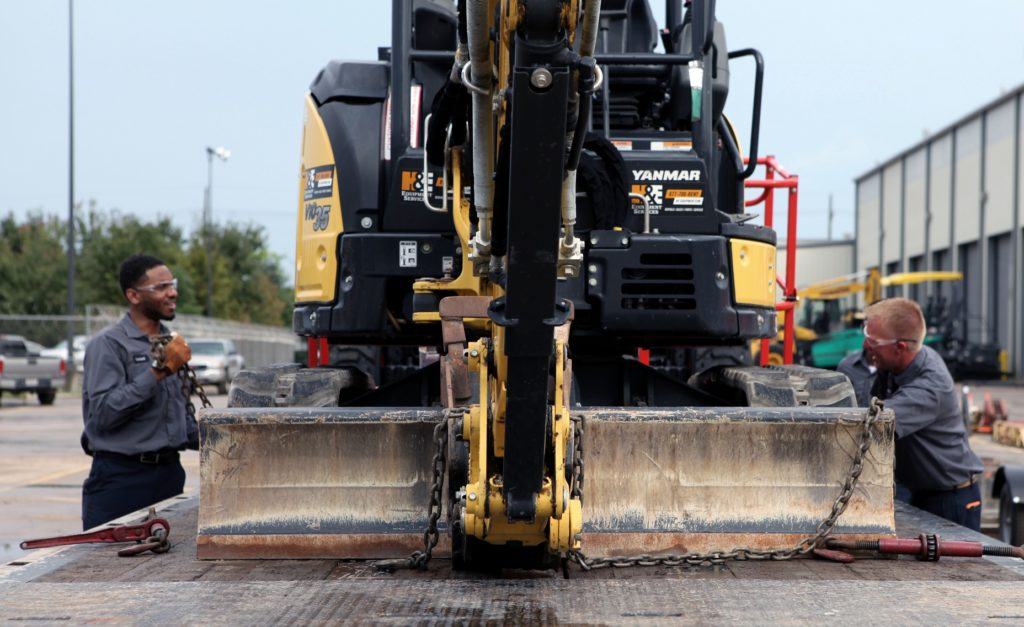
Effective December 13, 2022, H&E Equipment Services Inc. (H&E) announces the opening of its Ocala rental branch, its 11th in the state of Florida. The branch is located at 1800 NW 58th Lane, Ocala, FL 34475-3042, phone 352-644-9700. It includes a fully fenced yard area, offices, and a separate repair shop and is capable of handling a variety of construction and general industrial equipment for customers in Central Florida. “Our new Ocala branch fills a geographic gap in the central and northern parts of the state for us. We can now better reach our customer base between our existing Jacksonville and Orlando locations, and having a facility along the I-75 corridor gets us on the job site quickly. Steady population trends and other favorable economic conditions in the area point to a strong, long-term nonresidential construction forecast, and we have the equipment to effectively serve those projects,” says Branch Manager Jim Sill, who has worked in the area and in the industry for more than 30 years. “H&E has been in the Sunshine State for 20 years now and has one of the youngest fleets in the industry. That is a great combination to show our customers—new and existing—that we are here to stay and ready to grow with them.” The Ocala branch specializes in the rental of aerial lifts, telescopic forklifts, earthmoving machinery, compaction equipment, generators, compressors, and more and represents the following manufacturers: Allmand, Atlas Copco, Bomag, Case, Club Car, Cushman, Doosan, Gehl, Generac Mobile, Genie, Hilti, Husqvarna, JCB, JLG, John Deere, Kubota, LayMor, Ledwell, Lincoln Electric, Link-Belt Excavators, MEC, Miller, Multiquip, Polaris, Skyjack, SkyTrak, Sullair, Sullivan-Palatek, TAG, Taylor, Towmaster Trailers, Wacker Neuson, Yanmar, and others.
U.S. Rail Traffic for the week ending December 10, 2022
The Association of American Railroads (AAR) has reported U.S. rail traffic for the week ending December 10, 2022. For this week, total U.S. weekly rail traffic was 500,310 carloads and intermodal units, down 2.5 percent compared with the same week last year. Total carloads for the week ending December 10 were 242,007 carloads, up 1.3 percent compared with the same week in 2021, while U.S. weekly intermodal volume was 258,303 containers and trailers, down 5.8 percent compared to 2021. Six of the 10 carload commodity groups posted an increase compared with the same week in 2021. They included coal, up 5,921 carloads, to 72,541; nonmetallic minerals, up 1,514 carloads, to 32,575; and motor vehicles and parts, up 1,107 carloads, to 15,051. Commodity groups that posted decreases compared with the same week in 2021 included chemicals, down 5,042 carloads, to 30,258; grain, down 1,067 carloads, to 23,806; and forest products, down 607 carloads, to 9,296. For the first 49 weeks of 2022, U.S. railroads reported a cumulative volume of 11,376,119 carloads, up 0.1 percent from the same point last year; and 12,810,570 intermodal units, down 4.9 percent from last year. Total combined U.S. traffic for the first 49 weeks of 2022 was 24,186,689 carloads and intermodal units, a decrease of 2.6 percent compared to last year. North American rail volume for the week ending December 10, 2022, on 12 reporting U.S., Canadian and Mexican railroads totaled 345,288 carloads, up 4.3 percent compared with the same week last year, and 338,311 intermodal units, down 4.4 percent compared with last year. Total combined weekly rail traffic in North America was 683,599 carloads and intermodal units, down 0.2 percent. North American rail volume for the first 49 weeks of 2022 was 33,189,175 carloads and intermodal units, down 1.8 percent compared with 2021. Canadian railroads reported 80,453 carloads for the week, up 11.5 percent, and 63,300 intermodal units, down 1.9 percent compared with the same week in 2021. For the first 49 weeks of 2022, Canadian railroads reported a cumulative rail traffic volume of 7,153,334 carloads, containers, and trailers, down 0.5 percent. Mexican railroads reported 22,828 carloads for the week, up 13.4 percent compared with the same week last year, and 16,708 intermodal units, up 11.8 percent. Cumulative volume on Mexican railroads for the first 49 weeks of 2022 was 1,849,152 carloads and intermodal containers and trailers, up 3.8 percent from the same point last year. To view the rail charts, click here.