
Millwood adds second repair operation in New Jersey

New pallet repair facility marks 37 locations nationwide Millwood, Inc. added a second New Jersey-based pallet repair location in Barrington, NJ. The new location is about an hour southwest of our pallet repair location in South River, NJ, and is Millwood’s 37th location nationwide. “The opportunity to expand in New Jersey allows us to grow the Millwood family and have a further impact on the new communities we serve,” said EVP Operations Brad Arnold. This new location, which is about 60,000 square feet, will allow Millwood to service customers in the greater Philadelphia region and add nearly 50 new team members to the Millwood family. An estimated 50,000 pallets, or 100 truckloads in and out, per week, will be repaired at this new location. Team members from various departments are in Barrington working with our new family on their orientation into Millwood. Our mission is for all who come in contact with Millwood would clearly see the love of Jesus Christ in all that we do, which we are able to support by ensuring a chaplain is at every location to tend to all of our team members’ personal, professional and spiritual needs across the country. “This is a great opportunity for Millwood and will give us opportunities to do more,” Arnold said. “Over the next several months we plan to ensure the right people are in the right positions and to quickly help our new hires feel like they’ve been a part of the Millwood family for a while now.” Millwood continues to look for opportunities to add more pallet repair and other operations in 2023. New job openings at this new location will be posted on Millwood’s career site. All of our job openings can be found online at www.millwoodinc.com/careers.
Jungheinrich AG to acquire Storage Solutions group

Strengthens Jungheinrich’s intralogistics business with a complementary regional footprint Adds strong growth platform for warehouse automation solutions in the U.S. An important step in the implementation of Strategy 2025+ German intralogistics pioneer Jungheinrich AG (“Jungheinrich”) has signed a share purchase agreement with Merit Capital Partners, MFG Partners, and the management of Storage Solutions for the acquisition of 100% of the share capital in the Indiana-based Storage Solutions group (“Storage Solutions”), a provider of racking and warehouse automation solutions in the U.S., to gain enhanced access to the attractive U.S. warehousing and automation market. The total consideration agreed under the share purchase agreement consists of a purchase price of approximately USD 375 million (which is subject to customary closing adjustments) and a flexible, performance-based component in the mid to high single-digit percentage range of the purchase price which can be achieved by the retained Storage Solutions management over three years following completion of the transaction. The acquisition will be financed with available cash and debt with limited leverage impact. Storage Solutions, headquartered in Westfield, Indiana, is a U.S. warehouse design, automation, and integration company with 170 employees and 45 years of experience in delivering turnkey, best-fit solutions to customers. Based on a technology-agnostic business model, the company has achieved a strong position in the attractive U.S. warehousing market, which benefits from robust long-term growth dynamics. It offers unique vertically integrated service lines with in-house logistics and installation teams, ensuring on-time project completion and providing value-added services, including workflow optimization, engineering, and permitting. Storage Solutions is a trusted partner to a large and growing customer base with a strategic focus on companies that need integrated warehouse design, technical and project management support, and competencies. Its recurring customer base includes a broad range of leading brands, for example in the third-party logistics, e-commerce, retail, food and beverage, and industrials sectors. For 2022, Storage Solutions is set to report revenues of approximately USD 290 million and an adjusted EBIT of approximately USD 34 million. Strengthening Jungheinrich in line with its 2025+ strategy For Jungheinrich, the acquisition is highly complementary to its global footprint and will further strengthen the company’s market position. It is a unique opportunity to enter a large and rapidly growing market segment with a strategic foothold in the U.S. The market coverage of Storage Solutions will provide Jungheinrich with access to key logistics hubs in the U.S. and the opportunity to support the existing European customer base in this market. Acquiring a growth platform in the U.S. also provides the additional mid-term potential to build a presence in the adjacent countries of Canada and Mexico. The acquisition will sit alongside and not have any impact on the existing partnership of Jungheinrich with Mitsubishi Logisnext Americas (MLA), which will remain the sole activity of Jungheinrich in the North American forklifts market. By combining the expertise and capabilities of both partners, Jungheinrich and Storage Solutions will jointly drive the further development of innovative automation solutions. Warehouse automation is a priority for customers both of Storage Solutions and Jungheinrich, with an expected global market growth of 10% (CAGR) in the period of 2021 to 2025. The acquisition is expected to be accretive to EPS, free cash flow per share, and adjusted EBIT margin from the beginning. The 2025+ goal of 20% of sales outside Europe, in particular through inorganic growth, will be underpinned by the addition of USD 300+ million in annual revenues from Storage Solutions. Furthermore, the service-oriented business model of Storage Solutions allows for an asset-light approach with limited capital expenditure requirements, thereby strengthening Jungheinrich’s cash generation and resilience. Dr. Lars Brzoska, Chief Executive Officer of Jungheinrich: “The acquisition of Storage Solutions is an important step in the implementation of our 2025+ strategy. It is an excellent opportunity to expand our geographic footprint in the U.S. and adds a strong strategic platform for growth in warehouse automation across the region. Storage Solutions is a well-established and successful business with an attractive customer base and an excellent management team. We see great opportunities in combining the warehouse and automation capabilities of both parties to the benefit of customers in the U.S. as well as our European customers with operations in North America.” Kevin Rowles, Chief Executive Officer of Storage Solutions: “The next level of growth in our industry will be driven by an increasing need for warehouse automation. Storage Solutions has established solid capabilities in racking as well as automation and digitalization which we are seeking to expand further, as demand is continuously accelerating on the back of strong underlying fundamentals. Together with Jungheinrich, we look forward to jointly capturing the upside for further growth.” The executive board and supervisory board of Jungheinrich have approved the transaction. The completion of the acquisition, which is expected to take place in the second quarter of 2023, is subject to customary closing conditions, including receipt of the merger control clearance in the United States. Morgan Stanley & Co. International plc is acting as financial advisor to Jungheinrich and Freshfields Bruckhaus Deringer is acting as legal advisor, while Deloitte has provided support during the due diligence process. Baird is acting as financial advisor to Storage Solutions and Goodwin Procter LLP is acting as legal advisor.
ALAN launches Logistics Initiative improving access to disaster aid

As non-profits across the country struggle with inflationary pressures, one logistics non-profit organization is shoring up its efforts to help them make every disaster relief dollar count – and to assist disaster survivors more quickly. The American Logistics Aid Network has launched an initiative to help the non-profit community build stronger disaster supply chain networks. “This project stands to make a true systemic impact on disaster relief efforts because it will enable us to reach non-profits all across the country, especially the small to medium-sized ones that don’t have robust logistics programs in place,” said ALAN Executive Director Kathy Fulton. Funded through a Walmart Foundation grant, the ALAN project will provide disaster-focused non-profits with the opportunity to learn and apply a variety of best supply chain practices that have been gleaned from other humanitarian organizations as well as the commercial logistics community. The project will also create a stronger framework for more frequent logistics collaboration between non-profits and private businesses. “After 18 years and more than 60 disaster responses, we know that healthy humanitarian logistics practices aren’t just a game-changer, they’re a life-changer because they allow more relief to reach survivors more quickly and ultimately to multiply the good that they can do,” said Fulton. “That’s why we’re so excited about this grant. It will be a huge blessing to us – and the non-profits it enables us to serve. We’re incredibly grateful to the Walmart Foundation – and immensely excited to begin work on this project.” “Supporting vulnerable communities and getting aid to people after disasters requires close collaboration between businesses, non-profits, and government. This investment in ALAN will improve the coordination and efficacy to help donations and supplies reach those most in need during times of crisis,” said Brooks Nelson, Senior Manager, Disaster Preparedness and Response at the Walmart Foundation.
Episode 353: Spot AI

SPOT AI is a camera system that helps businesses leverage video footage to improve safety, security, and efficiency. By detecting areas of improvement early on, companies can save time and resources and reduce operational costs – ultimately leading to increased profits and customer satisfaction. In this episode of The New Warehouse, Sud Bhatija, co-founder of SPOT AI, discusses how intelligence dashboards can identify potential bottlenecks, provide training opportunities and improve collaboration. Key Takeaways SPOT AI works with any existing camera system customers have and provides them with an intuitive dashboard containing modern tools powered by AI. These tools make it easier for users to search through hours of footage quickly, collaborate on the footage securely, set alerts triggered by certain activities or people in specific areas, and receive notifications when those alerts are activated. Companies are using video technology to monitor specific areas, such as forklift or equipment usage in unauthorized areas. This technology can be used proactively to train new employees and prevent incidents. Customers have used this technology to improve their operations’ efficiency by instrumenting how long trucks idle in yards and how quickly loading/unloading takes place. Spot AI’s intelligent dashboard allows customers to get a real-time understanding of their business operations. The dashboard lets customers visualize and track all the different metrics they need to know about their business performance in one single, easy-to-access location. This enables customers to quickly analyze and identify areas performing below target or exhibiting any bottlenecks. Sud believes that to ensure privacy is respected; companies should use video not just for surveillance but also shift towards allowing multiple people to access the footage instead of having it centralized with one person looking at what everyone’s doing. He believes in moving from the traditional use of video surveillance to one where everyone in an organization can access it and collaborate. The New Warehouse Podcast EP 353: Spot AI
AAR Reports Rail Traffic for the week ending January 23, 2023

The Association of American Railroads (AAR) has reported U.S. rail traffic for the week ending January 21, 2023. For this week, total U.S. weekly rail traffic was 467,485 carloads and intermodal units, down 2.1 percent compared with the same week last year. Total carloads for the week ending January 21 were 230,545 carloads, up 3.3 percent compared with the same week in 2022, while U.S. weekly intermodal volume was 236,940 containers and trailers, down 6.7 percent compared to 2022. Five of the 10 carload commodity groups posted an increase compared with the same week in 2022. They included nonmetallic minerals, up 5,895 carloads, to 31,264; coal, up 2,454 carloads, to 68,675; and motor vehicles and parts, up 2,321 carloads, to 13,166. Commodity groups that posted decreases compared with the same week in 2022 included chemicals, down 2,891 carloads, to 31,038; grain, down 1,262 carloads, to 22,015; and forest products, down 799 carloads, to 9,065. For the first three weeks of 2023, U.S. railroads reported a cumulative volume of 687,678 carloads, up 3 percent from the same point last year; and 682,296 intermodal units, down 8.4 percent from last year. Total combined U.S. traffic for the first three weeks of 2023 was 1,369,974 carloads and intermodal units, a decrease of 3 percent compared to last year. North American rail volume for the week ending January 21, 2023, on 12 reporting U.S., Canadian and Mexican railroads totaled 336,113 carloads, up 6.8 percent compared with the same week last year, and 309,502 intermodal units, down 6.7 percent compared with last year. Total combined weekly rail traffic in North America was 645,615 carloads and intermodal units, down 0.1 percent. North American rail volume for the first three weeks of 2023 was 1,893,180 carloads and intermodal units, down 0.5 percent compared with 2022. Canadian railroads reported 82,940 carloads for the week, up 20.2 percent, and 56,839 intermodal units, down 7.9 percent compared with the same week in 2022. For the first three weeks of 2023, Canadian railroads reported a cumulative rail traffic volume of 413,325 carloads, containers, and trailers, up 8.7 percent. Mexican railroads reported 22,628 carloads for the week, up 0.7 percent compared with the same week last year, and 15,723 intermodal units, down 1.1 percent. Cumulative volume on Mexican railroads for the first three weeks of 2023 was 109,881 carloads and intermodal containers and trailers, up 0.3 percent from the same point last year. To view the weekly traffic charts, click here.
Consumers rein in spending…again…in December

The advanced monthly retail sales estimates for December recently released by the U.S. Census Bureau showed another month of a pullback in monthly consumer spending. Total sales for retail and food services decreased by 1.1% in December after a 1.0% decrease in November. Motor vehicles and parts, as well as electronics and appliances sales—both plastics-intensive sectors—had 1.2% and 1.1% sales decreases, respectively, in December. 2022 closed with retail sales at Department Stores decreasing 6.6%—the most significant among all retail stores sectors. While sales declined in most retail categories, however, there was a 0.3% uptick in building materials and garden and equipment supplies, as well as a 0.1% uptick in sporting goods, hobby, musical instruments, and bookstores retail sales. Food and beverage retail sales flattened in December, but grocery sales increased, albeit marginally, by 0.1%. Year-on-year retail sales increased in most categories Retail and food services total sales rose by 6.0% Y/Y in December. With the exception of electronics and appliances stores, and department stores, which saw 5.6% and 0.6% Y/Y decreases, respectively, retail sales in all other categories increased. Motor vehicles and parts dealers’ sales rose 1.8% Y/Y and building materials and garden supplies sales were up 2.3% Y/Y in December. Food and beverage stores retail sales rose 6.9% Y/Y in December, with grocery store retail sales up 7.3% Y/Y. Higher borrowing costs have slowed spending on durable goods Appliances, and to some extent electronics, are complementary products to the housing demand. As higher mortgage rates began weighing on home sales last year, demand for appliances also slowed. This explains the year-on-year decrease in electronics and appliances retail sales in December. New single-family home sales fell 15.3% Y/Y in November 2022. Housing starts in December fell by 21.8% Y/Y in December. A weaker outlook in housing will continue to weigh on consumer spending when it comes to appliances. Moderate economic growth will have uneven impacts on the plastics industry Moderate economic growth rates and higher interest rates are expected to continue to have an uneven impact on the plastics industry by way of changes in consumer spending on plastics’ end markets. Consumer non-discretionary spending—such as nondurable goods, which are not fully sensitive to rising borrowing costs—can be expected to remain stable. By extension, plastics manufacturers that serve nondurable goods end markets and the packaging industry can expect stable demand. However, lower demand for durable goods—particularly those that are normally financed—will cause lower demand for plastics in durable goods-producing end markets. This does not mean that as the economy continues to adjust towards long-term growth it will be strictly headwinds for plastics’ durable goods end markets. The plastics industry will continue to service demand in nondurable goods end markets, but demand will be lower than in recent years. If inflation continues to ease, rising borrowing costs may be nearing an inflection point. More important, demand growth in nondurable goods end markets could be at sustainable and serviceable levels—in contrast to 2020 and 2021 when insufficient inventory capped business revenue growth despite strong demand—as supply chain conditions continue to improve. The Plastics Industry Association (PLASTICS) is the only organization that supports the entire plastics supply chain, including Equipment Suppliers, Material Suppliers, Processors and Recyclers, representing over one million workers in our $468 billion U.S. industry.
R.A. Jones testing ecofriendly packaging materials
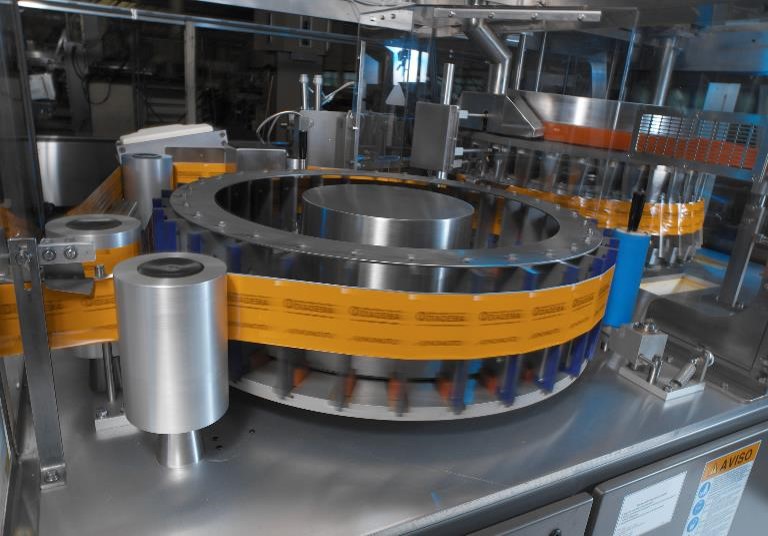
R.A Jones trials sustainable films on its Pouch King equipment, helping brand manufacturers transition to environmentally friendly packaging and meet consumer and industry demand R.A Jones, a Coesia Company, has developed new material handling technology to allow them to run a variety of different recyclable-ready flexible films on their high-speed Pouch King Form/Fill/Seal pouching system, which will help brand manufacturers transition to a more environmentally friendly packaging materials. With sustainable packaging emerging as a top priority for consumers – and rising pressure from global governing bodies like the European Union, mandating that all plastic packaging is reusable or recyclable by 2030 – R.A Jones is making it easier for consumer packaged goods (CPGs) companies to prepare and meet these green initiatives with innovative equipment solutions. To achieve 100 percent recyclability, new film structures are being developed to ensure these green solutions can fulfill the same necessary requirements as the legacy packaging materials. Many of the traditional flexible packaging film structures consist of multiple layers and dissimilar materials, which provide barrier qualities and enhance machinability. Yet these same multi-layered films have low recyclability capabilities due to the combination of materials, which can result in packaging eventually ending up in landfills. However, these new flexible packaging films are not always easy to run on form/fill/seal systems, especially high-speed machines similar to what R.A Jones provides with their Pouch King line. One of the biggest challenges with the new materials is a decreased heat tolerance. In order to produce a seal, applying heat and pressure to the film is required, which can cause the new eco-friendlier packaging alternatives to stretch, shrink, or distort when exposed to heat in an uncontrolled manner. These complications can lead to material waste and costly equipment downtime. In response, R.A Jones has invested substantially in developing new sealing technology, which manages the sealing process to avoid damaging the sustainable packaging films. “Consumer Packaged Goods suppliers are faced with meeting the increasing demand for sustainable packaging while ensuring they can operate machinery at the same performance level,” said Robert Kalany, Senior Manager of Research and Development at R.A Jones. “Our current Pouch King line is one of the fastest form, fill and seal pouch machines in the world with speeds of 2,000 pouches per minute. Now with this new sealing technology, customers will be able to run sustainable flexible materials on their Pouch King machinery while still meeting their output goals.” R.A Jones is in the process of evaluating different materials that can be used to package a variety of products, including soup bases, spices, instant breakfast foods, drink mixes, nutraceuticals, and snacks. The needed hardware and software upgrades will be available starting in Q2 of 2023 for any new R.A Jones’ Pouch King PCU-2000 and can be retrofitted on any Pouch King already in service, depending on the vintage of the machine.
Toyota Material Handling announces organizational changes

Toyota Material Handling (TMH), the industry leader in material handling innovation, announces the promotion of Bill Byrd and Dan Kossow to director-level positions as part of a new strategic vision for the company’s organizational structure to further support and enhance operations and collaboration between corporate sales teams and its renowned nationwide TMH dealer network. “These promotions are a reflection of Toyota’s ongoing commitment to providing customers with world-class service and expertise to meet their unique needs and challenges,” said Jaksa Pejnovic, TMH Vice President of Sales & Marketing. “It is our experience that one of the best ways to successfully uphold such a commitment is through a culture of continuous improvement in how and what we do – or ‘kaizen’ as we call it. We have an opportunity to enhance our collaboration as a team. Adding these executives to our management team positions us to pursue TMH’s vision for the future by leveraging their combined skills and talents for the benefit of our customers.” As Director of Dealer Development, Byrd is charged with managing the company’s relationships with its industry-leading network of independent and equity dealers. Byrd, a 24-year industry veteran, has held several key roles since arriving at TMH in 2016, including his most recent position as Senior Sales Manager for National Accounts. In addition to his current responsibilities overseeing the company’s Heavy Duty Division, Kossow will assume Byrd’s former responsibilities in his new role as Director of National Accounts and Heavy Duty Sales. Kossow’s industry experience spans 24 years. He joined TMH in 2019 after the company’s acquisition of HOIST Liftruck.
A packaging group is answering the call for more recyclable packaging

A Packaging Group (APG) is answering the call for more sustainable and environmentally-friendly packaging solutions. As consumers and businesses alike become more conscious of the impact of packaging on the environment, APG is rising to the challenge with a variety of new and innovative products that are not only recyclable but also designed to reduce waste and minimize environmental impact. “We understand that brands and their customers are looking for more sustainable packaging options. Our patented line of dispensers called “The Infinity Line” is fully recyclable with HDPE and PET bottles, and there is no need to disassemble before recycling them”, said company spokesperson Hannah Palese. APG is also promoting the use of sustainable materials, such as plant-based materials. These materials break down quickly in the environment, reducing the amount of plastic waste that ends up in landfills and oceans. By offering a range of recyclable materials and designs, APG is helping brands to enhance their green credentials and improve their sustainability agendas. In addition, APG work closely with customers to develop custom packaging solutions that meet their specific needs. So, whether they’re looking for a way to make sustainable products stand out on the shelves or need a packaging solution that meets specific regulatory requirements, APG has the expertise to help. APG’s new sustainable packaging solutions are not only better for the environment, but they are also good for business. By choosing APG’s sustainable packaging options, companies can reduce their environmental impact, improve their public image, and build consumer trust. “APG is committed to providing customers with innovative and sustainable packaging solutions that help them to meet their green goals and reduce their environmental impact. We believe that sustainable packaging is not only good for the planet but it is also good for business. With a wide range of recyclable materials and designs, APG is making it easy for businesses of all sizes to enhance their green credentials and improve their sustainability agendas,” said company spokesperson Hannah Palese.
Women In Trucking Association announces 2023 Content Advisory Council

The Women In Trucking Association (WIT) announced its 2023 Content Advisory Council, a volunteer group comprised of executives or professionals who have vast knowledge and experience in transportation and logistics, as well as a passion for the mission of the association: to encourage the employment of women in the trucking industry, promote their accomplishments, and minimize the obstacles they face. The goal of WIT’s Content Advisory Council is to provide guidance and counsel regarding relevant and meaningful content for WIT’s annual Accelerate! Conference & Expo, as well as various communication channels, such as its Redefining the Road magazine, weekly e-newsletter, and social media platforms. “It’s critical that WIT provides relevant, practical, useful information to our members and the industry at-large through our various communication channels,” said Brian Everett, group editorial director and publisher of Redefining the Road magazine and strategy advisor to WIT. “We rely heavily on this powerhouse group of industry experts to help guide, formulate and validate the content we produce and distribute.” The 2023 Women In Trucking Content Advisory Council is comprised of the following industry leaders: Melissa Addis, Producer, Commercial Underwriters Insurance Agency Niki Bolton, Chief Strategic Operations Officer, American Truck & Rail Audits Laura Duryea, Manager of Recruiting, Retention & Driver Development, Boyle Transportation Madeleine Frume, CEO, Koppur Trailer & Chassis Molly Gibson, Vice President of Sales Operations, CDLLife Vanessa Hernandez, Director of Carrier Resources, J.B. Hunt Transport, Inc. Malaina Hudson, CPIM, Director, Supply Chain Systems, Hillebrand Jeana Hysell, Senior Safety Consultant, J.J. Keller & Associates Jerri Jarvis, Safety Analyst, Cheeseman Kesha Jones, Senior Director of HR, Total Transportation of Mississippi Kelly Kirkpatrick-Lee, Truck Audits Manager, American Truck & Rail Audits Rachel Kremm, Vehicle Programs Project Engineer, Kodiak Angelika Mangino, Driver Recruitment & Engagement Manager, Clean Harbors Mark Mariano, Director, SRS Distribution, Inc. Samantha McCracken, Strategic Operations Manager, Bridgestone Americas, Inc. Josh Mecca, Director of Recruiting, American Central Transport Claire Mules, President, Assurance Resources, Inc. Martha Payne, Attorney, Benesch, Friedlander, Copland & Aronoff LLP Kristin Ridley, Marketing Communications Manager, Rihm Kenworth Amber Roy, Executive Vice President & Chief Operating Officer, Triumph Business Capital Laura Sayers, Senior Director of Marketing, TRANSFLO The members of the 2023 Women In Trucking Content Advisory Council can be found online at https://www.womenintrucking.org/content-advisory-council
Hyster forklifts win two Product of the Year awards
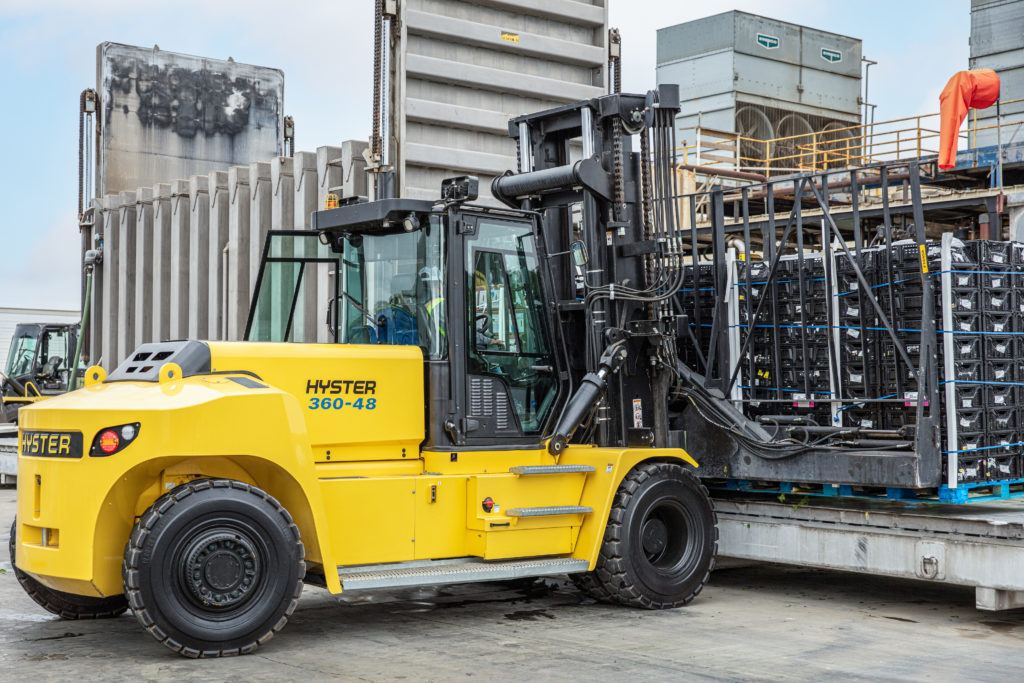
High-capacity integrated lithium-ion lift truck and newly launched internal combustion engine-powered model earn honors Hyster Company announces that two of its forklift models have been voted as top products of 2022 by readers of Material Handling Product News and MaterialHandling247.com. The J230-360XD36/48 was voted the year’s top lift truck and accessories product, while the H40-70A was elected the year’s best ergonomics and safety product. “These two award-winning lift trucks demonstrate our commitment to delivering solutions that address the wants and needs of our customers,” says Martin Boyd, Vice President, Product Planning and Solutions, at Hyster Company. “Whether customers are looking for tailored solutions they can build around their application or a solution designed to empower them to transition even high-capacity trucks from internal combustion to electric, our approach is to provide choices and work in partnership with customers, consulting on the optimal solution for their operations.” Powered by a factory-integrated lithium-ion battery, the J230-360XD36/48 offers lift capacities up to 36,000 pounds, bringing zero emissions and performance comparable to that of an internal combustion engine (ICE)-powered truck to heavy-duty industries such as steel, concrete, lumber, agriculture, and ports. The integrated lithium-ion battery enables opportunity charging, high uptime, and a low total cost of ownership. The ergonomically designed, high-visibility cab also puts high productivity within reach. An armored glass top window, curved front, and rear windows, and steel doors with tempered glass provide excellent all-around operator visibility. The largest cabin entry area in the industry makes access more convenient for the operator, and inside the cab, a full-color touchscreen puts performance data at the operator’s fingertips. An ergonomically designed control arm, an adjustable steering column, and a unique foot pedal design provide additional support for operator comfort and productivity all shift long. In addition to the win for the J230-360XD36/48 electric lift truck, Hyster took home a second Product of the Year Award for the recently launched H40-70A, the first model in the new, highly configurable A-Series lineup. These 4,000-to-7,000-pound capacities ICE forklifts are designed and manufactured according to a scalable approach that helps customers maximize operator performance while keeping a low total cost of ownership. Customers can choose the options they need from a fully integrated set of adjustable features, based on their unique application. The A Series also offers robust standard features, such as the innovative Dynamic Stability System, which uses sensors to continually monitor truck status. When it detects the truck exceeding designated stability thresholds, DSS automatically implements measures like limiting truck speed and hydraulic function, to help minimize the risk of forward and sideways tip-overs.
Staffing employment rebounded in January
Staffing employment rebounded further in the week of Jan. 8-15, increasing by 3.4% to a rounded value of 101. Several staffing companies mentioned a holiday as a barrier to preventing further growth. Staffing jobs were up 0.15% from the same week last year. New starts rose in the 2nd week of the year, increasing by 7% from the prior week. More than half of staffing companies (53%) reported gains in new assignments week-to-week. The ASA Staffing Index four-week moving average edged down from the prior week to a rounded value of 95, but temporary and contract staffing employment for the four weeks ending Jan. 15 was 0.23% higher than the same period in 2021. “Staffing employment has followed up a December holiday lull with two weeks of growth, in line with the typical seasonal pattern,” said Tim Hulley, ASA assistant director of research. This week, containing the 12th day of the month will be used in the December monthly employment situation report scheduled to be issued by the U.S. Bureau of Labor Statistics on Feb. 3. The ASA Staffing Index is reported nine days after each workweek, making it a near real-time measure of staffing employment trends. ASA Staffing Starts are the number of temporary and contract employees placed in new assignments during the reporting week. ASA research shows that staffing employment has historically been a coincident economic indicator.
#GLAD2023 Scheduled for July 13th

The fourth Global Lifting Awareness Day—#GLAD2023—will take place on Thursday. July 13th. Powered by the Lifting Equipment Engineers Association (LEEA) and supporting organizations, it is now a widely celebrated day where manufacturers, suppliers, and end users are among those sharing materials that promote safe and high-quality load lifting. Social media posts, videos, articles, and in-person activity will again be bound together by the hashtag, #GLAD2023. Industry stakeholders are also invited to share their content so LEEA can add it to the newly updated website—www.globalliftingawarenessday.com—where information about apprenticeships, military recruitment, diversity, sustainability, and technology has been posted during previous years. While the key message remains the same, LEEA has updated the logo, which will be used as another point of identity before, during, and after the event. Anyone with an interest in lifting and working at height can contribute by using the graphic and hashtag to celebrate their involvement with the industry and promote it as an interesting place to work, especially for younger generations. Ross Moloney, CEO at LEEA, said: “There’s an energy building behind plans for this year’s Global Lifting Awareness Day that suggest it will be the most widely supported and impactful ever. The concept has successfully spanned the Covid era, reiterating the fact that lifting remains both ubiquitous and essential in keeping all kinds of operations going, irrespective of pandemics and economic conditions.” He added: “Fighting gravity is inherently dangerous and getting it wrong can lead to accident, injury, and even fatality. That makes it an extremely important, challenging, and rewarding sector to work in, which is just one of the messages we’re encouraging people to promote.” Celebrate the lifting industry on Thursday 13 July—include the #GLAD2023 hashtag.
Episode 352: Hopstack
The New Warehouse welcomes Vivek Singh, Co-Founder of Hopstack, a software platform that automates and optimizes warehouse operations. Vivek founded Hopsack to bridge the gap between legacy systems and new software for modern e-commerce businesses by creating an open digital operating system that is agile enough to accommodate omnichannel strategies. Hopstack ensures its software meets the complexity introduced via automation in fulfillment operations, such as pre-built integration capabilities for robotic hardware devices like pick-to-light devices or picking robots. Be sure to tune in to learn about software in the fulfillment space, how it’s been changing over the recent years, and how some gaps between legacy systems and new software are being closed. Key Takeaways Vivek refers to Hopstack’s software as a warehouse operating system. He explains that larger companies may employ five to six different types of software, such as a warehouse management system (WMS), Warehouse Execution System (WES), Inventory Management System (IMS), order fulfillment software, etc. This isn’t practical for small and medium-sized businesses (SMB), making a system like Hopstack that can perform all those functions in one package is ideal for SMBs. Vivek shares that companies transitioning from legacy systems into modern cloud-based solutions like Hopstack have seen 30-40% benefits in terms of efficiency, order lead times, and the number of orders fulfilled daily. Hopstack’s system allows for native connectivity with picking robots and requires less implementation time than traditional systems, taking as little as 8-10 weeks on average. Many companies are reluctant to abandon their legacy systems because they cannot afford to have their operations negatively impacted by a lengthy implementation process. Vivek believes that having a software system to run fulfillment is no longer a “nice-to-have” but a necessity to operate in today’s environment. The New Warehouse Podcast EP 352: Hopstack
How to build trust and expertise with After Action Reviews (AARs)

Do you lead your team to learn primarily from successes or from failures? Many leaders argue that their teams are just too busy to spend time discussing why a successful project went well. They just wrap up fast, then dive into the next project. So, the unspoken insights and unwritten lessons learned from that project rarely ever get shared or discussed. Often, they just get forgotten in the frenzy of working project after project. Would you hire an engineer to build you a bridge if all that engineer ever studied was how bridges collapse? Would you hire a recruiter to find you a job if all that recruiter ever studied was how people get fired? The best leaders help their teams learn regularly from their successes, not just occasionally from their failures. But learning from success happens automatically… doesn’t it? After Action Review (AAR) Soldiers perform complex, dynamic, often dangerous missions. And they want to learn as much as they can from each one. In the 1980s, leaders in the US Army realized that they needed a practical way to help soldiers share the unspoken insights and unwritten lessons they learned from their missions. They realized that sharing tribal knowledge and applying tacit skills were key to winning wars. And since it was the Army, they developed a process — a non-punitive, semi-structured, post-job team debrief called an After Action Review (AAR). After Action Reviews have proven so wildly effective that every branch of the military now uses them. And for some units like flight crews and Special Operations Forces, AARs are almost a religion. They’ve been called, “one of the most successful organizational learning methods yet devised.” The process of leading a basic AAR is simple. Soon after your team completes a project, gather them in a private space for about 30 minutes, and ask these four questions: What did we set out to do? What did we actually do? How did it turn out the way it did? What will we do differently next time? Why Use These Questions? Have you ever had a discussion degenerate into a fact-free “war of opinions”? That’s the fate you’ll suffer if you start a debrief by asking for opinions. True, questions 3 and 4 are subjective and do indeed ask for opinions. But notice that questions 1 and 2 are much more fact-based. It may seem silly to ask, “What did we intend to do in this job?” But different people have different goals for the same job. The accountant on your team may have intended to maximize revenue. The safety specialist on your team may have intended to reduce the risk of injuries. The team leader may have wanted to finish the job ahead of schedule and under budget. So always start your After Action Reviews by getting facts with questions 1 and 2 before getting opinions with questions 3 and 4. “What went well, and what went badly?” This may seem like a great question for a debrief. After all, it cuts straight to the point, right? Here’s the problem. This question nudges us to discuss blame, not improvements. And blame stops learning in its tracks. Look at the four After Action Review questions. There’s no hint of fault, failure, or blame in any of them. That’s intentional. After Action Reviews focus on learning, not blame. Make sure you keep that focus in every AAR you lead. Soldiers are fond of sayings like, “No mission plan ever survives contact with reality” or “The planning is more valuable than the plan.” And in reality, the percentage of complex missions that go exactly according to plan is nearly 0%. Soldiers and other experts in complex, dynamic systems know that in any given job, there’s always a gap between what we plan to do and what we actually do. Notice how question 1 asks about the plan. Some call this “Work as Imagined.” Question 2 asks about the actual job. Some call this “Work as Done.” When you lead your After Action Reviews, use questions 1 and 2 to explore this critical gap, but not eliminate it. Three Common Mistakes and How to Avoid Them Successes vs. Failures Some leaders do AARs only for accidents or errors. If you do that, your team will quickly associate AARs with failure. And they’ll give short, vague answers to get it over with as fast as possible. So, lead about 80% or more of your AARs for successful projects. That way, your team will learn to trust the process and value the results. Now vs. Later Unspoken insights and lessons learned are the most valuable things a team can discuss in an After Action Review. Those unspoken ideas have a half-life of hours or less. So, if you wait a day or more to lead your AAR, much of the priceless, unspoken wisdom will already have been lost, perhaps forever. So, lead the AAR as soon as the project wraps. Leader vs. Facilitator Most leaders like to answer questions. Usually, that’s a good thing. But not in an After Action Review. If you give in to the temptation to answer the questions, you’ll shut your team down until the only person talking is you. So, in an After Action Review, remember that the leader is the person who talks the least. Choose your AAR leaders accordingly. If you want a low-cost, low-risk way to build trust and expertise on your team, you will likely never find a more practical method than leading After Action Reviews. If the US Army has used them for 40+ years, just imagine what kind of value they could create for your team. About the Author: Jake Mazulewicz, Ph.D. shows leaders in high-hazard industries why errors are signals, not failures, and how to address the deeper problem so that everyone can work more reliably and safely. He keynotes and advises globally. He has a decade of experience in Safety for electric utilities and served as a firefighter, an EMT, and
Bison Gear and Engineering adds Automated Gear Tooth Grinder
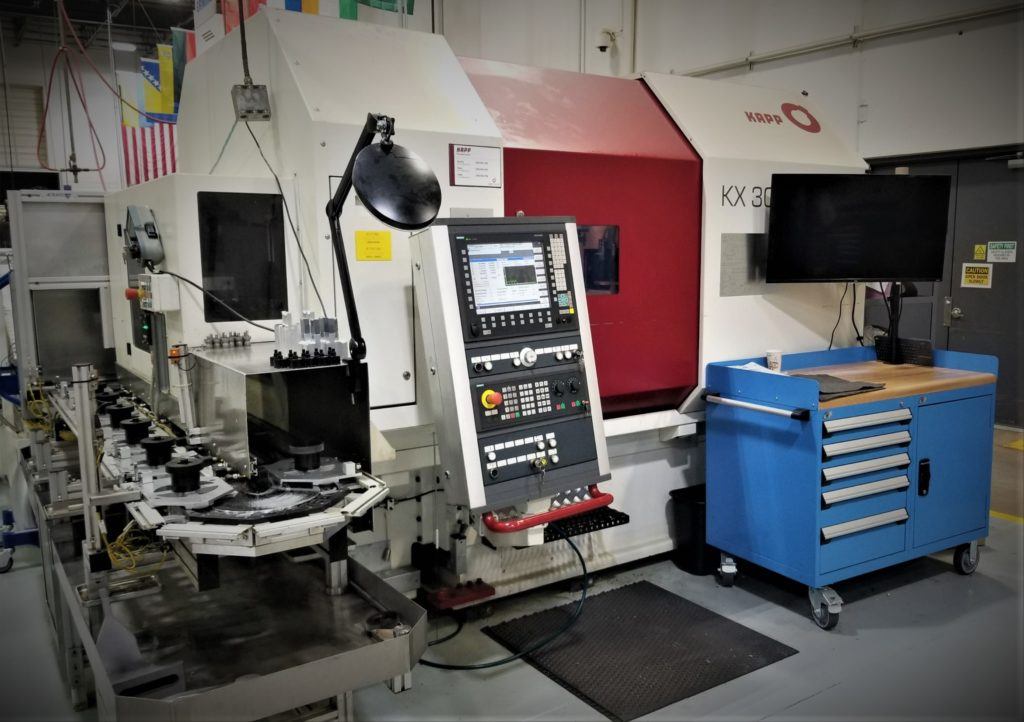
The new machine improves product quality and increases production capacity Bison Gear & Engineering Corp., a provider in the power transmission industry, has added an Automated Gear Tooth Grinder to their gear hobbing department. This new equipment offers a range of benefits that improve product quality and increase production capacity. This unique machine frees up capacity on four other machines, improves the quality of gear geometry, improves the cycle time, and effectively grinds spur and helical gears. At a time when product demand outpaces production capacity, adding this single piece of equipment will help make available nearly 40% more production time on four separate hobbing machines. In this way, the Automated Gear Tooth Grinder significantly increases total gear-cutting capabilities. This new machine is also capable of grinding the gear tooth profile, leading to an exacting, .00005-inch precision. This means that the teeth will continually mesh at the same point, appreciably reducing wear and noise. This aspect of the grinder proves of great benefit to customers who have noise-sensitive applications. Customers can also obtain increased gear motor efficiency from the fact that lower-weight lubricant oils are needed when using a grind-finished gear. The Automated Gear Tooth Grinder produces a better-finished product in ¼ of the time of a standard hobbing machine, significantly expediting the grinding process and improving the quality of the gear.
ABBYY accelerates METRO AG Companies’ wholesale customer payments up to 90% faster

Intelligent automation of invoice processing enabled METRO AG to significantly improve productivity and offer more customers benefits METRO Digital transformed its account payable process using ABBYY intelligent automation solutions resulting in processing customer invoices up to 90% faster. As the technology arm for METRO AG, an international wholesale company with 17 million customers in 30+ countries within the hotel, restaurants, and catering industry, Metro Digital is now able to streamline and speed invoice processing worldwide from up to two days to about one hour, thereby enabling more clients to take advantage of customer benefits and accelerate revenue for the company. ABBYY has been METRO Digital’s digital transformation partner for several years that began with a completely manual invoice process in one region to now intelligently automating large volumes of invoices globally in several languages. ABBYY intelligent document processing (IDP) solutions improved invoice processing accuracy and compliance with legal requirements and internal formal criteria. Access to invoice and payment data, which was never possible before, enables METRO Digital to better understand and predict the customer lifecycle stage and provide a value-adding experience. “Expectations are very high for global finance projects like this. The enthusiasm after the introduction of ABBYY’s IDP solution was great internally, but also on the customer side,” says Stefan Rödder, Product Owner at METRO Digital. “We chose ABBYY eight years ago. Since then, we haven’t seen a better automation solution on the market to reach our goal of zero-touch processing.” “We are pleased to have been able to accompany METRO on its journey to a digital future for several years now,” said Bruce Orcutt, Senior VP of Product Marketing at ABBYY. “As a pioneer in wholesale, METRO Digital has revolutionized an entire industry, and we are proud to be a technology partner that can exceed our customer’s quality demands and expectations with our intelligent process automation solutions.”
PTDA welcomes new member
The Power Transmission Distributors Association (PTDA), an association for the industrial power transmission/motion control (PT/MC) distribution channel, welcomes a new distributor member. Nelson Electric Motors (Opelika, Ala.) Founded in 1968 in Alexander City, Ala., Nelson Electric Motor Service provides expert Electro-Mechanical Repair services to the Central Alabama region. In 2002 and 2013 it expanded operations to Opelika, Ala., and Sylacauga, Ala., respectively. The company specializes in Electro-Mechanical Repair, Preventative Maintenance, and Predictive Maintenance of electric motors, generators, gearsets, and pumps through its in-shop and field service. Nelson also offers full machining and millwork and new equipment sales. In 2022, Nelson Electric made a commitment to grow sales of bearing and power transmission items to its traditional customer base. “We believe in the value of personal relationships with both customers and industry leaders and joined PTDA to build those powerful relationships,” says John Langford, corporate buyer/bearing & power transmission sales.
National Ladder Safety Month: The perfect time to “Step Up” employee training

According to the U.S. Bureau of Labor Statistics, ladder deaths accounted for 161 on-the-job fatalities in 2020, the most recent year for which statistics are available. That same year, there were 22,710 ladder-related workplace injuries, an injury stat that has remained relatively constant over the previous several years. The point is, ladder safety is a serious topic, with a staggering cost to businesses and an even worse impact on families that lose loved ones. March is National Ladder Safety Month, spearheaded by the American Ladder Institute (ALI). This, its seventh year will focus on four key themes: Week One – Choosing Your Ladder Week Two – Safety Before the First Step (Inspection and Set Up) Week Three – Safety While Climbing Week Four – Safety at the Top ALI believes ladder accidents are preventable with thorough safety planning, training, and continuous innovation in product design. The more people, organizations, and businesses that get involved, the wider the message spreads, and the more people learn about proper ladder safety. ALI’s Ladder Safety Training site, https://www.laddersafetytraining.org/, makes safety training easy with an organized curriculum, a video and resource library, and free registration. Because every life saved is precious, the goals of National Ladder Safety Month are to decrease the number of ladder-related injuries and fatalities, increase the number of ladder safety training certificates issued by ALI, increase the frequency that ladder safety training modules are viewed on https://www.laddersafetytraining.org/, lower the rankings of ladder-related safety citations on OSHA’s yearly “Top 10 Citations List,” increase the number of in-person ladder training and increase the number of companies and individuals that inspect and properly dispose of old or damaged ladders. Every step matters. From step stools to extension ladders, make sure you’re putting the right foot forward. This March, National Ladder Safety Month, is the perfect time to step up ladder safety efforts and direct employees to take courses on https://www.laddersafetytraining.org/.
Keep them short

Keep your planning process short. From what I see this is a must regarding 2023 and maybe even 2024. The plans I am suggesting for 23 have accounted for not more than three months. You work that plan and while you are doing so you add a month to the three-month plan and subtract the month just completed. You really don’t want to wait until the middle of month 3 to devise the plan for months 4. 5 and 6. You just keep adjusting to having three months on the drawing table at the end of any month. Why am I suggesting this? BECAUSE NO MATTER WHAT YOU HEAR, IT IS STILL SCREWED UP OUT THERE AND WILL PROBABLY BE SO FOR 23 AND INTO 24. Last month’s article by Allen Polk kind of spelled it out for you. The supply chain is still not fixed. Pricing is out of control. The OEM backlog is still not under control. Interest rates doubling over the last year. Customers with needs and problems you cannot solve at this time. Add to that the labor shortage and the need for technology and you find yourself in an almost impossible situation putting a gameplan together. But there is some good news to share as well. If you recall, I recommended a book titled THE END OF THE WORLD IS JUST THE BEGINNING, which basically maps out the collapse of Globalization written by Peter Zeihan, a geopolitical strategist. It basically spells out the history of the world economy and Uncle Sam’s involvement in protecting globalization as a result of increasing the standard of living throughout the world. But now that the USA is no longer finding globalization to be as profitable or useful as anticipated. The result is that many countries that build up an economy because of globalization will find their economy shrinking without a meaningful way to reverse the downfall. On the other hand, those countries hoping to continue to produce and grow their CDP numbers will need to have a certain availability of energy resources, land able to grow all the crops needed, industrial centers where the work can be performed and a population with flexible pay grades to allow for product costs acceptable to the market. Mr. Zeihan suggest that the best location in the world where this program could be developed was the space occupied by Canada, the United States, and Mexico. Working together these three countries will control the world’s economy. THAT IS GOOD NEWS FOR YOU AND IT IS COMING FASTER THAN YOU THINK. MANUFACTURING, HERE WE COME! As I was reading the book, I could spell the lube oils, hear the milling machines operating, and see the steel bars waiting to be processed. This was at my father’s Machine shop. All when well until the time we started allowing foreign steel into the country. When the price of domestic steel alone was more than the full cost of our products made with foreign steel ….globalization put us and many friends out of business. Now the collapse of globalization is going to put the US back on top of the Manufacturing Hill and take the lift truck industry with it. Buy the book, read it, pass it along and start planning how to get your piece of this pie. Since I do a lot of work with construction equipment and how it is used by contractors, I looked over the Dodge Report for 2023. And guess what? Expect housing and warehouse construction to be down, and manufacturing buildings to be up. MANUFACTURING, HERE WE COME! As we plan ahead let us not forget: Some inflation will reverse, and some will not. Many prices will move up and stay there. Remember, you have FIXED COSTS, SEMI-FIXED COSTS, AND VARIABLE COSTS. Are you prepared to adjust costs and billing to maintain margins? Labor costs will stick and even go higher because there are few eligible folks out there to hire. Better review your entire employee package for techs and tune it up so that they cannot leave. 94% of CEOs are planning for a recession in 2023. Hopefully, it is a normal recession (forget the soft landing) where inflation remains high and the Fed keeps hiking to 5% or more, with unemployment heading up and GDP down. Do not assume it will be business as usual in Q2 of 23. Customers need equipment. How about selling them refurb units? Or renting them refurb units. Or refurbing their units with them providing the core. Refurbs work and can be quite profitable for both dealers and customers. A recent email I saw about a contractor that gave his old pickup to a place that refurbs it in 3-4 weeks with a new drivetrain, interior, and parts as necessary replaced. It is a hell of a lot cheaper than a new one. There are probably many firms out there that do not want to own and operate their lift trucks. Work out a deal to manage their fleet. If there ever was a time to belong to a 20 Group, it is now. Believe me, with what you have on your plate, 15 heads are better than one when it comes time to plan for Q1 23. About the Columnist: Garry Bartecki is a CPA MBA with GB Financial Services LLC and a Wholesaler columnist since August 1993. E-mail [email protected] to contact Garry.