
SAKOR Technologies releases Dynolab™ GenV next generation test automation control
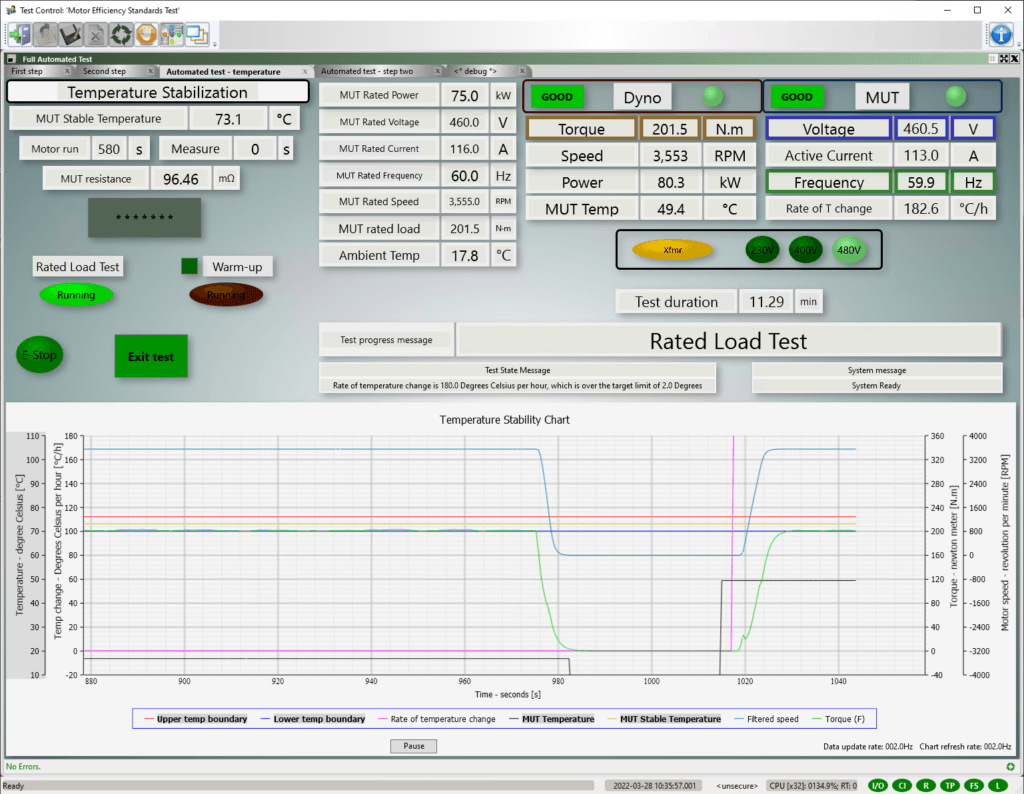
SAKOR Technologies Inc., a recognized leader in the area of high-performance dynamometer systems, announces the release of the DynoLAB™ GenV next-generation test automation controller, which allows even a non-programmer to implement complex test systems and testing standards. Delivering a new benchmark in modularity, performance, robustness, and expandability, DynoLAB GenV is built on the latest Windows technologies and development tools in full compliance with current information technology standards. The new DynoLAB GenV can be used with a wide array of hardware, including power analyzers, resistance meters, high potential (hi-POT) testers, ECU’s, video control units, and emissions analyzers. The fully networked test automation controller can operate several different devices independently, so users can perform multiple tests simultaneously, often with a single DynoLAB GenV controller. Each DynoLAB GenV execution unit is an independent module, which provides superior software robustness. The system is completely scalable, so performance takes advantage of faster processors, larger memory, and more processor cores as they become available. The powerful new automation controller features multi-monitor, multi-window, and multi-tabbed displays that allow the test sequence to be laid out in the most appealing and ergonomic manner. With its modern intuitive interface and powerful graphical test sequence editor, test engineers and technicians can easily design and implement complex automated test sequences without the need to learn a programming language or employ a professional programmer. Tests can be edited or created online or offline and the user interface and displays can be modified while the test is executing. Users can export test sequences, hardware channel sets, and unit definitions for offline test editing. SAKOR uses its advanced user experience feature to teach operators and engineers how to quickly configure and run tests. “We are excited about the launch of our new DynoLAB GenV product,” said Randal Beattie, president of SAKOR. “Building on our decades of testing experience, the new controller allows customers to automate much larger and more complex systems than ever before, with a cost and expandability not available in the market until now.”
Cold Robots revolutionize Cold Chain Logistics
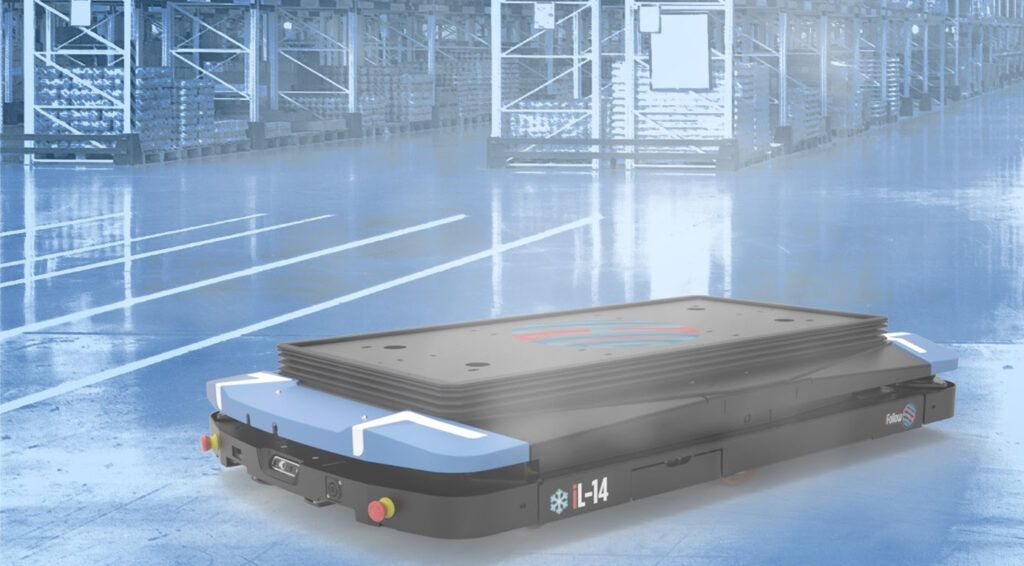
The labor attraction to the cold chain facilities is not growing, however, the market does. The global cold storage market size was valued at USD 138.97 billion in 2022 and is projected to grow at a compound annual growth rate (CAGR) of 17.2% from 2023 to 2030. Therefore, the cold chain turns to automation to meet internal productivity needs and customer expectations and that’s where mobile robots play an essential role. “Autonomous Mobile Robots will contribute significantly to efficient and productive use of increasingly vital cold storage. This kind of automated solution is not a question of luxury but one of need ” explains Vincent Jacquemart , CEO of iFollow. This has become critically important given how issues such as Brexit, the pandemic, the war in Ukraine and the weather have each highlighted the role chilled and frozen warehousing has in creating resilience in our food supply chains; not forgetting of course how Covid revealed the centrality of low-temperature storage in medicine and pharmacology. Research and development and many advanced industrial processes also depend on the ability to maintain goods and materials at low temperatures. Efficiency in every way ‘Efficiency’ here has several connotations. There is the efficient use of the available space. Many cold stores are quite small – often ‘cold rooms’ within larger buildings. But demand for cold space, from private companies, own facilities to ‘public’ stores operated by a 3PL for multiple customers, is increasing. In the food chain in particular, companies from processors to distributors and retailers are looking for larger facilities – the Cold Chain Federation (CCF) has identified 678 units of over 50,000 square feet, and there are many that are much larger still. But cold stores are expensive to build and equip, and although the CCF recently estimated that some 16.7 million square feet of new space are under construction or being fitted out, that may not meet increased demand, especially as so much of the existing stock (34%) is over 25 years old and some of this is converted, not always very effectively, from other uses. Cold stores must also be efficient in operation, which is key at a time of gas and electricity bills rising remorselessly. Although a well-built, equipped, and run cold store uses a lot less energy than is commonly supposed, there is still an imperative to improve storage density and operations to minimize the heat coming in through open doors. And contrary to popular opinion, cold chain warehousing is not usually about minimally manned, long-term, bulk storage. Many cold chains move goods in and out of stores rapidly and involve all the break-bulk, order-picking, stock rotation, and other operations familiar to ambient warehousing. That has to be performed just as efficiently and productively but in much more arduous conditions. This means that labor, too, has to be deployed efficiently. In November, the Cold Chain Federation noted “10 percent to 20 percent shortage rates” among its members. The pool of workers prepared to perform arduous, even hazardous, tasks in cold conditions is decreasing. In addition, there is an increasing realization of the need to limit the length of time that workers spend in the cold before taking a break in warmer areas, and of the long-term impacts of heavy manual tasks in cold conditions. Overcoming technical issues Given all this, the cold store would seem an obvious arena for the introduction of automation. But this is not without its problems. There are technical issues – operation at low, and especially sub-zero, temperatures, can embrittle and otherwise degrade materials including metals, plastics, and rubber tires. Electric and electronic components can be affected by ice and condensation. Batteries, in particular, have degraded performance and shorter lives at low temperatures. Fixed mechanization, such as conveyors, takes up refrigerated space that isn’t being used to store the goods. There are safety and operational issues too – it isn’t easy to perform complex control operations or to ensure that people are adequately protected from machinery when workers are wearing heavy and cumbersome protective clothing and both their physical and mental agility may be compromised by the low temperatures alongside the hazards of condensation and ice. Not all AMRs can work in cold storage. iFollow, however, has a range of robots for cold chain logistics that transport from 300 kg to 1500 kg payload down to -25°C and is specific to the cold store environment. This is due to its approach to safeguarding electronics and batteries. The temperature of key electronic components is regulated by an iFollow-developed servo system which eliminates condensation (and therefore, icing,) at temperatures as low as -25° – a particular issue when moving regularly between cold and temperate spaces. This also means that battery life is not degraded. Depending on the size of AMR, between 12 and 18 hours of autonomous operation are available from a 2-hour charge time. Fewer battery charges or changes obviously improve productivity, but also reduce the space needed for recharging. Using AMRs rather than ride-on vehicles eliminates the known hazards of the latter – present in any warehouse operation but exacerbated in cold and slippery conditions. Specialized cold-store standard trucks are also not cheap. Operator control is also suited to cold store conditions. It is not reasonable to expect workers to input complex instructions while wearing heavy gloves or to require them to take their gloves off for extended periods. The Mycelium WCS software from iFollow, which is compatible with all available WMS/ERP systems, can be used through any computer or tablet with most instructions available through just one or two clicks. AMRs do not require the segregated space of conveyor-based systems and they can turn in their own footprint, unlike most AGVs which require a defined bend to corner. This maximizes storage space, or to put it another way, minimizes the volume of fresh air being refrigerated. Also unlike AGVs, AMRs do not require semi-permanent predefined pathways, thus allowing more flexible use of warehouse space. They also do not require especially smooth and even floors
Automated Parcel Infeed Solutions from Endura-Veyor Inc

Endura-Veyor, Inc.’s specialization in bulk material handling extends to the bustling world of E-Commerce and Logistics. Providing custom Parcel Infeed Solutions that establish maximum efficiency at the very start of each operation, Endura-Veyor is actively helping customers manage rapid flows of inbound goods that optimize a wide range of downstream processes. Serving applications in Reverse Logistics, Last Mile Delivery, Return Goods, Sortation, Warehousing, and more, our team of specialists is dedicated to creating a user-friendly, agile, ergonomic process to unload and transport inbound parcels, packages, and goods. Our equipment and versatile systems initiate singulation, control product flow, reduce labor dependency, and accelerate productivity. Whether you’re looking to manage higher volumes of inbound parcels after consolidation or to automate your infeed, sortation, or returns process, our Parcel Team specialists will ensure that your unique needs are fulfilled. To get started, explore our top automated solutions that have successfully transformed our customer’s operations by bolstering product management, efficiency, productivity, and flow control. If there are customizations that we can make to enable seamless integration or to accommodate your product type and flow, please get in touch with us!
Episode 378: The smart warehouse with Softeon

CMO Dan Gilmore and CTO Mark Fralick of Softeon join The New Warehouse from ProMat 2023 to discuss the smart warehouse of the future. Softeon is a supply chain software solutions company focused on supply chain execution, including warehouse management and warehouse execution systems. Their suite of products includes labor management, yard management, slotting optimization, and materials handling. Tune in to hear how Softeon removes barriers to automation and speeds up ROI, allowing warehouses to integrate technology into the warehouse. The Future of Smart Warehouses According to Softeon, a smart automated warehouse comprises several capabilities, robotic technologies, and components that can be easily adaptable and combined to meet specific needs, with a Warehouse Management System (WMS) forming the foundation alongside complementary Warehouse Execution System (WES) technology to deliver a new generation of capabilities. Dan adds, “Smart warehouse systems will operate based on artificial intelligence and on a variety of technologies that will interact with each other to perform tasks in increasingly autonomous ways.” This implies a smart warehouse system can adapt and transform based on changing conditions, enhancing operational efficiencies. To realize this vision, advanced techniques such as task cutting and interleaving will play a significant role. Using these techniques, smart warehouses will prioritize the most profitable tasks and allocate resources accordingly to ensure optimal performance. In addition, WES will enable new levels of optimization, inventory control, and orchestration in smart warehouses. WES will offer real-time decision support and facilitate dynamic task allocation, increasing throughput and reducing lag times. Speaking on the subject, Gilmore added, “The Any-to-Any system integration technology will be critical in smart warehouses as it provides flexible and agile support for materials handling automation.” With the increasing demand for scalability and flexibility, such system integration technology will be essential in fulfilling this need. With ProMat breaking an attendance record this year, it appears smart warehouses will play an increasingly vital role in the future of the supply chain. These advanced technologies will enhance operational efficiency, curb costs, and enable warehouses to adapt to the ever-changing market and labor conditions. The Importance of Smart Warehouse Technologies in Optimizing Warehouse Management Systems In today’s fast-paced and ever-changing business environment, e-commerce and customer demand have pushed supply chains to become more efficient and responsive. One of the critical components of the supply chain is warehouse management systems, which can drive profitability for businesses if managed efficiently. Smart warehouse technologies have emerged as a solution to optimize warehouse management and automate supply chain operations, reducing the risk of errors and improving productivity. “Just by looking around, you see all this new technology, and fundamentally, this is all technology that wants to get to the floor, right? It’s a technology that wants to be on the floor,” says Mark. He believes it is crucial to remove the impedance that traditional warehouses face when integrating different systems and technologies in the supply chain, as it can lead to setbacks in productivity and profitability. This is where Smart Warehouse Systems come in. Softeon creates a dynamic data racetrack for communication between different systems used in the supply chain. This communication is essential in ensuring all these technologies work together seamlessly to optimize warehouse space and productivity. Smart warehouse systems can also boost sustainability within the supply chain. Smart warehousing can reduce a warehouse’s overall carbon footprint by reducing the time and energy required for order fulfillment and guiding employees to use environmentally conscious practices. The future of warehouse management and smart warehouse systems is exceptionally bright, with new emerging technologies that provide even more significant benefits. For example, AI can optimize warehouse picking by using inventory levels and predicting which products will be ordered next. This optimization could significantly improve a warehouse’s productivity and better predict customer demand. How to Optimize Automation in Your Warehouse Management System Managing a warehouse comes with its own set of challenges. But with the advent of automation and better warehouse management systems, we can make order fulfillment faster and more efficient than ever before. However, introducing automation into your warehouse operations can be time-consuming, and without the right strategy, you could end up with a complex and challenging system. So, how do you get automation into your warehouse? “It’s all about the flow,” said Mark. For any automation technology to work effectively, ensuring it fits into your warehouse’s operations is essential. Dan adds, “You have to have the core foundation in place to get to the smart warehouse.” In other words, it should seamlessly integrate with the warehouse processes existing system to amplify the system’s functionality. Mark believes a sound warehouse system should be like a duck in water. It should have a smooth flow and not look stressful on the surface, but everything underneath must work towards a common goal. Therefore, automation should not be viewed as just an addition to the existing inventory management system but as part of the more extensive warehouse management system. Having a technological solution that improves the flow of the warehouse, enhances productivity, and ultimately generates the best ROI. To do this, you must carefully consider the Return on Investment (ROI) of the technology you want to introduce into your warehouse operation. You should not simply add new technology without looking for its efficiency and impact on warehouse productivity. Instead of just adding technology bit by bit, it is crucial to understand the flow of inventory tracking in your warehouse and choose the right solution that amplifies the system’s flow. A proper ROI analysis, training, and a great understanding of the warehouse flow must back the right technology solution. Key Takeaways Materials handling technologies are growing in scope, and integrating them into flow processes needs to be more open and efficient. Organizations can maximize automation efficiencies and minimize bottlenecks by attacking ROI from the top down. The “smart warehouse of the future” emphasizes advanced techniques like task management and task interleaving to achieve autonomous warehouses. The New Warehouse Podcast EP 378: The Smart Warehouse with Softeon
Jungheinrich AG Commits to Strategic Collaboration Utilizing Configura as an All-in-One Plant-Design-Solution for the Company’s Warehouse and Automation Projects

Jungheinrich AG chose Configura to be a strategic partner for the development of various product and system configurators for highly complex customer solutions for its logistics systems division. The aim is to jointly establish an all-in-one plant-design solution for customer projects which covers Jungheinrich’s entire process from initial planning to calculation and the creation of a bill of materials. “Configura has officially been awarded the contract as the central software solution for the ‘System CPQ’ topic at Jungheinrich, which covers our fully automated intralogistics solutions and several other products,” said Dr. Florian Kuzmany, Head of Business Tools Sales Warehouse & Automation Projects at Jungheinrich. The cooperation between Jungheinrich and Configura began in 2020, starting with a pilot project for the configuration of automated pallet racking systems. With the latest development in this strategic collaboration, further racking systems, as well as materials handling components, will be added to Configura’s CET Material Handling planning software, providing Jungheinrich’s sales department with an efficient, intuitive, and cross-product project planning solution. “We value Jungheinrich’s continued commitment to Configura,” said Rich Trahey, VP Sales & Marketing at Configura. “This strategic collaboration enables Jungheinrich to take full advantage of our software ecosystem—enabling them and their network of partners to concept and engineer warehouse systems with speed, accuracy, and efficiency.”
Motion names new Senior Vice President and CFO

Motion Industries, Inc., a distributor of maintenance, repair, and operation replacement parts, and a premier provider of industrial technology solutions have announced the promotion of Patrick Cummings to Senior Vice President and Chief Financial Officer, effective immediately. Mr. Cummings graduated from the University of Alabama at Birmingham in 2006 with a Bachelor of Science in accounting. He began his career with Ernst & Young in 2006. In 2011, he moved from public accounting to industry, joining Walter Energy as their Internal Audit Manager. He joined Motion in 2012 as AVP of Corporate Compliance. Since then, he held the position of U.S. Controller from 2014-2019, before becoming VP of Financial Planning & Analysis, until he was asked to serve as interim CFO after Greg Cook, Motion’s previous CFO, moved to the U.S. Automotive Group at Genuine Parts Company (GPC). “Patrick will become a vital part of the Motion executive team, leading Motion to achieve our financial goals in the coming years,” said Randy Breaux, Motion’s President. “His promotion is well deserved. It makes me extremely proud and happy that after a nationwide search, the Motion candidates proved to be the ‘best in class,’ which says a lot about Motion, our succession planning/process, and our teammates.” Mr. Cummings will report directly to Mr. Breaux. He will also work closely with Bert Nappier, EVP and Chief Financial Officer of GPC, and the CFOs of the other GPC business units worldwide.
Singapore, Long Beach, L.A. Ports to establish Green, Digital Shipping Corridor
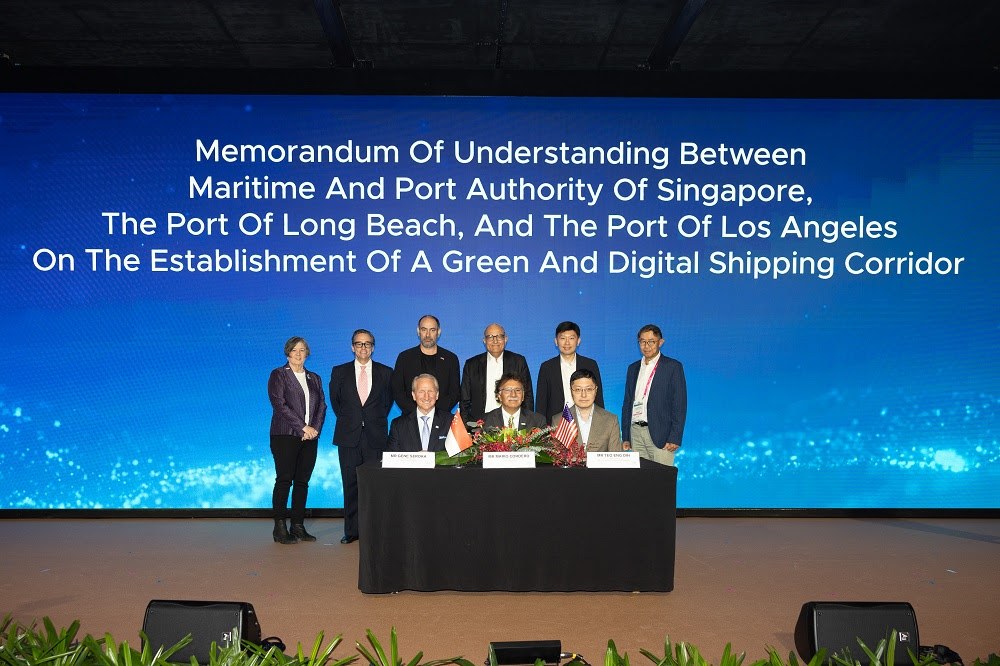
The collaboration aimed at decarbonizing ocean cargo transport The Maritime and Port Authority of Singapore (MPA), Port of Long Beach, and Port of Los Angeles, with the support of C40 Cities, signed a memorandum of understanding today to establish a green and digital shipping corridor between Singapore and the San Pedro Bay ports complex to support the decarbonization of the maritime industry and improve efficiencies through digitalization. The memorandum was signed by Teo Eng Dih, Chief Executive of MPA; Mario Cordero, Port of Long Beach Executive Director; and Gene Seroka, Executive Director of the Port of Los Angeles. The signing was witnessed by Jonathan Kaplan, United States Ambassador to Singapore; S. Iswaran, Singapore’s Minister for Transport and Minister-in-charge of Trade Relations; Niam Chiang Meng, Chairman of MPA; Sharon L. Weissman, Long Beach Harbor Commission President; and Edward Renwick, Vice President of the Los Angeles Harbor Commission. “Curbing greenhouse gases from international shipping is essential to fight global warming,” said the Port of Long Beach’s Cordero. “Creating this green corridor with our partner ports and C40 Cities is part of our strategy to coalesce all of our efforts here and beyond to help advance our goals for cleaner marine fuels for oceangoing vessels, improve efficiencies for the global movement of goods, and to achieve a carbon-neutral future.” “No single port or organization can tackle the challenge of decarbonizing the supply chain alone, no matter how innovative their technology or robust their efforts. The establishment of this green shipping corridor between the San Pedro Bay Port Complex and Singapore will prove to be a living, breathing testament to the power of global collaboration,” said the Port of Los Angeles’ Seroka. “I am honored to be here with key leaders from MPA Singapore, the Port of Long Beach, and C40 Cities to sign this MOU turning a shared commitment to fighting climate change into a meaningful step forward toward the future of global sustainability.” C40 is the facilitator of the green and digital shipping corridor, providing support to the cities, ports, and their corridor partners by coordinating, convening, facilitating, and providing communications support in furtherance of the corridor’s goals. As leading hub ports, Singapore, Long Beach and Los Angeles are vital nodes on the trans-Pacific shipping lane and key stakeholders in the maritime sector’s green transition. Ahead of the revision of the International Maritime Organization’s (IMO) Initial Strategy for the Reduction of Greenhouse Gas Emissions from Ships in July 2023, the three ports will come together with the C40 Cities network and other stakeholders in the maritime and energy value chains, to jointly accelerate the decarbonization of the maritime industry in line with the goals of IMO, and Singapore’s and the United States’ respective Nationally Determined Contributions. The memorandum also builds on the ports’ long-standing cooperation through platforms such as the Port Authorities’ Roundtable and chainPORT, and complements bilateral initiatives between Singapore and the United States such as the U.S.-Singapore Climate Partnership and the U.S.-Singapore Partnership for Growth and Innovation. John Kerry, U.S. Presidential Climate Envoy, said, “Shipping is responsible for approximately a gigaton of greenhouse gas emissions each year. But the good news is that many shipping companies, ports, and countries are stepping up. Today’s MOU is one of those pieces of good news.” The green and digital shipping corridor aims to support the transition to low- and zero-emission fuels by ships calling at Singapore and the San Pedro Bay ports complex. The parties will work to facilitate the supply and adoption of these fuels and explore the necessary infrastructure and regulations for bunkering. In addition to identifying and collaborating on pilot and demonstration projects, the memorandum aims to identify digital shipping solutions and develop standards and best practices for green ports and the bunkering of alternative marine fuels, including sharing experiences at international platforms such as IMO. The memorandum follows from an earlier announcement in November 2022, that Singapore, Long Beach and Los Angeles ports, and C40 Cities had begun discussions to establish a green and digital shipping corridor between Singapore and the San Pedro Bay ports complex. This announcement supported the Green Shipping Challenge launched during the World Leaders’ Summit at the 27th United Nations Climate Change Conference to encourage governments, ports, maritime carriers, cargo owners, and other stakeholders across the maritime value chain to commit to concrete steps to galvanize global action to decarbonize the shipping industry. “The signing of this MOU signals our collective will to pool our resources, technical insights, industry, and research networks to deliver scalable green as well as digital corridor solutions to help the maritime industry attain the 2050 emission reduction targets expected of the International Maritime Organization and help spur the development of green growth opportunities,” said Teo Eng Dih, Chief Executive of MPA. “Delivering science-based, rapid, and concrete action on shipping emissions is crucial to ensure the shipping sector decarbonization is aligned with the goal of keeping global heating below 1.5 degrees Celsius. C40 is proud to support this first mover initiative aimed at accelerating the transition to low- and zero-carbon fuels and other decarbonization technologies,” said C40 Cities Executive Director Mark Watts.
Comau is developing a new mobile robotics solution featuring Collaborative Robots

Comau Is Developing A New Mobile Robotics Solution Featuring Collaborative Robots In The Context Of 3 EU Projects Part of R&D initiatives and applied within three different EU projects, the new Mobile Robotic Arm combines collaborative safety features, industrial performance, and complete mobility when and where it is needed Modular approach enables the robot to address a large number of applications in different areas of the plant without changing the SW and HW architecture The platform can be used across multiple different industries Comau is designing a powerful mobile robotics platform as part of an open, highly collaborative production environment, in the context of 3 different European Projects. The integrated solution, which leverages Comau’s proven expertise in IoT-enabled technologies and collaborative robotics, is a natural evolution of the company’s automated workflow optimization systems. Modular, scalable, and completely re-configurable, the platform can be easily adapted to different applications without changing the system’s underlying software or hardware architecture. Furthermore, because the robotic arm is mounted on an autonomous mobile platform it is not tied to a single operation but can address a large number of applications in different areas of the plant as needed. Comau’s mobile robotics paradigm integrates the company’s high-payload Racer-5 COBOT, a 6-axis articulated robotic arm that can work at industrial speeds of up to 6 m/s when human operators are not present, and its Agile1500 autonomous mobile vehicle. It supports customized and efficient operations where human operators and machines work side-by-side, and is designed to handle individualized production within an Industry 4.0-enabled manufacturing environment. It can also be seamlessly integrated within Comau’s digital infrastructure, further safeguarding productivity and profitability across the entire manufacturing line. Visual feedback for pick and place operations, as well as other tasks, is provided thanks to an integrated vision system, such as the novel Comau MI.RA, installed directly on the arm. Finally, the robotic arm is mounted on an autonomous mobile platform equipped with two independent batteries that power the AGV and the robotic arm separately and can be managed using different types of navigation modes and a standard Comau controller. The solution is currently being used within several European projects. In the first application, with DIMOFAC, an EU initiative aimed at helping companies implement a smart factory architecture, the platform is being used for pick and place and warehouse automation tasks within a machining scenario. For PeneloPe, on the other hand, is being used for glue dispensing and non-destructive quality inspection in the public transport domain. Here, the goal of the Horizon 2020 program is to develop a closed-loop, end-to-end digital manufacturing solution that facilitates bidirectional data flows across the entire manufacturing value chain. Finally, the platform is being used as part of ODIN to support the manipulation of mechanical parts for automotive applications with the aim of demonstrating the technical and performance feasibility of collaborative robotics on the factory floor. The global market for collaborative mobile robots is significant, based on an internal analysis of published market data. Especially considering that collaborative robotics already represent up to 13% of the industrial robotics market and Automated Mobile Robots are expected to achieve a 5-year CAGR of 15% (2022 to 2027).
LogiMAT 2023: Interroll presents new High Performance Conveyor Platform (HPP)
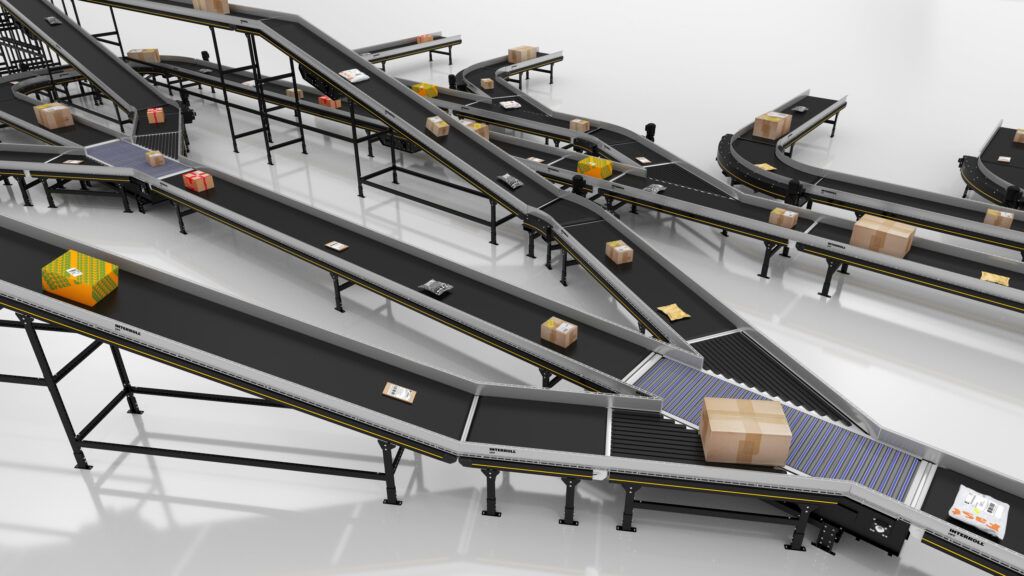
LogiMAT 2023: Interroll presents a new High-Performance Conveyor Platform (HPP) for courier, express, and parcel service providers. Following the example of its globally successful Modular Conveyor Platform (MCP), Interroll is launching a modular conveyor solution that meets the specific robustness and throughput requirements of courier, express and parcel (CEP) service providers. The new High-Performance Conveyor Platform (HPP)—a powerful addition to Interroll’s sortation solutions in particular—can significantly increase large and small distribution centers’ productivity, capacity, and energy efficiency. As part of Interroll’s comprehensive platform strategy, the HPP primarily uses proven technical products that have already proved themselves hundreds of thousands of times with users. The new offering will be on display for the first time from April 25–27, 2023, at Interroll’s LogiMAT trade fair stand (Hall 1, Stand K41) in Stuttgart, Germany, where visitors will also be able to experience the company’s platform strategy for material flow solutions in a playful way. The popularity of online shopping is generating an ever-increasing quantity and variety of goods that need to be transported and sorted in the distribution networks of CEP service providers worldwide. The number of parcels processed by corresponding conveyor and sorting systems in the largest 13 countries is set to rise from 159 billion in 2021 to 256 billion in 2027. Interroll’s automatic sortation solutions have played a key role in mastering these material-handling challenges for over 20 years. More than 500 sorters have been deployed globally by industry leaders such as Amazon, DHL, FedEx, UPS, Hugo Boss, Inditex (ZARA), and Zalando as well as postal services. “For our innovation course, we have been consistently leveraging the benefits of our platform strategy for many years. The latest example is the new High-Performance Conveyor Platform (HPP), which we developed based on our many years of industry expertise in the CEP market. It offers system integrators and courier, express, and parcel service providers important added value in achieving their business goals,” explains Jens Strüwing, Executive Vice President Products & Technology at Interroll. “In addition to the maximum flexibility and proven product quality of this modular system of freely combinable conveyor modules, these are above all the energy efficiency, ease of use, and speed with which automation projects can be implemented. In combination with a corresponding service offer, productivity in large and small parcel centers can be significantly increased in this way—for new installations, but also for retrofit projects.” Fast project implementation through digital processes The Interroll Layouter can be used, for example, to clearly design and plan complete HPP system concepts on a computer and implement them virtually. The solution drastically reduces the effort, planning time, and, therefore, project duration. It also makes for more informative and greatly simplified presentations and decision-making processes for users. At the same time, the standardized modules reduce the time required for installing and implementing solutions. What’s more, the seamless processing of data from the Interroll Layouter in enterprise resource planning (ERP) systems at production sites enables short delivery times. As with Interroll sorters, customers are supported with consistent and agile project management. The new conveyor platform consists of a large number of standardized line and curve modules that can be freely combined to meet the respective customer requirements. These include, for example, straight conveyor modules and modules for inclines and declines. The rigidity has been increased by one-third compared to the MCP. The robustness of the platform allows loads of up to 50 kilograms per meter, while the maximum conveying speed is 2.5 meters per second. Depending on the dimensioning and the goods transported, a throughput of up to 10,000 units per hour is possible. The solution can process a huge range of goods to be sorted, including cardboard boxes, small packages, padded envelopes, manila envelopes, and polybags. Energy-efficient drive technology, simple start-up, and maintenance Depending on customer needs, conveyors based on this platform are driven by gear or drum motors, which offer an efficiency of around 90 percent and enable a quiet and productive working environment with very high throughputs. When using conveyor lines with a central drive, the belt is tensioned from just one side, which significantly simplifies startup and maintenance. The design of the side guides is also well thought out in terms of construction. Thanks to their symmetrical and modular structure, they use only a few standardized components for the left and right conveyor sides. In addition, the overlapping design creates closed transitions from one conveyor line to the next, preventing transported goods from getting stuck at the transitions. The module integrates conveying and sorting The functional core of the HPP is the innovative Interroll Multibelt Switch (MBS). The module combines conveying and sorting functions in a unique way. By seamlessly overlaying the straight-line and lateral movements, the conveying goods are diverted onto additional conveyor lines at a constant speed in the conveyor either straight ahead or on two sides. This method ensures not only a gentle and safe transport process but also a very high speed and throughput values of over 10,000 units per hour. With the Interroll MBS, customers can further increase the capacity of their distribution centers through a higher degree of automation, based on the High-Performance Conveyor Platform. This applies not only to conveying presorted goods in the direction of or behind large sorting systems, such as those used in major distribution centers; even in smaller, customer-oriented package centers with few destinations now being constructed in many places, the automation solution can greatly increase work productivity and economic efficiency. In addition, the MBS can be used as a gateway to automatic sorting for applications that need only a few destinations. The HPP will go into production in Europe in the second quarter of 2023, and in America and Asia in 2024.
Amplify Business Value by amping up your Brand

Learn how a powerful brand maximizes value and mitigates risk for your business Branding is not what you may think. When executives consider branding, especially those with strong financial experience and limited marketing exposure (a classic CFO), they often see an expense with questionable ROI. They see a logo, tagline, website, marketing materials and equate those with the brand. While these are tools for delivering and building the brand, they are not the brand. The brand is a deliberate mental framework with a set of perceptions that resides in the mind. It is a result of brand-building actions and creates value by influencing decisions. That’s the priceless value of a powerful brand– an almost invisible influence. It’s why iconic investor Warren Buffet recommends investing in companies that have powerful brand. Emotional Influence Makes a Difference People are making decisions about your business all the time. If you want to influence their willingness to try something new, give you a shot, overlook the imperfect, buy more, pay more, or cut you a break –an emotional advantage tips the scale in your favor. Your brand is a mental filter that affects how people think and feel about your company, products, and people. It shapes how people interpret what they see/experience and what they are willing to believe, accept and forgive. The Johnson & Johnson company has saved hundreds of millions in downside costs and produced even more in revenues with the accelerated adoption of new products, by leveraging a brand built on the pure, trusted bond between a mother and child. That brand essence along with the “healthcare company” positioning (vs. a pharmaceutical company positioning) softens the edges, warms the heart, and keeps people pre-disposed in J&J’s favor. Experts tell us that up to 90% of decisions are based on emotion. From Wall Street to Main Street, people use their “gut” and take pride in making up their own minds. They even refute facts and authority when feelings are strong. Powerful brands are built to influence emotions and help people to see things in a specific way. Powerful brands define a context and make people feel. Think John Deere, Patagonia, Nike, Chanel, American Express, the U.S. Navy, Yeti, Apple and the list goes on. There are also tiny brands in niche markets that wield enormous brand authority. More Control Over the Human Side of Business As a leader, you have experienced more and faster change these days than your predecessors did in twenty. You face challenging times fraught with unprecedented emotional volatility. It is a VUCA world – volatile, uncertain, complex, and ambiguous. The Covid-19 pandemic, Great Resignation, the war in Ukraine, remote work, supply chain disruptions, and extreme weather are some of the things that have businesses scrambling to keep up with constant changes in human behavior. You can address these shake-ups with a powerful brand so they don’t shake down your business. Convey calm in these stormy times. Provide warmth in a cold market. Deliver clarity in a sea of confusion. This is how to break through to people so they remain by your side and behind your business in an upside-down world. Branding is less about marketing and more about business strategy and control. It is a strategy to consistently influence people from the inside out. Branding is soft power, not hard power. If you want to influence customers, partners, employees, regulatory authorities, journalists, or anyone who can affect your business, think about the value of having a brand filter in place to shape perceptions and emotions. Alternatively, think about how not setting that mental construct and allowing the market or competitors to define it, creates risk. In today’s tumultuous cancel culture world, many consider branding an essential risk mitigation strategy. Don’t let lack of time and resources and outdated legacy thinking stop you from doing everything it takes to influence the people that make your business live or die, grow or shrink. Take a hard look at what can really move the needle, and you’ll find it all comes down to people. Your brand is the asset that can deliver the sustainable emotional advantage needed to influence people – which sometimes means saving the day. When you build your new playbook for the new world, add what may others miss. Build a powerful brand and reap the priceless dividends that only an emotional advantage can deliver. About the Author: Jane Cavalier, Founder and CEO of BrightMark Consulting is a bestselling author (The Enchanted Brand, Amazon) and business strategist, Jane has built powerful brands like Snapple and Qwest and delivered branding solutions for companies including Samsung, Exxon, Johnson & Johnson, American Express, IBM, and iRobot for over 25 years. Learn more at www.brightmarkconsulting.com and visit www.theechantedbrand.com
Three safety experts honored as ASSP Fellows
The American Society of Safety Professionals (ASSP) is bestowing the honor of Fellow on three members who have made significant contributions to the occupational safety and health profession. Roger Jensen, Bruce Lyon, and Georgi Popov are the 2023 recipients of the Society’s highest honor. “ASSP Fellows are influential leaders who have played key roles in improving workplace environments as well as the safety and health profession itself,” said ASSP President Christine Sullivan, CSP, ARM. “Roger, Bruce, and Georgi are highly respected experts who have broadly helped prevent injuries, illnesses, and fatalities on the job.” Jensen, Ph.D., J.D., CSP, CPE, FASSP, is a professor at Montana Technological University where he helped form an ASSP student section that he guided for many years. He designed Montana Tech’s safety lab for fall protection and ladder-climbing research. His contributions to the occupational safety and health body of knowledge include work in heat stress, risk assessment, ergonomics, training design, and machine safeguarding. Jensen served for 22 years at the National Institute for Occupational Safety and Health (NIOSH) where he co-authored the publication that built the foundation for research on farm tractor rollover protective structures. That helped protect farm tractor operators from the most frequent source of machine-related injury in the nation. “Throughout his career, Roger has tirelessly dedicated his work to advancing workplace safety and health,” said former ASSP President Mark Hansen, P.E., CSP, CPEA, CPSA, CPE, FASSP. “He has mentored countless students and professionals while broadly contributing to our profession’s body of knowledge.” Lyon, P.E., CSP, ARM, SMS, CHMM, FASSP, is vice president of risk management services at Brown & Brown Inc. He has more than 40 years of experience in risk assessment, safety management systems, and ergonomics. Lyon has authored dozens of articles, books, and technical publications including co-writing “Risk Assessment – A Practical Guide to Assessing Operational Risks” which is a required text in many safety degree programs. Lyon is chair of the U.S. Technical Advisory Group to TC 262 for the ISO 31000 risk management standards, and vice chair of the ANSI/ASSP Z590.3 Prevention Through Design Committee. He has been the advisory board chair for the Occupational Risk and Safety Sciences department at the University of Central Missouri since 1999. “Bruce’s contributions to the OSH profession are as significant as any active professional I know,” said longtime ASSP member Bruce Hollcroft, CSP, CHMM, ARM. “He has been innovative at creating tools and techniques in risk management to improve worker safety. He’s always eager to share his expertise to help others be successful.” Popov, Ph.D., CSP, SMS, QEP, ARM, CMC, FASSP, FAIHA, is the chair and professor of the Occupational Risk and Safety Sciences department at the University of Central Missouri. He took prevention through design (PTD) from concept to reality in the development of the ANSI/ASSP Z590.3 standard, chairing the committee and being recognized as a pioneer in the field. His work has been published in many textbooks, articles, and safety standards. During his safety and health career that spans more than 30 years, Popov has provided training to hundreds of professionals in PTD and risk assessment. He develops course materials and instructs students worldwide through in-person and virtual sessions. He also helped create ASSP’s Risk Management Certificate program. “Georgi’s knowledge and expertise are exactly what’s needed at the higher academic level of education,” said safety management consultant Joel Tietjens, CSP, CSHM, FASSP. “He uses real-world experiences in the application of principles and theories. Without a doubt, he is one of the most profound experts in risk assessment.” The new Fellows will be honored at ASSP’s Safety 2023 Professional Development Conference and Exposition, set for June 5-7 in San Antonio. The honor of Fellow recognizes an ASSP member’s lifetime commitment, achievement, and leadership in occupational safety and health. Nominees must have a history of major contributions to the profession for at least 15 years. The list of Society Fellows dates back more than 50 years.
Comau’s Mate-Xt Wearable Exoskeleton supports ergonomic well-being at John Deere’s Parts Distribution Center
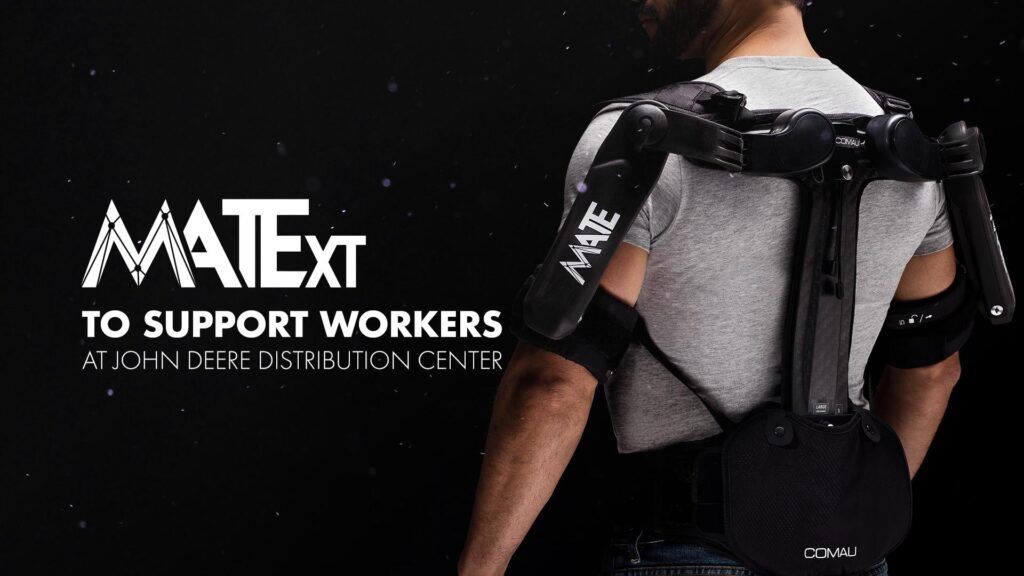
John Deere has deployed multiple MATE-XT exoskeletons to further facilitate better ergonomic sustainability for its employees The wearable robotic device effectively reduces biomechanical risk by 50% based on electromyographic analysis while keeping muscle effort during manual activities at a rest state 98.5% of the time The slim, highly breathable exoskeleton provides comfortable, all-day ergonomically-assisted support aimed at increasing the quality and precision of repetitive tasks MATE-XT is water, dust, UV-light, and temperature resistant, making it ideal for difficult applications and environments Comau has equipped John Deere with multiple MATE-XT wearable exoskeletons to help sustain worker well-being, alleviate physical stress, and reduce the ergonomic risk within its parts logistics operations. MATE-XT accurately replicates all movements of the shoulder, helping employees perform their jobs comfortably by reducing muscle fatigue without limiting mobility or adding bulk. Its ergonomic design can be easily adjusted to fit different people with different body types – changing the length of the shoulder straps and the required level of assistance based on the worker or the job at hand is quickly achieved in a few simple steps. Working closely with John Deere to implement the exoskeleton within its daily operations, Comau provided a hands-on training course held at John Deere’s 75,000m2 parts distribution center in Campinas, in the state of São Paulo. As parts are often required for next-day delivery, John Deere’s employees must select, sort, and package hundreds of parts per day, a task that involves repetitive movement of the arms, shoulders, and back. MATE-XT’s highly breathable design is worn like a backpack, providing comfortable, all-day ergonomically-assisted support aimed at increasing the quality and precision of manual tasks. In addition to offering highly effective postural support, MATE-XT is EAWS-certified (Ergonomic Assessment Work-Sheet), which enables John Deere to acquire an objective measurement of ergonomic improvement and projected benefits in terms of reduced muscle fatigue and execution speeds. Even when working with small and lightweight objects, the apparently minimal effort of repeated manual movements can take a toll on the body. To help John Deere quantify the benefits of using MATE-XT, Comau performed an electromyographic analysis of the ergonomic risk factor. MATE-XT kept the muscle at a resting stage for 98.5% of the activity time (compared to only 2.4% of the time without MATE-XT). Furthermore, Comau’s MATE-XT ensures proper muscular balance while optimizing the energy expenditure needed to stabilize and sustain the weight of the arm. Wearing the exoskeleton, arm stability can be maintained using only 10% of the operator’s maximum force capacity. This translates to an improved feeling of well-being in addition to tangible performance-based results such as process optimization and productivity gains. All said MATE-XT is helping John Deere to mitigate ergonomic risks and achieve a 68% reduction in muscle overload. “Our efforts to provide customers with innovative automation technologies extends to finding new ways to ensure their workers stay safe during their day-to-day activities, in different applications and markets,” said Laerte Scarpitta, Comau Leader for the Americas. “MATE-XT is an easy-to-use wearable exoskeleton that allows John Deere to provide greater added value and measurable benefits in terms of reducing perceived muscle fatigue and as a consequence, the mechanical stress on a worker’s back, lumbar region, arms, and shoulders. It is yet another example of the value that robotics can bring.”
Q2 Update to the 2023 Economic Outlook Forecasts 1.0% expansion in Equipment and Software Investment and 0.7% GDP growth as recession looms

Equipment and software investment growth cooled in the early months of 2023, resulting in the Equipment Leasing & Finance Foundation lowering its annual forecast for investment growth to 1.0%, according to the Q2 update to the 2023 Equipment Leasing & Finance U.S. Economic Outlook. The report released today also predicts sluggish economic growth in Q1 as the economy edges closer toward recession, which the Foundation continues to expect will begin during the second half of the year. Overall, annualized economic growth is forecast to be 0.7% in 2023, largely driven by a solid jump-off point at the end of last year. The Foundation’s report is focused on the $1.16 trillion equipment leasing and finance industry and highlights key trends in equipment investment, placing them in the context of the broader U.S. economic climate. Nancy Pistorio, Foundation Chair and President of Madison Capital LLC said, “Despite the U.S. economy ending 2022 with healthy growth and maintaining some momentum into early 2023, equipment and software investment softened to 2% annualized growth in Q4 and remains under pressure. The economy is still above water, but most indicators point to slowing growth, and many economists continue to expect a recession to begin later this year. Should that come to pass, I also expect the equipment finance industry will demonstrate its characteristic resilience, innovation, and resolve, and will continue to serve the financial needs of our customers regardless of the economic climate.” Highlights from the Q2 update to the 2023 Outlook include: Equipment and software investment growth were sluggish in Q1 as the combined effects of a slowing industrial sector and higher interest rates weighed on equipment demand. While certain end-user markets may fare better in the months ahead, a broad economic downturn will drag on investment across the board, resulting in an annualized growth forecast for equipment and software investment of just 1.0%. The U.S. economy is expected to continue to soften despite a healthy labor market, lower energy prices, and supply chain improvements. Stubborn inflation combined with rising consumer financial stress and a looming debt ceiling showdown will add to financial sector woes. Although a “soft landing” scenario is still achievable, a mild recession is likely, beginning during the second half of 2023. The manufacturing sector has worked through much of its pandemic-era supply chain backlogs, but measures of supply chain health indicate the industrial sector is in the midst of a protracted slowdown. On the plus side, the sector’s jumping-off point was strong, so while demand is likely to continue to soften this year, the downturn may not be as severe as in past cycles. Main Street businesses suffered the worst effects of pandemic-era labor shortages, and labor-saving investments in equipment and technology continue to be a lifeline. However, loan availability is expected to tighten following recent bank failures, making financing investments more difficult and adding to small business financial stress. The Federal Reserve continues to battle inflation, even raising interest rates immediately following the second and third-largest bank failures in U.S. history. Interest rates are expected to rise higher than most market-implied forecasts expect this year as the Fed targets an inflation rate of 2%. The Foundation-Keybridge U.S. Equipment & Software Investment Momentum Monitor, which is released in conjunction with the Economic Outlook, tracks 12 equipment and software investment verticals. In addition, the Momentum Monitor Sector Matrix provides a customized data visualization of the current values of each of the 12 verticals based on recent momentum and historical strength. This month two are expanding, two are recovering, and eight verticals are weakening. Over the next three to six months, year over year: Agriculture machinery investment growth is likely to weaken further. Construction machinery investment growth may have peaked and could start to slow. Materials handling equipment investment growth may pick up slightly. All other industrial equipment investment growth may have bottomed out and could start to pick up. Medical equipment investment growth is unlikely to pick up. Mining and oilfield machinery investment growth may have peaked and could decelerate. Aircraft investment growth may have peaked and could decelerate. Ships and boats investment growth could decelerate sharply. Railroad equipment investment growth may start to cool but will likely remain in positive territory. Trucks investment growth is likely to sidewind. Computers investment growth will likely remain weak. Software investment growth may reach a peak. The Foundation produces the Equipment Leasing & Finance U.S. Economic Outlook report in partnership with economic and public policy consulting firm Keybridge Research. The annual economic forecast provides the U.S. macroeconomic outlook, credit market conditions, and key economic indicators. The Q2 report is the first update to the 2023 Economic Outlook and will be followed by two more quarterly updates before the publication of the 2024 Economic Outlook in December. Download the full report at https://www.leasefoundation.org/industry-resources/u-s-economic-outlook/.
Herc Holdings reports record First Quarter 2023 results and affirms 2023 Full Year guidance

Record equipment rental revenue of $654 million, an increase of 24% Record total revenues of $740 million, an increase of 30% Net income increased 16% to $67 million, or $2.28 per diluted share Adjusted EBITDA of $308 million increased by 30%; adjusted EBITDA margin at 41.6% Rental pricing increased 7.0% year-over-year Common stock repurchases of approximately 460,000 shares Herc Holdings Inc. has reported financial results for the quarter that ended March 31, 2023. Equipment rental revenue was $654 million and total revenues were $740 million in the first quarter of 2023, compared to $527 million and $568 million, respectively, for the same period last year. In the first quarter of 2023, the Company reported a net income of $67 million, or $2.28 per diluted share, an increase of 19% compared to $58 million, or $1.92 per diluted share, in the same 2022 period. “We continue to build on our momentum coming out of 2022 with record first-quarter revenue that significantly outpaced industry growth,” said Larry Silber, president and chief executive officer. “Higher rental rates are more than offsetting inflation, while demand across regions and in our end markets is seasonally strong, benefiting from the multi-year fiscal stimulus, re-shoring and mega projects, as well as long-term industrial maintenance contracts for on-site fleet management.” Silber continued, “While macro concerns are focused on residential and commercial construction, we have very diversified end markets, with a growing share in manufacturing and reshoring projects, the private and government spend in infrastructure, as well as industrial MRO, which is required in all economic environments. Investments to capitalize on these opportunities are strategic and disciplined, whether it be in fleet, people, or acquisitions. As a tenured market leader with a strong reputation, a comprehensive product and service offering, broad capabilities, and one of the leading teams in the industry, we will continue to execute our strategies to win new business and deliver profitable growth.” 2023 First Quarter Financial Results Total revenues increased 30% to $740 million compared to $568 million in the prior-year period. The year-over-year increase of $172 million was primarily related to an increase in equipment rental revenue of $127 million, reflecting positive pricing of 7.0% and an increased volume of 23.2%. Sales of rental equipment increased by $43 million during the period. Dollar utilization was 39.7% compared to 41.4% in the prior-year period. The change is primarily due to a slowdown in the studio entertainment business as a result of a potential writers’ strike, as well as the Company’s decision to continue to accept equipment deliveries in the seasonally slow fourth quarter of 2022 and the first quarter of 2023, in order to ensure it has the fleet needed for the more robust construction season. Continued supply chain challenges have disrupted the optimal cadence of deliveries. Direct operating expenses of $281 million increased by 24% compared to the prior-year period. The increase was primarily related to strong rental activity and associated additional headcount, in addition to higher maintenance, fuel prices, and facilities expenses. Depreciation of rental equipment increased 28% to $152 million due to higher year-over-year average fleet size. Non-rental depreciation and amortization increased by 24% to $26 million primarily due to the amortization of acquisition intangible assets. Selling, general and administrative expenses were 19% higher primarily due to increases in selling expenses, including commissions and other variable compensation increases, and general payroll and benefits. Interest expense increased to $48 million compared with $23 million in the prior-year period due to increased borrowings on the ABL Credit Facility primarily to fund acquisition growth and higher interest rates on floating rate debt. Net income was $67 million compared to $58 million in the prior-year period. Adjusted net income increased 17% to $69 million, or $2.35 per diluted share, compared to $59 million, or $1.95 per diluted share, in the prior-year period. The effective tax rate was 11% compared to 13% in the prior-year period. Adjusted EBITDA increased 30% to $308 million compared to $237 million in the prior-year period, while the adjusted EBITDA margin was 41.6% compared to 41.7% in the prior-year period. Sales of used equipment, which more than doubled over last year’s first quarter sales, as well as a decline in the Company’s studio entertainment revenue year over year, impacted the margin performance in the latest quarter. Rental Fleet Net rental equipment capital expenditures were as follows (in millions): Three Months Ended on March 31, 2023 2023 2022 Rental equipment expenditures $ 332 $ 287 Proceeds from disposal of rental equipment (49) (29) Net rental equipment capital expenditures $ 283 $ 258 As of March 31, 2023, the Company’s total fleet was approximately $5.9 billion at OEC. The average fleet at OEC in the first quarter increased year-over-year by 29% compared to the prior-year period. The average fleet age was 47 months as of March 31, 2023, compared to 48 months in the comparable prior-year period. Disciplined Capital Management The Company completed three acquisitions with a total of six locations and opened three new greenfield locations during the quarter. Net debt was $3.2 billion as of March 31, 2023, with net leverage of 2.5x compared to 2.3x in the same prior-year period. Cash and cash equivalents and unused commitments under the ABL Credit Facility contributed to $1.5 billion of liquidity as of March 31, 2023. The Company announced a 10% increase in the quarterly dividend to $0.6325, payable to shareholders of record as of February 22, 2023, with a payment date of March 9, 2023. The Company acquired approximately 460,000 shares of its common stock for $52 million during the three months that ended March 31, 2023. As of March 31, 2023, approximately $229 million remains available under the share repurchase program. Outlook The Company is affirming its full-year 2023 adjusted EBITDA guidance range and net rental capital expenditures guidance presented below. The guidance range for the full year 2023 adjusted EBITDA reflects an increase of 18% to 26% compared to the full year 2022 results. Adjusted EBITDA: $1.45 billion to $1.55 billion Net
Nucor reports results for the First Quarter of 2023

Net earnings attributable to Nucor stockholders of $1.14 billion, or $4.45 per diluted share Net sales of $8.71 billion Net earnings before noncontrolling interests of $1.23 billion; EBITDA of $1.89 billion Earnings are expected to increase in the second quarter of 2023 on stronger steel mills segment earnings Nucor Corporation has announced net earnings attributable to Nucor stockholders of $1.14 billion, or $4.45 per diluted share, for the first quarter of 2023. By comparison, Nucor reported net earnings attributable to Nucor stockholders of $1.26 billion, or $4.89 per diluted share, for the fourth quarter of 2022 and $2.10 billion, or $7.67 per diluted share, for the first quarter of 2022. Included in the results for the fourth quarter of 2022 was an after-tax net benefit of $60.4 million, or $0.24 per diluted share, related to state tax credits and an after-tax net benefit of $88.0 million, or $0.34 per diluted share, related to a change in the valuation allowance of a state deferred tax asset. Also included in the fourth quarter of 2022 results was a pre-tax $96.0 million, or $0.29 per diluted share, write-off of the remaining carrying value of the Company’s leasehold interest in unproved oil and gas properties that are included in the raw materials segment. “We had a very strong quarter, driven by solid performance in our steel products segment and increased demand for steel at our mills,” said Leon Topalian, Nucor’s Chair, President, and Chief Executive Officer. “Demand from nonresidential construction, our largest end market, continues to be robust driven by strength in infrastructure and manufacturing investment. Average steel mill utilization rates and profit margins were both up in the first quarter compared to the fourth quarter, with sheet and plate mills seeing some of the largest gains. This, coupled with year-over-year gains in automotive and stability in energy, gives us confidence that 2023 will be another very profitable year for Nucor. My thanks to our 31,000 teammates for their dedication to safely meeting our customers’ needs while executing our strategic growth agenda.” Selected Segment Data Earnings (loss) before income taxes and noncontrolling interests by segment for the first quarter of 2023 and 2022 were as follows (in thousands): Three Months (13 Weeks) Ended April 1, 2023 April 2, 2022 Steel mills $ 838,388 $ 2,578,854 Steel products 970,802 684,867 Raw materials 58,140 95,853 Corporate/eliminations (270,546) (461,459) $ 1,596,784 $ 2,898,115 Financial Review Nucor’s consolidated net sales were $8.71 billion in the first quarter of 2023, similar to $8.72 billion in the fourth quarter of 2022 and 17% lower than the $10.49 billion recorded in the first quarter of 2022. Average sales price per ton in the first quarter of 2023 decreased by 11% compared with the fourth quarter of 2022 and decreased by 18% compared with the first quarter of 2022. A total of 6,443,000 tons were shipped to outside customers in the first quarter of 2023, an increase of 12% compared to the fourth quarter of 2022 and an increase of 1% compared to the first quarter of 2022. Total steel mill shipments in the first quarter of 2023 increased by 18% compared to the fourth quarter of 2022 and increased by 4% compared to the first quarter of 2022. Steel mill shipments to internal customers represented 20% of total steel mill shipments in the first quarter of 2023, compared with 20% in the fourth quarter of 2022 and 22% in the first quarter of 2022. Downstream steel product shipments to outside customers in the first quarter of 2023 decreased by 3% from the fourth quarter of 2022 and decreased by 8% from the first quarter of 2022. The average scrap and scrap substitute cost per gross ton used in the first quarter of 2023 was $414, a 3% decrease compared to $427 in the fourth quarter of 2022 and a 16% decrease compared to $495 in the first quarter of 2022. Pre-operating and start-up costs related to the Company’s growth projects were approximately $82 million, or $0.24 per diluted share, in the first quarter of 2023, compared with approximately $73 million, or $0.22 per diluted share, in the fourth quarter of 2022 and approximately $62 million, or $0.17 per diluted share, in the first quarter of 2022. Overall operating rates at the Company’s steel mills increased to 79% in the first quarter of 2023 as compared to 70% in the fourth quarter of 2022 and 77% in the first quarter of 2022. Financial Strength At the end of the first quarter of 2023, we had $4.70 billion in cash and cash equivalents, short-term investments, and restricted cash and cash equivalents on hand. The Company’s $1.75 billion revolving credit facility remains undrawn and does not expire until November 2026. Nucor continues to have the strongest credit rating in the North American steel sector (A-/A-/Baa1) with stable outlooks at Standard & Poor’s, Fitch Ratings, and Moody’s. Commitment to Returning Capital to Stockholders During the first quarter of 2023, Nucor repurchased approximately 2.7 million shares of its common stock at an average price of $156.35 per share. As of April 1, 2023, Nucor had approximately 251 million shares outstanding and approximately $656.9 million remaining for repurchases under its existing authorized share repurchase program. This share repurchase authorization is discretionary and has no scheduled expiration date. On February 21, 2023, Nucor’s board of directors declared a cash dividend of $0.51 per share. This cash dividend is payable on May 11, 2023, to stockholders of record as of March 31, 2023, and is Nucor’s 200th consecutive quarterly cash dividend. First Quarter of 2023 Analysis Steel mill segment earnings in the first quarter of 2023 increased from the fourth quarter of 2022, primarily due to higher margins and volumes. The steel products segment earnings in the first quarter of 2023 decreased relative to the fourth quarter of 2022 due primarily to reductions in realized pricing. Earnings for the raw materials segment increased in the first quarter of 2023 as compared to the fourth quarter of 2022 due to higher volumes at our direct reduced iron (“DRI”) facilities and scrap recycling and brokerage operations. Second Quarter of 2023 Outlook We expect earnings in the second quarter of 2023 to increase compared to the first quarter
Lineage Logistics celebrates the grand opening of Savannah Fresh-Port Wentworth facility

The new facility is strategically located near the Port of Savannah and will allow Lineage to process up to 1.4 million pounds of produce per day The facility brings Lineage’s total investment in Chatham County to over $100 million and expands the Company’s growing footprint in Georgia Lineage Logistics, one of the leading temperature-controlled industrial REITs and integrated solutions providers worldwide, has celebrated the grand opening of its newest facility in Port Wentworth, Georgia. Savannah Fresh-Port Wentworth is strategically located near the Port of Savannah, the largest single-terminal container facility of its kind in North America and the third busiest container gateway in the U.S. The 220,000-square-foot facility offers cross-docking services for products to enter and exit the facility on the same day if needed, reducing storage time, creating cost efficiencies, and ensuring consumers receive fresh produce faster. The facility has 23 inbound and outbound lanes that can process more than 40 trucks daily, moving up to 1.4 million pounds of produce per day. “Today, the demand for port-centric temperature-controlled storage has never been greater and our Fresh solution offerings at Lineage have never been more robust. Savannah Fresh-Port Wentworth will allow us to expand our Fresh offering to new and existing customers and also provides the needed capacity to improve market conditions,” said Jim Henderson, Vice President of Global Sales and Business Development at Lineage. “The opening of this new facility is a critical step for Lineage as we continuously work to reimagine the world’s food supply chain. We are honored to further our long-standing partnership with Georgia Ports Authority and look forward to building our presence in the state of Georgia, an essential hub for trade and innovation.” For the past two years, Lineage has worked closely with the Savannah Economic Development Authority, Georgia Ports Authority, and the city of Port Wentworth to construct the Savannah Fresh-Port Wentworth facility in addition to its port-adjacent facility on Tremont Road in Savannah. The Savannah Fresh-Port Wentworth project resulted in a $78 million investment alone that created 65 new jobs, bringing Lineage’s total economic investment in Chatham County to over $100 million. To date, Lineage’s footprint in Georgia spans over 3 million sq. ft. Savannah Fresh-Port Wentworth was designed to address the overwhelming influx in imports of fresh produce to ports in the Mid-Atlantic that lack the space to keep up with the demand. With proximity to the Port of Savannah, the new facility will enable Lineage to deliver larger quantities of fresh produce more efficiently to serve customers across the Southeast. “With an increasing demand for fresh produce capacity in Savannah, this new, state-of-the-art facility is a welcome addition,” said Griff Lynch, Executive Director of the Georgia Ports Authority. “Lineage Logistics’ suite of services, such as cold-retreatment and onsite CBP inspections, will save time, help prevent loss, and, ultimately, bring fresh food to market faster.” Leaders from Lineage, business partners from the state of Georgia, community leaders from the city of Port Wentworth and leadership from Georgia Ports Authority attended the facility’s grand opening.
JLG reveals Next-Generation ClearSky Smart Fleet™ IoT capabilities

Company’s new two-way fleet management and communications platform coming soon JLG Industries, Inc. has offered a first look at the new ClearSky Smart Fleet™, a next-generation Internet of Things (IoT) platform for true, two-way fleet management and machine interactivity, today at the Summit of the International Powered Access Federation (IPAF) in Berlin, Germany. This JLG® system will launch in late Summer/early Fall 2023. “Telematics today can only do so much,” says Ara Eckel, director of product management for JLG’s connected solutions. “ClearSky Smart Fleet reimagines what’s possible, paving the way to a new frontier for connectivity solutions in the industry. More than yet another singular piece of software, it’s built as a robust, constantly evolving IoT platform capable of delivering new functionality, new insights, and new ways to run cost-effective operations.” This generation of ClearSky is a ground-up redesign, adding innovative elements to transform the way customers work. Key features include: Digitized daily processes for operational efficiencies Accurate and efficient machine location Additional equipment service capabilities Streamlined logistics with Automated Site Networks Actionable, on-demand machine and fleet insights According to Eckel, ClearSky Smart Fleet will be standard on most new machines produced later this year, and customers with existing JLG products can continue to use the legacy ClearSky program for their connected needs. Both platforms will be integrated into Online Express, JLG’s 24/7 e-Commerce site. Additional details about ClearSky Smart Fleet will be coming soon. Visit smartfleet.JLG.com for the most up-to-date information.
Cimcorp launches CVision Assisted Reality Glasses for real-time automation support

The revolutionary AR-glasses connect Cimcorp’s customers to the Success Services team for fast, efficient, and secure virtual support Cimcorp, a pioneer of intralogistics automation, specializing in fresh food handling and tire-handling solutions, announces a new addition to its Success Services after-sales service range: CVision Assisted Reality-glasses. A major advancement in the field of automation support, CVision AR-glasses enable Cimcorp’s Success Services team to assist customers in real-time, without the need to travel or arrange on-site meetings. Backed by anytime, anywhere support from Cimcorp experts, customers can minimize unplanned downtime and maximize the performance of their automated intralogistics solutions. Intuitive and easy to use, the hands-free CVision AR-glasses power bidirectional communication between the Cimcorp customer and System Support. Cimcorp’s experts can see the problem firsthand through a live video feed from the customer’s site—minimizing the risk of misunderstanding and making it easier for the Cimcorper to grasp and efficiently solve the issue. The Cimcorper can also add hand-drawn marks to the image to provide further instructions or clarification. This reciprocal transmission of information allows for high-quality and rapid support, ultimately increasing the overall quality of customer service provided by Cimcorp. Key features of Cimcorp CVision AR-glasses include: Language translation: The glasses can translate more than 100 languages, which breaks down language barriers for improved communication. Noise-canceling technology: Controlled by voice command, the glasses are easy to use in industrial environments thanks to effective noise-canceling technology and high impact resistance. Heat camera: The glasses can be upgraded with an add-on heat camera to identify problems that may not be visible to the human eye. This heat camera increases the first-time-fix rate, saving time and resources for both the customer and Cimcorp. Image annotation: The Cimcorper can provide further instructions or clarification via hand-drawn marks on the image feed. “At Cimcorp, we’re committed to building lifelong partnerships with our clients. And at the core of those relationships is the peace of mind we offer through 24/7 customer support,” said Nicole La Duke, Customer Support Manager, Cimcorp Automation, Ltd. “Thanks to our CVision AR-glasses, our experts now have a faster, more efficient way to communicate with clients and resolve any issues. We’re proud to be pioneering new automation support technologies, and we will continue to develop innovative ways to help our clients maximize the longevity of their automated solutions for years to come.” CVision technology from Realwear is based on communication by Cisco, a networking company. The connection is secure and provides a safe platform for conversation, which is a requirement in the warehousing and grocery retail industries.
Women In Trucking Association announces winner of 2023 Distinguished Woman in Logistics Award
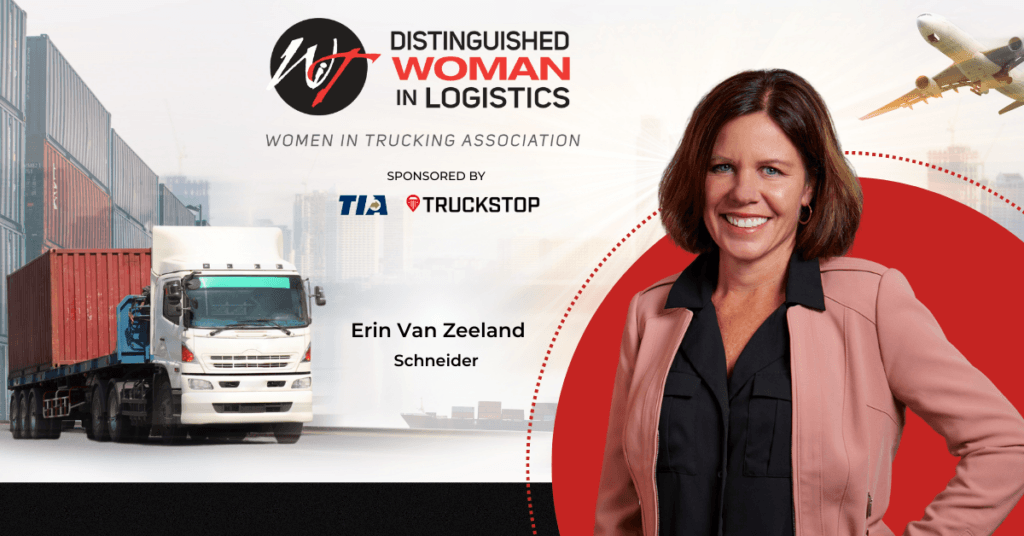
The Women In Trucking Association (WIT), Truckstop, and Transportation Intermediaries Association (TIA) announced that Erin Van Zeeland, senior vice president and general manager of logistics and serves as the chief commercial officer for Schneider, as the winner of the ninth annual Distinguished Woman in Logistics Award (DWLA). Van Zeeland was chosen among three finalists for the award. The other finalists include Katerina Jones, chief marketing officer for Fleet Advantage, and Nanette Malebranche, managing director of the Tri-State District for FedEx Express. The finalists and winners were recognized during the TIA 2023 Capital Ideas Conference & Exhibition. “We’re pleased to recognize Erin with the honor of Distinguished Woman in Logistics,” said Jennifer Hedrick, president and CEO of WIT. “Throughout her career at Schneider, as well as in her volunteer work, she has shown exceptional talent, leadership, and mentorship of others – three of the key characteristics of this award.” Van Zeeland is accountable for the strategy, execution, and growth/profitability of Schneider’s fastest-growing division, which includes brokerage, supply chain, and distribution management, as well as the power-only service offerings. Additionally, Van Zeeland is the company’s chief commercial officer. In this capacity, she is responsible for overall organizational strategy including activities relating to marketing, sales, sales force effectiveness, product development, and services that drive business growth and expanded market share. “All three finalists are incredible leaders in the transportation community,” says Anne Reinke, president and CEO of TIA. “Van Zeeland’s dedication to bettering the industry is a true inspiration. She and the other finalists are outstanding role models for other women interested in the trucking sector.” Van Zeeland started her career at Schneider in 1993 and has subsequently held several leadership roles in a variety of positions with increasing responsibility for customer growth and business expansion throughout operations, tech, business transformation, human resources, enterprise/global customer engagement, and logistics. “Erin, Katerina, and Nanette truly embody the leadership qualities that the Distinguished Woman in Logistics recognition celebrates,” said Kendra Tucker, chief executive officer, Truckstop. “We congratulate Erin on this prestigious honor as she continues her commitment to bettering the freight transportation industry and her community.” Van Zeeland holds a bachelor’s degree from Pennsylvania State University and an MBA from Silver Lake College in Manitowoc, Wis. She also received a Corporate Governance certificate from the Harvard Business School and was the recipient of Supply & Demand Chain Executive’s first-ever Women in Supply Chain Award. Van Zeeland currently serves on the board of directors for the United Way – Green Bay and the Transportation Intermediaries Association (TIA). She also co-leads the Schneider Women’s Network and various other women in leadership and business programs. Members of the judging panel include Brent Hutto, chief relationship officer for Truckstop, Anne Reinke, president and CEO of TIA, Dr. Stephanie S. Ivey, associate dean for research and professor at Herff College of Engineering, Ellen Voie, founder of WIT, and Jennifer Hedrick, president and CEO of WIT.
SVT Robotics delivers rapid Warehouse Automation Integration for Tecsys WMS customers with a SOFTBOT® Platform Connector

The Tecsys connector will bring rapid, plug-and-play automation connectivity to robotics integration and warehouse automation solutions SVT Robotics, a provider of enterprise software for the rapid deployment of industrial robotics, has announced a new SOFTBOT® Platform Connector for Tecsys Inc., a supply chain management software company. SVT and Tecsys worked together to develop and launch the pre-built connector between the Tecsys WMS and SVT’s SOFTBOT® Platform. The integration will provide Tecsys Elite™ customers with much faster deployment and lower complexity without the need for custom code development often involved in multi-system automation and robotics deployments. “A SOFTBOT connector is one of the basic building blocks of the SOFTBOT Platform, like a Rosetta Stone for data information between systems,” said Nick Leonard, SVP of Product at SVT Robotics. “With this connector to the Tecsys WMS, we can normalize data from their standard API to create interoperability between Tecsys and other solutions from leading providers. This allows Tecsys customers to rapidly deploy the specific automation they need today with little to no customization.” “This is a game-changer for our customers,” said Bill Denbigh, Vice President of Product Marketing at Tecsys. “With a growing and evolving automation market, orchestrating warehouse automation across multiple automation vendors has the potential to quickly become unsupportable. Our collaboration with SVT allows Tecsys to offer a hardware-agnostic warehouse automation solution perfectly tailored to each use case. It liberates them to choose automation that best addresses their warehouse challenges, rather than limiting them to a specific WMS provider’s preferred automation partner.” Click here to see a demo of the Tecsys Connector in action on the SOFTBOT Platform.