
Haver & Boecker Niagara offers Make and Hold and Stocking Agreement programs for improved convenience
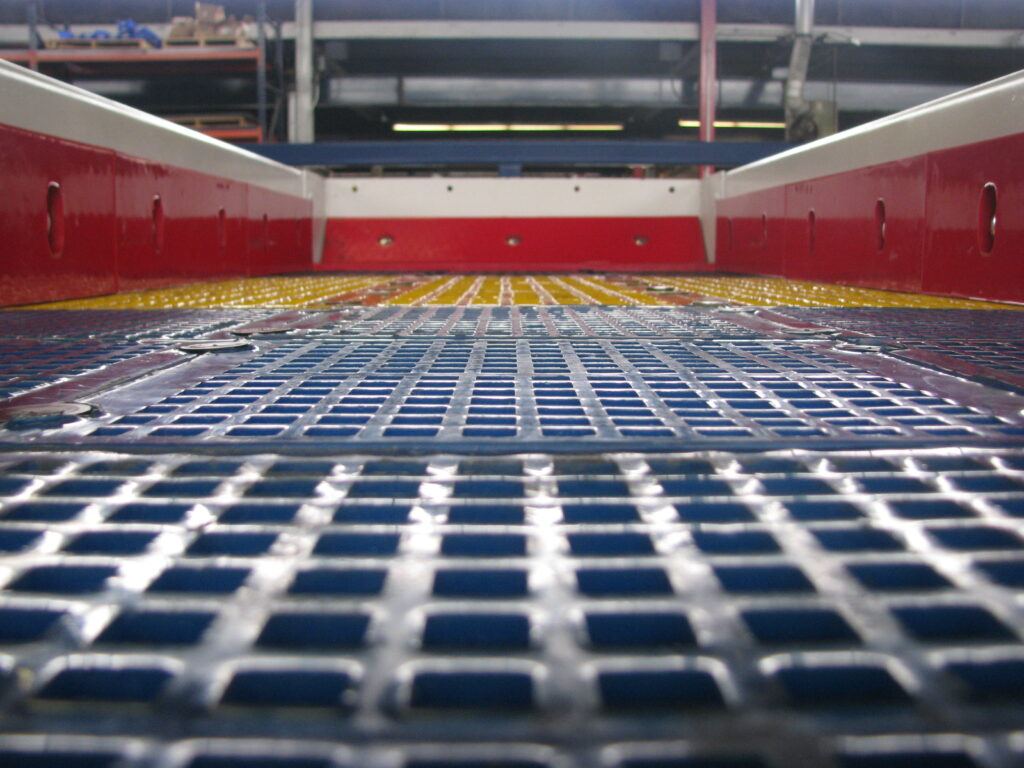
Haver & Boecker Niagara offers Make and Hold and Stocking Agreement programs for screen media and wear parts. The programs provide mining and aggregates customers options for short lead times, pricing stability, and simplified inventory management. “We put customer service first, which is why we’re one of the only manufacturers in this industry to offer a Make and Hold program,” said Karen Thompson, president of Haver & Boecker Niagara’s North American and Australian operations. “Programs like this give producers the assurance of timely deliveries at a price they can budget for at the beginning of the year. In addition, they can virtually eliminate the challenges of inventory management.” Under the Make and Hold program, Haver & Boecker Niagara stocks products in quantities and prices agreed upon at the beginning of the year. The product is produced and packaged in a pre-determined quantity so that it can be shipped the same day the order is placed. Once an order is shipped, the product is automatically replenished in preparation for the next time the customer requires it. A Stocking Agreement — or blanket order — the program is also available as an alternative for customers interested in a one-time annual agreement. Prices are locked in at the beginning of the year for a predetermined quantity of product. Customers draw on their stock throughout the year as required, and pay per shipment. Stocking Agreement shipments are shipped the same day the order is placed. Both programs are an opportunity for operations to ensure product availability and price stability and are particularly beneficial for products that may otherwise have long lead times.
LiuGong North America awarded two Sourcewell contracts

LiuGong North America, a construction equipment manufacturer, has been awarded two contracts through Sourcewell in the “Heavy Construction Equipment” and “Medium and Compact Equipment” categories. These were awarded following a rigorous process to determine new contract purchasing solutions vendors. Sourcewell is a government organization with over 40 years of dedicated service helping government, education, and nonprofit agencies operate more efficiently through a variety of solutions. These multi-year contracts allow government and education entities in the United States and Canada to procure equipment and services. “We’re honored Sourcewell has selected LiuGong as one of the suppliers to fulfill these client needs,” said Andrew Ryan, President, LiuGong North America. “This is a new area of business for LiuGong. We look forward to serving customers and providing additional value to taxpayers that fund state, county, and municipal government agencies.”
Plastics Industry Association statement on Oregon’s Single-Use Plastic Law

The Plastics Industry Association (PLASTICS) has released the following statement on Oregon’s new single-use plastics law, which bans restaurants and other food vendors from using expanded polystyrene food containers: “Oregon’s new single-use plastics law is unnecessary given the state’s recently enacted extended producer responsibility (EPR) law,” said Matt Seaholm, PLASTICS President and CEO. “Rather than give the people of Oregon the chance to responsibly recycle materials, this law forces the costly replacement of recyclable containers with alternative materials that could create an even larger carbon footprint. The plastics industry wants to keep plastic out of the environment and in the economy; we are committed to eliminating waste, but a ban like this is potentially worse for the environment and increases costs for business owners and consumers.”
ORBIS Corporation welcomes Thomas Estock as Director of Sustainability

The new position will spearhead the sustainability journey across the company ORBIS® Corporation, an international provider of reusable packaging, has announced Thomas Estock as its new director of sustainability. The position will focus on furthering sustainability efforts throughout the company while helping customers improve their sustainability performance and meet their ESG goals with reusable packaging. “I am excited to join ORBIS and lead the company’s programs and initiatives to achieve and exceed our sustainability goals,” Estock said. “ORBIS has a strong commitment to sustainability, which is ingrained in our culture, and I look forward to collaborating with the executive team and cross-functional stakeholders to develop and implement programs, protocols, and strategies that will benefit the environment, our communities, our customers, and our employees.” As a steward of sustainability, ORBIS is committed to minimizing its impacts while creating holistic value for its stakeholders through reusability, innovative product design, and optimization of its operations and material usage. At its core, ORBIS has long provided reusable packaging solutions that drive a circular economy through strategic supply chain partnerships for leading companies. “We are thrilled to have Thomas join our team as director of sustainability,” said Norm Kukuk, president at ORBIS Corporation. “His extensive experience in environmental, health, safety, and sustainability management will be invaluable in helping ORBIS achieve and exceed its sustainability objectives and reinforce our leadership in sustainable business practices.” Estock joins ORBIS with three decades of broad and diverse experience in industrial, environmental, health, safety, and sustainability management. Estock will be responsible for developing, implementing, maintaining, and identifying continuous improvement opportunities for ORBIS’ environmental, social, and governance programs and strategies while supporting ORBIS and its stakeholders to achieve their sustainability objectives and goals. He will also work closely with internal stakeholders to identify, establish and track key performance indicator data to help support our customers with sustainability reporting (e.g., Global Reporting Initiative, Carbon Disclosure Project, EcoVadis, etc.) and Menasha Corporation’s “30 by 30” goal. This enterprisewide goal includes reducing water usage by 10%, landfill waste by 10%, and total emissions by 10% per production ton, by 2030.
Omnicon partners with Barry Callebaut to implement industry-leading MES Solutions

Omnicon and Barry Callebaut join forces to revolutionize operations with cutting-edge MES solutions, paving the way for efficient manufacturing and industry recognition Omnicon, a global system integrator of industrial automation, smart manufacturing, consulting, and data management solutions, has announced that the company is providing a team of engineering experts to work alongside Barry Callebaut, a manufacturer of high-quality chocolate and cocoa products. Since July 2022, Omnicon has been implementing MES solutions across Barry Callebaut’s plants worldwide, utilizing information from newly-imported PLC data to create reports and dashboards. The team is utilizing AVEVA MES Suite, as well as PLCs from Rockwell Automation and Siemens. “Omnicon has the resources and skills that are compatible with what we need around all aspects of MES implementation, going from modifications on the PLC to the MES design, development, and integration. When we need additional resources, they are usually able to meet those needs quickly,” says Bram Van Genabet, a Corporate Digital Innovation Manager at Barry Callebaut. “They have an edge over their competition in terms of agility. As a result of our digital transformation initiatives, we are identifying potential capacity and throughput increases in production processes.” Omnicon’s work has impacted eight to ten plants directly and enabled Barry Callebaut to establish KPIs and measure chocolate production with dashboards and reports. This allows the company to identify and address any issues in the production process, resulting in more efficient operations. Omnicon’s primary objective is to optimize machine efficiency, measure material movement, and maximize process efficiency across the organization. Recently, Barry Callebaut received a prestigious award for Smart Manufacturing: the 2023 Factory of the Future award in January 2023. Omnicon takes pride in their completed projects in MES solutions, automation, and digitalization, and is pleased to see Barry Callebaut achieve this milestone. “At Omnicon, we are proud to continue providing our expertise and resources to assist Barry Callebaut in their MES implementation and digital transformation initiatives. It is rewarding to see our work making a tangible impact on their operations, with increased efficiency and stability in production processes,” says Daniel Gomez, Chief Operating Officer at Omnicon. “Our ability to quickly address and resolve technical challenges and communicate effectively with teams across the globe has been a significant factor in our success.” The MES project management faced communication challenges due to the complexity of the international organization, which includes teams in Europe, Asia, North America, South America, and Latin America. However, Omnicon’s ability to speak both Spanish and English has been a huge advantage, as well as its ability to quickly address and resolve technical challenges to deliver quality work. “Barry Callebaut is a worldwide example of best practices and a good understanding of the main KPIs of the business. They know that processes are always susceptible to improvement, and they understand that to generate greater positive impacts on production and return on investments, the key factor is timely information that leads to timely and accurate decisions,” says Rafael De Vega, Account Manager at Omnicon. “It has been great to work hand in hand with a company that is so passionate about constant improvement and that keeps its eyes on the future.”
Toyota Material Handling launches three new electric models

The new Side-Entry End Rider, Center Rider Stacker, and Industrial Tow Tractor maximize efficiency while improving operator comfort Toyota Material Handling has launched three new electric forklift models, adding to the company’s industry-leading lineup of material handling products and solutions. The new electric product launch features a Side-Entry End Rider, a Center Rider Stacker, and an Industrial Tow Tractor, offering customers access to next-level efficiency, versatility, and best-in-class performance that prioritizes operator comfort. “Toyota’s culture is built on the guiding principle of kaizen, or continuous improvement. The drive to continually improve permeates every facet of our company, from the broad range of products we manufacture to our unwavering commitment to provide our customers with the smartest and most reliable solutions available in the material handling industry,” said Jaksa Pejnovic, Toyota Material Handling Vice President of Sales & Marketing. “We believe these new Toyota electric products will help customers get even more efficiency and productivity out of their operation.” The new electric Side-Entry End Rider, available in both 6,000 and 8,000-pound models, is perfect for cross-warehouse transportation and order picking, increasing uptime while reducing energy costs with a host of features, including an automatic parking brake and standard power steering. This product offers operators a forward-facing position with a clear line of sight when picking and placing loads and features a unique multifunction ergonomic control handle. Operators will also experience best-in-class turning radius and speed reduction during turns, making it easier to transport loads when cornering, ideal for a combination of applications. The Side-Entry Rider features quick access to the operator compartment from either side of the truck to ensure smoother operation. The innovative three-in-one design of the new electric Center Rider Stacker offers optimal versatility, capable of performing the work of a center rider, order picker, and counterbalanced forklift all in one. With a lift capacity of up to 2,500 pounds and lift height up to 72 inches, the Center Rider Stacker delivers the ultimate utility and value, offering lower labor, operational and equipment costs with increased productivity. The equipped ergonomic multifunction control handle and optional additional controls integrated into the backrest simplify operation and prioritize operator comfort. The center rider chassis allows operation in narrow aisles, on trailers, and it excels at long runs, staging, and cross-dock work. With an impressive towing capacity of 15,000 pounds on flat surfaces, the new electric Industrial Tow Tractor is equipped with standard electric power steering to provide operators with effortless steering, improved ergonomics, and unmatched control. This tugger features an AC Drive Motor to provide the power needed to accomplish daily tasks and is designed to meet the needs of customers who are looking to get more done per trip. Additionally, the Industrial Tow Tractor includes regenerative plugging, which not only reduces energy costs but results in increased efficiency and productivity shift after shift. The ergonomic design of this power player features an operator compartment sensor to encourage the operator to stand in the proper place for maximum comfort. “Warehouses and distribution centers everywhere need material handling equipment that can help them keep pace with the speed of commerce,” said Tony Miller, Toyota Material Handling Senior Vice President of Engineering, Operations, and Strategic Planning. “Our customers have been asking for specific and sustainable solutions that get the job done. By adding these new models to Toyota’s expansive and growing lineup of electric products, we are in a position to lift up customers with the material handling solutions they need to be successful in today’s demanding market.” The Industrial Tow Tractor and Center Rider Stacker are compatible with Toyota Lithium-Ion Batteries. All three new Toyota electric models offer optional features, allowing customers to customize orders to meet their unique needs, such as cold storage conditioning or PIN code access for enhanced security.
Port of Long Beach releases Pier Wind Project concept

Nation’s largest wind turbine facility key to California’s clean energy future The Port of Long Beach has released plans for an ambitious facility conceived to help California and the nation reach renewable energy targets in the coming decades. The floating offshore wind facility – known as Pier Wind – would support the manufacture and assembly of offshore wind turbines standing as tall as the Eiffel Tower. It would be the largest facility at any U.S. seaport specifically designed to accommodate the assembly of offshore wind turbines. “Imagine fully assembled wind turbines capable of generating 20 megawatts of energy towed by sea from the Port of Long Beach to offshore wind farms in Central and Northern California,” said Port of Long Beach Executive Director Mario Cordero. “As society transitions to clean energy, our harbor is ideally located for such an enterprise – with calm seas behind a federal breakwater, one of the deepest and widest channels in the U.S., direct access to the open ocean, and no air height restrictions. No other location has the space to achieve the economies of scale needed to drive down the cost of energy for these huge turbines.” “Building Pier Wind lays the foundation for a zero-carbon energy future, not only for the public but for our operations as well,” Long Beach Harbor Commission President Sharon L. Weissman said. “Offshore wind is essential to the Port of Long Beach’s own goals to transition to zero emissions, and ensuring there is a ready supply of reliable, resilient, and renewable power is vital for the work we do moving commerce.” The Pier Wind project helps California harness the powerful wind in deep waters in order to generate renewable energy while enhancing air quality by reducing reliance on fossil fuels; meet the state’s goal of producing 25 gigawatts of offshore wind power by 2045; and contribute toward lowering the national cost of offshore wind power by 70% by 2035. The facility would span up to 400 acres of newly built land located southwest of the Long Beach International Gateway Bridge within the Harbor District. The Port’s concept study, available here, provides information to continue planning and discussion with state and federal officials, developers, and funders for the $4.7 billion project. Pier Wind would also create new jobs and career opportunities for the communities closest to the Port that has been disproportionately impacted by climate change and port operations. Community members would participate and benefit as California transitions away from fossil fuels and into a green economy. Construction could potentially start in January 2027, with the first 100 acres operational in early 2031, the second 100 acres operational in late 2031, and the last 200 acres coming online in 2035.
Craig Salvalaggio appointed President of Applied Manufacturing Technologies

AMT has appointed Craig Salvalaggio, previously the Chief Operating Officer (COO), as its new president to lead the company’s growth and drive innovation in delivering turnkey solutions throughout North America Applied Manufacturing Technologies (AMT), North America’s largest independent automation engineering company supporting manufacturers, robot companies, systems integrators, line builders, and users of robotic automation worldwide, has announced the promotion of Chief Operating Officer (COO) Craig Salvalaggio to the position of company president. “Promoting Craig to the role of president was an easy decision,” said AMT’s Founder and CEO Michael Jacobs. “His passion for AMT and his remarkable leadership skills as COO over the past three years have been integral to our success. Craig has built an incredibly dedicated team, and his unwavering commitment to our company, culture, and values inspires the AMT team. I am certain that Craig will continue to lead AMT to even greater heights in his new role as president.” “Craig’s promotion to president is a well-deserved recognition of his exceptional leadership skills,” said Louis Finazzo, Vice President of Sales for FANUC America and long-time acquaintance. “He is an industry pioneer and a very strong and capable leader, with remarkable situational awareness and interpersonal skills. Under his leadership, AMT has achieved great success, earning the prestigious FANUC Level V Integrator award and becoming a trusted strategic partner. Craig’s dedication to his customers and his team have been critical to the company’s growth and reputation, and I have no doubt that he will continue to excel in his new role.” Salvalaggio has served in the role as the Chief Operating Officer of AMT since 2020 which has prepared him to take on the additional responsibilities as company president. Since becoming COO, Salvalaggio has led overall operations of Applied Manufacturing Technologies along with sales, engineering, and talent management. His technical skills in automation and robotics combined with his leadership ability, led to his current role. Salvalaggio’s strategic mission is to continue driving the growth and diversity of both the systems and services market segments at AMT. With over 20 years of experience in automation and possessing a Bachelor of Science in mechanical engineering from Lake Superior State University, Salvalaggio also holds a Master of Science in operations management and an MBA from Kettering University. Salvalaggio’s impressive rise to the role of president of AMT is a testament to his hard work and extensive experience, starting as a robotics software engineer in 2006 and working his way up the ranks to become Vice President of Engineering, Vice President of Operations, Chief Operating Officer and finally, President. Having climbed the ladder in all aspects of the business, Salvalaggio possesses a deep understanding of the company’s operations and clients. Salvalaggio is actively involved in the Association for Advancing Automation (A3) on the Robotics Tech Sector Board of Directors and has also served on the RIA Membership Committee and as co-chair of the RIA Certified Robot Integrator Program Committee. He is an expert speaker and panelist on topics such as emerging technologies, culture, and talent management, and has authored dozens of publications to further the industry’s progression on knowledge sharing and technology advancement. “I am deeply honored and grateful to be named the president of this incredible company,” said Salvalaggio. “Working alongside my leader Mike Jacobs and our exceptional team has been an incredible journey so far, and I’m excited to continue driving our mission forward in this new role. As we look to the future, I am committed to preserving the unique culture and values that have made our company so successful, while also exploring new opportunities for growth and innovation.”
FMI Analysis: Warehouse racking market expected to scope US$ 10,839.2 million by 2033

As per a recent market analysis by Future Market Insights (FMI), the global warehouse racking market is expected to capture a 3.8% CAGR from 2023 to 2033. The market is likely to increase from US$ 7,464.9 million in 2023 to US$ 10,839.2 million by 2033. The global logistics industry comprises a wide range of freight and cargo-related transportation sectors. The integration of material handling, warehousing, packaging, transportation, inventory management, supply chain management, procurement, and shipping security are expected to drive sales of warehouse racking market. Furthermore, the need for flexible material storing and stacking architectures with new safety features and resource efficiency is a vital factor spurring demand for industrial racking systems. In addition to this, the ex; expansion of the e-Commerce sector is also fuelling the growth in the market. Different solutions are being presented as technology advances to make operations easier. With cutting-edge approaches and effective solutions, smart storage ideas are gaining traction. With the correct kind of training in automated solutions, a warehouse management system may be considerably more effective, empowering employees to be more productive even when working at a high intensity. Upgrading, modifying, or relocating storage systems following changing business needs is another significant consideration. This is compelling manufacturers to employ racking systems, such as drive-in pallet racks and structural selective pallet racks, thereby augmenting the growth in the market. “Growing need for quick product accessibility, maximum space utilization, product and worker safety, convenient workability, and overall performance enhancement is expected to drive the market. Furthermore, the availability of both manual and automatic rack servicing is expected to boost sales in the forthcoming years,” says the FMI analyst. Growing Demand for Warehouse Space Optimization Global trade volumes are increasing at an unprecedented rate as a result of improved trade connections via roads, trains, and airways. This is rising the demand for customized products and favorable trade agreements. The Trade and Transportation Corridor Initiative, for example, is expected to invest roughly US$ 2,000 million over the next decade. To improve Canada’s transportation efficiency and effectiveness. Many manufacturing companies do not own warehouses and instead prefer to use third-party logistics providers to keep their goods. This saves money and allows them to focus on the quality of their products and services. As a result, warehouses must optimize their space to accommodate more goods. Most warehouse racks manufacturers also offer consulting services to help with warehouse management. The Key Driver of Market Growth is Rising Demand for Retail Space Growing retail space globally is expected to boost the global storage rack market over the forecast period. The worldwide retail market is expanding as a result of robust economic expansion and urbanization. E-commerce is quickly becoming a popular way for customers to buy consumer products, resulting in a high need for warehousing. This is projected to help the highlighted market grow during the forecast period. Furthermore, shopping convenience is one of the numerous aspects driving consumer interest in online channels. Furthermore, supermarkets, hypermarkets, and convenience stores have traditionally been the primary sales channels for consumer goods. Traditional retail establishments sell a variety of brands offered by vendors. Allowing customers to readily select the best brands available. Vendors’ rising emphasis on raising retail sales and retailer expansion fuel demand for warehouse racking, accelerating the market’s growth pace throughout the forecast period. A Glimpse of Country-wise Insights Does the Expansion of the Food and Beverage Sector Boost the Market in the United States? Manufacturers in the United States use Warehouse Shelving to Improve Inventory Management The market in the United States is predicted to increase at a 13.4% CAGR during the forecast period, according to FMI. The food and beverage business is vital to the country’s economy. According to the USA Committee for Economic Development, the industry employs over 1.5 million people and includes nearly 27,000 enterprises. As a result, growth in the food and beverage sector, as well as increased export and retail of organic food items, drive sales in the United States over the forecast period. What Indian Storage Rack Market is expected to Grow? Increased Acceptance of Warehouse Racking Systems in India Drives Growth The rapid expansion of India’s e-commerce industry is boosting market growth. With sales expected to expand at a 7.2% CAGR over the assessment period. In India, the shift from traditional brick-and-mortar storefronts to online retail platforms is increasing. This is driving the demand for effective storage solutions and sales of warehouse racking equipment. The Automotive Sector Drive the Market in the United Kingdom? Automakers Invest in Warehouse Shelving Units to Improve Supply Chain Management The warehouse racking market in the United Kingdom is expected to register a 3.0% CAGR over the forecast period, according to FMI. In the automotive industry, warehouse racking systems are utilized to store various automotive spare parts and automobiles. Increased motor vehicle sales in the United Kingdom are driving manufacturers. To implement industrial shelving systems to maximize storage area utilization. With these elements behind it, the United Kingdom market is expected to rise rapidly in the future years. Competitive Landscape Daifuku, SsiSchaefer, Interroll, Dematic, Vanderlande, AK Material Handling Systems, Beumer, Constructor, Dmw&H, Godrej Storage Solutions, Warehouse Rack & Shelf LLC., and Steel King Industries, Inc. among others are some players in the warehouse racking market are employing smart promotional strategies, advertisements, and new product launches to gain a competitive edge in the market.
ARA’s quarterly forecast reveals economic optimism reflected in rental operator attitudes
The outlook calls for greater growth than the previous quarter’s projection The American Rental Association (ARA) indicates in its updated forecast that the United States equipment rental industry’s growth will soften but still grow. Last quarter, the year-over-year growth was expected to be 4.7 percent in 2023 and 2.1 percent in 2024. The most current projections indicate 7.6 percent growth in 2023 totaling $60.4 billion in construction and general tool rental revenue. As for 2024, a 3.1 percent revenue increase is now expected. “While the growth has softened, we’re looking at a more optimistic outlook than we were a quarter ago. The recession fears we had have subsided,” says Scott Hazelton, managing director at S&P Global. “After talking with many manufacturers and operators at CONEXPO-CON/AGG and in the weeks after, it’s clear the headwinds are still there,” says Tom Doyle, ARA vice president of program development. “Inflation is still high, interest rates are still high and they may continue to rise, while issues remain with labor shortages and supply.” However, investment in the construction industry and construction employment approaches a record high. Also evident is rental companies’ adaptiveness. “I continue to marvel at the adaptability of our members. They have found ways to overcome these headwinds and provide solutions for their customers,” Doyle says. In Canada, equipment rental revenue growth is higher in 2023 compared to last quarter’s data due to inflation and resilient demand. At the end of 2022, the Canadian equipment rental revenue forecast for 2023 was -0.3 percent and 4.7 percent for 2024. Now, Canadian equipment rental revenue growth (construction and general tool combined) is projected to be 2.9 percent in 2023 and 4.3 percent in 2024, totaling $4.6 billion and $4.8 billion respectively. “Canada was able to avoid a technical recession, but the GDP remains weak, and that contributes to the new projections,” Hazelton says. “The big issue is the pullback on the residential market as home values have weakened and there is high inflation. However, The Bank of Canada is predicted to press pause on interest rate hikes, so consumer sentiment is improving.” Mike Savely, ARA director of program development, says, “ARA’s quarterly member survey reveals that not only is consumer sentiment improving, but rental operators also echo the optimism.” Savely adds, “Interestingly enough, the last couple quarters we’ve seen synchronicity from the top-down (S&P Global) and bottom-up (quarterly member survey) data, including projections and sentiments,” Savely says. “They’re both showing growth. Our members are benefitting from getting both the top-level economic picture and results of our internal surveys.” Last quarter, ARA members were asked about the current situation of equipment rental and 18 percent of respondents believed the situation was getting better. This quarter, 32 percent of respondents indicated a more positive outlook with 86 percent of respondents reflecting a generally positive sentiment. Looking to the second quarter, ARA members were asked if they expect a revenue change compared to the same quarter last year. Results show that 76 percent of respondents believe their revenues will increase compared to quarter two in 2022.
Leuze announces a change of management

Leuze is placing its strong growth on a broader footing and has expanded its executive management. Xavier Hamers joined the company on April 1, 2023. By 2025, Leuze will have doubled its sales growth since 2020, and not for the first time. With a sales increase of 25 percent, Leuze took another big step toward achieving this ambitious goal in 2022. And the company is set to make further investments: in international structures as well as in its employees and new talent. Expanded executive management Due to the company’s strong growth, Leuze has begun to gradually and systematically place the entire company on a broader footing – in terms of its processes and its organization. A year ago, Helge Held (CFO and Commercial Director) and Dr. Henning Grönzin (CTO and Technical Director) joined the Leuze executive management. Hamers becomes the new CEO of Leuze On April 1st, Xavier Hamers began his role as the new CEO and Chairman of the Executive Board of the global Leuze electronic Group. He studied mechanical engineering and has a strong technical and business background. He also brings many years of international experience in sales and business development to the role. His goal: “The design and service-oriented implementation of technology must give our customers real added value and enable them to sustain their success in a continuously changing industry”. The Sensor People welcome Hamers and wish him all the best in starting his new role.
Atlas Copco unveils its first battery-driven portable screw compressor
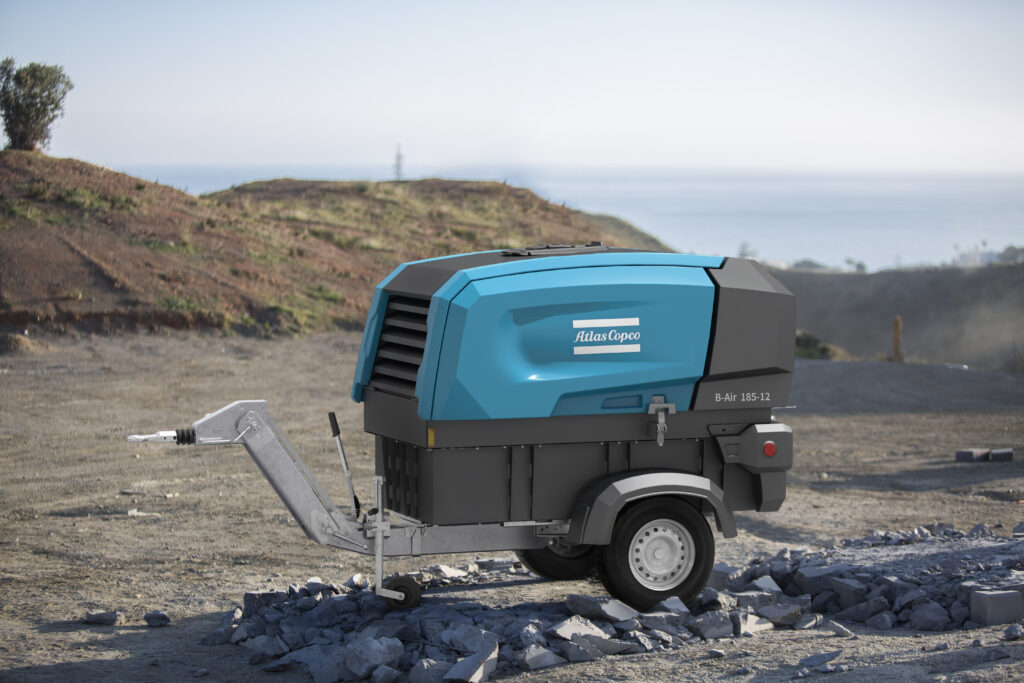
Unveiling its all-new battery-driven portable screw air compressor, Atlas Copco’s ‘B-Air’ marks a defining moment in the global industrial marketplace’s transformation towards a low-carbon future. In the latest sign of its progressive shift to more sustainable products, Atlas Copco has expanded its portable electric product portfolio to include an all-new battery-driven portable screw air compressor. The B-Air 185-12 is the first of its kind within the global industrial marketplace and represents a major milestone in Atlas Copco’s roadmap toward a sustainable future. “We are committed to accelerating the transition away from carbon-dependency and towards renewable energy sources,” explains Maarten Vermeiren, Product Marketing Manager of Sustainability and Digitalization at Atlas Copco, Portable Air Division. “By introducing the first battery portable screw compressor, we want to play our part in enabling a sustainable transformation and help build a better tomorrow – for society and the planet alike.” Clean power The B-Air 185-12 features a 5-12 bar of pressure, a stable flow rate of 5.4-3.7 m3/min, and a 55-kWh battery storage capacity. With power delivered from its onboard power pack, in operation a fully charged unit is independent of the need for fuel or a local power source to plug into, and has the capability to perform for up to a full typical work shift In turn, it provides both portability and productivity for those working on sites where regular access to electricity is not practical. Making the switch from an internal combustion engine (ICE) to an electric motor brings with it a host of benefits, including less downtime and maintenance requirements. Due to having far fewer moving (and therefore wearing) parts compared to a diesel-powered unit, the electric B-Air 185-12 only needs to be serviced every 2,000 hours, as opposed to 500 hours for a typical ICE-powered unit. The machine’s state-of-the-art Variable Speed Drive (VSD) and permanent magnet motor drive down the total cost of ownership, automatically adjusting the motor speed to match air demand in real-time and increasing energy efficiency by up to 70%. Through Atlas Copco’s rigorous testing process, which includes rapid aging testing under harsh conditions and climactic chamber testing, the B-Air 185-12 has been proven to perform optimally even in the most extreme of climatic conditions – ranging from +45°C (+113°F) to a glacial -25°C (-13°F); and 4,500 meters (14,764 ft) above sea level. The unit is also designed to excel in densely populated urban areas where emission and noise pollution are tightly restricted, thanks to it producing no local emissions and having low noise levels. The quiet nature of the compressor enables operators to work without noise distraction, enhancing both productivity and safety. Building a better tomorrow The B-Air 185-12 was first unveiled at the recent Atlas Copco’s ‘Journey to a Sustainable Future’ event in Antwerp, Belgium. Here, the company gathered senior business leaders from across the industry to discuss how best to tackle the transformation to a climate-friendly, low-carbon future. The new battery-powered unit marks a vital step in the electrification of Atlas Copco’s product offering and is just one of many developments the company currently has in store to deliver sustainable solutions to its customers. The unit came to life thanks to the long-term partnership with Perslucht Wilda, Atlas Copco’s distributor in The Netherlands for more than 40 years. During the event, it was also announced that Dutch infrastructure company Van Doorn made history by purchasing the first B-Air unit. Bert Derom, President of Atlas Copco Portable Air Division, comments: “Atlas Copco is proud to be committed to our industry’s fight against climate change by developing the first battery-driven screw compressor. The B-Air 185-12 is a tangible symbol of our commitment to delivering real-world solutions to help our customers and their customers adopt a more sustainable way of working and to turn the tide on climate change. We ultimately want to offer a sustainable alternative to every user and every application, and this new battery-powered unit is a leap closer to that goal.” The B-Air 185-12 is scheduled to go into production in September, using a compact and modular concept with multiple autonomy variants.
Episode 382: Rajant panel discussion
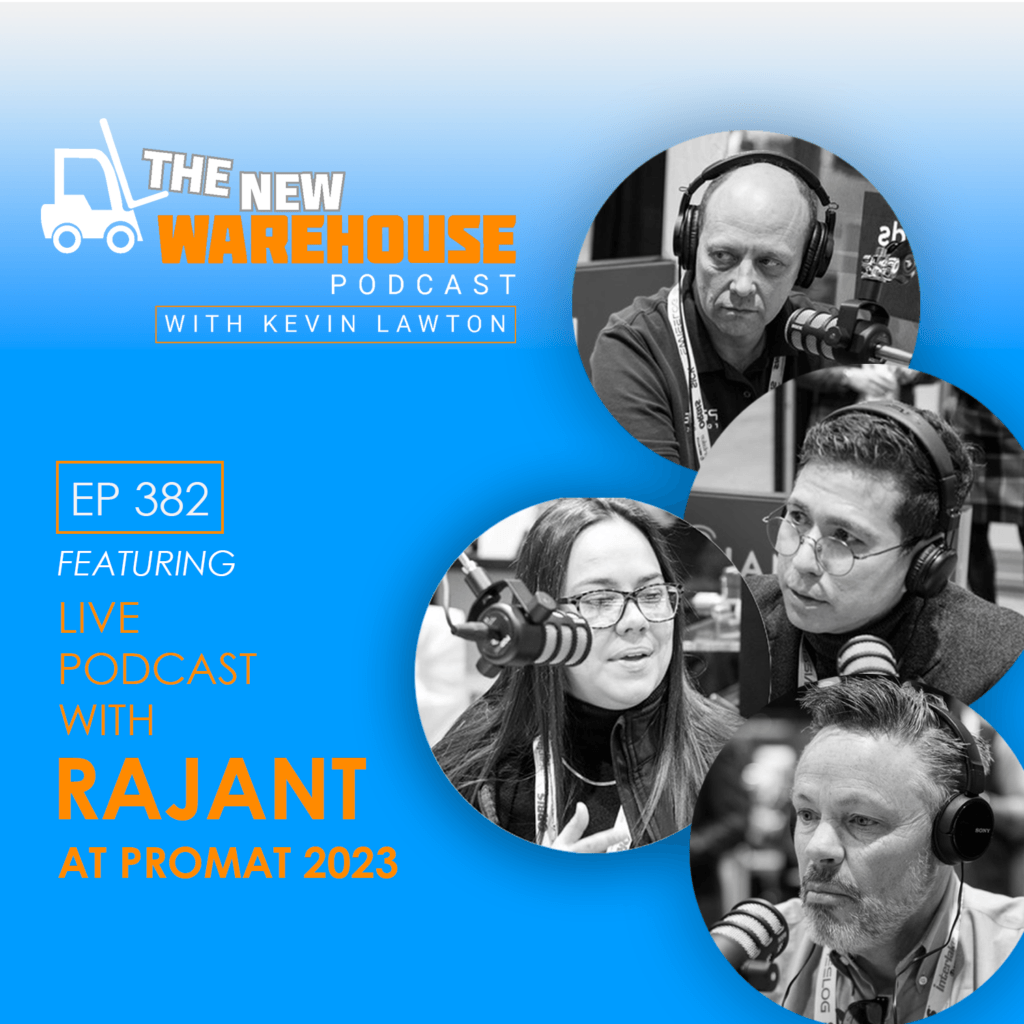
In a special panel episode of The New Warehouse, host Kevin Lawton welcomes industry experts to discuss Rajant’s revolutionary Kinetic Mesh Networking technology. The lineup included Ale Walker, Director of Business Development at Gray Solutions, Todd Rigby, Director of Sales at Rajant Corporation, Eric Rongley, CEO at Prime Robotics, and Robert Cheek, COO at Uvify. Tune in to learn more as these experts discuss how Kinetic Mesh Networking technology revolutionizes the warehouse industry! Rajant Corporation, founded in 2002, is a wireless provider specializing in advanced network technology. Their Kinetic Mesh Networking enables a constantly self-optimizing data flow, resulting in a high-quality solution that guarantees compatibility across generations of equipment. This technology has proven highly beneficial in the material handling industry, where downtime can translate to lost productivity or weakens ROI for investments in automated technology that rely on connectivity. Rajant’s Kinetic Mesh Networking: An Advanced Solution for Warehouses At the heart of Rajant’s technology is their Kinetic Mesh Networking. As Todd Rigby explains, “Unlike other networks, like wifi or LTE, which are parent-child type architectures, Rajant has a true peer-to-peer architecture where any node can talk to any other node, and every radio in that node can establish and maintain many active connections.” This sophisticated network ensures continuous connectivity, virtually eliminating handoffs and dropouts that can hinder the value of investments in warehouse robotics and management systems. This self-optimizing network seamlessly adapts to changing operational and environmental conditions, guaranteeing a high-quality solution for warehouse settings. With Rajant breadcrumbs continuously seeking connections, warehouses equipped with this technology experience reduced latency and risk of pallets crashing, thus improving overall worker safety. Impact on Warehouse Operations Rajant’s Kinetic Mesh Networking technology allows for effective connectivity between robots, drones, and AMRs (Autonomous Mobile Robots). As Ale Walker points out, warehouse and distribution centers can now reap the benefits of this advanced technology, maximizing their investment in automation: “At the end of the day, Rajant allows us to implement automation in these massive plants so that they’re always up. This ensures that customers can recognize the value not only in the product but also in the automation and the investment they’ve committed to.” Moreover, adaptability remains key to the success of this technology, as Todd Rigby highlights the importance of Rajant’s self-optimizing network. Rajant eliminates connectivity limitations and ensures a highly efficient and reliable warehouse infrastructure by allowing any radio to connect to any matching radio in any breadcrumb. Optimizing Warehouse Operations with Rajant Kinetic Mesh The role of automation and robots in modern-day warehouses and manufacturing facilities is paramount to effective and efficient operations and addressing the labor challenges. Rongley emphasizes the importance of connectivity, stating, “For our robots within a warehouse, the latency between the server and robots is critical as dropouts could lead to pallets crashing and humans getting hurt.” The challenges become more significant as facilities integrate more robots into their operations. Cheek explains, “As the number of robots increases, we see a greater need for solutions like Rajant’s Kinetic Mesh to ensure accuracy and precision in these complex systems.” Rigby says, “Having a strong network ensures better support for us (the providers) over time and ultimately for customers.” With its self-optimizing routes and configurations, Rajant Kinetic Mesh provides reliable and cost-effective solutions to warehouses and manufacturing facilities looking to automate their processes. Moreover, Rajant’s breadcrumbs continually improve performance and capability as new features and capabilities to each firmware upgrade. As Rigby notes, “Unlike a computer or a smartphone that can lose performance over time, our Rajant breadcrumbs continually improve in performance and capability.” Key Takeaways Rajant’s Kinetic Mesh Networking technology enables unparalleled connectivity in warehouses, allowing for efficient communication between robots, drones, and AMRs. This reduces latency and the risk of accidents, offering a safer and smoother operating environment. Rajant’s Kinetic Mesh enables the implementation of automation, ensuring that systems are always up, which helps customers recognize the value of their investment in both the product and automation. Having a self-optimizing network allows Rajant’s technology to adapt to ever-changing warehouse conditions, ensuring maximum operational efficiency and return on investment for its customers. EP 382: Rajant Panel Discussion
How lithium-ion forklift batteries are a game-changer for the paper and packaging industry
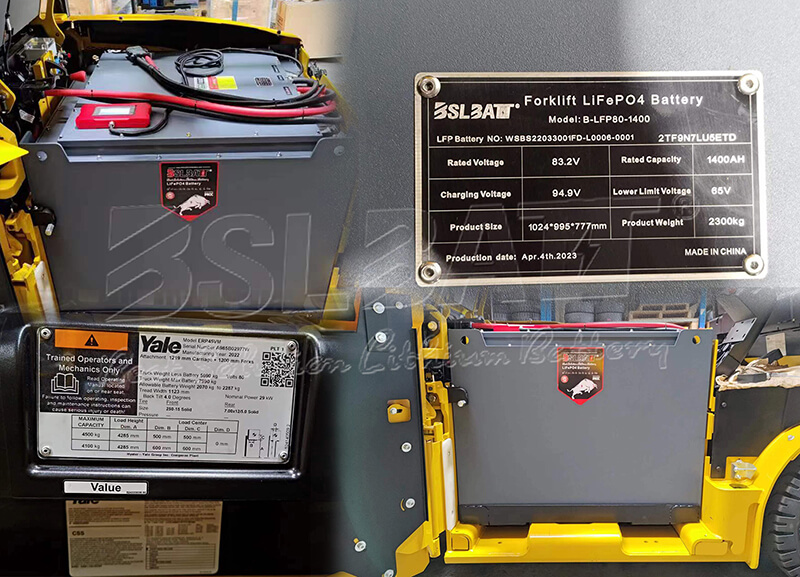
Industry Challenge A typical paper roll may be loaded, transported, and unloaded 4-16 times on its way from the paper mill to the printing press. All stages of this transport chain require powerful, dedicated handling equipment to minimize downtime and operating costs. Newsprint, coated paper, craft, or linerboard – high-volume, uninterrupted processing of paper rolls, pulp, and waste bales requires powerful equipment. The power supply usually needs to be so rugged and reliable that you can run it non-stop. Until recently, Class I and II forklifts using tilt and swivel attachments were primarily powered by LPG internal combustion engines or lead-acid electric motors. Both have their own set of problems, but three main ones are common: run time, high energy costs, and pollution. The pulp and paper industry is an “edge” industry for Li-ion technology. Its material-handling needs range between those industries where electric forklifts have traditionally been available, such as small warehouses and supermarkets, and super-heavy industries, such as mining, where huge machinery consumes so much energy that conventional wisdom says it cannot be used converted into electricity. “We’re proving that’s not true,” said Haley Ning, director of marketing at BSLBATT. “The paper industry was one of the first heavy industries to adopt lithium-ion batteries, but others will follow.” Pulp and paper facilities are ready for conversion because they generally have access to electricity and stable infrastructure with a consistent grid; in contrast, many mining operations are located in undeveloped areas. “Our battery offers great potential for paper processing,” says Felix Du. “Furthermore, where hygienic handling is a mandatory requirement – such as paper converting and packaging, including food packaging – the absence of harmful fumes and low maintenance are important.” How BSL lithium-ion forklift batteries are changing the paper and packaging industry Case 1 A Taiwanese paper mill is retrofitting new lithium batteries with a Yale ERP45VM forklift. 4500KG. The Electric Buffer Tire Trucks are all 83.2V powered by a 1400Ah BSL Li-Ion battery. Six trucks carry the rolls to the loading and unloading warehouse, where they are stacked in warehouses for distribution. There are also two trucks for excursions with rolls that need to be rewound. All eight trucks run on one battery, which will last all day, with quick opportunity recharging sessions during breaks and lunches. Case 2 A large Israeli paper mill is using a Yale ERP55VM6F2170 to retrofit new lithium batteries to feed the production line. The end of the line is served by eight Yale ERP55VM6F2170 forklifts, which have all recently switched from lead-acid powered electric trucks to BSL lithium batteries. There are 5500 KG capacity trucks equipped with 2267KG paper roll clamps and BSL lithium batteries with 2200KG installed. 8 Yale ERP55VM6F2170 forklifts do very heavy duty – 3 shifts per day, averaging 4,800 hours per year! This is well beyond any industry standard rental (approximately 1500-2000 hours per year). Powerful, durable BSLBATT lithium batteries are the best choice when you need to maximize uptime and safely handle paper and pulp products. Also for pulp and paper manufacturers, sustainability is another factor. It was a “eureka moment” for Haley Ning to realize that many of his clients had internal mandates to reduce their factories’ carbon footprint. “Forklifts may not even be an area they’re thinking about helping achieve those goals,” he said. “Switching from lead-acid batteries to lithium means switching from dirty to clean energy. Efficiency is common in every industry. You’ll save money along the way on lead acid. In Israel, it can cost 5-10 times more to run a truck with a lead-acid battery, depending on where you live and work. Our experience is that we can help someone reduce their total cost of ownership by 25-30% over five years,” he added. Summarize BSLBATT is known for producing some of the most durable, reliable, safe, and trouble-free Li-ion batteries for applications where durability, speed, and energy efficiency directly impact the bottom line. BSLBATT lithium-ion batteries help reduce downtime by taking advantage of breaks to opportunistically recharge when operations are most convenient. Zero routine maintenance and energy efficiency provide quick cost savings. Lithium-ion technology is the best forklift battery to help the paper and packaging industry achieve warehouse and operational efficiencies. The benefits of using lithium-ion batteries can help achieve these operational efficiency goals. Fleet managers in the paper and packaging industry can improve operational efficiency by implementing lithium-ion batteries in their forklift fleets.
Episode 381: Lucas Systems at ProMat 2023

Ken Ramoutar, Chief Marketing Officer at Lucas Systems, joins The New Warehouse live from ProMat 2023. Lucas Systems is a Pittsburgh-based software company focused on improving warehouse efficiency by providing workers with tools to streamline their operations. Their system, run by the voice assistant Jennifer, helps workers move around warehouses more efficiently and reduce stress with minimal walking and unproductive time. Ken and Kevin discuss everything from the MHI Innovation Awards nomination for Lucas System, things to consider before robotics, and how voice optimization benefits the warehouse. Lucas Systems Voice Optimization System for Warehousing Operations One of the most exciting recent trends in warehousing technology is voice optimization, which allows workers to use spoken commands to direct their work and receive instructions from a central system. Ramoutar shares, “Jennifer’s the voice and the brains of our system. She helps the workers move around the warehouse so they know what to do, what to pick, and where to go next. So she’s really their best friend. And so what Lucas does is we not only help the workers, but we help warehouses get a lot more efficient and productive.” This technology offers several key benefits for the industry, from increased employee productivity to more security to reduced operator fatigue to enhanced customer experience. The Challenges of Modern Warehousing Operations Today’s warehouses face several key challenges, from growing customer demands and rising operational costs to the need for improved efficiency and accuracy in order fulfillment. In the past, these challenges were often addressed through manual processes, with warehouse workers often using paper-based systems and physical labor to manage their daily tasks. However, as the industry has grown and become more complex, these approaches have become increasingly untenable. As a result, many companies have turned to technology and smart software to optimize their operations. Solutions like Lucas, a leading provider of voice optimization systems and smart software for the warehousing industry, offer new ways to streamline warehouse processes and boost worker productivity. Ramoutar adds, “Labor remains a big challenge for most of our customers. The newer workers want tech. Their expectations are bigger, and I think tech will be a game changer for those who want to acquire and retain the warehouse workforce of the future.” Lucas Systems Warehouse Orchestration One of the key benefits of a voice optimization system from Lucas Systems is the ability to orchestrate workflow efficiently within warehouse and distribution center operations. “And one of the things we do at Lucas is optimized how they run the warehouse, and we help optimize the amount of travel,” says Ramoutar, and also one of the reasons Lucas Systems was up for an MHI Innovation Award this year. Lucas Dynamic Work Optimization product has some customers reporting a 50% decline in employee travel time thanks to its efficiency. Additionally, a voice optimization system can help improve picking accuracy, as workers can receive specific instructions and feedback directly from managers through the system. This can help reduce errors and ensure that items are accurately picked and shipped to customers. Another key benefit is the reduction of operational fatigue. With a voice-activated system, workers can have their hands free to focus on tasks rather than constantly switching between physical tasks and data entry. This level of orchestration provided by Lucas Systems can help warehouses continuously adapt, prevent injuries and reduce fatigue, leading to a safer and more productive work environment in changing market dynamics. Key Takeaways Companies need to think about more than just buying robots; they also must consider how it will work with the existing system and who can help make it happen. The Dynamic Work Optimization product has been developed by Lucas Systems for over 10 years, and customers have reported up to a 50% reduction in worker travel time due to its efficient routing. The newer workers want tech. Their expectations are bigger, and it will be a game changer for any warehouse or distribution center looking to acquire and retain the warehouse workforce of the future. The New Warehouse Podcast EP 381: Lucas Systems at ProMat 2023
AAR reports rail traffic for April and the week ending April 29, 2023

The Association of American Railroads (AAR) has reported U.S. rail traffic for the week ending April 29, 2023, as well as volumes for April 2023. U.S. railroads originated 936,637 carloads in April 2023, up 1.8 percent, or 16,981 carloads, from April 2022. U.S. railroads also originated 945,313 containers and trailers in April 2023, down 12.7 percent, or 137,879 units, from the same month last year. Combined U.S. carload and intermodal originations in April 2023 were 1,881,950, down 6.0 percent, or 120,898 carloads and intermodal units from April 2022. In April 2023, seven of the 20 carload commodity categories tracked by the AAR each month saw carload gains compared with April 2022. These included: coal, up 10,098 carloads or 4.1 percent; crushed stone, sand & gravel, up 7,901 carloads or 9.7 percent; and motor vehicles & parts, up 6,483 carloads or 12.3 percent. Commodities that saw declines in April 2023 from April 2022 included: chemicals, down 4,677 carloads or 3.4 percent; grain, down 3,294 carloads or 3.7 percent; and nonmetallic minerals, down 2,263 carloads or 14.9 percent. “Intermodal continues to suffer because of significantly lower trade activity at ports, weaker consumer demand, and continued excess retail inventories from the pandemic era,” said AAR Senior Vice President John T. Gray. “These headwinds won’t last forever. When they dissipate, railroads will be prepared to meet their customers’ needs safely and reliably.” Excluding coal, carloads were up 6,883 carloads, or 1.0 percent, in April 2023 from April 2022. Excluding coal and grain, carloads were up 10,177 carloads, or 1.7 percent. Total U.S. carload traffic for the first four months of 2023 was 3,930,129 carloads, up 0.6 percent, or 23,161 carloads, from the same period last year; and 3,968,876 intermodal units, down 10.9 percent, or 484,228 containers and trailers, from last year. Total combined U.S. traffic for the first 17 weeks of 2023 was 7,899,005 carloads and intermodal units, a decrease of 5.5 percent compared to last year. Week ending April 29, 2023 Total U.S. weekly rail traffic was 481,960 carloads and intermodal units, down 4.9 percent compared with the same week last year. Total carloads for the week ending April 29 were 236,318 carloads, up 1.4 percent compared with the same week in 2022, while U.S. weekly intermodal volume was 245,642 containers and trailers, down 10.3 percent compared to 2022. Five of the 10 carload commodity groups posted an increase compared with the same week in 2022. They included motor vehicles and parts, up 1,702 carloads, to 15,529; petroleum and petroleum products, up 1,349 carloads, to 10,177; and nonmetallic minerals, up 1,171 carloads, to 33,863. Commodity groups that posted decreases compared with the same week in 2022 included miscellaneous carloads, down 849 carloads, to 8,780; chemicals, down 670 carloads, to 33,864; and forest products, down 549 carloads, to 9,616. North American rail volume for the week ending April 29, 2023, on 12 reporting U.S., Canadian, and Mexican railroads totaled 343,589 carloads, up 2.8 percent compared with the same week last year, and 326,666 intermodal units, down 11.4 percent compared with last year. Total combined weekly rail traffic in North America was 670,255 carloads and intermodal units, down 4.6 percent. North American rail volume for the first 17 weeks of 2023 was 10,938,636 carloads and intermodal units, down 3.9 percent compared with 2022. Canadian railroads reported 83,719 carloads for the week, up 8.2 percent, and 65,041 intermodal units, down 16.2 percent compared with the same week in 2022. For the first 17 weeks of 2023, Canadian railroads reported a cumulative rail traffic volume of 2,392,698 carloads, containers, and trailers, up 0.2 percent. Mexican railroads reported 23,552 carloads for the week, down 1.2 percent compared with the same week last year, and 15,983 intermodal units, down 7.1 percent. Cumulative volume on Mexican railroads for the first 17 weeks of 2023 was 646,933 carloads and intermodal containers and trailers, up 2.0 percent from the same point last year. To view the weekly traffic charts, click here.
ProMach announces new investors

ProMach, a worldwide provider of processing and packaging machinery solutions, today announced that funds managed by BDT Capital Partners, LLC (“BDTCP”) have entered into a definitive agreement to acquire a significant stake in ProMach alongside Leonard Green & Partners, L.P. (“LGP”), the existing majority owner. BDTCP is an affiliate of BDT & MSD Partners, a merchant bank built to serve the distinct needs of business owners and strategic, long-term investors. As part of the agreement, LGP will invest new capital into the company. Financial terms were not disclosed. Founded in 1998, ProMach’s portfolio includes 46 best-in-class processing and packaging solutions product brands serving manufacturers of all sizes, geographies, and industries. ProMach’s product brands manufacture, distribute, integrate, and support solutions across the entire production line in distinct areas including processing, filling, primary packaging, secondary packaging, labeling and coding, pharma, and systems integration. “We are extremely enthusiastic as we enter our next phase of growth with two exceptional partners in LGP and BDT Capital Partners that share our common vision,” said Mark Anderson, President and CEO of ProMach. “ProMach has grown tremendously due to the hard work and creativity of our people that deliver innovative solutions to our customers every day across many different segments of the consumer products marketplace. Our outstanding management team appreciates the strong existing partnership with LGP and looks forward to working with both them and the team at BDT Capital Partners as we continue our focus on growth and value creation for our customers across the globe.” “Personally, I’m so proud of all our employees and the hard work and effort they bring every day to strengthen ProMach’s reputation as a trusted partner to our customers,” added Mr. Anderson. “We wouldn’t be where we are without their tremendous talent and energy, and we are very fortunate to have great teams at all our product brands that are passionate about our products, our customers, and collaborating with other ProMach product brands to deliver performance each and every time.” “Under Mark Anderson’s skilled leadership over the past 17 years, ProMach has established an exceptional track record of performance and solidified its position as a leader in the U.S. processing and packaging machinery market,” said Byron Trott, Chairman & Co-CEO, BDT & MSD Partners. “We believe ProMach is well positioned to capitalize on secular industry tailwinds, including the transition to sustainable packaging and the accelerating adoption of automation technologies, and we look forward to supporting the company’s continued expansion and success.” “We extend our sincere gratitude to the entire ProMach team for their outstanding work in building a world-class organization,” said Jon Sokoloff, Managing Partner of LGP. Chris McCollum, Partner of LGP, added “We look forward to partnering with BDTCP in the next stage of ProMach’s growth and success. Since we partnered with the ProMach team over five years ago, the company has been a consistent strong performer and has delivered exceptional growth and value to all stakeholders with its proven business process. We are excited about the many growth opportunities that lie ahead and look forward to continuing our support of the company.” The transaction is expected to close in the second half of 2023 and is subject to customary regulatory approvals. Goldman Sachs & Co. LLC served as the lead financial advisor to ProMach. Morgan Stanley & Co. LLC also provided financial advice to the company. Latham & Watkins LLP and Thompson Hine LLP acted as legal advisors to ProMach.
Trelleborg Wheel Systems officially joins The Yokohama Rubber Co. Ltd. operating under the name “Yokohama TWS”
The Yokohama Rubber Co., Ltd. has acquired Trelleborg Wheel Systems from the Trelleborg Group for 2,074 million euro Yokohama TWS will operate as a new company with no change to its organizational structure Following last year’s announcement, Trelleborg Wheel Systems announced the acquisition by The Yokohama Rubber Co., Ltd. has been successfully completed for 2,074 million euros. From this day forward, the company will officially be part of The Yokohama Rubber Co., Ltd., operating under the name “Yokohama TWS” as a new company. The Yokohama Rubber Co., Ltd., based in Hiratsuka, Japan, is a global leader in the tire industry and other rubber applications, such as conveyor belts, hoses & couplings, and fenders. With 860.5 billion yen in revenues (approx. 6 billion euros), The Yokohama Rubber Co., Ltd. is a truly international concern, employing over 28,000 people around the globe and operating in more than 120 countries. This acquisition enables The Yokohama Rubber Co., Ltd. to consolidate its leading position among tire producers in the world, becoming a global leader in the off-highway tires segment with the addition of Trelleborg, Mitas, Maximo, Cultor brands, and Interfit service network to its portfolio. Paolo Pompei, former president of Trelleborg Wheel Systems and current President and CEO of Yokohama TWS, says: “Today we are closing a successful chapter in our history with the Trelleborg Group and opening a new page with a leading player in the tire industry, sharing our values and vision for the future. Over the last few years, we have delivered continuous business growth by combining strategic acquisitions with dedicated investments, and this has allowed us to build a strong and sustainable platform supported by a global manufacturing footprint, innovative products and solutions, and an extensive sales network in close proximity to our customers. I’m extremely proud of what the TWS team has been able to achieve so far and we are all honored that Yokohama has decided to invest in us, building together with their existing business, a new leading player in the off-highway segment”. Yokohama TWS will continue delivering the same high-quality products, solutions, and level of service to all its customers worldwide. As a new company, Yokohama TWS will operate with no change to its organizational structure.
Avidbots releases first floor scrubbing robot built for industrial spaces

Avidbots, one of the world’s leading robotics companies, announced today the launch of Neo 2W, the first cleaning robot designed specifically for warehouses and manufacturing environments to improve cleaning quality, efficiency, and productivity. Warehouses and factories present unique and challenging environments for robots, given floor debris, dynamic activity, and frequent layout changes. In collaboration with industrial customers, Avidbots developed Neo 2W to alleviate common issues, resulting in a more consistent clean with less downtime and unnecessary human intervention. Neo 2W increases cleaning efficiency, allowing companies to reallocate labor to other higher-value tasks. “The release of Neo 2W comes at a timely moment when 3PL and manufacturing companies are looking for solutions that bring the highest operational efficiencies,” said Faizan Sheikh, CEO and co-founder at Avidbots. “With the use of Neo 2W, companies are able to combat labor supply challenges and automate the time-consuming, labor-intensive task of keeping their facilities clean.” Neo 2W is an exclusive AI and hardware configuration that helps the robot keep cleaning without human intervention. Its Debris Driver, Bulk Navigator, and Advanced Obstacle Detection (AOD) brings a unique set of features designed for industrial settings, combatting debris found on the warehouse floors, navigating around obstacles, both large and small, and optimizing the cleaning path of the warehouse floor for maximum performance: The Debris Diverter limits the impact of debris on Neo by diverting debris, protecting the wheels, and reducing the risks of clogs in the vacuum hose and tank. The Bulk Navigator utilizes advanced localization algorithms, allowing the robot to clean in the most dynamic and challenging environments. Advanced Obstacle Detection identifies and avoids obstacles on the floor including pallets and forklift/pallet mover tines through machine learning capabilities. “Neo 2W is the result of extensive involvement from customers based on their experiences using autonomous robots in warehouse settings. Avidbots gathered feedback, tested prototypes in real-life scenarios, and utilized this data to deliver a truly purpose-built robot,” said Sheikh. “Given this robust process, we’re able to deliver even greater value to industrial customers. For instance, the focused solution delivers more cleaning productivity – up to 42,000 square feet per hour – due to Neo 2W’s unique ability to maneuver in challenging warehouse environments.” In addition to Neo 2W’s unique features, the robot includes industrial-strength, swappable batteries that deliver six hours of cleaning on a single charge. Neo 2W also includes Home Base, which ensures the robot can start and return from any location, and other standard safety features, such as leading-edge 3D cameras, lasers, and sensors to avoid collisions, and direction-indicating safety lighting. Facility managers also can leverage Neo’s remote assistance, in-depth reporting, and analytics, as well as real-time monitoring through the Avidbots Command Center.
Delta-Q Technologies commences full production of its 3.3 kW Battery Charger

The XV3300 battery charger XV3300 battery charger is a 3-in-1 on-board charging system offering stellar performance and features, suited for non-road mobile machinery Delta-Q Technologies (Delta-Q), a provider of battery charging solutions for electric vehicles and industrial equipment, has announced that its innovative mid-power charger, the XV3300, is now in full-scale production. With its unique 3-in-1 design, this highly efficient charging system integrates a 3.3 kW battery charger, a 500 W DC-DC converter to power the vehicles’ auxiliary loads, and an EV charging station interface. These key features encased in a ruggedized IP67 design, provide OEMs with an attractive package for simplifying electrification of their off-road applications. “No other 3.3 kW charger on the market also includes a DC/DC converter for auxiliary DC loads and an EVSE charging interface in such a compact size,” said Mourad Chergui, Senior Product Manager with Delta-Q. “As we start full-scale production, we can begin to fulfill the substantial demand we received since we first announced the initial development.” The 3.3 kW charging solution is available in 58.8, 65, and 120-volt DC models and is scalable, allowing OEMs to stack up to three chargers for power levels up to 10 kW. The XV3300 uses complex algorithms to deliver a precise charge to batteries of various chemistries and voltages, maximizing battery life and optimizing charge time. Key features and benefits of the XV3300 charger include: High Reliability: The XV3300 battery charger is compact, rugged, and IP67-rated. It is tested for automotive-grade shock and vibration. Its fully sealed aluminum die-cast enclosure protects the charger from dust, liquids, and the effects of immersion in up to one meter of water. Enhanced Protection: The XV3300 is a low-voltage charger that optimally charges all battery chemistries and nominal voltages between 48 V to 120 V. It is also protected against short circuits, over-voltage, and over-temperature to ensure safe operation. Flexible Power Options: The XV3300 is scalable and can be paralleled to provide between 3.3 kW to 10 kW of power for faster-charging options. The charger is also available as an on-board and off-board charger, providing OEMs with additional flexibility. Integrated DC-DC converter: It provides auxiliary power to operate vehicle accessories such as air-conditioners, controllers, lights, turn signals, navigation, and communication devices. It also eliminates the need for an external DC-DC converter, saving OEMs and equipment operators space and cost. EV Charging Station Interface: The XV3300 complies with SAE J1772 (levels 1 and 2) and IEC 61851 (modes 2 and 3) to charge from standard EVSE AC charging stations across North America and Europe. This feature provides end-users with more charging options and greater vehicle flexibility. To register for updates on the XV3300 battery charger or for specific details, including product specifications, visit https://connect.delta-q.com/xv3300.