
AAR reports Rail Traffic for the week ending April 15 2023

The Association of American Railroads (AAR) has reported U.S. rail traffic for the week ending April 15, 2023. For this week, total U.S. weekly rail traffic was 468,197 carloads and intermodal units, down 4.4 percent compared with the same week last year. Total carloads for the week ending April 15 were 234,066 carloads, up 5.8 percent compared with the same week in 2022, while U.S. weekly intermodal volume was 234,131 containers and trailers, down 12.8 percent compared to 2022. Eight of the 10 carload commodity groups posted an increase compared with the same week in 2022. They included nonmetallic minerals, up 3,445 carloads, to 33,677; motor vehicles and parts, up 2,408 carloads, to 14,871; and metallic ores and metals, up 2,195 carloads, to 22,835. Commodity groups that posted decreases compared with the same week in 2022 were miscellaneous carloads, down 668 carloads, to 8,714; and forest products, down 272 carloads, to 9,311. For the first 15 weeks of 2023, U.S. railroads reported a cumulative volume of 3,453,227 carloads, up 0.2 percent from the same point last year; and 3,483,361 intermodal units, down 10.9 percent from last year. Total combined U.S. traffic for the first 15 weeks of 2023 was 6,936,588 carloads and intermodal units, a decrease of 5.7 percent compared to last year. North American rail volume for the week ending April 15, 2023, on 12 reporting U.S., Canadian, and Mexican railroads totaled 339,933 carloads, up 6.0 percent compared with the same week last year, and 311,134 intermodal units, down 12.3 percent compared with last year. Total combined weekly rail traffic in North America was 651,067 carloads and intermodal units, down 3.6 percent. North American rail volume for the first 15 weeks of 2023 was 9,601,378 carloads and intermodal units, down 3.9 percent compared with 2022. Canadian railroads reported 82,319 carloads for the week, up 9.0 percent, and 60,931 intermodal units, down 14.8 percent compared with the same week in 2022. For the first 15 weeks of 2023, Canadian railroads reported a cumulative rail traffic volume of 2,097,986 carloads, containers, and trailers, up 0.7 percent. Mexican railroads reported 23,548 carloads for the week, down 1.7 percent compared with the same week last year, and 16,072 intermodal units, up 10.1 percent. Cumulative volume on Mexican railroads for the first 15 weeks of 2023 was 566,804 carloads and intermodal containers and trailers, up 2.4 percent from the same point last year. To view the weekly traffic charts, click here.
KION Group off to a strong start in fiscal year 2023

KION Group is off to a strong start in the fiscal year 2023 Business development in the ITS segment in the first quarter was significantly better than expected KION Group, therefore, raises its 2023 outlook Adjusted Group EBIT in the first quarter is expected to amount to €156 million (previous year: €170.3 million) Significantly positive free cash flow of €105 million anticipated (previous year: €-432.6 million) SCS segment in line with KION Group expectations – order volume significantly below the prior-year quarter Based on preliminary figures, the KION Group recorded better-than-expected business performance in the first quarter of 2023 thanks to the Industrial Trucks & Services (ITS) segment. The significant increase in adjusted EBIT in the ITS segment to an expected €177 million (previous year: €114.2 million) mainly reflected the improving supply chain situation and pull-forward benefits from operational and commercial agility. As a result, the preliminary adjusted EBIT margin for ITS rose to 8.8 percent (previous year: 6.6 percent). Accordingly, the KION Group’s adjusted EBIT was better than expected. “The strong development in the ITS segment shows that the measures we have introduced are taking effect. That is why we have raised our outlook. The Group is well on the way to sustainably increasing profitability,” said Rob Smith, CEO of KION GROUP AG. The development of revenue and adjusted EBIT at SCS was in line with KION Group expectations. Order volumes in the SCS segment were significantly lower than the prior year’s level due to continued restraint in customers’ investment decisions causing delays in new orders. Free cash flow is expected to be clearly positive at €105 million (previous year: €-432.6 million). In addition to operating profit, stable net working capital compared with year-end 2022 was a major contributory factor. Due to the strong first quarter at ITS, the Executive Board of KION GROUP AG has adjusted the outlook for the fiscal year 2023 for the Group and for the ITS segment as follows: Outlook 2023 KION Group Industrial Trucks & Services Supply Chain Solutions Outlook 2023 Outlook 2023 adjusted Outlook 2023 Outlook 2023 adjusted Outlook 2023 unchanged Revenue1 minimum €11.0 billion minimum €11.2 billion minimum €7.8 billion minimum €8.0 billion minimum €3.2 billion EBIT adjusted1 minimum €550 million minimum €615 million minimum €600 million minimum €665 million minimum €65 million Free Cashflow minimum €500 million minimum €565 million – – – ROCE minimum 5.0% minimum 5.5% – – – 1 Disclosures for the Industrial Trucks & Services and Supply Chain Solutions segments also include intragroup cross-segment revenue and effects on EBIT. KION Group’s key performance indicators for the first quarter, which ended March 31, 2023 (preliminary results) € million Q1/2023 Q1/2022 Revenue Industrial Trucks & Services Supply Chain Solutions 2,781 2,005 783 2,734.5 1,718.4 1,019.8 EBIT adjusted [1] Industrial Trucks & Services Supply Chain Solutions 156 177 7 170.3 114.2 74.0 Free Cashflow [2] 105 -432.6 Order Intake Industrial Trucks & Services Supply Chain Solutions 2,444 1,957 498 2,900.1 2,082.1 843.2 [1] Adjusted for purchase price allocation items and non-recurring items [2] Free cash flow is defined as cash flow from operating activities plus cash flow from investing activities
Episode 377: Brother Mobile Solutions at ProMat 2023
For this episode of The New Warehouse, Nick D’Alessio, Senior Business Development Manager at Brother Mobile Solutions, joins Kevin live at ProMat 2023. Brother Mobile Solutions provides a range of solutions to help optimize warehouse operations, including barcode printing software, labels, and mobile devices. Be sure to tune in to discover how important mobility is in the warehouse environment and learn about the future of modernization in this industry. How Brother Mobile Solutions Helps Challenges Faced By Warehouses Today Warehouses face the challenge of transitioning from traditional, paper-based methods and outdated software to modern, digital solutions. Nick shares that many businesses still use manual processes such as Excel spreadsheets and Sharpies to manage their warehouses. These outdated processes make it difficult to track inventory efficiently and accurately. Nick adds that Brother can help in this transition by providing tools to democratize technology. Barcoding is the most basic digital representation of physical items, enabling them to be tracked and traced more easily. Brother can also provide mobile printing solutions that allow faster workflows so staff can independently complete tasks such as labeling, packing, and picking. In addition, Brother can assist businesses in moving warehouse management into the cloud for added efficiency. Brother Mobile Solutions Products Brother Mobile Solutions has a range of products designed specifically for warehouse environments. One of the essential products is the mobile four-inch printer, which can be mounted on forklifts to enable workers to print four-by-six, four-by-two, or four-by-eight labels. Brother also has full-page mobile 8.5” x 11” capabilities for packing and picking lists and labels. No more walking back to a stationary printer! In their Tennessee warehouse, Brother has implemented mobile printing with cobots and following robots, with mobile printers bolted to enable labels to print out as workers complete their tasks. This feature allows the workflow to move along swiftly with the worker at the point. For more significant industrial printing needs, Brother has high-velocity barcode label printers that handle many labels. These products are extensively tested for ruggedness and durability, with Brother’s experience in designing products for use in trucks and other challenging environments coming into play. Brother’s motor division provides automation to the underbellies of the robots in their warehouse, highlighting the full range of solutions that Brother can provide for warehouse management. Flexible Connectivity Options from Brother Mobile Solutions Brother Mobile Solutions understands that warehouse workflows can vary greatly, depending on whether work occurs at the dock or outside the four walls. As such, connectivity options are a crucial factor to consider when implementing warehouse management technology. Brother offers the flexibility of Bluetooth connectivity to enable users to print labels in environments where WiFi may not be possible. When work occurs inside the four walls, dual radio models are available to connect securely to an enterprise-level network. This connectivity ensures that workers can print labels securely and that the system will be reliable and responsive. They also support Android and iOS operating systems and comply with iOS MFI standards. With flexible connectivity options, Brother has ensured its products can adapt to various warehouse workflows. Brother Mobile Solutions has also ensured that their radios perform well, even when users need to roam from one access point to another. This performance is critical from both the implementation standpoint and for users who need to press print and know that their label will come out quickly and accurately. Key Takeaways Hundred million-dollar businesses still use Excel spreadsheets and Sharpies to manage their warehouse. Nick believes providing a system that’s easy to maintain is one way to help make the employees happy and the workers more efficient. Brother offers a demo option to interested parties, allowing them to try their printers before committing to a purchase. Their team is happy to send out printers to get a demo or pilot test going. The New Warehouse Podcast EP 377: Brother Mobile Solutions at ProMat 2023
Pacific Coast Iron joins LiuGong North America Dealer lineup

Pacific Coast Iron, Inc. is the latest West Coast construction equipment dealer to join the rapidly expanding LiuGong North America dealership network. Pacific Coast Iron leaders said they partnered with LiuGong to continue selling premium construction equipment at a fair market value. “We wanted to provide our customer base with the latest market products that are both affordable and reliable,” said Pacific Coast Iron Marketing Manager Kami Louis. Pacific Coast Iron is a national heavy equipment dealership located near Sacramento, California. Established in 2013, the business brings a decade of experience buying and selling heavy equipment to the LiuGong dealer lineup, along with a wealth of relationships with dealers, buyers, and other industry stakeholders. Pacific Coast Iron has grown tremendously over the last few years, from having only a handful of clients to currently servicing hundreds of customers worldwide that continually list machines through their dealership. LiuGong North America President Andrew Ryan said their growth is a testament to the excellent reputation Pacific Coast Iron has in the region, and it will be integral to expanding the LiuGong footprint across North America. “We are always seeking out reputable dealers to join our network and expand our reach in key markets across the country, and Pacific Coast Iron fits the bill,” Ryan said. “We’re looking forward to working together to mutually grow our businesses and impact throughout the region.” Pacific Coast Iron is headquartered in Placerville, California with an additional branch location further south in Jackson. The dealership serves the construction industry across California and Western Nevada for rentals and service and provides sales worldwide.
Andrew Manship appointed as Vanderlande’s next CEO

Vanderlande has announced the appointment of Andrew Manship as its next Chief Executive Officer (CEO). Andrew will take up the position on January 1, 2024, succeeding current CEO, Remo Brunschwiler, who has the intention to end his executive management career on December 31, 2023 and thereafter transition to nonexecutive management positions. Andrew is currently the company’s Executive VP of BU Airport & Parcel Solutions. He brings a strong customer-driven focus to his new role, as well as a deep understanding of Vanderlande’s business strategy, activities, and global markets. He has been with the company since 2016 and has successfully merged Vanderlande’s airport and parcel businesses. In addition, Andrew can lean on a wealth of experience within the automated material handling industry and a track record of delivering added value to customers in highly competitive markets. The Chairman of Vanderlande’s Supervisory Board, Norio Wakabayashi, sees the benefit of appointing an outstanding internal candidate as the new CEO: “We are convinced that Andrew is the best candidate to lead Vanderlande through its next phase of growth. He has successfully expanded the global airport business for the company and realized valuable portfolio synergies with the parcel business. Vanderlande will continue to benefit from his visionary industry expertise and unwavering customer focus, reinforced by his value-driven ethos. “I would also like to take this opportunity to thank Remo for his leadership of Vanderlande. His clear strategic focus on organizational development and sustainable platform-based solutions has given the company a strong foundation for future growth and a better position from which to succeed.” “It has been a pleasure to have been the CEO of Vanderlande for almost seven years and –with the support of the organization – continuously strive for a high performance that results in innovative solutions for the benefits of our customers,” says Remo Brunschwiler. “I have enjoyed working with talented colleagues, who have helped me to move our customers’ businesses forward on a global scale. I will hand over my CEO responsibilities to Andrew in January 2024, safe in the knowledge that he brings great determination and energy to the role, with a customer-centric focus.” “I am honored to have been appointed as Remo’s successor, with the opportunity to lead Vanderlande as a trusted partner for future-proof logistics process automation,” says Andrew Manship. “I aim to build on the company’s extensive portfolio of integrated solutions to serve the needs of our customers. In addition, I look forward to working with Vanderlande’s global team, as well as Toyota Industries Corporation, to deliver optimal value. And finally, I would also like to thank Remo for the trust and support he has given me over the years.” Vanderlande is a market-leading, global partner for future-proof logistic process automation in the warehousing, airports, and parcel sectors. Its extensive portfolio of integrated solutions – innovative systems, intelligent software, and life-cycle services – results in the realization of fast, reliable, and efficient automation technology. The company focuses on the optimization of its customers’ business processes and competitive positions. Through close cooperation, it strives for the improvement of its operational activities and the expansion of its logistical achievements. Vanderlande’s warehousing solutions are the first choice for many of the largest global e-commerce players and retailers in food, fashion, and general merchandise across the globe. The company helps them to fulfill their promise of same-day delivery for billions of orders, with nine of the 15 largest global food retailers relying on its efficient and reliable solutions. As a global partner for future-proof airport solutions, Vanderlande’s market-leading baggage handling systems and related passenger solutions are capable of moving over 4 billion pieces of baggage around the world per year. These are active in more than 600 airports, including 12 of the world’s top 20. Vanderlande is also a supplier of process automation solutions that address the challenges in the parcel market. More than 52 million parcels are sorted by its systems every day, which have been installed for the world’s leading parcel handling companies. Established in 1949, Vanderlande has more than 9,000 employees, all committed to moving its customers’ businesses forward at diverse locations on every continent. With a consistently increasing turnover of 2.4 billion euros, it has established a worldwide reputation over the past seven decades as a global partner for future-proof logistic process automation. Vanderlande was acquired in 2017 by Toyota Industries Corporation, which will help it to continue its sustainable profitable growth. The two companies have a strong strategic match and the synergies include cross-selling, product innovations, and research and development.
NAFA announces first-ever Regional Council Leaders

NAFA Fleet Management Association (NAFA), the vehicle fleet industry’s largest membership association, has announced the leaders that make up the Regional Councils as part of NAFA’s new regional governance model rolled out earlier this year. “The new regional structure was born from a multi-year effort and driven by NAFA leadership, staff, and groups of members that shaped a plan to allow all members to make the most of their membership regardless of where they work,” says Bill Schankel, CAE, CEO of NAFA. “We were overwhelmed by the outpouring of interest to serve on our new Regional Councils and know these leaders will be instrumental in our ongoing evolution of NAFA to expand our member value as our industry continues to evolve at a rapid pace.” The following individuals sit on NAFA’s eight Regional Councils: Northeast Jacqueline Agel (Chair) Hannah Abdoo Justin Flannery Chris Langlois Brian J. Scott Mid-Atlantic Brandon S. Boring (Chair) Oleg Cytowicz David T. Hayward Tadeh Issakhanian Robin N. Meritt Nancy L. Murray Lisa R. Nutter J. Darryl Syler Kyle Waters Midwest Chris Hartlep (Chair) Trevor Crawford Naomi Kislanski Donna Lind Jennifer J. Morgan Parthiban Parasuraman Elizbeth Stomberg Josh Wallace Russell Werra Nicolas Wilson Northcentral Kathy R. Wellik (Chair) Lance Flegel Michael Keim Michael McDonald David D. McFarland Peggy Schuette Northwest James Laverty (Chair) Eric Chitoubol Levi C. Clark Jacob Mahan Jason Rosete Michael Stoller Southeast Brenda Peshel (Chair) Timothy E. Coxwell Michael Naglieri Marie A. Pepper Dave Persad Cedric B. Roberts Shelley Warren Southcentral Thomas Christian (Chair) Amy Boone Tim Fortson Jeff G. Hill Brian Marshall Mike Mosakowski Bo Villarreal John T. Walden Wayne W. Westerholm Southwest Josh E. Turley (Chair) Elmer Andujar Mike Antich Gwen Black Patrick Collins Lorie A. Gill David Mattke Bradley J. Northup Desiree Taylor NAFA is pleased to welcome these dedicated individuals to the Regional Councils. Their service to the fleet and mobility world inspires innovation, creates progress, and truly keeps our industry moving forward. Several events around the new Regional Governance model are set to take place during NAFA’s Institute & Expo in Baltimore this week including a regional leader coaching session and the NAFA Regional Forum and Leadership Experience Overview, which will provide an opportunity for members to meet with their home region and brainstorm ideas for goals within the new structure. It will also preview the 2023 NAFA Leadership Experience launching in early May. Additionally, a regional reception was held Monday evening to kick off the conference.
NFI enhances Canadian footprint with acquisition of SDR Distribution

NFI, a provider of North American supply chain solutions, announced that it has acquired SDR Distribution Services, a multichannel provider of custom warehousing and distribution solutions in Canada and the US. With the acquisition, NFI will expand its customer base in the fashion and retail industry and will double its distribution footprint in Canada. Established in 1979 as a wholesale distribution company, SDR has become a leader in the North American 3PL market, specializing in fashion, footwear, and accessories. NFI has been operating in the Canadian marketplace for over 15 years. The SDR acquisition expands its presence in Toronto, Calgary, and Vancouver, making NFI one of Canada’s largest warehousing and distribution businesses, with 4.5 million square feet. “We are excited to have SDR join NFI and continue our growth in the Canadian market,” said Sid Brown, CEO of NFI. “The SDR acquisition brings additional blue-chip fashion and retail customers to our portfolio. With the combined expertise of both NFI and SDR, customers can expand in the US with NFI’s existing footprint and access our other service offerings. We look forward to SDR’s impact on the future success of NFI.” “NFI is a great fit for our associates because of our similar cultures and NFI’s deep commitment to their customers,” said Glenn Nicodemus, CEO of SDR. “The acquisition of NFI will bring added value to our customer relationships since SDR prides itself on being an expert in the fashion and apparel industry.” Since its acquisition of Canadian-based Dominion at the end of 2016, NFI has continued to expand its Canadian service offering through acquisitions and organic growth, including freight brokerage, global freight forwarding, asset-based transportation, and value-added warehousing and distribution. The addition of SDR brings NFI’s warehousing footprint to 72 million square across the United States and Canada.
Growth in Material Handling Automation evident at ABCO-CEO confirms

An industry report released last month that forecasts a nine percent increase by 2029 in automated material handling systems accurately reflects trends recently seen at ABCO Systems, according to CEO Seth Weisberg. The report from Exactitude Consultancy projected the automated material handling equipment market will reach $51.7 billion by 2029. ABCO Systems is a provider of warehouse automation and design, and its systems help increase efficiency for material-handling businesses across the nation. “In the past few years especially, we have seen steady increases in the number of businesses who are looking for automated solutions,’’ Weisberg said. “The pandemic helped usher in a wave towards more automation in material handling, and in subsequent years we’ve continued to see sustained growth.” Automated solutions reduce downtime and labor costs and improve production, safety, and quality control. Automation also allows employees to focus on more pressing tasks. There are also tax benefits associated with investing in warehouse automation. “Automating warehouse distribution is a great way to maximize efficiency and reduce costs,’’ Weisberg said. “With the increasing demand for faster delivery, automated processes are essential for streamlining operations and keeping up with customer expectations.” The report said the automated material handling market will expand at a compound annual growth rate of 9.1 percent. The market reached $23.6 billion in 2022, according to the report, which also said a surge in the e-commerce industry has generated an increase in online shopping. “Notably, there has been a surge in online sales of pharmaceuticals, household goods, and food,” according to the report. As more businesses embrace automation, they are also finding there is a range of options that can improve their processes. While some systems are expensive, some less costly solutions can also can provide important benefits. “The range of solutions is quite wide, and ABCO can plan, design and install a system that can benefit any customer,’’ Weisberg said. “With the way the industry is evolving, now is a great time to improve automation processes. It’s important to maintain pace with competitors, and the best way to do that – or even pull ahead – is through automation advancements.”
ATC Diversified Electronics introduces MPA2

Upgraded motor protection analyzer measures, analyzes, and reports critical performance information The automation experts at ATC Diversified Electronics, a maker of devices for automation, motor protection, process monitoring, and power quality, have introduced the new MPA2 motor protection analyzer. MPA2 is a micro-controlled three-phase motor protection analyzer specifically designed to protect electric loads and motors from failure and damage due to common current and voltage faults. The new MPA2 has some major upgrades over the original version. New features include a two-line, 16-character LCD display for greater specificity and higher-quality information, four front panel push buttons for operation/protection, standard RS485 Modbus RTU communication protocol, flexible DIN rail or surface mounting options, UL94V0 enclosure material, and access to a wide variety of reports. Plus, all of this is available at a lower cost than the original! Protecting an investment in machinery is critical to all functions of an organization, as maximized uptime impacts profits, quality, and customer satisfaction. A reliable, cost-effective method of monitoring motor health – and deactivating power before a potential problem becomes catastrophic – is a necessity. The MPA2 constantly supervises current and voltage values. When any harmful condition occurs, the output connection is deactivated until the fault disappears, power line conditions return to an acceptable level, and the motor has been totally cooled. The MPA2 measures, analyzes, and reports critical information such as current, voltage, frequency, power factor (PF), reactive power (KVA), real power (KW), and energy consumption (KWH). Charting performance history enables more-informed scheduling of future maintenance.
New Roadmaster Truck Driving School in Houston offers training for a career with steady pay, flexibility, and job security
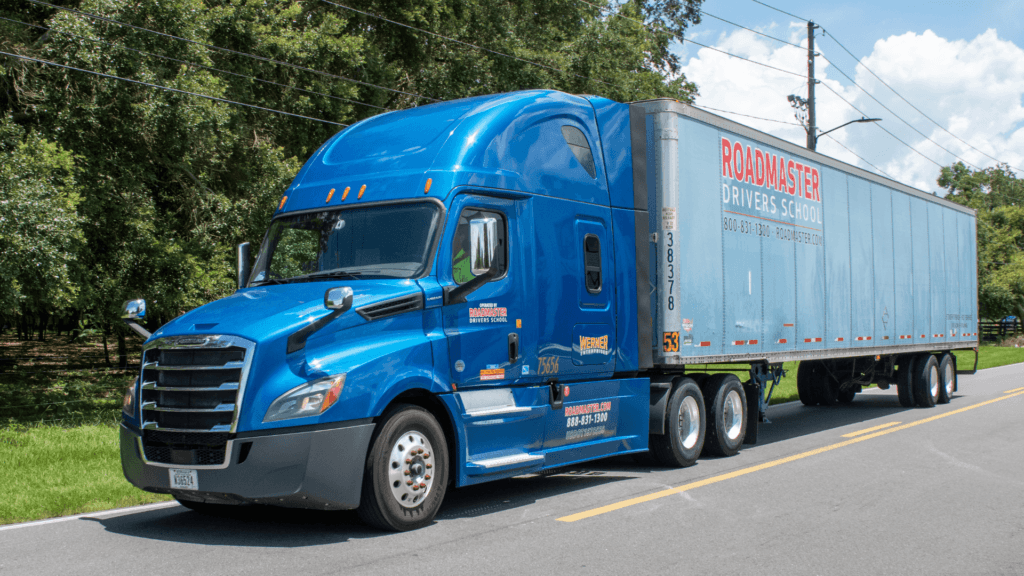
Amid The Great Resignation, job seekers are looking for new career fields that satisfy their need for increased flexibility, steady pay, and job security. Roadmaster Drivers School President Brad Ball explains how a career in truck driving could be fulfilling, lucrative, and a unique opportunity to experience the open road With a growing national need for truck drivers amid supply chain disruptions and driver shortages, Roadmaster Drivers School, the Class A CDL (commercial driver’s license) truck driver training program, is opening a new Houston, Texas location. The new school is Roadmaster’s fourth location in Texas and could be a tremendous opportunity for Houston residents who may be unemployed, underemployed, or looking for a career change. Brad Ball, President of Roadmaster Drivers School, explains that the demographics of the greater Houston area are well-suited to a truck driving career. Ball says, “The national economy relies on a new generation of trained truckers to help meet the needs of the country’s biggest trucking state, Texas.” The state of Texas employs over 170,000 truck drivers, which equates to 15 of every 1000 jobs, and that number continues to grow year after year.1 Because Texas is centrally located from the Dallas/Fort Worth Metroplex, the average turnaround time is only 48 hours for truck drivers to reach most parts of the U.S. As one of only four states bordering Mexico, the Texas trucking industry facilitates 85% of the trade between Texas and Mexico.2 The pandemic created a massive disruption in the traditional job market. In 2021, people started to re-examine their work-life balance and began seeking new jobs that provided better pay, increased flexibility, and more personal fulfillment. This career uncertainty contributed, in part, to The Great Resignation. According to the U.S. Bureau of Labor Statistics, over 47 million people opted to willingly quit their jobs.3 Supply chain disruptions and driver shortages were already problematic before the pandemic, but COVID-19 certainly exacerbated the issue. Studies predict a shortage of 240,000 drivers by 2023 driven by factors such as truck drivers retiring (the average age of truck drivers is 55 years old), new regulations and qualification requirements, and truckers who never returned to the industry after pandemic-related layoffs.4 As a result, 2.6 million global positions remained unfilled in 2022.5 A truck driving career offers job security, competitive pay, and benefits. According to Indeed.com, the average entry-level truck driver’s salary in the U.S. is $73,907 per year!6 Ball states, “We’ve proudly trained more than 160,000 men and women to build a career in truck driving, positively changing their families’ lives in the process. There’s a growing diversity in truck driving with no wage gap tied to race or gender.” Once considered an almost exclusively male occupation, the industry is experiencing record growth among women now choosing a truck driving as a career.7 More than 90% of truckload fleets gave raises in pay to drivers in 2021, with an average increase of 10.9%. A majority of fleets are also offering significant sign-on and referral bonuses.8 Ball says wage increases look promising over the next few years. Ball explains, “On average, completing CDL training classes takes about a month. We thoroughly prepare you every step of the way, including hands-on experience driving a truck and classroom training. Financial assistance is available for those who qualify.” He adds, “We encourage you to stop by our new facility and let us show you what life on the road could look like. Taking a few hours out of your day could be the first step to a fascinating and profitable new profession. We’re excited to meet the Houston area residents and support them on their new career path.” On May 18th, between the hours of 11:00 am and 3:00 pm, members of the press, prospective students, and the general public are warmly invited to the grand opening ceremony of Roadmaster’s new training facility at 1224 Normandy Street, Houston, Texas 77015. Ball remarks, “Trucking is an essential and increasingly well-paid and respected profession. If you — or someone you know — are in the market for a better future, I urge you to come and talk to us. It might turn out to be the best thing you ever did.” References What states have the most truck drivers? Fremont Contract Carriers. (n.d.). Retrieved September 10, 2022, from fcc-inc.com/what-states-have-the-most-truck-drivers/ Texas Trucking Industry. TheTrucker.com. (n.d.). Retrieved September 10, 2022, from thetrucker.com/truck-driving-jobs/resources/states/texaB Fuller, Joseph, and William Kerr. “The Great Resignation Didn’t Start with the Pandemic.” Harvard Business Review, 25 Mar. 2022, hbr.org/2022/03/the-great-resignation-didn’t-start-with-the-pandemic. “Supplying Your Hauling Needs.” Haulink, haulink.com/blog_post/the-truck-driver-shortage-in-the-united-states#! Kerriou, Anne. “The Truck Driver Shortage Has Got Worse in 2022.” Market Insights, 29 June 2022, market-insights.upply.com/en/the-truck-driver-shortage-has-got-worse-in-2022. Entry Level Truck Driver Salary in United States – Indeed. indeed.com/career/entry-level-truck-driver/salaries. Bisaha, Stephan. “Truck Driving Has Long Been a Man’s World. Meet the Women Changing That.” 19 houstonpublicmedia.org/npr/2021/09/19/1037513003/truck-driving-has-long-been-a-mans-world-meet-the-women-changing-that/#: McNally, Sean. “Trucking Wages Jump in 2021 as Shortage, Supply Chain Issues Increase Demand.” American Trucking Associations, 10 Aug. 2021, trucking.org/news-insights/trucking-wages-jump-2021-shortage-supply-chain-issues-increase-demand.
G-Tek work gloves: Hand protection meets dexterity
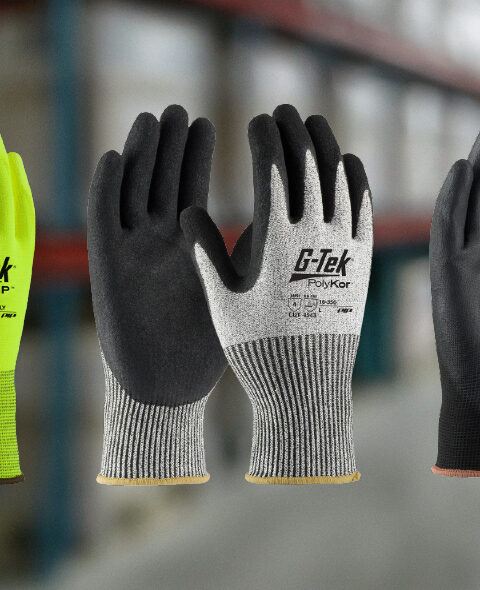
Warehouse workers have a demanding job that requires constant material handling and operation of machinery. To ensure their safety, workers need reliable protective gear, including work gloves that offer the necessary protection and dexterity to perform efficiently. G-Tek® work gloves are designed to meet these needs by offering a breathable string knit glove with coated palms and fingers. These features allow protection that is perfect for a warehouse environment but offers more grip and finger dexterity. The G-Tek® GP series is a popular budget-friendly glove for box handlers and light-duty warehouse work. Its seamless knit nylon shell offers increased comfort, breathability, and an ANSI cut rating of 1. Like most G-Tek® gloves, the GP is coated with polyurethane for added grip. If the GP series doesn’t quite fit your needs, G-Tek® offers dozens of options for almost any work environment. Foam-coated, touch screen, impact, and cut resistant (up to ANSI 9) are just a few notable styles.
Carolina Handling named Raymond Dealer of Distinction for 32nd consecutive year
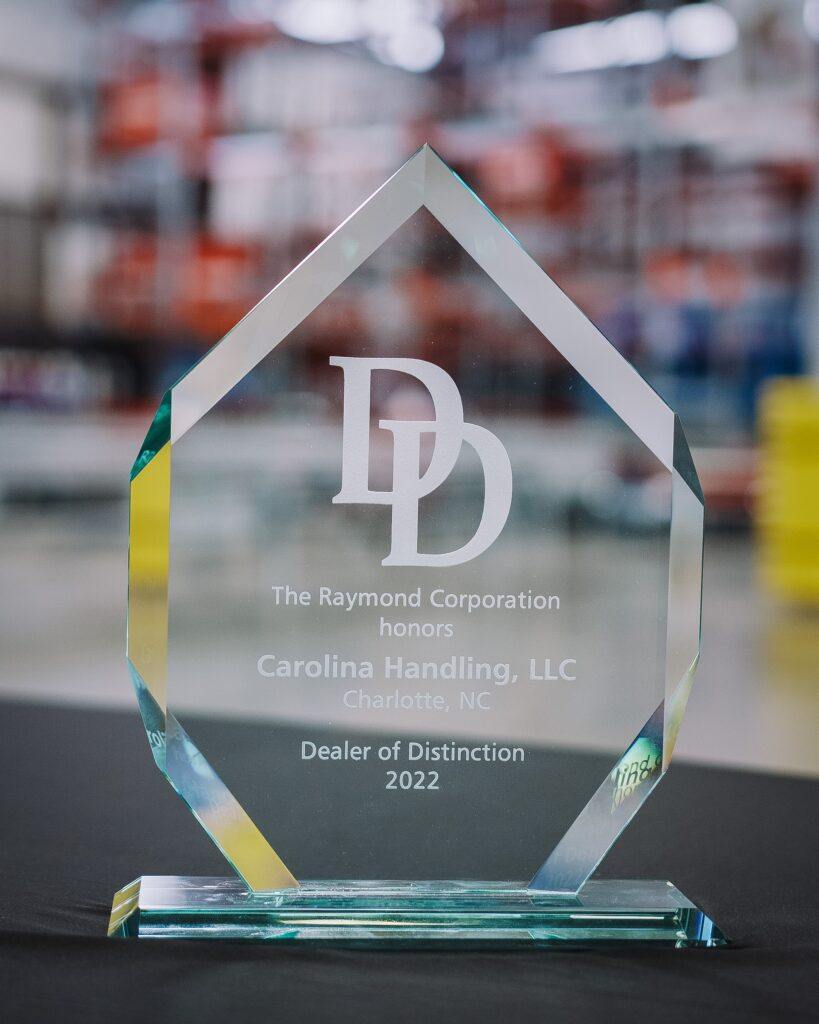
Carolina Handling has been named a Dealer of Distinction (DOD) by The Raymond Corporation for the 32nd year in a row. The DOD award is given annually to the top performers among Raymond Solutions and Support Centers throughout North America. Carolina Handling, the exclusive Raymond Solutions and Support Center for the Carolinas, Georgia, Alabama, and Florida’s Central time zone territory is one of only seven Raymond dealers to receive the 2022 designation. Being named a Dealer of Distinction is based on points scored in the categories of Market Share, Financial Performance, Customer Support Performance, Service Contract Growth, Scheduled Maintenance Completion, Raymond Lean Management, iWarehouse® Solutions, Purchase of Lease Maturities, Forecast Accuracy and Energy Storage Solutions. Categories cover virtually all areas of the business, including sales, service, parts, rentals, leasing, continuous improvement, power, and intralogistics solutions. A point of pride for Carolina Handling associates, the Dealer of Distinction award also is a strength in the marketplace, said Carolina Handling President & CEO Brent Hillabrand. “As a customer, you know you’re getting the most well-rounded and consistent support you could ever dream of because of the way we perform year after year against our peers,” Hillabrand said. The 2022 DOD designation comes at a time when warehouses and distribution centers are experiencing dramatic and swift operational changes and during a period of steady growth for Carolina Handling. “The bigger we get, the easier it would be to become fragmented and not work as a team,” Hillabrand said. “The fact that we scored so many points in so many different areas is a testament to our teamwork. The consistency with which our associates perform as teams in the different areas of our business is the reason that we continue to succeed.” As a Raymond Solutions and Support Center, Carolina Handling is a total intralogistics solutions provider, offering a broad range of consulting, connected technologies, material handling equipment, and service to support the growing and changing needs of the industry. The Dealer of Distinction Award comes on the heels of Carolina Handling’s receiving the 2023 MVP (Most Valuable Partner) Award from the Material Handling Equipment Distributors Association (MHEDA) for excellence in customer service, supplier relationships, associate training, and community involvement.
Taking a page from the video game industry to generate reoccurring revenue

If you play video games or have children that play modern-day video games, without even thinking about it, you are familiar with the video game industry’s revenue model. You are especially familiar if you are the one footing the bill for your or your children’s video game play. The old-fashioned business model for gaming has been the console model. Video game console manufacturers sell their gaming consoles usually at cost or very low margin while making money by selling high-priced games. The rise of online gaming, especially as high-speed internet has become an everyday commodity in households, has further diversified the revenue models for video game companies. One of these revenue streams is the subscription model, where a game requires continuous payments to play the game. Another revenue stream is what is called microtransactions, where there are features or aspects of a game that the player can purchase to upgrade gameplay or attain digital goods or premium features of the game. Again, if you are into gaming or have children into gaming, you are probably all too familiar with these microtransactions if it is your credit card being billed. While companies might not necessarily be making high margins by selling consoles, or even if they provide some free-to-play games, these revenue streams outlined above continue to remain lucrative. Now you are probably wondering what that has to do with the material handling industry and lift trucks. I wanted to draw the parallels between the revenue streams in the video game industry to the revenue streams within a traditional lift truck dealership. Think of the lift truck as being the gaming console for the purposes of this article. The sale of a new lift truck can lead to years of service maintenance and replacement parts business for the dealer. As defined by MHEDA, the material handling aftermarket is the add-on revenue source from industrial truck equipment sales; parts, after-sales service, and rental fleet operations. So compare the subscription and microtransaction revenue models I mentioned at the beginning of this article for the gaming industry to the lift truck dealer’s subscription and microtransactions. They can include but are not limited to field service repair, preventive and/or planned maintenance, annual safety inspections, service shop work, sales of high mortality rate/high-wear parts and accessories, component replacements, rebuilds or remanufactured parts, and service and maintenance contracts. According to the MHEDA data, a typical lift truck dealership revenue mix consists of the following: New Equipment Sales: 29.2% Used Equipment Sales: 7.9% Parts: 18.4% Service: 20.4% Rental Billings: 14.4% Other Revenue (not listed above): 9.7% According to the same MHEDA data, the gross margin from new equipment sales for a typical dealership is 8.7% whereas the gross margin for parts sales is 34.9%, and the gross margin for service is 62.6% Tight margins on the new equipment, similar to the console in the video game industry model I described earlier in the article. As the MHEDA data shows, the sale of parts and services is critical to the profitability of the dealership. This is especially true with the current climate of our industry. Extended lead times from new equipment manufacturers have led to the life of the older equipment within the market being extended past its normal operating life. This has led to an increase in parts and services needed to maintain the equipment that would normally be replaced during the normal equipment life cycles of your end-customer. While new equipment manufacturers and lift truck dealers are aware of the importance of aftermarket/after-sale parts and services as shown in the data above, many dealers sometimes struggle to differentiate the role of an equipment salesperson and the role of a customer service sales rep. Too often I see these roles rolled up into one function, where I believe these roles should always be separate functions and separate salespersons. Where an equipment salesperson’s objectives are the targeting and identifying of new equipment opportunities, along with quoting and selling of new/used equipment, if they are also tasked with providing aftermarket parts and service support that could lead to not having enough focus on one function over the other. I believe having dedicated customer service sales reps will allow your dealership to provide focused and professional aftermarket parts support, along with dedication to targeting and obtaining service agreements and the upselling of service repair quotes. Well-defined customer service sales rep function includes but is not limited to targeting accounts to develop and ensure aftermarket sales, ensure the growth of a dealer’s existing service accounts, and develop new and maintain existing rental equipment customers. This dedicated function aligns with the dealer’s workflow to ensure a steady stream of service, rental, and parts business while working cross-functionally with said departments within the dealership. Having this dedicated customer service sales rep function allows the for the new/used equipment sales rep to focus on the functions of selling equipment. In addition, as with the sale of new/used equipment to your end-customer leading to service maintenance and parts sales for your dealership, you could also see how targeting new customers through a dedicated customer service sales rep can also lead to the future sale of new/used equipment to those end-customers as well. Combining this with a great customer experience as I discussed in last month’s article, will lead to the continued growth of these revenue streams for your dealership. About the Author: Chris Aiello is the Business Development Manager at TVH Parts Co. He has been in the equipment business for 16-plus years as a service manager, quality assurance manager, and business development manager. Chris now manages a national outside sales team selling replacement parts and accessories in various equipment markets such as material handling, equipment rental, and construction/earthmoving dealerships.
AtomBeam surpasses $1.3M in investments on StartEngine

AtomBeam Technologies Inc., whose game-changing product has the potential to revolutionize how data is sent and stored, announces today that it has raised $1.3M in its current crowdfunding campaign AtomBeam, whose compaction product massively drives efficiency in data transmission and storage, has announced that it has raised $1.3 million in its current crowdfunding campaign on StartEngine. This milestone marks a significant achievement for the company and its growing investor community. “We are thrilled to see the continued support of our investors, who recognize the potential of AtomBeam’s technology to revolutionize how virtually every machine talks to another machine,” said Charles Yeomans, CEO of AtomBeam. “This successful raise brings us one step closer to achieving our engineering goals and driving adoption of our technology.” AtomBeam’s Compaction is poised to disrupt how connected machines, the Internet of Things, communicate. With its ability to reduce the amount of data that needs to be transmitted by an average of 75%, AtomBeam’s technology offers significant cost and efficiency benefits to businesses and consumers alike. “Imagine your phone could send and receive data four times faster just with a software upgrade,” Mr. Yeomans said. “Compaction does that by squeezing out all the inefficiencies in data transmission, and it does it so fast all you experience is, ‘Wow!’” AtomBeam invites investors to join its growing community on StartEngine and be a part of the company’s exciting journey. The company is committed to developing cutting-edge solutions that solve real-world problems and create meaningful impact. Investors interested in learning more about AtomBeam and its innovative technology can visit the crowdfunding campaign page at https://www.startengine.com/offering/atombeam.
Women In Trucking Association announces Gold Partnership with UPS
The Women In Trucking Association (WIT) has welcomed United Parcel Service (UPS) as its newest Gold Level Partner, furthering its mission to empower more women to pursue careers in transportation. Trina Norman, Southern California feeder operations manager and WIT’s 2022 Influential Woman in Trucking will serve on the Board of Directors. This year, the company was a Platinum Sponsor of WIT’s Accelerate! Conference & Expo held in Dallas, TX Nov. 13-16 and virtually Dec. 6-7, and was a participant in the event’s Truck & Technology Tour. “UPS is honored to be a Gold Level Partner and to serve on the Women in Trucking Board of Directors,” said Norman. “The future looks bright for women in the trucking industry and we are dedicated to helping this association advance gender diversity, inspire more women to consider the trucking industry as a career, and celebrate the success of women behind the wheel.” “UPS’ commitment and support is a powerful affirmation to the industry that the advancement of diversity and inclusion in the workplace matters,” said Jennifer Hedrick, president and CEO of WIT. “Their partnership will have a valuable and immediate impact on furthering our association’s mission and influence.” Founded in 2007, the Women In Trucking Association was established to encourage the employment of women in the trucking industry, promote their accomplishments, and minimize the obstacles they face. Currently, the organization is a resource for nearly 8,000 corporate and individual members located in the United States, Canada, and Mexico, as well as Japan, Australia, Sweden, South Africa, and New Zealand. Recent accomplishments include: releasing the 2022 WIT Index, the official barometer to benchmark and measure the percentage of women who make up critical roles in transportation each year, finding professional female drivers increased to 13.7%; participating in White House and FMCSA roundtables and events; launching its Professional Driver Hub, an online resource to encourage driver success; and more than 1,700 registered attendees at the 2022 Accelerate! Conference and Exhibition.
RM2 welcomes Wayne Cochran as Chief Operating Officer

RM2 has announced that Wayne Cochran has joined the company as Chief Operating Officer. Wayne brings with him a wealth of experience and expertise in high-growth operations and is particularly skilled at optimizing manufacturing processes rapidly to meet demand. Wayne has an exceptional track record of leading large organizations and programs with complex supply chains across multiple geographies. He is also known for his ability to build and lead effective teams, delivering improvement in financial and operational performance metrics. “I’m thrilled to join the RM2 leadership team at this incredible inflection point in the company’s story,” said Wayne, “RM2 has a great product in BLOCKPal and a strong customer base that’s fueling demand for more and more of their IoT pallets, and I’m looking forward to helping scale operations to meet this demand.” Wayne started his career as a design engineer for Motorola with a BSEE from the Missouri University of Science and Technology. He later received his MBA from Arizona State University’s WP Carey School of Business and holds certificates in Negotiations and Management from Harvard University’s Schools of Law and Business. Throughout his career, Wayne has also worked for Intel, Badger Technologies, and Jabil. “Wayne’s skillset is a perfect fit for RM2,” said Kevin Mazula, CEO of RM2, “His expertise and experience will help RM2 continue to thrive and meet the increasing market demand for our solutions. I’m honored to welcome Wayne our team.”
What really kills organizational productivity

I was sitting in a coffee shop on a Thursday afternoon when I overheard two gentlemen talking about work. Not so much about whether client X needed Y, solving a technical problem about a product, or even collaborating on a slide deck. They were deep in discussion about organizational behavior. They went over multiple email and phone communications where they dissected whether the sender was “testing” the receiver, had a hidden message, or had a secondary agenda. They tried at length – over two hours – to divine what these communications were all about. What an incredible waste of time. How many hours a day (whether in the office or remotely) do your employees and teams spend interpreting the meaning behind the meaning of internal communications? While politics are inherently part of business, time wasted and money lost is typically blamed on inefficiency and lack of productivity. People aren’t working hard enough. They’re slacking off. They’re not really working when they are working from home. This all stems from the perception that people can’t really be trusted to do their jobs without extensive supervision or oversight. (But that’s a debate for another day) However, I’d argue that wasted time, lack of productivity, inefficiencies, and all the other things that drain a company’s dollars stems from communication and culture. Had these two guys had the ability to communicate openly and ask straightforward questions, those two hours never would have happened. Companies often try to sidestep this issue through teambuilding exercises, office events, or even through promoting their organizational values (which always include communication and an ‘open door policy’). Yet, this doesn’t change behaviors, it only glosses over underlying cultural problems. There’s frequent talk about shaping culture through establishing a common purpose and a sense of community. But when there’s a lack of trust, those things really don’t matter much. Trust is huge. According to a study conducted by the Edelman Trust, 1 in 3 people don’t trust their employer. According to research, this lack of trust costs U.S. companies approximately $450 billion to $550 billion annually. Trust also goes both ways. Employees need to be able to put trust in their superiors and other executives, while managers and leaders need to be able to trust their teams. Building trust, however, often requires thinking from a new perspective. Trust really isn’t about you. It’s about empowering other people as a result of your presence, and about making sure that the impact of your leadership continues into your absence. This requires three things – honesty, transparency, and authenticity. Delivering these three means being your true self, focusing on what others need to succeed, paying less attention to what you think people want to hear and more attention to what you need to say to them, and ensuring all communication ends with actual understanding. People don’t always realize how they’re communicating may undermine their own trustworthiness. People tend to trust when they believe they are interacting with your authentic self when they have faith in your intentions, and when they feel that you care about them. If the gentlemen in the coffee shop had trusted in their organization, those two hours may have actually resulted in something a lot more productive. About the Author Andrea Belk Olson is a keynote speaker, author, differentiation strategist, behavioral scientist, and customer-centricity expert. As the CEO of Pragmadik, she helps organizations of all sizes, from small businesses to Fortune 500, and has served as an outside consultant for EY and McKinsey. Andrea is the author of three books, including her most recent, What To Ask: How To Learn What Customers Need but Don’t Tell You, released in June 2022. She is a 4-time ADDY® award winner and host of the popular Customer Mission podcast. Her thoughts have been continually featured in news sources such as Chief Executive Magazine, Entrepreneur Magazine, Harvard Business Review, Rotman Magazine, World Economic Forum, and more. Andrea is a sought-after speaker at conferences and corporate events throughout the world. She is a visiting lecturer and startup coach at the University of Iowa, a TEDx presenter, and TEDx speaker coach. She is also an instructor at the University of Iowa Venture School. More information is also available on www.pragmadik.com and www.andreabelkolson.com.
Dialight introduces DC Crane Vigilant High Bay fixture for overhead crane applications
Dialight announced the availability of its newest fixture, the DC Crane Vigilant High Bay, designed to specifically meet the needs of overhead crane applications. Overhead crane applications, common to heavy industrial settings such as metals and steel processing, are notorious for large voltage swells and dips, which occur during the operation and regeneration of the cranes. Even the most robust lighting fixtures face the risk of failure in these unforgiving conditions. Compromised power supplies and electronic components can plunge work areas into darkness or put the lights into a fault state, introducing an unnecessary safety risk. Dialight’s DC Crane Vigilant High Bay features a wide 250-480VDC input range with built-in 6kV surge protection and can handle short-term voltage swells of up to 778VDC for at least 60 seconds. In addition to Dialight’s integrated custom power supplies, these fixtures also carry additional features to withstand harsh industrial environments, including a copper-free aluminum housing with a dual powder coat finish, robust tempered glass lens, IK10 impact rating, and an ambient temperature range of up to 65°C on most models. With a broad lumen output range of 12,000 lumens up to 40,000 lumens, there are models to suit a wide variety of mounting heights and applications. “Dialight has long been the gold standard in LED lighting for hazardous and industrial applications”, said Fariyal Khanbabi, Dialight CEO. “We are proud to be able to expand our offering to those with specific performance needs to meet the challenges of overhead crane operation. Our DC Crane fixture offers customers Dialight’s hallmark reliability and industry-leading 10-year warranty with specific features to protect against voltage sags and swells.” Dialight has a proud heritage of robust engineering and comprehensive product testing. The DC Crane Vigilant High Bay has been vibration tested to Lloyd’s Register and IEC 60068-2-6 across a broad frequency range of 10-150Hz, and 750,000 cycles. It carries Dialight’s industry-leading 10-year warranty to ensure long-term reliable operation, even in the most difficult environments.
Concentric LLC acquires Industrial Battery Solutions

Concentric, LLC, the national provider of DC power management for the material handling and critical power industries, announced today the acquisition of Industrial Battery Solutions. Based in Waipahu, Hawaii, Industrial Battery Solutions is the only company in Hawaii to sell and service forklift batteries along with critical power products. This acquisition expands Concentric’s footprint past the contiguous United States and into areas that have historically lacked access to leading power management solutions. As an essential partner in maintaining Hawaii’s supply chain, Industrial Battery Solutions’ team of service leaders are specialized in battery replacement, chargers, watering systems, repairs, maintenance, and removal. Industrial Battery Solutions is led by Kathleen Moses Benson, President and Hank Benson, Vice President of Operations – who will both remain in leadership after the acquisition. “Industrial Battery Solutions is led by a strong management team with 50 years in the battery industry,” said Concentric Chief Operating Officer, John Winter. “We are looking forward to working with them and continuing to grow their presence while serving their customers across Hawaii.” “We are excited to join the Concentric team and expand the solutions we can provide to our forklift and critical power customers,” said Industrial Battery Solutions President, Kathleen Moses Benson. “Being an island nation, Concentric’s suite of critical power solutions provides an invaluable opportunity to provide energy security to Hawaii-based businesses.” For additional information about Concentric or this acquisition, visit www.concentricusa.com or https://www.concentricusa.com/partners/acquisition-announcement
Episode 376: Meter delivers fast, secure, and reliable Wi-Fi for warehouses
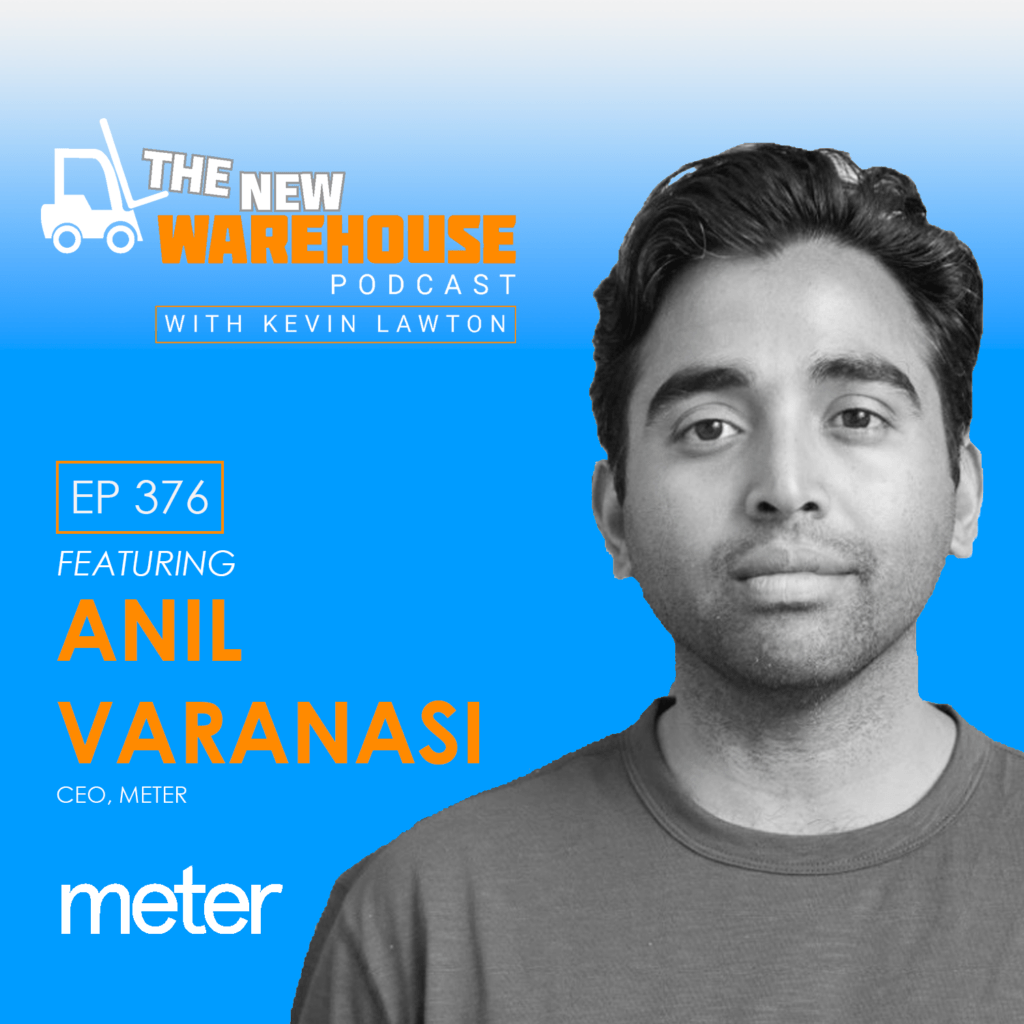
Anil Varanasi, CEO and Co-Founder at Meter, joins The New Warehouse to discuss fast, secure, and reliable wireless connectivity for industrial spaces. Meter makes it easy for warehouses, 3PLs, and distribution centers to come online with internet networking Wi-Fi. With Meter, warehouses can be up and running in weeks, all while saving CapEx and Opex in the process. If you need to get your warehouse connected or improve your existing services, this is an episode you do not want to miss. Meter: Making Internet Networking for Warehouses Easy and Cost-Effective Setting up an internet network can be challenging and expensive when opening a new fulfillment center, distribution center, or warehouse. Companies must choose an ISP, decide on the hardware, and determine who will install and maintain it. This process can take months and cost hundreds of thousands of dollars. Meter offers a complete package for internet networking in warehouses. With their expertise in hardware operating systems, Meter ensures fast, secure, and reliable connections for bandwidth-intensive operations that demand low-latency connections. Their unique pricing model charges only a fixed monthly fee for ISPs, hardware installation & maintenance, cabling, and testing without any upfront costs. With Meter, warehouse companies can easily manage their internet networking, Wi-Fi, and other systems in new locations without the headache of building out a networking team everywhere. Their approach to internet networking follows the same concept as cloud services like AWS, Microsoft Azure, or Google Cloud – pay for what you use without building a big team. All companies need to do is provide Meter with an address and a floor plan, and they will handle everything from there. Meter’s software and teams manage everything for the companies, ensuring minimal downtime and maximum uptime for all their networking needs. They partner with all major ISPs and ensure the proper connections come in from primary and backup pipes. They build all the racks for routing and switching and install all the hardware needed for great Wi-Fi throughout the space. Moreover, Meter’s approach to redundancy is unique in the industry. With additional redundancy built into the system and leveraging insights from data centers, proactively preventing hardware failure and total capacity usage is accounted for from day one. Save Time and Remove Burden from IT Teams with Meter’s Expertise Setting up internet networking for a new warehouse or distribution center traditionally takes months and requires considerable time and resources from IT teams. With companies asking more of IT teams and the complexity increasing in multi-location warehouse companies, this burden on IT departments is becoming significant. Meter solves this problem by offering quick and hassle-free installations, saving companies valuable time and resources. For Meter, speed is critical, and they can install the hardware and software in weeks instead of months, allowing their clients to be productive and profitable as soon as possible. The primary reason for their fast installation is their software and hardware operating systems expertise. With their software, they can design networks, deploy networks, and procure ISP connections faster, taking the burden off the IT departments. Secondly, Meter operates at scale. They have deployed millions of square feet with millions of customers, allowing them to do this repeatedly every day, week, and month. Their installations are repeatable, and they have built-out processes and repeatable runbooks to get out any edge cases, allowing for a smoother installation process. Lastly, Meter’s relationships with ISPs are essential to its success. They purchase extensive connections, enabling them to have the right relationships when push comes to shove. This ability to craft the right relationships ensures they can deliver on their promise of fast and reliable installations. Connectivity in Warehouses Today: How Meter Ensures Redundancy, ROI, and Uptime Connectivity is crucial in today’s warehouses, particularly with the growing adoption of automation and robotics. Investing in new technologies such as WMS systems, pick-and-place robotics, sensors, printers, and drones can improve productivity and ultimately lead to a better warehouse ROI. However, these services require reliable, secure, and fast connectivity to work correctly. Meter understands the critical role connectivity plays in warehouse operations and takes an approach that prioritizes redundancy to ensure maximum uptime and optimal connectivity. The company installs more hardware than is typically required to plan for full capacity from day one. Their hardware has LTE built-in, which means there is redundancy within the system even if the primary or secondary connections fail. Meter also designs its systems to prevent hardware failure, drawing insights from data centers and implementing redundancy to ensure that one piece of hardware doesn’t bring down the entire network or cause disruptions. Moreover, they make choices based on their customers’ best interests by ensuring that even if the internet goes down, their production does not stop. Key Takeaways Meter offers solutions for warehousing, logistics, and distribution centers to reduce CapEx and Opex related to networking with cost-effective solutions. Customers benefit from reduced costs and minimal downtime due to Meter’s unique pricing model that charges based on the size of the space. As the warehouse industry progresses, robotics, automation, logistics, and fully automated companies are investing in Wi-Fi over other connectivity options. They understand that Wi-Fi connectivity within the warehouse provides greater reliability and efficiency than bringing signals from the outside. The New Warehouse Podcast EP 376: Meter Delivers Fast, Secure, and Reliable Wi-Fi for Warehouses