
Episode 443: AI Integration & Visibility: Boosting warehouse performance with Arvist
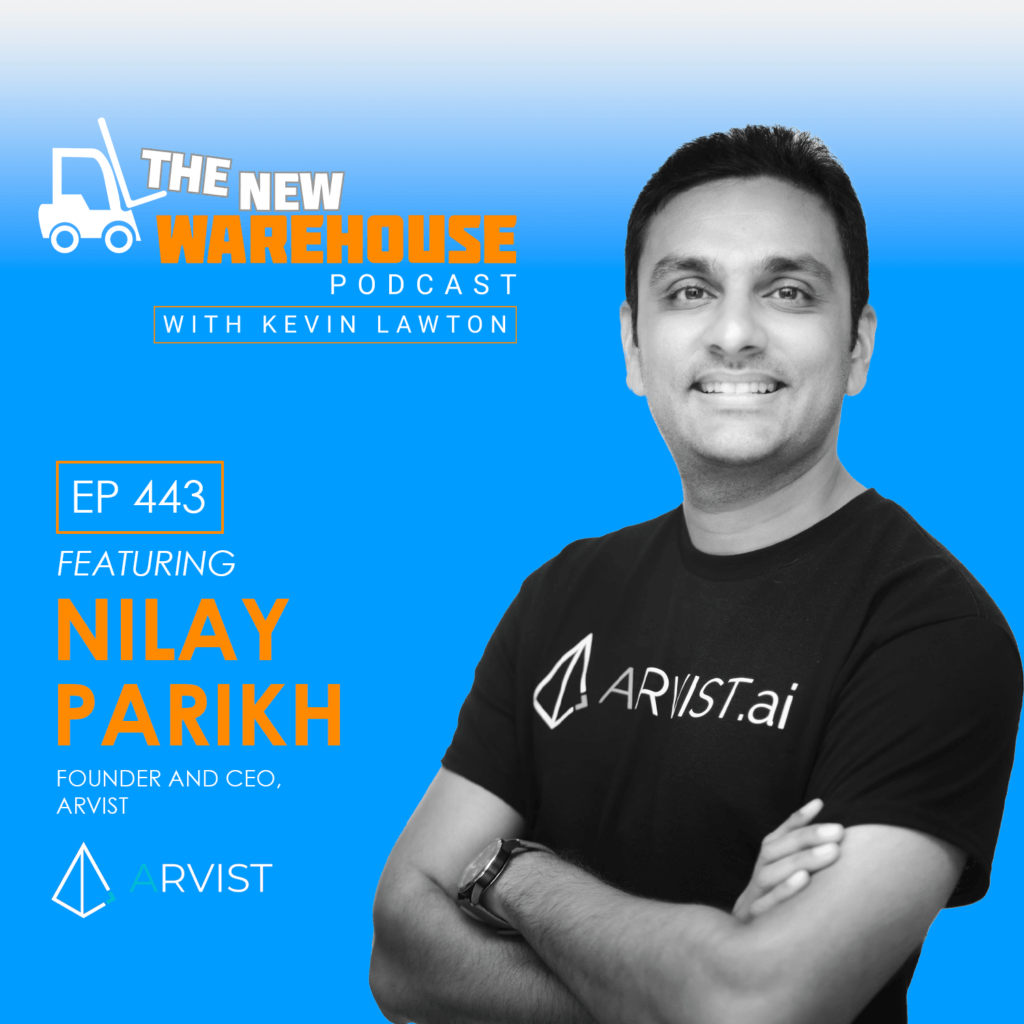
In this episode of The New Warehouse podcast, Kevin welcomes Nilay Parikh, the founder and CEO of Arvist. By leveraging AI, Arvist focuses on harnessing the power of data to enhance safety, productivity, and quality in the supply chain. Parikh brings a wealth of knowledge and experience in AI technology, offering unique perspectives on its practical applications in warehousing. In this engaging conversation, he delves into how Arvist’s solutions are shaping the future of warehousing, addressing current challenges, and setting new standards for operational efficiency and safety. AI Integration for Enhanced Warehouse Safety Parikh discusses Arvist’s innovative approach to using AI for proactive warehouse safety measures. Arvist’s technology can identify potential safety hazards and compliance issues in real time by analyzing data from existing security cameras and systems. Parikh explains that instead of looking at accidents after they happen, the Arvist AI platform proactively spots risks, allowing immediate corrective action. This approach not only enhances the safety of workers but also fosters a culture of prevention, fundamentally transforming traditional safety management in warehouse environments. AI-Driven Operational Efficiency Arvist’s AI platform offers a significant leap in operational efficiency for warehouses by harnessing existing data sources like security cameras, WMS, and ERP systems. This includes optimizing loading dock operations, enhancing inventory management, and streamlining workflow. Parikh highlights a case where their AI solutions significantly reduced loading dock bottlenecks, demonstrating the practical impact of their technology on day-to-day operations. Future of Warehouses with AI Integration Looking into the future, Parikh envisions an increasingly integrated role for AI in warehouse operations. He anticipates AI not only complementing existing automation technologies but also paving the way for more advanced solutions. He envisions a warehouse environment where AI-driven systems work seamlessly with robotics to achieve unprecedented levels of productivity and accuracy. This vision points to a future where warehouses operate optimally, driven by intelligent algorithms that continuously learn and adapt to changing demands and environments. Key Takeaways Proactive Safety Measures: Arvist leverages AI to enhance warehouse safety proactively. Operational Efficiency: Integrating AI with existing data sources streamlines warehouse operations. Future Trends: AI will drive more sophisticated and efficient warehouse management. The New Warehouse Podcast EP 443: AI Integration & Visibility: Boosting Warehouse Performance with Arvist
It’s that time of year: “Call me back after the holidays.”

“Call me after the holidays” is the second most-heard objection in sales. (First being, “Your price is too high.” Third being, “I have to think about it.”). It comes up year after year and salespeople get frustrated year after year, unnecessarily. Here’s how to think about it and here’s what to do about it: Humbug. Salespeople hate holidays. It’s an excuse for decision makers to put buying decisions on hold. But the worst of them are the Christmas to New Year, “Call me back after the holidays,” and “Call me after the first of the year.” Two of the most hated phrases in sales. (They still rank behind “We’ve decided to buy from someone else.”) “Call me after the holidays” is not an objection. It’s worse. It’s a stall. Stalls are twice as bad as objections. When you get a stall, you have to somehow dance around it, and then you still must find the real objection before you can proceed. Here are 11.5 clever lines and winning tactics to use that will help overcome the stall: Close on the stall line. “What day after the first of the year would you want to take (would be most convenient to take) delivery?” Firm it up, whenever it is. Ask, “When after the first of the year? Can I buy you the first breakfast of the new year?” Make a firm appointment. If it’s just a callback, make the prospect write it down. Call backs must be appointed, or the other guy is never there when you call. Writing it down makes it a firm commitment. Tell them about your resolutions. “I’ve made a New Year’s resolution that I’m not going to let people like you who need our service, delay until after the first of the year. You know you need it.” Offer incentives and alternatives. Invent reasons not to delay. Bill after the holiday. Order now, deliver after the holiday. Question them into a corner – and close them when they get there. “What will be different after the holidays? Will anything change over the holidays that will cause you not to buy?” (Prospect’s answer — “Oh no, no, no.”) “Great!” you say, “Let’s get you order in production (service scheduled) now, and we’ll deliver it after the holiday. When were you thinking of taking delivery (beginning).” Agree. Then disagree. I know what you mean lots of people feel that way. Most don’t realize that the money wasted between now and the first of the year, will equate to a huge savings if they buy now. Are you sure you want to waste the money? Get a testimonial letter. Ask someone who bought before the holidays and was glad they did to write you a two paragraph testimonial. Video it if you can. Get one paragraph about the value they received and how they originally wanted to wait. The second paragraph should be about how happy they are about your service after the sale. Similar situations are more powerful than your sales pitch. Drop-in with holiday cheer. Use a small holiday plant or gift to get in the door. (No one says no to Santa — unless you live in Philadelphia. There they boo Santa.) Create urgency. There’s a product or delivery back-up after the first — schedule now. Be funny. Say, “So many people have said call me after the first that I’m booked until April. I do however, have a few openings before the first. How about it?” Making the other person laugh (smile) will go a long way towards getting past the stall. An alternative joke is, “What holiday?” 11.5 Beg. Pleeeeaaase. I’ll be your best friend. Reality check. The success with which this stall is able to be handled is directly related to the quality of the relationship that’s been built with your prospect or customer. A good relationship allows more liberty to press for immediate action. A weak relationship will mean you wait until after the holiday. Or longer. Prevention – the best cure. If you know this objection is coming, do something BEFORE it happens. Prevention of objections and stalls is the most obvious, most powerful, and least used sales technique. Here are a few prevention methods: Start in early November to create urgency. Set price raises in September to take effect January 1. Announce them right away and communicate them weekly into the holiday season. Create a holiday special. Have a five-day sale in December. Offer December price incentives or special value incentives. Throw a holiday party. Invite prospects and customers, and offer them a “Tonight only deal.” Hold a series of seminars that are about important issues to your prospects and customers. Have the best one just before the holidays. Serve great food. Create an internal sales contest with a great first second and third prizes. Build relationships all year long. The bottom line is – as sure as you’ll spend lots of money this holiday season, someone will ask you to call them after it’s over. When they do, don’t get mad, get creative. Don’t get frustrated, get a relationship. Happy holidays! If you need more information on this subject, call me – after the first of the year. Ho, ho, ho. About the Author: Jeffrey Gitomer is the author of twelve best-selling books including The Sales Bible, The Little Red Book of Selling, and The Little Gold Book of Yes! Attitude. His real-world ideas and content are also available as online courses at www.GitomerLearningAcademy.com. For information about training and seminars visit www.Gitomer.com or email Jeffrey at [email protected] or call him at 704 333-1112.
Signode showcases Automation Solutions and total support services at MODEX
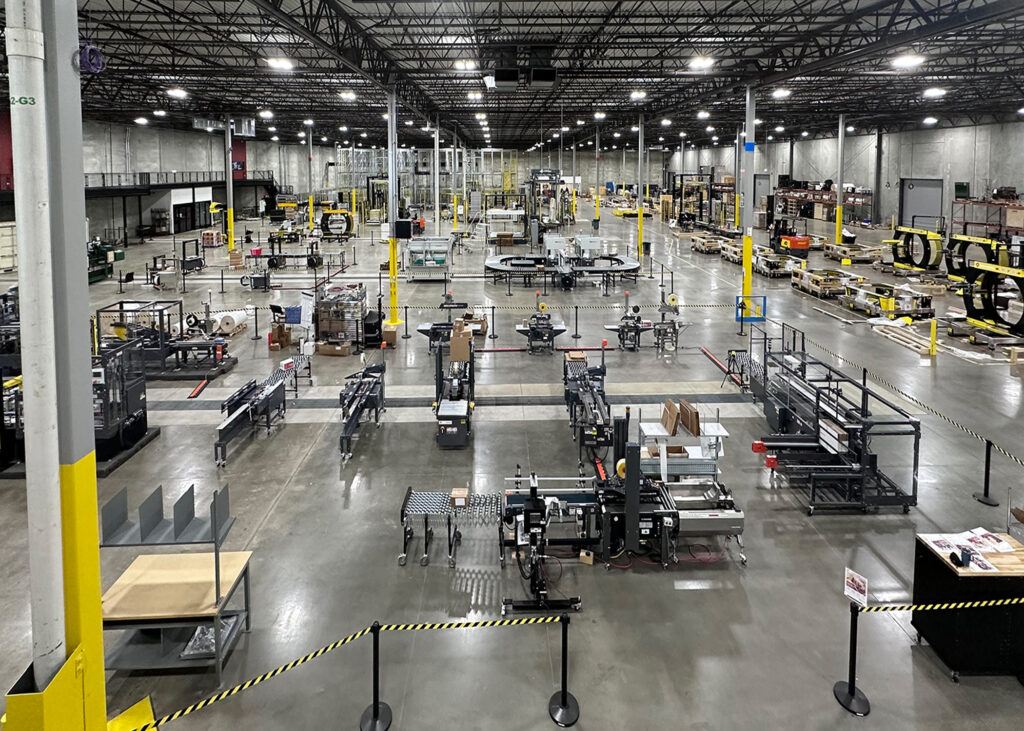
Signode, a global manufacturer of a broad range of automated transit packaging equipment, tools, consumables, automation and support solutions, is highlighting industry-leading technologies at MODEX 2024 in Atlanta. Held at the Georgia World Congress Center March 11-13. Those who stop by booth B1411 can expect a preview of Signode’s two-pronged approach to solving customer challenges: Innovative packaging and automation solutions backed by comprehensive application testing, and a robust post-installation service and support program. Highlights at MODEX include: Automation Equipment and Protective Packaging Whether you’re looking to upgrade a single machine or automate your entire production line, Signode offers thoughtful and customizable solutions to build a system that meets your operation’s specific needs. By utilizing its broad portfolio of protective transit packaging solutions, Signode assists its customers across industries in achieving optimal outcomes. An expansive portfolio includes semi- and fully automated equipment, robotics and other packaging machinery to protect products on their transit journey from the production line to their final destination. Solutions include: Automation Systems, including Palletizers/Depalletizers, AMRs, ASRS Protective Packaging Case Packaging Equipment Strapping Equipment and Consumables Stretch Wrapping and Hooding Equipment and Consumables An Industry-Leading Approach Signode takes partnerships seriously, working with customers to discover underlying needs and delivering tailored solutions to meet specific requirements. Its innovations in transit packaging equipment and consumables are driven by customer and industry trends, which is why Signode has expanded its offering to include total customer support beyond the equipment. Providing customizable resources designed to promote success, confidence, and knowledge are what truly sets Signode apart in the marketplace. Customers have access to Signode’s Packaging Plus Reliability Services, which employs more than 500 field service engineers and technicians around the world who utilize the latest technology, tools, and training to keep customers’ packaging equipment operating at peak performance. Signode also offers a hands-on approach at their Customer Experience Center (CEC) in Roselle, IL. Customers have access to a product showroom, where they can see Signode’s portfolio come to life, the ISTA-Certified Packaging Lab, and Factory Acceptance Testing space. At the industry’s marquee transit packaging testing facility, real-world transit and environmental conditions are simulated to show how Signode machines adeptly handle and package your specific products before making a purchasing decision, and FAT testing determines that your investment will integrate with existing equipment.
November 2023 Logistics Managers’ Index released

The road to recovery is not always linear – something that is clearly evidenced by the backwards step the Logistics Managers’ Index took this month. November’s Logistics Manager’s Index read in at 49.4, down (-7.1) from October’s reading of 56.5. This dip back into (very mild) contraction ends what had been three consecutive months of expanding rates of growth. The 7.1-point drop is the largest since the start of the ongoing downturn back in April 2022.However, the reason behind this decline is much different than the one from 19 months ago. November’s dip was largely triggered by a decline in Inventory Levels (-9.1) which is attributable to Q4 holiday sales and the subsequent dips in Warehousing Capacity (+3.6) and Transportation Capacity (+5.2) and slowdown in Warehousing Utilization (-14.0) and Transportation Utilization (-10.7). We saw a similar decline in utilization metrics back in April 2022, but in that instance, it was because inventories were holding still. Essentially, November’s decline seems to have come because firms are selling off inventories quickly. The previous large decline from April 2022 happened because firms had too much inventory and couldn’t sell any of it. Both of these scenarios led to large drops in the overall LMI, but this more recent drop is significantly less concerning. Researchers at Arizona State University, Colorado State University, Rochester Institute of Technology, Rutgers University, and the University of Nevada, Reno, and in conjunction with the Council of Supply Chain Management Professionals (CSCMP) issued this report today. Results Overview The LMI score is a combination of eight unique components that make up the logistics industry, including: inventory levels and costs, warehousing capacity, utilization, and prices, and transportation capacity, utilization, and prices. The LMI is calculated using a diffusion index, in which any reading above 50.0 indicates that logistics is expanding; a reading below 50.0 is indicative of a shrinking logistics industry. The latest results of the LMI summarize the responses of supply chain professionals collected in November 2023. As with every report chronicling the month of November, we should begin the discussion with “Cyber Week” – the five-day period between Thanksgiving and Cyber Monday that has often functioned as the true kickoff to holiday spending. According to the National Retail Federation 200.4 million shoppers made purchases between Thanksgiving and Cyber Monday. This was significantly higher than predicted turnout. Consumers spent $12.4 billion on Cyber Monday and $38 billion in online sales across Cyber Week which is up 7.8% from 2022[1]. The jump in sales at the end of the month is a potential explanation for the increase in activity we see in the second half of November. The increase did not only come from ecommerce, as physical retail store traffic grew as well, up 1.5% from 2022[2]. Electronics, apparel, furniture, groceries, and toys led the way, accounting for 60% of all consumer spending in November[3],[4]. One interesting note on the spending is that the use of “buy now pay later” providers and eschewing the use of the store credit cards which had previously been so lucrative for retailers. This shift in the use to the type of credit consumers are using is likely partially due to the changing demographics of shoppers, with younger spenders less drawn to high-interest cards for multiple stores when compared to previous generations. This wave of spending comes after consumer spending was only up 0.2% in October, which was the slowest increase in spending since May – which is one of the reasons Inventory Levels had built up last month. The low spending was a major contributor to the continued slowdown of inflation[5]. This dip was also reflected in the San Francisco Fed’s measure of inflation factors, which showed demand as being deflationary in October, the first time since January 2022 when consumers first started stepping back from the record spending of 2021[6]. The Fed is not ready to say that they are through raising interest rates. However, given the continued improvement in their preferred inflation metrics, it seems unlikely they will raise rates at their December meeting. Whether or not this is indicative of an eventual reduction in rates remains to be seen[7]. If consumer spending is muted through the end of the year, a rate reduction may enter into the realm of possibility. Markets seem to be expecting this possibility. In the U.S., the Dow rose for the fifth consecutive week at the end of November which marks its longest period of expansion since 2021. The S&P 500 and Nasdaq have increased over the last five weeks as well as investors grow more hopeful of a slowdown in interest rates[8]. LMI respondents are optimistic about growth in the logistics industry over the next 12 months. For that growth to occur it is likely that the predicted relaxation in interest rates will have to have happened first. Despite the dip in the overall LMI (-7.1) to the very mild rate of contraction of 49.4, the North American economy continues to chug along. The “earnings recession” that U.S. firms had been mired in seems to have ended. Earnings had been down since Q4 of 2022 but rebounded in Q3 2023 with corporate profits reaching a total of $3.28 trillion – just shy of the all-time record of $3.3 trillion set in Q3 of last year[9],[10]. However, as has been the case through most of 2023, this recovery is not consistent across the globe. The slowdown in the Panama Canal is sending fuel prices skyrocketing in Asia as the LPG carriers are being given last priority (behind passenger and cargo ships) to get through the canal[11]. This could potentially lead to inflation in Asia this winter as heating becomes more expensive. This would be particularly unwelcome news for China, which is already struggling due to low consumer demand fueled by their faltering real estate market and continually contracting factory activity[12]. Sailings through the Panama Canal will be restricted through at least February. High fuel prices for the world’s second-largest economy could potentially have ripple effects around the
The carbon footprint of electric forklifts: a Cradle-to-Grave analysis

Green Logistics The logistics and transport sector (operating commercial and industrial trucks and forklifts) contributes just over a third of global carbon dioxide (CO2) emissions, making it the largest-emitting sector in numerous developed countries. And that share keeps growing. We are relatively well-informed about the cradle-to-grave CO2 emissions of passenger cars. Even though battery-powered industrial trucks have a 70% share of the US market, there is little information about the carbon footprint of electric forklifts in terms of a full life cycle analysis (LCA). We will address this gap in this article. While passenger EVs are idle 95% of the time, forklifts are moving loads throughout 2–3 work shifts, up to 20 hours a day! High utilization of electric equipment drives up the share of emissions from the use of electric energy (Scope 2) to over 90%, even with zero tailpipe emissions (Scope 1). Emissions from the manufacturing of both a forklift and a battery (Scope 3) account for an estimated 9% of its total carbon footprint. LCA of Electric Forklift Carbon Emissions Electric industrial trucks offer several environmental benefits and can significantly reduce the carbon footprint of warehouses and distribution centers. However, these operations are not net-zero just yet, and the US companies are required by law to track and report their emissions. The total sum of emissions from any vehicle comes from the three main categories: tailpipe emissions (Scope 1, a direct result of operating the equipment), zero in the case of electric forklifts; emissions from the generation of energy used by a vehicle (Scope 2), in our case—electricity; emissions from the manufacturing of the industrial truck (Scope 3), including manufacturing of the battery, mining, and refining of key components (steel, copper, battery metals, plastics, etc.). It’s the Law! The United States requires facilities that emit at least 25,000 metric tons of carbon dioxide (CO2) per year to report greenhouse gas emissions to the Environmental Protection Agency (EPA). This requirement to report Scope 1 emissions has been in place since 2009. California’s Senate Bill 253, known as the Climate Corporate Data Accountability Act, requires companies with over $1 billion in annual revenue to publicly report their Scope 1, 2, and 3 greenhouse gas (GHG) emissions starting in 2026 (for 2025). This is pivotal, as scope 3 emissions often account for more than 90% of an organization’s climate impact and are notoriously difficult to measure. The bill stipulates that companies will have to submit emissions calculations to a digital reporting platform, and they must make disclosures easily comprehensible to residents, investors, and other stakeholders. They will also be required to hire independent auditors to verify their reported emissions. It will take time, but chances are that this practice will eventually be adopted in the rest of the USA. Energy Use With zero tailpipe emissions, electric forklifts are a more sustainable alternative to their fossil fuel counterparts. However, it is important to recognize that their environmental impact extends beyond just the operational phase. CO2 emissions from the production of electric power used by forklifts represent the lion’s share of their total CO2 footprint. With passenger EVs, manufacturing of the car and the battery reaches 34% of the total emissions (calculated for a 16-year lifespan or 160,000 miles), and energy use adds the other 66%. According to the model used by the European Rental Association, generating the electric energy to charge a forklift’s battery exceeds 90% of its total carbon footprint (calculated for a 10-year lifespan). Both calculations are based on the average CO2 emissions from electricity-generating plants in the US, but the reality is more nuanced. Ten percent of the electricity generated in the US in 2023 comes from renewable sources, and power plants that still rely on fossil fuels differ dramatically: coal generates about twice the amount of CO2 as natural gas does. California and Texas have massively increased the share of renewables in their energy portfolio, while Arkansas still gets over 35% of its electric power from burning coal. The bottom line is that a forklift’s carbon footprint will differ dramatically from state to state, depending on the technology of electricity generation. Steel Another part of the CO2 footprint associated with forklifts comes from the manufacturing stages. Both the forklift itself and the battery used as its power source require resources and energy, and involve high emissions-generating processes, from mining and refining raw materials to assembling various components. We based our calculations on the specifications of a Hyster E70XN electric forklift with a chassis-integrated lithium battery. The total truck weight without a battery is 7500 pounds, at least 7000 pounds (roughly 3.5 tons) of which is steel. Globally, producing steel generates as much as 9 % of human-caused CO2 emissions every year—more than any other heavy industry, including cement and chemical production. Typically, integrated (coal-burning) steelmaking generates nearly 2 metric tons of CO2 emissions for every metric ton of steel produced. However, about 70 percent of America’s steel today is made in over 100 electric-arc furnaces, while roughly 30 percent of steel is produced in integrated mills. In the rest of the world, the story plays out in reverse: About 70 percent of global steel production is made in coal-hungry furnaces, while 30 percent comes from melting scrap metal. When it comes to curbing CO2, scrap-based steelmaking has a clear advantage. According to the Steel Manufacturers Association 2022 report, America’s electric-arc furnaces generate about 0.37 metric tons of CO2 for every 1 metric ton of crude steel they produce, or roughly three-quarters less than primary steelmaking. Recycling and Repurposing Lastly, the disposal of electric forklifts at the end of their life cycle must be managed responsibly to minimize their environmental impact. Fortunately, many manufacturers and industry organizations have established recycling and battery repurposing programs. By participating in these programs, companies can actively contribute to reducing the environmental impact of electric forklifts throughout their life cycle, and the model we used shows a 2% reduction of the total emissions with an average “best practice” approach to recycling. LCA of Electric Lithium Battery-powered Forklift CO2 Footprint We used the European Rental Association CO2 calculator to estimate the total footprint of a Hyster E70XN model of an electric lithium industrial truck. The calculations are based
AIT Worldwide Logistics acquires European life sciences specialist Mach II Shipping Ltd

Deal includes global partner network, highly accredited locations in Netherlands, United Kingdom AIT Worldwide Logistics has acquired Mach II Shipping Ltd, a U.K.-based freight forwarder specializing in worldwide distribution of pharmaceuticals and related products. The deal includes a subsidiary in the Netherlands in addition to a global network of life sciences partners. According to AIT’s Executive Vice President, Life Sciences, Chris Amberg, the acquired company (commonly known as Mach 2 or Pharmafreight) has earned a reputation for extremely high-quality shipping solutions in the demanding life sciences industry, including transportation programs for clinical trials, active pharmaceutical ingredients (APIs), pharmaceutical machinery, and finished products. “In addition to temperature-controlled air freight, Mach 2 provides outstanding dedicated road service for high-value life sciences moves throughout Europe with a managed fleet of temperature-controlled vehicles operated by Good Distribution Practices-trained independent contractors,” Amberg said. “Additionally, their value-added services include in-house customs clearance and a temperature-controlled warehouse in Ashford, Middlesex, near London Heathrow Airport.” Services at the Ashford location are mirrored by a second office in the Netherlands, opened in 2019 as a response to the United Kingdom’s withdrawal from the European Union. Customers requiring a post-Brexit alternative to working in the U.K. receive the same top-quality standard of service from the Nieuw-Vennep office, located just minutes away from Amsterdam Airport Schiphol, while avoiding Brexit-related customs or regulatory challenges. The Netherlands facility features an ultra-low temperature (ULT) freezer farm, safely and securely storing oncology products at below -60°C. Mach 2’s global Pharmafreight partner network is also included as part of the acquisition. Formed in 2000, the network has grown over the past two decades under the leadership of Mach 2 Shipping Commercial Director, Andy Hughes. As a result of careful recruitment and vetting, Pharmafreight is a first-rate collective of audited, approved independent freight forwarders operating under Good Distribution Practices in 30 countries across Africa, Asia, Europe, North America, and South America. In addition to promoting best practices for total quality across the network, Pharmafreight ensures consistent quality with international partner training (including GDP training) and a global sales call program to boost cooperation between network partners. “Our teammates across Mach 2 and Pharmafreight are eagerly continuing to provide stable, high-quality service for our customers as we prepare to integrate fully with AIT in 2024,” Hughes said. “This acquisition is providing a phenomenal opportunity to enhance our solutions for customers as we tap into AIT’s vast worldwide network.” “I’m delighted to welcome Mach 2 and Pharmafreight teammates to the company,” said AIT’s President and Chief Operating Officer, Keith Tholan. “Their well-tenured expertise provides an instant boost to our world-class Life Sciences Division, and we look forward to elevating cold chain service for our customers, especially in Europe.” In addition to being Authorized Economic Operator and Good Distribution Practices certified, the Mach 2 United Kingdom office is one of just 20 forwarders with Wholesale Distribution Authorization (WDA) granted from the U.K.’s Medicines and Healthcare products Regulatory Agency (MHRA). Likewise, the Netherlands location is one of only 15 forwarders to earn API storage registration; it has also obtained Japanese Foreign Manufacturer Accreditation, and the facility will soon hold its own Dutch WDA and Manufacturers Import Authorization (MIA) license. Terms of AIT’s acquisition of Mach II Shipping Ltd have not been disclosed.
Rental Hall of Fame inductees announced

Each year, the American Rental Association (ARA) honors individuals for outstanding service to the association and the rental industry. This year, two longtime rental industry leaders will become the newest inductees into the Rental Hall of Fame and will be honored at The ARA Show™ 2024 in New Orleans. The Rental Hall of Fame was created in 2000 to honor those individuals who have changed the trajectory of the equipment and event rental industry. Each year, nominations are accepted to recognize outstanding industry leaders who have made a substantial and lasting impact on the industry’s success and growth at the national and/or international level. “The Rental Hall of Fame is ARA’s most prestigious award. This year, we recognize two individuals whose contributions made a significant impact on growing the equipment and event rental industry. Their dedication has been felt across the rental community and we look forward to bestowing them with the rental industry’s highest honor,” says Tony Conant, ARA CEO. Bruce Campbell, Do It Best Corp., Fort Wayne, Ind. Bruce Campbell, an equipment rental industry veteran began his career in 1968 in Fort Wayne, Ind., as an employee of an independent rental store. In 1974 he relocated to the Cincinnati area. Then in 1984, he founded L&B Equipment Rental in Harrison, Ohio. As a rental operator, Campbell served a term as vice president of the ARA of Ohio and two terms as president of the Greater Cincinnati Tool Rental Association. In 1989, he earned an ARA President’s Image Award for L&B Equipment Rental. Campbell sold his rental business in 1992, retired, and became a rental consultant. In 1994, Campbell was instrumental in the launching of a rental program for Do it Best Corp., then known as HWI (Hardware Wholesalers, Inc.). Do it Best Corp., a cooperative that supplies products and services to independent hardware, lumber, and home improvement retailers, was looking for an expert with rental knowledge to help develop the program. Campbell contributed his consulting services to the initiative and helped many Do it Best Corp. members become successful rental operators. Campbell helped create the Do it Best Rental School – a member education event through which he provided extensive knowledge of equipment, procedures, safety, the latest trends and strong financial knowledge. Through this program, Campbell aimed to instill high standards and the importance of product quality, inventory and customer service. Over the years, Campbell has worked to continuously enhance the Do it Best Rental School’s curriculum and offerings. Along the way, he has served as an invaluable resource for learning all aspects of the rental industry for program members across the U.S. and abroad. Campbell also strongly advocates for his Do it Best Rental School students to become active in ARA both locally and nationally. Jay D. Chapin, Taylor Rental Corp., Springfield, Mass. The late Jay D. Chapin of Westfield, Mass., past president and co-founder of Taylor Rental Corp., began working at Dealer Supply Co. in 1959, the same year that the organization put together the first Taylor Rental franchise. He became vice president of Dealer Supply Co. in 1963. Chapin was named company president in 1971, and in 1972 Dealer Supply Co. became Taylor Rental Corp. Seven years later, there were 626 Taylor Rental Centers (TRCs) in full operation in 49 states in the U.S. As president of the organization, Chapin helped family owned, small-business entrepreneurs prosper by backing them with the knowledge, experience and opportunities that a major corporation could provide. Under Chapin’s leadership, Taylor Rental Corp. was at the forefront when digital information was in its infancy in the rental industry. In the late 1970s, he introduced TOPIC–the TRC equivalent of Taylor Rental Corp.’s proprietary point-of-sale computer system, CompuRent. In 1982, he made CompuRent available to independent rental outlets. During his career, Chapin developed many products, programs and services that enabled TRC franchises to grow and expand the rental concept in communities throughout the U.S. He instituted a team of business management consultants to provide on-site guidance and support to franchisees, developed private-label products to enhance brand recognition, created in-store designs and signage, built a 100,000-sq.-ft. warehouse to allow for faster delivery of products to franchisees, and instituted national advertising programs. Chapin also encouraged TRC members’ involvement in ARA.
Episode 442: Green Cubes Technology – A decade of advancing Lithium-Ion power in warehousing
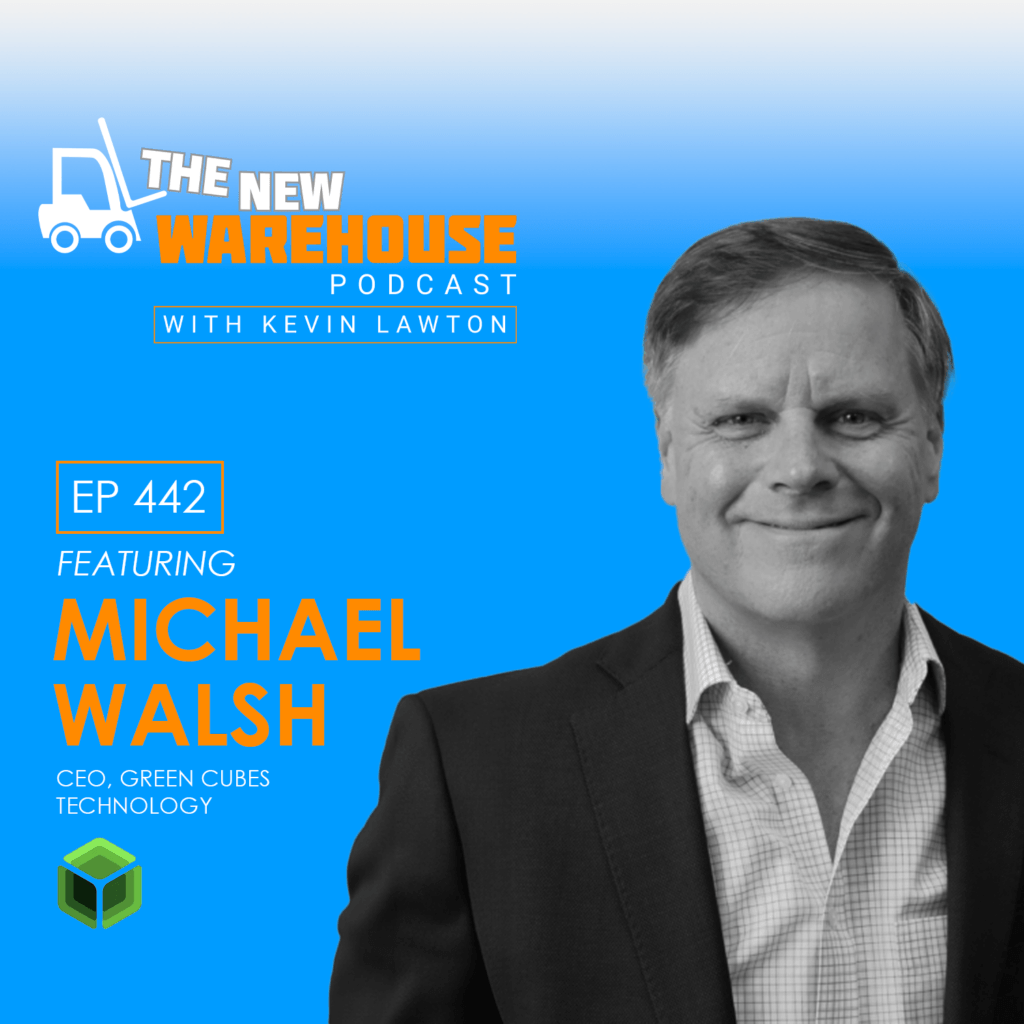
In episode 442 of The New Warehouse podcast, Kevin talks with Michael Walsh, CEO of Green Cubes Technology. The company, a provider of electrification solutions for the past thirty-five years, is celebrating the tenth anniversary of its SAFEFlex battery. Green Cubes Technology has successfully deployed over 10,000 SAFEFlex batteries, significantly supporting the warehousing and material handling industry. Walsh shares insights into the company’s journey, the impact of lithium-ion technology, and future trends. Transforming Warehousing with Lithium-Ion Technology Michael Walsh reflects on Green Cubes Technology’s ten years of manufacturing lithium-ion systems for warehousing. “We’re now in the aftermarket model where customers say, ‘Hey, great, they’re still cooking. They’re still doing well,’” Walsh notes, highlighting the batteries’ longevity and performance. Total Cost of Ownership: A Key Driver for Lithium-Ion Adoption Walsh emphasizes the importance of total cost of ownership (TCO) in driving the adoption of lithium-ion technology. “The only reason it takes off is the total cost of ownership. We have the proof points; you’re seeing batteries last longer and have fewer maintenance cycles,” he explains, illustrating lithium-ion batteries’ financial and operational benefits in warehousing. Lithium-Ion Batteries in Material Handling: Lessons Learned Reflecting on a decade in the business, Walsh shares learnings and the performance of their batteries. “Every site is different. Every application is different. The faster we lean into saying exactly what you have for your charging infrastructure, your electrical infrastructure, the better,” he says, emphasizing the importance of understanding customer needs and site specifics. Key Takeaways Durability and Longevity: Green Cubes’ lithium-ion technology has proven its durability and longevity in warehousing operations. Focus on TCO: The adoption of lithium-ion is largely driven by its lower total cost of ownership compared to traditional power solutions. Customized Solutions: Understanding the unique needs of each site and customer has been crucial for Green Cubes in delivering effective lithium-ion solutions. The New Warehouse Podcast EP 442: Green Cubes Technology – A Decade of Advancing Lithium-Ion Power in Warehousing
Women In Trucking Association announces its December 2023 Member of the Month

The Women In Trucking Association (WIT) has announced Deb Beecher as its December 2023 Member of the Month. Beecher is an area risk manager I for J.B. Hunt Transport and recently celebrated 40 years with the company. Raised by a 3-million-mile safe driver, Beecher was familiar with the trucking industry and had an appreciation for drivers and the work they do across the nation. She remembers passing by J.B. Hunt on her way to church every Sunday and shortly after graduating high school, her best friend’s father who was a vice president of transport at the time encouraged her to apply. The decision was easy as the passion for the industry was already there. Celebrating 40 years with the company in 2023, Beecher did not start her time there thinking she was going to make a full career out of it. “My intention was to go into nursing, but I ended up on a different path,” said Beecher. “Since the start, I have really enjoyed working at J.B. Hunt. I look back now, and know transportation is where I was meant to be. I have held various roles at this company but have always come back to the operational side and working with the heart of our company, the drivers.” Beecher understands the importance of safety within her company and values deeply the opportunity to provide safety resources to its drivers. “Many drivers have connected with me to say thank you and I love that about my role,” said Beecher. “Whenever our drives utilize new safety resources, it’s like a lightbulb turns on for them and it’s not just a good feeling, it’s a great feeling.” A fond memory of her time at J.B. Hunt was before driver load sheets were digital and one that was essential to an important load has been misplaced. Mrs. Hunt personally took the time to help Beecher look for the load sheet until it was found. She enjoyed the time she got to spend with Mrs. Hunt saying, “she has always had a heart for the drivers of J.B. Hunt and would do whatever it took to make sure their time at the company was successful.” In 2018, Beecher received the Rodney Horton award that is given in recognition and appreciation of commitment to J.B. Hunt and compassion for others. The award is in honor of Rodney Horton who was a long-time employee and exemplary person who passed while employed with J.B. Hunt. In this same year, Beecher and her team received the Pillar award for Q1 for Truckload Support category. Beecher is a champion for women in the trucking industry saying, “I encourage women within our industry to show up to work, do your job well, and you will be recognized for your work. Believe in yourself and never think you aren’t capable.”
Know the differences and functionalities of battery management systems
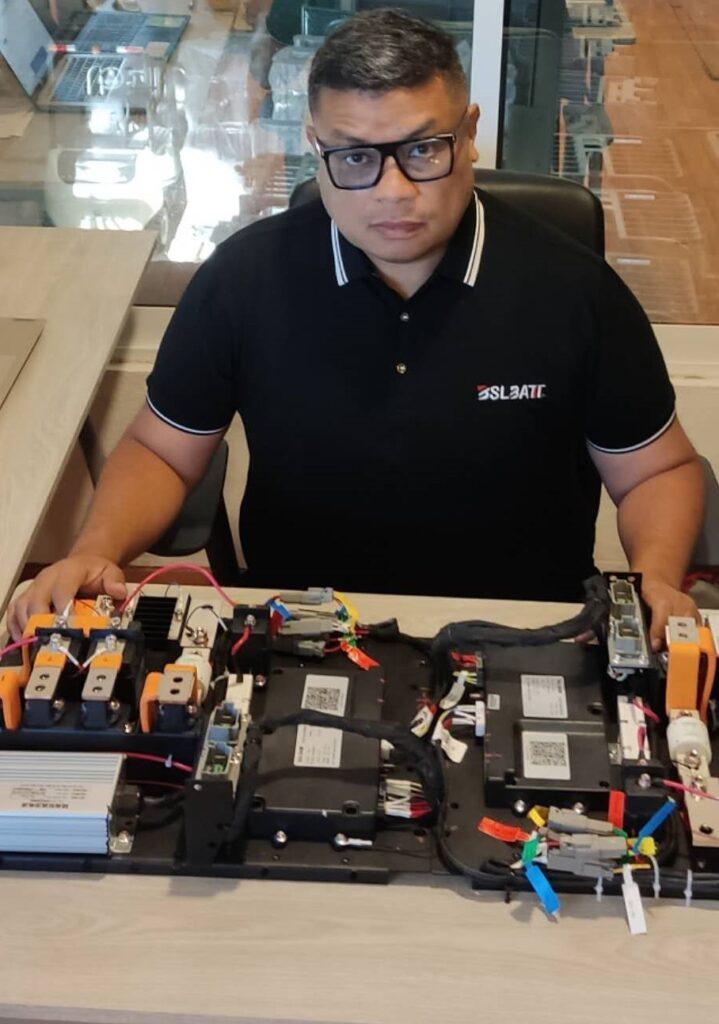
Batteries used in forklifts and other material handling equipment often look very similar, with no obvious differences in design or features. A vehicle’s voltage, Ah capacity, and other technical indicators must meet the requirements of the main vehicle standard. However, there are often significant price differences between brands, not only due to the functionality of the battery management system (BMS) but also because of other parts of the “total product”: delivery and installation, integration with forklifts and chargers, and support, service and parts availability. For optimal performance and longevity, it is crucial to choose a lithium forklift battery that is reliable and safe. Your organization’s efficiency can be maximized by choosing the right battery for your device. How do cheap industrial lithium batteries remain cheap? When production expands, cheap overseas labor may be a major factor in retail prices. Material handling, however, is a relatively niche market. This advantage is offset by higher shipping costs and longer delivery times. After that, what happened? First and foremost, it is the limited functionality of non-automotive-grade high-quality battery modules and base-level BMS. Secondly, the CAN bus system is unstable and the components are of high quality. Industrial lithium batteries are affected by these factors. The battery core is the heart of the battery, according to BSLBATT. We work hard to extend the life of our batteries and increase their energy and power density by using only the highest quality batteries with the safest technology. Even in extreme weather conditions, it operates over a wide temperature range. Furthermore, advanced BMS prevents battery degradation by providing real-time diagnostics, adjusting individual cell charging, and protecting and optimizing the battery. Furthermore, the Advanced Controller Area Network (CAN bus) is the battery’s nervous system for communication. In addition to communicating battery condition information to the BMS system, the CAN bus functions as a central network hub. Additionally, high-quality components prevent overheating during high-current charging and discharging. In order to maximize the performance of the battery system, BSLBATT forklift lithium batteries are designed with the highest quality components. Process of charging and discharging. The lithium battery module, BMS, CAN bus system, and high-quality components cannot be adjusted according to the customer’s actual working conditions. Moreover, there are no advanced features, which may result in a price advantage, but may also cause battery users problems. As you will see in the practical example below provided by David Zabala, a professional electrical engineer and top forklift expert at one of BSL’s distributors in Mexico, cheap industrial lithium batteries purchased online from overseas arrive at your doorstep just as easily as forklift batteries. The TV remote control requires AAA batteries. No, it isn’t. A second forklift or crane is required to remove the old battery, and a technician must be trained to connect and test it. Inspections include connectivity, safety, and operational aspects. BSLBATT’s high-quality lithium battery brand price usually includes installation and setup costs. Due to potential service needs, labor costs for initial installation will continue to rise. In the best case, the downtime cost is equal to the rental cost while you wait for the spare parts to arrive. The cost of downtime to business operations is the worst-case scenario if a replacement is not made quickly. An industrial lithium battery purchased online had a problem This is the story told by David, a professional electrical engineer and top forklift expert at a BSL distributor in Mexico. BSL distributor in Mexico provided a quote for 15 5,000-pound electric forklift batteries to a customer in Monterey. It turned out that BSL’s distributor in Mexico quote was $1,200 higher than “the Internet’s” price, so it lost the bid. David’s personal profile: https://www.lithiumforkliftbattery.com/bsl-batteries-north-america.html A month later, the customer received a 20HQ industrial lithium battery and lithium battery charger from the public transportation company, but the old battery in his forklift couldn’t be replaced. If he orders through BSL’s distributor in Mexico, the new battery will be delivered and installed, and the old battery will be removed and properly disposed of. Instead, customers pay BSL’s distributor in Mexico $220 per battery for installation. The customer experienced battery failure approximately 90 days later, contacted the manufacturer, and had a replacement battery accessory shipped to him. In this call, the customer asks David for help with replacing the damaged parts for a service fee of $500. While customers waited for their units, the only forklift stopped again. The rent ended up costing him nearly $600. He also experienced headaches and downtime, as well as the time it took to overcome these obstacles. “So we spent an extra $1,500 upfront, so he bought the battery from the Internet,” David said. Once all is said and done, the customer shows that he understands local support for the product and won’t make the same mistake again.” What is the best strategy for industrial lithium batteries? According to David, most forklift dealers in Mexico do not use lithium technology at all. Many of them are making their own batteries or relying on artisanal battery producers who have not yet fully developed the technology they use. There are significant safety concerns with these batteries, and many battery systems today look as if they were cobbled together with jumper cables. Today, too many companies are playing with fire! To help more forklift dealers choose the best industrial lithium battery, I feel it is necessary to elaborate on four points. It’s not comprehensive, of course, but if a vendor can’t answer your questions in these areas, then they aren’t worth working with. Safety is more important than price ● There is a wide range of battery technologies available in terms of cost and safety. I recommend paying the premium. Battery accidents are dangerous and, in my experience, more expensive in the long run than buying safe, high-quality batteries. For the peace of mind of our customers, all BSL products have passed the most stringent UL2580 test and every product is covered by PICC insurance! UL2580 test certification video: https://www.lithiumforkliftbattery.com/lithium-forklift-battery-ul2580.html ● Contact the
New Leuze location in the USA
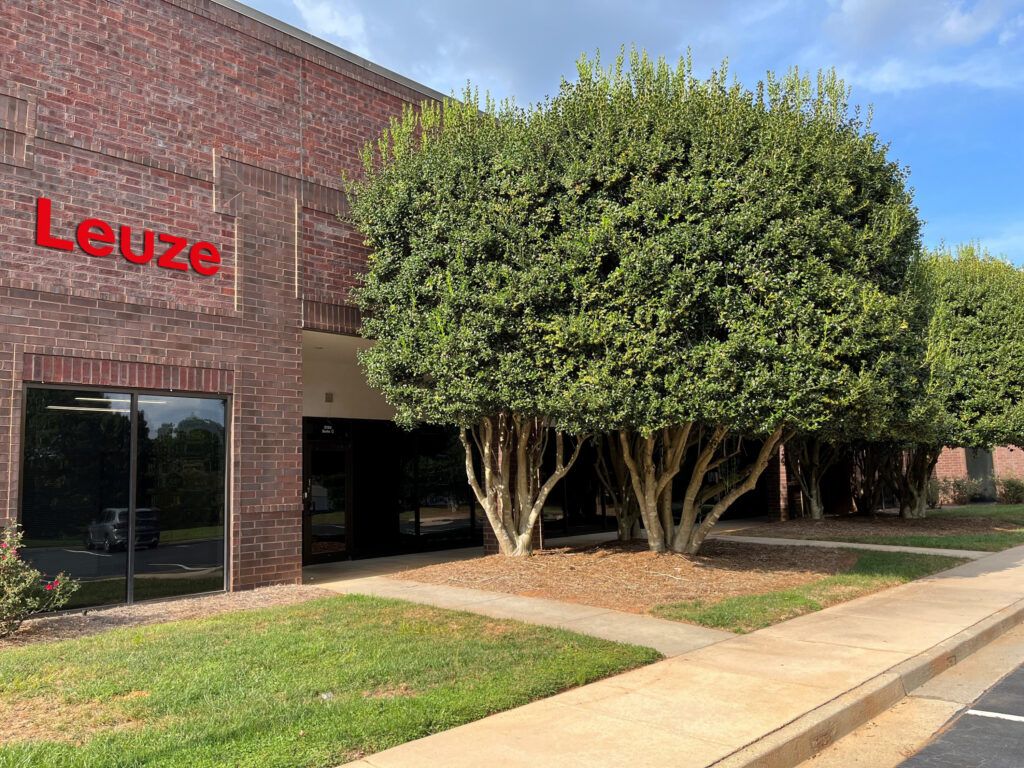
As part of its global growth strategy, Leuze in the USA is moving to new premises. The US Leuze Sales, Production and Development departments will in the future be located in Duluth, Georgia. Duluth in the northeast of Atlanta, Georgia, will in the future be the new Leuze location in the USA. “After careful consideration, we have decided to move our office to a new, more modern and more spacious US location,” says Ibrahim Zuva, VP Operations and Technology Americas. This decision is consistent with Leuze’s long-term strategic growth targets. “The new location also provides a more favorable environment for cooperation with our customers, distributors and partners,” emphasizes Zuva. Everything under one roof A further advantage: Sales, production and development will in future all be under one roof. Leuze will relocate the Sales, Operations and Development departments currently based in New Hudson, Michigan, by the end of 2023. “At the beginning of 2024, US production will also be moved to the new location. The formal opening of the new Leuze location is planned for March 2024,” says Zuva. Extensive range of high-tech sensors Leuze offers its customers in the USA an extensive range of high-tech products, which include a large number of different sensors for automation technology. For example, switching and measuring sensors, identification systems as well as solutions for data transmission and image processing, and everything needed for safety at work: safety components, safety services and safety solutions. The new on-site training center provides the company’s employees, customers, and distributors with many possibilities for further training. “We greatly value the good relationship we have with our customers, distributors, and we are convinced that the relocation will further consolidate our cooperation,” says Aaron Henry, President Leuze USA. “Local production brings us closer to our customers and will allow us to supply them with products faster and more efficiently,” he emphasized.
Charging Station to Power Electric Trucks in Port of Long Beach
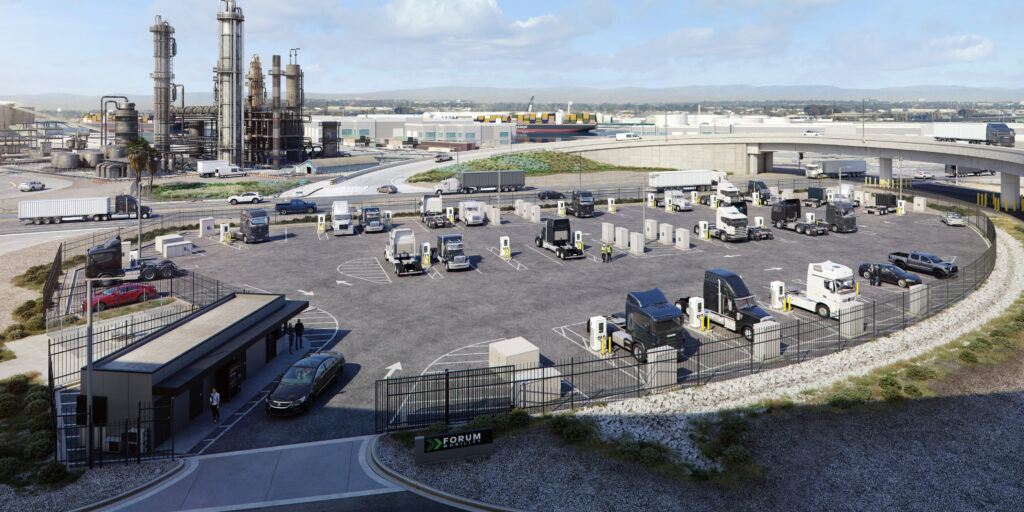
The growing fleet of electric trucks serving the Port of Long Beach will be able to charge at a new depot scheduled to begin construction in mid-2024 along Pico Avenue just north of the Long Beach International Gateway Bridge. The Port is partnering with Forum Mobility, a leading zero-emission drayage trucking solutions provider, to offer 19 dual-port chargers and six single-dispenser chargers at the new station, capable of charging heavy-duty electric trucks in about 90 minutes, depending on battery size. The depot, located at 260 Pico Ave., is scheduled to go online in fall 2024. “Forum Mobility is taking the next step toward helping the Port achieve its goal of having 100 public charging stations in the Port available for heavy-duty trucks by 2026, which will help us transition away from diesel fuel and move toward a zero-emission future,” said Port of Long Beach CEO Mario Cordero. “We are proud to be an industry leader in the sustainable movement of goods as we continue to make dramatic reductions in air pollution.” “We thank Forum Mobility for delivering the necessary infrastructure to help us become the world’s first zero-emissions port,” said Long Beach Harbor Commission President Bobby Olvera Jr. “We have a duty to enhance air quality for our surrounding communities and an obligation to assist our local truckers with cost-effective solutions to operate more sustainably.” “With the support of the Port of Long Beach, Forum is building the infrastructure for heavy-duty trucks to transition from diesel to electricity,” said Matt LeDucq, CEO and co-founder of Forum Mobility. “This partnership provides drayage truckers a solution to comply with California Air Resources Board regulations at a convenient location and at a competitive cost. Forum is building a network of charging depots at the ports, along freight corridors and near distribution centers to serve owner-operators and carriers of all sizes in the transition to zero emission vehicles. We make it easy to go electric.” In addition to the Port of Long Beach, Forum Mobility has eight charging depots in advanced stages of development scheduled to open within the next two years at seaports and along goods movement corridors throughout California. The announcement comes as the California Air Resources Board will require any new drayage trucks registered to serve the San Pedro Bay ports complex as of Jan. 1, 2024, to be zero-emissions and for the entire drayage fleet to be zero-emissions by 2035. In an effort to assist truck drivers with making the transition, the Port of Long Beach is partnering with the Port of Los Angeles, CARB and CALSTART to make $60 million in Clean Truck Fund Rate funding available for vouchers toward the purchase of zero-emission, Class 8 drayage trucks operating within the San Pedro Bay ports complex. With funds collected by the San Pedro Bay ports, up to $436,000 per truck is available through the California Hybrid and Zero-Emission Truck and Bus Incentive Project. Funding information can be found at https://californiahvip.org/. Truck drivers can drop-in and ask questions to learn about CARB’s new regulation and the incentive program during an event scheduled for 8:30 a.m. to 4 p.m., on Tuesday, Dec. 12 at the Port of Long Beach Terminal Access Center, 1265 Harbor Ave., Long Beach (southwest corner of Harbor Avenue and West Anaheim Street).
Zero-Emissions Cargo Handlers debut at Port of Long Beach
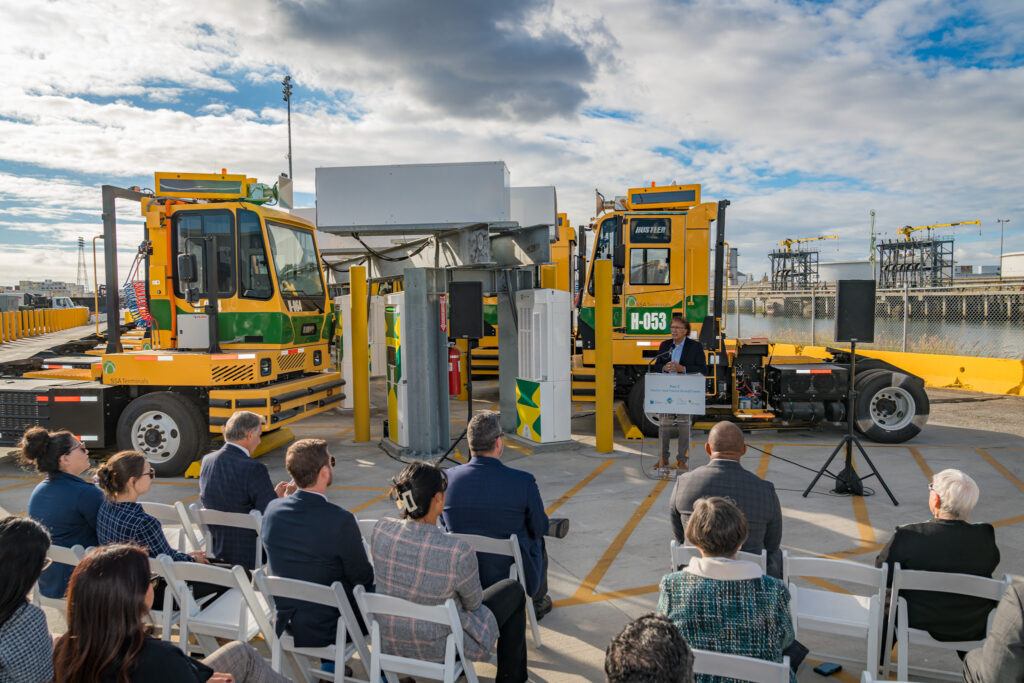
A fleet of 33 new human-operated, zero-emissions battery-electric yard tractors were officially unveiled Wednesday at a Port of Long Beach container terminal where the cargo-handling machines have replaced traditional gasoline and diesel-powered models. The deployment – the largest of its kind on the West Coast – was led by terminal operator SSA Terminals LLC, a joint venture between SSA Marine and Matson Navigation Company. It is partially funded by a $50 million grant from the California Air Resources Board for the Sustainable Terminals Accelerating Regional Transformation, or START project, a sweeping, transformative demonstration of a near-zero and zero-emissions supply chain. The START project is part of California Climate Investments, a statewide initiative that puts billions in cap-and-trade dollars to work by reducing greenhouse gas emissions, strengthening the economy and improving public health and the environment – particularly in disadvantaged communities. Additional funding for the equipment was provided by a U.S. Environmental Protection Agency Targeted Airshed Grant award. The new machines increase the percentage of zero-emissions equipment being used at the Port of Long Beach to approximately 20%. The percentage will continue to increase as more zero-emissions equipment is rolled out at the Port. This equipment also accelerates Pier C’s progress toward zero-emissions operations, a process that will continue further as SSA Terminals works to integrate zero-emissions, human-driven top handlers. “Meeting our aggressive zero-emissions goals is not possible without the support of our partners, and this project is just another example of the shared commitment at the Port of Long Beach to a zero-emissions future,” said Port of Long Beach CEO Mario Cordero. “I’d especially like to thank SSA Terminals for leading zero-emissions efforts at Pier C, Southern California Edison for prioritizing zero-emissions infrastructure projects and CARB for the funding to make these types of projects possible.” “This project is exciting, and we commend all parties involved for balancing the need for zero-emissions technology and infrastructure while bolstering the efficient movement of cargo by the hardworking dockworkers,” said Long Beach Harbor Commission Vice President Bonnie Lowenthal. “We are excited to see the Port of Long Beach moving in this direction, consistent with Matson’s goals of achieving a 40% reduction in Scope 1 greenhouse gas fleet emissions by 2030 and net zero GHG emissions by 2050,” said Matson Chairman and CEO Matt Cox. To turn idea into reality, SSA Terminals closely collaborated with the equipment developers to create machinery and infrastructure that could withstand the intensity of a full workday on the docks. The equipment is capable of running a two-shift operation with a once-per-day opportunity charge. Both the Port and SSA Terminals worked with Southern California Edison to bring the project to fruition. SCE’s Charge Ready Transport program supports heavy duty electrification projects and was vital to the success of the project.
Association of Diesel Specialists Convention will feature session on Technician Retention
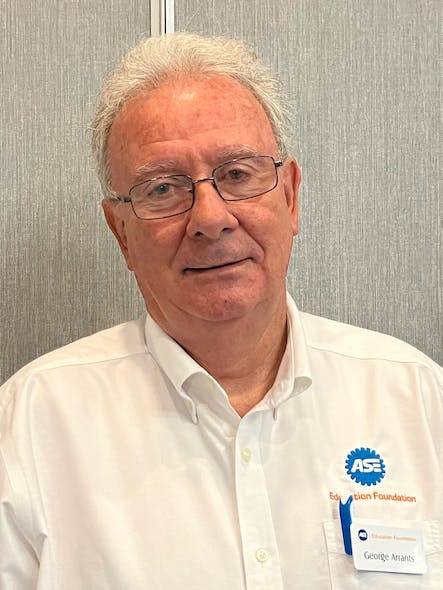
George Arrants, Vice President, ASE Education Foundation will present “What Makes Technicians Leave? and How to Stop Them” at the 2024 ADS Convention in Grapevine, Texas The Association of Diesel Specialists (ADS) has announced a new speaker for the 2024 ADS International Convention, George Arrants. Arrants will present “What Makes Technicians Leave? And How to Stop Them” at the Gaylord Texan Resort & Convention Center. The convention runs from January 21-22, 2024 immediately preceding Heavy Duty Aftermarket Week (HDAW) and features the latest industry education sessions as well as numerous networking opportunities. When an ADS service member has a quality technician leave, it creates a major void that is difficult to fill. This session will address the challenges of retention and recruitment of technicians. ASE Foundation’s Arrants will share his insights into what really motivates technicians to leave employers. It’s more than just pay. He will offer practical and actionable tips on how ADS members can strengthen relationships with existing technicians and create relationships with technical schools to supplement their workforce effectively. “We look forward to having George present at the 2024 ADS International Convention,” stated ADS CEO Scott D. Parker. “Losing talent is difficult, particularly in today’s employment environment. Every ADS member will benefit from this session with real takeaway retention ideas.” During the ADS International Convention (January 21-22), ADS members will receive diesel specific industry education and training as well as networking opportunities with hundreds of their peers in the diesel sector. Immediately following the ADS International Convention, HDAW kicks off (January 22-25). ADS members will interact with more than 2,500 executives and managers at the largest North American gathering of light, medium and heavy duty aftermarket professionals in the industry. HDAW also features a trade show with over 300 exhibitors. Register for both the ADS International Convention and HDAW now for lower pricing.
Central Rent-A-Crane of Indianapolis wrapping up expansion
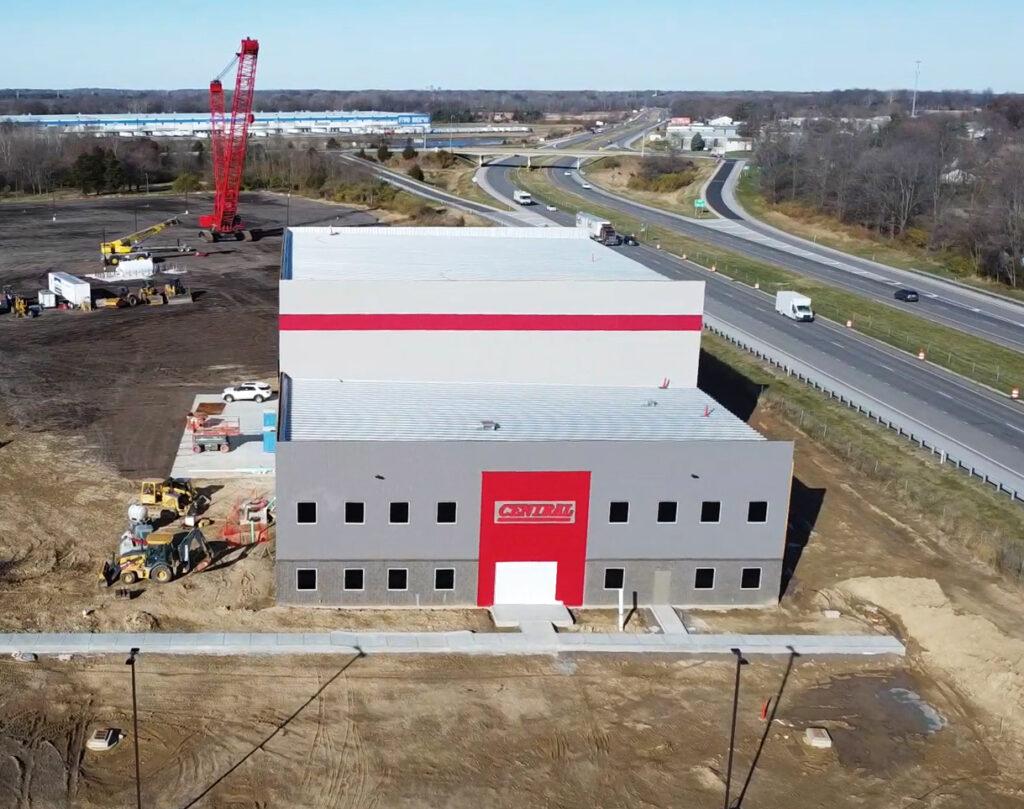
Big changes are coming soon to Central Rent-A-Crane of Indianapolis, a member of the ALL Family of Companies, as the branch is in the final phase of an expansion project to better serve its customers. It will soon move to a new 14-acre property in nearby Fairland. Construction is wrapping up on a new 17,000-square-foot facility at the property. It features five service bays, including one 30-foot-wide wash bay, 55-foot ceilings, and heated floors. Another 6,000 square feet is dedicated to offices, 4,000 square feet for parts on the mezzanine level, and 4,000 square feet will be reserved for future expansion. The surrounding acreage provides plenty of space for cranes. The office space includes a breakroom large enough for 60 people, which will double as a safety training space. “The new facility is a service dream,” said Kevin Hileman, general manager of Central Rent-A-Crane of Indianapolis. “With the high ceilings, we’ll be able to extend crane booms for service indoors, and the heated floors will make a huge difference for our service technicians.” Hileman says the new facility speaks to ALL’s commitment to service. “The market has granted us huge success because they’ve responded to our customer-first approach to business,” said Hileman. “At our present rate of growth, we’re building this facility to accommodate future expansion.” A grand opening celebration will be scheduled to mark the formal opening of the new branch headquarters. The Indianapolis branch is one of 33 ALL Family branches throughout North America. In Indiana, ALL also operates Central Rent-A-Crane branches in Fort Wayne and Hammond.
The Future of Electrification Conference returns for its third year
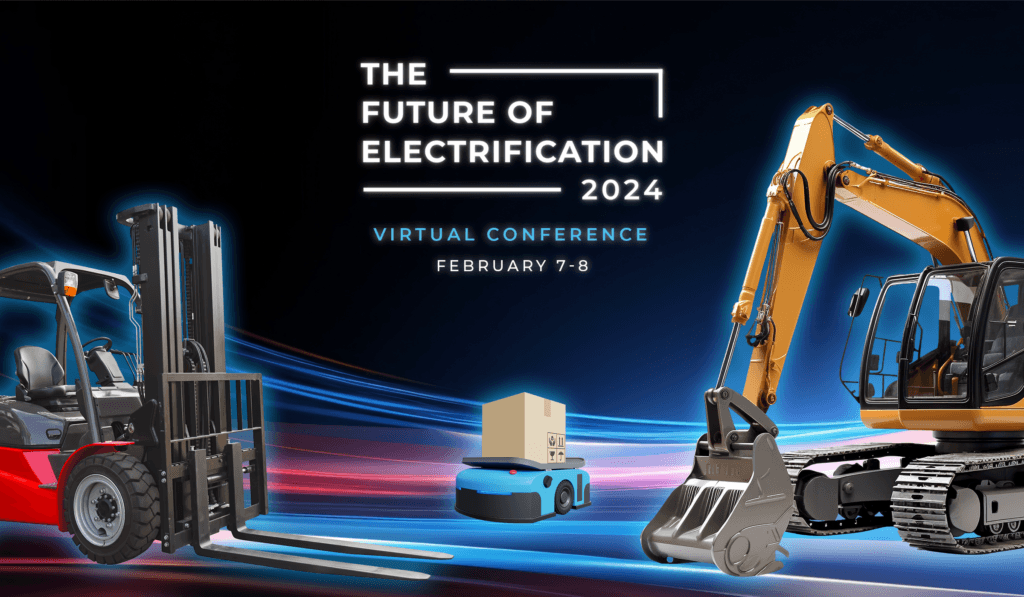
ZAPI GROUP drives discussions on achieving an All-Electric Reality with industry experts and futurist Stefan Hyttfors ZAPI GROUP, a global provider in vehicle electrification, announced the 2024 dates of its Future of Electrification virtual conference taking place on February 7-8, 2024. Following the success of the first two years, the conference will bring together industry leaders and experts in industrial and commercial vehicle electrification to discuss the practical steps to achieve an all-electric reality. Presented by ZAPI GROUP, an electrification leader since 1975, the conference will provide insights into the latest technology, industry trends, and geopolitical and regulatory factors driving the electrification revolution. With the consumer automotive market-leading electric adoption, the event’s focus will facilitate conversations showcasing the practical path to electrification for industrial and commercial vehicles and machines. “We are actively working with customers in industries such as construction, commercial eMobility and material handling to realize wide adoption in all motive industrial markets. Our purpose is to make the electric dream a reality,” said Lloyd Gomm, Global Marketing Director for ZAPI GROUP. “We are excited to host our third annual virtual event where we can discuss our shared challenges and opportunities with thought leaders across the electrification business.” Attendees can expect a dynamic program that features a keynote presentation from renowned futurist Stefan Hyttfors titled Electrification as the Catalyst for a New Eraand a special presentation about the future of motor sport with Formula E’s Maserati MSG Racing Team. Presenters from leading organizations such as Ubiquicom, RISE AB, Discover Energy Systems, Flux Power, Trojan Battery, Stafl Systems, Inventus Power and SUNCAR AG join the ZAPI GROUP team to share their visions, challenges, and success stories in their journeys towards an all-electric world. Prominent industrial media leaders Becky Schultz, Vice President, Content, KHL Power Group; Darrell Proctor, Senior Associate Editor, Power Magazine; and Sara Jensen, Technical Editor, Power & Motion, bring their experience and perspectives across industries as moderators for some of the event’s panel discussions. Registration for The Future of Electrification 2024 is now open and free of charge. Visit www.futureofelectrification.org to register and for more information.
Gordon Report: Skills and Jobs in America: Past – Present – Future

First the good news: Over the past decade (2011-2020) investment in corporate training has grown by about 30 percent. The caveat is that professionals and executives received the lion’s share of these programs. (Development Dimensions International, 2023). The current skills-jobs picture paints a different reality. Seventy-five percent of U.S. employers now struggle to find skilled talent (worldwide it is 77 percent). This is the highest figure in 17 years. (ManpowerGroup 41 Country Survey, 2023). By 2030 U.S, talent shortages may lead to a loss of nearly $2 trillion from unrealized revenue. This will coincide with an estimated decline in the labor participation rate from 62 percent (2020) to 60 percent (2030). (Korn Ferry, “The Global Talent Crunch,” 2018). The worker pipeline is being squeezed because too many skilled workers are retiring and too few younger people are entering the workforce. Until 2029, 10,000 U.S. workers will retire each day. At least one-third are skilled workers. Unfortunately, the following generations are smaller and many of them lack the educational attainments needed to fill the high-skill jobs of the Fourth Industrial Revolution. In 2023 the ACT scores of U.S. high school seniors was the lowest in 30 years. Grade inflation at both the high school and college levels is masking the real educational accomplishments of today’s students. TALENT-DEFICITS CONSEQUENCES Here are some examples of the ways that current education and talent deficits are affecting the economic growth and social welfare of today and tomorrow. The post-COVID surge in airplane travel is stressing the aerospace sector. Airlines have ordered more planes, but both Boeing and Airbus have fallen behind in filling these orders. They have heavily invested in new aero-space technician training programs to replace retirees and expand capacity. Yet, poorly educated trainees are dropping out of these programs or creating quality issues on-the-job. Also, airplane part-suppliers are not delivering parts in a timely manner. They also are experiencing the same inability to find and skill more workers. The shortage of new planes in turn is forcing airlines to ramp up their repair and maintenance services on older aircraft. They also face shortages of trained mechanics and spare parts. This is reducing the number of airplanes in service at a time of increasing demand. Nearly 600 rural hospitals (30 percent of the total) are in danger of closing. (Center for Healthcare Quality and Payment Reform, 2023). A chronic shortage of doctors, registered nurses, and other skilled medical personnel and rising costs mean that many lack the resources to keep operating. Factories or fabs for advanced chip manufacturing are now being constructed in several locations across the United States. Many of these fabrication companies have already begun training and education programs for the engineers and technicians who will be needed to staff these plants. However, the Semiconductor Industry Association is predicting that up to 58 percent of the projected 115,00 jobs that will be added by 2030 may not be filled due to an insufficient number of students completing degrees in science and technology programs. The future U.S. labor economy needs more long-term talent investments. Demographic declines and increased job skills demands are not going away. Unless we do more to address skilled worker shortages, we can expect pay rises chasing a declining pool of qualified workers. This will complicate the U.S. inflation fight and raise the risk of a prolonged recession. About the Author: Edward E. Gordon is the founder and president of Imperial Consulting Corporation in Chicago. His firm’s clients have included companies of all sizes from small businesses to Fortune 500 corporations, U.S. government agencies, state governments, and professional/trade associations. He taught in higher education for 20 years and is the author of numerous books and articles. More information on his background can be found at www.imperialcorp.com. As a professional speaker, he is available to provide customized presentations on contemporary workforce issues.
BSLBATT and EVE sign battery cell strategic cooperation agreement
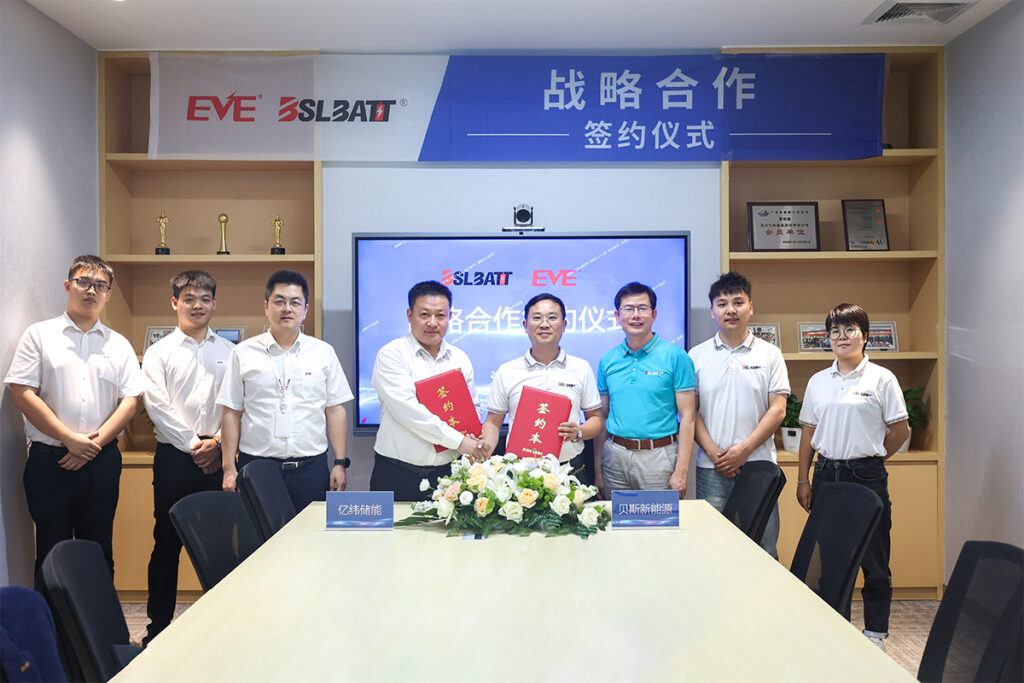
BSLBATT®, a China manufacturer of forklift lithium batteries specializing in the material handling industry, has announced that it has partnered with a global lithium battery company with core consumer technologies and solutions EVE Energy Co., Ltd signed a strategic cooperation agreement. The agreement will see BSLBATT add EVE’s LFP Cell to its current offering of innovative lithium battery solutions for forklift manufacturers and dealers looking to improve their forklifts. According to the official agreement, EVE Energy Co., Ltd will provide BSLBATT with a full range of Prismatic LFP Cells. “EVE Energy Co., Ltd is proud of the battery cell supplier partnerships we have with innovative partners like BSLBATT. We see the advantages of lithium iron phosphate power and the high-quality products they produce. We look forward to helping BSLBATT’s Customers increase uptime and lower the total cost of ownership of their material handling equipment by using EVE Energy’s cells.” – Rico Huang, EVE Energy Co., Ltd General Manager BSLBATT Battery leads the industry with innovative power options, with many forklift dealers turning to lithium batteries for high power applications such as Electric Forklifts, Multi-Directional Forklifts, Heavy-Duty Forklifts, Narrow Aisle Forklifts, Walkie Pallet Jacks, Electric Tow Tractors etc. BSLBATT’s lithium batteries are able to withstand harsh environmental factors while being maintenance-free and efficient. They allow warehouse managers looking for Refrigerated Storage to worry less about whether batteries are sustainable. “We are excited to bring our high-quality LFP Cells to BSLBATT customers around the world,” said Henry Shao, sales director of EVE Energy Co., Ltd. “Both BSLBATT and EVE believe that by providing quality products and excellent customer service, we can achieve greater success in Accelerate material handling throughput without breaking the bank. We look forward to working with the BSLBATT team to continue to expand its service offering with innovative technology and operational approaches adapted to today’s customer challenges.” BSLBATT’s forklift lithium batteries have a good track record and have been used with more than 12,000 Hster-Yale, Crown, Toyota, Manitou, Clark, Raymond, Combilift, Jungheinrich, Doosan, Linde, Nissan, Hyundai, Caterpillar, JCB, Bobcat, KION group , UNICARRIERS, KOMATSU, HELI, HANGCHA, BYD, Mitsubishi and many other electric forklift brands are integrated. They are plug-and-play and integrate seamlessly into the truck. Additionally, using BSLBATT’s fuel gauge and remote button, users can easily monitor battery charge status and turn the battery on and off as needed. BSLBATT lithium batteries are very efficient and can provide rated capacity at any discharge rate. This means operators will get longer working hours, with power continuously provided throughout the discharge process, and recharging in half the time compared to lead-acid batteries. The entire battery pack of BSLBATT battery has also passed UL2580, IEC62619 and UN38.3 certification, and the LFP Cell has passed UL 2580 certification, CE, IEC and UN38.3 certification. UL2580 test certification video: https://www.lithiumforkliftbattery.com/lithium-forklift-battery-ul2580.html Eric Yi, CEO of BSLBATT Battery, added: “We are seeing growing interest and adoption of lithium battery solutions across many industries. We are committed to bringing lithium batteries to market that address not only the challenges of lead-acid batteries, but other lithium batteries as well So. Providing this smart, seamless power solution supports our mission and provides the industry with an advanced approach to lithium batteries.” Interested in learning more about BSLBATT lithium-ion batteries and why they are so far removed from traditional solutions and their cloud platforms? Contact a BSLBATT energy expert today.
Association of Diesel Specialists announces free Technical Training during Annual Convention

Kevin Looney will present “2nd Generation HEUI for International & Ford 6.7 troubleshooting and repair” for EPA 04, 07 and 10 at the 2024 ADS Convention in Grapevine, Texas The Association of Diesel Specialists (ADS) announces that the technical training session at the 2024 ADS International Convention will be presented by Kevin Looney. Kevin will present ” 2nd Generation HEUI for International & Ford 6.7 troubleshooting and repair” at the Gaylord Texan Resort & Convention Center. The convention runs from January 21-22, 2024 immediately preceding Heavy Duty Aftermarket Week (HDAW) and features the latest industry education sessions as well as numerous networking opportunities. The Association of Diesel Specialists will be hosting a three-hour technical training class at no charge for registered attendees at the 2024 ADS Convention in Texas on January 21, 2024. Industry expert Kevin Looney will present information related to 2nd generation HEUI for International and on the 6.7 Ford troubleshooting and repair. It will include a discussion of the unique fuel delivery system found on these engines and some tips for diagnosing them. This will cover EPA 04, 07 & 10. Variable geometry turbocharging (VGT) and general aftertreatment principals will be included. Engine performance issues that commonly lead to aftertreatment concerns will be discussed as well. “We look forward to having Kevin Looney as the ADS Technical Training presenter,” stated ADS CEO Scott D. Parker. “Kevin has been maintaining and repairing equipment and vehicles for nearly 40 years, with a primary focus on domestic light, medium, and heavy duty diesel vehicle diagnosis and repair. ADS is committed to providing quality technical training for its members and this session is another example of that commitment.” During the ADS International Convention (January 21-22), ADS members will receive diesel specific industry education and training as well as networking opportunities with hundreds of their peers in the diesel sector. Immediately following the ADS International Convention, HDAW kicks off (January 22-25). ADS members will interact with more than 2,500 executives and managers at the largest North American gathering of light, medium and heavy duty aftermarket professionals in the industry. HDAW also features a trade show with over 300 exhibitors. Register for both the ADS International Convention and HDAW now for lower pricing. Kevin Looney has been maintaining and repairing equipment and vehicles for nearly 40 years, with a primary focus on domestic light, medium, and heavy duty diesel vehicle diagnosis and repair. Repairing everything from classic/historic trucks and equipment, to the latest computer controlled fully networked vehicles, Kevin has built a business known for getting the job done right. As a both a shop owner and working technician, he brings a unique combination of technical expertise, subject knowledge and hands on experience to the classroom. Building on a collaborative relationship with Bruce Amacker’s Turbo Training has allowed Kevin to expand his skill set to include educating. Kevin now splits his time between his shop in Phoenix Arizona, and a busy training schedule. Registration for the 2024 ADS Convention & Trade show is now open. Visit www.diesel.org/2024ADSConvention for more information.
Episode 441: Building supply chains with Izba
In episode 441 of The New Warehouse podcast, Kevin is joined by Aaron Alpeter, founder of Izba. Izba, a multifaceted company in the supply chain and e-commerce space, aims to assist startups in scaling their operations effectively. In this insightful episode, Alpeter shares his expertise on the fulfillment side of e-commerce, the evolving brand-provider relationships post-COVID, and the unique offerings of Izba. Building Supply Chains for Startups with Supply Chain Expertise Investors expect businesses to be stable and profitable from day one. Alpeter discusses how Izba started as a consulting business and evolved into a multi-company entity focused on helping founders scale their businesses and build their supply chains. “It’s actually three companies in one, with a mission to help founders start, scale, and exit their businesses,” Alpeter explains. Enhancing E-Commerce Operations Izba’s acquisition of Sourcify and the development of Capabl software are vital components of its business model. Alpeter elaborates on how these tools empower brands: “Capabl helps brands hold their 3PLs accountable and provides validation for 3PLs doing good work.” He highlights the efficiency and accountability brought to e-commerce operations through these innovative solutions. “Sourcify helps brands lower their COGS. So if you’ve got a widget you’re making for $10 today, we’ve got a network of about 3000 factories from around the world capable of making it at a lower price.” The Future of E-Commerce and Fulfillment Looking ahead, Alpeter predicts a more conservative growth approach for 3PLs. He suggests that success will come from focusing on performance rather than just technological aspects or marketing. “Letting your performance be what makes you special,” Alpeter remarks, highlighting the importance of delivering quality service and building a reputation based on reliability and efficiency. Aaron Alpeter discusses consumer demand for faster fulfillment: “We have figured out how to do 15-minute fulfillment… but nobody demands that. So that product is going away.” While rapid fulfillment is feasible, the consumer need for fast turnaround times is not as prevalent, leading to a shift away from such services. Alpeter emphasizes the need for 3PLs to focus on specific customer types or commodities to stay competitive. “The best thing 3PLs can do in 2024 is to go through their portfolios and prune brands that don’t fit their Ideal Customer Profile (ICP),” he advises. By doing so, 3PLs can ensure they’re providing the highest level of service to brands that align with their capabilities and philosophies. Alpeter encourages 3PLs to consider joining the Izba Exchange. “By integrating with Izba, 3PLs can have their performance fully audited, leveraging data from platforms like Shopify to provide a comprehensive operational scorecard. This integration will be a key differentiator in the Izba Exchange, showcasing empirical performance data, such as shipping 99% on time for many brands, helping them stand out in a crowded market of fulfillment providers.” Key Takeaways on Building Supply Chains Comprehensive Startup Support: Izba’s unique blend of consulting, sourcing, and software services provides holistic support for startups in supply chain management. Innovative Tools for E-Commerce: Integrating Sourcify and Capabl into Izba’s offerings enhances operational efficiency and accountability in e-commerce. Future-Oriented Approach: Alpeter’s insights into expanding applications for their technology indicate a forward-thinking strategy for Izba in the evolving landscape of e-commerce and fulfillment. The New Warehouse Podcast EP 441: Building Supply Chains with Izba