
Combilift retains Deloitte’s Best Managed Company Award for the 12th Consecutive Year
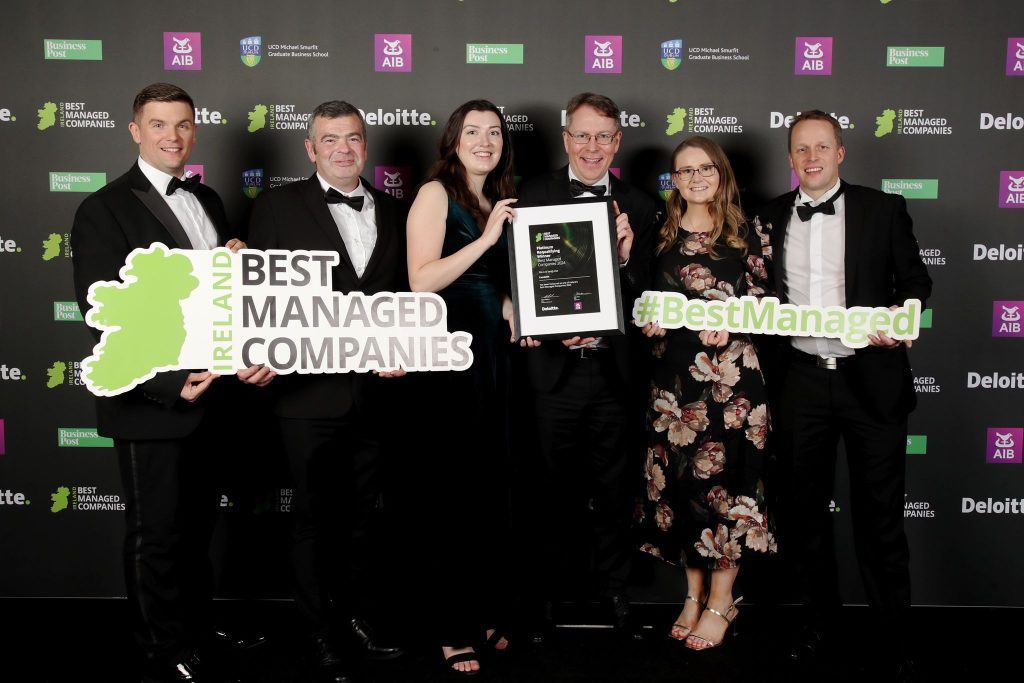
For the 12th consecutive time in the awards’ 16-year history, Combilift has been recognized as a Best-Managed Company, requalifying as a Platinum winner for the sixth time. Their management prowess was rewarded at Deloitte’s prestigious awards ceremony in Dublin on September 19th. The Deloitte Best Managed Company award acknowledges the achievements of management teams, not just individuals. The accolade recognizes overall business performance based on the criteria of Strategy, Capability and Innovation, Culture and Commitment, and Governance and Financial Performance. Judges examine every company based on these four equally weighted pillars to select a winner. The Best Managed Companies Program originated in Canada in 1993, with Ireland’s program, introduced in 2008, being the second longest-running program. In addition to Ireland and Canada, the program is currently run in 48 countries across four continents. Founded in 1998 by Martin McVicar and Robert Moffett, Combilift has grown from a small team of 10 to a total staff of over 850 people, selling to 85 countries worldwide. When receiving the award, Martin McVicar said, “It’s a great honor for us as a company to be acknowledged once again by a global brand such as Deloitte’s Best Managed Companies. The credibility of this global award enhances our brand to scale internationally”.
Fairchild Equipment earns RAVS Plus Certification from ISN
Fairchild Equipment has announced that it has received the RAVS Plus certification from ISN. This recognition places Fairchild Equipment among an elite group of contractors and suppliers out in ISN to meet or exceed the rigorous standards for workplace safety, quality outcomes, and risk management. The ISNetworld Review and Verification Services (RAVS) and RAVS Plus processes assess a company’s health and safety practices and programs. The RAVS Plus process goes beyond a simple desktop review and on-site observations, ensuring that a contractor’s written safety programs are operational in day-to-day activities. This verification process requires documented evidence and in-person interviews by ISN staff to confirm a company’s dedication to occupational health and safety and environmental compliance. “Receiving the RAVS Plus certification is a testament to our unwavering commitment to our ‘Safety Always’ core value” said Marty Schumacher, Corporate Safety Manager at Fairchild Equipment. “At Fairchild Equipment, safety is not just a protocol; it’s an integral part of our culture, emphasizing safety at all times and in all places.” For over 35 years, Fairchild Equipment has consistently provided comprehensive materials handling solutions, including new and used forklifts, aerial lifts, utility vehicles, construction equipment, and professional cleaning equipment, alongside service, parts, rental, fleet management, forklift training, and engineered storage systems. With over 330 employees, including more than 175 technicians, Fairchild Equipment continues to lead the industry with its dedication to safety and quality. “Our top priority is ensuring that our employees return home in the same or better health than when they started the day,” said Van Clarkson, President of Fairchild Equipment. “Achieving RAVS Plus certification reinforces our commitment to not only safeguarding our team but also exceeding our customers’ safety protocols when we are onsite at their locations to keep their teams safe,” Clarkson added.
Nelson-Jameson Executive receives Women in Supply Chain Rising Star Award
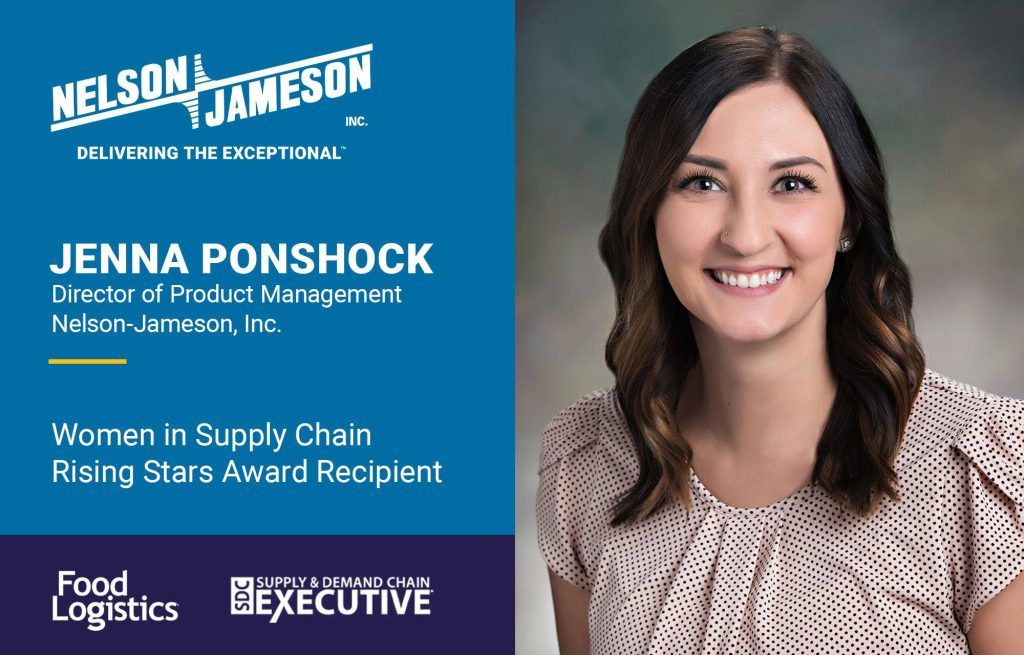
Food Logistics and Supply & Demand Chain Executive honor Director of Product Management Jenna Ponshock Nelson-Jameson has announced that Director of Product Management Jenna Ponshock was honored with a Women in Supply Chain Award. Food Logistics, the only publication exclusively dedicated to covering the movement of products through the global cold food supply chain, and Supply & Demand Chain Executive, the only publication covering the entire global supply chain, named Ponshock as a winner of its annual Rising Stars award. “We couldn’t be more proud of Jenna for receiving this prestigious honor from such well-respected industry publications,” says Mike Rindy, President of Nelson-Jameson. “In her time with Nelson-Jameson, Jenna has made a significant impact across our organization with unwavering kindness and mutual respect. As a rising star within and outside of her work with Nelson-Jameson, Jenna will undoubtedly continue to make a profound impact on supply chain operations.” The Women in Supply Chain Rising Stars award recognizes younger or newer professionals (39 and under) whose achievements, hard work and vision have helped shape the supply chain network. In 2023, two Nelson-Jameson female executives – Dakonya Freis, Vice President of Commercial Development, and Devon Vogel, Vice President of Customer Solutions – were honored with Women in Supply Chain Awards. “Every year, this award continues to amaze me. But this year especially, it’s all about the quality of the submissions. These women are doing remarkable things for their communities, organizations and teams and are paving the way for future young female leaders to be a part of an industry that’s making a difference,” says Marina Mayer, Editor-in-Chief of Food Logistics and Supply & Demand Chain Executive and Co-Founder of the Women in Supply Chain Forum. “New this year, the award was broken down into Rising Stars, Trailblazers, DEI Pioneer and Workforce Innovator. From there, we named an overall winner per category and then four honorable mentions per category. This year’s applications were superb and made it next to impossible just to pick one winner. I’m so proud of these women and their achievements. We’re just getting started.” Sarah Barnes-Humphrey, founder of Let’s Talk Supply Chain podcast and Blended Pledge, both sponsors of the Women in Supply Chain award, added that the winners have been crucial to their industries’ success and innovation. “Women are reshaping the landscape of supply chain management with their unparalleled contributions, igniting growth and fostering innovation across the industry. Their presence not only enriches the workforce but also brings a myriad of perspectives essential for tackling intricate challenges and refining global operations. The Women in Supply Chain award stands as a beacon, celebrating and amplifying their remarkable achievements,” Barnes-Humphrey said. “Congratulations to all the winners, everyone who was nominated and all those making an impact. This recognition honors the courage and dedication of all incredible people who work hard every day. This award is a testament to their unwavering commitment and profound impact on the field.”
Episode 523: Redefining LTL freight logistics with WARP
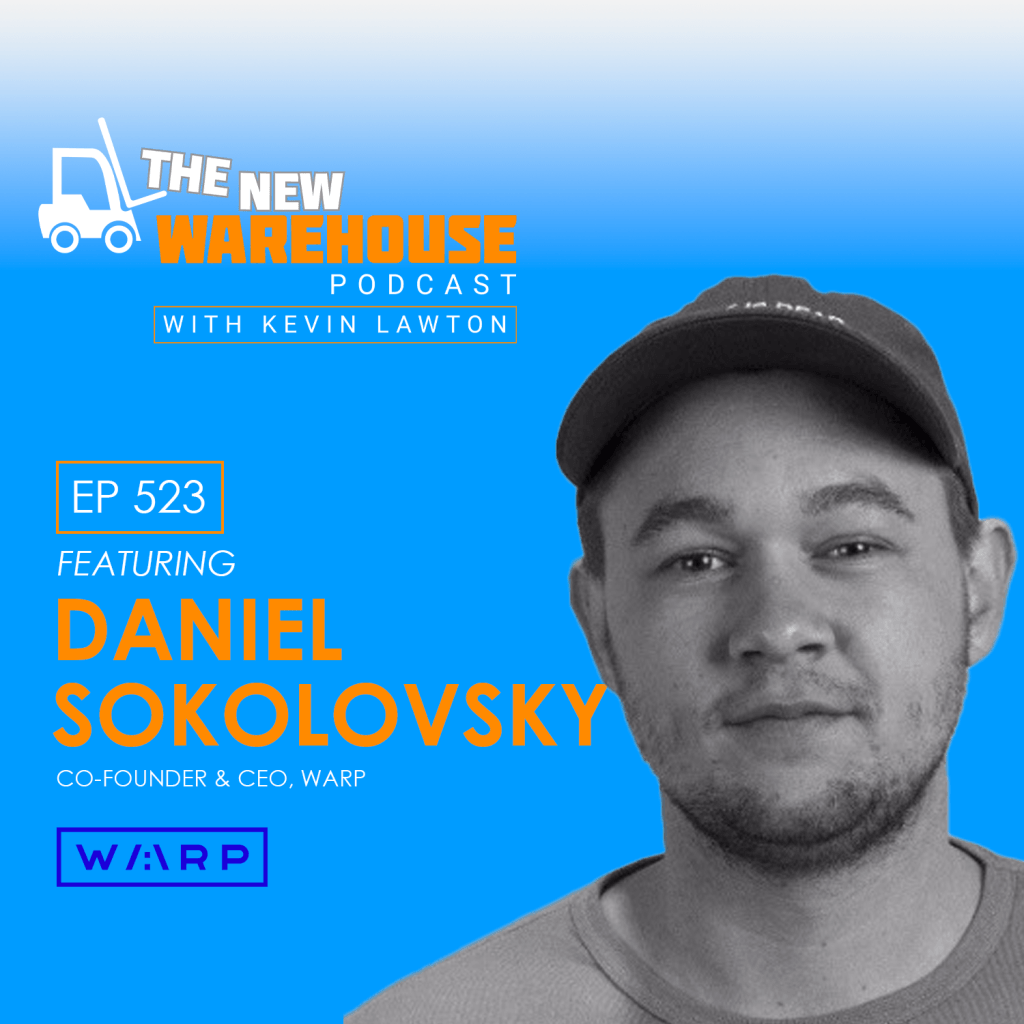
Welcome to this episode of The New Warehouse Podcast, where we dive into LTL freight. We’re joined by Daniel Sokolovsky, the co-founder and CEO of WARP. WARP is leading the charge in innovating Less-Than-Truckload (LTL) freight. In this episode, Daniel shares how WARP is shaking up traditional LTL networks with technology and flexible operations. The company’s mission goes beyond just moving goods; it’s about transforming the entire logistics process to be faster, more efficient, and cost-effective for brands and retailers. Building an LTL Network on Steroids WARP aims to revolutionize the LTL freight market with a powerful network combining cross-docking facilities, optimized routing, and flexible scheduling. As Daniel puts it, “The way we think about it is an LTL network on steroids.” This advanced network allows shippers to choose between speed and cost, offering flexibility that’s rare in traditional LTL logistics. Whether a shipper needs fast delivery or cost savings, WARP’s system allows them to tailor their logistics strategies to fit their unique needs. Bridging Parcel and LTL Freight in the Middle Mile Traditionally, separate networks handle parcel and freight deliveries. WARP, however, is changing the game by integrating these networks, especially in the crucial middle mile. Daniel highlights this innovation: “Where those two networks intersect is specifically in the middle mile.” By connecting these segments, WARP optimizes the movement of goods from regional hubs to final destinations, whether a small package or palletized freight. This strategy cuts costs and boosts efficiency, ensuring goods arrive quickly and reliably. “The flexibility in our network enables a significantly lower price point, quality on par if not higher, and significantly better visibility,” adds Daniel. A Tech-Driven Future for Freight Looking ahead, WARP hopes to unify freight modes—LTL, FTL, and parcel—into one seamless, tech-driven network. Daniel envisions a future where dynamic routing and optimization replace outdated static routing guides. “I think what happens is that we see a merge across all of these different service modes,” he explains. As WARP continues to innovate, they are exploring automation in cross-docking facilities, which could further streamline logistics and set new industry standards. Key Takeaways WARP’s LTL network offers unmatched flexibility, allowing shippers to balance costs and delivery speeds. Integrating parcel and freight networks in the middle mile cuts costs and enhances efficiency. The future of freight lies in a unified, tech-driven network that seamlessly connects multiple service modes. The New Warehouse Podcast Episode 523: WARP is Redefining Freight Logistics
ALAN Tropical Storm Helene Situation report
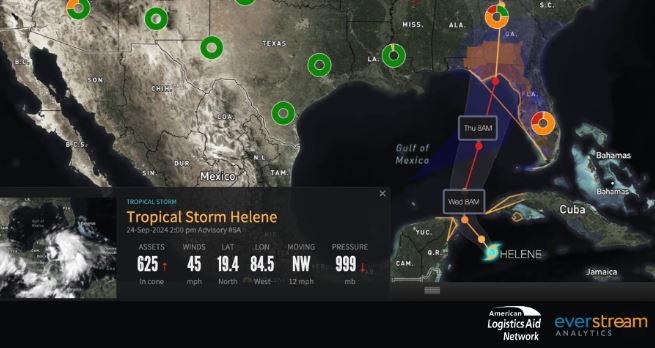
As Tropical Storm/Hurricane Helene approaches landfall on the Florida Gulf Coast, ALAN is busy preparing, and we are encouraging all of our partners to do the same. With that in mind, we’d like to share five pre-storm takeaways that we feel are essential for you and your organizations to be aware of. They’re listed below, and we hope you’ll find them informative. Below these takeaways, you’ll find the current situation report. We’ll update these resources frequently on our Disaster Micro-Site (https://www.alanaid.org/operations/) and will send another situation report as conditions warrant. The Disaster Micro-Site is also where we share key details about ALAN’s storm activation measures and how you can support our relief efforts. Because this storm has the potential to be especially destructive, we encourage you to visit ALAN’s Supply Chain Intelligence Center (https://www.alanaid.org/map/). There, you’ll find resources to keep you in the loop about everything from Helene’s latest path to how local and regional transportation infrastructure is being affected. “As always, all of us at ALAN hope that this storm will be much less severe than predicted and that any damage to life, health, and property will be minimal. At the same time, we are grateful for the many good people like you who continue to invest in our work, said Kathy Fulton, Executive Director of ALAN. ” We ask that you help us prepare to respond by making a financial donation today. Even a seemingly small contribution can go a long way in ensuring we can deliver critical aid to those who need it most. ALAN’s five key takeaways for your organization 1) Make personal safety a priority. If you or your locations are anywhere near Helene’s path, monitor the National Hurricane Center and your local National Weather Service forecast for real-time details. And please, don’t ignore any safety warnings that pertain to you or your personnel. This is expected to be a major hurricane with estimated winds of up to 115 miles per hour, so its potential impact is not to be taken lightly. 2) For the latest detailed information about storm-related road closures, facility closures, and other supply chain impacts, visit ALAN’s Supply Chain Intelligence Center at https://www.alanaid.org/map/. It should tell you most of what you need to know. But should you need additional information, don’t hesitate to contact us at https://www.alanaid.org/contact/. Time permitting, we will do our best to work with our emergency partners to get you an answer. 3) View the latest requests for logistics support by going to the “Active Logistics Needs” section of our Disaster Micro-Site at https://www.alanaid.org/operations/ Over the past few weeks, ALAN has communicated with various emergency management and non-profit partners regarding hurricane needs for Beryl, Debby, and Francine. Although there are no “open” requests for Tropical Storm/Hurricane Helene, this situation could quickly change as the storm makes landfall. In previous years, most of our requests have come several days or weeks after hurricanes. So stay tuned and ready – as requests for transportation, warehousing, volunteers, and material handling equipment come in, we will post them promptly. 4) Request or offer support. If you are a non-profit, please tell us what you anticipate needing by requesting alanaid.org/request-support. If you are a business, tell us how you can help by making a “pre-offer” for transportation, warehouse space, equipment, expertise, or services at https://www.alanaid.org/how-to-help/. Such information is hugely helpful because it helps us better plan our response. Knowing what is needed and who can help allows us to move quickly to support the most urgent needs. We’ll confirm the information with you and match offers with fit needs. 5) Be mindful and demure in your support of disaster relief activities. Don’t self-deploy to disaster-affected sites; please don’t participate in product collection drives. Although the intention behind both of these activities is good, they often create more challenges than they solve because they tend to get in the way of responders who are working to save lives – and add confusion to an emergency supply chain that is already under tremendous strain. If you’re looking for a meaningful way to help, consider making a financial contribution to ALAN or a humanitarian organization. Such donations will be much more helpful and efficient – and far more likely to reach storm survivors.
CKF are best of the bunch with their banana palletising solution for Primafruit
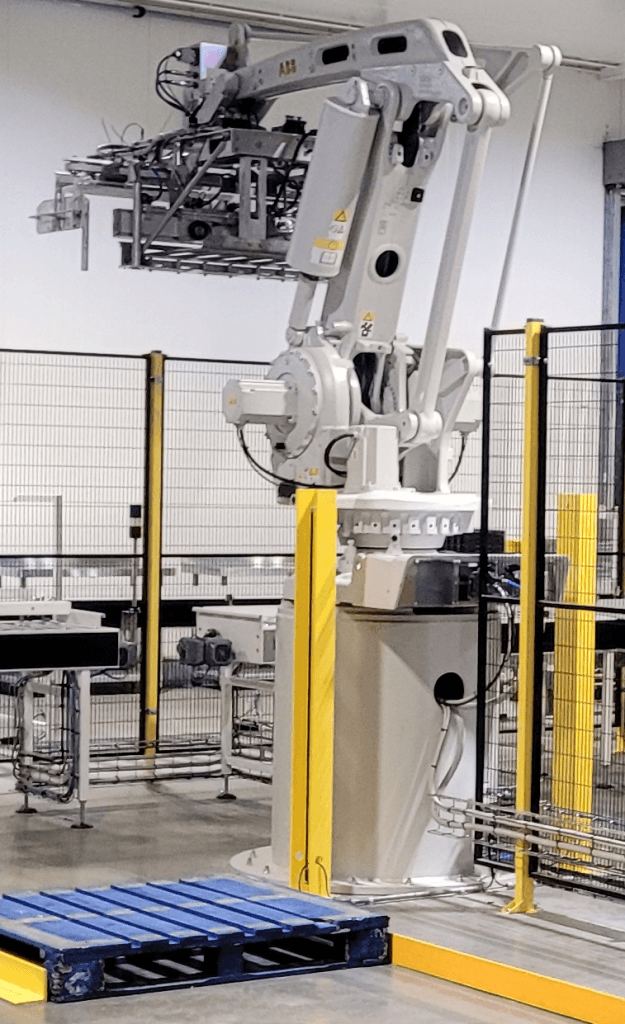
CKF Systems was delighted to have been chosen by Primafruit to develop a new bespoke robotic de-palletising and re-palletising system at their site in the Vale of Evesham. Primafruit is a primary supplier of a broad range of fruit. The challenge The banana inspection and packing lines within Primafruit at their Evesham facility were heavily reliant on manual labor. Imported produce, cardboard trays filled with bananas, were received stacked on pallets, typically to a height nearing 2.5m. The operation for Primafruit was to de-stack the cardboard trays, inspect the produce, and re-pack the fruit into either cardboard trays or collapsible, returnable plastic crates prior to re-palletizing and despatch to their retail customer. Primafruit wanted to automate the process at their state-of-the-art facility which is perfectly located in a central hub for agriculture and have a dedicated pack house, chilled storage, and ripening chambers. The new system was another important step in their automation journey creating a more efficient and safe working environment. Approach CKF has vast experience, designing and building robotic palletizing systems for a wide range of industries. This application demanded that the CKF team fully understand the challenges such that customized solutions could be developed to provide Primafruit with an efficient automated process. The challenges were identified as: De-stack filled cardboard trays from a pallet 2.5m high that could have an inconsistent stack form and deformed cases due to transit. Manage and deliver cardboard trays containing bananas to each inspection and re-packing station ensuring there is always an empty tray or re-useable plastic crate available at each station to enable continuous inspection and re-packing. Re-stack either cardboard or re-useable plastic crates onto the finished pallet ready for despatch. Minimize the system footprint for the efficient use of the existing floor space. For the automation to be cost-effective CKF proposed a single robot for de-stacking and re-stacking. Searches, tolerances, case quality, and stack profiles are all key elements to the success of any robot palletization. To undertake the de-stacking and re-stacking utilizing a single tool would require a bespoke design. The CKF Engineering team also understood the demands on the tool to handle two differing containers i.e. cardboard trays and plastic collapsible, re-useable crates. It was vital that the tooling developed would maintain the integrity of the bananas, without marking or causing any damage. By using a single robot cell, the system would maximize the floor space available to ensure that designated access routes for personnel and the movement of materials would be maintained. The Solution CKF, an experienced ABB value provider for over 13 years, utilized an ABB IRB 660 industrial robot system in the solution design – this dedicated palletizing robot is designed to handle a load of up to 180kg at a reach of up to 3.15m. Its low-weight upper arm, 4-axis design, and parallel rod system mean it delivers optimized speed, reach and payload. This robot is exceptionally fast making it ideal for palletizing bags, boxes, crates, bottles and more. The CKF Engineering team developed the bespoke gripper to pick either two or three cases at a time (dependent on stack orientation.). The single tool was designed to suit both de-stacking and re-stacking, together with handling two case variants of differing dimensions, location points, and material. Based on an anodized aluminum framework to reduce weight, the tool utilizes pneumatically actuated side grippers and base slide plates for transfer of the multiple case format, additionally, a vacuum assist is required to enable lifting of the product trays prior to separation from the stack. Due to the lack of conformity of the pallet stack from the suppliers to Primafruit, the CKF team developed the Robot positioning for de-palletizing using an onboard sensor array to determine the coordinates of height and stack position prior to the pick operation. Once transferred from the pallet, stack cases are transferred to and from the inspection cells on the CKF range of ZPA conveyor sections which utilises the Interroll DC platform. This perfectly matched range of controls, motor rollers, and power units enables the provision of a unique combination of conveyors for this system. This includes CKF accumulation conveyors configured to provide individually controlled zones, allowing zero pressure accumulation of the product trays and the flexibility to be configured to different sizes. The system is driven on a Rockwell platform using a compact GuardLogix 5380 safety controller with a 10” SVGA touch screen for the Operator interface. Troax safety fencing is used around the robot cell to provide the enclosure, with Leuze light guards providing protection for pallet entry and exit.
DURAVANT Expands into China and appoints County Manager

Duravant Establishes Entity in China and Appoints Executive to Lead Local Growth Strategies and Infrastructure Expansion Duravant LLC has announced the appointment of Denver Lu to the position of Managing Director, Duravant China Co Ltd. The announcement follows the company’s recent investments to establish a local sales and service office in Suzhou, China. In this new role, Lu will be responsible for leading business development across the company’s Protein Processing, Food Sorting and Handling, Packaging and Material Handling segments by delivering innovative automation solutions to the Chinese market through Duravant’s world-class brands. Duravant has a long history of supporting global customers who operate in China, and with these investments, the company is advancing their commitment to expand its local sales and service infrastructure to better serve their customers’ expanding automation needs. “China is poised to become the world’s largest consumer market, driven by robust economic growth and rising incomes,” said Petros Diamantides, Duravant’s Chief Operating Officer, Emerging Markets. “As the country shifts its manufacturing focus from speed to efficiency and from quantity to quality, traditional sectors such as food, agriculture and logistics are undergoing a transformative evolution. We see immense potential in the China market to grow our partnerships with multinational customers and regional Chinese powerhouse brands.” Duravant’s comprehensive suite of automation solutions includes hardware and software integration, equipment and technology solutions, and aftermarket parts and services. “Our expansion in China is more than just geographic; it represents our dedication to providing full-service solutions that cater to the unique requirements of the Chinese market,” said Diamantides. “By leveraging our global expertise and local insights, as well as developing capabilities on the ground, we will be well-positioned to support the growth and transformation of the China market.” “We are extremely fortunate to welcome Denver to Duravant,” added Diamantides. As a veteran business leader with almost 30 years of experience in the China market, Lu has held management positions with both food & beverage companies as well as with OEMs. Lu’s extensive industry knowledge stems from leadership roles at Simplot, OSI, and Marel. Lu holds a Master of Commerce degree from the University of New South Wales in Sydney, Australia and a Master of Business Administration degree from Rutgers University in New Jersey, United States. He also has been recognized as a Fellow of CPA Australia.
Container trading and leasing rates decline in China ahead of the Golden Week

China to US container leasing rates drop by 35% Average container trading prices in China decreased for the second consecutive month in September; remained 25% higher than last year’s average. This month’s China market update is packed with developments that could potentially disrupt supply chains both within China and from China to key markets like the U.S. and Europe. Typhoons slow down berthing times and container operations in key Chinese ports Last week, China experienced its worst typhoon in 75 years, making landfall on the east coast. Hapag-Lloyd reports that ships are now facing delays of 36-60 hours to berth in Shanghai, while Ningbo faces waiting times of 24-48 hours. This bottleneck is expected to worsen as Typhoon Pulasan approaches, potentially exacerbating the already strained situation. Several ports in Ningbo and Shanghai have announced the suspension of container operations. (As on 20 September 2024) East Coast labor strikes affecting U.S.-bound shipments On the U.S. front, the ongoing threat of labor strikes at East Coast ports has created uncertainty. These strikes are expected to affect operations at the ports in the east coast. This has led to an acceleration in orders over the past two to three months, with businesses pulling forward shipments to mitigate potential delays. “In light of the recent robust U.S. economic growth, particularly in consumer spending (expected to rise 2.4% in 2024), businesses have been pulling forward shipments to mitigate potential delays. This consumer demand, coupled with a projected 3.8% increase in imports in 2024, represents the significance of timely shipping from China.” shared Christian Roeloffs, cofounder and CEO of Container xChange, an online global container trading and leasing marketplace based in Hamburg, Germany. Golden week approaching; another factor for slowdown Our regular surveys indicate that demand for U.S.-bound shipments from China remains strong, especially with Golden Week looming. Golden Week, starting October 1, traditionally causes a temporary slowdown in logistics activities across China, with a noticeable dip lasting between seven and ten days. With these events in combination—the U.S. labor strikes, upcoming Golden Week, and port suspensions—the China-to-U.S. shipping route is set to be volatile and uncertain over the next 20 days. Container market conditions in China: Softening demand and container prices Despite these uncertainties, no significant congestion or market is tightening within China itself. Several customers have reported a drop in container prices and lower COC (Carrier-Owned Container) rates, suggesting a softening demand for exports from China. Average container prices on a downward trend As of September 2024, average container prices in China have maintained their downward trajectory, with declines accelerating ahead of the Golden Week holidays. This drop reflects a broader reduction in demand for container shipments. Prices have fallen by 25% year over year, from $3,012 in September 2023 to $2,525 in September 2024. This year, container prices peaked at $2,603 in July 2024 and have been decreasing for two consecutive months. Chart 1: Average container price chart in China Leasing rates decline for the second month Overall, China to US average one-way container leasing rates dropped by 35% from $1221 in the first week of August 2024, to $787 as on 23 September 2024. Chart 2: Average one-way container leasing rates drop by 35% from Aug -Sep’24 Average one-way leasing rates for containers from Shanghai to Los Angeles have fallen for the second consecutive month. Rates dropped from $1,149 in July to $786 in August, and to $732 as of mid-September. Despite this decline, current rates remain elevated compared to the same period in 2023, when rates were $479. We anticipate these prices to stay relatively high through the rest of the year due to uncertainties surrounding U.S. East Coast strikes and the broader economic climate. Chart 3: Average one-way container leasing rates from Shanghai to Los Angeles: July–September 2024 Industry insights and market outlook The current challenge in the China market is the low Carrier-Owned Container (COC) rates, making it harder to send units to the U.S. This is compounded by high Pickup Charges (PUC), which have resulted in fewer Shipper-Owned Containers (SOC) reaching the U.S. Consequently, we might see rising prices for U.S.-bound shipments. Container leasing demand is expected to slow as Golden Week approaches. Much of the Christmas and Black Friday inventory has already been shipped, with deliveries typically taking 30 to 60 days. Despite the ongoing challenges, there are no major reports of port congestion in China, though general trade volumes are declining, indicating a tougher economic environment. At present, securing containers is not an issue, though this may change as market conditions evolve.
Advance Lifts highlights innovative container dumper series

Optimize workflow efficiency with versatile and reliable container dumping solutions Advance Lifts continues to offer cutting-edge solutions with its comprehensive Container Dumper Series. Container dumpers are used to empty containers’ contents onto various receivers. This series includes a range of high-performance products designed to meet the dumping needs of various industries, including package and letter handling, food processing, material handling, automotive, manufacturing, and warehousing. The Standard Container Dumpers (DP) are compact and ideal for medium-duty applications where space is a premium. With a 125-degree dump rotation and versatile dump heights, these models are perfect for operations requiring efficient and reliable dumping capabilities in confined spaces. The front-mounted cylinders and compact power units make DP models the go-to choice for tight spaces. For more demanding tasks, the Heavy Duty Container Dumpers (HDDP) are engineered to handle continuous use with enhanced mechanical advantages. These units feature angled cylinders straddling the bins for added strength and stability, a 135-degree dump rotation. They are designed for higher cycle rates, making them ideal for operations requiring robust and reliable performance. High Reach Container Dumpers (HRDP) is tailored for applications that need elevated dumping heights. These models offer a dumping carriage that can be raised to heights between 72” to 120”, ensuring exceptional versatility in reaching different containers or processing equipment. The HRDP models maintain the same robust construction as the HDDP, ensuring long-lasting durability even in challenging environments. The new High-Performance Container Dumper (HPDP) stands out with its up to 180-degree dump rotation, ensuring complete and efficient emptying of containers. Designed for continuous use, the HPDP can perform up to 22 cycles per hour across three shifts per day. Its robust design makes it suitable for high-demand environments, delivering exceptional performance without compromising on space. The new Ultra High-Performance Container Dumper (UHPDP) takes efficiency to the next level, combining the advanced features of the HPDP with enhanced control settings, including a unique shuffle mode for optimized operation. With the highest operational efficiency and the ability to handle the most rigorous tasks, the UHPDP is designed for industries requiring top-tier performance. Advance Lifts backs its products with some of the best warranties in the industry, reflecting its offerings’ superior durability and reliability. The standard warranty covers 1 year on electrical components, 250,000 cycles, and 10 years for structural components. The HPDP models include a 5-year, 500,000-cycle warranty, while the UHPDP models come with a 5-year, 1,000,000-cycle warranty.
What the Fed Interest Rate Cut may mean for Manufacturers

In a highly anticipated move, Federal Reserve Chair Jerome Powell announced the target rate would be cut 50 basis points, bringing the federal funds rate to a 4.75% to 5% target range. This move comes less than a week after the close of IMTS 2024, the largest manufacturing trade show in the Western Hemisphere. At this show, the technology needed to meet the consumer and business demands of tomorrow was on display and met with overwhelming enthusiasm by manufacturers. “Economic convention says this decrease will help spur additional consumer purchasing and business investment. Fulfilling this additional demand will require the parts and products that are made with the metalworking machinery AMT members provide,” said Christopher Chidzik, principal economist of AMT – The Association For Manufacturing Technology. “A gradual normalization of interest rates would have been a welcome signal the Fed has squeezed inflationary pressures from the economy without tipping it into recession. With this larger cut, Chair Powell has also recognized some growing risks of rising unemployment. While that may cause some to entrench their hesitation into future planning, the forward guidance shows unemployment deviating little from the longer-term trend. If consumers and businesses take those signals from the Fed and translate them into additional spending and investment in the remainder of 2024, demand for manufacturing technology will surely begin to increase for the rest of the year and remain elevated through 2025.”
NRF Foundation launches Customer Conflict De-escalation training for front-line workers

Today, the NRF Foundation launched a new Customer Conflict De-escalation training program for front-line retail employees. The latest offering is part of the RISE Up educational training program. It focuses on fostering a safe and positive environment for retail employees and the millions of customers they serve. “As the nation’s largest private-sector employer, retailers help millions of customers find the items they want and need on a daily basis,” NRF Foundation Executive Director Adam Lukoskie said. “The Customer Conflict De-escalation program provides customer-facing employees with the knowledge and training to identify situations of potential conflict, and, most importantly, abate them successfully and ensure an enjoyable shopping experience for all.” The NRF Foundation partnered with the Crisis Prevention Institute (CPI) to create a 30-minute online de-escalation training program. Explicitly developed for front-line, customer-facing, and distribution center employees, the course teaches associates how to identify and manage customer conflict within a retail environment. “At CPI, we understand that retail employees face unique challenges on the front lines every day. Our partnership with the NRF Foundation to develop the Customer Conflict De-escalation training ensures that these vital skills are accessible to those who need them most, fostering safer and more positive environments for both employees and customers,” said Susan Driscoll, president of Crisis Prevention Institute. In 2023, the NRF Foundation earned more than 58,000 RISE Up training credentials. For more information, visit here.
Diversified Fall Protection appoints Gabe Galvan as EBM Design Director West
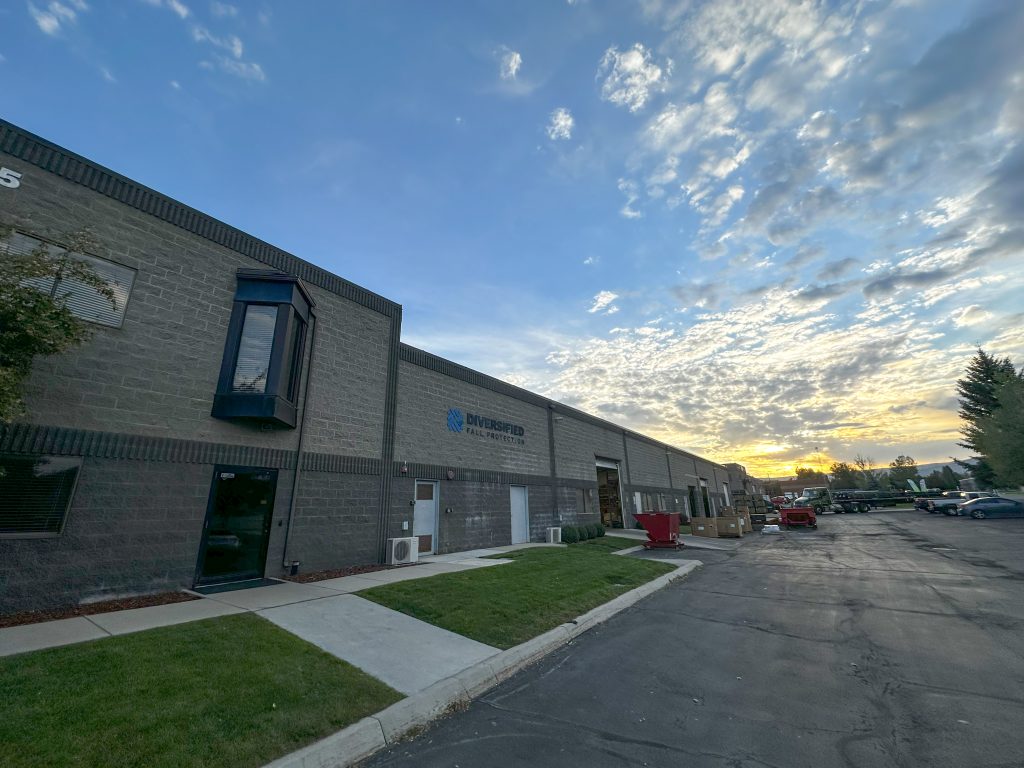
Galvan to oversee West Coast expansion with SIT Licensure, including testing and inspecting suspended scaffolding and building safety equipment in California Diversified Fall Protection (DFP) has appointed Gabe Galvan as EBM Design Director. Galvan will play a key role in leveraging the company’s newly acquired California SIT (Scaffold Inspection and Testing) license. This license permits DFP to offer inspection, testing, and design services related Exterior Building Maintenance (EBM) and other equipment within the state of California. After helping DFP secure the license, his role will enhance the company’s adherence to California’s stringent regulations, and ensure the highest standards of compliance for workers in California. “Obtaining California SIT license #56 makes it possible for DFP to offer mandated services which, until now, had to be provided by others,” said Travis Nelson, CEO of DFP. “We are so fortunate to have someone of Gabe’s caliber and expertise leading our EBM offering. We’re now a one-stop-shop in California for all required fall protection and EBM systems and services. I remain steadfast in the belief that our people are the most important input to our success; we want the best people in our industry, and Gabe is one of them.” Galvan brings 31 years of earned expertise to DFP, primarily in California, with eight years as an SIT surveyor. He has worked in all facets of this industry, from upper management to working side-by-side with field techs. His position ensures that DFP can now efficiently manage several critical compliance aspects, including the creation of Operating Procedures Outline Sheets (OPOS). These detailed documents provide comprehensive information on roof layout, equipment to be serviced, existing fall protection systems, and safety protocols necessary for the compliant execution of work. The OPOS is required for any building taller than 36 feet in California. “I’m eager to apply my comprehensive career insight to this position,” said Galvan. “Given the specific regulations and requirements within the state of California, securing this SIT licensure for DFP is something that will only enhance the formidable lineup of services we already provide.” As the leader of DFP’s EBM offering, Galvan will also facilitate the issuance of Letters of Written Assurance for vendors using fall protection equipment, verifying that all equipment has been inspected, and that vendors are properly trained for safe rooftop access. These letters must be produced for each vendor using the equipment on a given building. Established in 1994, DFP currently employs 275 professionals across six U.S. locations, serving all 50 states. The company has experienced exponential growth, quadrupling in size since 2019, propelled in part by four strategic acquisitions between late 2019 and 2021 (PEAK Fall Protection, Fall Protection Systems, Rooftop Anchor, and Versatile Systems). Since 2021, DFP has achieved a remarkable 30% growth rate. Currently, DFP specializes in partnering with strategic clients as their trusted advisor, assessing fall protection concerns with their fully integrated model, and providing “Fall Protection Partnership for Life” through the design, engineering, installation, and servicing of permanent systems. DFP also fabricates and distributes a range of fall protection products under their SafePro brand.
Hyster hydrogen fuel cell-powered ReachStacker honored by three sustainability award programs

BIG Sustainability, Green GOOD DESIGN and Global Good award programs commend innovative zero-emission container handling solution Hyster has announced that its hydrogen fuel cell-powered ReachStacker has been recognized by three award programs, adding to the list of accolades the company has earned for its efforts to help operations decarbonize by making the shift to electric material handling equipment. The solution, which produces zero tailpipe emissions, is being tested and validated at the MSC terminal in Valencia, Spain, one of the largest container terminals in Europe. “Industries that have typically relied upon diesel-powered equipment, such as ports, are increasingly seeking electric alternatives that satisfy emissions regulations from governments and ambitious targets companies are setting themselves,” says Lucien Robroek, President, Technology Solutions Division, Hyster. “This ReachStacker, as well as the award-winning hydrogen fuel cell-powered top-pick container handler and recently announced electric terminal tractors, are proof positive that Hyster is committed to working closely with customers to develop clean power solutions that provide the productivity that these applications require.” The ReachStacker was named one of the year’s best sustainable products by the BIG Sustainability Awards. Judged by experts on environmental impact, the program honors products that are designed to be more eco-friendly than market alternatives. The container handler also won a Green GOOD DESIGN Award, identifying it as one of the year’s best sustainable transportation solutions. The program honors companies and products that are driving progress toward a healthier and more sustainable world. The solution is also a finalist for the Global Good Awards in the Game-Changing Innovation of the Year category, alongside Microsoft and other major companies. The Global Good Awards reward businesses, nongovernmental organizations, charities and social enterprises that are blazing the trail for purpose-driven sustainability and ethical leadership. The hydrogen fuel cell-powered ReachStacker uses Nuvera®Fuel Cell Engines to convert hydrogen into electricity. The hydrogen is stored on board in high-pressure tanks and can be refilled in 10-15 minutes. The onboard hydrogen fuel cell charges the batteries and powers the electric motors and hydraulic systems, enabling the ReachStacker to lift laden containers with performance similar to that of a diesel-powered alternative. The pilot program is supported by the H2Ports project. H2Ports is funded by the Fuel Cells and Hydrogen Joint Undertaking (FCH-JU), coordinated by the Fundación Valenciaport, and involves several partners from the port community, industry and academia.
Episode 522: Tackling labor challenges in the Warehouse with Geek+
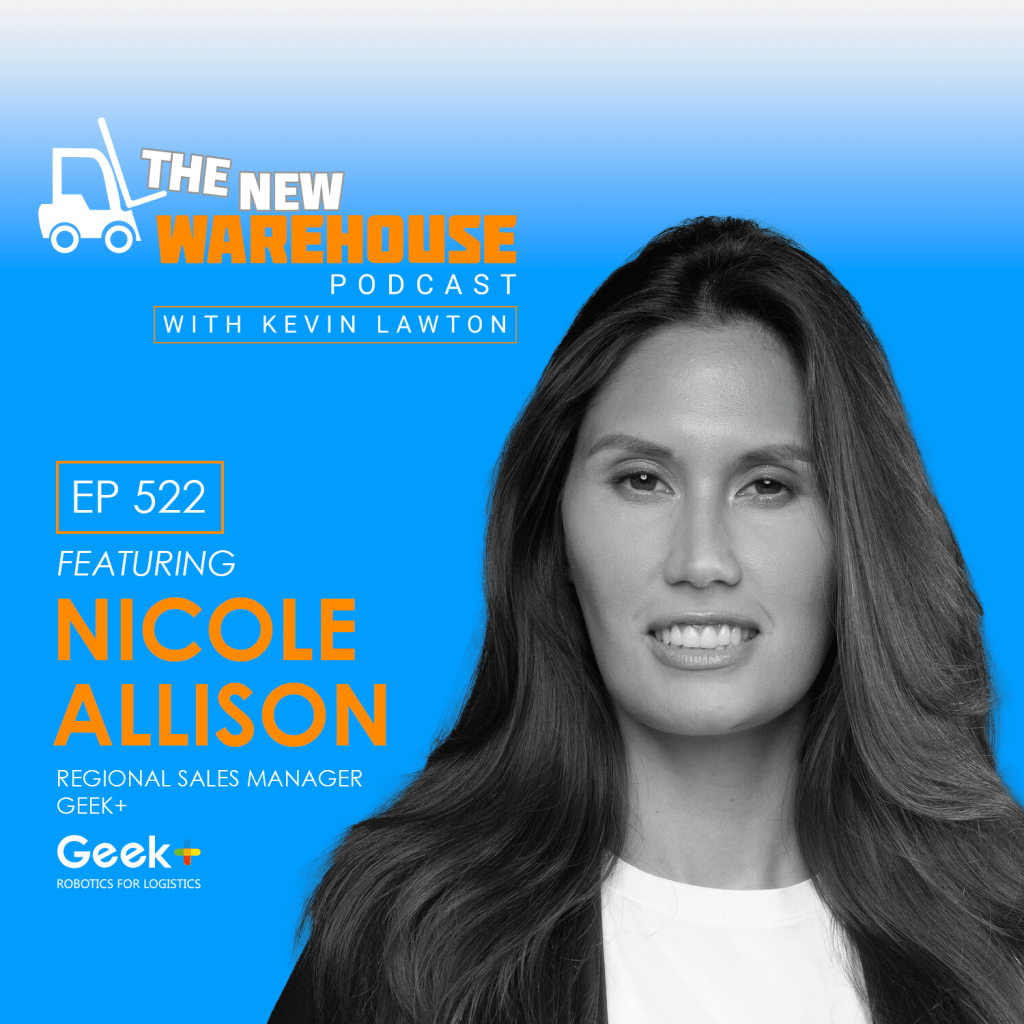
In this episode of The New Warehouse Podcast, Kevin sits down with Nicole Allison, Regional Sales Manager at Geek+. They dive into the intricacies of warehouse automation, focusing on how Geek+ addresses some of the most pressing challenges in the industry today. Geek+ is a global leader in autonomous mobile robots (AMRs) and goods-to-person technology. Nicole shares insights on how their innovative solutions optimize operations and improve worker ergonomics and satisfaction in the ever-evolving warehouse environment. Leveraging Automation for Labor Challenges in the Warehouse One of the most significant hurdles in the warehouse industry is labor management—finding, retaining, and ensuring the safety of employees. As Nicole highlights, “Labor is the largest component of any customer’s business, accounting for about 70 percent of their total operating costs.” Consequently, Geek+ tackles this challenge head-on by creating solutions that reduce the physical demands on workers. Furthermore, automation helps make jobs more ergonomic and more appealing. Nicole adds, “Geek+ is fortunate to have the largest portfolio of goods-to-persons technology on the market.” These systems allow workers to remain stationary while products are brought to them, significantly boosting productivity and worker satisfaction. Comprehensive Solutions for Diverse Warehouse Needs Geek+ stands out in the market with its extensive portfolio of robots tailored to various warehouse tasks. From shelves-to-person to totes-to-person and pallets-to-person systems, Geek+ can automate a wide range of operations within a warehouse. Nicole emphasized, “We refer to ourselves as an end-to-end solution provider because we can handle multiple applications in the warehouse.” Consequently, this flexibility allows Geek+ to address labor challenges across different departments. They can streamline operations and maximize efficiency through a unified software platform that controls all their robots. The Next Chapter in Warehouse Automation As automation becomes more commonplace, Geek+ plans to expand its footprint in the Americas. Additionally, Nicole notes that their focus is also on enhancing downstream operations. This strategy ensures their solutions are fast and highly adaptable to the needs of their clients. “Our software continues to optimize based on several factors, such as correlation and weight, to ensure that warehouses are running at their best efficiency,” she explained. They also plan to launch an innovation center in Atlanta this fall. Key Takeaways Labor costs account for about 70% of warehouse operating expenses, making automation a critical solution. Geek+ provides end-to-end solutions that integrate seamlessly across various warehouse operations. Geek+ has the largest portfolio of goods-to-person technology on the market. The New Warehouse Podcast Episode 522: Tackling Labor Challenges in the Warehouse with Geek+
ASSP unveils new membership model and management system

Occupational safety and health professionals can now find even more value in being a member of the American Society of Safety Professionals (ASSP). The Society’s membership model has been restructured to add key benefits while a new association management system simplifies member engagements. “More than ever, an ASSP membership is a smart investment in the continued growth of safety and health professionals,” said ASSP President Pam Walaski, CSP, FASSP. “It’s also an important investment in helping to keep workplaces safer in all industries worldwide.” ASSP members can now join common interest group and practice specialty communities at no additional cost. This free enhancement is geared to enrich member experiences through a greater sharing of resources and best practices with colleagues on a global scale. ASSP offers four common interest groups and 18 practice specialties, such as construction, manufacturing, ergonomics and transportation. “Our vibrant communities advocate for our profession and help individuals grow personally and professionally through education and networking,” Walaski said. “There is tremendous value in being part of a community at any career stage. Our communities also reflect our commitment to a diverse, equitable and inclusive Society.” In 2023-24, ASSP communities delivered more than 80 online workplace safety webinars, and nearly half offered free continuing education units (CEUs) to help safety professionals maintain certifications. As ASSP expands the value of membership, a modest dues increase will be phased in over the next three years to ensure the Society’s sustainability in providing top-tier services and resources. ASSP membership dues have not kept pace with inflation and have not changed in more than five years. The current rollout of the new membership model is aligned with the launch of ASSP’s new association management system, which streamlines how members engage with the Society when renewing memberships, registering for events and courses, and making purchases. “All of these changes are research-based and designed to support member needs while helping ASSP remain strong in advancing the safety and health profession,” Walaski said. “We are thoughtful in everything we do.” ASSP members have convenient access to a global network of more than 35,000 safety professionals and receive monthly issues of the Society’s award-winning flagship journal, Professional Safety. Discounted member-only pricing is available on industry-leading conferences, continuing education, voluntary national consensus standards and technical publications.
Nucor Promotes two warehousing leaders in anticipation of new initiatives

Nucor is pleased to announce the promotion of two esteemed teammates – Daniel Aguirre who is now Commercial Director and Keavon Anbardan who accepted the position of Construction and Installation Director. Both material-handling industry leaders have played a vital role in developing Nucor Data Systems (NDS) as the ultimate single-source provider of data center essentials. Daniel Aguirre’s career with Nucor began in 2014 at Hannibal Industries as an inside sales representative for its tubing products, where he held various responsibilities until his promotion to Distribution Sales Manager. In 2023, he was promoted to National Sales Manager of Nucor Warehouse Systems. As Commercial Director of Nucor Data Systems, Aguirre will lead the group’s commercial and design teams as it captures the explosive growth within AI and Cloud Computing infrastructures with Nucor Data Systems. In his new role as the Construction and Installation Director at Nucor Data Systems, Keavon Anbardan will lead the growing team of install technicians, project managers, construction engineers and sub-contractors. Anbardan was a key player in the rapid growth of Nucor Data Systems and will explore more growth opportunities for Nucor Fabricated Products in the construction and installation scope for data and warehousing. Previously, Anbardan was the Operations Manager for Southwest Data Products (SWDP), now Nucor Data Systems. “As we grow and expand with these exciting new data and warehouse market opportunities, we need strong leaders to help navigate our teams so that we can best serve our customers with our continuously evolving solutions,” said Dave Olmsted, VP and GM, Nucor Data Systems. “Daniel and Keavon are the best people for the job, with forward-thinking strategies that align with our unique position in the industry. They are going to help our team and customers build towards the future.”
Iowa vs. Minnesota Football rivalry Bobblehead unveiled to celebrate Saturday’s game

The National Bobblehead Hall of Fame and Museum unveiled a limited-edition Iowa Hawkeyes vs. Minnesota Golden Gophers Rivalry Bobblehead ahead of Saturday’s game between the two rivals in Minneapolis. The bobblehead features Iowa’s mascot Herky the Hawk and Minnesota’s mascot Goldy Gopher with a replica Floyd of Rosedale Trophy. The bobblehead commemorates the rivalry, which dates back to 1891. The special edition bobblehead, which will be released in conjunction with the 118th meeting between the Hawkeyes and Golden Gophers on Saturday, September 21st, at Huntington Bank Stadium in Minneapolis, Minnesota, is available exclusively from the National Bobblehead Hall of Fame and Museum, an official licensee of the University of Iowa and the University of Minnesota. “We’re excited to unveil this limited-edition Iowa vs. Minnesota Rivalry Bobblehead ahead of tomorrow’s game in Minneapolis,” National Bobblehead Hall of Fame and Museum co-founder and CEO Phil Sklar said. “This bobblehead will be the perfect way for Iowa and Minnesota fans, alumni, students, faculty, and staff to show off their school and state pride!” Each bobblehead is individually numbered to 2,024, and they are now available at this link in the National Bobblehead Hall of Fame and Museum’s Online Store. The bobbleheads, expected to ship in January, are $50 each plus a flat-rate shipping charge of $8 per order. The unique Floyd of Rosedale trophy, introduced in 1935 and awarded to the winner of the game, is a giant bronze pig commemorating its namesake. After the 1934 matchup was filled with controversy over the treatment of Iowa star running back Ozzie Simmons, the lead-up to the 1935 game was filled with back-and-forth barbs. To lighten the mood, Minnesota Governor Floyd Olson sent a telegram to Iowa Governor Clyde L. Herring on game-day morning, which read, “Minnesota folks are excited over your statement about Iowa crowds lynching the Minnesota football team. I have assured them you are law-abiding gentlemen who are only trying to get our goat. … I will bet you a Minnesota prize hog against an Iowa prize hog that Minnesota wins.” The Iowa governor accepted, and Minnesota won the incident-free game, 13-6. Governor Herring obtained an award-winning prize pig, which had been donated by Allen Loomis, the owner of Rosedale Farms. Dubbed Floyd after Minnesota Governor Olson, a few days later, Governor Herring collected “Floyd of Rosedale” and personally walked him into Governor Olson’s carpeted office. Floyd died of cholera just eight months after making headlines. Since the two schools could not continue wagering a live pig, Governor Olson commissioned Saint Paul sculptor Charles Brioschi to capture Floyd’s image. The result is a 98-pound bronze pig trophy, which is 21 inches long and 15 inches high. Tied for the fourth-longest rivalry in the Big Ten Conference, Iowa, and Minnesota have been squaring off on the football field since 1881. Minnesota leads the all-time series, 63-52-2, but the Hawkeyes have won eight of the last ten meetings and 15 of the last 20. The Golden Gophers snapped an eight-game losing streak to the Hawkeyes with a 12-10 upset victory last year in Iowa City. One of the most notable games in the rivalry was in 1960 when No. 1 Iowa and No. 3 Minnesota – both undefeated – played for the Big Ten championship, the 1961 Rose Bowl berth, and the No. 1 ranking. Minnesota won the game, 27-10.
Women In Trucking Association names new Membership Director
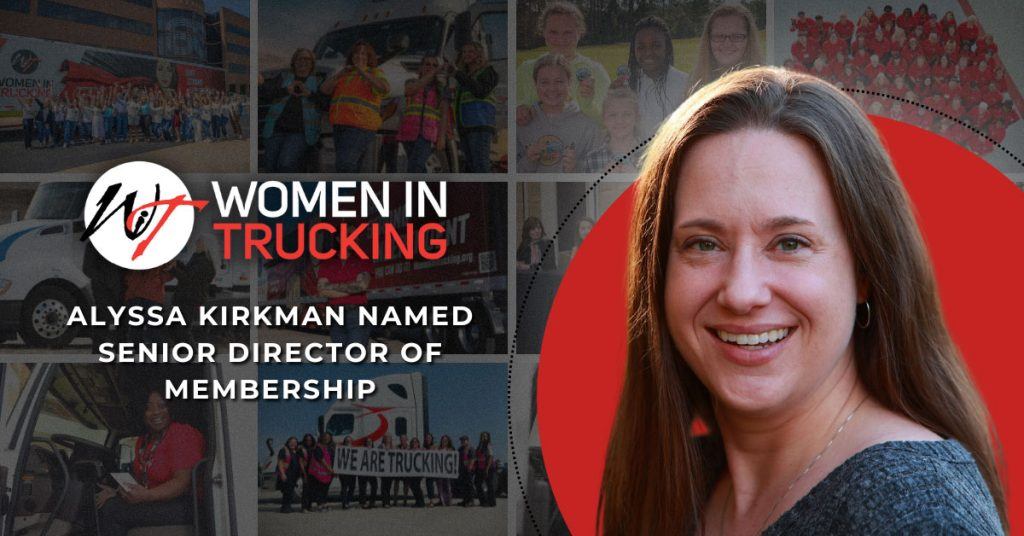
The Women In Trucking Association (WIT) recently named Alyssa Kirkman senior director of membership. In this newly created position, Kirkman is responsible for all aspects of membership, engagement, retention, and strategic recruitment initiatives for the association. In this critical role, Kirkman will also help to advance WIT’s mission to encourage the employment of women in the transportation industry, eliminate barriers they face, and promote their accomplishments. Kirkman has over 15 years of experience in membership, marketing, and education leadership with industry associations. Previously, she was a communications and marketing manager and a member of IFMA, the world’s largest international association for facility management professionals. She supported 24,000 members in more than 100 countries. Kirkman was also in membership and marketing leadership roles with CORFAC International, the National Glass Association, and the American Cleft Palate-Craniofacial Association. “We are thrilled to have a professional of Alyssa’s caliber leading WIT’s membership growth and retention initiatives,” said Jennifer Hedrick, CAE, president and chief executive officer of WIT. “As the first association to focus on gender diversity in the commercial freight transportation industry, the Women In Trucking Association is looking to enhance the strategies of WIT’s membership programs that will broaden our impact on the industry through more female talent.” Hedrick notes that WIT is today one of the larger trade associations in transportation with more than 8,000 members in 10 countries. “WIT has done an incredible job of growing organically over the last 17 years, and I look forward to leading membership initiatives to continue the membership trajectory of the association,” said Kirkman. “I’m excited to support the industry as a whole and to expand our reach so that more women are supported in their careers.”
I’m satisfied with my current source. Well, maybe

The prospect is not waiting by the phone for your call. Most people have what you’re selling and are doing business with someone else. They have a source for what you do, and they think they are happy. Satisfied. Good News: Satisfied people are willing to do business with others. Your challenge is to get them to do business with you. For you statistic buffs, “I’m satisfied with my present source” ranks second on the all-time prospect objection list. “Price too high” is number one (and always will be). When the prospect says, “I’m satisfied,” they’re really saying: This is all I know now. I don’t want to bother with you. I’m doing business with someone I like (not necessarily the best). I’m not telling you the real reason. I’m satisfied it is a brush-off. It’s not all that bad. Your prospect is saying that their existing supplier is the best they’ve been able to find. You may have a better product, price, delivery availability, service, training, or warranty. The prospect is only telling you he’s satisfied from his perspective. He doesn’t really know about you or your company yet but don’t give him any reason to switch until you know why he’s satisfied. Knowing the reason(s) why the existing relationship is satisfactory will help you understand how to proceed. Knowing those reasons gives you a chance. Here are a few “interest-gainers” or challenges that may get you in the door: Good Response: Satisfied? Great! You’re going to love doing business with us! Our customers are ecstatic, so if you’re only satisfied, today is your lucky day. Better Response: Mr. Johnson, Many of our customers said that when they were prospects like you. I wish I had ten dollars for every prospect that said, “I’m satisfied with my present supplier,” who is now a customer. Let me share a few of their comments (show your testimonials that say, “I used to buy from (name the competitor you hate the most), now I’m a loyal (your company) customer. And I invite you to call me personally if you need further explanation.” WOW! Best Response: When you started with (their present supplier), you took some risk, didn’t you? I’m not asking for all your business, but I’d be interested in what caused you to take the risk back then, and I may ask you to take that small risk with me and let me earn the rest.” Here are a few dialog starters: “Most people initially feel that way, but our experience has shown…” “What do you like most about your supplier (his product/service)?” (agree with them) “That’s what lots of their former customers said.” “If your friend left the business but stayed in the industry, would you still do business with that company or go with your friend?” “What would you change about your present relationship?” “How did the relationship begin?” “When people say, “I’m satisfied” they usually mean…” Find a personal link (common ground) that can trigger a friendly conversation. If they like you, they will listen to you. (a bit more assertive) “Satisfied or complacent? When was the last time you really looked at the situation and did a comparison?” Sales Caution: If the prospect says, “I’m satisfied,” it’s open season on the competition. If the prospect says, “I’m loyal,” watch out. Loyal is 100 times more powerful than satisfied. Sales Reality: You will not convince everyone. But the more you practice, the more “luck” you will have. “I’m satisfied” is not an objection; it’s a stall. If you believe in the value of your product, you can get past it. Sales Tip of the Year: Record five customers who were satisfied with your competitors, switched, and are now ecstatic with your company. Get your customers to tell your story. It’s far more compelling (and believable). About the Author: Jeffrey Gitomer is the author of twelve best-selling books, including The Sales Bible, The Little Red Book of Selling, and The Little Gold Book of Yes! Attitude. His real-world ideas and content are also available as online courses at www.GitomerLearningAcademy.com. For information about training and seminars, visit www.Gitomer.com, email Jeffrey at [email protected], or call him at 704 333-1112.
Saluting Women in Material Handling: Champions of Industry Innovation and Excellence
As the material handling industry evolves and grows, so do the ranks of professionals within the business. This month, Material Handling Wholesaler spotlights some women’s work in the material handling industry. Those who participated in the article talked about their history in the business, shared thoughts on where the industry is today, and discussed changes they envision in the near future. Jeannette Walker Walker, currently the CEO of MHEDA got her start in material handling in 2001 thanks to a conveniently located business. Intrupa manufactured parts for forklifts and was just a mile from her home in suburban Chicago. After passing the operation on a longer commute, Walker decided to apply. When she was offered a job as an assistant to the CEO, Walker decided to go for it. “I took it and worked my way up,” she said. TVH acquired the business in 2006, and Walker stepped in to implement marketing during the acquisition and grew into other roles from there. Following her experience in leadership at TVH, Walker took on the role with MHEDA. She worked with former CEO Liz Richards for six months before taking the reins in July. “She did anything and everything she could,” said Walker of Richards’ help with the leadership transition. According to its website, MHEDA is the Material Handling Equipment Distributors Association, a non-profit trade association dedicated to serving all segments of the material handling business community. As to the current economy, Walker said the feeling for 2025 is “cautiously optimistic.” At a recent meeting of MHEDA’s board of directors, Walker identified several impactful trends. “The economy is number one,” she said, adding that the market is normalizing, although situations vary by region. “We talked a lot about consolidation in the market and what that means,” said Walker of the leadership discussion. Automation and AI continue to be among top-of-mind for MHEDA members, particularly with a universal talent gap in the industry, according to Walker, who said technology is helping fill the need in some spaces. She reflected that career paths for women in material handling vary. Still, the industry seems to be filled with professionals who are open to sharing information and through that, helping others succeed. According to Walker, there continues to be a growing number of women taking up leadership roles in the material handling industry. “I think it’s evolving very rapidly,” she said. MHEDA will also host a “Women in Industry” conference this fall. The event will be held November 6 and 7 in Rosemont, Ill., and registration is still open, according to Walker. Walker says the session will include topics important to women in the business. “There is also a leadership focus,” she said. Registration information can be found online at www.mheda.org. Candi N. Powers As a teenager, Candi Powers aspired to become a doctor. In pursuit of that dream, she traveled to Nashville, TN, enrolled in medical courses, and became an intern. In the meantime, her father, Henry M. Powers, and wife, Darlene Powers, were busy building a business. That business, focusing on developing and manufacturing new products for the materials handling industry, led him to develop a vertical lift that would propel his company’s success in the industry. To grow his new business into the innovative powerhouse now known as Custom Industrial Products (CIP), Henry Powers surrounded himself with the people he trusted most…his family. Candi Powers began her career with CIP advancing the materials handling cart division where she managed clients in hospitality, a critical industry that was the first to apply vertical lifts for improving operational efficiency and safety. She worked long and hard, eventually earning the crucial position of Material Control Manager. As Ms. Power’s responsibilities grew, so did her passion for solving unmet needs in materials handling. Besides the hospitality industry, CIP vertical lift systems began to make a difference in warehousing and distribution, government, automotive, retail, education, aerospace, and more. There were so many applications that CIP’s line of vertical lifts expanded to accommodate and adapt to a variety of space requirements, load and weight needs, height restrictions, safety concerns, workflow integrations, and environmental considerations. “I am one of the lucky ones who found a place where I could thrive and help others,” states Ms. Powers. “So instead of helping patients with their health, I’m helping people with the health of their business and with their workers’ safety.” Candi Powers became President of CIP in 2021 after helping the company weather the pandemic. In 2023, Henry Powers passed away, leaving a legacy of innovation and excellence in industrial duty manufacturing as well as a corporate headquarters in Melbourne, FL, with 50 employees and 126,000 square feet of space for fabrication, welding, powder coating, engineering, administrative, and storage. Candi Powers took the reins as CEO to continue and expand her father’s legacy. Henry Powers was a masterful mentor. In addition to the deep work values and ethics he instilled in Candi Powers as a child, he worked side by side with her at CIP, teaching Ms. Powers manufacturing insights, design and engineering, sales and marketing, and managing people. As Ms. Powers sees it, people are the most important part. “Dad really cared for all those around him,” recalls Candi Powers. “He was accessible and everyone’s go-to person for help. His example inspired me to listen and lead.” Today, Candi Powers works side-by-side with CIP President (and brother) Chris Powers to usher in the next generation of CIP products and solutions. In 2024, they launched CIP Lifts as Custom Industrial Products’ flagship product line with new vertical lifts that are expanding the envelope and applications of what a VRC or materials handling lift can do. “We are continuously improving every aspect of our operation from customer service and design to production turnaround and quality superiority,” states Ms. Powers. “The minute a call comes in, our multi-interdisciplinary team is assessing and addressing customer needs before customizing a solution that only CIP can provide…faster…smarter…better.” Megan Brune Brune got her start in material handling