Why the future of dealership growth depends on owning the entire customer lifecycle
Walk through any dealership today, and you will hear the same pressures being discussed in different ways: margin compression, rising labor rates, more sophisticated equipment, and customers expecting faster answers with less friction. None of that is new. What is changing, and changing quickly, is how leading dealerships are responding.
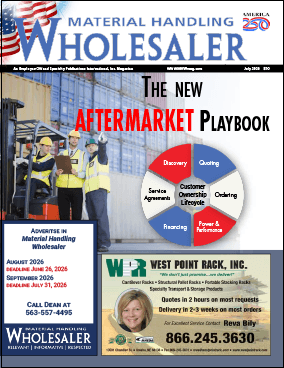
What has become increasingly clear in dealerships is that the aftermarket can no longer be viewed as a collection of separate departments or transactions. The most successful operations are beginning to think differently, viewing the customer relationship as a complete ownership lifecycle. Not just the sale, and not just the service call, but every interaction in between and every touchpoint that follows. That shift in thinking may ultimately become one of the most important strategies for sustainable aftermarket growth over the next decade.
Most dealerships already participate in pieces of the lifecycle. The opportunity is to intentionally connect them.
The Lifecycle Mindset Shift
Too often, aftermarket operations are managed in silos. Parts focus on fill rate and counter sales. Service focuses on technician productivity and billable hours. Sales focuses on new equipment and occasionally pushes service agreements. Finance operates separately. Digital tools exist, but they are layered on top rather than integrated.
The customer, however, does not experience your business this way. They experience one continuous relationship. From the moment they begin researching a solution to the day they retire a piece of equipment, they form opinions about how easy you are to do business with, how responsive you are, and whether you are helping them run their operation more effectively. That is the lifecycle, and the dealerships that win in aftermarket are the ones that take ownership of that entire journey.
Stage 1: Discovery, Make It Easy to Find and Choose You
The lifecycle begins long before a quote is requested. Customers today are researching online, comparing options, and forming opinions before they ever talk to your team. If your dealership is not visible or if your digital experience is clunky, you are already behind.
This is where e-commerce and digital presence come into play, not as a side project, but as a core aftermarket strategy. It is not just about listing parts online. It is about making it easy for a customer to identify what they need, confirm availability, and understand pricing without having to pick up the phone for every transaction. For aftermarket leaders, the question is simple: Are you making it easier for your customers to do business with you than your competitors are? If the answer is no, you are losing opportunities before your team even knows they exist.
Stage 2: Quoting, Speed, and Accuracy Win
Once a customer engages, the quoting process becomes the first real test of your operation. How quickly can you respond? How accurate is your pricing? How easy is it for the customer to understand what they are getting?
Too many dealerships still rely on manual processes that slow everything down. Quotes sit in inboxes, pricing inconsistencies creep in, and follow-up becomes reactive instead of proactive. Modern aftermarket operations are investing in centralized quoting tools and standardized processes, not because it is trendy, but because it drives results. Faster quotes increase close rates, consistent pricing protects margins, and clear proposals build trust. This is not complicated, but it does require discipline.
Stage 3: Ordering, Remove Friction
Once the customer approves the quote, the next step should be simple. In the aftermarket, that may mean ordering replacement parts, scheduling service, approving a repair, purchasing accessories, or adding safety items to a unit. Customers should not have to chase updates, resend information, or navigate multiple departments just to get what they need.
The best aftermarket operations make every channel feel connected, whether the customer engages online, through inside sales, service, or an account manager. When ordering is easy, customers approve faster, buy more confidently, and rely on your dealership first.
Stage 4: Power and Performance, Expanding the Conversation
As equipment evolves, so does the aftermarket opportunity. Energy solutions, whether traditional or electric, are no longer just a product category. They are part of the performance conversation.
Customers are asking different questions, such as how long this will last, what the total cost of ownership is, and what the operating implications are. Aftermarket leaders who understand these dynamics can move from being a supplier to being an advisor. That shift matters. Advisory relationships are harder to replace and far more valuable over time.
Stage 5: Financing, Remove Barriers to Action
One of the most overlooked elements of the aftermarket lifecycle is financing. Customers often delay necessary repairs, upgrades, or service agreements because of budget constraints, not because they do not see the value.
When dealerships offer flexible financial options, they remove that barrier. This is not just about large capital purchases. It can apply to service agreements, major repairs, or bundled parts-and-service programs. Making it easier for customers to say yes accelerates revenue and strengthens relationships.
Stage 6: Service Agreements, Lock in Value
If there is one area where dealerships consistently leave opportunity on the table, it is service agreements. Too often, they are treated as an add-on rather than a core offering.
Service agreements create predictability. For the customer, they reduce unexpected costs and downtime. For the dealership, they create recurring revenue and stronger retention. The key is not just selling them but structuring them to align with how the customer operates. That means clear scopes, transparent pricing, and defined value. When done right, service agreements become the backbone of the aftermarket business.
Stage 7: Maintenance and Repair, Execution Still Matters
All the strategy in the world does not matter if execution falls short in the field. Maintenance and repair are where your brand is truly tested. Are your technicians showing up prepared? Are parts available when needed? Are jobs completed right the first time?
This is where operational KPIs matter. First-time fix rate, technician productivity, time from job completion to invoice, and comeback percentage are not just internal metrics. They directly impact the customer experience. Aftermarket leaders should regularly review these numbers and use them to drive continuous improvement.
Stage 8: Fleet Management, Think Beyond the Single Unit
The most progressive dealerships are shifting their focus from individual transactions to fleet-level relationships. Customers do not think in terms of a single unit or a single repair. They think in terms of uptime across their entire operation.
Fleet management programs allow dealerships to step into that conversation. By helping customers track utilization, schedule maintenance, and plan for replacement, you position yourself as a long-term partner. This is where the aftermarket becomes strategic.
Stage 9: Data and Insights, Turn Information into Action
Telematics and connected equipment have changed the game. Dealerships now have access to more data than ever before, including usage patterns, error codes, and performance trends.
The challenge is not access to data. It is what you do with it. Aftermarket leaders need to translate that data into actionable insights for their customers. Not a report, a recommendation. Here is what we are seeing, what it means for your operation, and what we suggest you do next. That is where value is created.
Stage 10: Billing, Make It Simple and Transparent
Billing is often treated as an administrative function, but it should be viewed as part of the customer experience. Are invoices clear, accurate, and timely? How quickly are they sent after the work is completed?
Delays in billing impact cash flow, and confusing invoices create unnecessary friction with customers. Simplifying and standardizing billing processes is one of the easiest ways to improve both internal efficiency and customer satisfaction.
Stage 11: Business Reviews, Stay Proactive
Too many dealerships only talk to their customers when something goes wrong. Quarterly or semi-annual business reviews change that dynamic. They create a structured opportunity to review performance, discuss upcoming needs, and identify opportunities for improvement.
More importantly, they reinforce the idea that you are invested in the customer’s success. These conversations often uncover additional aftermarket opportunities that would otherwise be missed.
Stage 12: End-of-Life, Do Not Miss the Final Step
Every piece of equipment eventually reaches the end of its lifecycle. How that transition is handled matters. Proper disposal, recycling, or trade-in programs are not just operational necessities; they are opportunities to reinforce your value and begin the next lifecycle.
Dealerships that manage this step well create a natural bridge back to the beginning of the cycle.
Bringing the Lifecycle Together
Individually, none of these stages is new to the dealership business. Most dealers already have parts departments, service teams, financing options, fleet programs, digital tools, and customer-review meetings in some form. The opportunity is not to add more programs. The opportunity is connecting the ones you already have into a more intentional customer experience.
That is where aftermarket leadership becomes more strategic. Parts sales, service revenue, and labor recovery still matter, but they are part of a larger picture. The bigger question is whether your dealership is making ownership easier, more predictable, and more valuable for the customer.
When departments operate independently, customers feel the gaps. They feel it when a quote takes too long, parts availability is unclear, service recommendations are not communicated well, invoices are confusing, or no one follows up after the repair. Each breakdown may seem small, but together they shape how customers view your dealership.
When the lifecycle is connected, customers feel confidence. They can find what they need, get answers quickly, approve work easily, track their fleet, understand their costs, and see that your dealership is helping them plan ahead. That level of consistency is difficult for competitors to replace.
Many dealerships still view the aftermarket as a support function behind equipment sales. Today, the strongest dealerships realize it is one of the most important parts of the customer relationship. Most customer touchpoints happen after the sale, through parts orders, service calls, PMs, fleet reviews, telematics insights, billing interactions, and business reviews.
That is why the lifecycle concept matters. It gives aftermarket leaders a better way to evaluate the business. Instead of only asking where revenue growth will come from, ask where friction still exists. Where do handoffs break down? Where are systems disconnected? Where does the customer have to work harder than they should?
The dealerships that answer those questions honestly will be best positioned to grow. Not because they have the lowest price or the most programs, but because they are easier to do business with and more valuable to the customer’s operation.
In the end, aftermarket growth is not just about winning the next order or closing the next repair. It is about earning a larger role in the ownership experience. The dealers that simplify that experience and stay engaged throughout the full equipment lifecycle will be the ones that separate themselves in the years ahead.
About the Author:
Chris Aiello is the Business Development Manager at TVH Parts Co. He has over 20 years of experience in the equipment industry, including service, quality assurance, and business development roles. Chris now manages a national outside sales team selling replacement parts and accessories across equipment markets, including material handling, equipment rental, and construction and earthmoving dealerships.