
Analyze MyDrives available as standard in the MindSphere Store and SINAMICS Connect 300 with new intelligent features
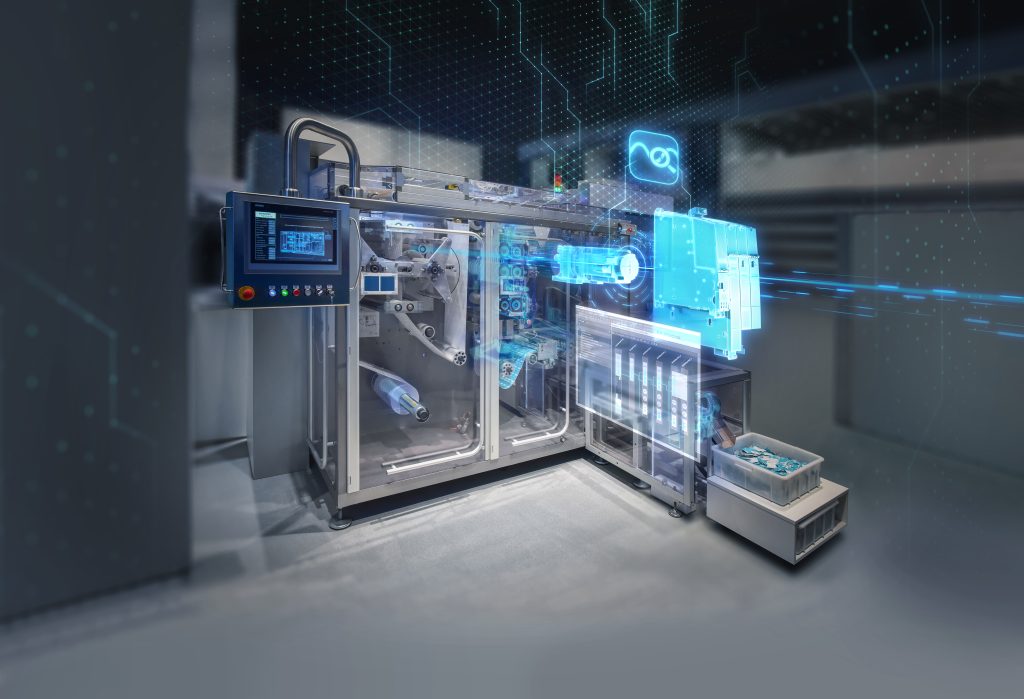
Siemens is presenting its latest solutions for smart and networked drive technology. By networking entire drive systems, machine and plant builders, as well as end-users, can simulate machines and plants more accurately using digital twins, perform commissioning, reduce downtimes and therefore increase manufacturing productivity. Analyze MyDrives With the new version of the Analyze MyDrives MindSphere app, Siemens is offering users new powerful diagram libraries for faster visualization. The new “Pan and Scan” function enables users to specify a precise time frame for monitoring. The new version also features an improved e-mail notification service, which is based upon a simple IFTTT control mechanism. In addition, users can freely configure trend analytics — for example, for time series and scatter diagrams to support even more powerful bi-variate graphical correlation analysis. A new dashboard provides key status information for all relevant drive components at a glance. If necessary, users have an overview of the integrated variables per drive train component, including the last transmitted value, time of the last update, unit of measurement, and link to the diagram used. Diagrams can be exported with a single click and statistical aggregate functions are integrated into all diagram types. New functions for SINAMICS Connect 300 With SINAMICS Connect 300, Siemens is introducing a simple plug-and-play solution that integrates SINAMICS low-voltage drives into IT infrastructure, and it supports cloud-based digitalization. One new feature is expert mode, where, upon request, users can individually differentiate the parameters of the SINAMICS drive and store them in MindSphere, the open, cloud-based IoT operating system. The new SINAMICS Connect 300 device includes comprehensive commissioning and service management with an integrated web server, which simplifies configuration even with very specific requirements. The webserver enables comprehensive management of the device, e.g., CA certificates, license management, and firmware updates. On the webserver’s homepage, users can also view MindSphere connection status and immediately check cloud connectivity. To ensure that data is not lost in the event of network failures, a data buffer of up to 500 MB is provided. For secure data transfer, the transfer protocol has been changed from HTTP to HTTPS and the security guidelines have been updated to prevent unauthorized manipulation of the device. SINAMICS Connect 300 adds to the existing standard MindConnect portfolio and gives users the opportunity to connect SINAMICS drives that do not communicate via Profinet directly to MindSphere. In addition, SINAMICS Connect 300 enables the connection of SINAMICS drives in existing plants without the need for expensive and time-consuming hardware or software modifications. SINAMICS Connect 300 does not use a proprietary data model, which means that uploaded drive data can be provided to all MindSphere apps without issue.
Yellow’s Peggy Arnold named finalist for Women in Trucking’s “Driver of the Year”
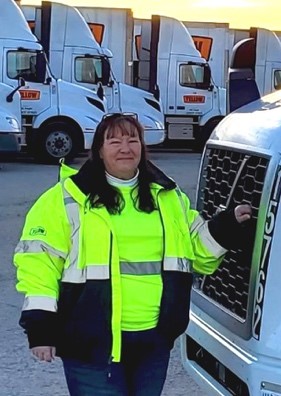
Peggy Arnold, a company driver for Yellow Corporation for nearly 30 years, is one of three finalists for the 2022 Driver of the Year award, the Women In Trucking Association (WIT) announced this week. The third annual award recognizes outstanding female professional drivers who are industry leaders in safety standards and service, while also enhancing the trucking profession’s public image. The award winner will be announced on March 25 during WIT’s “Salute to Women Behind the Wheel” event at the Mid-America Trucking Show (MATS) in Louisville, Ky. Arnold will attend the event. “It’s always exciting to receive recognition from Women in Trucking, and this is a first-class accomplishment for Peggy,” said Darren Hawkins, CEO of Yellow. “We are so proud of her and grateful for the way she represents our company every day.” Based in Nashville, Tenn., Arnold has earned Yellow’s Million Mile driver award, having logged nearly 1.9 million accident-free miles as of December 2021. She has been named among WIT’s 2022 Top Women to Watch and has also been named as an America’s Road Team Captain finalist for 2022 by the American Trucking Associations. At Yellow, Arnold serves on the company’s safety team and on the Women’s Inclusion Network Employee Resource Group. Last year, she received Yellow’s Road to Excellence Award and is a certified safety trainer. “Our safety team spends countless hours helping our fellow drivers prevent on-the-job injuries, with a goal to be accident-free,” Arnold said. “I am a part of our new driver’s training program and take my job straight to the heart. Every day I do my best to train and teach to the best of my ability… I desperately want them to remember a positive experience and know that the team spirit is alive and well, so that they, too, can someday pay it forward.” Tamara Jalving, vice president for safety at Yellow, said Arnold trains new and existing drivers on collision avoidance, injury prevention techniques, terminal safety practices, and more. “She brings her passion every day to everyone she meets. I personally could not be prouder to have her represent our industry and women in trucking,” Jalving said. This is the third time that WIT will name a Driver of the Year and the first time that a Yellow driver has been a finalist. The judging panel for the 2022 award includes Tricia Tullis, general transportation manager for Walmart Transportation, Jeana Hysell, senior safety consultant for J. J. Keller & Associates, Inc., and Ellen Voie, WIT president and CEO. “Each year, we become more amazed at both the quality and the quantity of drivers nominated for this prestigious award,” Voie said.
Manufacturing Technology Orders Have Strongest January on Record

Manufacturing technology orders totaled $436.6 million in January 2022, according to the latest U.S. Manufacturing Technology Orders Report published by AMT – The Association For Manufacturing Technology. Manufacturing technology orders totaled $436.6 million in January 2022, according to the latest U.S. Manufacturing Technology Orders Report published by AMT – The Association For Manufacturing Technology. January 2022 orders decreased nearly 27% from December 2021 but increased 33% from January 2021. January orders were also the strongest on record since USMTO began tracking orders. “USMTO typically shows a drop in orders from December to January, and, after December 2021 proved to be the best month on record, we expected to see a substantial decrease,” said Douglas K. Woods, president of AMT. “Recording the best January on record is a welcome sign that the strength of the manufacturing technology market will continue into 2022. Recent demand for production capacity has shifted from sectors producing final consumer goods to ones closer to the raw material process.” Strong consumer demand through January 2022 drove continued investments in manufacturing technology in all stages of the supply chain. In 2021, orders for manufacturing technology were increasing uniformly across all sectors; however, the largest growth was in those closest to the final product. “Consumer demand necessitated elevated capital investment, but we are now seeing a shift to industrial demand,” said Woods. “This shift in industrial demand indicates that entire manufacturing supply chains are being brought back to the United States. Long term, the broad industrial base created by concentrated supply chains is a huge positive for the manufacturing technology industry and the economy as a whole.” The market for manufacturing technology has proved resilient over the past several months despite several challenges facing manufacturers. “We have been highlighting issues that could take the wind out of the sails for the past several months, but the industry has overcome them in one way or another,” said Woods. “Recent geopolitical events and sustained inflation are two more challenges, and time will tell if the industry can find a silver lining behind them.” AUTHOR Kristin Bartschi Director, Marketing & Communications
February 2022 Logistics Manager’s Index Report®
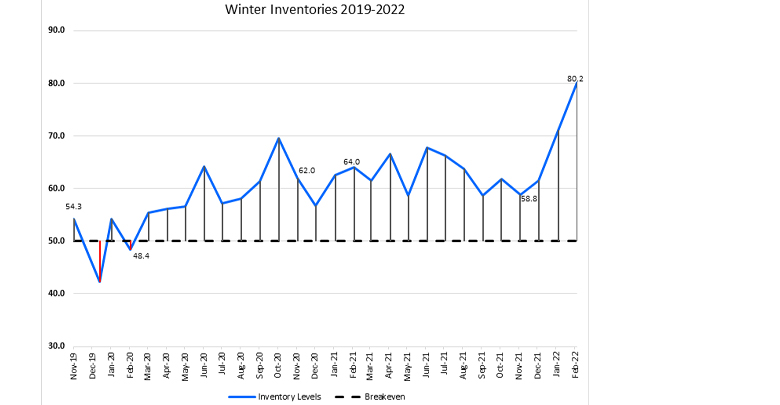
Growth is INCREASING AT A DECREASING RATE for: Inventory Levels, Inventory Costs, Warehousing Utilization Warehousing Prices, Transportation Utilization, and Transportation Prices. Warehousing Capacity and Transportation Capacity are CONTRACTING. February’s overall LMI reading of 75.2 is the second-highest in the history of the index, up (+3.3) from January’s reading of 71.9. This is now 13 consecutive months over 70.0, which we would we would classify as significant expansion, with no obvious signs of a slowdown on the horizon. Like January, this month’s growth is driven by rapid growth in Inventory Levels, which are up 9.1 points to 80.2 – crossing the 80.0 threshold for the first time and shattering the previous record of 72.6. This is a complete 180 from the Fall of 2021, when firms struggled to build up inventories. Now it seems that a combination of over-ordering to avoid shortages, late-arriving goods due to supply chain congestion, and a softening of consumer spending has created a logjam, Inventory Levels a full 21.4 points higher than they were in November. Unsurprisingly, this has spilled over to Inventory Costs as well, which have also reached a new peak (+2.3) of 90.3. This inventory issue seems more pronounced for downstream retailers, who reported significantly higher levels of both Warehousing and Transportation Utilization than their upstream counterparts. There is a possibility that this surge in inventories will result in some price markdowns for durable goods. However, it seems unlikely that this will lead to a meaningful break in the inflation we have observed across supply chains, as Warehousing and Transportation Prices remain high due to the continued mismatch in demand and available capacity. Researchers at Arizona State University, Colorado State University, Rochester Institute of Technology, Rutgers University, and the University of Nevada, Reno, and in conjunction with the Council of Supply Chain Management Professionals (CSCMP) issued this report today. Results Overview The LMI score is a combination of eight unique components that make up the logistics industry, including: inventory levels and costs, warehousing capacity, utilization, and prices, and transportation capacity, utilization, and prices. The LMI is calculated using a diffusion index, in which any reading above 50 percent indicates that logistics is expanding; a reading below 50 percent is indicative of a shrinking logistics industry. The latest results of the LMI summarize the responses of supply chain professionals collected in February 2022. Overall, the LMI is up (+3.3) from January’s reading of 71.9. The growth in this month’s index is fueled by metrics from across the index. Unseasonably high rates of inventory accumulation stand out among these metrics, but capacity remains constrained, and prices continue to grow quickly. Looking forward, respondents do not predict much relied over the next 12 months. Given the current shortages in capacity, it is difficult to disagree with them. The obvious place to start this month is with the Russian invasion of Ukraine. Beyond the truly tragic loss in human life, a number of costs are extending out of this conflict – many of which will have a direct effect on global supply chains. The most apparent change has been the shock to fuel prices. The price of crude oil is up to $100 a barrel – the highest level since 2014. As sanctions rack up on Russia, prices may continue to increase, potentially driving transportation and inventory costs higher[1]. Average diesel prices in the U.S. $4.006 on February 28th. This is up 44 cents per gallon since the start of 2022 and up $1.07 from this time last year[2] [3]. Russia’s invasion has also led to no-fly zones over Moldova, Eastern Russia, and Ukraine, cutting off the most direct route between Europe and Asian. Additionally, many countries, such as the UK have banned Russian carriers from landing there[4]. FedEx and UPS have also suspended shipments to Russia, with packages in route to be returned to sender[5]. The longer routes cargo planes will have to take, along with increased fuel costs due to the war, create a “double whammy” for carriers. Finally, we are likely to observe various indirect costs here as well, as sanctions cut off access to leading producers of commodities like nickel, palladium, natural gas, wheat, grain, and sunflower oil. The ripple effects from this will be felt in products from groceries to Volkswagens[6]. On the other side of the globe, the number of ships waiting off the coast of LA/Long Beach was at 66 during the last week of February – the lowest level since September. Additionally, dwell time for containers at the Port of LA are down 23% from their peaks in early December. However, the number of ships queuing off of alternate US ports like Charleston or New York/New Jersey has increased steadily[7]. Over 30 ships lingered off the Port of Charleston in late February – up from 19 in January. The Port Authority expects the backlog to clear by April[8]. In addition to the ongoing port delays, protests at the U.S./Canada border have slowed truck traffic as well. These actions caused prices to ship goods from Canada to the US to jump up 44% from January to February[9]. The push to avoid bottle necks has also led some firms to move what would usually be intermodal freight by road. US intermodal transports are down by 12% year-over-year through the first six weeks of 2022. They have lost approximately 1% of their market share to long-distance trucking since the start of the pandemic. Increasing the demand for truckloads of over 500 miles[10]. The impacts of this consistent congestion, fueled by the 10.6 million TEUs that were processed at the Port of LA in 2021 – up 16% from 2020[11], a paltry 42.2% of container ships arrived on time in 2021 – down 35.8% from 2019. This has not improved much, in late February the average container was still taking 109 days to get from China to its final point of destination in the U.S., something that should take 40-60 days pre-pandemic. This has led to the forecasting headaches and a high volume of
Sunlight Group adds further international experience to its Board of Directors

Gordon Riske appointed Chairman of Sunlight Group’s new Board of Directors, as independent Non-Executive Director (iNED). Michel Govaert joins the board as iNED and head of the Audit Committee. Dr. Peter Lamp to also join the BoD in May 2022 as iNED and head of the newly established Technology and Innovation Committee. Changes to the company’s corporate governance reflect its ambition to pursue strategic growth opportunities and become a global leader in the energy storage market. Global technology company Sunlight Group Energy Storage Systems (Sunlight Group) appoints its new Board of Directors and names Gordon Riske as Chairman and independent Non-Executive Director (iNED). Also joining the board as iNEDs are Michel Govaert, who will also head the company’s Audit Committee, and Dr. Peter Lamp, who will head the newly established Technology and Innovation Committee. Gordon Riske led KION Group AG for 14 years as CEO and is the incumbent CEO of GRBR Services. He brings decades of professional experience in management and business administration, as well as a wealth of expertise in automation, digitalization, and high-performance energy systems to the organization. His in-depth knowledge of OEMs will assist Sunlight Group to further broaden its activities in its respective sector. As Chairman of Sunlight Group’s new BoD, he stated: “Sunlight Group is a uniquely innovative company with a clear long-term strategy to provide clean energy storage systems to its customers around the world. I am looking forward to working with the management team and the entire Board of Directors on this exciting journey.” Michel Govaert, current Non-Executive Director and former Group CFO at AOC & ChemicaInvest, started his career at Philips Electronics and has served as partner at Alvarez & Marsal. He is a seasoned executive and expert in finance, development of action-oriented strategies, operational and financial result improvement, and M&As. His experience will be invaluable in Sunlight Group’s ongoing corporate transformation to become a global technology company, as well as the proceedings of the Audit Committee that he will be heading. Commenting on his appointment, he said: “I am looking forward to working together with the leadership team and board on the realization of Sunlight’s strategic ambitions, encompassing significant organic and inorganic growth. Combining this growth agenda with a model of operational excellence and translating this into a path of sustainable results and long-term value creation”. As of May 2022, Dr. Peter Lamp, Head of the BMW Group Battery Cell Technology and the associated worldwide R&D network, will also be joining Sunlight’s new Board of Directors. Dr. Lamp has over 30 years of experience in cutting-edge R&D work within the energy sector, which will inspire and lead Sunlight Group’s new Technology and Innovation Committee that he will be heading. Regarding his new role, he commented: “I am honored to be appointed as iNED to the Sunlight Group’s Board of Directors and am looking forward to contributing to the future growth of the company”. The new Chairman and members will collaborate with the existing members of Sunlight Group’s BoD, Lampros Bisalas, CEO and Executive Board Director; Rouben Bourlas, Non-Executive Director; and George Tsourapas, independent Non-Executive Director with over 30 years of professional experience at Procter & Gamble, where he served as President of Global Home Care and Professional Products and member of the company’s Global Executive Leadership Council. The new BoD will serve a five-year term until 2027. Lampros Bisalas, Sunlight Group’s CEO, noted on the composition of the new BoD: “Gordon, Michel and Peter joining our Board of Directors is a great milestone for Sunlight Group. We’re thrilled to welcome them aboard and look forward to learning from their insights and extensive experience. They all have a strong track record of driving growth and operational excellence which they’ll implement in line with Sunlight’s strategic objectives. I would also like to thank our existing board members, Robby and George, for helping Sunlight reach this excellent position and for their ongoing support. The new board signals our ambition to expand our successful course and become a true global leader within the energy storage sector.” Changes to Sunlight Group’s corporate governance reflect the organization’s global ambition to pursue strategic growth opportunities, following the company’s rapid development in recent years and plans for further growth. In 2021, the company announced the initial rollout of its diverse €560m five-year investment plan to expand the capacity of both lead-acid and lithium-ion energy storage products. Investments include upgrades to the company’s facilities in the USA, Italy, and Greece. They will allow Sunlight’s main manufacturing unit in Xanthi to become the largest in the world for industrial, motive, lead-acid batteries, while also demonstrating the company’s commitment to lithium-ion technologies. To find out more about Sunlight Group Energy Storage Systems, please visit: www.systems-sunlight.com
LogistiQ, a “100-Year-Old Startup,” launches at MODEX 2022
Subsidiary of LEWCO offers complete solutions for customers LogistiQ, the first fully vertically integrated business in the e-commerce material handling industry, will make its debut at MODEX 2022, March 28-31, in Atlanta. Though technically a new company, LogistiQ has deep roots in the industry. It’s a subsidiary of LEWCO, Inc., a leader in conveyors and industrial ovens which was founded in 1917. A “100-year-old startup,” LogistiQ was created to meet the explosive demand created by online shopping. “The e-commerce industry is in dire need of innovative technology and services,” said CEO Gerald Guerra. “This new company will allow us to focus exclusively on e-commerce material handling and offer a fully integrated package of services, from consulting and design to manufacturing and installation.” As part of its expansion, LogistiQ has converted a former World War II depot in Port Clinton, Ohio, into a 750,000-square-foot, state-of-the-art manufacturing facility. The Erie Army Ordinance Depot, built by the Army in 1942 to service tanks and other military equipment, is now the manufacturing heart of LogistiQ, which has invested $12 million in new production equipment. The company will continue to operate its two other manufacturing facilities in Sandusky. In addition to adding manufacturing capacity, LogistiQ has expanded its engineering services to offer precision manufacturing and customized design solutions for clients. It also has begun manufacturing pulleys and control panels, which previously had been supplied by vendors. This benefits clients by streamlining manufacturing and eliminating supply chain delays. LogistiQ, a third-generation, family-owned business, is proud to support American manufacturing by recommitting to its roots in north-central Ohio and increasing its workforce of 420 to 550. “Our success is owed to our employees’ hard work and innovation,” Guerra said. “They are the reason we lead the industry and have been able to launch this exciting new company.” By providing comprehensive, vertically integrated solutions for e-commerce material handling, LogistiQ will help the industry continue to grow. “E-commerce has transformed the way the world shops and how business is conducted,” Guerra said. “LogistiQ is committed to providing the expertise, service and equipment that powers this transformation to better serve businesses and consumers.” Stop by the LogistiQ booth (#B6713) at MODEX 2022 to learn more.
EP 262: A. Duie Pyle Navigates NYC

In this episode, I was joined by John Luciani of A. Duie Pyle. Pyle is a transportation and logistics company providing LTL, FTL, and warehousing services based in the Northeast of the United States. John is the COO of LTL services and we discussed how the pandemic has had an impact on the trucking industry we also discuss how Pyle navigates difficult areas for trucking like New York City. Key Takeaways Pyle has been around for close to 100 years now and remains a family-operated business. This is very admirable to me as they are very focused on “making decisions for a lifetime” as John says. Definitely, a great thing to see these days and it shows as they have been resilient through the pandemic. John explains how they had seen a 40% drop in business right when everything happened but were able to navigate their way through to a point where they are now growing again from pre-pandemic numbers. While they saw challenges dealing with different restrictions throughout the pandemic they have been dealing with challenges for a long time. Some of the biggest challenges that Pyle’s faces are those that a carrier operating in a congested city like New York would face. With many restrictions for trucks in New York, Pyle finds different ways to still accommodate their customers and ensure they deliver goods. John discusses the challenges that they face like having only two entry points into the city and parking issues. Many places in the city are outdated to accommodate modern trucks so oftentimes double parking or idling trucks can occur. The issue is that these carry major fines. Pyle was hit with $300k in fines in just the last year from these different restrictions. John believes that working with the city and shifting to more nighttime deliveries will help them to avoid some of these restrictions and get the product to customers in a better way. Another challenge for trucking companies is the green initiatives that the city has put in place. For older trucks, this is hard to meet due to their emissions but Pyle has been testing both hybrid and electric trucks to help move their fleet into the future. However, they also face challenges in this area because of the amount of power that is needed to charge the number of trucks that are required. Another issue that they are ensuring they tackle is to make sure that the power they are utilizing for electric trucks is coming from a sustainable source and that the energy is “green” all the way through the process. Listen to the episode below and leave your thoughts on the challenges they are facing in the comments. The New Warehouse Podcast EP 262: A. Duie Pyle Navigates NYC
S.A.F.E. delivers custom Boeing CH-47 fall protection platforms to the Army in Ft. Hood TX
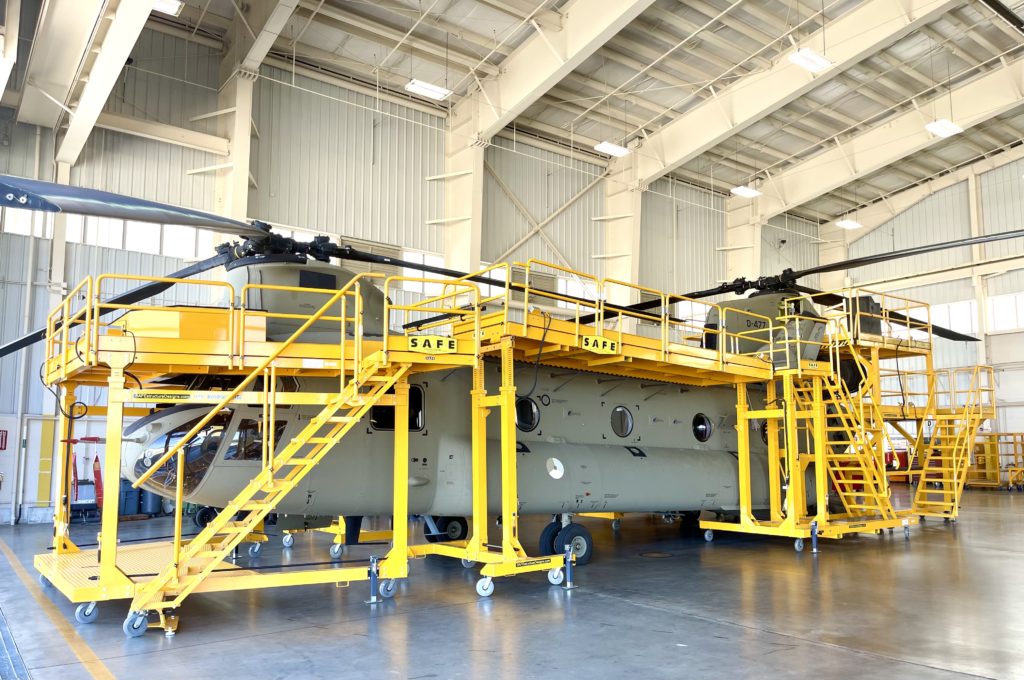
S.A.F.E. Structure Designs has announced the delivery of custom fall protection maintenance platforms to the Army in Ft Hood, Texas. The SAFETY FIRST ergonomic platforms allow technicians SAFE access to all areas of their Boeing CH-47F aircraft fleet. The set of platforms is equipped with the latest features including a seamless fit to the aircraft with zero gaps, enhanced safety handrails, and precise working deck heights to increase comfort and efficiency. These versatile platforms are lightweight and easy to move around by two technicians. Without impedances to critical areas on the aircraft, these platforms allow for maintenance access to all required areas when performing depot-level overhauls or routine maintenance on the aircraft. The CH-47 fall protection stands provide an ergonomic work environment that is SAFE. SAFE will have info on these platforms at HAI Heli-Expo 2022 in Dallas, Texas. “We are excited to supply our custom fall protection maintenance platforms to the Army in support of their CH-47 program,” said Johnny Buscema, S.A.F.E. CEO. We have spent many years on research, development, and prototyping in order to finalize what we believe to be the most ergonomic set of CH-47 stands on the market. We have had the support of Columbia Helicopters, Boeing, Army, Airforce, Special Ops, and Navy technicians around the United States providing us with critical feedback on this design.
Canaveral Port Authority CEO John Murray elected Chairman, National Cargo Bureau
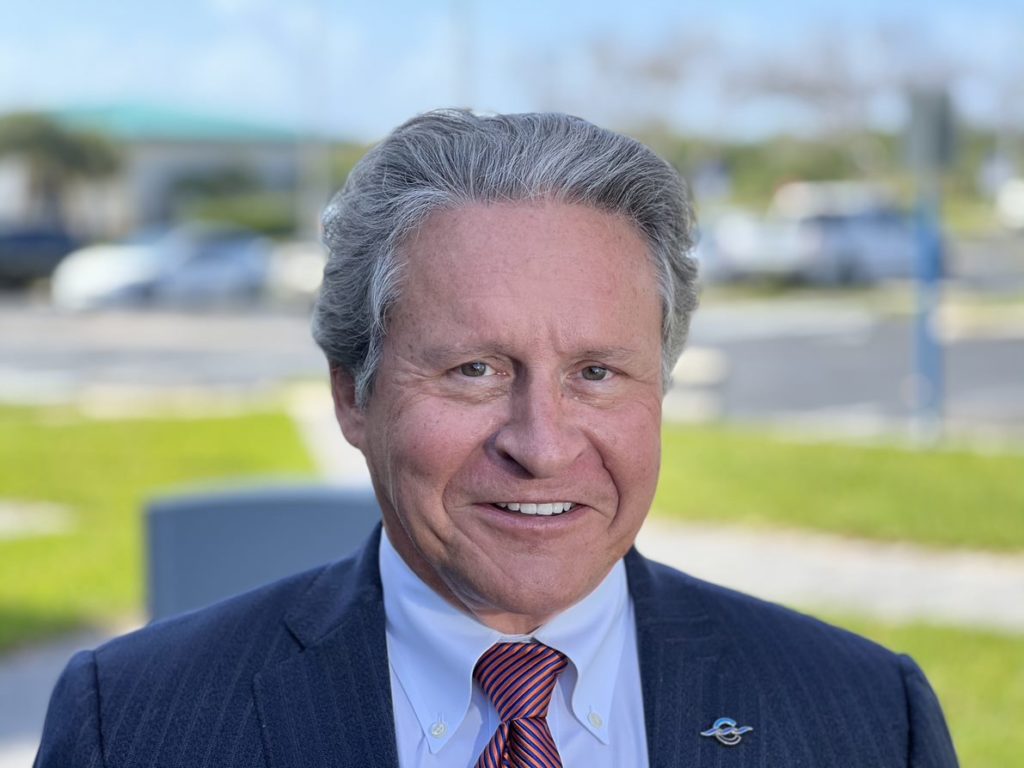
Canaveral Port Authority CEO and Port Director Capt. John W. Murray was elected Chairman of the Board of the National Cargo Bureau, Inc. (NCB) during the organization’s 71st Annual Meeting of Directors held this week. Capt. Murray will serve two, one-year terms as NCB’s Board Chairman replacing Robert C. Gallagher, whose current term as Director expires this month. Other officers elected to the Board include Sean M. Dalton, as Deputy Chairman of the Board, and Philip H. Greene, Jr., as Treasurer. Capt. Murray has been a member of the National Cargo Bureau since 1997. He most recently served as Deputy Chairman of the Board, as well as Chairman of the NCB’s Executive Committee. The National Cargo Bureau is a non-profit organization founded in May 1952. The Bureau was created by a group of marine underwriters and the U.S. Coast Guard to aid the Coast Guard in discharging its responsibilities under the International Convention for Safety of Life at Sea. The NCB acts with and enforces the regulations of the Coast Guard and provides a variety of services including surveying and certifying the secure loading and stowage of cargo and performing vessel safety inspections and surveys to ensure compliance with U.S. Coast Guard regulations and/or International Maritime Dangerous Goods Code regulations. By assignment and under the authority of the U.S. Coast Guard, compliance certificates issued by National Cargo Bureau, Inc. may be accepted as prima facie evidence of compliance with the provisions of the Dangerous Cargo Act and the Rules and Regulations for Bulk Grain Cargo. The National Cargo Bureau, Inc. operates on a nationwide basis and is a continuation and amplification on a broader base of inspection services formerly performed by the Board of Underwriters of New York and the Board of Marine Underwriters of San Francisco. Headquartered in New York City, the NCB has offices throughout the United States. In June 2018 National Cargo Bureau acquired Exis Technologies, the leading supplier of IT compliance systems for the management of dangerous goods in sea transport. With over 35 years of experience supporting major shipping lines, ferry operators, port and terminals, logistics operators, freight forwarders, government, and regulatory organizations worldwide, the Exis acquisition expanded the NCB’s mission internationally.
Fit into tight spaces with Dorner’s new AquaGard LP (Low Profile) Sanitary Conveyor
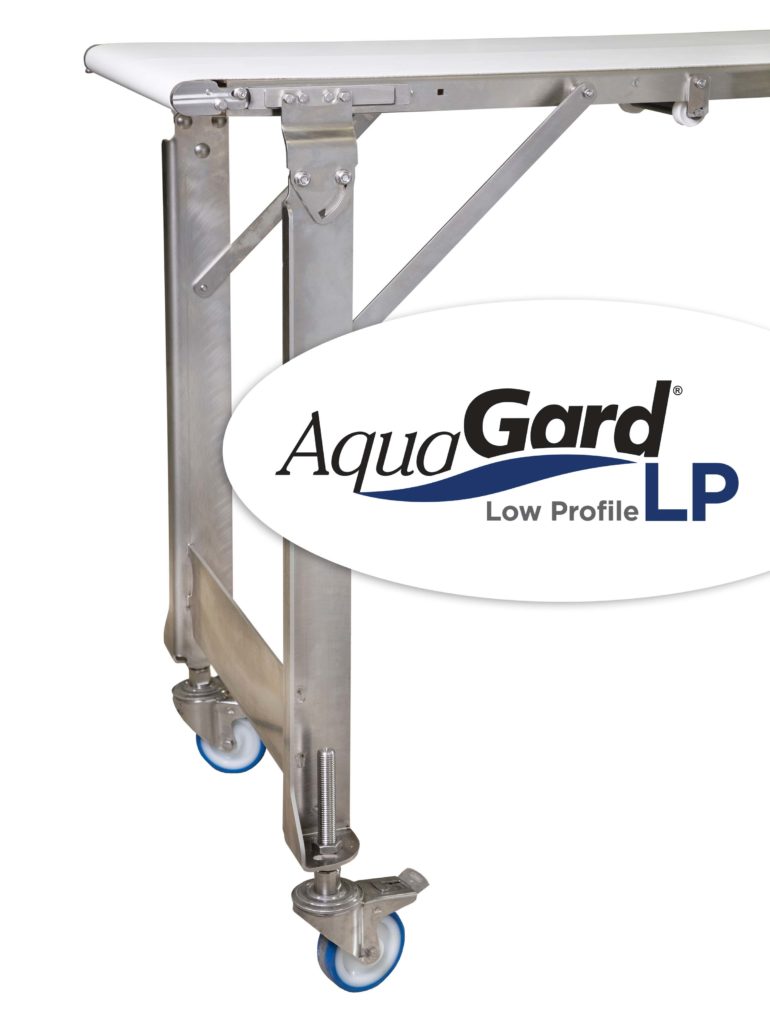
Dorner’s new AquaGard LP conveyor is designed to fit in tight spaces, making it the ideal sanitary conveyor for dry or wipe down applications within the packaging, pharmaceutical, confectionery, bakery, and other packaged food industries. The AquaGard LP (low profile) is the latest reiteration in the AquaGard sanitary conveyor platform. This updated version features a low-profile stainless steel frame with compact 1.25” diameter end-roller pulleys, enabling the conveyor to fit in tight spaces in and around other machinery, as well as safely operate in close proximity to employees. The pulleys also aid in the efficient transfer of small- to medium-sized products on and off the conveyor. The AquaGard LP’s standard tip-up tail design provides operators complete, easy access to the frame and under the belt for cleaning. Dorner’s reliable V-guided belting ensures precise belt and product tracking along with the enclosed tensioning system keeps the belt to the proper tension and provides smooth snag-free cleaning. Engineered to meet high sanitary standards, the AquaGard LP has earned the coveted Baking Industry Sanitary Standards Committee (BISSC) certification, which is recognized as the definitive sanitation and safety standards for equipment used in the baking industry. Features and benefits of the new AquaGard LP conveyor include: Widths between 70 mm to 457 mm (2.75 inches to 18 inches) Lengths between 700 mm and 5,500 mm (27.5 inches to 18 feet) Load capacity up to 22.7 kg (50 lbs.) Available in straight configurations; FDA approved belt types: cleated, flat, high friction, and others Toolless, flexible guiding options 10-day lead time
California Ports keep ‘Container Dwell Fee’ on hold

Long Beach, Los Angeles to reassess activation on March 18 The Port of Long Beach and the Port of Los Angeles will delay consideration of the “Container Dwell Fee” for another week, this time until March 18. The two San Pedro Bay ports have seen a combined decline of 64% in aging cargo on the docks since the program was announced on Oct. 25. The executive directors of both ports will reassess fee implementation after monitoring data over the next week. Fee implementation has been postponed by both ports since the start of the program. Under the temporary policy, ocean carriers can be charged for each import container dwelling nine days or more at the terminal. Currently, no date has been set to start the count with respect to container dwell time. The ports plan to charge ocean carriers $100 per container, increasing in $100 increments per container per day until the container leaves the terminal. Any fees collected from dwelling cargo will be reinvested for programs designed to enhance efficiency, accelerate cargo velocity and address congestion impacts. The policy was developed in coordination with the Biden-Harris Supply Chain Disruptions Task Force, U.S. Department of Transportation, and multiple supply chain stakeholders.
The new Combi-MR4 with Dynamic 360° ™ Steering
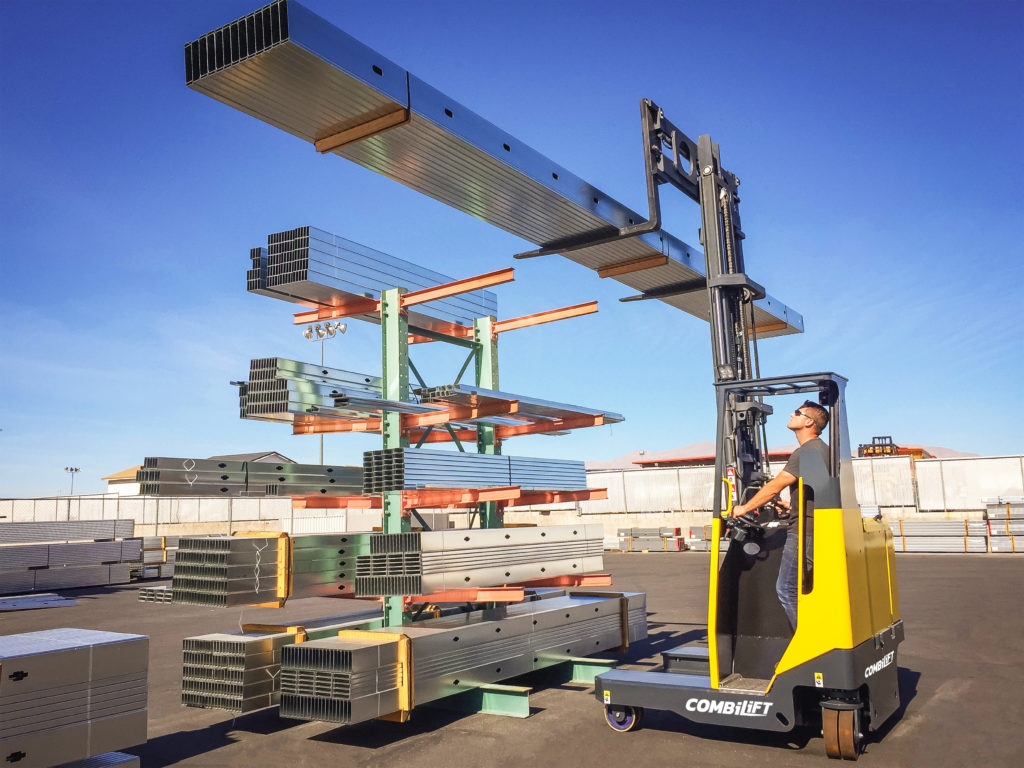
Since Combilift launched its first C8000 model in 1998, multidirectional capability has been one of the major hallmarks of the company’s wide range of handling solutions. Twenty-Four years and thousands of R&D hours later, its latest product takes multidirectional capability to the next level. The Combi-MR4 is a 4-wheel electric-powered multidirectional reach-truck, which incorporates Combilift’s new Dynamic 360° ™ steering, which provides rotation on each wheel, enabling seamless directional change of the truck while on the move. The system allows this extremely agile forklift to work in forward, sideward and crab steer mode, guaranteeing swift operation and excellent maneuverability. Hence the full name of the new model: the Combi-MR4 Dynamic 360. The impetus for the development of this latest addition to Combilift’s portfolio was to develop a multi-directional truck, with a very low platform to maximize storage density. The Combi-MR4 is available in two unique models, with capacity ranges up to 10,000lbs, and can operate in aisles as narrow as 8ft. To maximize all vertical storage space in racking systems, the wheel configuration of two drive wheels at the rear and two sets of smaller dual front wheels provides a platform height as low as 15”. In keeping with Combilift’s common overall design ethos, the highly versatile Combi-MR4 can handle long loads as well as palletized goods with ease. Driver comfort and safety are priorities, from an ergonomic point of view this is provided with high visibility stand-up or sit-down operator cabin, AC-electric power steering, multi-function joystick controlling hydraulic mast functions and travel direction all make for a smooth ride and straightforward operation. The articulated rear axle with two rear rubber drive wheels provides optimum traction for outdoor use, while still ensuring nimble and accurate truck placement. To achieve this level of maneuverability, Combilift utilized its newly developed-in-house Dynamic 360° ™ steering. This novel steering concept enables operators to manipulate the truck’s positioning and orientation without the need to stop and change driving mode. Intuitive and easy-to-operate, this is achieved by simply twisting the control joystick clockwise or counterclockwise to adjust the wheel positions simultaneously – providing crab steering and allowing direction change on the go. Combilift CEO Martin McVicar: “With Combilift’s continued commitment to innovation, aiding customers to handle their materials safely and efficiently is our priority”
Port of Long Beach achieves busiest February on record
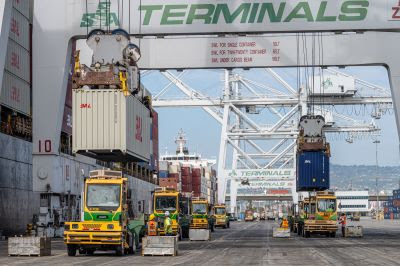
Ongoing efforts to expedite the transfer of long-waiting cargo off the docks lifted the Port of Long Beach to its busiest February on record. Dockworkers and terminal operators moved 796,560 twenty-foot-equivalent units of container cargo in February, up 3.2% from the same month last year. Imports increased 4.4% to 390,335 TEUs, while exports declined 1.2% to 117,935 TEUs. Empty containers moved through the Port were up 3.5% to 288,290 TEUs. “We are moving record amounts of cargo and catching up with the ongoing surge of imports,” said Port of Long Beach Executive Director Mario Cordero. “Meanwhile, we are proceeding with measures we will need in the long term, such as the development of our Supply Chain Information Highway data solution, which provides greater cargo visibility, connectivity, and predictability.” “New records continue to be set by our hardworking workforce,” said Long Beach Harbor Commission President Steven Neal. “We are collaborating with our industry partners to keep the supply chain moving as efficiently as possible.” Although trade typically slows in February as east Asian factories close for up to two weeks to celebrate the Lunar New Year, the Port was busier than usual due to continued work to clear shipping terminals and reduce the number of vessels waiting to enter the Port. The effort was boosted by workers returning to the supply chain following a decline in COVID-19 cases. The Port has withheld the start of a “Container Dwell Fee” that would charge ocean carriers for containers that remain too long on the docks. Still, the San Pedro Bay ports – Long Beach and Los Angeles combined – have seen a 64% decline in aging cargo on the docks since the program was announced on Oct. 25. Economic activity is anticipated to rebound after inflation cut into consumer spending during the first quarter of 2022, but it remains unclear how the war in Ukraine will affect the economy and financial markets. Additionally, consumers are purchasing fewer goods and spending more on dining out, entertainment and other services due to the decline in COVID-19 cases. For complete cargo numbers, visit polb.com/statistics.
Sunbelt Rentals acquires Illinois Truck & Equipment and Southern California’s Toolshed Rentals

Sunbelt Rentals recently acquired Illinois Truck & Equipment, Morris, Ill., and Toolshed Rentals, Escondido, Calif. Illinois Truck & Equipment rents a broad range of equipment ranging from skid-steer loaders and reach forklifts up to larger excavators, wheel loaders, on- and off-road trucks, and larger earthmoving equipment. Main ITE product lines include Kobelco excavators, Hitachi wheel loaders, Bell articulated off-road dump trucks, JLG man lifts, Skytrak telehandlers, New Holland Construction, Morooka track carriers, Broce brooms, Allied Construction Products, and others. The acquisition of Toolshed Rentals enhances Sunbelt’s strength in the heavy earthmoving market in San Diego County. Toolshed is a general rental business that also had a division that rents larger dirt-moving equipment such as excavators and dozers. Toolshed was owned by members of the Hawthorne family, relatives of the founding family of Hawthorne Cat.
Targeting everything targets nothing

When looking for growth, most leaders don’t want to leave any stone unturned. Where can we find new customers? Maybe this segment or that segment? Why not both? The problem is, the broader the net, the more diluted the message. No matter how hard you try, you can’t be everything to everyone. If you try, you lose distinctiveness and differentiation – a key competitive advantage. For example, take a simple product, such as a vacuum cleaner. Almost everyone needs a vacuum cleaner, barring people who are homeless or nomads. Therefore, why not reinforce the virtues of our product, its superior engineering, its reliability, suction power, maneuverability, etc.? Why not let everyone know about these differences? Spread the word as far as it can reach? It seems logical, as there’s a perceived safety with targeting everyone. Why would we want to isolate or not speak to a specific group of vacuum users? They all might want to buy a vacuum, and we want them to think of us! However, this isn’t different, and it’s definitely not distinct. These two things are what makes a company stand out, and an offering connects with people on a deeper level. Anyone can take a bunch of money and throw it into the void trying to get market attention and sales. But it takes talent to identify a distinct space to compete in and a unique way to do it. Think of it this way – just like a job applicant, you want to stand out from the other people competing for the position, emphasizing those skillsets that are uniquely valuable for that company and industry to give yourself a leg up. Sending the same generic, laundry-list resume to any and all companies gets you little to no call-backs unless you’re sending in thousands of applications – which is really just playing the odds. Going back to our vacuum example, Bissell focuses their advertisements on pet owners – specifically dog owners. They show their products with dogs, they talk about their products’ performance with cleaning up pet hair, they donate to dog shelters. Their objective is to be the go-to vacuum for people who own pets. What if you don’t own a pet? Will Bissell not sell you a vacuum? Of course, they will. Do you feel their brand doesn’t speak to you if you’re not a pet owner? No. You may even be more apt to purchase a Bissell, as if it can tackle pet hair, it should be able to handle your pet-free home. Other vacuum companies can claim they “work great for pets” but Bissell is focused on this segment, and positioned to own it. Another example of positioning is Yeti. There are tons of cooler and thermos brands out there. Everyone says they keep your drinks and food cold. Some perform better than others. But Yeti decided to target professional outdoorsmen – people who were most comfortable outside on a frozen pond or hunting in the woods. This audience has different needs, standards, and demands for products than your average beachgoer. Yeti wanted to focus here – where they could target discerning buyers with high-end products. Their advertisements and messaging reflect this, showing the product in rough-and-tumble environments. By positioning their offerings to this target, they don’t isolate those who aren’t rugged outdoorsmen, but quite the opposite – average consumers perceive the products as superior, especially if professionals prefer them – and are willing to pay a premium to join that proverbial club. Targeting and differentiation are about identifying whom you can cater to, and how to position your offerings uniquely to that market to create a distinct competitive advantage, rather than attempting to be everything to everyone. If you don’t take that leap, you’ll compete with all the other companies which try to reach everyone as well – and at that point, the only way to stand out is money. And it’ll take a lot of it. About the Author: Andrea Belk Olson is a speaker, author, applied behavioral scientist, and customer-centricity expert. As the CEO of Pragmadik, she helps organizations of all sizes, from small businesses to Fortune 500, and has served as an outside consultant for EY and McKinsey. Andrea is the author of The Customer Mission: Why it’s time to cut the $*&% and get back to the business of understanding customers, No Disruptions: The future for mid-market manufacturing, and her upcoming book, What To Ask, coming in June 2022. She is a 4-time ADDY® award winner and host of the popular Customer Mission podcast. Her thoughts have been continually featured in news sources such as Chief Executive Magazine, Entrepreneur Magazine, The Financial Brand, SMPS Marketer, Rotman Magazine, and more. Andrea is a sought-after keynote speaker at conferences and corporate events throughout the world. She is a visiting lecturer and startup coach at the University of Iowa, a TEDx presenter, and TEDx speaker coach. She is also a mentor at the University of Iowa Venture School. More information is also available on www.pragmadik.com and www.andreabelkolson.com.
Daliborka Riberio joins JLG® Product Management team
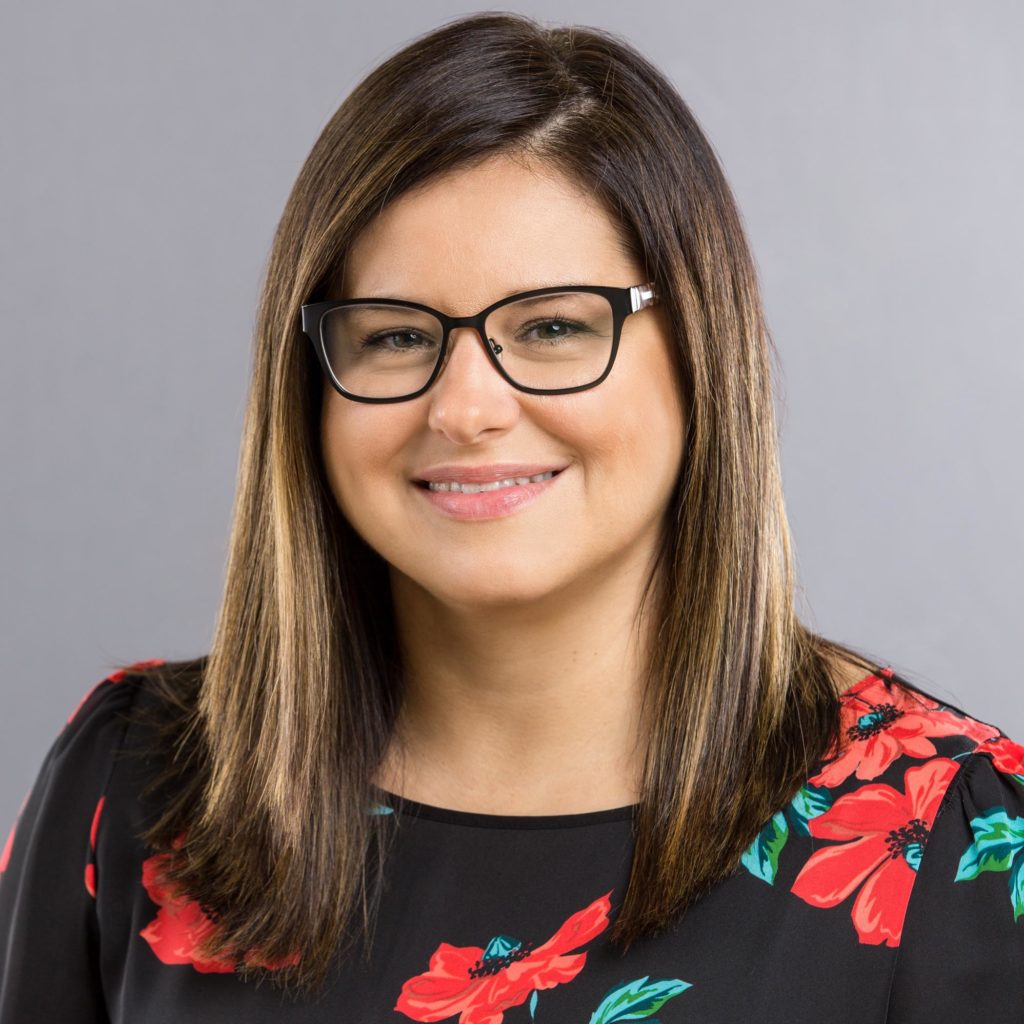
Named Director of the company’s telehandler product line JLG Industries, Inc., an Oshkosh Corporation company and a global manufacturer of mobile elevating work platforms (MEWPs) and telehandlers, is pleased to announce Daliborka (Dali) Ribeiro as the director of product management for JLG® and SkyTrak® telehandlers, including the company’s latest rotating and agricultural models. In this role, Ribeiro will lead the multi-generation product plan and drive the direction and implementation of its telehandler go-to-market strategy. Ribeiro and her parents moved from the former Yugoslavia to Chambersburg, Pennsylvania, in 1998 where she completed high school and went on to study at Penn State University, earning a Bachelor’s degree in Marketing. After graduation, she followed in her father’s footsteps and joined JLG in 2005 as a parts pricing analyst. Ribeiro says that she always knew JLG would be the right place for her because of her father’s long career in JLG manufacturing, his passion for the products, and the company’s culture. While in her first role at JLG, she continued her studies at Shippensburg University where she earned a Master of Business Administration from the John L. Grove School of Business. Shortly after receiving her MBA, Ribeiro advanced to a parts pricing manager role. Ribeiro expanded that role to become a senior manager of business development, acquiring responsibilities beyond parts pricing, which included coordination with the supply chain, aftermarket parts sales, and integrated technology teams. With more than 10-years of aftermarket experience and a broad understanding of the JLG business and its customers, Ribeiro then advanced to a director of the pricing role, where she led the team responsible for both whole goods and aftermarket parts pricing, before moving into her newest role as director of product management for telehandlers. Throughout her career, Ribeiro has played an integral role in supporting business development initiatives. She says that taking on a leadership role in product management provides her with the opportunity to continue expanding her business knowledge by getting closer to the customer and being at the forefront of new business and product development decisions. “JLG has a well-established position in the telehandler market,” says Ribeiro. “It’s an honor to represent two market-leading brands like JLG and SkyTrak and to have the opportunity to talk directly with customers about the current product line and future enhancements. Feedback from the field spurs our process of customer-inspired innovation.” JLG has recently diversified its telehandler portfolio to meet the growing demand for these highly versatile machines. These new models support applications across the agricultural and landscape industries, as well as work in highly congested urban areas and in specialty applications where higher capacity and greater height are required. “Our team is passionate about understanding job site challenges to develop solutions that drive tangible value for owners and operators. It’s an exciting time to step into my new product management role, and I am looking forward to applying my aftermarket experience and developing a full lifecycle strategy for the telehandler product line,” concludes Ribeiro. In her new telehandler role, Ribeiro joins Ara Eckel, Bob Begley, and Nate Hoover to round out the JLG product management director team.
WIKA Mobile Control provides wireless system solution for QMC Cranes
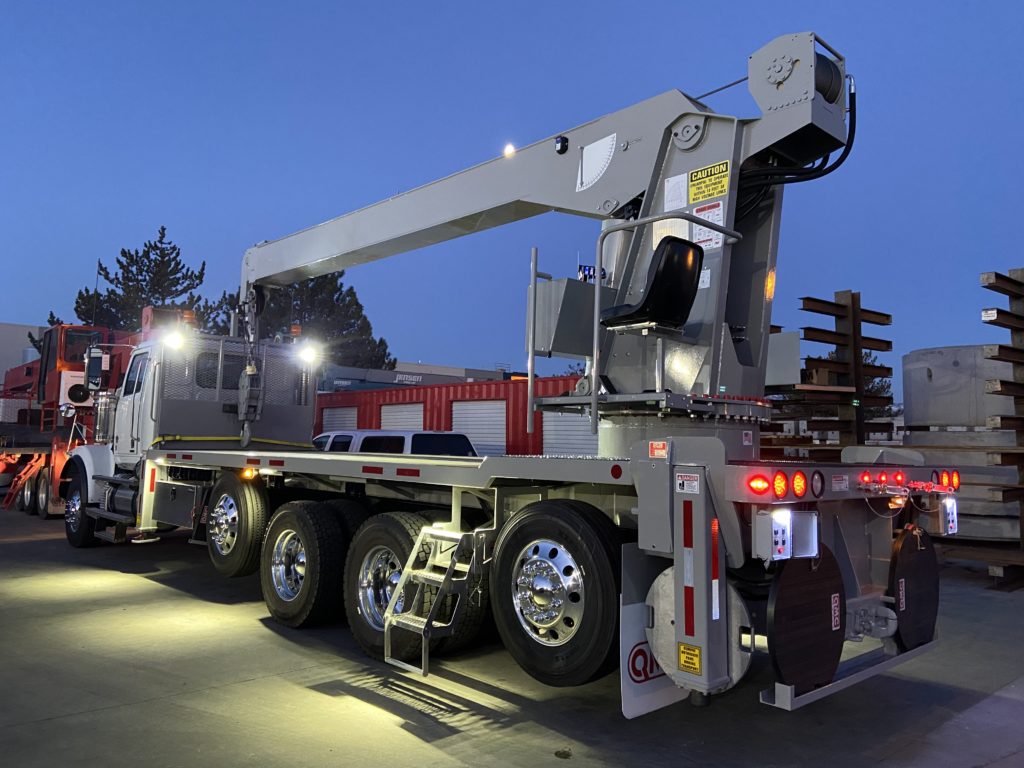
QMC Cranes (QMC) is offering WIKA Mobile Control’s PRS90 wireless multi-sensor indicator as an option on their 40-series and 50-series boom trucks. The system is widely used as an option for production units and is frequently installed on older cranes requiring a wireless system upgrade. All of the 4033R and 5034R boom trucks equipped with the PRS90 are currently being used in the precast concrete industry. Given the harsh working environments that their machines operate in, QMC required a robust wireless system and chose the PRS90 for a variety of reasons. According to QMC, one of the many benefits of the system is that it is simple to use and easy to install which makes it a great fit for less experienced mechanics when upgrading in the field. In addition, the PRS90 is more robust and reliable than comparable wireless systems making it suitable for unique job sites and a large variety of applications. “Our team has been providing the PRS90 system to our customers for several years,” said Brent Petring, General Manager of QMC Cranes. “The ease of use, ease of installation, and reliability make the PRS90 a high-quality system, perfect for the tough applications that QMC Cranes sees every day.” The PRS90 system features a 4.3” color graphic display and various wireless sensor options including angle, load, and anti-two block. This system allows the operator to pre-set limits with an audible and visual warning and modify sensor configurations with ease.
Flow-Rite fortifies efforts with additional staff

Flow-Rite has fortified its marketing efforts by filling two newly created positions. Justin McQueen joins the company as product marketing manager and Daniel Muschiana as graphic and web designer. Todd Hart, Flow-Rite president, made the announcement. With a deep understanding of the competitive landscape, McQueen develops new product ideas and business opportunities through collaboration with Flow-Rite staff, current customers, and potential OEM and aftermarket partners. He establishes go-to-market strategies including initial forecasting, target market identification, refined pricing tactics, and product placement. McQueen comes to Flow-Rite with a strong track record of developing profitable, scalable, and strategic marketing initiatives. Most recently, he was a marketing business development consultant with Perspective Communications. Prior, he was the marketing director for KPS Essentials. McQueen holds a bachelor of science in advertising and public relations from Grand Valley State University, Allendale, Michigan. Ensuring company brand consistency, Muschiana collaborates on the creative workflow for all Flow-Rite digital and printed marketing collateral from conception to delivery. This includes literature, advertising, product launches, direct mail and email campaigns, and e-retailer listings such as Amazon and eBay. He is responsible for show and event design work and developing and managing all corporate websites. Established art and design professional, Muschiana was most recently a partner at Allie & Muschiana Design LLC. Prior, he was a partner and project manager at Bonfire Media Midwest and senior graphic designer at Part Pit Stop. He holds two bachelor’s of fine arts degrees from Kendall College of Art and Design, Grand Rapids, Michigan, in design and visual communications – multimedia, and graphic design. “I’m excited to have Justin and Daniel join the Flow-Rite team,” said Hart. “We’ve been pioneers in developing fluid control solutions for the marine, RV, and industrial segments, and now we have a robust team of highly skilled professionals that will take our product marketing and promotion to a new level.” Flow-Rite is a vertically integrated company that designs and manufactures a wide range of fluid control and IoT devices. Its single-point lead-acid battery watering systems are used extensively in boats, RVs, golf carts, lifts, floor scrubbers, and industrial applications such as forklifts and locomotives. The company’s marine line includes livewell, baitwell, and ballast solutions with unique Qwik-Lok™ connectors.
Fenton retires on June 30th at United Rentals

United Rentals announced that Jeff Fenton, Senior Vice President, business development, will retire on June 30. He will be succeeded by Alfredo Barquin, who will lead the company’s M&A growth strategy as vice president, business development. Fenton will continue working with the company as a senior advisor through December 31, 2022. Fenton joined United Rentals in his current position in 2012. Over the past decade, he has been instrumental in the successful completion of dozens of acquisitions and other transactions to expand the scale and depth of the company’s service offering and built a high-performing business development team to support strategic growth. “I want to personally thank Jeff for his many contributions to a landmark decade of growth for our company, and wish him the very best in his retirement,” said Matthew Flannery, United Rentals CEO. “Jeff’s done an outstanding job of furthering our vision in line with our values. As Alfredo takes the reins in June, his strong track record with strategic expansions and our world-class team will ensure a smooth transition.” Barquin joined United Rentals in January from SWM International, a global manufacturer of engineered industrial performance materials. He most recently served as chief growth officer of SWM, following roles as general manager and CEO of company subsidiaries and vice president, corporate development. Previously, during an 11-year tenure with GE Energy (now GE Power), he led M&A initiatives as managing director, global business development, and earlier managed development activities for Eaton Corp. Barquin holds a bachelor’s degree in finance from the University of South Florida and a master’s degree in international business from Thunderbird School of Global Management.
Verde Bio Holdings, Inc. announces termination of BioDiesel transaction

Verde Bio Holdings, Inc., with revenue-producing mineral and royalty interests across the most active areas in the U.S., today announced that Verde terminated the Agreement to purchase the two biodiesel facilities, which the company first announced in December 2021. “Verde maintains a highly disciplined approach to the assessment of potential acquisition candidates. While we were excited by the potential of this transaction to move the Company into the renewable energy space and to create significant stockholder value, we could not get comfortable with the level of debt, short and long-term capital needs, and time it would take to generate revenue. Towards that end, we have decided that terminating this previously announced transaction is prudent for the Company and our shareholders. While we are growth-focused through opportunistic acquisitions such as this, we take debt and the issuance of significant numbers of shares very seriously,” said Scott Cox, Founder and CEO. “We remain laser-focused on our strategy and execution of our current business model of continued acquisitions of oil and gas royalties and pursuing opportunistic investments or acquisitions into alternative assets in the new energy economy,” said Mr. Cox. “With crude oil over $100/barrel and the strong level of deal activity we currently have, we are particularly excited about upcoming months of revenue and adding to our existing portfolio of great assets. We are proud to have built a Company which is creative and flexible enough to take advantage of these deals as they come to market. We remain focused on executing our business plan and creating long-term value for our shareholders,” Mr. Cox said.