
Episode 329: Third Wave Automation

Welcome to The New Warehouse Podcast. In this episode, our guest is Michael Myers, Director of Product Solutions from Third Wave Automation. Third Wave Automation is a company that automates material handling equipment in the warehouse, distribution, and manufacturing spaces. Please tune in to learn all about their multi-mode approach to forklift automation. Key Takeaways Third Wave Automation takes a unique approach to forklift automation. With a team of roboticists and software engineers, they chose not to reinvent the wheel but instead use base OEM vehicles and retrofit them with the necessary computing and sensing technology to allow the forklift to operate autonomously. Mike explains the multi-mode capabilities of their product. On top of operating autonomously, if the forklift encounters an error reading a label or some other challenge that prevents it from completing a task, it can “phone a friend,” as Mike calls it. At this point, a remote operator is alerted and can provide assistance or guidance to the robot to complete the task. By partnering with industry manufacturer Clark Material Handling, Third Wave found some distinct advantages in physical dimensions that allow them to accelerate into smaller aisles. They currently support aisles as narrow as ten and a half feet and are actively working to get that down to nine and a half. With warehouse space approaching $15 a square foot in some markets, optimizing warehouse space is more important than ever. Mike points out another advantage is forklift maintenance. Using traditional OEM equipment, maintenance and repair technicians are already familiar with the equipment and can quickly diagnose and repair issues. This familiarity prevents downtime and increases uptime, a huge advantage to warehouse operations. The New Warehouse Podcast EP 329: Third Wave Automation
U.S. Rail Traffic for October and the week ending October 29, 2022

The Association of American Railroads (AAR) has reported U.S. rail traffic for the week ending October 29, 2022, as well as volumes for October 2022. U.S. railroads originated 952,074 carloads in October 2022, up 0.5 percent, or 5,121 carloads, from October 2021. U.S. railroads also originated 1,062,422 containers and trailers in October 2022, down 1.4 percent, or 15,095 units, from the same month last year. Combined U.S. carload and intermodal originations in October 2022 were 2,014,496, down 0.5 percent, or 9,974 carloads and intermodal units from October 2021. In October 2022, seven of the 20 carload commodity categories tracked by the AAR each month saw carload gains compared with October 2021. These included: coal, up 14,937 carloads or 5.8 percent; crushed stone, sand & gravel, up 8,615 carloads or 10.7 percent; and motor vehicles & parts, up 5,998 carloads or 11.4 percent. Commodities that saw declines in October 2022 from October 2021 included: chemicals, down 6,195 carloads or 4.8 percent; primary metal products, down 4,645 carloads or 13.2 percent; and all other carloads, down 4,209 carloads or 16.8 percent. “October is usually one of the highest-volume months of the year for rail carloads, and it’s the top month so far this year,” said AAR Senior Vice President John T. Gray. “Carloads of grain surged upward as U.S. producers sought alternatives to the Mississippi River constraints while motor vehicles had one of their better months since pre-pandemic times. Carloads of chemicals were down in part because of high natural gas feedstock prices. U.S. intermodal volumes remained subdued in October thanks largely to high inventories at many retailers, lower port volumes, and still-scarce warehouse capacity for many rail intermodal customers.” Excluding coal, carloads were down 9,816 carloads, or 1.4 percent, in October 2022 from October 2021. Excluding coal and grain, carloads were down 8,950 carloads, or 1.5 percent. Total U.S. carload traffic for the first 10 months of 2022 was 9,971,376 carloads, up 0.1 percent, or 14,912 carloads, from the same period last year; and 11,321,976 intermodal units, down 4.8 percent, or 567,366 containers and trailers, from last year. Total combined U.S. traffic for the first 43 weeks of 2022 was 21,293,352 carloads and intermodal units, a decrease of 2.5 percent compared to last year. Week Ending October 29, 2022 Total U.S. weekly rail traffic was 514,457 carloads and intermodal units, up 0.8 percent compared with the same week last year. Total carloads for the week ending October 29 were 244,425 carloads, up 2.6 percent compared with the same week in 2021, while U.S. weekly intermodal volume was 270,032 containers and trailers, down 0.7 percent compared to 2021. Five of the 10 carload commodity groups posted an increase compared with the same week in 2021. They included coal, up 4,036 carloads, to 70,984; nonmetallic minerals, up 3,631 carloads, to 34,438; and motor vehicles and parts, up 2,365 carloads, to 15,002. Commodity groups that posted decreases compared with the same week in 2021 included chemicals, down 2,147 carloads, to 31,092; metallic ores and metals, down 1,916 carloads, to 22,108; and forest products, down 805 carloads, to 8,908. North American rail volume for the week ending October 29, 2022, on 12 reporting U.S., Canadian and Mexican railroads totaled 347,651 carloads, up 2.2 percent compared with the same week last year, and 355,130 intermodal units, down 0.9 percent compared with last year. Total combined weekly rail traffic in North America was 702,781 carloads and intermodal units, up 0.6 percent. North American rail volume for the first 43 weeks of 2022 was 29,189,693 carloads and intermodal units, down 2 percent compared with 2021. Canadian railroads reported 80,084 carloads for the week, up 0.4 percent, and 67,951 intermodal units, down 2.3 percent compared with the same week in 2021. For the first 43 weeks of 2022, Canadian railroads reported a cumulative rail traffic volume of 6,270,727 carloads, containers, and trailers, down 1.8 percent. Mexican railroads reported 23,142 carloads for the week, up 4.7 percent compared with the same week last year, and 17,147 intermodal units, up 1.8 percent. Cumulative volume on Mexican railroads for the first 43 weeks of 2022 was 1,625,614 carloads and intermodal containers and trailers, up 3.9 percent from the same point last year. To view the weekly charts, click here.
Global Shop Solutions employees celebrated as Emerging Leaders by NTMA

Developing homegrown leaders is one of the most important things companies can do to pave the way for continued success. Global Shop Solutions, a global provider of ERP software for manufacturers, has announced that Cynthia Ashby and Ryan Carpenter were identified as Emerging Leaders by the National Tooling and Machining Association (NTMA). NTMA is a U.S.-based trade association with 1,200 tool & die and precision manufacturing companies representing more than $35 billion in sales. Each year NTMA selects 15 individuals – nominated by their employers – for recognition in the association’s Emerging Leaders Rising program. This program recognizes the hard work and accomplishments of future leaders in manufacturing. “We’re very proud to have Cynthia and Ryan on our team,” says Dusty Alexander, President and CEO of Global Shop Solutions. “Cynthia attained her current position as Manager of the Financial Data Analysis Team by earning the respect, admiration, and trust of senior leaders, supervisors, fellow employees, and customers. As an Operations Consultant on our Continuous Improvement Team, Ryan has greatly impacted our customers by continuously helping them improve their fluency with our software and resolve issues from quote to cash. It’s employees like Cynthia and Ryan that have made Global Shop Solutions great today and into the future.” Each Emerging Leaders class is profiled in The Record, NTMA’s Monthly Precision Manufacturing Magazine and are invited to attend Manufacturing Engage – the annual precision manufacturing conference – where they are recognized on stage during the awards ceremony. They are also invited to attend the annual Emerging Leaders Conference where they can connect with each other and continue to develop their leadership skills. “It’s an honor to receive this award, but I wouldn’t be where I am today without the guidance of others,” says Ashby. “Becoming an Emerging Leader has motivated me to work harder and continue growing in my career while helping others succeed.” “I am honored to be chosen as an Emerging Leader,” says Carpenter. “Every day I do my best to ensure our customers’ needs are met, and I hope to pioneer a path for new hires by demonstrating the effectiveness of young leaders.”
Raymond introduces notification system for truck and pedestrian awareness
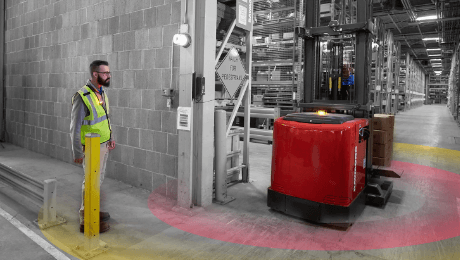
Designed to increase employee awareness of forklift and pedestrian proximity in dynamic operating environments, iWAREHOUSE® FieldSense strengthens Raymond’s intralogistics capabilities The Raymond Corporation has announced its latest addition to the iWAREHOUSE® Fleet and Warehouse Optimization System portfolio: the iWAREHOUSE FieldSense (iW.FieldSense) proximity notification system. Designed to reinforce operator best practices, instill a mindset of continuous improvement, and enhance environmental awareness, iW.FieldSense is unique in how it uses magnetic field generator (MFG) technology to see through and around most objects — including racking and corners — to alert properly equipped pedestrians and lift truck operators when they come within a predefined distance of each other. “We developed iWAREHOUSE FieldSense as a flexible solution, allowing users to customize the product to meet their specific needs today and then expand the system in the future,” said Steve Gorr, application manager for iWAREHOUSE Solutions at The Raymond Corporation. “It’s designed so warehouse managers can customize it to best fit their operators, applications and facility layouts without significant infrastructure changes.” The vehicle-mounted MFG creates an adjustable field around each piece of mobile equipment. If a pedestrian-worn pedestrian notification device (PND) detects a field, the PND sends a notification to the MFG, which then notifies the vehicle-mounted Notification Device for the vehicle operator to see. Using this field, iW.FieldSense can provide three levels of awareness: Truck-to-truck: When a vehicle-mounted MFG recognizes another MFG field from similarly equipped vehicles in close proximity, a warning light and sound is generated through the vehicle-mounted Notification Module, alerting the vehicle operator. Truck-to-pedestrian: When a pedestrian-worn PND recognizes a MFG field generated by a vehicle-mounted MFG, distance is determined and a notification is generated to inform the pedestrian. The same notification is simultaneously sent back to the MFG, notifying the vehicle operator. Truck-to-facility (with infrastructure option): Optional devices can be installed in sensitive areas around the facility that can detect the presence of the MFG fields, alerting vehicle operators of their close proximity to designated areas. Additionally, iW.FieldSense can be tailored to the operation and application, with features such as: 360-degree detection: Provides a solution for free range and dynamic environments that follows lift trucks and personnel around for greater security and flexibility. Easy installation: Vehicle hardware kits are designed for easy installation, and there are no additional software applications to learn. Vehicle compatibility: Allows the system to be added to almost any make and model of forklift — or other vehicle — for use across your entire fleet. Exceptional performance: Offers a reliable solution in nearly any environment, including cold storage. “The Raymond team of experts is here to support you every step of the way,” said Susan Comfort, senior manager of technology solutions and marketing at The Raymond Corporation. “Our innovative intralogistics solutions can help you optimize, connect and automate your operation to cut lead times, reduce waste, minimize downtime and improve quality all while continuously improving every aspect of your warehouse.”
Industry veteran Cantillo joins executive team at Got-Rack.com
Got-Rack.com just announced that Nelson Cantillo has joined their company to be its new VP of Corporate Strategy and Business Development. Cantillo has over 42 years of experience and considerable expertise in the supply chain and material handling industry. His focus will be on its national partnerships specifically in acquisitions and sales of new, used, and refurbished racking systems. In addition, Cantillo has served as vice president of the RMI (Rack Manufacturer’s Institute), the MHI trade association’s largest product group, His affiliation with RMI goes back over 25+ years. Cantillo was previously at Tri-Boro Shelving and Partition Corp. based in Farmville, VA. Got-Rack.com has locations in Florida, Texas, Indiana, Ohio, and Georgia. They will soon have future locations in Nevada and West Virginia.
Signode unveils global flagship facility in Roselle Illinois
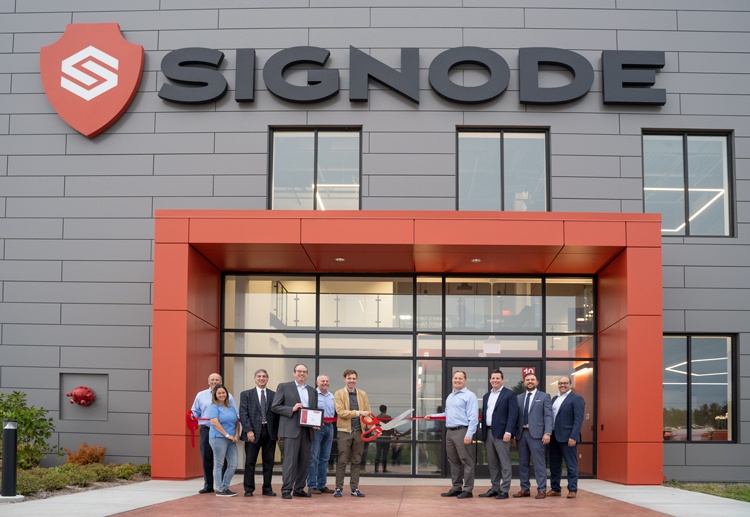
Signode’s Automation and Packaging Technologies division celebrated the opening of their new global flagship facility with the Mayor and other officials from the Village of Roselle, commemorating the occasion with a ribbon-cutting ceremony. The 360,000-square-foot structure, located at 1600 Central Avenue in Roselle, Illinois, is the new location for its Automation and Packaging Technologies (APT) division and will feature a state-of-the-art customer experience center, training facility, and expanded equipment manufacturing capabilities. “Roselle is proud to welcome Signode’s state-of-the-art facility to our community, and we look forward to a collaborative relationship to further industry and workforce development together,” said Roselle Mayor David Pileski. As a global manufacturer of innovative packaging and warehouse automation solutions, Signode relocated its APT operations from Glenview to Roselle. The new facility encompasses manufacturing for a broad portfolio of equipment and houses division leadership, sales, customer support, marketing, product management, innovation, research & development, application engineering, operations, and reliability services. “This facility is well-suited to support the APT team now and for the coming years,” said Eric Christensen, Group President at Signode. “As a leader in the transit packaging industry, our capabilities and services extend beyond product offerings. This new space will allow us to better innovate and serve our clients’ needs for automation and optimized packaging solutions.” In addition to manufacturing and office space, over 100,000+ sq ft is dedicated to a new customer experience center that will feature meeting space, a showroom for product demonstrations, a certified test laboratory to optimize packaging designs, and a training space for Signode’s Reliability Services team of field service technicians as well as customer partners and other employees. “We aspire to optimize every customer’s packaging investment, and this new experience center will aid us in delivering on that standard,” said Mike Stein, Signode’s Vice President, Sales, Marketing and Product Management.
Hy-Tek reintroduces itself with new brand identity
Hy-Tek Material Handling debuts a new look as Hy-Tek Intralogistics- reflecting the company’s growth and new brand promise Hy-Tek Material Handling, a full-service provider of integrated fulfillment and distribution solutions, announced today that it has completed a major rebranding. Hy-Tek Material Handling reintroduces itself with a new brand identity, positioning, and brand promise as Hy-Tek Intralogistics. Hy-Tek Material Handling originally started as Slife Material Handling in 1963. The name and logo continued for 26 years until Sam Grooms and four others purchased the company in 1989, renaming it Hy-Tek Material Handling— a play on the 1980s buzzword “High-Tech.” Inspired by its roots, the 59-year-old national supply chain integration company is reimagining every detail of its service offerings and the customer experience in the form of a single-source platform that can meet its customers at any stage of the process. “Over fifty years ago, Hy-Tek set out on a mission to build the organization into a single-source platform for our customers,” said Sam Grooms, CEO of Hy-Tek. “We have done this by developing internal expertise and through the acquisition of several brands. I am excited about the future of Hy-Tek Intralogistics. We believe this name best represents our comprehensive offering and supports our vision.” Over the next several months, Hy-Tek will be taking steps to migrate all its acquired companies under the new Hy-Tek Intralogistics brand. The full migration is expected to be completed in early 2023.
AIT Worldwide Logistics exceeds fundraising goal, raises more than $68,000 for St. Jude Children’s Research Hospital®

Multi-market sponsor, transportation management provider surpasses donation goal for the sixth year in a row Teammates from across AIT Worldwide Logistics’ North American region came together to raise money for St. Jude Children’s Research Hospital® this year. Including the company’s promised to match, AIT successfully exceeded its $60,000 goal for a total donation of $68,195. “The fight to end cancer is a cause that’s close to my heart, personally, and to the hearts of so many of us here at AIT,” said AIT Worldwide Logistics Executive Chairman and CEO, Vaughn Moore. “It makes me so proud to see our teammates show up every year without fail to support this critical work for the kids of St. Jude and really engage in their communities to make a difference.” Moore added that AIT selected St. Jude as the company’s flagship alliance in 2017 because not only does the hospital treat pediatric cancer patients, but they also never charge patients’ families for their services. To raise both money and awareness for the cause, AIT teammates participated in a variety of events starting in June and culminating during Childhood Cancer Awareness Month in September. Fundraising activities included cookouts, auctions, a cake walk, department decorating contests, bingo games, raffles, a fall festival featuring food trucks, a pumpkin painting contest, and more. Since first partnering with St. Jude, AIT’s supply chain solutions experts have worked together to raise more than $356,000 to support the hospital’s efforts, which include sharing lifesaving, cutting-edge research with doctors and medical institutions all over the world. St. Jude has spent the past five decades leading the charge in putting an end to childhood cancer, caring for patients, and creating treatments that helped increase the overall childhood cancer survival rate from just 20% to more than 80%.
New High-Inertia 1FK7-HI Servomotors added to Siemens offerings
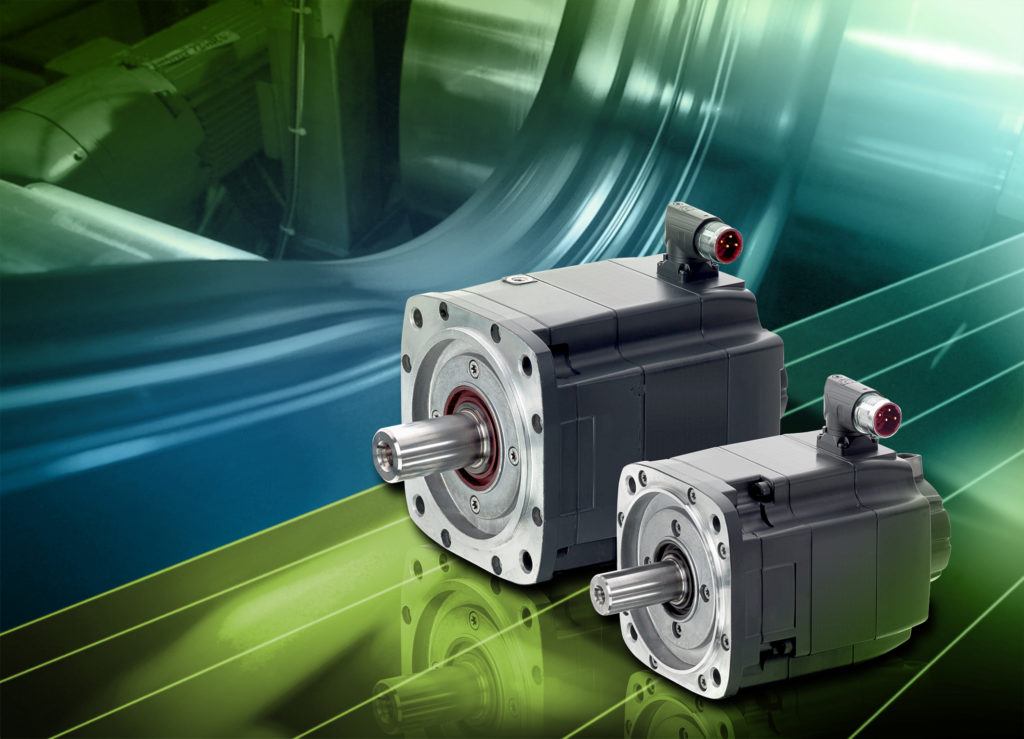
Siemens Industry, Inc. has announced that it is expanding its popular 1FK7 servomotor family, with the introduction of a new high-inertia style. The higher rotor inertia of this design makes the control response of the new 1FK7-HI servomotors highly robust and suitable for high- and variable-load inertia applications, including the feed and auxiliary axes on machine tools, as well as winders and unwinders on converting, packaging, and printing equipment. These self-cooled 1FK7-HI servomotors provide stall torque in the 3 Nm to 20 Nm range and are offered in IP64 or IP65 with IP67 flange degree of protection, with selectable options for plain or keyed shaft, holding brake, 22-bit incremental or absolute encoders, as well as 18 color options. A mechanical decoupler between the motor and encoder shaft protects the encoder from mechanical vibrations, providing a long service life. In cases where the encoder needs to be exchanged, the device automatically aligns the encoder signal to the rotor pole position, enabling feedbacks to be changed in the field in less than five minutes. These new Siemens 1FK7-HI servomotors also feature the unique Drive-Cliq® serial bus and electronic nameplate recognition, allowing virtual plug-n-play operation when paired to the Sinamics® S drive platform. All servomotors in this new line are also configured to interface with Siemens Sinumerik® CNC technology for machine tool applications and the motion controller Simotion® for general motion control use. Selecting the proper motor to suit the application is facilitated by the Siemens Sizer® toolbox and compatible 3D CAD model-generating CAD-Creator package.
Q4 Update to the 2022 Economic Outlook forecasts 5.9% expansion in Equipment and Software investment and 1.8% GDP growth this year

Despite early indicators of a modest rebound in equipment and software investment growth in Q3, demand may soften in several end-user markets over the remainder of the year due to high-interest rates and expectations for further rate hikes, according to the Q4 update to the 2022 Equipment Leasing & Finance U.S. Economic Outlook. The report released today by the Equipment Leasing & Finance Foundation forecasts equipment and software investment growth of 5.9% in 2022, while U.S. GDP growth of 1.8% is expected. The Foundation’s report is focused on the $1.16 trillion equipment leasing and finance industry and highlights key trends in equipment investment, placing them in the context of the broader U.S. economic climate. Nancy Pistorio, Foundation Chair and President of Madison Capital LLC, said, “While many of the factors highlighted in the Foundation’s Q4 Economic Outlook have worsened in recent months, including the U.S. housing sector, the global economic backdrop, and Fed actions to control inflation, there are bright spots. The industrial core of the economy continued to hum along in the late summer and early fall, and demand for equipment remains strong despite concerns of a looming recession.” Highlights from the Q4 update to the 2022 Outlook include: Equipment and software investment grew just 1.9 percent (annualized) in Q2, a notable slowdown from strong growth in Q1. The effects of Fed interest rate hikes appear to be filtering through the economy, but most verticals are not showing cause for serious concern. However, demand is expected to soften late this year and in early 2023 as the Fed continues to address inflation. The U.S. economy contracted through the first six months of 2022, amplifying recession concerns. The labor market remains a bright spot, but higher interest rates are increasingly taking a toll on the U.S. housing market and the global economy, which is struggling under the weight of the strongest dollar in decades. Still, a recession is unlikely to occur in 2022. In the manufacturing sector, loosening supply chains have allowed the industrial activity to continue expanding despite rising interest rates and high inflation weighing on business confidence. The recent passage of multiple infrastructure-related bills should provide a modest tailwind for the equipment finance industry in 2023. The outlook for Main Street businesses over the remainder of the year has worsened. While small and medium-sized businesses are starting from a position of relative strength, the dual impacts of high inflation and surging interest rates are likely to impact smaller firms first and hardest. With borrowing more expensive and sales expectations weak, small business owners are likely to feel pressure to slow or pause expansion and hiring plans. Despite rapidly increasing interest rates, the Fed’s actions to quell inflation seem to have had little effect. Fed officials have repeatedly emphasized the importance of reining in inflation, even if it means sending the U.S. economy into a recession. The Foundation-Keybridge U.S. Equipment & Software Investment Momentum Monitor, which is released in conjunction with the Economic Outlook, tracks 12 equipment and software investment verticals. In addition, the Momentum Monitor Sector Matrix provides a customized data visualization of current values of each of the 12 verticals based on recent momentum and historical strength. This month four verticals are expanding/thriving, four are peaking/slowing, and four are weakening/struggling. Over the next three to six months, year over year: Agriculture machinery investment growth is unlikely to improve. Construction machinery investment growth is likely to slow. Materials handling equipment investment growth is likely to remain soft. All other industrial equipment investment growth may continue to decelerate. Medical equipment investment growth will likely hold steady. Mining and oilfield machinery investment growth may have peaked, though growth is expected to remain positive. Aircraft investment growth may begin to rebound. Ships and boats investment growth are unlikely to accelerate. Railroad equipment investment growth will likely remain strong. Trucks investment growth may improve. Computers investment growth will likely continue to sidewind. Software investment growth will likely decelerate further. The Foundation produces the Equipment Leasing & Finance U.S. Economic Outlook report in partnership with economic and public policy consulting firm Keybridge Research. The annual economic forecast provides the U.S. macroeconomic outlook, credit market conditions, and key economic indicators. The Q4 report is the third update to the 2022 Economic Outlook and the final quarterly update before the publication of the 2023 Economic Outlook in December. Download the full report at https://www.leasefoundation.org/industry-resources/u-s-economic-outlook/. Download the Momentum Monitor at https://www.leasefoundation.org/industry-resources/momentum-monitor/. All Foundation studies are available for free download from the Foundation’s online library at http://store.leasefoundation.org/.
Orbital Wrapper manufacturer increases Made in USA components to 90 percent
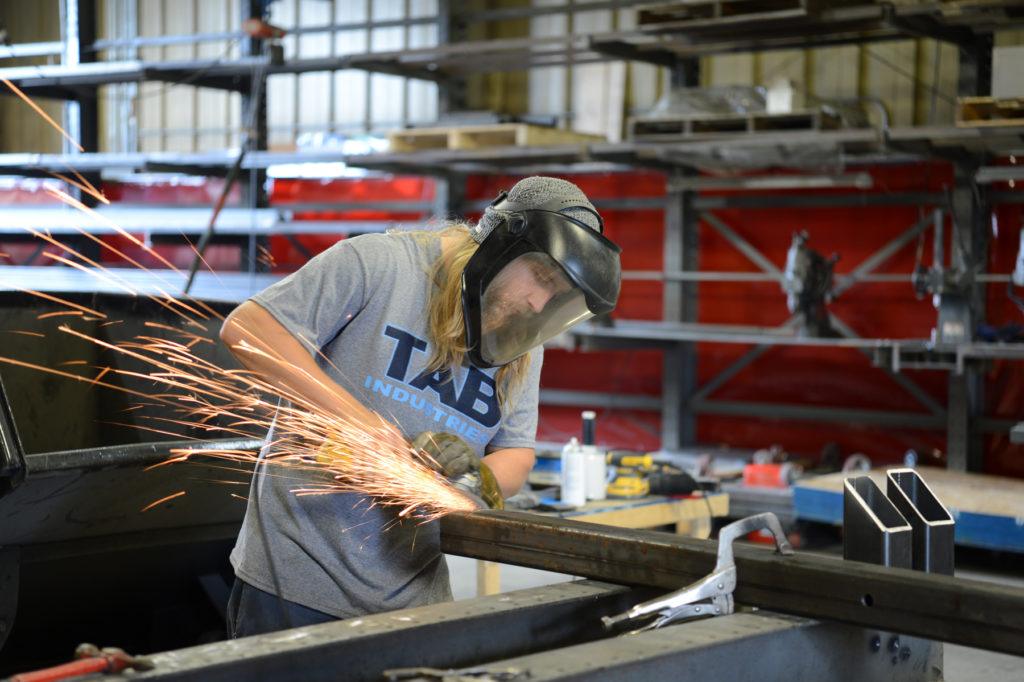
Orbital wrapping machine manufacturer TAB Industries, LLC, Reading, Pa.has increased the amount of component parts that are “Made in USA” in its TAB Wrapper Tornado line of pallet wrappers to 90 percent. Now manufacturing more than 40 different parts per orbital wrapper in its Reading, PA facility, the company increased the use of in-house and locally sourced components as a key part of its business strategy to help insulate production from global supply chain disruptions and permit faster lead times. Recent investments in fabricating, welding, automated laser cutting, and CNC machining equipment have eliminated reliance on outside suppliers and accelerated lead times by approximately two weeks. Current lead times for the standard model wrapping system are at eight weeks. First manufactured in 2011 using only [40?] percent of component parts that are “Made in USA”, the TAB Wrapper Tornado orbital wrappers today feature heavy gauge steel wrapping rings, laser cut machine guarding, a variety of latches, clips, and plates, and advanced electronics, all designed, manufactured, assembled, wired, and programmed in-house and delivered ready to plug in and operate. The company’s streamlined production capabilities also promote fast delivery of replacement parts. The TAB Wrapper Tornado line of orbital wrapping machines automatically applies stretch wrap 360 degrees around and under the pallet and load to create a sturdy, secure, unitized load in seconds without banding, boxing, or strapping. Testing is offered using customer-supplied pallet loads to verify performance.
ASSP helps safety and health professionals get recognized

Occupational safety and health professionals create safe work environments in all industries around the globe, helping workers return home safe and healthy to their loved ones at the end of the day. Through its organization-wide awards program, the American Society of Safety Professionals (ASSP) puts a spotlight on many dedicated members and member groups that advance workplace safety and the profession. Nominations are encouraged. ASSP’s top annual recognitions include the Honor of Fellow, ASSP Safety Professional of the Year, William E. Tarrants Outstanding Safety Educator, and the Thomas F. Bresnahan Standards Medal for achievement in workplace safety standards. “We are pleased to acknowledge the work our members do to protect workers, save lives and help businesses succeed,” said ASSP President Christine Sullivan, CSP, ARM. “Our Society consistently highlights these special individuals and groups, and we welcome nominations from the safety field to make sure we don’t miss the brightest stars.” Additional honors that ASSP presents to safety and health professionals each year include: ASSP Foundation Distinguished Service Award Chapter Awards Charles V. Culbertson Outstanding Volunteer Service Award Council on Practices and Standards Safety Professional of the Year Outstanding Student Section Award (for colleges and universities) Practice Specialties and Common Interest Groups Community Award Practice Specialties and Common Interest Groups Safety Professional of the Year President’s Award Professional Safety Article of the Year Region Safety Professional of the Year “Our many vibrant ASSP communities worldwide, from chapters to practice specialties to common interest groups, contribute to our mission of creating safe work environments,” Sullivan said. “We’re focused on recognizing the many deserving members who consistently help propel safety forward.”
Women In Trucking Association announces its November 2022 Member of the Month
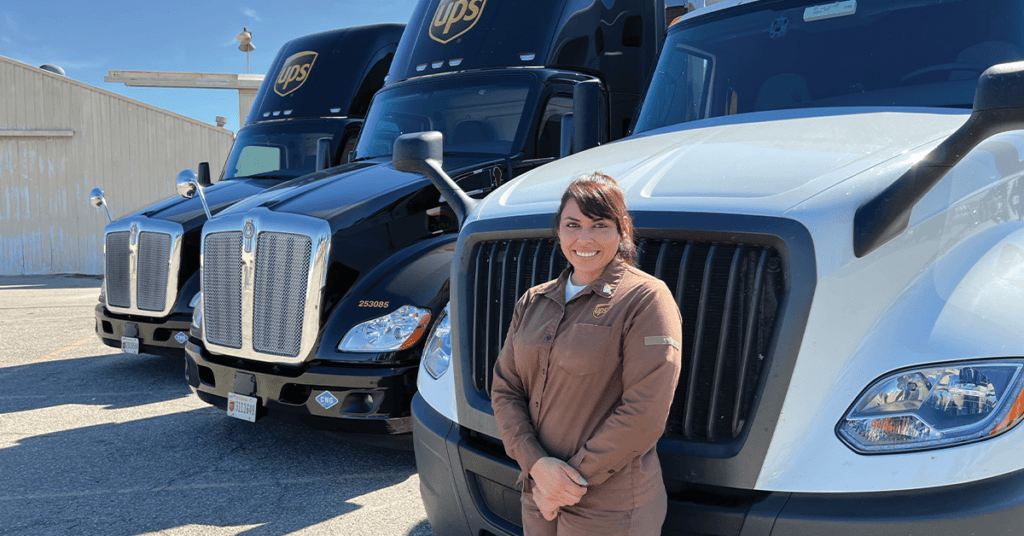
The Women In Trucking Association (WIT) has announced Raquel Sanchez as its November 2022 Member of the Month. Sanchez is a feeder driver for United Parcel Service (UPS). When Sanchez joined the Army National Guard in 2011, she was offered the opportunity to drive a truck. Inspired by her father, Jim Sanchez, who has been a driver for UPS for more than 38 years, she realized her love for being behind the wheel. Sanchez left the military after eight years and continued doing various jobs, however, never felt completely satisfied in her work. Following the passion she found for driving trucks, Sanchez began her career at UPS in August 2019 as a part-time employee and loaded packages onto delivery trucks. Progressing quickly, she became a delivery driver and eventually began driving a semi-truck for UPS in February 2022. Most recently, Sanchez and her father made history by being the first father-and-daughter long-haul team on the West Coast. “As someone who is just starting their career, I feel blessed to have my dad by my side as a mentor,” said Sanchez. “In 1997, my dad was on the first experimental UPS sleeper team when I was just seven years old. Who would have thought I would be his partner all these years later?” Since long-haul driving is a mostly sedentary job, Sanchez believes in the importance of staying healthy and focuses on nutritious foods to stay energized behind the wheel. Additionally, when she is not driving, she makes it a priority to spend time in the gym, saying, “staying healthy allows me to keep moving packages from one destination to the next and I know I am doing my part to move the world forward by delivering what matters.” Sanchez feels a sense of accomplishment driving a truck and encourages other women to pursue a career in this industry, saying, “more than 70 percent of goods and services are delivered by trucks, and being able to deliver loads on time gives you a sense of self-importance and value and I feel proud of the work I do after completing my last stop of the day.”
Stryten Energy Components division launched to serve the battery industry’s growing need for engineered components

The Division provides the Plastic Injection Molded Battery Components and Terminals critical to the growth of U.S. Energy storage manufacturing capabilities Stryten Energy LLC, a U.S.-based energy storage solutions provider, announced at AAPEX 2022 the launch of Stryten Energy Components. This new division provides engineered-to-order battery components for lead, lithium, flow, and other emerging battery technologies for the automotive and industrial markets. “Stryten Energy’s Components division has invested in automation in each of our four facilities to enhance quality, productivity, and service to all of our customers,” said Jeremy Furr, Components Division Leader for Stryten Energy. “These investments have helped us scale up our operations to provide the U.S.-manufactured and sourced components required for the emerging domestic battery market.” Stryten Energy Components provides quality, cost-effective, engineered plastic components from natural and recycled polypropylene, including battery containers, covers, vents, handles and terminal protectors. Its cold-formed lead battery terminals are designed to prevent corrosion and utilize a patented SuperLock terminal to provide superior sealing. Value-added technical services and expertise help customers with product development, design, mold making, and injection molding processing. “We have seen an increase in market demand for critical battery components in the U.S. and internationally,” said Furr. “We are continuing to invest in our Stryten Energy Component plants to expand our product offering and the availability of our products to serve international customers.” Stryten Energy Components includes a combination of the company’s and its subsidiaries’ existing custom plastic injection molded battery component operations with the recent acquisition of Tulip Richardson Manufacturing’s plastic injection molding, lead terminal, and reprocessed polypropylene operations. The division has manufacturing facilities in Lampeter, PA; Columbus, IN; Niagara Falls, NY; and Milwaukee, WI.
CALSTART research forecasts strong growth in zero-emission off-road equipment
CALSTART has collaborated with the California Air Resources Board (CARB) on a market readiness and technological status assessment of zero-emission off-road equipment CALSTART, a global non-profit focused on clean energy and transportation, has released the results of a new research project that gives a wide-ranging technology and market assessment of zero-emission off-highway equipment. This research was conducted in partnership with Interact Analysis to support the California Air Resource Board’s Long-Term Heavy-Duty Investment Strategy, including the Clean Off-Road Equipment Voucher Incentive Project (CORE), and shows how off-highway equipment lags behind on-highway equipment in terms of electrification despite concerns over public health and greenhouse gas emissions. The analysis finds that off-road equipment electrification is progressing rapidly, with over 200 electrified equipment models currently available on the market across eight distinct off-road categories. Several categories, such as light forklifts, airport ground-support equipment, yard trucks, and transportation refrigeration units, are classified as technologically mature, meaning that only market barriers stand in the way of widespread deployment. Furthermore, technological progress in these segments is helping to transition the mining, rail, cargo-handling, marine, and agriculture sectors. Construction equipment is primed for fast growth in electrification. There are various reasons for this, including the compactness of many construction machines and the proximity of many construction sites to the electrical infrastructure necessary for recharging this equipment. For example, sales of battery electric mini-excavators accounted for 5% of the total U.S. market in 2021 and are projected to account for 15% of the market by 2029. By contrast, the electrification of agricultural machinery is a much more difficult challenge, partly due to the need to operate in remote locations. Two of the most successful segments have been forklifts and underground mining equipment, where the deployment of electrified machinery is already widespread due to the need for these machines to operate in enclosed environments where exhaust fumes are a health concern. The report argues that mining companies need to more rapidly electrify other categories of equipment to meet the environmental goals that they themselves have set. It also points out that beyond the air quality and associated health and financial benefits of eliminating exhaust fumes, there are additional benefits to electrification in mining, such as higher low-end torque, which offers greater hauling power at low speeds. Meanwhile, in forklifts, the big story is the battle between lead acid and Li-ion batteries. Currently, the market is 80/20 in favor of lead acid. By 2030, it is projected to be 30/70 in favor of Li-ion. “Going forward, electrification of the largest off-road equipment will be challenging. Nevertheless, significant progress is being made,” said Jacob Whitson, Program Manager at CALSTART. “Some of the largest equipment is produced in small enough volumes that it may not be as hard to electrify them as originally presumed. For example, Sandvik is rolling out a battery-electric 65-ton truck. The CALSTART beachhead strategy shows how advances in electrifying smaller equipment translate into advances in electrification of larger machines more rapidly than many assume.” With the Bauma Conference going on in München, leading OEMs are showcasing advancements in construction vehicle electrification, including Komatsu’s direct electric actuated wheel loader and 20-ton Proterra battery-powered excavator; John Deere’s two asphalt pavers and eight compaction rollers; Bobcat’s compact track loader; and Yanmar’s “powertrains for all” third-party solution suite. “CALSTART’s beachhead strategy outlines the roadmap to the deployment of zero-emission technologies in even the largest off-road equipment segments, added Jessie Lund, Truck Program Manager at CALSTART. “The beachhead strategy is based on the concept that the development and continual improvement of smaller electric machines lead to rapid improvements in areas such as component performance or charging infrastructure improvements that then drive the whole market forward. For example, the market success of battery electric forklifts clearly paved the way for the next wave of zero-emission equipment such as off-road yard trucks – a segment that is rapidly growing today.”
New Hikvision video access control terminals improve entrance security and functionality

Robust, Compact Vandal-Proof Unit Combines Access Control, Video Intercom, and Video Security Hikvision, a global manufacturer and supplier of security products and solutions that deliver the ideal combination of high performance and extreme value, is introducing the new Video Access Control Terminal, the latest addition to our lineup of Identity Authentication Terminals. The new Video Access Control Terminal combines an HD camera with three authentication methods and two-way audio communication, all housed in a compact, and vandal-proof rugged indoor/outdoor enclosure for a powerful, flexible entry solution. “This new Video Access Terminal lets users choose to support a variety of authentication methods for added flexibility and convenience,” said John Xiao, Vice President of Marketing, at Hikvision USA. “At the same time, it enhances the user experience with video intercom functionality and can even provide video security in an entrance area. At Hikvision, we are dedicated to helping professionals and users alike make the most of their security investments and device capabilities to improve safety, security, and overall system performance.” The Video Access Control Terminal model number DS-K1T502DBWX-C has an 81mm by 177mm faceplate that extends just 24mm from the mounting surface. The unit is built for indoor or outdoor use and features IP65 and IK09 ratings for environmental protection. The 2 MP camera, keypad, and card reader sensor are all located on the front of the device. The network interface, SD card slot, and wiring terminals are on the lower back of the unit. Wireless support includes not only the card reader, but also Wi-Fi, 2.4G, and Bluetooth. Connection to external access controllers is via a Wiegand protocol, and RS-385 communication provides links for an external card reader if needed. The unit can be controlled remotely using the Hik-Connect mobile app. This combination of capabilities and connectivity lets the new access control terminal provide a range of valuable services at an entrance, including not only access control but also two-way audio, remote live views, picture capture, video security recording to an NVR, and more.
Semiconductor innovator becomes the newest CLPA member

The CC-Link Partner Association (CLPA) has welcomed Lattice Semiconductor as the latest member of its network of leading industrial automation vendors, system integrators, and end users. This new collaboration will help advance interconnected industrial automation applications, enhancing their efficiency, security, and safety and benefitting manufacturing industries worldwide. The rapidly and constantly expanding CLPA membership unites key industry players to drive the development and adoption of state-of-the-art automation devices, enabling the creation of the Connected Industries of the future. These solutions are backed by the organization’s open network technologies, which provide a solid foundation for interconnectivity, interoperability, and standardization among different automation products. Compatibility with the CLPA’s industrial communications protocols is provided via hardware and software tools for product development, such as field-programmable gate array (FPGA) and intellectual property (IP) cores. Lattice, the low-power programmable leader, is, therefore, an ideal fit within the organization, as the company’s portfolio features powerful, energy-efficient integrated circuits. Manabu Hamaguchi, Global Director at CLPA, welcomed Lattice to the organization, noting the role of the company in the semiconductor industry: “We are excited to work with Lattice. Our goal is to improve efficiency and speed up the construction of IIoT-driven smart factories with our industry-leading TSN technology. We believe Lattice’s low-power FPGAs and its wide range of application-specific solutions will strengthen our mission of making the Connected Industries of the future a reality today.” Bringing Lattice into the CLPA’s membership allows automation vendors to benefit from a broader range of cutting-edge hardware and software-based solutions to offer compatibility with widely adopted and sought-after network technologies. These include CC-Link IE TSN, the first open industrial Ethernet that combines gigabit bandwidth with Time-Sensitive Networking (TSN) to converge information technology (IT) and operational technology (OT) network traffic, helping to realize the Industrial Internet of Things (IIoT). Matt Dobrodziej, Vice President of Segment Marketing and Business Development at Lattice, comments: “As Industry 4.0 advancements continue, seamless IT and OT network interoperation, real-time control, and flexible product support are essential for security, safety, and reliability in smart factories. We look forward to collaborating with the CLPA to deliver optimized industrial networking solutions powered by our FPGA solutions and IPs, including the Lattice Automate™ solution stack and Lattice mVision™ solution stack.” Thomas Burke, Global Advisor at CLPA, concludes: “The CLPA constantly strives to help drive competitiveness in the manufacturing sector as well as the profile of its members in the marketplace. This is achieved by supporting the development of automation devices with the advanced capabilities offered by our open network technologies. By adding Lattice to our open development ecosystem, we can help this leading company develop its business worldwide while underpinning the development of future-oriented IIoT systems. We look forward to collectively building on the already impressive list of CC-Link IE TSN compatible automation devices.”
Nano One announces closing of Candiac acquisition from Johnson Matthey and appoints Denis Geoffroy as Chief Commercialization Officer

Nano One® Materials Corp., a clean technology innovator in battery materials, has announced that, through a wholly owned subsidiary, it has successfully completed the acquisition of Johnson Matthey Battery Materials Ltd. (“JMBM Canada”) previously announced on May 25, 2022. Net consideration for the Acquisition was C$10.25 million, subject to customary closing adjustments, and was fully funded from cash on hand. The Company held C$48 million cash on hand as of June 30, 2022, in addition to the Acquisition consideration. Highlights The Acquisition helps expedite Nano One’s business strategy for LFP and other battery materials and includes: A talented and dedicated workforce of 46 professionals with almost 400 years of scale-up, commercialization, and cathode manufacturing know-how on LFP. The only existing North American lithium iron phosphate (“LFP”) production facility. An 80,000 square foot, 2,400 tpa capacity LFP production facility on 9.5 acres, strategically located near Montréal. Certification systems supplying tier 1 cell manufacturers for the automotive sector. The Company is further pleased to announce that Denis Geoffroy, a seasoned lithium-ion battery value chain and cathode manufacturing leader has been appointed Chief Commercialization Officer of Nano One, effective Nov 1, 2022. Denis was an early contributor to Phostech Lithium, which led the first commercial manufacturing of LFP cathode active materials globally. Under Denis’ leadership, Phostech Lithium commercialized LFP in Québec and grew from pilot to full industrial commercialization with the build of the Candiac LFP plant and the commencement of commercial operations in 2012. Denis went on to lead the Candiac operations as General Manager until 2019. Mr. Dan Blondal, Nano One CEO, said, “Today marks the beginning of an exciting new chapter in the Nano One story. I am pleased to report that the entire team in Candiac has transitioned to Nano One and this positions us with the most experienced LFP workforce in North America. We welcome their addition to the Nano One family and are looking forward to building and expanding the scope and trajectory of our operations over the coming months and years. Denis has contributed significantly to Nano One over the past year and played an integral role in the acquisition of JMBM Canada and we are delighted to be appointing him as Chief Commercialization Officer. We are confident that Nano One can create significant, long-term value for stakeholders by leveraging our enhanced resources, know-how, and patented One-Pot cathode manufacturing technology to address the critical mineral and scale-up challenges of a terawatt-hour world.” The Candiac facility and team in Montreal will be a base for the expansion and acceleration of Nano One’s commercialization strategy and is a perfect complement to Nano One’s technology innovation hub and team in Burnaby, British Columbia. Integration activities, with advisory services from the Business Development Bank of Canada (BDC) and other specialty consultants, have been underway for the past few months with a focus on finance, human resources, governance, IT, marketing, communications, facilities, enterprise systems, manufacturing, procurement, and logistics. This work is expected to continue into Q2 2023 and work to date has put Nano One in a strong position, at this time, with the Acquisition now complete, to execute its organizational and business plans. The Company will begin with trials in the Candiac facility to validate the production of LFP using the Company’s patented One-Pot process. Results from these trials will drive business, commercial, and plant conversion decisions in 2023. In support of these post-closing activities, Nano One has been planning, engineering, and developing business channels for many months already, in close collaboration with key employees at the Candiac facility. This will enable the newly expanded company to move quickly. Critical raw material inputs and equipment, such as One-Pot reactors, have been ordered. A local engineering firm, with team members that participated in the design and build of the Candiac facility a decade ago, has been engaged to assist with large pilot trials of the One-Pot process, and this brings valuable experience that will help bridge the learning curve and expedite the transition of the facility to Nano One. Nano One has done extensive analyses of the techno-economics, critical minerals, carbon footprint, and environmental impact of its One-Pot process. The Company believes there is a significant opportunity to differentiate both economically and environmentally and to create a sustainably robust and secure supply chain to serve markets in Canada, the USA, Europe, and other emerging battery jurisdictions. Furthermore, Nano One will launch engineering activities for the design, construction, and operation of a commercial LFP facility. Site selection for this plant will be done in collaboration with partners and will consider governmental and non-governmental support in various jurisdictions. It is the Company’s intention, to use this plant as a blueprint for large multi-line production facilities under a hybrid business model that includes licensing, joint venture, and independent production in Canada, the USA, and other emerging critical mineral jurisdictions. This strategy is aimed at serving outsized demand from the energy storage, mobility, and electric vehicle markets. Details will be disclosed as the Company firms them up. The Candiac production facility has been in operation since 2012 and was acquired by Johnson Matthey in 2015. It has been a supplier of lithium iron phosphate (LFP) cathode material to the lithium-ion battery sector for both automotive and non-automotive applications for a select group of customers, globally. Strategically located in Candiac, Québec, it has the benefit of access to a rapidly developing North American ecosystem that will serve the broader global community with cost-effective, resilient, and environmentally sustainable cathode materials. M. Denis Geoffroy said “As part of my work on LFP over the last 20 years, I helped develop, design, build and run the Candiac plant. When I joined Nano One a year ago to lead their commercialization effort, the opportunity quickly arose to bring these two great teams together and harness the best people with the most complementary skillsets. The team in Candiac has a passion for excellence, and an entrepreneurial spirit and they have successfully scaled two different processes on their journey to commercialize LFP 10
Women In Trucking Association names 2022 Top Companies for Women to Work for in Transportation
Redefining the Road magazine, the official magazine of the Women In Trucking Association (WIT), announced today the recipients of the 2022 “Top Companies for Women to Work For in Transportation.” According to Ellen Voie, president and CEO of WIT, the magazine created the award in 2018 to support an element of WIT’s mission: to promote the accomplishments of companies that are focused on the employment of women in the trucking industry. There are a number of characteristics that distinguish the companies recognized on this list, according to Brian Everett, publisher of Redefining the Road. These characteristics include corporate cultures that foster gender diversity; competitive compensation and benefits; flexible hours and work requirements; professional development opportunities; and career advancement opportunities. “These corporate attributes are essential to any successful enterprise that is serious about gender diversity,” said Everett. “Identifying the companies on this list involves a two-step process. First, nominations of the companies are received and carefully reviewed to ensure they qualify by meeting a minimum threshold of qualifications – including these characteristics we look for. Then the final ballot of companies is voted on by individuals in the industry. This is the fifth year of this prestigious recognition program and it garnered a record number of more than 22,000 votes to identify and validate the final companies named to the list.” The list is comprised of a diverse range of business sectors in the commercial freight transportation marketplace, including motor carriers, third-party logistics companies, and original equipment manufacturers. These companies will be recognized at the upcoming WIT Accelerate! Conference & Expo Nov. 13-16 in Dallas, TX. Navistar is the sponsor of this year’s program. Companies named to the 2022 “Top Companies for Women to Work For in Transportation” list are: 160 Driving Academy AFS Logistics Ancora Education Armstrong Transport Group Arrive Logistics Averitt Express BCB Transport Bennett Family of Companies Big M Transportation, Inc. Bob’s Discount Furniture Booster Boyle Transportation Bridgestone Americas, Inc. Carter Express, Inc. Centerline Drivers CFI Clean Harbors Convoy Covenant CPC Logistics Crowley Cumberland International Trucks Cummins, Inc. Daimler Truck North America Dart Transit Company Day & Ross Drivewyze, Inc. Dupré Logistics Dynacraft, a PACCAR Company EASE Logistics Estes Express Lines Exxact Express FedEx Freight First Truck Centre FirstFleet, Inc. GLT Logistics Halvor Lines, Inc. Highway Transport Logistics, Inc. J.B. Hunt Transport Services, Inc. JX Enterprises, Inc. Kenworth Truck Company Leonard’s Express Marathon Petroleum Company May Trucking Company Merchants Fleet Michelin North America, Inc. MOTOR Information Systems Navistar, Inc. New West Truck Centres NFI Industries Old Dominion Freight Line PACCAR Engine Company PACCAR Parts PACCAR, Inc. Palmer Trucks Paschall Truck Lines Penske Transportation Solutions PepsiCo Peterbilt Motors Company Pilot Company Prime, Inc. Quality Carriers Redwood Logistics ReedTMS Logistics Rihm Family Companies Roehl Transport Ryder SAIA LTL Freight Savage Schneider Skelton Truck Lines Solera Stericycle Sunset Transportation Swift Transportation The Erb Group of Companies The Evans Network of Companies The Pete Store, LLC Thomas E. Keller Trucking Total Transportation of Mississippi TRAFFIX Transflo Tri-National, Inc. (TNi) Trinity Logistics Triumph Business Capital Truckstop.com TrueNorth Transportation Tucker Freight Lines U.S. Xpress UPS US AutoLogistics Venture Transport Logistics Volvo Group North America Walmart, Inc. Waste Management Werner Enterprises, Inc. Wilson Logistics XPO Logistics Yellow Zonar
Episode 328: FORT Robotics at MODEX 2022
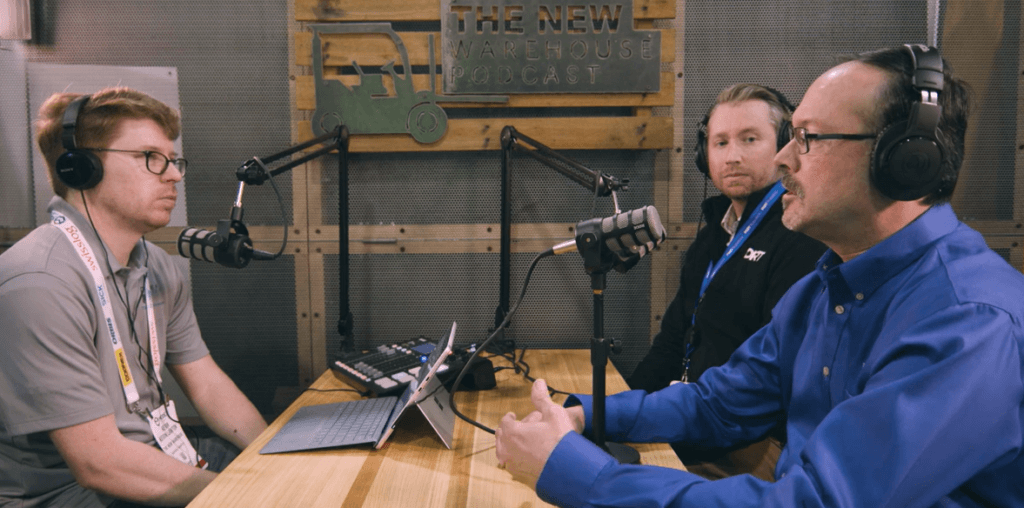
Fort Robotics joins The New Warehouse podcast live from MODEX 2022. David Sullivan, Principal Product Manager, and Mike Zipperer, Product Development – Cybersecurity Director from Fort Robotics, discuss safety technology in the warehouse space. Fort Robotics is a four-year-old start-up spinoff of a previous company focused on landmine removal. Fort Robotics uses the same suite of technologies to enhance the safety and security of all sorts of smart machines and robotics. Key Takeaways David explains that any “dull, dirty, or dangerous” job is likely a good fit for automation or robotics, which is why we see many technologies developed for the military are also applicable for logistics and warehousing. He adds the military’s robust budget doesn’t hurt either, as they can fund more advanced technology development. Mike and David explain as robotics become more commonplace in warehouse environments, we need to improve the ability to protect personnel. One way Fort Robotics is making warehouses safer is through its nano safety control. For example, embedding the nano safety control into a mobile robot allows safety commands to be sent wirelessly, and black channel communications technology ensures the integrity of the safety commands. As much as we joke about robots taking over, malicious actors or hackers are a legitimate concern. Mike shares how this is a real safety risk due to the size and physical presence of some automated machinery. The nano safety controller protects against almost any form of hack. This level of security keeps personnel safe and allows roboticists to focus on navigation and visualization problems. The New Warehouse Podcast EP 328: FORT Robotics at MODEX 2022