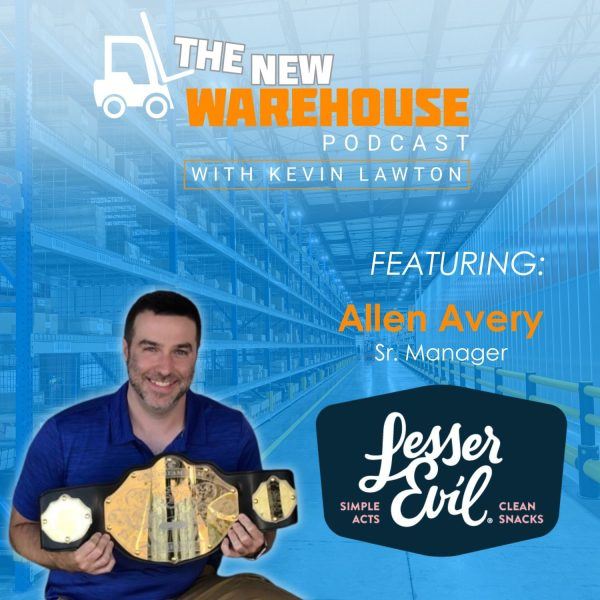
Strong warehouse leadership extends beyond productivity metrics and operational efficiency. It creates an environment where employees feel valued, trusted, and empowered to contribute every day. In this episode of The New Warehouse Podcast, Kevin sits down with Allen Avery, Senior Manager of Warehouse Operations at LesserEvil, to discuss how the rapidly growing better-for-you snack company has built a warehouse culture centered on empathy, accountability, and continuous improvement.
From hiring the right people to developing future leaders and embracing new technology, Avery shares practical leadership lessons that have helped LesserEvil scale while maintaining a highly engaged workforce.
Warehouse Leadership Begins with Hiring Great People
LesserEvil has experienced remarkable growth during Avery’s five years with the company. The business now operates roughly 500,000 square feet of warehouse space across multiple facilities, runs 24 hours a day, six days a week, and keeps trucks moving almost continuously to support production and customer demand. Rather than focusing solely on experience, Avery believes long-term success starts with hiring people who fit the organization’s culture. As Avery explains, “We make sure we hire for attitude over skill. We don’t want people who are going to come to work and be miserable every single day.”
Avery emphasizes, “We try to lead with empathy and dignity, and understand that people outside of work have really important lives.” This mindset helps LesserEvil build a warehouse culture that supports rapid growth without sacrificing employee engagement.
Great Warehouse Leadership Develops Future Leaders
Leadership development begins long before someone receives a promotion. “I remembered the way every bad boss ever made me feel. And I swore up, and down I would never make anybody feel that way.” Rather than simply promoting the highest-performing forklift operator, Avery looks for employees who think proactively, solve problems, and help improve operations before issues escalate. His first evaluation question is simple: “First and foremost, are they bringing me problems or are they bringing me solutions?”
Avery also encourages psychological safety by ensuring employees feel comfortable sharing ideas. Every suggestion receives attention, even when it cannot be implemented. As he explains, “Nobody steals ideas.” He further reinforces participation by reminding employees, “The worst thing that’s gonna happen is we’re going to say no, because we’ve tried it already.”
Warehouse Leadership Creates a Culture People Want to Join
Maintaining morale becomes even more challenging during periods of extraordinary growth. Avery believes transparency and recognition make the difference. Before LesserEvil entered its busiest shipping month ever, leadership openly communicated what employees should expect and invited them to help develop solutions.
The approach worked. Employees immediately proposed staging inventory differently, improving workflows, and preparing for increased volume. After the company’s busiest shipping day, Avery recognized employees throughout the organization, prompting praise from executives and colleagues alike. As he notes, “It’s hard to be in a bad mood when people that you don’t see every day are cheering you on.”
Avery views technology as something that enhances employee success rather than replaces it. He reminds leaders that “Nobody knows more about loading the trucks than the guys loading the trucks.” By combining frontline expertise with new technology, LesserEvil continues to find better ways to operate while preserving the culture that fueled its success.
Key Takeaways
- Psychological safety encourages continuous innovation and collaboration.
- Company-wide recognition reinforces employee engagement during demanding periods.
- AI tools are encouraged to improve communication, idea generation, and employee development.
- Technology decisions involve frontline employees who best understand warehouse operations.