
Bison announces PowerSTAR® High-Efficiency Right Angle Gearmotor celebrating 10 Years of product excellence
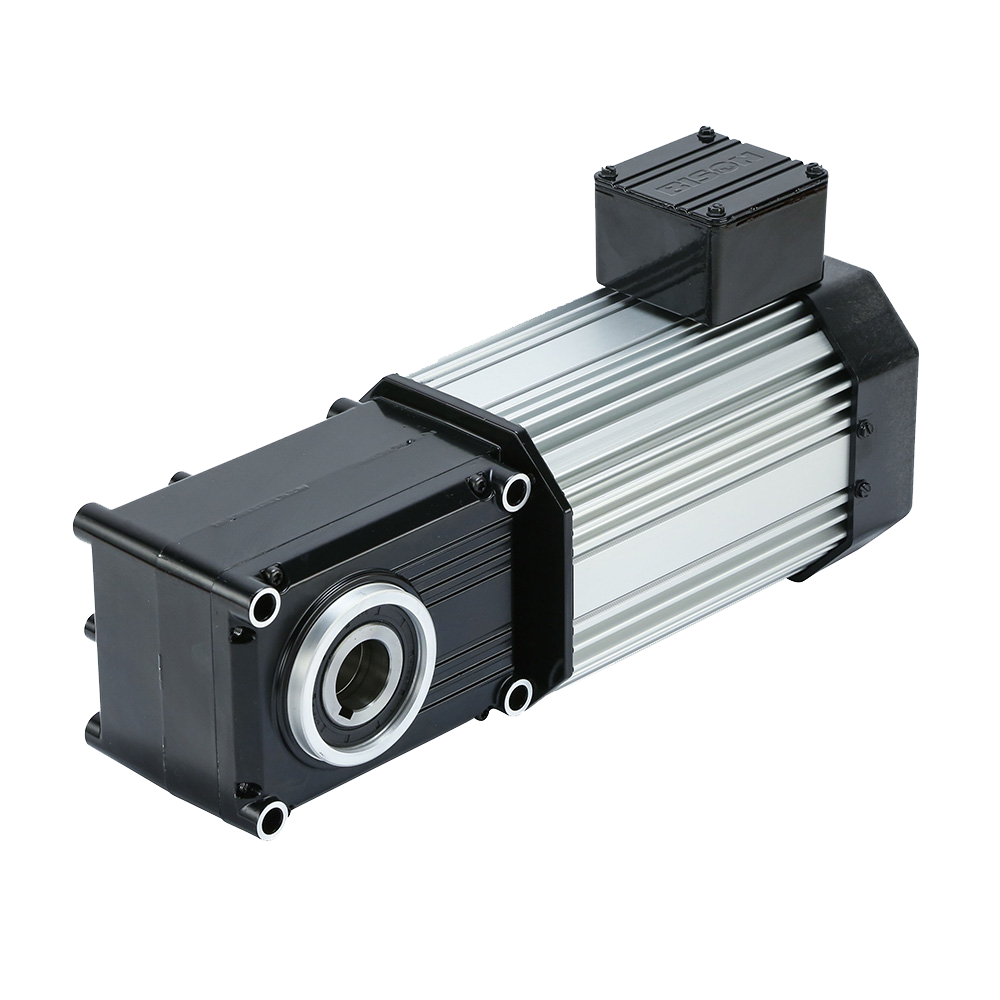
Bison Gear & Engineering Corp., a provider in the power transmission industry, announces its proven PowerSTAR® high-efficiency right angle gearmotor is celebrating 10 years of industry-leading product excellence. Featuring, advanced hypoid gearing technology for improved energy efficiency over traditional right-angle worm gearmotors, PowerSTAR® offers maximum power density in a compact profile that does not compromise performance. Its sleek design offers easy mounting in several orientations, ground gearing for low noise, and a variety of frame sizes to fit numerous design specifications. Ground gearing provides whisper-quiet operation and low backlash precision, while larger diameter pinions offer more surface area contact. With multiple tooth contact that handles larger loads at better efficiency, PowerSTAR® offset gears transmit higher torque output in a smaller profile along with high energy efficiency sustained throughout all standard gear ratios.
Tompkins Robotics adds Legal Counsel and Business Development Executives to its leadership team

Tompkins Robotics, a global provider focused on the robotic automation of distribution and fulfillment operations, has announced two new leaders to its executive team in response to company growth. Pat Mathavan has joined the company as Legal & Intellectual Property (IP) Counsel, and Michael Carmody was named Vice President of Robots as a Service (RaaS) Business Development & Sales. In his new role, Mathavan is responsible for all legal matters for Tompkins Robotics and manages the company’s IP portfolio, which includes the preparation and prosecution of patent applications and trademark applications worldwide. Previously, he held in-house IP/Patent attorney roles at Vesuvius Corporation, IBM, and at various law firms specializing in intellectual property. Pat earned his J.D. with a specialization in Intellectual Property Law from Quinnipiac University School of Law, his MBA from Southern Connecticut State University, and his B.S. from SUNY Maritime College. He is admitted to the North Carolina and Connecticut bars and is registered to practice before the U.S. Patent and Trademark Office. He is also a Registered Engineer-in-Training (EIT) in New Hampshire, and currently pursuing his MEng in electrical and computer engineering from North Carolina State University. As Vice President of RaaS Business Development and Sales, Michael Carmody brings more than 24 years of Supply Chain expertise in deploying engineered solutions and technology applications across North America and Mexico. With a focus on the third-party logistics market, Michael is tasked to chart a compelling roadmap for the Robots as a Service subscription offering recently unveiled by the company. Prior to joining Tompkins Robotics, Carmody led 3PL Business Development for AutoStore North America; delivered software transformation as Principal Consultant in transportation system implementations with enVista, and led cloud TMS implementations for MercuryGate. Carmody has established a track record of effective supply chain design and optimization success across Fortune 500 networks. Michael is fluent in English, with working Spanish skills. Carmody is a graduate of The Ohio State University with a Masters in Geography focused on logistic networks optimization and earned a Bachelors from Carthage College. Additionally, he co-founded a non-profit organization providing supply chain leverage for smaller organizations helping communities rebuild after natural disasters.
AutoScheduler.AI named Analytics winner in NextGen Solution provider Supply Chain Awards

AutoScheduler.AI, an innovative Warehouse Management System (WMS) accelerator, announces the company has been named the Analytics Winner in the 2022 NextGen Solution Provider Awards from Supply Chain Management Review (SCMR). The Annual NextGen Awards honor those companies at the forefront of emerging technologies. An awards ceremony will occur at the NextGen Supply Chain Conference in Chicago, October 17 – 19, 2022. On Tuesday, October 18, 2022, NextGen Supply Chain Conference will proudly recognize four solution providers and four end-user companies for utilizing technologies that will shape tomorrow’s supply chains during the NextGen Supply Chain Conference. At the conference, supplier and end-user winners will share their success stories on how they are leading the way in new technologies. “We are proud that this prestigious publication has chosen AutoScheduler as the best in the artificial intelligence solution provider category. Our technology smooths warehouse operations by orchestrating and planning all activities in real-time on top of an existing WMS. It considers space, time, labor, dock doors, and more constraints to ensure that orders are fulfilled on time and in full. Clients gain efficiencies and value in their supply chains through optimized labor, schedules, touches, and inventory.” said Keith Moore, Chief Executive Officer at AutoScheduler. “This is the fourth year for the NextGen Supply Chain awards. The awards are meant to recognize supply chain professionals and solution providers who are moving technology forward. Early adopters and first movers win in the marketplace. We hope their stories will encourage other companies to follow their example.” added Bob Trebilcock, Editorial Director at Supply Chain Management Review Jeff Potts, Chief Revenue Officer at AutoScheduler.AI, will speak at the conference on how businesses gain value and efficiencies when implementing AutoScheduler. The warehouse resource planning and optimization platform dynamically orchestrate all activities on top of an existing WMS in real-time. Clients maximize capacity and maintain higher fill rates while meeting customer order requirements, on time and in full. The NextGen Supply Chain Conference prepares senior-level supply chain executives for the future technologies and processes that will have the most transformative effects on their supply chains. This year’s conference will focus on emerging supply chain technologies that are powering tomorrow’s supply chains and enabling the digital transformation of supply chain processes.
Episode 319: Smart Packing with Paccurate

Welcome to The New Warehouse podcast. In this episode, Kevin welcomes James Malley, co-founder, and CEO of Paccurate. Paccurate is an application programming interface (API) that determines the best way to pack any given parcel shipment. James explains how he went from an art school graduate to a self-proclaimed supply chain nerd, to co-found Paccurate in efforts to address a huge opportunity in logistics, reducing waste and packing goods accurately. Key Takeaways Originally Paccurate was focused on minimizing cubic volume but soon found by incorporating rate tables additional savings could be realized depending on if you’re shipping across the country, next door, or on a plane. The price of corrugated cardboard and the increase in transportation costs have forced many companies to take a deep look into shipping costs. What they’ve found are huge opportunities for savings by utilizing technology to increase efficiencies and minimize cubic volume, wasted material, and shipping costs. In the API, the shipper will send over item dimensions, weight, rate table, and other factors that they want the algorithm to consider. The API sends back a packing list with an image of the box or boxes that need to be packed in a certain way. James gives an exclusive reveal on Paccurate’s latest product, PacSimulate. With PacSimulate businesses share historical shipping data and the simulator identifies the most efficient carton sets for each of your locations and compares scenarios based on desired outcomes such as greener choices, cost savings, etc. Kevin and James discuss the competing priorities between the marketing side and the operation side when it comes to the customer experience. For marketing, the customer experience when they open that box is all that matters while operations focus on getting the product to the customer in the most efficient way. Too often there is a disconnect, and the operation side ends up using too big of a box or too much packing material which results in a lot of waste that can be frowned upon by the customer or worse yet, shared on social media. James shares that customers use Paccurate primarily to optimize labor. Most eCommerce shippers see an average of 14% reduction in cubic volume, which translates to a one-to-one reduction in the number of floor-loaded trailers required. This translates to a big win on the sustainability side since you are reducing cardboard and optimizing freight. Additionally, customers see anywhere between a 6% and 20% reduction in shipping costs. Some of the larger Paccurate customers are saving just shy of $2 million annually not including the corrugated reduction. Listen to the episode below and leave your thoughts in the comments. The New Warehouse Podcast Episode 319: Smart Packing with Paccurate
U.S. Rail Traffic for the week ending September 24, 2022
The Association of American Railroads (AAR) has reported U.S. rail traffic for the week ending September 24, 2022. For this week, total U.S. weekly rail traffic was 489,111 carloads and intermodal units, down 4.4 percent compared with the same week last year. Total carloads for the week ending September 24 were 231,258 carloads, down 3.2 percent compared with the same week in 2021, while U.S. weekly intermodal volume was 257,853 containers and trailers, down 5.4 percent compared to 2021. Three of the 10 carload commodity groups posted an increase compared with the same week in 2021. They were motor vehicles and parts, up 1,610 carloads, to 13,165; coal, up 819 carloads, to 70,697; and nonmetallic minerals, up 372 carloads, to 34,436. Commodity groups that posted decreases compared with the same week in 2021 included metallic ores and metals, down 3,405 carloads, to 20,708; grain, down 2,276 carloads, to 19,540; and chemicals, down 1,758 carloads, to 30,261. For the first 38 weeks of 2022, U.S. railroads reported a cumulative volume of 8,784,882 carloads, up 0.2 percent from the same point last year; and 9,998,106 intermodal units, down 5.1 percent from last year. Total combined U.S. traffic for the first 38 weeks of 2022 was 18,782,988 carloads and intermodal units, a decrease of 2.7 percent compared to last year. North American rail volume for the week ending September 24, 2022, on 12 reporting U.S., Canadian and Mexican railroads totaled 333,265 carloads, down 1.3 percent compared with the same week last year, and 342,019 intermodal units, down 4.3 percent compared with last year. Total combined weekly rail traffic in North America was 675,284 carloads and intermodal units, down 2.8 percent. North American rail volume for the first 38 weeks of 2022 was 25,700,318 carloads and intermodal units, down 2.4 percent compared with 2021. Canadian railroads reported 79,152 carloads for the week, down 1.2 percent, and 68,448 intermodal units, down 3.6 percent compared with the same week in 2021. For the first 38 weeks of 2022, Canadian railroads reported a cumulative rail traffic volume of 5,499,480 carloads, containers, and trailers, down 2.4 percent. Mexican railroads reported 22,855 carloads for the week, up 22.4 percent compared with the same week last year, and 15,718 intermodal units, up 15.3 percent. Cumulative volume on Mexican railroads for the first 38 weeks of 2022 was 1,417,850 carloads and intermodal containers and trailers, up 2.5 percent from the same point last year. To view the weekly rail traffic charts, click here.
New generation of Signal Towers are brighter and simpler to order and maintain
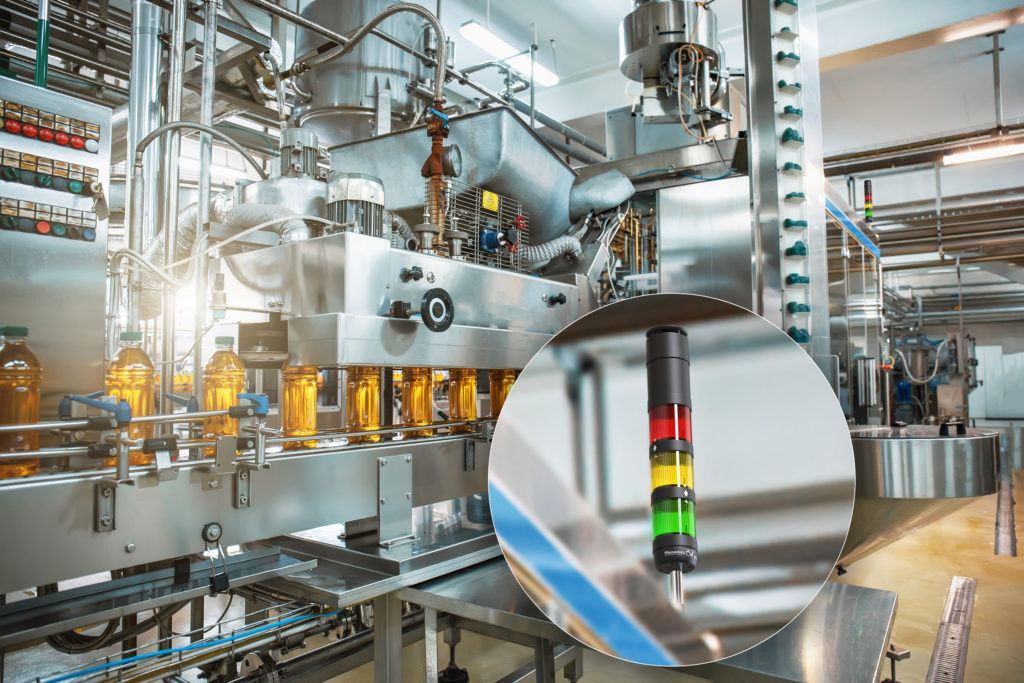
Signal tower lights play a critical role in protecting the safety of people and equipment in manufacturing and process control environments, providing visual and audible indications of system status and alerts of dangerous conditions. They are relatively simple devices, but until recently, they have been notoriously difficult to configure, order and stock because of the proliferation of different sizes and options to meet the wide range of applications. Fortunately, a new generation of signal towers changes all this. New technology and new designs make state-of-the-art signal towers much brighter so that one size fits all applications and environments. Now, ordering signal towers is much easier and fewer spare parts are needed Typical Signal Tower Color Schemes Signal towers have been around for decades. They are also frequently called stack lights due to their vertical orientation. They contain up to five lights, of different colors, with each color signifying a particular status, warning, or alarm. Despite efforts to create international harmonized standards for indicator lights and their meanings (e.g., IEC 60204-1, Fifth edition Chap. 10.3.2), implementations vary. In general, the following conventions are commonly applied: RED is an alarm condition signifying an emergency or hazardous situation. AMBER warns of an abnormal condition or an impending critical situation. GREEN represents normal machine or process operation or a non-hazardous environment. BLUE signifies an important/mandatory action that is not urgent, such as refilling a hopper with raw material or scheduling a service call. WHITE does not have any universal designation. It is often used for productivity monitoring. Within each color category, the light can be continuous or it can blink intermittently to indicate a more urgent condition and to attract more attention. Likewise, stack lights frequently incorporate a sounder module for audible signals for more effective warning and alarming. Sounders can generate a variety of tones including simulated bells, continuous tones, and siren sounds. Wide Range of Applications Sometimes a stack tower will contain only two modules. For example, laser cutting machines may use a green light to indicate that the machine is on and everything is working properly, and a red light will flash when the laser is pointing downward in cutting mode to warn operators and to alert other workers to stay clear of the machine. In addition to warning indication and machine fault management, signal towers are also commonly used for productivity monitoring (rate-based machine output management with displays counting parts per hour or parts per shift), as well as equipment effectiveness and productivity (uptime and downtime). In fact, stack towers are often called andon lights, for the andon system of quality control that is a principal component of the Toyota Production System. It empowers workers to stop production when a defect is found and immediately call for help. In the andon system, a green light indicates that production is proceeding normally. Yellow signifies that a problem has appeared and the operator needs assistance, and red alerts supervisors that the problem needs further investigation. Stack lights are widely used as warnings and alarms to protect workers, equipment and buildings from elevated levels of hazardous chemicals. For example, green lights may signify very low levels. A yellow light with an audible signal would designate detection of say, five parts per million of ammonia gas. And flashing red, with a strobe light and a loud audible alarm would be triggered at more dangerous levels. New Generation of Stack Lights A new generation of stack lights incorporates LED elements to replace incandescent bulbs. The LEDs, which can be 10,000% brighter, have a number of important advantages. First is the obvious benefit that because they are brighter, they are much more effective in performing their function of being clearly visible and capturing attention in all ambient light conditions, including outdoor installations. High luminosity is also increasingly critical indoors. Industrial spaces are being equipped with better artificial lighting and more natural lighting is being used for energy saving and sustainability. A second benefit is that LEDs last much longer than incandescent bulbs. Whereas incandescent bulbs typically are rated at a lamp life of only 2500 hours under ideal conditions, LED elements last for at least 50,000 hours. Moreover, LEDs are not vulnerable to vibration and shock the way incandescent bulbs are. Third, LED bulbs generate less heat and consume much less electrical power. The Size Advantage All of these benefits are important, but they are commonplace for many other applications where LEDs have replaced incandescent bulbs. Perhaps the most significant advantage of the new generation of stack lights comes from the much smaller size of the LED elements compared to incandescent bulbs. One of the problems with incandescent bulbs is they need to dissipate heat, and therefore to produce more luminosity, you need a larger bulb, which in turn is encased in a larger colored lens. As a result, stack towers varied in diameter up to 4 inches (100 mm). State-of-the-art LED stack towers have lenses that are about half the diameter even though the systems are much brighter. One-Size-Fits-All for Easier Ordering and Inventory Catalogs for signal towers with incandescent bulbs can run 100 pages or more, with varying bulb and lens sizes needed depending on the luminosity requirements for each application and environment. Selecting the right size and figuring out all the parts required has complicated the ordering process. And if a facility requires a variety of sizes, maintaining an inventory of all of the different spare parts gets to be costly and burdensome. The new state-of-the-art LED signal towers are bright enough so that one-size-fits-all, or nearly all, applications. It’s now much simpler to figure out what is needed for each application, and maintaining inventory is much cheaper and easier. Signaling towers are a simple and effective solution for a wide variety of applications. Now they are as easy to order, install and maintain as they should be.
HyLite LED NexGen Post-Top Intigo Lamps

The NexGen LED Post-Top Intigo Lamps are Heavy-duty, Industrial Grade Lamps with Highly Efficient Lighting Design and offer Excellent Illumination all around. Saving between 67%-90% they significantly Reduce Energy Consumption and Re-lamping Costs. Designed for Easy Installation in New and Existing Fixtures, the NexGen LED Lamps are suitable for Damp Locations and for Fully Enclosed Fixtures which make them Excellent for use in a Variety of Applications. The Next Gen Post-Top Intigo Lamps come in these wattages 30W & 50W that replace HID equivalent from 100W to 250W of Traditional HID Lighting. Quick and Easy Installation makes it an Easy Retrofit into the Existing Socket. With a Lamp Life of up to 60,000 hours, they significantly decrease Maintenance and Disposal Costs. The NexGen LED Lamps have a Universal Input Voltage of 100-277V or 120-347V that ideally makes them for use anywhere in the world. The NexGen Intigo Post-Top Lamps Enhances Vision with Better Optical Acuity for Increased Visibility and Security. It also reduces Light Pollution, while providing Clean, Crisp Light. Its Compact Size makes it an ideal replacement for CFL, MV, HID, and HPS Lamps in Existing Post-Top Fixtures. The Rugged Industrial Design is Shatter-Proof, High Shock & High Vibration Resistant. With a 360° beam angle the NexGen Intigo Post-Top provides Uniform & Even Light Distribution. The new Intigo Post-Top Lamps have a cool operation that does not add to the heat load while producing brilliant light.
New IoT solution tracks sealed batteries health
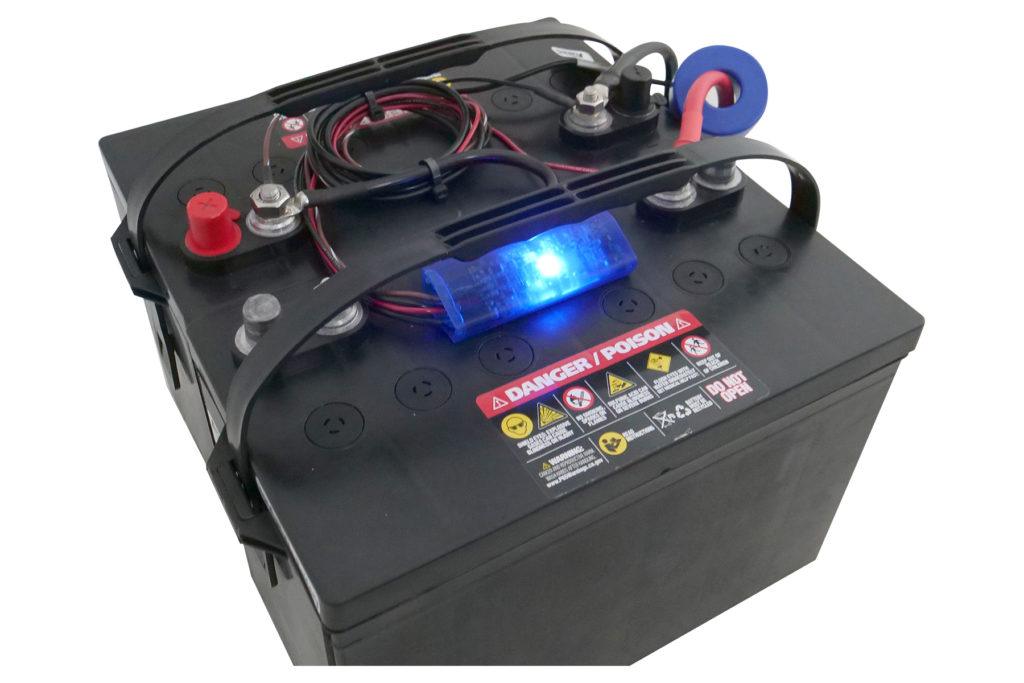
Sealed AGM, Gel, TPPL, and Lithium Ion batteries are often selected for use in golf cart fleets, pallet jacks, forklifts, scissor lifts, scrubbers, and emerging industrial applications such as solar arrays and UPS backups. With the new Advanced Battery Steward for Sealed Batteries system from Flow-Rite, it’s easy to wirelessly monitor the health of one or more batteries in the field with a mobile device to make informed maintenance decisions. Leveraging IoT technology, the Advanced Battery Steward Sealed Battery Tracker monitors critical data like voltage and half-voltage, current in and out, temperature, and battery impact and angle. Each event and measurement is time and date stamped for Machine Learning (ML) processing to create high-value metrics and realistic gauges of battery performance. With the ability to display both the current battery state as well as view its history on a smartphone, tablet, or desktop, it’s simple to identify events that may be putting a battery’s health at risk. A storage battery manager can, for example, take measurements to modify equipment utilization to optimize performance and increase longevity. Pre-wired and easy to install, the Flow-Rite Advanced Battery Steward for Sealed Batteries is configured using a free intuitive Android or iOS app. Once set up, the user can monitor all their battery technologies on a single dashboard. The solution works with sealed battery technologies such as AGM, Gel, TPPL, Lithium Ion, and Bipolar.
Tri-Lift Industries joins LiuGong North America Dealer Network

LiuGong North America is adding North Carolina-based Tri-Lift Industries to its dealer lineup. Founded in 1968, the third-generation family business covers a three-state area across North Carolina, South Carolina, and Virginia. Tri-Lift Industries President and owner Bob Bond said he is excited about the opportunity to partner with LiuGong as a forklift dealer. “I think there is a great opportunity for us to create a market presence for this brand,” Bond said. “We are very comfortable bringing a new product to the market with our rental and after-market focus.” The opportunity arose as Tri-Lift Industries sought to diversify its product offerings during the pandemic. Bond said he was impressed with LiuGong machines at past trade shows, and LiuGong offered Tri-Lift Industries the ability to cover its entire territory while significantly increasing the size of its rental fleet. LiuGong North America President Andrew Ryan said the partnership will be mutually beneficial. “The further development of LiuGong’s dealer network is central to our growth strategy in North America,” Ryan said. “We believe LiuGong machines are some of the best available in our industry and we want great partners like Tri-Lift Industries to represent and support them with our customers.” LiuGong North America Director of Material Handling Jared Ward welcomed Tri-Lift Industries and noted that it will play a vital role in its dealer network. “The Carolina and Virginia region is important for LiuGong North America as we continue to expand our line of forklift dealers,” Ward said. “We welcome Tri-Lift Industries, as they’ve shown great dedication and are building for the future of their company with the next generation of their family’s work with the business.” Throughout the process of joining the LiuGong dealer network, Bond said he was struck by how invested LiuGong’s leadership was in their business. LiuGong executives visited Tri-Lift Industries in person to identify territories, put together an initial order and introduce the regional representative. “Maybe it’s old-fashioned, but it means a lot to me,” Bond said. “They recognize that this is a big decision for a dealership. I think that’s a great way to start a partnership.”
Hubbell Incorporated announces Segment Leadership transition

Hubbell Incorporated has announced that Pete Lau has stepped down as president of Hubbell’s Electrical Solutions (“HES”) segment, effective September 30, 2022. His departure follows a mutual determination by the Company and Mr. Lau to transition HES to new leadership. Mr. Lau will be pursuing opportunities outside the Company following his departure. Hubbell has initiated a search to identify the next leader for HES, and the Company expects to consider both internal and external candidates for the role. During this interim period, the leaders of the segment’s four strategic business units will report directly to Gerben Bakker, Hubbell’s Chairman, President and CEO. “Hubbell Electrical Solutions is well-positioned for continued success and we are confident in the segment’s near- and long-term financial outlook, as well as its ability to continue delivering value for our customers through quality, reliability, and service,” said Mr. Bakker. “Since unifying HES into one operating segment two years ago, we have established a strong foundation and an effective strategy. Importantly, we have a deep bench of talent, and we expect to build on recent momentum with a strong finish to 2022 while we conduct a search to identify the next leader.” “I want to thank Pete for his leadership and contributions to Hubbell over the last two years and wish him the best,” concluded Mr. Bakker.
FMCSA Administrator Hutcheson to keynote Women In Trucking Accelerate! Conference

The Women In Trucking Association (WIT) announces that Robin Hutcheson, the newly confirmed administrator of the Federal Motor Carrier Safety Administration (FMCSA), will be the opening keynote on Nov. 14 at its upcoming Accelerate! Conference & Expo. The conference, which will take place Nov. 13-16 at the Hilton Anatole in Dallas, TX, is the largest event to encourage employment, address obstacles, and celebrate the successes of women in the trucking industry. WIT expects more than 1,300 attendees this year. “We are thrilled to have Administrator Hutcheson share her perspectives on safety in the trucking industry, supply chain challenges, and the truck driver shortage,” said Ellen Voie, WIT president and CEO. “WIT has worked closely with the FMCSA in recent years, and recently hosted Hutcheson on a truck ride-along to help her better understand driver issues. The former deputy administrator, Meera Joshi, was WIT’s keynote speaker in 2021.” This will be WIT’s eighth annual Accelerate! Conference & Expo and the third year the association has held a virtual version of the event, which will take place Dec. 6-7. The in-person and virtual conference will feature more than 60 educational sessions on critical transportation and logistics issues through the lens of gender diversity. Topics will be relevant to professionals involved in leadership, human resources/talent management, operations and safety, sales and marketing, and driver recruiting and engagement. Additionally, more than 100 speakers and facilitators will be featured from leading companies such as Amazon, Walmart, Yellow, Navistar, Kenworth Trucks, Peterbilt, Great Dane, Bridgestone, XPO Logistics, J.B. Hunt Transport, Penske Transportation Solutions, DAT Freight & Analytics, Truckstop.com, UPS, Coyote Logistics, Waymo and Plus. The event also will feature an expo with more than 150 companies representing more than 1,000 products and services valuable to the transportation industry. “We bring the Accelerate! Conference & Expo to the marketplace because of the importance of workforce diversity,” said Voie. “Diversity in experience, skills and perspective is proven to be critical to the success of any company in transportation, and gender diversity is a critical path to this goal. This event is one way for our industry to share new ideas and best practices that encourage the employment of women in the transportation industry.”
Help for Trucker Days returns October 18-19
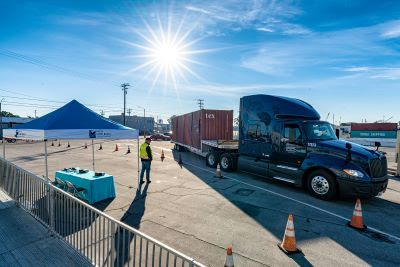
One-stop program assists drivers seeking Port access Truck drivers and others can sign up for various official programs and certifications they need to work at the San Pedro Bay ports complex at a one-stop event at the Port of Long Beach scheduled for Oct. 18 and 19. The “four in one” event will allow truckers to enroll with the Transportation Worker Identification Credential, or TWIC, register for the Clean Truck Program, obtain radio frequency ID tags, and sign up for the Port’s Truck Alert traffic notification system. The Port of Long Beach is hosting the event in partnership with the Transportation Security Administration and the identity certification company IDEMIA. The “four-in-one” event is scheduled for 8:30 a.m. to 4:30 p.m., on Tuesday, Oct. 18 and Wednesday, Oct. 19 at the Port of Long Beach Terminal Access Center, 1265 Harbor Ave., Long Beach (southwest corner of Harbor Avenue and West Anaheim Street). Free tacos will be available to participants from 11 a.m. to 2 p.m. each day, while supplies last. TWIC appointments and pre-enrollment are available at universalenroll.dhs.gov/programs/twic. Click New Enrollment, complete the information, and in Step 9 – Select Appoint Location, choose “Pop Up: Port of Long Beach, 10/18-10/19.” For questions and appointments regarding Clean Truck Program registration and RFID, call 866-721-5686 or email [email protected].
H&E opens new branch in Indio, CA
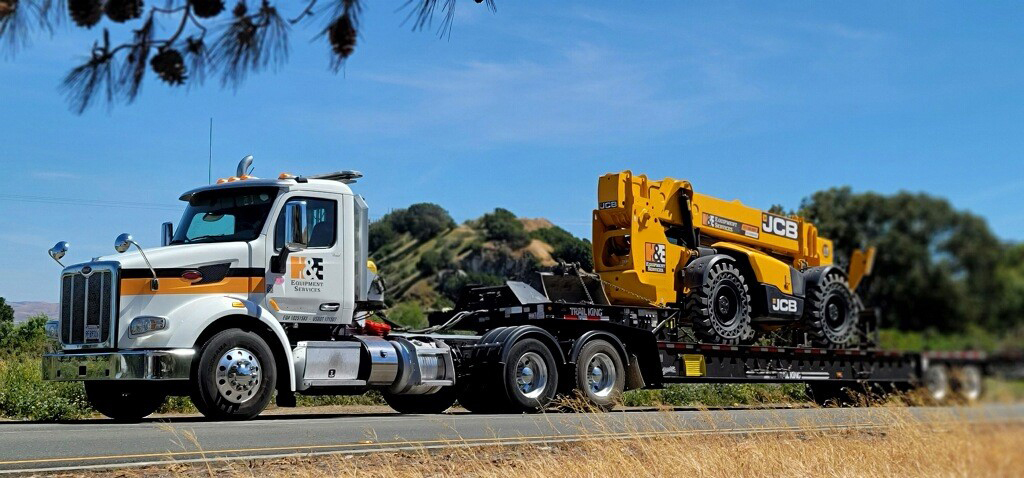
Effective September 27, 2022, H&E Equipment Services Inc. (H&E) announces the opening of its new Indio branch, its 12th location in California. The branch is located at 45600 Citrus Avenue, Indio, CA 92201-3449, phone 442-307-6200. It includes a fully fenced yard area, offices, and a separate repair shop and is capable of handling a variety of construction and general industrial equipment for customers working throughout the low desert areas of Coachella and Imperial valleys in Southern California. “From Palm Springs down to the Salton Sea and the surrounding areas, H&E has serviced the region from nearby branches for several years. With such demand for quality equipment, we’ve taken the next natural step and established a location right in the heart of the Coachella Valley, which hosts a mixture of everything: agriculture, green energy like solar and wind, geothermal energy, entertainment, leisure, and, of course, general construction. The growth in the last decade has been incredible,” says Branch Manager Jacob Murrieta, who has been with H&E for nearly 20 years. “The new branch opens its doors at the same time as the much-anticipated home of the Firebird hockey team and will be ready for events such as Stagecoach and Coachella Fest 2023. Our team represents decades of experience from members who call the Coachella Valley home, and we can’t wait to grow with this beautiful place.” The Indio branch specializes in the rental of aerial lifts, telescopic forklifts, earthmoving machinery, compaction equipment, generators, compressors, and more and represents the following manufacturers: Allmand, Atlas Copco, Bomag, Case, Club Car, Cushman, Doosan, Gehl, Generac Mobile, Genie, Hilti, Husqvarna, JCB, JLG, John Deere, Kubota, LayMor, Ledwell, Lincoln Electric, Link-Belt Excavators, MEC, Miller, Multiquip, Polaris, Skyjack, SkyTrak, Sullair, Sullivan-Palatek, TAG, Taylor, Towmaster Trailers, Wacker Neuson, Yanmar, and others.
Welch wins the bid for the 2022 Trailer for a Cause benefitting Eagle’s Healing Nest
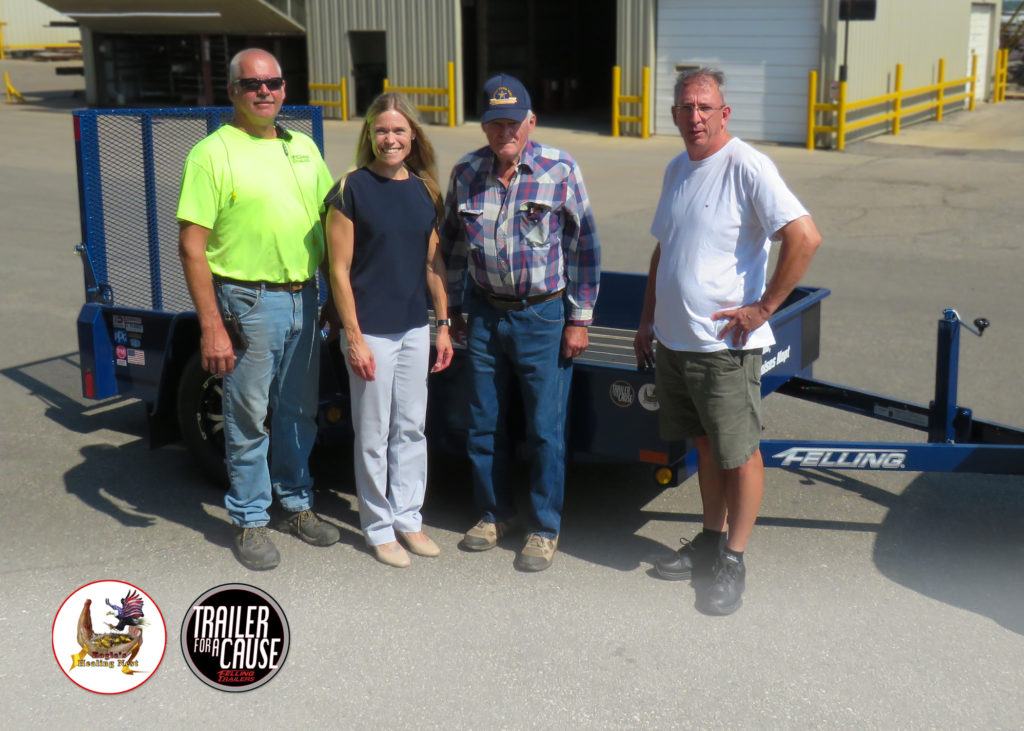
Felling Trailers, Inc. conducted its tenth annual online auction of an FT-3 drop deck utility trailer to benefit a non-profit organization: Eagle’s Healing Nest. A winning bid of $7,752.00 won the auction that ended at noon on the 27th of August. The bid winner was Joe Welch of Caledonia, MN. Joe, an equipment dealer, has followed Felling Trailers’ Trailer for a Cause auctions for a few years. “This was the first auction I was able to catch before it closed. When I saw the cause, I really wanted to help support the Eagle’s Nest’s ‘Promises Made Promises Kept’ mantra. This is an exceptionally important mission they are undertaking that not only affects the people getting assistance by the entire community and the community of volunteers that assist in their cause,” said Joe. With just six minutes left in the auction, Joe placed his bid of $7,752.00, winning the bid at the close of the auction. A week after the auction had finished, Joe and his father Jerry, an Army veteran who served from 1955-1957, made the close to four-hour drive from Jerry’s home in Gilbert, MN, to Sauk Centre to pick up the Patriot Blue, FT-3 Trailer for a Cause. Once at Felling Trailers, they met with Felling Trailers’ owners: Brenda Jennissen and Bonnie Radjenovich, along with Chris Senger, Felling Trailers’ Senior Material Handler, who is also on Eagle’s Healing Nest’s Advisory Board and a volunteer. Chris shared with Joe and his father how Eagle’s Healing Nest came to be nine years ago. “The Nest is run by veterans and volunteers. Many of the vets who have moved on from the Nest still come back to visit and help. We currently have 2-3 new vets coming to the Nest each week needing to heal, with over 100 vets calling the nest home,” said Senger. Joe shared with the Felling team that he had a proxy bid set of $10,000 and that he would be writing an additional check for $2,000 to be donated to Eagle’s Healing Nest. “This was the right trailer, the right cause. Our veterans are very important. We need to take care of them,” said Joe. “A very big thank you to you, the Felling family, and team members for all they do to help support their community. It’s organizations and people like you that go beyond what is expected and give back to our communities, helping them grow and prosper. I am very glad I could be a small part of this cause.” Joe will be using the trailer for a little bit of fun hauling his side by side, but primarily for his business, Joe Welch Equipment, selling used farm and industrial equipment. “I am looking forward to people asking what the promises made promises kept means!” said Joe. Along with his father, Jerry, Joe’s brother Bill served in the National Guard, and a very good friend Bob Hosch served in WWII. “It’s important that we take care of our veterans however we can. Each person that steps up to volunteer and to help makes such a difference,” said Welch. The 2022 Trailer for a Cause FT-3 utility trailer was painted a custom metallic “Patriot Blue” with chrome pinstriping and bared the Eagle’s Healing Nest’s emblem along with its credo “Promises Made. Promises Kept.” Several Felling Trailers’ suppliers joined to support Eagle’s Healing Nest by sponsoring the trailer build, from lighting to tires to decking. The 2022 Trailer for a Cause sponsors were Trans-Texas, PPG, Dexter, Sealco, Peterson, Industrial Wood (Blackwood), Demco, Pacific Rim, and Metal Crafters/Flexco. Felling Trailers wanted to generate awareness about the invisible wounds of war that our veterans carry and how Eagle’s Healing Nest helps them restore their honor, dignity, pride, and purpose. The online auction ran for six days, from Monday, August 22nd at 7 am through Saturday, August 27th (during Eagle’s Healing Nest’s Annual Nest Fest), at noon CST, ending with Welch’s winning bid of $7,752. One hundred percent of the $7,752, plus Welch’s additional proxy bid for a total of $9,752, will benefit Eagle’s Healing Nest!
Staffing employment grows after Labor Day holiday
7.6% growth Year-Over-Year in September Staffing employment grew in the week of Sept. 12–18, rising 1.4% to a rounded value of 106 and setting a new record high for the month of September. Several staffing companies mentioned a recent holiday as a barrier preventing further growth. Staffing jobs were up 5.6% from the same week last year. New starts bounced back in the 37th week of the year after a sharp holiday-driven decline, rising 8.8% from the prior week. More than four in 10 staffing companies (45%) reported gains in new assignments week-to-week. The ASA Staffing Index four-week moving average edged down from the prior week but held at a rounded value of 106, as temporary and contract staffing employment for the four weeks ending Sept. 18 was 7.6% higher than the same period in 2021. “Staffing employment remains strong despite a holiday dip in September,” said Tim Hulley, ASA assistant director of research. This week, containing the 12th day of the month will be used in the September monthly employment situation report scheduled to be issued by the U.S. Bureau of Labor Statistics on Oct. 7. The ASA Staffing Index is reported nine days after each workweek, making it a near real-time measure of staffing employment trends. ASA Staffing Starts are the number of temporary and contract employees placed in new assignments during the reporting week. ASA research shows that staffing employment has historically been a coincident economic indicator.
Caldwell beams turn Pink for Breast Cancer Awareness Month
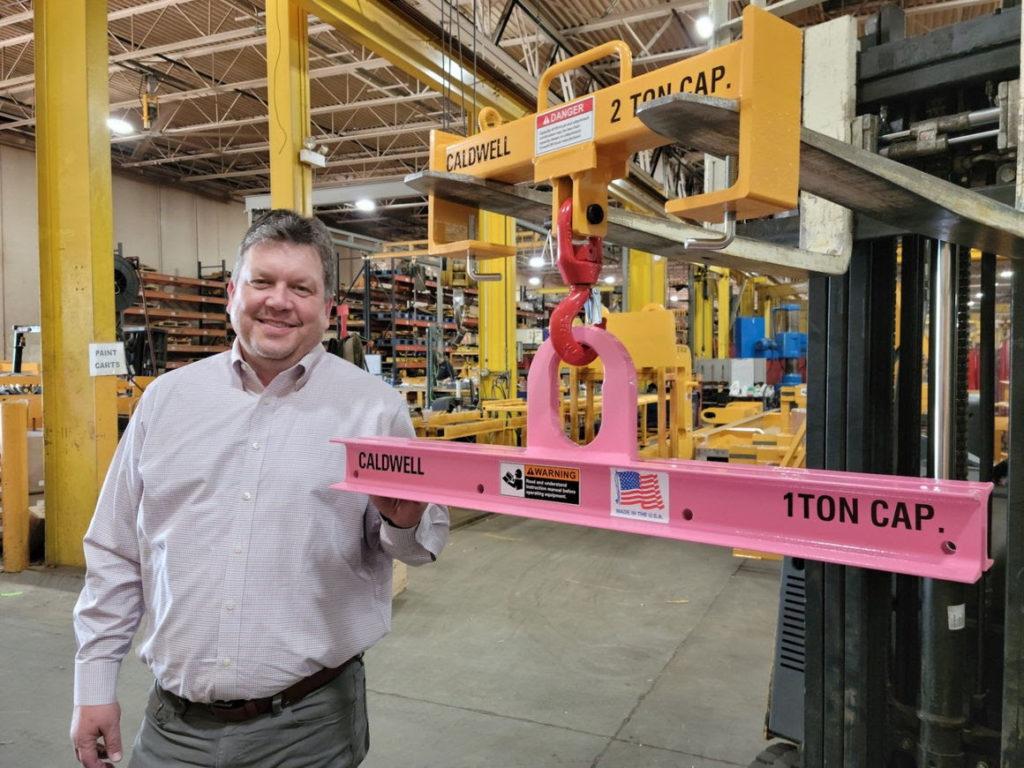
Rockford, Illinois-based The Caldwell Group Inc. will lead a series of initiatives this fall to raise money for breast cancer charities, including offering its most popular beam in pink. The manufacturer of material handling and rigging equipment has made its Model 20 low headroom lifting beam available in pink when ordered in lengths up to 10 ft. The adjustable beam is available in various capacities (0.5 tons to 40 tons) and spreads (3 ft. to 18 ft.) with an additional option to add pink paint for a donation of $100. The concept was developed by Doug Stitt, the company’s president and CEO—and his connection to the cause is a personal one. “Like many families, mine has been touched by breast cancer,” said Stitt. “Breast cancer is the reason I’ve largely grown up and spent my life without a mom, and my kids missed out on the best grandmother that ever would have been. My mom contracted breast cancer just before my 16th birthday. I wanted to find a way to raise money for continued research and support. When I brought the idea up, my team responded enthusiastically—and I hope our distributor and industry network will too.” Lisa Sympson, marketing manager at Caldwell, said: “Any [Model 20] beam up to 10 ft. long ships for free, so it is quick and easy to calculate an end-price that incorporates the donation. Just ask for the pink beam, and we’ll add a $100 donation to your invoice. The full $100 will go directly to the American Cancer Society’s Making Strides Against Breast Cancer campaign.” Of course, these beams remain world-class, below-the-hook products, and comply with relevant ASME standards. Caldwell has shipped approx. 1,100 units so far this year and continue to ship 30 per week, albeit in all lengths. Model 20 beams in 6 ft. and longer have three spreads, while 3 ft. and 4 ft. beams have only two. Swivel hooks with latches come as standard. October is Breast Cancer Awareness month in the U.S. and pink is its signature color. Caldwell is hoping that its efforts will strike a chord with employees, distributors, and industry partners alike. “The pink beam concept might prove to be the most iconic thing we’re doing, but it is just one part of our overall plan. Our whole team is behind the fundraising effort that starts in September and goes through October,” said Sympson. “We will put donation jars around our facilities, sell pink ribbon / Caldwell t-shirts, and take part in a local 5k fundraising walk / run. Plans are even afoot to arrange for a [Caldwell] team to carry a pink lifting beam around the course.” Per the American Cancer Society, 290,000 women in the U.S. will be diagnosed with breast cancer in 2022, making it the second most prevalent form of cancer for women, behind only skin cancer. While breast cancer is the second leading cause of cancer death in American women, more than 3.8 million are breast cancer survivors. “It is a timely moment to show support for this ever-worthy cause—order your beams today,” added Sympson.
Percentage of Female Human Resources Professionals in transportation at all-time high
New Data by Women In Trucking’s WIT Index Shows Predominance of Women in human resources and talent management roles The percentage of female professionals in human resources and talent management roles within the commercial freight transportation industry has reached an all-time high, according to new data highlighted in the WIT Index, which was just released by the Women In Trucking Association (WIT). The WIT Index is the official industry barometer to benchmark and measure each year the percentage of women who make up critical roles in transportation. The 2022 WIT Index shows that 74.9 percent of human resources and talent management roles in transportation companies are women. In addition, the 2022 WIT Index finds that approximately 49 percent of respondents report that 90 percent or more of professionals in their HR/Talent Management positions are women. Another 34 percent say that between 50 and 90 percent of HR/Talent Management professionals are women. Approximately 11 percent report that women comprise 10 to 50 percent of HR/Talent Management roles, while 6 percent report having no women in HR-related roles. Traditionally, human resources (HR) and talent management disciplines have been long perceived as a female-oriented profession, primarily because of the skill sets requirement in the field, according to Ellen Voie, WIT’s president and CEO. Women are typically more skilled in this area because they are commonly considered to have a better Emotional Intelligence (EI) score than men. Critical skills in this discipline that are more commonly held by women include multitasking, leadership, planning, communication, and human relations skills. “Women have always been visible in the areas of human resources and talent management, but we want to see these figures increase as more women find careers in the transportation industry,” said Voie. Initiated in 2016, the WIT Index is comprised of average percentages of females in various roles that are reported by companies in transportation, including predominantly for-hire trucking companies, private fleets, transportation intermediaries, railroads, ocean carriers, equipment manufacturers, and technology companies. This data was confidentially gathered from January through April of 2022 from 180 participating companies and percentages are reported only as aggregate totals of respondents. Along with its traditional benchmark percentages among HR/talent management, leadership, and professional drivers in commercial freight transportation, WIT this year has expanded its collection on the percentage of women to include operations, technicians, sales and marketing. For more information on the WIT Index and to download a full executive summary of the 2022 WIT Index findings, visit https://www.womenintrucking.org/index.
ASSP Foundation receives second grant to advance workplace safety

The American Society of Safety Professionals (ASSP) Foundation has received a second Susan Harwood education and training grant for $159,967 from the U.S. Department of Labor’s Occupational Safety and Health Administration (OSHA), directly supporting the ASSP Foundation’s development of free workplace safety and health instructional materials on combatting infectious disease. “Earning federal grants confirms the need in the greater community for new resources designed to help safety and health professionals better protect workers in all industries,” said ASSP Foundation Chair Trish Ennis, CSP, ARM, CRIS. “The creation of programs through these grants shows our commitment to doing even more for the occupational safety and health community.” This year’s OSHA grant distribution will enable nonprofit organizations to assist employers in identifying infectious disease hazards – including coronavirus – and implementing preventive measures to maintain safe workplaces. The ASSP Foundation will use the grant to produce live virtual instruction on infectious diseases and pandemic preparedness and response for businesses with 250 or fewer employees. OSHA awards Harwood grants annually to nonprofits that develop training programs for small-business employers and underserved vulnerable workers in high-hazard industries. Last year, the ASSP Foundation was awarded a $74,960 Harwood grant to create free training materials on personal protective equipment (PPE) designed to prevent falls from height. Three education modules developed under the grant aim to assist construction, demolition, and material handling companies increase the proper use of PPE. A pilot training program recently took place with 30 at-risk workers, demonstrating full-body harnesses, self-retracting devices, anchorage connectors, and other elements of fall arrest and restraint systems. Working at height is inherently hazardous, exposing workers to significant risks that range from falls from roofs, scaffolding, and ladders to slips through floor and roof openings. Above-ground work such as window washing and tree trimming remains a leading cause of injuries and OSHA citations. “Access to cost-effective and high-caliber PPE training has been an ongoing concern for employees and small businesses,” Ennis said. “Our Foundation is now helping to fill that void.” Chartered in 1990, the ASSP Foundation is the charitable arm of ASSP that has invested more than $5 million to improve occupational safety and health. Programs are solely supported by federal grants and charitable donations from the ASSP community and corporations motivated to advance the profession. Stay informed of the ASSP Foundation’s latest initiatives and find out how to support its programs by visiting www.assp.org/foundation.
JLG® Seatbelt Engagement and Operator Presence Option now available as an aftermarket accessory
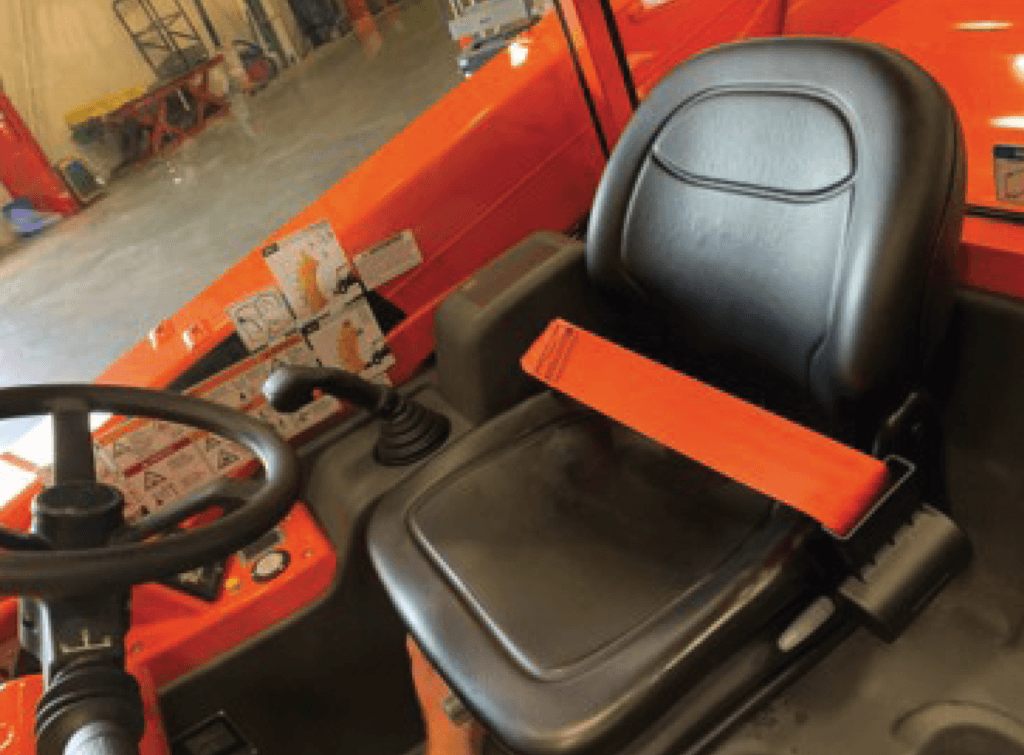
Enhances job site safety through alarms and limited machine functionality JLG Industries, Inc., an Oshkosh Corporation company and a global manufacturer of mobile elevating work platforms (MEWPs) and telehandlers, now offers its Seatbelt Engagement and Operator Presence option for select JLG® telehandlers as an aftermarket accessory available through Online Express (P/N 1001281071). This new telehandler retrofit kit includes seatbelt engagement assurance, operator presence functionality, a high visibility orange seatbelt, and illustrated instructions for installation. Features of JLG’s telehandler Seatbelt Engagement and Operator Presence system include: The operator presence feature restricts engine start and hydraulic functions when an operator is not present in the seat The seatbelt engagement feature produces a visible and audible alarm when an operator is seated and unbuckled Orange high-visibility seat belt encourages operator seat belt use These telehandler features work together to enhance job site safety by using both visual and audible alarms, as well as limiting machine functions. The Seatbelt Engagement and Operator Presence kit can be field installed on JLG 742, 943, 1043, 1055, and 1255 telehandler models.
Why do we continually allow sandbagging to happen?

Sandbagging is a strategy of lowering the expectations of a company or an individual’s strengths and core competencies in order to produce relatively greater-than-anticipated results. Unlike Quiet Quitting, which focuses on stopping the completion of any tasks not explicitly stated in the job description, Sandbagging fundamentally drags down overall company performance. We’ve all seen it, experienced it, or maybe have done it ourselves. But why does Sandbagging happen, and why do we allow it to occur? There are a few behavioral reasons, beginning with what we let happen. We let employees hide behind technology. We let people hide behind their incompetence. We let bosses ignore their direct reports. We let managers hide one of the biggest parts of their job — engaging employees — under HR. We let this happen because often, people don’t want to deal with confrontation and uncomfortable discussions. However, even worse, we do this because we don’t know it’s happening. Executives fundamentally operate at 50,000 feet. They need to stay focused on big-picture issues, while middle managers deal with the day-to-day, ground-level execution of strategies. However, middle managers are often burdened with three things: 1. A lack of experience, motivation, talent, and training to help their employees improve. Managers often were promoted because they were good at their job, but this doesn’t mean they are good at helping other people do their job. In addition, Managers placed in roles based on their managerial experience often don’t know enough about the nuts and bolts of the job their teams are implementing to provide effective insight or guidance. 2. Their own “job”. Many Managers today are working managers, with duties and responsibilities to deliver outside of working with their staff to advance the organization’s efforts. If you have your own job that your performance is judged on, why spend time with the rest of the team? I’ve written more on this here. 3. Too much “stuff” and not enough “time”. Managers in lean operations frequently are under-resourced but have the same pressure of timely delivery as other departments which are fully resourced. However, because of items #1 and #2, these Managers can’t identify ways to create more “time” and eliminate unnecessary “stuff”. For example, I had a direct report whose job was to maintain 3,000+ documents. Almost nothing was ever fully up to date and always in a state of flux. Until I examined the issue in-depth, were we able to change the workflow and automate aspects of the process to free up 85% of her time? If managers don’t have time for problem-solving, nothing will change. So, what happens? Employees who aren’t coached by an effective and engaged manager, who understands their job and can provide applicable resources, solutions, and opportunities for failure and learning, start retreating to safe zones. They start to learn the game, and how to manipulate it to protect their job and comfort level. If the manager allows months of email chains without taking accelerated action, then that’s the way to avoid following through on something that is difficult or uncomfortable. Or holding back on starting a new initiative until it’s been reiterated six times because they’ve learned anything less than that the initiative is likely to be scrapped before it starts. Or approaching a problem or challenge with the least effort solution because the manager doesn’t understand the technology and won’t ask tough questions. All the while, perceived productivity remains high, and the managers are oblivious to all of the sandbagging happening. If managers spend most of their managerial time either (a) in meetings or on calls or (b) doing the exact same stuff they did before they were a manager, that’s not an effective use of that resource. Then the burden falls on executives to push harder, escalate things quicker and set clear priorities. But that means, only those things get done. The operational sandbagging will continue despite this, and as more and more initiatives get added to the pile, the problem just gets worse. We can do better. From the hundreds of employee surveys and interviews we’ve conducted, there are many reasons “why our workplace sucks”, but you don’t get too far down the list before you find, “We let managers hide behind basically every conceivable thing as opposed to asking them to do the primary responsibilities of their job.” Allowing employees to constantly hide and run from everything, including real conversations that need to be had, doesn’t help anything about the culture and productivity of the organization. This requires executives to set the tone on behaviors they’d like to see in the organization, by coaching, guiding, and engaging their direct reports beyond the superficial status update. It requires allowing their leaders to fail and learn without repercussions. It requires eliminating the litany of random initiatives and activities piled on daily, and instead ensuring focus on what’s most important. It requires making their job one of 100% improving their employees and their performance. It requires having tough conversations and identifying new, innovative, unexplored ways to solve problems. Yes, this means you, executives. Most of all, it requires being involved and highly engaged with people. If you have no honest and clear transparency to the inner workings of how your company runs and how the proverbial “sausage” gets made, you’ll never know how much Sandbagging is killing your productivity and profitability. About the Author: Andrea Belk Olson is a keynote speaker, author, differentiation strategist, behavioral scientist, and customer-centricity expert. As the CEO of Pragmadik, she helps organizations of all sizes, from small businesses to Fortune 500, and has served as an outside consultant for EY and McKinsey. Andrea is the author of The Customer Mission: Why it’s time to cut the $*&% and get back to the business of understanding customers, No Disruptions: The future for mid-market manufacturing, and her upcoming book, What To Ask, coming in June 2022. She is a 4-time ADDY® award winner and host of the popular Customer Mission podcast. Her thoughts have been continually featured in news sources such as Chief Executive Magazine, Entrepreneur Magazine, Harvard Business Review, Rotman Magazine,