
Salespeople: “Never fail again” Here’s how!

One of the greatest fears of salespeople is failure. Early in his career, the late David H. Sandler, founder of the Sandler Sales Institute, created a mechanism that prevented him, or any salesperson who uses it, from ever failing again. The following adaptation from You Can’t Teach A Kid To Ride A Bike At A Seminar, by David H. Sandler and John P. Hayes, explains Sandler’s technique The Upfront Contract. John Hayes recalls a magic moment in the book where David Sandler recounts how The Upfront Contract was born. One day, the thought occurred to Sandler that all he really needed to do was establish an agreement with a prospect to see if they had anything to discuss. That took the pressure off trying to close the sale. If they agreed they had something to discuss, they could continue to determine if they should do business together. If there was nothing to discuss, however, no harm done. There was no need to try to sell the prospect. By establishing the agreement or a contract before Sandler tried to sell his services, he could call on anyone and never risk failing. Sandler couldn’t fail trying to get an upfront contract. Either he got a commitment to continue, or he didn’t. If he did, all the better, and if he didn’t, Sandler was out the door, no regrets. Suddenly, selling became more of a game than a risk or a challenge. If you think of selling as a game, then you’ll find it appropriate to use The Upfront Contract. Every sport uses one. Before a baseball game, the umpire calls the managers from the opposing teams to home plate, and they discuss the rules of the game. They agree on what’s foul and fair, what makes a home run, and they review any unusual circumstances about the ballpark. Later, during the game, if a batter hits a ball behind the catcher, up over the screen, and into the crowd, there’s no argument that it’s a foul ball. . . Why don’t salespeople take the same approach? What could be more honest than to establish a set of rules at the beginning of interacting with a prospect? An Upfront Contract, or better yet, a series of Upfront Contracts, will save time for both you and the prospect, and help you make more money in sales without offending anyone. By always arriving at an agreement up front, you and the prospect can avoid misunderstandings, as well as the rhetoric and posturing that often occurs during the selling dance. An Upfront Contract improves communications and greatly enhances the profession of selling. Here are some samples of how to form Upfront Contracts: When you meet your prospect (either on the phone or in person), say something like this: “Jim, let’s set some ground rules for our meeting. I’d like to have the opportunity to ask you some questions about your business, and I’d also like you to ask me anything you’d like about my product. Is that okay with you?” (First Upfront Contract). As we ask and answer each other’s questions, “Jim, we may decide there isn’t a fit between what you need and my product. We may decide it doesn’t make sense to spend any more time together. If we reach that point, are you comfortable telling me that?” (Second Upfront Contract). “On the other hand, if you see that my product makes sense to you, we can decide to move forward. Okay, Jim?” (Third Upfront Contract). “When we finish today, Jim, we can set up the ground rules as to how you and I will proceed. Is that satisfactory?” (Fourth Upfront Contract). See how it works? The more often Sandler used upfront contracting in sales calls, he discovered there was rarely a need to make a presentation. . . Why? Because when you create a series of contracts, prospects can experience how your product or service will fulfill their needs. As you develop the contracts, you gently guide the prospects to see that your product or service can eliminate the problem or provide the solution. By establishing Upfront Contracts, you’re not guaranteed to get every order. . . However, establishing Upfront Contracts will guarantee your control of the selling process, every step of the way. As a salesperson, you’ll get in the habit of never making a move without knowing in advance what will happen when you do. Even small items require an Upfront Contract. For example, your prospect asks you to call back on Thursday, but you don’t know why. Gently say, “Sally, I’ll be happy to call you on Thursday. . . what will happen when we talk on Thursday?” Before you give up control of a selling situation, take the opportunity to get an Upfront Contract. Upfront contracting won’t be easy because it’s asking you to change your behavior. At first, it’s going to feel awkward, but the more you use the technique, the faster you’ll master it. One final word: The most important Upfront Contract you will ever make is with yourself. It’s the contract that says nothing will drive you out of sales. The only way you can break that contract is to quit. Don’t. About the Author: Jeffrey Gitomer is the author of twelve best-selling books including The Sales Bible, The Little Red Book of Selling, and The Little Gold Book of Yes! Attitude. His real-world ideas and content are also available as online courses at www.GitomerLearningAcademy.com. For information about training and seminars visit www.Gitomer.com or email Jeffrey at [email protected] or call him at 704 333-1112.
Top tips to keep Forklift Fleet Operators safe
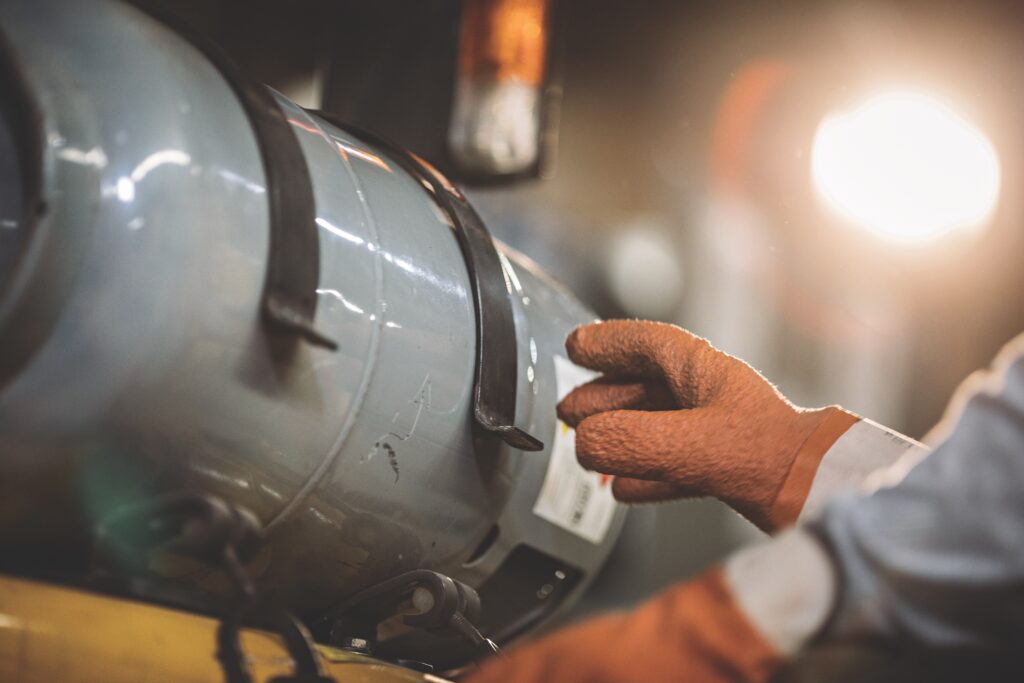
Forklifts are an everyday essential in material handling operations, which is why forklift safety is a top priority in the industry. Ninety percent of Class 4 and 5 forklifts are powered by propane, which is why proper propane safety practices are an important priority for crews across the country. With safety top of mind this June, below are some of the top tips for operators, floor workers, and truck drivers alike to stay safe around forklifts. Universal Forklift Safety Tips Complete routine checks of equipment before operating and notify management of damages or problems. Wear proper PPE such as hard hats, protective footwear, eyewear, and high-visibility clothing on the warehouse floor and while operating a forklift. Buckle up every time. This may seem obvious, but it’s an essential tip to remember. Overturned forklifts are a leading cause of forklift-related accidents. Move slowly and use the horn. Collisions could happen when vision is obstructed. Using the horn at every intersection will keep pedestrians and other operators safe. Know your forklift’s weight capacity and adhere to it. Exceeding the weight capacity of a forklift significantly increases the risk of tipping and injury. Lower, park, and set. Always lower the forks, use the parking brake, and set the controls to neutral when finished operating a forklift. Safely parking the machine reduces the risk of unintended movement and injury. Use wheel blocks to secure the forklift further, especially if parking on an incline. Mind the ramp. Drivers should always carry a load pointing up an incline with their heads pointed in the direction they are going. If unloaded, keep the forks pointed downgrade. Inspect forklift fleets regularly. Regular maintenance helps prevent unnecessary damage to the equipment and keeps employees safe. Keep forklifts clean and free from excess oil and grease. Propane Forklift Safety Tips Inspect propane cylinders before operation. Check cylinders for rusting, dents, gouges, and leaks. Cylinders that show signs of wear or leaks shouldn’t be used and may need to be replaced, even if within the cylinder’s requalification date. Use proper lift techniques to place a cylinder onto a forklift and wear protective gloves. Carefully place the cylinder into the cradle so the cylinder pin enters the locating hole in the cylinder collar. Once properly situated, secure the cylinder by tightening the brackets and check for leaks using a leak detection solution. Secure the pressure relief valve on the cylinder. Before connecting, confirm the cylinder valve is closed. Once placed in the cradle, operators should check that the pressure relief valve fitting is roughly 180 degrees from the forklift’s locating pin. Firmly tighten the gas line to the service connection. Close the service valves on cylinders when not in use. This helps prevent potential injury around internal combustion engines and unintended fuel loss. Store propane cylinders in a secure rack or cage. The cylinders should be stored horizontally with the pressure relief valves in the uppermost position, and operators should use proper lifting techniques when removing cylinders from storage and placing them onto a forklift. Propane cylinder storage racks must be located at a safe distance from heat or ignition sources, protected from the elements, and kept away from stairwells and high-traffic areas. Warehouses, factory floors, and distribution centers have many moving parts as well as people coming and going. With proper signage, training, and storage, propane is a safe energy source to power forklifts year-round, both indoors and out. Remember to regularly review safety measures with forklift operators and workers not just during the month of June, but every day. To learn more about propane forklifts, visit Propane.com/forklifts. About the Author: Gavin Hale is the Vice President of Business Development of the Propane Education and Research Council. The Propane Education & Research Council is a nonprofit that provides leading propane safety and training programs and invests in research and development of new propane-powered technologies. PERC is operated and funded by the propane industry. PERC programs benefit a variety of markets including transportation, agriculture, commercial landscaping, residential, and commercial building.
Balance sheet Part 2

There is no doubt that Balance Sheet Management needs to be a top priority for Dealer Management. Dealers have a lot of money tied up in the Balance Sheet and with current economic and industry dynamics changing it will be imperative that Dealers be able to convert Balance Sheet Assets into CASH. Sounds like another MTM conversation but it is not. I have been doing my normal economic daily review which entails about 100 email sources plus hours listening to CNBC and Bloomberg to try and anticipate future activities that will impact the equipment business in terms of material handling equipment as well as construction equipment. And as of April 19, 2023, I am taking a stand that: Rates will remain higher and last longer. Inflation factors considered by the Fed are slowing but the remaining factors the Fed has no control over are sticking. The recession will happen if we are not in one already, Banks will be tough to deal with for the foreseeable future. The EV conversion is moving much faster than anticipated. Any customers with any connection to the auto industry can expect major changes in their company activities. OEMs, Dealers, and Customers will probably change the way they do business because they have to. Most items on your Balance Sheet will probably be impacted by the above. Your homework assignment for this evening is to figure out what your Balance Sheet will look like a year from now (especially the cash account). A typical deal Balance Sheet would look like this: On the ASSET SIDE 2% Cash 28% AR 28% Inventory 40% Fleet and Fixed Assets On the LIABILITY & EQUITY SIDE 11% AP 17% NP -current 7% Other Current Lia 25% Long Term Lia 38% Equity So, what do you think? How will the changes discussed above positively or negatively impact your balance sheet, understanding that changes in the Balance Sheet can leave you with either a higher cash balance or a lower cash balance? Hey, maybe we should turn this into a game and see who comes out with the biggest cash balance. The company with the largest cash amount will be featured in my Cover Story for the September issue. Just send me your starting Balance Sheet and a Balance Sheet a year later and we will assign a code number to it to keep it confidential. Dean even said he will give a full-page ad to the winner. Please email the two balance sheets above to me by July 7th. Email them to [email protected]. I guess the first thing I would do is compile a couple of revenue stream projections covering current lines of business as well as what you would expect from changes your OEMs will make and how those new items will price out and how will they compare maintenance wise with what you are selling now. And I guess you would want to include any new products or service lines you may add to support customers and their current needs. Don’t forget to factor in inflation as well as new cost line items needed to support new business. Next, I would get a list of my top 50 customers and determine if they are “auto” related in any way, shape, or form. I guess any company with EV exposure also falls into this category. My fear would be that they will no longer need the number of units owned or rented. Finding this out sooner rather than later allows you to plan to replace “lost” business while at the same time helping them downsize their fleet by selling off the units for them. My biggest fear would be the ultimate value and use of what you have hiding in your parts inventory and used equipment inventory. This is usually a scary scenario. What is interesting is the value can probably increase as supplies disappear, but at some point, sink like a rock as demand disappears. A timing issue for sure. Me, I would sell off what I could now as prices are elevated and convert the assets into cash. The goal here would be to get rid of slow-moving or sure-to-be slow-moving inventory and units to make room for replacement units and related maintenance items. You have to be a little careful here because your Assets are supporting those loans you have on the books in terms of an operating line and equipment purchase long-term notes. Sell off too much and the bank will want a piece to put their ratios back in order. My guess is that new unit revenues will increase for some time but that support revenues will decline as new units become more efficient and thus require less maintenance. I also expect rental revenues to increase but with some new rental scenarios coming into being. And let’s not forget that there are OEMs now planning to sell direct, which puts you in the service and maintenance business, which may not be a bad idea. In the end, however, whatever plan you come up with needs to pay off related debt before you can move on to another business plan. What we are discussing here is not easy to get your hands around. I would suggest that conversations with all OEMs are in order to see what they have in mind, especially for your region. Who knows, this may also be a good time to add other companies into your fold if their management is not ready to deal with this new business environment. About the Columnist: Garry Bartecki is a CPA MBA with GB Financial Services LLC and a Wholesaler columnist since August 1993. E-mail [email protected] to contact Garry.
Locomotive Engineers Union achieves breakthrough agreement on paid sick leave at Norfolk Southern

The agreement provides up to seven days of paid sick leave and is not tied to a punitive attendance policy This week, The Brotherhood of Locomotive Engineers and Trainmen, the union representing the vast majority of the nation’s railroad engineers, has reached a breakthrough agreement with Norfolk Southern Corporation to provide up to seven paid sick days per year to BLET members employed at the East Coast railroad. The agreement, which came with no concessions by the union, will provide Norfolk Southern engineers with five days of paid sick leave every year while also offering engineers the flexibility to use up to two additional days of existing paid time off as sick leave. This is the first time that locomotive engineers at any of the Class I railroads have been able to successfully bargain for paid sick leave. “We are proud to be the first to have reached a paid sick leave agreement for locomotive engineers,” said Dewayne Dehart who serves as a BLET general chairman representing the union’s members at Norfolk Southern and who helped bargain the new leave policy. The agreement between BLET and Norfolk Southern will provide paid sick leave benefits to more than 3,300 engineers, roughly a quarter of the company’s unionized workforce. BLET general chairman Scott Bunten, who also helped bargain the new sick leave benefit, emphasized, “This agreement gives us paid sick leave without attaching sick leave to a punitive attendance policy. This is very important and should serve as a model for BLET’s negotiations with other railroads.” The new paid sick leave policy is accompanied by a quality-of-life agreement that requires approval by members under the union’s bylaws. This second agreement offers additional preservation of earnings to Norfolk Southern engineers when they use paid sick leave, as well as greater protection for vacation time, further enhancing the paid sick leave deal. For example, an engineer who doesn’t use his or her sick leave may receive cash reimbursement for up to five days of leave not taken at the end of the calendar year. The new sick leave rules will become effective upon ratification of the second agreement. A ratification vote is expected within the next month. The lack of paid sick leave for frontline workers who keep the supply chain moving was one of the factors that almost led to a national freight rail strike in 2022. Negotiations for paid sick leave by all of the railroad unions with each of the Class I railroads, the nation’s largest, have been underway since the start of the year. Beginning in February, some of what is termed the “non-operational” crafts, workers who work as dispatchers or repair engines or roadbeds for example, were successful in achieving paid sick leave agreements that provided four days of leave. However, for those workers who operate trains, engineers, and conductors, who make up roughly half of the workforce at freight railroads, four days of paid sick leave was seen as insufficient. Another hurdle that needed to be addressed, BLET also was and is opposed to any sick leave policy that penalizes workers for getting sick. “It’s not in the public’s interest or our members’ best interest to have locomotive engineers and conductors handle some of the most dangerous items that any transportation group handles go to work sick or dangerously overtired because they’re worried about being penalized for making the safe choice,” said Mark Wallace, BLET’s second-highest official. The work of a locomotive engineer can be grueling. Schedules are irregular, 12-hour runs are not uncommon. “Our members are the hardest-working folks on the railroad, this agreement reached this week with Norfolk Southern recognizing the critical contributions our members make to keep the railroad and the American economy running,” said Jerry Sturdivant, BLET general chairman involved with bargaining the agreement. “We thank NS for their collaboration in getting this deal done.”
Registration opens for fall session of SafetyFOCUS

Registration is open for the fall session of SafetyFOCUS, the semi-annual in-depth education experience from the American Society of Safety Professionals (ASSP). The hybrid event will take place Sept. 18-22 in Arlington, VA, and online, helping workplace safety and health professionals expand their knowledge through collaborative learning and engaging discussions on a broad range of topics. Using case studies, real-life examples, and proven successes, expert instructors will explore key issues and provide new perspectives and strategies to help solve real-world safety and health challenges. SafetyFOCUS is ASSP’s second-largest education event, which was expanded to twice a year in 2022. The one-, two- and three-day courses are standards-based and focus on business and leadership skills, certification preparation, fall protection, risk assessment and management, safety management systems, and comprehensive worker health. Attendees build their own schedule to fit their unique professional development plan, whether they are new to the industry or a seasoned professional. In-person courses will take place at the AMA Washington Area Conference Center. Instructors will facilitate courses from 9 a.m. to 5:30 p.m. ET each day. Online education will be accessible through ASSP’s Live Virtual Classroom via Zoom. Participants will have the same positive and focused learning experience whether they attend in person or online. Attendees who register for the full week of training either in person or online can earn up to 3.5 continuing education units (CEUs) that will help them maintain a range of professional certifications. Participants will also expand their professional networks and take away relevant information and practical guidance they can immediately implement to help their organizations prevent worker injuries, illnesses, and fatalities. Safety and health professionals can get the discounted early rate by registering online by June 29. Groups of five or more from the same company can save even more by contacting ASSP Customer Service at [email protected]. ASSP members save on registration and receive discounts on all of the Society’s education, training, and workplace safety standards. First-time attendees who have never been an ASSP member will receive a free one-year membership and complimentary memberships in a practice specialty and common interest group.
Hai Robotics USA changes leadership structure to support a growing American market

As of May 10th, the American leadership team at Hai Robotics USA advances on a global scale as the company deepens its investment and dedication to the U.S. market. Richie Chen, the founder and owner of Hai Robotics, will assume the role of U.S. General Manager, Brian Reinhart, formerly the Vice President of Sales, Solutions & Marketing, will take on the role of Chief Revenue Officer, and Brian Zheng, formerly the U.S. General Manager, will advance into the role of Vice President of Operations. Hai Robotics and Hai Robotics USA have announced the advancements in their upper leadership to better support the rapidly growing North American market and best meet the demands and needs of customers here. When asked about the growing American market and Hai Robotics’ developing leadership structure to support it, Brian Zheng explains, “Leadership is about adaptability and strategic thinking. Sometimes, changing a leadership structure can be the key to unlocking new opportunities and achieving greater success. As I transition from General Manager to VP of Operations, my focus remains steadfast on fostering collaboration between the U.S. and our global entities and driving increased investment in the US for Hai Robotics.” With the founder of Hai Robotics taking on a direct leadership role for Hai Robotics USA, and the elevation of Brian Reinhart and Brian Zheng, the North American market is expected to take on more of a leading role in the direction and development of the company. “I am excited to take the role of GM of Hai Robotics USA.” Richie Chen stated. “The US market is one of the most important markets for Hai. I look forward to working side-by-side with the rest of our American-based team to create the best value for our North American customers. We will also continue to develop and improve our industry-leading ACR solutions based on the needs of this market.” “This is a very exciting time for Hai Robotics US. Our growing presence in the market, consistent order intake, and ever-growing network of customers, partners, and clients, demands the full focus and attention of not just our US group, but our Global Organization,” said Brian Reinhart. “I’m very excited to work closer with Richie on the day-to-day operations of Hai US, and alongside Brian Zheng as we further strengthen our coordination and collaboration with our Global HQ and other global entities. This new structure allows us to provide immediate reinforcement of our US operations while allowing us room to grow and scale in the short and mid-term, ever focusing on our customers, employees, and partners.” Hai Robotics is a global provider of intelligent automated storage and retrieval systems (ASRS). Advanced Autonomous Case-handling Robots (ACRs) are the core equipment that operates Hai Robotics ASRS solutions. These robots are independent of any storage medium, meaning they free facilities of the rigid constructs of shuttle or grid-based systems and the high costs of their required unique, high-precision storage structures and containers. ACRs are intelligent enough to manage ASRS created from structures readily available on the market. Facilities can utilize almost any industry standard shelving or racking structure that provides ideal density and use of vertical space, use most sizes of bins, trays, or cardboard cartons that fit the needs of their product, and design a system that provides amplified workflow speed, accuracy, and efficiency. ACRs manage the storage and retrieval of goods in vertical space 5x higher than standard AMR technologies, up to 10m (32+ feet high.) They provide the unique combined advantages of the system flexibility typically seen with AMR or AGV technology while allowing facilities to obtain modern warehouse density with maximum use of vertical storage, and the workflow efficiency and speed gains seen in the shuttle or grid-based systems while utilizing industry standard storage material. By utilizing these robust robots for their ASRS solution, facilities have seen a reduction of storage footprint by 75%, workflow efficiency gains increase by 4x, order pick accuracy of 99.9%, and an increase of daily orders fulfilled by over 170%.
In pursuit of safety
Safety in the workplace is a goal offering numerous benefits. From aiding in worker retention and meeting standards to ensuring the best for employees, safety is one of the keys to an organization’s success. New designs making an impact One company that has been bringing its safety technology to the industry in recent years is seeing some positive results. HeroWear designs exosuits that aid workers in performing demanding movements at work, according to the business website. “It was born out of a research project at Vanderbilt University,” said Mark Harris, co-founder, and chief executive officer of HeroWear. Dr. Karl Zelik, a biomechanical engineer, had experienced back pain from lifting two small children, according to Harris. “He thought, ‘Could I design something that would take the load off my back and wear every day?” said Harris, who said the concept led to several years of research and development at Vanderbilt. Harris said as the project grew from the research phase, it was introduced to companies and interest was strong. The idea formed of providing a solution to a major industry problem, namely, back pain and injuries. A prototype was launched and HeroWear was formed, announcing the HeroWear Apex. The exosuit is a flexible 3-pound suit that takes 75 pounds of strain off a back with every lift, according to the business website. “For some users, it’s actually closer to 125 pounds of back relief,” the site said. The exosuit is designed to support and assist the lower back muscles involved in repetitive lifting and bending activities, according to the website. It provides strength by functioning with a patent-pending on-off switch, the site said. The switch is “activated by a single, easy-to-use switch that can even be operated through personal protective equipment and coveralls,” the website said. HeroWear officials stress that the exosuit can be integrated with other types of safety equipment already in use. “It works fine on a pallet jack or a forklift,” Harris added. “This was important when we designed it.” Today, HeroWear has over 200 customers, according to Harris. Many companies want to test a launch of the product on a subset of workers and then expand use, he said. “Typically, we see companies start out with 10, 20, or 30 units. They will try them out on a number of workers,” said Harris, who said HeroWear works with its customers to ensure the Apex suits are sized per worker. “It’s really important that these fit very well or else you don’t get the biomedical advantage,” said Harris, noting that the exosuits are modular so pieces can be rebuilt for specific workers. The anecdotal reports from users have been positive, according to Harris. “What we hear a lot of after the first week is, ‘I’m going home and I’m not sore anymore. I can play with my kids. I’m not collapsing on the couch,” Harris said. “That’s what gets us really inspired.” The Apex 2, a redesign based on three years of research, was launched in mid-March, according to Harris. When working with a company, he stressed that HeroWear aims to learn more about how the operation functions. The company does recommend starting with more than a single exosuit. “There is a psycho-social aspect to this. You are putting something new on a worker. You need a critical mass of workers, so it becomes somewhat normalized,” said Harris, who said there is better success in a launch when several workers are wearing the exosuit. Having equipment like the HeroWear exosuit on hand can possibly help with employee retention as well, Harris noted. “These are really, really hard jobs. It’s that first few weeks or a couple of months when they realize how hard it is. If you can make the job a little easier, a smoother transition, we suspect that will improve retention,” he said. The bands on the exosuits are replaced every 12 -to-18 months and the textile base has a 4-to-5-year life, according to Harris. The company’s leaders imagine widespread use of the products in the future. “Our long-term vision is everybody has an exosuit in their garage. Like everyone has power tools. Maybe you don’t need it every day, but it’s there,” said Harris, noting that everyone needs to do some amount of lifting and leaning in their daily lives. He added that research shows about 80 percent of the population will experience back pain at some time in their lives. “It’s kind of crazy that we lift things now in the same way as the people who built the pyramids. The physics haven’t changed,” Harris said. “It seems like a pretty big opportunity.” Studying standards For those looking to stay up to date on robotics, Jeff Fryman offers courses through the Association for Advancing Automation, or A3. “I go through an overview of the basic safety requirements from the American national standard, the ANSI / RIA R 15.06,” said Fryman, a safety standards trainer through A3. He said his courses cover risk assessments and task-based methodology consistent with what the standards require. Class attendees are typically safety engineers or mechanical control engineers responsible for designing and implementing robot applications, according to Fryman. He also offers a class that is more in-depth on standard requirements. Fryman teaches both in-person and online. He noted that the international safety standards match up with the national requirements and has had students around the world for the classes. “There’s basically one worldwide robot standard,” Fryman said. “We’re working on the basic industrial robot, not the walking, talking supermarket-greeting robots.” The basic course is offered monthly and collaborative robot safety training is bi-monthly as a webinar on the A3 website at automate.org. For in-house classes, Fryman said he encourages a limit of 30 students in the room to enhance participation. Although the course is geared toward the manufacturers and integrators of the robots, Fryman said he does address the topic of users in the training and the importance the standards have throughout an organization. “If you have robots, you need to know about the standards for robot safety that covers
EEOC releases new resource on Artificial Intelligence and Title VII
Outlines Considerations for Incorporating Automated Systems into Employment Decisions Today the Equal Employment Opportunity Commission (EEOC) released a technical assistance document, “Assessing Adverse Impact in Software, Algorithms, and Artificial Intelligence Used in Employment Selection Procedures Under Title VII of the Civil Rights Act of 1964,” which is focused on preventing discrimination against job seekers and workers. The document explains the application of key established aspects of Title VII of the Civil Rights Act (Title VII) to an employer’s use of automated systems, including those that incorporate artificial intelligence (AI). The EEOC is the primary federal agency responsible for enforcing Title VII, which prohibits discrimination based on race, color, national origin, religion, or sex (including pregnancy, sexual orientation, and gender identity). Employers increasingly use automated systems, including those with AI, to help them with a wide range of employment matters, such as selecting new employees, monitoring performance, and determining pay or promotions. Without proper safeguards, their use may run the risk of violating existing civil rights laws. “As employers increasingly turn to AI and other automated systems, they must ensure that the use of these technologies aligns with the civil rights laws and our national values of fairness, justice, and equality,” said EEOC Chair Charlotte A. Burrows. “This new technical assistance document will aid employers and tech developers as they design and adopt new technologies.” The EEOC’s new technical assistance document discusses the adverse impact, a key civil rights concept, to help employers prevent the use of AI from leading to discrimination in the workplace. This document builds on previous EEOC releases of technical assistance on AI and the Americans with Disabilities Act and a joint agency pledge. It also answers questions employers and tech developers may have about how Title VII applies to the use of automated systems in employment decisions and assists employers in evaluating whether such systems may have an adverse or disparate impact on a basis prohibited by Title VII. “I encourage employers to conduct an ongoing self-analysis to determine whether they are using technology in a way that could result in discrimination,” said Burrows. “This technical assistance resource is another step in helping employers and vendors understand how civil rights laws apply to automated systems used in employment.” The EEOC’s technical assistance document is part of its Artificial Intelligence and Algorithmic Fairness Initiative, which works to ensure that software—including AI—used in hiring and other employment decisions complies with the federal civil rights laws that the EEOC enforces. The EEOC advances opportunity in the workplace by enforcing federal laws prohibiting employment discrimination.
Emergent Vision Technologies officially launches 100GigE and 25GigE Cameras featuring 65MP Gpixel GMAX3265 CMOS Sensor
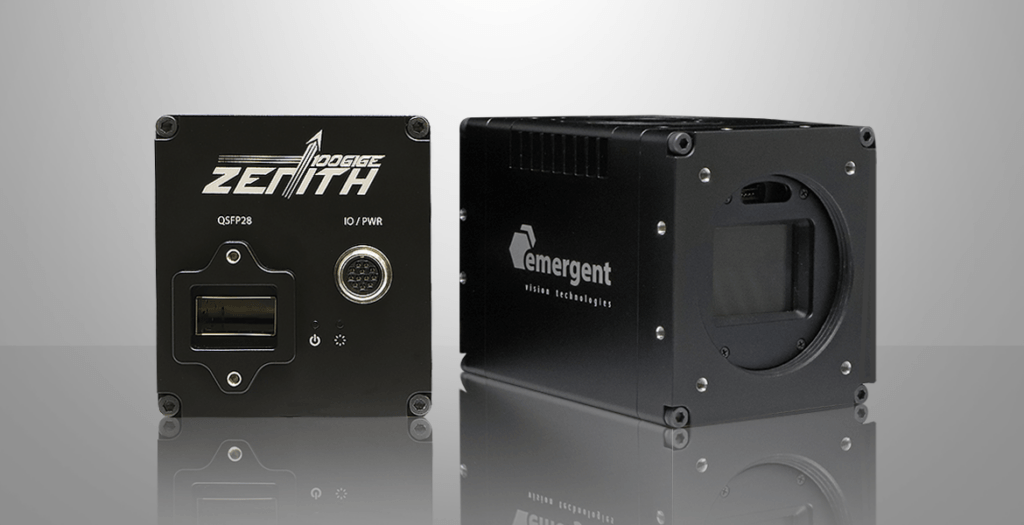
Emergent Vision Technologies, a pioneer in high-speed GigE Vision cameras and NO-DATA-LOSS vision technologies, announces that its 100GigE Zenith HZ-65000-G and 25GigE Bolt HB-65000-G GigE Vision cameras are officially shipping. Both models are offered in monochrome and color versions and are based on the Gpixel GMAX3265 CMOS image sensor, a 65MP sensor with 3.2×3.2µm pixel size and 9344 x 7000 resolution. Through a 100GigE QSFP28 interface, the HZ-65000-G reaches 71fps, while the HB-65000-G reaches 35fps through a 25GigE SFP28 interface. Both cameras offer low-cost accessories, low CPU overhead, low latency, low jitter, and accurate multi-camera synchronization using IEEE 1588. Both GigE Vision and GenICam compliant, the cameras accommodate cable lengths from 1 m up to 10 km without costly fiber converters/repeaters. “Imaging applications continue to evolve and expand, pushing the need for cameras that can keep pace with the resolution and speeds required in some of today’s most challenging tasks,” says John Ilett, president and CTO at Emergent Vision Technologies. “Whether a demanding machine vision application like electronics inspection or applications beyond the factory floor, such as virtual reality or volumetric capture and metaverse systems, systems integrators need reliable, high-performance cameras like the HZ-65000-G and HB-65000-G that offer the sensor size and frame rates for the job.” See Our 10GigE to 100GigE Technologies at Automate 2023Emergent showcases its 25GigE HB-65000-G and 100GigE HZ-65000-G at Automate from May 22 to May 25. The company also highlights additional 100GigE cameras, including area scan models like the HZ-2000-G (2.5MP, 3462fps) and the HZ-10000-G (10MP, 1000fps) and line scan models like the LZ-16KG5 (16Kx16, 400KHz). In addition, Emergent demonstrates its eCapture Pro comprehensive development software, along with a range of additional 10GigE and 25GigE cameras. For end users looking to maximize the effectiveness of their 100GigE and 25GigE cameras, Emergent Vision Technologies offers a line of network interface cards (NICs). Along with 10GigE options, the company offers 2- and 4-port 25GigE Hermes NICs and 1- and 2-port 100GigE Zeus NICs, which deliver optimal performance for any video stream with minimal system memory utilization, along with low latency and low jitter. These NICs also feature real-time, front-panel 5 V TTL trigger input for added flexibility, along with support for the GigE Vision Streaming Protocol (GVSP), Windows and Linux operating systems, GPUDirect, and camera multiplexing and multicasting with switches. Emergent also showcases its NICs at Automate 2023.
Marsh Bellofram earns safety recognition

ARPM recognizes group for Best Safety Practices U.S.-based manufacturer Marsh Bellofram is being recognized for its commitment to safety in the workplace. The Association for Rubber Products Manufacturers (ARPM) will honor the company at its 2023 Safety Awards by recognizing Marsh Bellofram in its Best Safety Practice category. The ARPM safety awards recognize companies in the manufacturing industry that have achieved excellent safety techniques that go beyond adherence to regulations. They are based on OSHA 300’s log of work-related injuries and illness statistics and safety best practices. Marsh Bellofram is a global manufacturer with 13 divisions focused on high-performance OEM, industrial, and process control instrumentation as well as elastomers, including diaphragms and specialty silicones. Marsh Bellofram’s environmental, health, and safety manager, Jonathon Monfredi, said the culture of health, wellness, and protection starts with Marsh Bellofram’s safety committee. The committee begins with a broad, overarching view of operations, seeks to engineer away hazards, and then drills down to daily practices that, when given adjustment or focus, can improve safety. “Each safety committee member is given a monthly assignment to conduct individual audits in their work area and help with monthly safety initiatives,” said Monfredi. “By conducting focus inspections in each department, we’re able to identify potential safety issues that we otherwise may not have. It has helped improve our overall safety culture.” With the U.S. Bureau of Labor Statistics reporting that fatal workplace injuries rose nearly 9% between 2020 and 2021, the last year for which there are issued reports, workplace safety remains a concern for all businesses, particularly in manufacturing, where humans and machines often work in close contact. Recognition like this from ARPM is a reward for past accomplishments but also serves as a reminder to be ever vigilant. Marsh Bellofram will be recognized on May 25 during ceremonies that are part of ARPM’s Environmental, Health, and Safety Summit being held in Columbus, Ohio. For more information about the 2023 Safety Awards, visit www.arpminc.com/ehs.
NAFA announces first-ever Fleet Safety Symposium

NAFA Fleet Management Association (NAFA), the vehicle fleet industry’s largest membership association, announces its first-ever Fleet Safety Symposium taking place June 22-23 in Indianapolis, Indiana. Spanning two days, the event will focus on the most critical aspects of fleet safety programs, including technology, policies, driver training, emerging legislation, and trends. Ensuring a safe work environment for employees is vital, and the need for effective fleet safety programs could not be more urgent. NAFA’s Fleet Safety Symposium offers attendees critical insights from expert speakers and fleet management professionals. “We are thrilled to present our first-ever Fleet Safety Symposium to the fleet community,” said Bill Schankel, CAE, CEO of NAFA. “Safety is a top priority for fleet managers, and this event will be an excellent opportunity for professionals to learn from each other and stay current on the latest trends and best practices for effective fleet safety programs.” A line-up of seasoned industry leaders will present sessions covering “Real Life Examples from Fleet Professionals,” “Legal Policies to Protect Your Fleet,” “Cannabis Legalization and the Impact on Your Fleet,” “NETS Benchmarking Safety Report,” and more interactive discussions with industry experts. View the Fleet Safety Symposium 2023 program and register today. More information on the speakers and sessions will be available soon.
MAY Gordon Report: How to repair America’s talent pipelines

Micron Technology Inc., based in Boise, Idaho, plans to invest $100 billion in a semiconductor-manufacturing campus in a suburb of Syracuse, New York. Once fully built this campus will employ 9,000 workers and possibly support 41,000 jobs for contractors and suppliers, Yet the highly skilled engineers and technicians needed for advanced chip manufacturing are in short supply across the United States. What steps are they and local community leaders taking for solving these critical talent shortages? Micron is seeking to develop a regional talent-creation pipeline through partnerships with K-12 schools and local colleges and universities. It is providing $10 million to local K-12 schools to bolster STEM education. Macron is cooperating with Onondaga Community College to develop a new degree program for chip technicians. Syracuse University is developing plans to greatly increase enrollments in its undergraduate and graduate engineering programs. The extent of Macron’s education partnerships is particularly notable. Education is a continuum. Even before the educational setbacks caused by COVID-19 restrictions, it was clear that K-12 education in the United States has not been providing a significant proportion of our students with the educational foundations needed for their future development The challenge we now face is only about one-third of our high school graduates leave school with reading and math comprehension at the twelfth-grade level. These skill levels are needed for the successful completion of post-secondary certificates, apprenticeships, community college two-year degrees, or four-year degrees. Cascading Challenges It seems likely that Micron will be affected by other types of skilled worker shortages. Micron’s Syracuse area expansion plans were spurred by the federal incentives offered by the Chips Act that was signed by President Biden in August 2022. Other companies have announced plans to build semiconductor manufacturing facilities in Arizona, Texas, and Ohio. Chip manufacturing plants have highly exacting construction specifications requiring specialized training. At the same time, growing international tensions and supply chain disruptions precipitated by the COVID pandemic are leading to the in-shoring of all types of manufacturing to the United States. Construction spending for manufacturing projects was the highest on record last year and is expected to remain elevated as there is a considerable backlog of nonresidential projects across the United States. A major reason for construction delays is worker skills shortages. In a recent survey conducted by the Associated General Contractors of America, 80 percent of the respondents reported difficulty in finding qualified workers. Last year U.S. businesses lost $2 trillion in productivity and profit due to skills-jobs disconnects. We estimate that there are over 27 million skilled and semi-skilled Americans who are not participating in today’s labor force. If their skills were updated through entry-level training, the impact on U.S. productivity would be substantial due to the magnitude of this hidden population. By 2030 Korn Ferry predicts that up to 90 million jobs worldwide could go unfilled. This could cost employers $8.5 trillion in profits. To meet the steeply escalating skill demands of the Fourth Industrial Revolution, more regions across the United States must develop a comprehensive approach to workforce development for a wide range of occupations in which employers and educational institutions cooperate in education and training programs that keep pace with technological advances. About the Author: Edward E. Gordon is the founder and president of Imperial Consulting Corporation in Chicago. His firm’s clients have included companies of all sizes from small businesses to Fortune 500 corporations, U.S. government agencies, state governments, and professional/trade associations. He taught in higher education for 20 years and is the author of numerous books and articles. More information on his background can be found at www.imperialcorp.com. As a professional speaker, he is available to provide customized presentations on contemporary workforce issues.
ABCO Systems plans Automation Innovation 2023

ABCO Systems will host a trade show on Tuesday, July 27, to showcase its innovative systems for warehouse automation and design. Automation Innovation 2023 will be held at ABCO’S headquarters in Carlstadt, N.J. The trade show will help material handling companies learn how effective material handling operations are designed with a unique blend of efficiency and resilience. People can register online at https://abcosystems.net/upcoming-trade-shows/ “Customers’ rapidly changing demands have left logistics professionals scrambling,’’ said Seth Weisberg, CEO of ABCO Systems. “Warehousing capabilities were once solely defined by the ability to store products in sufficient volume. But the tremendous pressure on retailers and suppliers to have wares ready the moment someone makes a purchase has pushed legacy logistics systems beyond their breaking point.” ABCO provides racking systems, multi-level pick modules, conveyors, sortation, and robotics to help logistics professionals meet needs for the lifetime of their industry. ABCO creates solutions by developing partnerships with the most innovative manufacturers of automation and storage technology. “The trade show gives us an opportunity to demonstrate how our solutions can help businesses get the most out of their warehouses and distribution centers,’’ Weisberg said. “We have more than 30 years of experience helping clients implement the tools they need. Big or small, we have unique warehouse design and automation solutions to meet a customer’s needs.” ABCO is offering free booth space, and sponsorship packages are available. The trade show runs from 9 a.m. to 3 p.m. Advance registration is required.
Techlift International has acquired Chariots élévateurs GCS
Techlift International has acquired Chariots élévateurs GCS, thus becoming its fourth branch. With branches in Drummondville, Victoriaville, Sherbrooke and now Montreal, Techlift is taking a big step towards its goal to cover the entire Quebec territory. Kevin Lecouffe joins the team as Branch Manager. “We are happy to welcome Kevin and the GCS employees to the Techlift family. This is a great day for us and I thank the team for their confidence. We are looking forward to the success we will have together” – Guillaume Joyal, President of Techlift. Techlift will now offer an even wider range of products designed to help our customers more efficiently manage their equipment fleet.
Marginal decline in Forklift Truck Sales in 2022 following historic 2021

The Industrial Truck Association (ITA) reports that forklift sales in the North American market remained robust for the second consecutive year during 2022 after reaching a record level in 2021. Despite headwinds from high levels of inflation and mixed economic indicators, retail orders decreased by only 1% year-over-year, closing out the year as the second highest on record. “The dedication and commitment by all of our associates is a powerful testament to the industry’s ability to meet the accelerated demand in 2022 and 2021,” said Chuck Pascarelli, ITA Chairman of the Board of Directors and President, Americas, Hyster Yale Group. Year-end 2022 forklift truck sales of 344,330, spanning all classes (1-5), trailed the previous year (347,677) by slightly more than 3,000 units. Industry performance varied among the classes including electric rider trucks (Class 1 and Class 2 combined) and motorized hand trucks (Class 3) declining (y/y). Class 3 showed the greatest decline of 11%. Class 1 declined by nearly 10% and Class 2 declined by 8.3%. The market for internal combustion trucks, Classes 4 and 5, grew significantly (y/y). Class 4 showed growth of over 39% whereas Class 5 grew at a rate of 13.7%. “Many economists are predicting stagnant levels of growth in GDP for 2023. To date through March 2023, the North American market is down 31.9% year-over-year. Ultimately, we will have to wait and see how the forklift market fares during the year given the predicted economic challenges facing the country,” said Brian Feehan, President of ITA. “It is important to recognize that in 2022 and 2021, more than 100,000 units sold above the traditional North American annual market volume.”
FAULHABER GROUP: Drives for speed in intralogistics
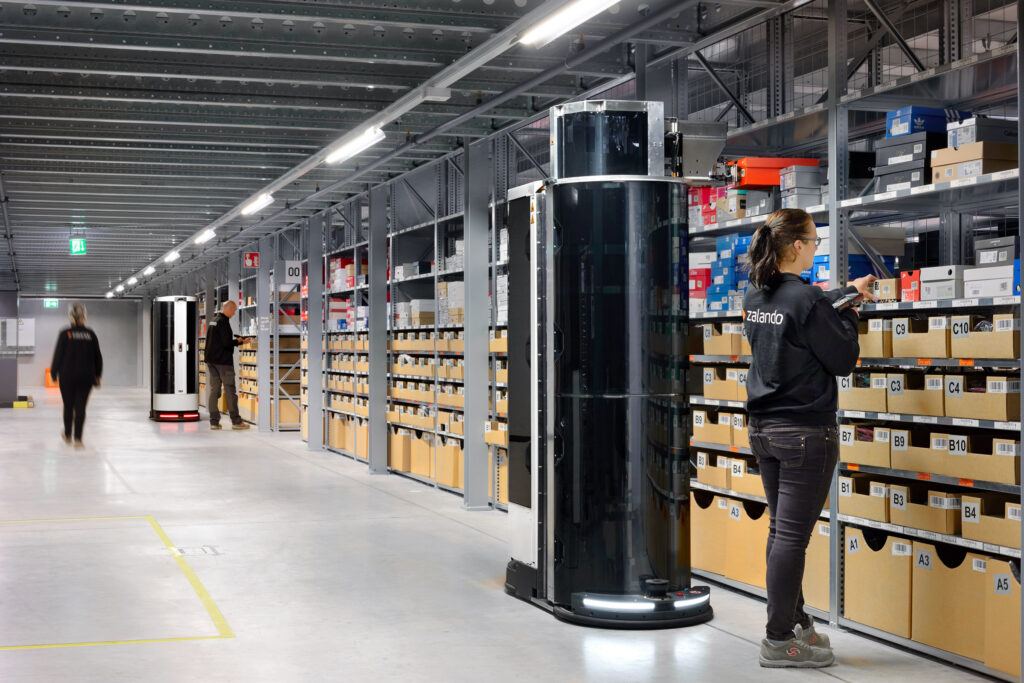
Suitable transport structures in intralogistics are a prerequisite in all industries in order to be able to withstand competitive pressure in the future. An increasing number of work steps involved in storing items in warehouses as well as retrieving these items and preparing them for dispatch are being taken over by automatic storage and retrieval machines, driverless transport systems, and intelligent logistics robots. To speed up the processes, flexible systems that work reliably around the clock are needed here. Such logistics solutions are often driven by high-performance micromotors. The demands that modern intralogistics place on the used drives are high: In many instances, they must be capable of releasing tremendous forces under extremely confined conditions, also work reliably in continuous or stop-and-go operation, and oftentimes they must also perform highly precise positioning tasks. The speed also plays an important role, after all, many thousand orders need to be processed every day in large warehouses. Drive systems from FAULHABER have often demonstrated their performance here during sorting and transporting as well as with storage and retrieval. Thanks to their modular design, the motors can be combined with a variety of high-resolution encoders for precise positioning tasks and with high-performance gearheads for high torque requirements. There are also compact motion controllers that can either be integrated into the drives or arranged externally. Powerful handling with finesse Autonomously driving and self-contained logistics robots are a critical component of “Intralogistics 4.0”. They are used both for storage as well as removal and dispatch preparation. They optimize material flow, relieve employees and replace, e.g., conventional lift trucks or pallet trucks. Autonomous picking robots that allow individual objects to be precisely accessed are one example. A typical picking robot comprises a lifting column and gripper. As a drive unit, it contains, e.g., BX4 series brushless DC-servomotors with an integrated motion controller and planetary gearhead. When used in the gripper, this combination ensures precise positioning during storage or retrieval – all during continuous operation with constant load changes. Yet the complete drive unit weighs only about 300 grams. This means that no counterweight is required even when the gripper is fully extended. With a diameter of only 32 mm and a length of 85.4 mm, the brushless DC-servomotors are also very compact. This makes it possible to design the gripper very flat, allowing it to also pick up packages that are stored just above ground. Expensive storage areas can thus be optimally used. Thanks to the brushless commutation system, the motors are long-lasting and reliable. They deliver high torques and, with the balanced rotor, are very quiet running. With the integrated current control, the torque demands are limited and the drive is reliably protected against overload. Compact drives for rapid start/stop operation Graphite-commutated DC micromotors of the CXR series combined with matched gearheads have also proven themselves in handling tasks. Their commutation system is very robust and is especially well suited for dynamic, high-performance applications with fast start/stop operation as is required in many handling systems as well as with automatic sorting, e.g., in cases where switches are used to change routes on transport paths. Thanks to their linear characteristics, the DC motors are also easy to control. Combined with high-resolution encoders, this makes them ideal for precise positioning tasks. High-quality neodymium magnets and the proven Faulhaber winding ensure a high power density in a compact design. They can thereby be installed directly in the handling elements. In spite of their small size, they can lift considerable weight there. Flexible through production Automated guided vehicles (AGV) are the means of choice when it comes to ensuring flexible transport in production processes. Among the most important requirements for the used drives with in-house material transport systems are availability, speed, flexibility, and – often – low space requirements. The current consumption also plays a role in ensuring that the battery of the vehicles is as long-lasting as possible. For example, brushless DC-servomotors of the BP4 series are suitable to drive the wheels, whereby the motor power can be transferred to the wheels via planetary gearheads and drive belts. The motors operate with high efficiency: their innovative winding technology allows for high copper content and keeps losses to a minimum thanks to high winding symmetry. Encoders of the IE3-1024 series are built right onto the servomotors for precise position detection. The magnetic incremental encoders, which are available with different resolutions, feature an indexing channel for referencing a revolution of the drive shaft as well as a standardized, electronic encoder interface. The resolution, direction of rotation, index width, and index position can be flexibly adapted to the application. A motion controller controls the servomotors. Such drive systems are also used for mobile robot platforms, which move about completely autonomously in industrial halls without a preinstalled guidance system. Above all, their high power density is particularly evident in the wheel modules. A lot of power in a very small space If there is limited installation space for wheel drives in the axial direction, the high-torque flat motors of the BXT series are often an option. Thanks to innovative winding technology and an optimized design, the motors are just 14, 16, and 21 mm in length but deliver torques up to 134 mNm, within a diameter of 22, 32, and 42 mm respectively. For precise speed control or in the case of high requirements on positioning accuracy, diameter-compliant magnetic encoders or speed controllers are now fully integrated into the housed motor variants, whereby the drive is increased by just 6.2 mm. Speed control is performed by the digital Hall sensors integrated into the motors. Thus, a wide speed range from 200 rpm to 10,000 min -1 is available. The compact drive combination is ideal for space-critical applications and simplifies installation and commissioning. The matching metal planetary gearheads of the GPT series too are characterized by a short design, high torque, and extremely fine graduations of the numerous reduction ratios.
Korea Association of Robot Industry operates Korea Pavilion at AUTOMATE 2023
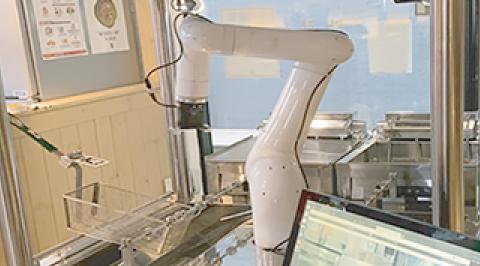
Korea Association of Robot Industry‘s first national pavilion in the U.S. The Korea Association of Robot Industry(KAR) has announced that it will be operating a “Korea Pavilion” at “AUTOMATE 2023“. Nine Korean companies will feature their products in Korea Pavilion located in booth no. 3250 and 3452. KAR has participated in many tradeshows held in Europe and East Asia for decades, but it has never participated in AUTOMATE or any other tradeshows held in the US. While China remains the largest market for Korean robot companies with exports worth of $319 million, The United States is the second-largest market with exports amounting to $204 million(“Korean Robot Industry Survey 2021”, 2022. 12). According to Markets and Markets, demand for collaborative and industrial robots in North America is expected to grow due to the increasing aging and labor shortages in the existing workforce in the manufacturing sector. Growing demand for energy conservation, higher efficiency and productivity, and remote monitoring will drive the growth of automation, too. In response to the increasing demand for automation facilities and systems in the United States, some of the major Korean robot companies such as Hyundai Robotics, Doosan Robotics, Rainbow Robotics, and Neuromeka have opened offices in the country to expand their operations. AUTOMATE, North America’s Largest Automation Tradeshow, is attended by 600 companies, including major players such as ABB, FANUC, Kawasaki, KUKA, and Universal Robots. The show has become a reliable platform for global companies in the automation and robotics industry to showcase their new technologies and exchange ideas, which makes it a perfect place for Korean companies to make their debut in North America. A KAR official stated, “The North American market has been the market that Korean robot companies have been longing for, but individual small and medium-sized enterprises have faced many limitations despite various attempts. We hope to alleviate the difficulties of Korean SMEs and promote marketing for them to expand their channels to the North American market. Korean products show high performances and are reasonably priced, which make them appealing to North Americans who seek products with decent prices.” He added, “We look forward to further exchange of technology and information with North America in the robotics and automation industry for mutual goods. If there are any institutes or companies that would like to build a cooperative relationship with us, we are open.” To give a brief introduction to 9 companies in Korea Pavilion, COBOTSYS Co., Ltd., Neuromeka Co., Ltd., and Rainbow Robotics Inc. will feature collaborative robots used in manufacturing and Food & Beverage services. DOGU Co., Ltd. will show autonomous mobile robots for security while TWINNY Co., Ltd. will introduce autonomous mobile robots specially designed for order picking in logistics. HCNC will demonstrate integrated IT services to perform robot-based automation. RS Automation Co., Ltd. will show a PC-based multi-function controller and servo drive for factory automation. TAEHA CORPORATION will demonstrate an auto-dispensing system and equipment.
ARA participates in Construction on the National Mall
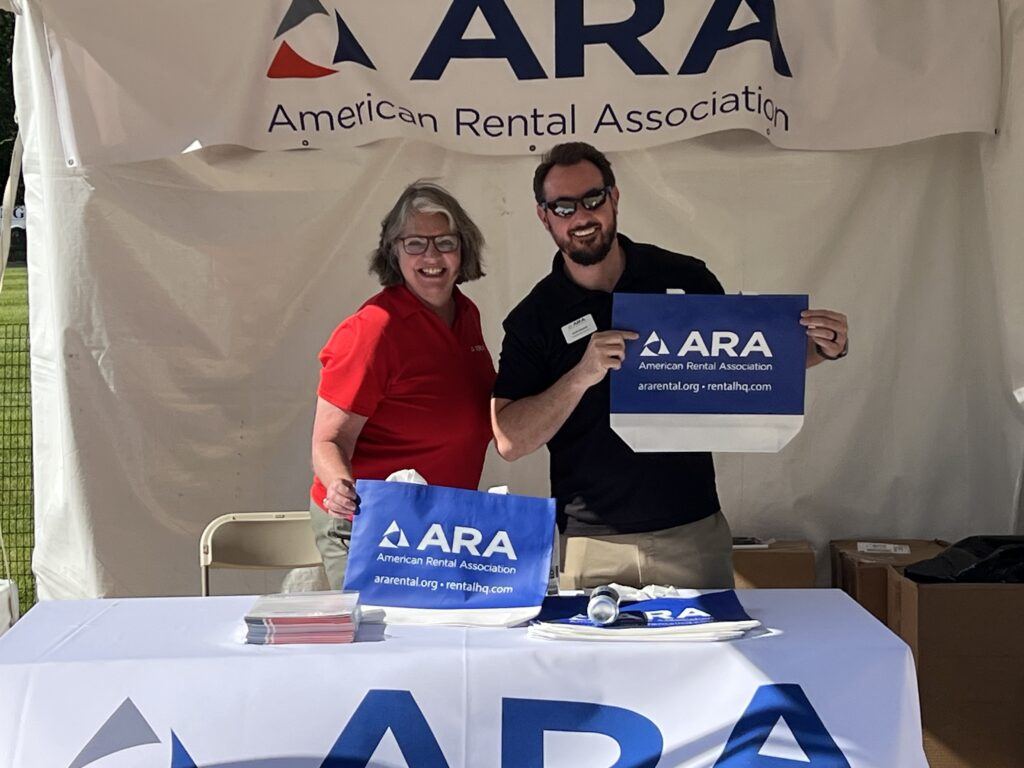
Three-day festival shines a spotlight on the construction industry The American Rental Association (ARA) highlights the role of rental at the Celebration of Construction on the National Mall event. The festival was held Sunday, May 14 through Tuesday, May 16 in Washington, D.C. The ARA was one of 17 partnering organizations that joined forces to tell the construction industry story. In partnership with the Association of Equipment Manufacturers (AEM), ARA leadership, members, and construction companies from across the nation joined together to bring construction equipment to the nation’s capital and speak with federal representatives about what’s important to the construction industry. “Representing ARA members at AEM’s Celebration of Construction on the National Mall event helps the rental industry solidify its place as part of the broader construction industry for federal legislators,” says Josh Nickell, ARA vice president, equipment segment. “This is critical now that more than 50% of equipment on a construction job site is rented versus owned. “It also allows us to speak about issues impacting our members, remind legislators that we are a more sustainable solution than ownership, and help the construction industry better react to market cycles like we are currently experiencing.” To bring awareness to the industry’s sustainability initiatives, participating AEM members showcased cutting-edge innovations, including alternative-powered equipment, autonomous systems with live demonstrations, and an array of other tools that are enabling the industry to sustainably build the infrastructure that makes modern society possible. Exhibits were open to the public and focused on workforce development, worker safety, sustainable materials, and environmental stewardship. Through participation in the event, ARA leadership was able to engage with members of Congress, regulators, and staff about the importance of the construction sector, innovation and sustainability impacts, and the sector’s positive effect on the American economy.
AAR reports rail traffic for the week ending May 13, 2023
The Association of American Railroads (AAR) has reported U.S. rail traffic for the week ending May 13, 2023. For this week, total U.S. weekly rail traffic was 466,381 carloads and intermodal units, down 5.9 percent compared with the same week last year. Total carloads for the week ending May 13 were 225,571 carloads, up 0.9 percent compared with the same week in 2022, while U.S. weekly intermodal volume was 240,810 containers and trailers, down 11.5 percent compared to 2022. Five of the 10 carload commodity groups posted an increase compared with the same week in 2022. They included motor vehicles and parts, up 2,968 carloads, to 16,035; petroleum and petroleum products, up 1,452 carloads, to 9,491; and nonmetallic minerals, up 1,040 carloads, to 33,846. Commodity groups that posted a decrease compared with the same week in 2022 included grain, down 2,040 carloads, to 18,818; miscellaneous carloads, down 1,216 carloads, to 7,526; and farm products excl. grain, and food, down 462 carloads, to 15,540. For the first 19 weeks of 2023, U.S. railroads reported a cumulative volume of 4,260,143 carloads, up 0.6 percent from the same point last year; and 4,413,091 intermodal units, down 10.9 percent from last year. Total combined U.S. traffic for the first 19 weeks of 2023 was 8,673,234 carloads and intermodal units, a decrease of 5.6 percent compared to last year. North American rail volume for the week ending May 13, 2023, on 12 reporting U.S., Canadian, and Mexican railroads totaled 332,478 carloads, up 2.1 percent compared with the same week last year, and 322,390 intermodal units, down 12.1 percent compared with last year. Total combined weekly rail traffic in North America was 654,868 carloads and intermodal units, down 5.4 percent. North American rail volume for the first 19 weeks of 2023 was 12,232,554 carloads and intermodal units, down 4.0 percent compared with 2022. Canadian railroads reported 89,784 carloads for the week, up 4.7 percent, and 70,736 intermodal units, down 15.0 percent compared with the same week in 2022. For the first 19 weeks of 2023, Canadian railroads reported a cumulative rail traffic volume of 3,036,897 carloads, containers, and trailers, down 0.2 percent. Mexican railroads reported 17,123 carloads for the week, up 5.0 percent compared with the same week last year, and 10,844 intermodal units, down 5.2 percent. Cumulative volume on Mexican railroads for the first 19 weeks of 2023 was 522,423 carloads and intermodal containers and trailers, up 1.4 percent from the same point last year. To view the rail traffic charts, click here.
Episode 385: Portable Intelligence’s Smart Warehouse Platform
In this episode of The New Warehouse Podcast, Kevin welcomes Jeff Lem, President and Founder of Portable Intelligence, to discuss the next generation of warehouse management systems and his book, now in its second edition, Your Warehouse is Not Your Fridge. Portable Intelligence is working on smart warehouse solutions incorporating artificial intelligence (AI) and real-time locating systems (RTLS) for indoor tracking. By pushing the boundaries and challenging the manual processes in traditional WMS systems, Portable Intelligence is creating a new frontier in warehouse management. Automating Prioritization and Task Allocation in a Smart Warehouse Platform Smart warehouses like Portable Intelligence’s platform aim to hold workers accountable and distribute tasks based on priorities, contributing to efficiency improvements. Lem explains how the Task Engine Distributor (TED) from Portable Intelligence assigns tasks to the most available worker using AI and RTLS, improving warehouse efficiency and reducing travel time by 25%. He adds, “Despite the implementation of barcoding, wifi, and other wireless technologies, many processes in the industry still rely heavily on manual methods and require a considerable amount of tribal knowledge.” Standardizing processes and monitoring production lines can lead to better conversations around efficiency and best practices. One successful example was assigning a pool of workers to a zone, offering flexibility in defining the size of the zone, which led to more consistency in service and eliminated the need for drive-bys. Tasks are now monitored, and start and stop times and distance traveled are tracked, leading to efficient discussions and improvements in the workplace. Leveraging Data and Analytics of a Smart Warehouse Platform Can Improve Warehouse Safety Portable Intelligence’s Smart Warehouse platform provides real-time maps and analytics that improve the safety and analysis of tasks. Installing a real-time map and heat map allows management to track worker locations, specific tasks, and safety incidents. According to Lem, “From a safety perspective as well, now I’ll have a history of that if there is an accident. In a certain area, they can always do what we call playback and review all the traffic that occurred in that area where the traffic, where the accident may have happened, where the accident had happened.”The system has been successful, and ideas for new features are coming from the workers. What’s new in the 2nd Edition of “Your Warehouse is Not Your Fridge.” Lem recognized that the world changed dramatically over a very short period of time since his book, Your Warehouse is Not Your Fridge, was published in 2019. With the pandemic and supply chain disruptions, it became apparent that warehouses needed to improve their processes. In the second edition of his book, Jeff highlights the need for accurate inventories and the challenges of dealing with limited space and workers. The book also emphasizes advancing warehouse technology beyond barcoding and wireless systems. Lem mentions Zebra’s warehouse maturation process, which outlines the five stages of warehouse growth. Most companies can only achieve stage three, which involves a typical WMS with a barcoding and wireless system. However, he encourages companies to challenge themselves to reach stage four and beyond with task management and AI integration. As automation becomes more prevalent in warehouses, it is crucial to synchronize and orchestrate the work of humans and machines. Jeff also points out that there has been an increase in inventory due to recent shortages. Companies must manage their inventory effectively by utilizing basic inventory principles such as inventory turns and ensuring that products do not become stale. Key Takeaways Warehouses often rely on rules of thumb and tribal knowledge, with little accountability. Smart warehouses improve efficiency by holding workers accountable and distributing tasks based on priorities. Deploying a task engine distributor like Ted can improve warehouse operations by automating prioritization, providing real-time tracking and analysis, and enabling continuous improvement. The New Warehouse Podcast EP 385: Portable Intelligence’s Smart Warehouse Platform