
Maximizing Warehouse Space: Unleashing potential with Next Level’s Mezzanine Solutions
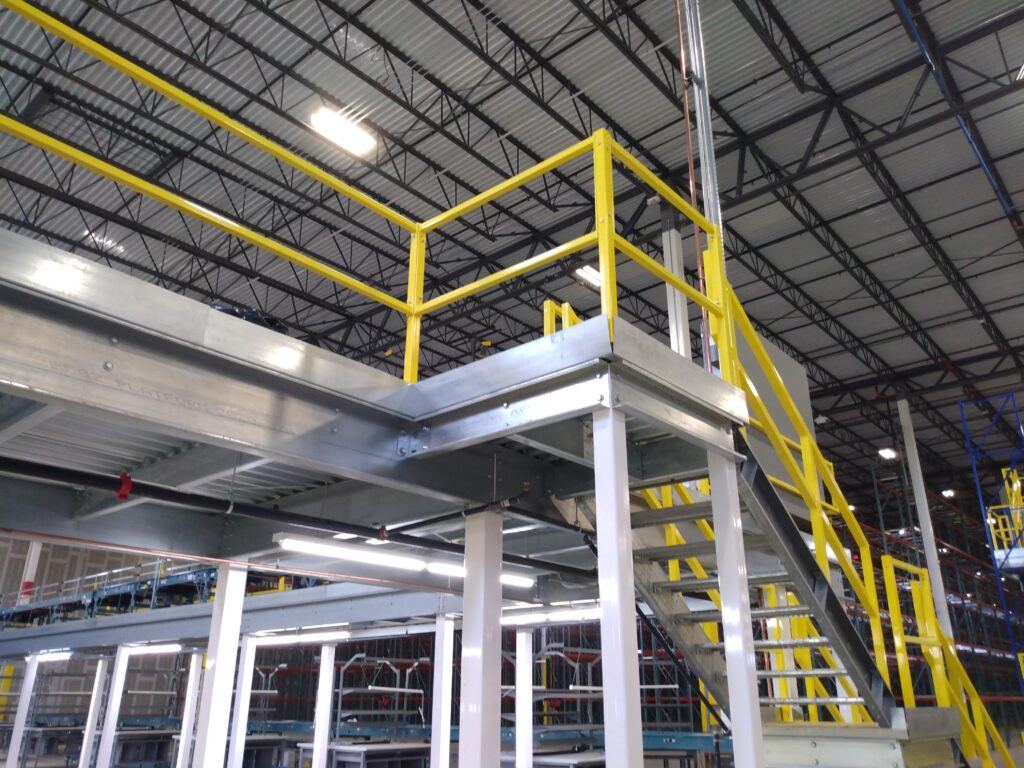
Optimizing warehouse space is a critical endeavor for businesses looking to enhance efficiency and reduce operational costs. One innovative solution gaining popularity is the use of mezzanine systems, and Next Level stands out as a provider that prioritizes strength, stability, and cost-effectiveness. In this article, we explore how Next Level’s mezzanine systems can help you maximize your warehouse space with their robust features and thoughtful design. Section 1: The Strength Advantage Next Level distinguishes itself through an unwavering commitment to providing mezzanine systems with unparalleled strength. The foundation of this strength lies in the meticulous selection of materials and construction techniques employed by Next Level, ensuring that their mezzanine systems offer robust support for diverse loads while maintaining long-term durability. Next Level’s emphasis on utilizing the strongest possible connections within their mezzanine systems speaks directly to the reliability and safety of these structures. Heavy-duty columns, carefully chosen for their load-bearing capabilities, are strategically incorporated to create a solid framework that stands up to the challenges of a bustling warehouse environment. This robust construction not only allows for the efficient use of vertical space but also instills confidence in businesses looking to optimize their storage and operational capacities. Moreover, the strength advantage provided by Next Level’s mezzanine systems contributes to the overall stability of the structure. This is especially crucial in warehouses dealing with heavy inventory or machinery. The mezzanine’s ability to withstand substantial loads without compromising stability ensures a secure and dependable platform for storage or operational needs. Beyond the immediate benefits, the strength advantage becomes a long-term asset for businesses, minimizing concerns related to structural integrity and reducing the likelihood of costly repairs or replacements. By investing in Next Level’s mezzanine systems, businesses can be confident that their warehouse space is fortified with a foundation designed to withstand the rigors of daily operations while providing a robust and enduring solution for maximizing storage capacity. Section 2: Stability without Bracing One of the distinctive features that sets Next Level’s mezzanine systems apart is their innovative design that eliminates the need for knee bracing or diagonal bracing. This design philosophy goes beyond mere aesthetics, presenting tangible benefits in terms of both installation simplicity and the creation of a versatile and unencumbered workspace beneath the mezzanine. Traditional mezzanine structures often require diagonal bracing or knee bracing to enhance stability, which can, in turn, limit the open space below. Next Level challenges this norm by engineering mezzanine systems that boast inherent stability without the need for additional bracing elements. This not only simplifies the installation process but also opens up possibilities for businesses seeking a more flexible and streamlined floor plan. The absence of knee bracing or diagonal bracing beneath the mezzanine creates a spacious and obstruction-free area that businesses can utilize for a variety of purposes. Whether it’s organizing inventory, setting up workstations, or accommodating machinery, the unobstructed space fosters an environment where operational efficiency and adaptability thrive. Furthermore, this design choice contributes to a cleaner and more visually appealing warehouse layout. The absence of additional bracing elements not only enhances the overall aesthetics but also facilitates easier navigation and movement within the warehouse. Businesses can, therefore, design their floor space with greater freedom, optimizing the layout to suit specific operational needs without the constraints imposed by traditional bracing requirements. In summary, Next Level’s commitment to stability without bracing not only simplifies the installation process but also transforms the space beneath the mezzanine into a versatile canvas for businesses to optimize their workflow and spatial efficiency. It’s a testament to Next Level’s forward-thinking approach to mezzanine design, providing a solution that not only meets structural requirements but also enhances the overall functionality and aesthetic appeal of the warehouse environment. Section 3: Zinc Coating for Durability Next Level takes a proactive approach to ensuring the longevity and durability of their mezzanine systems by offering zinc-coated beams, struts, and joists as a standard feature from the factory, without incurring any additional cost. This meticulous coating process involves applying a layer of zinc to the structural components, creating a protective barrier against corrosion, rust, and environmental wear and tear. The zinc coating not only serves as a shield against the harsh conditions commonly found in industrial environments but also enhances the overall lifespan of the mezzanine system. This protective layer acts as a corrosion-resistant barrier, preventing degradation over time and reducing the need for frequent maintenance. As a result, businesses can rely on Next Level’s mezzanine systems for sustained performance, minimizing the risk of structural deterioration that might compromise the safety and functionality of the warehouse space. In addition to its protective qualities, the zinc coating contributes to the aesthetic appeal of the mezzanine components. The clean and polished appearance not only reflects a commitment to quality but also adds a professional touch to the overall warehouse environment. By incorporating zinc-coated elements into their mezzanine systems, Next Level ensures that businesses not only maximize their storage capacity but also invest in a solution that stands the test of time and looks great doing it. Section 4: Cost-Effective Solutions Next Level’s dedication to providing zinc-coated components without additional charges extends beyond durability; it translates into a cost-effective solution for businesses seeking to expand their warehouse space. The decision to include zinc coating as a standard feature without extra cost reflects Next Level’s commitment to delivering value and reducing the total cost of ownership over the lifespan of the mezzanine system. By opting for Next Level’s mezzanine systems, businesses not only benefit from the durability and corrosion resistance of zinc-coated components but also make a strategic investment in long-term cost savings. The reduced need for maintenance and potential replacements due to corrosion leads to lower operational costs and a higher return on investment over time. In summary, Next Level’s combination of zinc coating for durability and a commitment to cost-effective solutions ensures that businesses not only maximize their warehouse space but do so with a keen eye on durability, maintenance costs, and long-term financial benefits. It’s
U.S. Rail Traffic for the week ending February 21, 2024

The Association of American Railroads (AAR) has reported U.S. rail traffic for the week ending February 17, 2024. For this week, total U.S. weekly rail traffic was 474,226 carloads and intermodal units, up 3.7 percent compared with the same week last year. Total carloads for the week ending February 17 were 220,529 carloads, down 0.6 percent compared with the same week in 2023, while U.S. weekly intermodal volume was 253,697 containers and trailers, up 7.9 percent compared to 2023. Seven of the 10 carload commodity groups posted an increase compared with the same week in 2023. They included miscellaneous carloads, up 1,983 carloads, to 9,616; chemicals, up 1,543 carloads, to 33,899; and motor vehicles and parts, up 1,187 carloads, to 14,849. Commodity groups that posted decreases compared with the same week in 2023 were coal, down 7,122 carloads, to 59,534; nonmetallic minerals, down 652 carloads, to 27,126; and petroleum and petroleum products, down 122 carloads, to 9,467. For the first seven weeks of 2024, U.S. railroads reported a cumulative volume of 1,466,059 carloads, down 5.6 percent from the same point last year; and 1,724,189 intermodal units, up 6.7 percent from last year. Total combined U.S. traffic for the first seven weeks of 2024 was 3,190,248 carloads and intermodal units, an increase of 0.7 percent compared to last year. North American rail volume for the week ending February 17, 2024, on 12 reporting U.S., Canadian, and Mexican railroads totaled 331,196 carloads, down 1.0 percent compared with the same week last year, and 337,305 intermodal units, up 7.6 percent compared with last year. Total combined weekly rail traffic in North America was 668,501 carloads and intermodal units, up 3.2 percent. North American rail volume for the first seven weeks of 2024 was 4,443,897 carloads and intermodal units, down 0.2 percent compared with 2023. Canadian railroads reported 92,737 carloads for the week, down 3.0 percent, and 70,767 intermodal units, up 5.0 percent compared with the same week in 2023. For the first seven weeks of 2024, Canadian railroads reported cumulative rail traffic volume of 1,069,472 carloads, containers and trailers, down 4.0 percent. Mexican railroads reported 17,930 carloads for the week, up 5.0 percent compared with the same week last year, and 12,841 intermodal units, up 19.2 percent. Cumulative volume on Mexican railroads for the first seven weeks of 2024 was 184,177 carloads and intermodal containers and trailers, up 6.7 percent from the same point last year. To view the weekly rail charts, click here.
Governors America Corp. welcomes Jeff Little as director of product management

Oklahoma resident brings nearly three decades of experience to his role Governors America Corp. (GAC) recently welcomed Jeff Little as its new director of product management. “We’re thrilled to bring Jeff on board,” said Sean Collins, President and CEO. “He has decades of experience in the field, particularly in the area of instrumentation, display and control products for the industrial stationary, off-highway and recreational power sports market. His insight and expertise are exceptionally valuable.” As director of product management, Little’s responsibilities include aligning product strategy with business goals; driving product discovery, market research and competitor research; driving innovation and new product development initiatives; communicating product vision and strategy to stakeholders; and monitoring and maintaining product health. Little, a resident of Sapulpa, Oklahoma, received his B.S. in electrical engineering from Mississippi State University. He has garnered 27 years of experience in the industry, most recently as director of product management at Enovation Controls.
January 2024 remains steady with 66 New Food and Beverage Industry planned projects
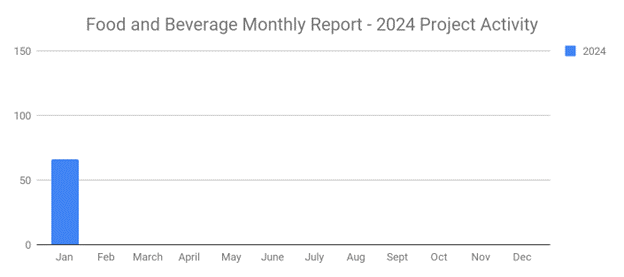
SalesLeads has announced the January 2024 results for the new planned capital project spending report for the Food and Beverage industry. The Firm tracks North American planned industrial capital project activity; including facility expansions, new plant construction and significant equipment modernization projects. Research confirms 66 new projects in the Food and Beverage sector as compared to 67 in December 2023. The following are selected highlights on new Food and Beverage industry construction news. Food and Beverage Project Type Processing Facilities – 47 New Projects Distribution and Industrial Warehouse – 24 New Projects Food and Beverage Project Scope/Activity New Construction – 24 New Projects Expansion – 16 New Projects Renovations/Equipment Upgrades – 29 New Projects Plant Closing – 4 New Projects Food and Beverage Project Location (Top 10 States) Florida – 9 California – 6 New York – 6 Michigan – 4 Ohio – 4 Pennsylvania – 4 Indiana – 3 Virginia – 3 Wisconsin – 3 Georgia – 2 Largest Planned Project During January, our research team identified 3 new Food and Beverage facility construction projects with an estimated value of $100 million or more. The largest project is owned by Natures Bakery, which is planning to invest $237 million for the construction of a 339,000 SF processing facility in SALT LAKE CITY, UT. They have recently received approval for the project. Completion is slated for Summer 2025. Top 10 Tracked Food and Beverage Projects ONTARIO: Sugar producer is planning to invest $135 million for the construction of a processing facility in HAMILTON, ON. They are currently seeking approval for the project. Completion is slated for 2025. CALIFORNIA: Global retail chain is planning for the construction of a 1.8 million SF distribution and warehouse complex in TRACY, CA. They are currently seeking approval for the project. NEBRASKA: Meat processing company is planning to invest $43 million for the expansion of their processing facility in HASTINGS, NE by 11,000 SF. They are currently seeking approval for the project. ARKANSAS: Bakery company is planning to invest $37 million for the expansion and equipment upgrades on their processing facility at 2700 E. 3rd Street in HOPE, AR. They have recently received approval for the project. WISCONSIN: Candy MFR. is planning for the renovation and equipment upgrades on a recently leased 447,000 sf distribution center at 9403 136th Ave. in BRISTOL, WI. They will relocate a portion of their regional distribution operations upon completion in Summer 2024. ILLINOIS: Distillery is planning for the renovation and equipment upgrades on a 157,000 SF production and warehouse facility at 2400 SW Washington St. in PEORIA, IL. They are currently seeking approval for the project. GEORGIA: Herbal supplement MFR. is planning for the renovation and equipment upgrades on an 85,000 SF of warehouse space at 2323 Brown Rd. in BUFORD, GA. They are currently seeking approval for the project. MICHIGAN: Pickle products MFR. is planning to invest $10 million for the expansion of their processing and warehouse facility in LEXINGTON, MI. They are currently seeking approval for the project. NORTH CAROLINA: Distillery is planning to invest $10 million for the construction of a 28,000 SF production facility at 178 Old Airport Rd. in STATESVILLE, NC. They are currently seeking approval for the project. FLORIDA: Snack food MFR. is planning for the construction of a 104,000 SF distribution center at 9111 Cheetos Cir. in FORT MYERS, FL. They are currently seeking approval for the project. About Industrial SalesLeads, Inc. Since 1959, Industrial SalesLeads, based in Jacksonville, FL is a leader in delivering industrial capital project intelligence and prospecting services for sales and marketing teams to ensure a predictable and scalable pipeline. Our Industrial Market Intelligence identifies timely insights on companies planning significant capital investments such as new construction, expansion, relocation, equipment modernization and plant closings in industrial facilities. The Outsourced Prospecting Services, an extension to your sales team, is designed to drive growth with qualified meetings and appointments for your internal sales team.
Anyline unveils autonomous drone scanning technology for enhanced warehouse inventory management

Anyline and Mondi collaboration leads to groundbreaking solution capable of scanning entire inventory storage and distribution centers Anyline, a mobile data capture and data insights, has introduced a new autonomous drone inventory management software that can scan an entire warehouse efficiently. Anyline worked with Mondi to develop this autonomous drone barcode scanning solution. Seeking to improve its inventory management process across multiple, large warehouse locations, Mondi tested several technology options including handheld RFID and camera scanners. A breakthrough was achieved when the company engaged Anyline to apply its mobile data capture technology to DJI Mini 3 Pro drones. “Taking inventory in a warehouse using autonomous drones was an exciting challenge and we were happy to partner with Anyline to make it a reality,” says Rainer Steffl, CIO at Mondi. “After several months of testing, problem-solving, and integrating with our backend systems, we have successfully counted our first full warehouse, proving the technology a success.” Before using barcode scanning drones, multiple workers used forklifts to manually lift two people at a time to scan inventory across large warehouses, sometimes only once per year. This process involves working at heights and, due to the need for space and extra safety measures, had to be done with overtime outside of warehouse operating hours. Now, a single drone operator can scan all the inventory aisle-by-isle in a warehouse during operating hours. The new modern process is safer, very accurate and alleviates a mandatory after-hours full warehouse count all at once. “Both Anyline and Mondi are passionate about innovation,” says Lukas Kinigadner, CEO and co-founder at Anyline. “We are proud to be a part of this project, which is redefining what is technologically possible in inventory management but can also be applied across other industries. We look forward to continuing to work with Mondi and other organizations redefining expectations and inspiring others to innovate and transform the way they work.” For more information or to explore similar collaboration opportunities with Anyline, interested parties can visit Anyline’s website or contact its customer support team directly.
New Renishaw TEMPUS™ technology achieves up to 50 percent reduction in additive manufacturing build times
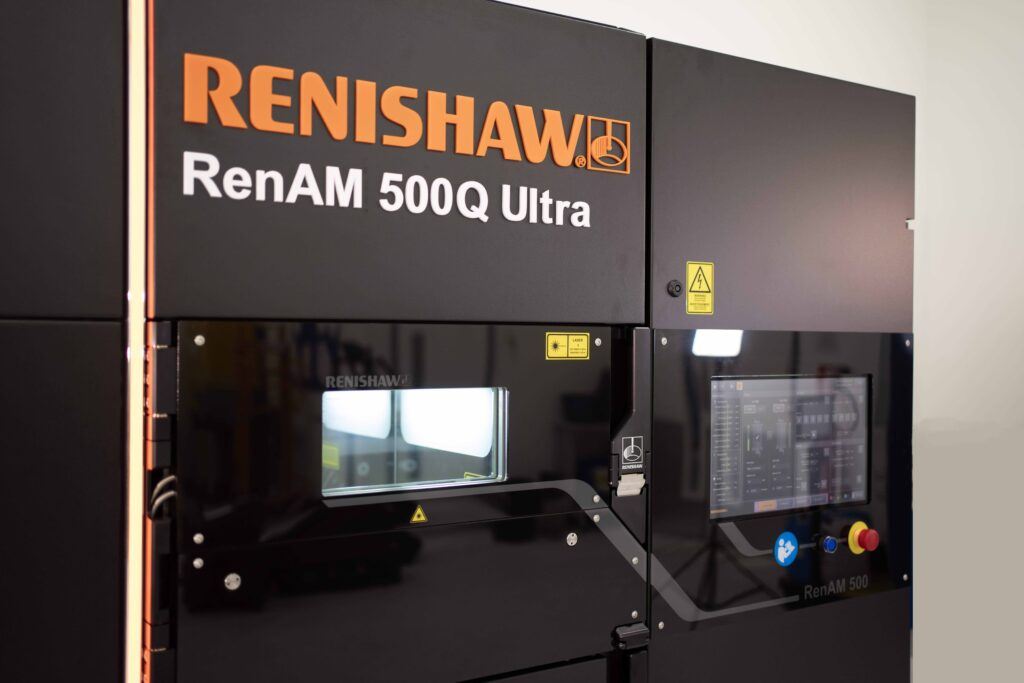
Patented technology enhances the class-leading productivity of the RenAM500 series metal additive manufacturing systems with reduced build times, detailed build insights and advanced process monitoring. New technology to be exhibited at the upcoming AAOS and RAPID shows. Renishaw’s new TEMPUS™ technology enables users of RenAM 500 series metal additive manufacturing (AM) systems to reduce build times by up to 50 percent. The technology uses advanced scanning algorithms that sequence the layer data in a way that maximizes productivity while maintaining part quality. The optimization suits some part geometries more than others, but all geometries can see some productivity benefits. Parts with thin, vertical features, for example, are likely to experience proportionally higher productivity savings. This new technology will be on display in February at the American Association of Orthopaedic Surgeons trade show (February 12-16 in San Francisco) and in April at the RAPID show (April 23-25 in Anaheim, CA). TEMPUS technology is standard with the new RenAM 500 Ultra system, as well as advanced process monitoring software. The combination of significantly reduced build times and detailed build insights means that the RenAM 500 Ultra delivers cost-effective, reliable additive manufacturing for metal component production. Existing RenAM 500 series customers can access TEMPUS technology as a paid-for upgrade, helping them to make the most of their machine investment. TEMPUS technology: jumping forward in AM productivity While traditional powder bed systems require the powder recoater to fully distribute powder before the layer can be consolidated, TEMPUS technology fires the lasers as the recoater is moving. The patented technology employs seamless communication between advanced software and hardware components to synchronize the system lasers with the powder recoater, removing up to nine seconds of build time from every layer. With builds frequently containing thousands of layers, this can reduce total build times by tens of hours. Yet crucially, there is no reduction in part quality. For uses in consumer electronics and computing, Renishaw has entered into an exclusive partnership agreement with metal component expert Alloyed, which has been using TEMPUS technology since 2021. “Reducing cost per part is critical to the wider adoption of AM technology,” explained Louise Callanan, Director of Additive Manufacturing at Renishaw. “The dominant contributing factor to part cost for most components today is the time spent building the part on the machine itself. Reducing the amount of machine time per part therefore results in more cost-effective production. “We believe the time and cost savings that both TEMPUS technology and the RenAM 500 Ultra system bring will open AM up to mass production applications where the technology would previously have been unviable,” added Callanan. “Meanwhile, these innovations will deliver crucial productivity gains for AM users who want full-scale production at the lowest cost per part.” The Ultra: The latest in the RenAM 500 Series The RenAM 500 Ultra system includes all the existing benefits of the RenAM 500 series – including industry-leading optical, chamber and gas-flow design – with the addition of the productivity-boosting TEMPUS technology. The RenAM 500 Ultra’s advanced process monitoring software delivers detailed insights into the build, equipping users with data and providing in-process visibility. Using the RenAM 500 Ultra to create production-ready metal parts means AM users can remain agile when faced with changing demands, are unrestricted by complex part geometries, and can seamlessly scale capacity to suit business needs. All of Renishaw’s RenAM 500 series systems, including the RenAM 500 Ultra, are available with one (500S) or four (500Q) high powered lasers, each able to access the whole powder bed simultaneously. This allows for efficient laser assignment and significantly higher build rates, improving productivity and lowering the cost per part. RenAM 500 Ultra models are equipped with automated powder and waste handling systems optimized for volume production. The RenAM 500 Ultra is available to order now.
Thomson video explores shift toward electrification of applications using linear actuators
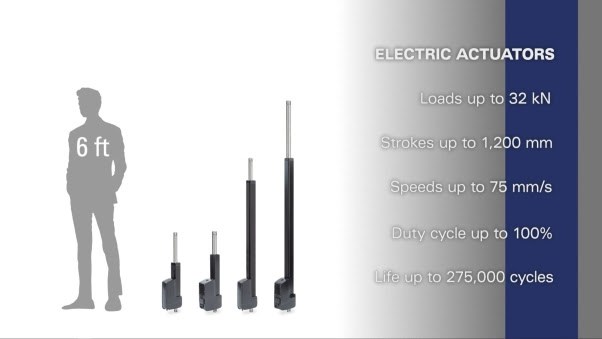
Thomson Industries, Inc, a manufacturer of linear motion control solutions, has released a video: ‘Clean and Simple: The Electrification of Applications with Linear Actuators,‘ which highlights the growing trend towards electric actuators and the advantages they bring over traditional technologies such as hydraulic, pneumatic and even manual actuation. For decades, hydraulic and pneumatic systems have been the preferred choice for heavy-duty applications. However, these systems pose challenges, including complexity, noise, high energy consumption, safety concerns, and adverse environmental impact. Electric actuators are now changing the game. This video explores the shift toward electric actuators, highlighting the increased load-handling capabilities that put them on par with hydraulic systems, as well as advanced controls and diagnostics that enable seamless communication with other machines in the network. The video also touches on numerous advantages of electric over traditional systems, including compact design, simplified wiring, and being entirely fluid-free, ensuring zero leaks, and minimal energy consumption and maintenance. “Electrification isn’t just a technological leap; it’s a profound transformation in how we approach motion control. It’s about harnessing efficiency, ensuring reliability, and securing a sustainable future,” said Travis Gilmer, Product Line Manager – Linear Actuators at Thomson. A prime example of how far electrification has come is the new Thomson Electrak® XD actuator, which can handle larger loads, longer strokes, and higher travel speeds, all with increased durability. Additionally, the XD goes toe-to-toe with hydraulics in shock load handling, making this unit versatile for various applications. Thomson’s commitment to innovation is driving the trend toward electrification in motion control applications. Their electric actuators are the embodiment of advanced controllability and safety and provide unparalleled durability. To explore these innovations further, click on the video link here – Clean and Simple: The Electrification of Applications with Linear Actuators | Thomson (thomsonlinear.com).
Registration for Queen City Robotics Alliance 2024 Summer Camps now open

Come build bots with us! Registration for Queen City Robotics Alliance (QCRA) 2024 Summer Camps is open so now is the time to sign up your kids for summer fun. These weekly camps offer students ages 9-13 (Grades 4-8) the opportunity to learn about and program robots in a collaborative, hands-on environment while learning valuable STEM lessons and real-world life skills. These camps will also introduce students to FIRST® LEGO® League (FLL) Challenge programs where they will learn how to build a robot and bring it to life. Camps are in one-week, all-day sessions beginning June 24 and run through the week of August 5. All camps take place at The Zone, QCRA’s home for robotics learning. In the morning students will learn coding led by QCRA’s talented peer instructors while in the afternoon the kids will take what they learned to solve an FLL Challenge. On the last afternoon of the camp, students will display their new talents in a robot showcase. Coding experience is not necessary, but students will need a laptop computer. Contact QCRA to request a computer loan if needed or parents and guardians can purchase a low-cost laptop from E2D. A brown bag lunch is also recommended. The cost is $320 per student. With special thanks to our longtime sponsor Sullenberger Aviation Museum, QCRA has grants available to families with financial need. Slated to open Summer 2024, the museum is working to increase accessibility and inclusivity in STEM education for students across the region. “At Sullenberger Aviation Museum, we support our longtime partner Queen City Robotics Alliance,” said Misty Sweat, VP of Education for the museum, “by funding camperships for their summer camps and providing financial aid towards STEM exposure for students lacking economic means. This initiative aligns with our mission to inspire, educate, and elevate the next generation of innovators through accessibility and inclusivity for those that have been historically underrepresented in STEM careers.” Learn more about the camps or to sign up your budding robotics student.
SINAMICS G115D distributed drive system specifically designed for conveyor applications

Comprised of the drive, motor, and gearbox, this new distributed drive system is available as a complete solution for motor-mounted and wall-mounted horizontal motion control conveyor applications. With its new SINAMICS G115D, Siemens is introducing a new, compact, and powerful drive system specifically designed for horizontal conveyor applications. The drive system comprises the motor, drive, and gearbox in one unit and is offered in two versions — wall-mounted and motor-mounted. The SINAMICS G115D drive system is characterized by a robust design with a high IP protection class (up to IP66 / UL Type 4X) and is suitable for use in harsh environments. Thanks to its compact dimensions, the SINAMICS G115D can be easily installed in confined areas. The drive system can also be operated reliably over a wide temperature range of -30 to 55 degrees Celsius (-22 to 131 degrees Fahrenheit), enabling operation in deep freezing applications. SINAMICS G115D is suitable for applications in intra-logistics and airports, as well as in the automotive and food and beverage industries. Its power ranges from 0.37 to 7.5 kilowatts (1/2 to 10 hp) for wall-mounted applications and 0.37 to 4 kilowatts (1/2 to 5 hp) for motor-mounted applications. The drive system can be put into operation quickly and easily with comprehensive integration into the Totally Integrated Automation (TIA) portal including Startdrive commissioning software or the SINAMICS Smart Access Module (SAM) web server for Wi-Fi setup and diagnostics. To be prepared for digital transformation and to enable cloud-based analysis, SINAMICS G115D is integrated into the entire MindConnect portfolio and is compatible with MindSphere applications such as Analyze MyDrives. Thanks to Profisafe, the SINAMICS G115D has Safety Integrated in the form of STO (Safe Torque Off) SIL2, which standardizes and facilitates the certification process. For flexibility in terms of installation, service, and maintenance, the solution is equipped with a plug-in connector and flexible connection possibilities. The device is particularly suitable for interaction with SIMATIC controllers such as the S7-1200 or ET200 for motion control. Siemens offers warranty extensions for SINAMICS G115D through its Service Protect package. As part of this service package, an additional one or two-year warranty extension may be purchased for failure coverage. The package offers simplified processing under normal warranty conditions for an extended period.
Movu Robotics and Reesink Logistic Solutions: A powerful alliance transforming warehouse logistics with innovative solutions
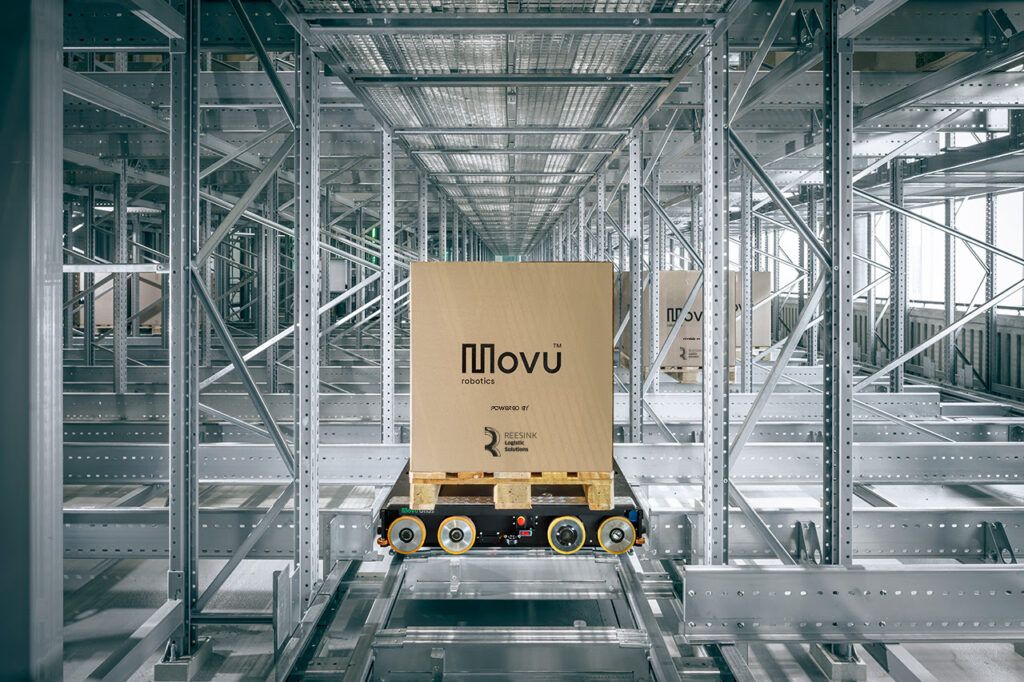
Movu Robotics is proud to spotlight their enduring partnership’s success through groundbreaking projects across Europe. Highlighting their successful long-term collaboration, two flagship projects for the Weinig Group in Germany and B&S in The Netherlands showcase the partnership’s innovative approach to logistics challenges, including a first-of-its-kind venture into next-level cold store logistics. Tailored Solutions for the Weinig Group In Germany, the Weinig Group, renowned for its wood processing technologies, will benefit from a compact and high-performance automated pallet & item storage and retrieval system designed by Reesink Logistic Solutions. This cutting-edge system streamlines the flow of parts, semi-finished and finished products, significantly enhancing efficiency and reducing manual handling using a Movu atlas pallet shuttle system. The solution underscores the beauty of a unique fit-for-purpose solution in the manufacturing and processing industry. Innovative Cold Store Logistics for B&S The B&S project in The Netherlands takes automation a step further with its unique concept for a pallet-based Goods-to-Person Solution in a cold store environment. Within this project, the Movu atlas pallet ASRS, the Movu ifollow AMRs, the pallet conveying system and the FAST PICK STATIONS are combined into this unique, state-of-the-art and scalable pallet-based Goods-to-Person solution. Both the Movu atlas shuttles and the ifollow AMR’s can operate in temperatures ranging from -25 to +40°C. The B&S solution exemplifies how Reesink and Movu’s innovative technologies can be utilized to meet the stringent requirements of temperature-controlled warehousing while ensuring operational excellence. The Power of Collaboration Machiel van den Hazelkamp, Commercial Director at Reesink Logistic Solutions, states, “Our enduring partnership with Movu Robotics is instrumental in our mission to provide our customers with future-proof, next-level warehousing solutions maximizing their competitive position. The projects for the Weinig Group and B&S not only demonstrate our joint capability to tailor our standard products into unique solutions in response to our client’s specific needs but also highlight our commitment to advancing logistics technology in both standard and challenging environments like cold stores.” Future-Focused Movu Robotics and Reesink Logistic Solutions are pioneering the future of logistics by focusing on high-density storage, scalability, flexibility, sustainability, and the integration of advanced technologies. They’re leading the shift towards eco-efficient operations, ensuring their solutions can adapt to changing market demands using minimal space. By integrating advanced technologies, they’re setting new efficiency standards, making warehousing smarter and more responsive. This strategic emphasis positions them at the forefront of sustainable and flexible logistics innovations, ready to meet tomorrow’s challenges today. Leaving no warehouse behind with next-level solutions Movu Robotics, known for its innovative warehouse automation solutions, brings to this partnership its expertise in robotics and automation technology. The Movu atlas and ifollow solutions represent a significant advancement in pallet handling. With more than 50 years of experience in warehouse automation, Reesink Logistic Solutions brings a wealth of knowledge and a track record of integrating over 850 warehouse automation projects. Together, Movu Robotics and Reesink Logistic Solutions are set to redefine the standards of warehouse automation, delivering solutions that are not just efficient and cost-effective, but also tailored to the unique needs of each warehouse.
Magline Inc. announces leadership changes

Magline, Inc., manufacturer of Magliner® aluminum and steel material handling equipment, has announced the promotion of Greg Ecker to Chief Executive Officer and the addition of Mike Howard as President and Chief Operations Officer. “Magline has experienced strong and steady growth under Greg’s guidance. His appointment by the Board to the position of CEO is recognition of this past success and a strong vote of confidence in his ability to lead us to new heights,” said Bruce Law, Chairman of Magline’s Board of Directors. “Greg will shift his focus and attention to business development, growth, and corporate strategy.” Ecker joined Magline as Global Supply Chain Director in 2007 and held executive positions in Operations, Sales, and Marketing before being named President and Chief Operating Officer in 2013. Prior to joining Magline, Ecker held senior positions with Whirlpool Corporation and Electronic Data Systems. Howard, a Michigan native, joins Magline following leadership positions as President of Judson Smith, an ATW Company, and General Manager at a division of Parker Hannifin. He earned a Bachelor of Science degree from Western Michigan University and a Master of Business Administration from Michigan State University. “Mike’s hands-on approach, enthusiasm, eagerness to learn, and passion for helping individuals achieve new levels of performance strongly position him to have a meaningful impact on people and achieve organizational success,” stated Ecker. “I am excited to be joining this well-respected organization and the opportunities to continue the growth and success of the organization,” stated Howard. “I am happy to be back in Michigan and in a position to contribute to the ongoing legacy and value proposition Magline holds in the markets we serve.”
Every thing your supply chain needs
Connections. Innovations. Solutions. As the speed of the manufacturing and supply chain world continues to accelerate, building a more agile, sustainable and transparent operation depends on today’s forward-thinking decisions. MODEX brings together the entire industry to allow you to see end-to-end solutions — from traditional equipment to automation, robotics and emerging tech — and learn impactful trends from the industry’s key thought leaders. Make plans to attend MODEX 2024 and see in-person the full spectrum of what’s now and what’s next for supply chains. 1,000+ Leading Providers Experience over 1,000 of the leading providers and experience in person how their efficiency-enhancing, cost‑cutting equipment and technology solutions can futureproof your supply chain. 500+ Education Sessions Learn from the industry’s best minds how key industry trends and innovations can transform your manufacturing and supply chain operations during 150+ free education sessions and four powerful keynotes. 45K+ Education Sessions Connect face-to-face with your manufacturing and supply chain peers and leading solution providers. Experience the complete supply chain ecosystem With more than 1,000 exhibits, the world’s leading solution providers will be on hand to showcase their most innovative equipment and systems. Nowhere else will you have the chance to see these solutions in-person, in-action and determine which can best solve your manufacturing, transportation and supply chain challenges. By attending, you can connect with your peers and tap into the collective power of the industry’s solution and thought leaders, all gathered in one place. Packaging, containers & shipping equipment Box and Carton Makers, Dunnage Trays, Packaging and Unitizing Systems, Wrapping, Inspection of Products by Weight or Scanning, Pallets, Wire Baskets, Plastic and Metal Containers, Palletizing Equipment Dock & warehouse equipment & supplies Dock Levelers, Dock Pads, Doors, Forklift Trucks, Racks, Flooring, Handling Systems, Forklift Attachments, Conveyors, Hoists, Cranes, Monorails, Loading Dock Equipment, Below/Hook Lifting Devices RFID and auto ID equipment & systems Barcode Printers and Scanners, Vision Systems, Voice Recognition Systems, RFID Systems, Systems Integrators, IIoT, Sensor Technology Material handling & logistics equipment & systems Automated Storage and Retrieval Systems, Automatic Guided Vehicle Systems, Casters/Wheels/Tires, Hydraulic and Electrical Components and Controls, Robotics, Personnel/Burden Carriers, Racks, Forklifts, Batteries, Lift Trucks, Flexible Manufacturing Systems, Tool Handling, Conveyors, Mezzanines, Lift Tables, Scissor Lifts, Unit Handling Systems, Manufacturing Execution Systems, Warehouse Management Systems/ Supply Chain and Logistics Execution Systems, Ergonomic and Safety Equipment, Carousels, Modular Drawer Storage, Order Picking, Sortation Equipment, Shelving and Workstations, Third-Party Logistics Supply chain management & sustainability Alternative Fuel Systems, Parcel Management and Distribution, Reverse Logistics, Third Party Logistics, Sustainable Facility Equipment, Supply Chain and Logistics Execution Systems, Enterprise Resource Planning and Transportation Management Systems, Inventory Security Services Inventory management, information technology, & controlling technologies Computers, Controllers, Software Programs, Systems Integrators, Manufacturing Execution Systems, Warehouse Management Systems/Supply Chain and Logistics Execution Systems, Remote Control Equipment, Wireless Control Systems, Voice Recognition Systems, Enterprise Resource Planning, Order Management Systems, Transportation Management Systems Transportation, last mile, & logistics Road, Rail, Sea and Air Freight Transportation, Parcel Delivery, Security, Autonomous Vehicles, Robotics, Sensors, Supply Chain Management Software, Third Party Logistics and Reverse Logistics, Fleet Management, Last Mile Tech, Parcel Lockers, Omni-Channel Fulfillment, Micro-location, Route Optimization, Urban Logistics Emerging technologies Sensors, Software, Cloud Computing, Driverless Vehicles, Robotics and Automation, Predictive Analytics, Artificial Intelligence, Omni-Channel Fulfillment, Unified Commerce, Augmented Reality, Virtual Reality, Wearable and Mobile Technologies Show Exhibit Hours Monday – March 11, 2024 – 10:00 am – 5:00 pm Tuesday – March 12, 2024 – 10:00 am – 5:00 pm Wednesday – March 13, 2024 – 10:00 am – 5:00 pm Thursday – March 14, 2024 – 9:00 am – 1:00 pm
The Hot Air Factor. How full of it are you?

Sometimes salespeople get a bad rap. Sometimes they create it. Sales require self-confidence but there’s a fine line between self-confidence and cockiness. A finer line between self-assurance and arrogance. And the finest line between proud and egotistical. As a professional salesperson, there’s a career difference between self-talk = self-performance (the right way) and loose lips sink ships (the ultra-wrong way). Salespeople are not the most loved group of professionals to begin with. We rank above politicians, tax collectors, and (especially) lawyers, but below dentists and dog catchers. All that a salesperson can hope to do is establish a great reputation and let that propel him to success. Since the prospect buys the salesperson first, reputation is as valuable (and critical) an element as he or she can have. How is yours? One bad event, situation, or story can ruin years of hard work. Continuing stories of neglect or overpromising breed career destruction. A salesperson’s self-delusion (failure to admit the problem, and thinking nothing is wrong) will make the situation worse. Sales of hot air can occur at any level. Customers, prospects, bosses, and coworkers are all potential victims. “Come on Jeffrey,” you say, “Get to the point. Give me some examples of self-destructive talk. What is sales “hot air?” Relax, helium breath, here ‘tiz. 7.5 examples of Hot Air (even though I’m sure none of these apply to you). BTNA –Big talk no action. Too much time talking about the sales you’re going to make and not enough time making them. Bragging too soon.Before the deal is signed, sealed, and a check delivered. Bragging too much. No one but you want to hear it. If you need to hear yourself just record yourself and replay it in your car until youget as sick of it as others. Bragging at the expense of others. Beat the competition, but don’t beat them into the ground. A variation of this is making someone else look like a fool. Bragging about someone you took advantage of or tricked. Using others as scapegoats to get yourself off the hook. Better known as covering your butt, or the inability to accept responsibility. Blaming others for your failings is obvious to those who are listening and makes a fool out of the teller. Exaggerating the facts. Each year, the fish that got away size increases. Stay within the parameters of what you know to be true or less. Understated is always better. Using insincere words.Honestly, truthfully, quite frankly, and I mean that, are words that alienate. 7.5 Talking past the sale. Knowing when to shut up and go home. Employing any one of the above elements after a sale has been consummated but before you leave will jeopardize the sale. It’s known as “buying it back,” and it happens often. The rule of thumb in sales is “less is more.” Hot air has interesting negative side effects… It wastes everyone’s time. It’s the most unproductive and negative use of your time possible. It makes you look like a fool. It lowers your respect factor by 100. It gets people talking behind your back. It prevents advancement. It can get you fired. Who wants that? No one, but these side effects are linked to people with severe cases of hot air. How do you know if this is you? How do you know if you’re blowing hot air? Well, no one is without some guilt. It’s hard not to brag if you just made a big sale and took it out from under the nose of your biggest competitor. The rules are simple: Don’t say anything behind anyone’s back you wouldn’t say to their face. Don’t say something you wouldn’t want to be said about you. Don’t say anything you have to remember (lies must be remembered, or you get tripped up with the truth). Don’t say anything you couldn’t say in front of your mom. The key is to temper your remarks with humility. Your challenge is to always bring out the good side in your words. Your challenge is to employ self-discipline in getting past the hot air. Your challenge is self-rule or self-destruct. About the Author: Jeffrey Gitomer is the author of twelve best-selling books including The Sales Bible, The Little Red Book of Selling, and The Little Gold Book of Yes! Attitude. His real-world ideas and content are also available as online courses at www.GitomerLearningAcademy.com. For information about training and seminars visit www.Gitomer.com or email Jeffrey at [email protected] or call him at 704 333-1112.
Potential $$ is coming your way

There are still plenty of questions and discussions taking place about what to expect in 2024. Management is really under the gun trying to properly budget profits and free cash flow, and at the same time trying to entice customers to buy units and parts and properly maintain equipment. Speaking of customers, seeing that they are in the same boat you are, are looking for ways to become more efficient through cost reductions and productivity gains, using help from vendors to help them do that. Hopefully, your management teams and OEMs are looking for answers to assist customers and are passing along those ideas for you to pass on to existing and prospective customers. Do you think customers would appreciate finding some potential cash that could be used for Cap-X purposes? Sure, they would. And would it not be great if you helped them find that cash? Believe it or not, some anticipated tax plays are coming about that I am assured will pass, and if they pass could provide immediate benefits in terms of tax payments. There are changes regarding: Bonus Depreciation Section 179 Interest Expense Limitation Contractor Employee Status The Tax Cuts and Jobs Act allowed 100% Bonus Depreciation starting September 27, 2017, and before January 1, 2023. So up through 2022. Starting in 23 the Bonus Depreciation would phase out at 20% per year until 2027. After that, it is back to normal tax depreciation methods. THE PROPOSED LAW EXTENDS 100% BONUS DEPRECIATION THROUGH JANUARY 1, 2026, WITH THE PHASEOUT BEGINNING THE YEAR AFTER. What is great about this is your ability to go back and use 100% for 2023. If you were basing your estimate payments using an 80% bonus to calculate taxable income, you can now adjust that annual result for the additional 20% you can adjust for. And of course, planning for 2024 would also include numbers using a 100% bonus. Of course, each company has its unique tax situation or position, and even with the changes, there are no general significant benefits. SECTION 179 is amended to increase the limit on Depreciable Business Asset expensing. For property placed in service after December 31, 2023, taxpayers can expense up to $1.29 million, reduced by the amount of cost of qualifying property over $3.22 million, adjusted for inflation. In terms of Business Interest, the proposal extends the use of EBITDA for purposes of regarding the limitation of the deduction for business interest. This amendment applies to tax years beginning after December 31, 2023 and will run through December 2025. These tax changes are positive for every dealer out there, but also very positive for customers who were not quite sure they wanted to invest in equipment in 2024. These unexpected funds could be used to buy, make a down payment, or just expand the business with the support of the new equipment. I suggest you put a plan together to discuss with customers to see where they stand on this issue. CONTRACT EMPLOYEE STATUS. This issue continues to tighten up because both tax and legal issues are involved to the point where not properly reporting payments for work could result in material taxes and penalties. We now have an economic reality test for determining workers’ status under FSLA. This new rule rescinds the 2021 Independent Contractor Rule and becomes effective March 11, 2024. There are now six factors to determine if a person is an employee or independent contractor: Any opportunity for profit or loss a worker might have. A financial stake or resources the worker has invested in the work. The degree of permanence of the work relationship. The degree of control an employer has over the person’s work. Work is essential to employers’ business. A factor regarding the worker’s skill and initiative. If the worker is an employee there are tax withholding requirements, as well as payroll taxes paid by both the worker and employer. Base pay and overtime, if earned, would also be included in the process. Then there are the Federal Unemployment Tax implications. And there could be benefits provided to employees. I am reminded that the contractor “payroll” may wind up being included for WC and General Liability insurance unless you notify the insurance company to not include the contractor expense. Contractors should supply an insurance certificate to the company. All I see here is a lot of exposure if you guess wrong. One other recent tax topic concern Limited Partner Status for SECA Tax (Self-employment tax). Since limited partnerships are popular these days, I thought I would throw this in to make you aware that if you participate as a limited partner the exemption requires a functional analysis of whether a partner was, in fact, active in the business of the partnership and a limited partner in name only. So, if you receive profit distributions from a limited partnership take steps to decide whether you are a limited partner or one active in the operation of the business. Document your functional analysis review. I believe a review of these topics with customers will be appreciated even though they have no additional funds coming. Will anyone else discuss these topics with them? About the Columnist: Garry Bartecki has been a CPA MBA with GB Financial Services LLC and a Wholesaler columnist since August 1993. E-mail [email protected] to contact Garry.
Service and part departments need to track their KPIs to achieve growth

As we are well into the first quarter of 2024, the subject of labor shortages continues to be a trend across our industry. Dealers that I talk to stress that the growth of their service and parts departments’ revenue continues to be impacted by the shortage of skilled forklift technicians. The topic of attracting, hiring, and retaining technicians continues to be a hot topic, however, in this month’s column, I will focus on another topic as it relates to service technicians, technician productivity, and efficiency. The key to your dealership’s service department’s success goes beyond the number of technicians you have and how busy they are. The question to ask is how productive and efficient they are in their work. Long hours on the clock may not be the key metric; rather, it’s their productivity that impacts your dealership’s profitability. Today, many dealerships have adopted business system software that will track and compute these metrics as they pertain to technician productivity for you, yet sometimes this this Key Performance Indicator (KPI) is neglected. Service Department Efficiency Before measuring technician productivity and setting up KPIs, your service department operations and processes must first be efficient. Running an efficient service department within your dealership requires a combination of effective management, skilled personnel, and streamlined processes. The efficiency of your service department is critical in meeting your customer demands and driving the success and revenue of the department. A crucial factor is the proficiency of the service technicians on your staff, who should be well-trained and certified to handle the diverse range of equipment they are being asked to diagnose and service. Investing in ongoing and continuing training programs will ensure your technicians are up to speed on the latest technological advancements in equipment and diagnostic tools. Additionally, having a well-organized and stocked spare parts department or service van parts inventory is an important factor for efficiency. You want to ensure that the necessary spare parts are readily available to your service technician when your customer’s equipment goes down. Be sure your parts department staff have the necessary resources to look up, procure, inventory, and deliver the right parts as needed to positively impact technician efficiency and customer satisfaction. Establish clear communication channels with your customers so your service department and technicians understand their needs and expectations. Providing regular updates on the status of repairs and offering estimated completion times helps build trust and satisfaction with your customers. Additionally, if everyone at your dealership (service dispatcher, service writer, technician, customer service sales rep, etc.) is on the same page with the customer, it will show the customer that your dealership is running a customer-centric service department. Having efficient workflow processes and effective management of work-in-process is another critical element to the efficiency of your service department. There are many business systems and field service mobile solutions today that allow for the efficient documentation of service records and collaborations between your service, sales, and parts departments that further enhance the overall performance and customer satisfaction of your dealership. If you are still asking your technicians to use paperwork orders to document their service work orders and billable hours and turn them in manually to the office, it may be time to look to invest in a modern field service mobile solution. This will also streamline your processes of converting a completed service work order to a customer invoice more efficiently. An additional benefit, as you look to attract, hire, and retain technicians, is that state-of-the-art technology is more attractive to workers for their everyday job tasks. Technician Productivity Now that you’ve streamlined processes and demonstrated your service department can run efficiently, it’s also crucial to stress the importance of productivity. Simply computed, technician productivity can be calculated by dividing their working hours by the available hours and their efficiency by how long they take to complete a service job versus the standard time estimated to complete that job. For many dealers, a normal paid working day consists of eight hours for your service technicians, which you compensate them for even if they are unable to bill out all that time to retail customer service jobs. While not all their time will always be 100% billable to your customers, your processes should maintain accountability for every paid hour to be billed out to a customer invoice, internal invoice, or general ledger (GL). These three types of hours to be billed are commonly referred to as retail hours, internal hours, and expense hours. Retail hours are hours you can bill your customer for a service job. Internal hours billed include repairs to your rental fleet, pre-delivery inspection of new equipment sales, and equipment serviced under full maintenance lease agreements. Expense hours include training hours, team meetings, and other non-billable tasks. The key here is to invest in technology and systems that can effectively account for every retail, internal, and expense hour of your technician. The forklift service industry landscape is evolving, and strategic adaptation is key to the future profitability of your dealership. Embracing change, staying up to date with technological advancements, and consistently innovating your service offerings can position your dealership as a leader in your market, while also attracting and retaining customers with opportunities for revenue growth. About the Author: Chris Aiello is the Business Development Manager at TVH Parts Co. He has been in the equipment business for 17-plus years as a service manager, quality assurance manager, and business development manager. Chris now manages a national outside sales team selling replacement parts and accessories in various equipment markets such as material handling, equipment rental, and construction/earthmoving dealerships.
Trelleborg tires brings more resilience to material handling applications with premium full tire range at LogiMAT 2024

Trelleborg Tires will showcase its full premium portfolio for material handling and logistics at LogiMAT 2024, the international trade fair taking place March 19-21, 2024 in Stuttgart, Germany. Trelleborg’s Stand A23 • Hall 10 will feature innovative tire technologies, including advanced treads and high-performance rubber compounds for solid endurance, safety, and performance. In today’s multitude of material handling operations, having the right solution is key to maximizing efficiency. The Trelleborg full range of solid resilient forklift tires offers something for everyone, helping businesses handle low to maximum-intensity jobs with ease, starting from the user-friendly labeling system for selecting the right tire for specific operations, depending on the intensity and working conditions, thereby improving overall endurance, performance, and efficiency. Top-of-the-line is the Trelleborg XP1000 tire for maximum-intensity applications. The XP1000 tire has been proven to deliver optimal performance, with extra traction and minimal tire vibration, giving better driver comfort and less fuel consumption. This newest tire is available in a variety of special rubber compounds, including the unique ProTEX: the non-marking electrically conducting compound engineered for use on Materials Handling applications operating in potentially explosive environments. Equipped with effective Pit Stop Line technology, Trelleborg XP1000 is shown to improve safety and tire change planning. Once 100 hours of operating time remains, an orange band appears on the tread, helping forklift drivers and fleet managers schedule tire changes and avoid unplanned downtime. The Trelleborg XP900 tire, made for high-intensity applications, provides exceptional stability and maneuverability when loading and unloading goods in warehouses, factories, and more. Its rubber compounds have been developed using special raw materials tested for long-lasting performance and sustainability, promising a further reduction in CO2 emissions. To support medium-intensity operations in all indoor and outdoor conditions, the Trelleborg XP800 tire is key to reaching the highest performance maintaining, at the same time, the cost control with its advanced tread design. The Trelleborg XP700 tire has been designed to perfectly match the needs of low-intensity material handling operations. Anton Stoynev, Director of Material Handling & Construction Trelleborg Central Europe states: “Our extensive Trelleborg XP range gives operators a wide selection to choose from our complete resilient solid tire portfolio, depending on the material handling application they need. We are proud to be a strategic partner to the forklift industry, delivering advanced solutions to support our customers maximizing their performance under any working conditions while minimizing the environmental impact. We have worked hard to make sure our tires are ready for the next generation of material handling vehicles and the intense jobs they’re required to perform.”
December 2023 Manufacturing Technology orders beat expectations as December adds $491 Million

In an upside surprise, December 2023 orders of manufacturing technology totaled $491 million, up nearly 22% from November 2023, and nearly 12% above December 2022, according to the U.S. Manufacturing Technology Orders Report published by AMT. Just like the larger U.S. economy fared better than many predicted at the beginning of 2023, orders of manufacturing technology, measured by the U.S. Manufacturing Technology Orders Report published by AMT – The Association For Manufacturing Technology, outperformed even the best expectations. In an upside surprise, December 2023 orders totaled $491 million, up nearly 22% from November 2023, and nearly 12% above December 2022. This was the second-highest order level in 2023 and the first month of the year to outperform 2022 order levels. Orders in 2023 totaled $4.94 billion, 11.2% behind the $5.56 billion recorded in 2022. Although a decline, orders in 2023 surpassed many predictions, with some of the most pessimistic forecasters expecting the year to be down nearly 20% from 2022. Contract machine shops decreased their 2023 orders just over 21% compared to 2022. This customer segment, the largest customer for manufacturing technology, is mostly small-to-medium-sized businesses, so their capital investment tends to be tied to a shorter-term economic outlook. Even with their pullback in orders, 2023 exceeded expectations due to investment from larger OEMs, which tend to operate on much longer production schedules. Automotive orders in 2023 rose 2% from 2022. This growth came primarily from manufacturers of automotive transmissions, who made their second-largest investment since 2000, falling short of 2015 by only 1.3%. While a lot of attention has been paid to investments in electric vehicle production lines, such as the one recently announced by Toyota, automakers have also been heavily investing in production lines that make traditional internal combustion engines. Although the aerospace sector’s 2023 orders decreased nearly 9% from 2022, it still recorded its fourth-best year for manufacturing technology orders. Despite issues with the Boeing 737 MAX-9 that have dominated news cycles, the aerospace sector decreased orders in 2023 by less than the overall market and is positioned to continue investing in manufacturing technology in 2024. Manufacturers of ventilation, heating, air conditioning, and commercial refrigeration equipment made the largest investment in manufacturing technology since 2012, increasing orders by over one-third from 2022. This investment was likely driven by the massive uptick in new construction that was brought about by recent government legislation and investment, such as the Chips and Science Act, Inflation Reduction Act, and Infrastructure Investment and Jobs Act. Orders of manufacturing technology outperformed expectations in 2023, and there are several reasons to believe the momentum will carry over into 2024. For example, shipments of cutting tools increased in 2023 by nearly 7%, as measured by the Cutting Tool Market Report, a collaboration between AMT – The Association For Manufacturing Technology, and the U.S. Cutting Tool Institute. This increase in shipments of consumables used in the metal machining process indicates that machines in the field are increasing output. This is a good sign for machinery orders in 2024, as increased output could signal a coming need for additional capacity. The January 2024 reading of the Gardner Business Index, a sentiment indicator produced by Gardner Business Media, shows the manufacturing sector is still in a moderate contraction but improving to its highest confidence level in nine months. Further, expectations of business conditions over the next 12 months are quite positive. There are certainly challenges to the manufacturing technology industry that have been highlighted in previous articles but also many opportunities as we head deeper into the new year and toward another IMTS in September 2024.
Episode 462: Harbor Lockers simplifies pickups and returns for logistics
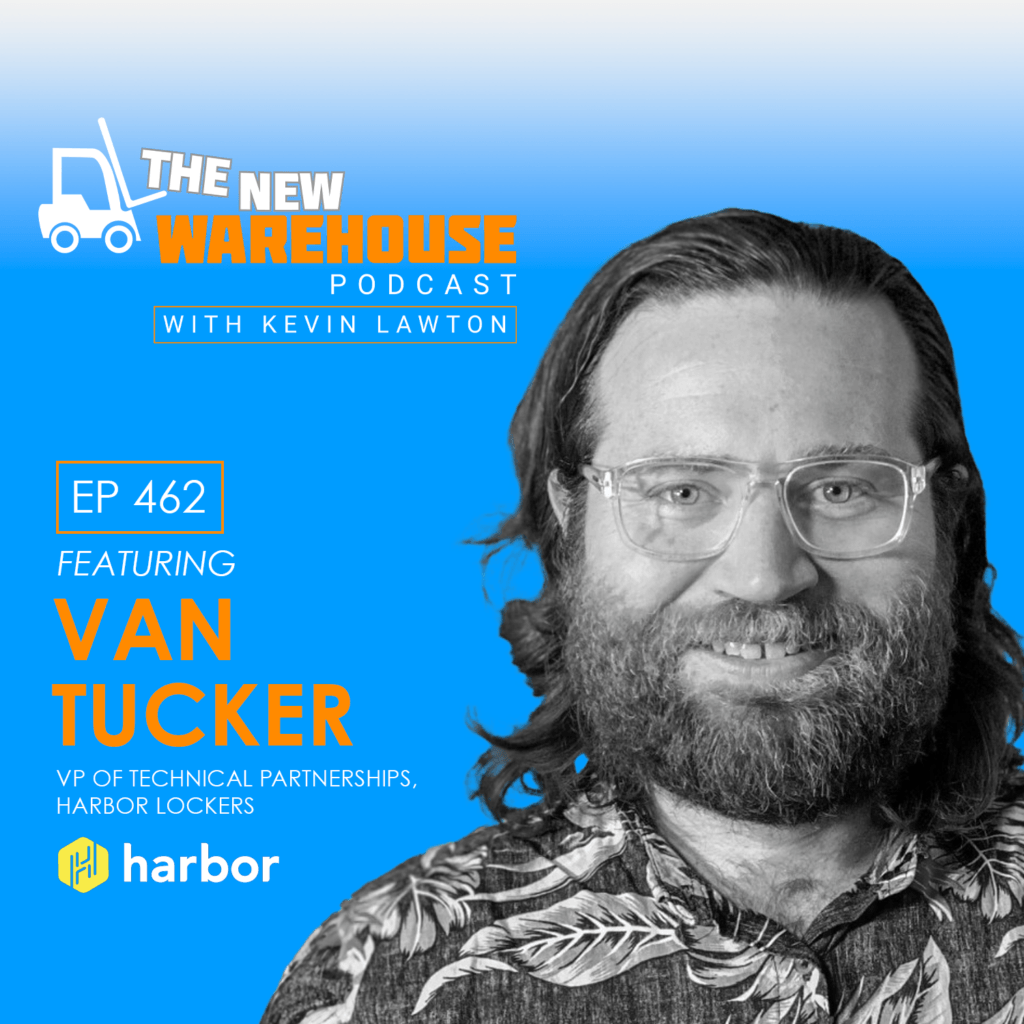
In this episode of The New Warehouse podcast, we’re joined by Van Tucker, VP of Technology Partnerships at Harbor Lockers. Part of Luxer One, Harbor Lockers is at the forefront of logistics innovation, offering versatile drop-off and pick-up locker solutions that enhance the delivery and return process for consumers and businesses alike. We delve into the mechanisms behind Harbor Lockers, the technology that powers them, their cost-saving benefits, and the problems they aim to solve within the supply chain. Innovative Solutions with Harbor Lockers With over 10,000 locker locations across the U.S., Harbor Lockers caters to many uses beyond parcel pickup and returns, including micro-warehousing. Van Tucker shares, “We’re seeing a lot of other novel use cases as we’ve been deploying more of these public locker locations around the United States in the last year.” The Technology Behind the Convenience The open technology platform allows for easy integration with retailers and carriers. “You can literally just hit our API and you can see all of our locker locations instantly,” explains Tucker. This seamless integration is a cornerstone of their user-friendly approach, offering a native experience without additional investments in infrastructure. Cost Savings and Logistical Efficiencies Harbor Lockers significantly reduces the cost of returns and facilitates collaborative cost-saving strategies. Tucker highlights the economic and operational benefits: “We work with multiple brands to facilitate cost savings when they combine services.” This approach saves costs and enhances efficiency within the logistics network. Key Takeaways from Harbor Lockers Expanding the utility of locker systems in logistics offers innovative solutions beyond traditional parcel pickup and returns. The technology platform enables seamless integration for carriers and retailers, enhancing the customer experience. Lockers offer a cost-effective solution for logistics challenges, promoting efficiency and savings through collaborative partnerships. The New Warehouse Podcast Episode 462: Harbor Lockers Simplifies Pickups and Returns for Logistics
Antares Vision Group to showcase automatic inspection machines for vials and more at INTERPHEX
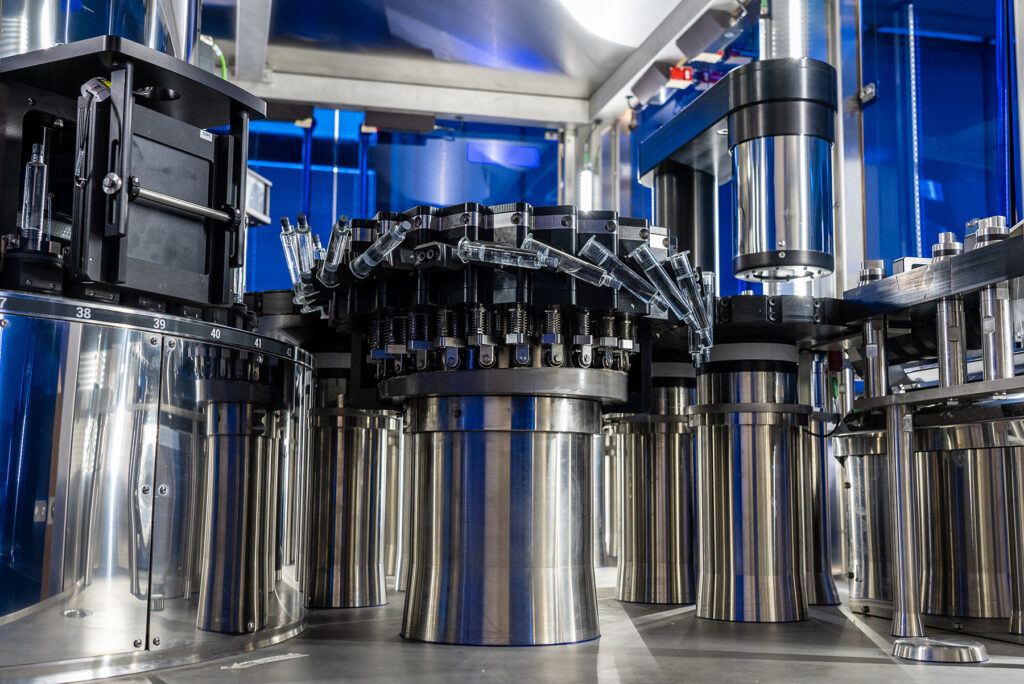
Company also will emphasize its recently launched DIAMIND ecosystem, a portfolio of interconnected software and hardware systems for comprehensive traceability. Antares Vision Group will showcase a variety of its latest, state-of-the-art inspection equipment at INTERPHEX NYC, April 16-18. At Booth 2821, the company also will emphasize its recently launched DIAMIND, a series of interconnected software and hardware systems providing physical products with the digital identities necessary to meet traceability mandates and streamline production and supply chain operations. Among the DIAMIND Line solutions showcased at INTERPHEX will be an automatic visual inspection machine for prefilled syringes. Antares Vision Group’s Visual Rotating Inspection (VRI) unit can handle up to 400 pieces per minute. The module can process SVP glass and plastic prefilled syringes up to 24mm in diameter, and inspect liquids with a wide range of viscosities – from water-like products to emulsions and gels. Like each of the company’s VRI systems, an additional camera mounted on a secondary carousel yields 100% inspection of the syringe surface. Fast, smooth single-point handling minimizes the risk of product breakages and scratches, thanks to individually motorized grippers and guideless conveying with vacuum-operated starwheels. Antares Vision Group also specializes in precise, high-speed vial inspection. At INTERPHEX, the company will showcase a module from its Visual Rotating Inspection (VRI) series capable of inspecting up to 400 liquid-filled glass containers per minute. The machine combines sophisticated particle and cosmetic detection with technology-driven closure integrity verification at an exceptionally rapid production pace. The VRI unit can inspect liquids in a wide variety of viscosities, including water-like, oily, suspension, gel, emulsion, lyophilized, and powder products. Vials are also inspected for cosmetic defects such as crimping quality, flip-off color, neck-shoulder sidewalls, and stopper position. Molded glass and plastic containers also can be inspected. Antares Vision Group will also display its CT, which automatically inspects vials and cartridges at speeds up to 200 pieces per minute. The unit is designed for accurate cosmetic and particle detection of small-volume containers up to 36mm in diameter. Compact and reliable, the CT features three stations for particle inspection equipped with both backlight and bottom light, and is configurable for reflecting and non-reflecting particles. Optional inspection stations include tip/cap and vial sealing, as well as CCIT-high voltage leak detection. DIAMIND integrated ecosystem for comprehensive production management Also, at INTERPHEX, traceability experts from Antares Vision Group will be on hand to discuss the company’s recently launched DIAMIND, an integrated ecosystem of solutions offering holistic transparency, production optimization and supply chain streamlining. DIAMIND operates at the line, factory, warehouse, enterprise, and supply chain levels, guaranteeing everything from product quality through sophisticated inspection systems to end-to-end traceability via integrated, cloud-based data management. DIAMIND’s integrated setup provides a single reference point for substantially simplified project management and centralized support services. The result Is heightened and interconnected quality assurance extending from raw materials and line production to warehouses, store shelves, and end users. All totaled, DIAMIND comprises multiple production and supply chain suites, making them applicable to manufacturers, distributors, wholesales and even government organizations.
Rider mezzanine access lifts
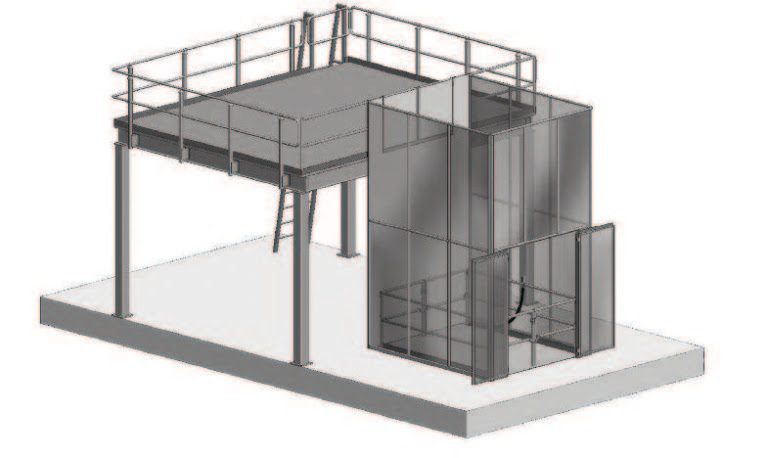
How to get personnel and material from ground level to mezzanine level quickly, safely, and efficiently Scissors lifts have been moving men and material from ground level to higher elevations for more than 60 years. They offer a distinct advantage over vertical reciprocating conveyors because people ride industrial scissors lifts along with the materials that they are moving. This greatly enhances the utility of the mezzanines. The cost is very competitive with VRC’s and the installation can offer significant savings because industrial scissors lifts come from the factory fully assembled instead of in kit forms like elevators and some vertical reciprocating conveyors so they avoid costly field assembly by elevator installers. Only the gates and enclosures need to be assembled on-site. Three main features make industrial scissors lifts different from other kinds of lifts: Scissor lifts are fully assembled at the factory and not field assembled from kits. Scissors lifts have no external guide rails and/or pulley mechanisms to entangle riders. All the stability and lifting is provided by the scissors lift mechanism beneath the platform. Rider scissors lifts use constant pressure push buttons which means the rider operator is in constant control of the lift movement. Governing codes The International Building Code for 2015 was printed in June of 2014 and has clarified matters greatly. Chapter 30 Elevators and Conveying Systems, Section 3001.2 Referenced standards, sites ANSI MH29.1 Safety Requirements for Industrial Scissors Lifts. This clears up any confusion with other codes such as ASME17.1 for elevators, ASME B20.1 for vertical reciprocating conveyors or ASME 90.1 for other types of scissors lifts. Virtually all states, counties and municipal agencies accept the references cited by the International Building Code because they respect the rigorous (multi-year and multi-constituency) review process conducted by the ICC (International Code Council). Note that the MH29.1:2012 was the standard reviewed and accepted and that this version differs substantially from previous versions. Also, note that other codes such as those governing the height of guardrails or enclosures on mezzanines or upper floors must be reviewed in conjunction with the industrial scissors lift code. Enclosure heights at upper levels may vary in different jurisdictions. The essential ingredients of a proper mezzanine lift One of the essential ingredients of a proper mezzanine lift is a properly configured industrial scissor lift. The platform should be equipped with 42” high guardrails with mid rails and 4” toe plates. The lift platform should have electrically interlocked gates that prevent lift movement unless the lift gates are closed. The interlocked gates are not required by code but will be a common sense addition required by most municipalities and inspectors. The unit should have proximity switches or limit switches for each level. The control shall be a constant pressure pushbutton that the rider operator must keep depressed to maintain movement of the lift (the use of call/send buttons is not allowed with riders on the lift). The lift should also be equipped with an emergency down valve on the power unit to lower the lift in case of power failure. Again, this is not a code requirement, but most municipalities or inspectors will require it. Another essential ingredient of a proper mezzanine lift is a smooth mezzanine fascia. The entire surface of the mezzanine adjacent to the lift from ground level to the top of the guardrail on the upper level must be equipped with a smooth face to eliminate shear points. This may be wallboard, polycarbonate GP sheets or fine mesh. Interlocked doors & windows are allowed. A proper mezzanine lift would also include an enclosure system. The sides not adjacent to the mezzanine must be enclosed from ground level to the height of the highest guardrail in the fully raised position. The guardrail on the mezzanine and the access gates on the enclosure must be electrically interlocked to prevent lift movement when the gates or doors are opened and mechanically locked so that they cannot be opened unless the lift platform is present. The gap between the platform and the mezzanine should be 1”. The gap between the platform and the enclosure on all other sides should be approximately 3” to 4”. This gap requirement is not by code, but another common sense requirement required by most inspectors. The configuration should look like this: Advance lifts will always supply a configuration drawing after receipt of order so that users and inspecting authorities can make comments before the equipment is built and shipped. What about inspections of these lifts? Advance Lifts has studied elevator inspection forms from several states and realized that the forms closely followed the underlying elevator code. Advance Lifts then developed an inspection form following the same reasoning based on the latest draft of ANSI MH29.1. This form was then reviewed by elevator inspectors and further refined into its current form which is called the “Inspection Checklist For Industrial Scissors Lifts At Mezzanines” form AL-2010 Rev 1. This should be a big help to elevator inspectors and municipal building commissioners around the country. Landing lock option All multistage scissor lifts have some sway and some deflection inherent to their design. The BFL models typically used in mezzanine access lifts are exceptionally stout and rigid, but there still is some sway and deflection. This is by no means dangerous, but some people find this undesirable. Therefore, Advance Lifts created a Landing Lock (patent pending) which consists of two (2) locking pins that are extended into receivers when a unit arrives at an upper elevation. This eliminates sway and deflection at the loading edge of the platform. A discussion about specific applications is necessary to determine a recommendation on this option. By Henry J. Renken, Advance Lifts, Inc.